
Review · KATHMANDU
From Kathmandu: 7-Day Annapurna Basecamp Trek
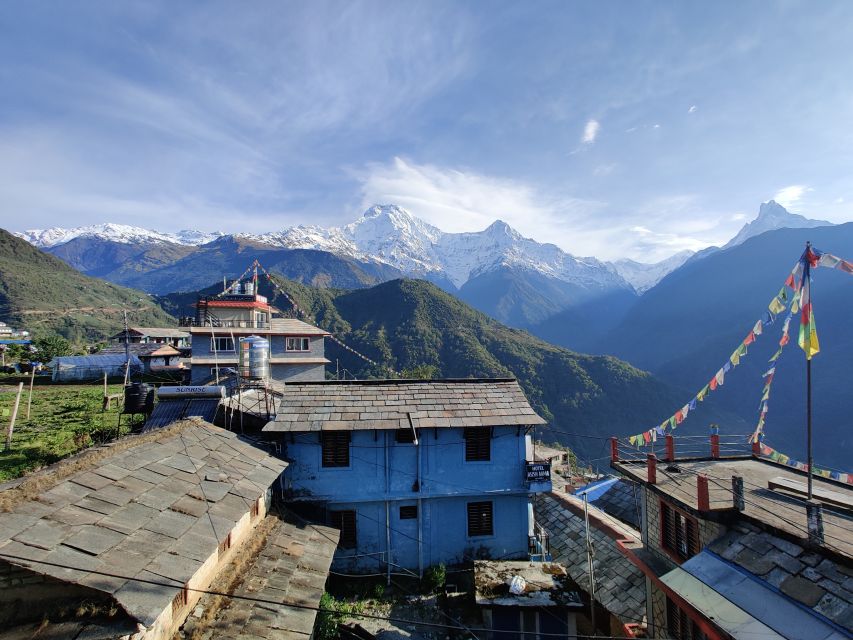
Annapurna Base Camp is the prize here: a high mountain bowl at 4,130 meters, surrounded by the Annapurna range and reached on foot through forests, waterfalls, and Gurung villages. You also get the memorable contrast of a sunrise at base camp and a natural hot bath at Jhinu before returning to Pokhara.
I like the mix of local guesthouses and cultural stops, especially Ghandruk and Chomrong, rather than treating the trek as one long march through the hills. I also like the practical support: an English or Hindi-speaking guide, a porter for every two people when that option is selected, permits, trekking poles, sleeping bags, and duffle bags.
The main drawback is the pace. You spend only one night at base camp, and several trekking days run six to seven hours. The long Kathmandu to Pokhara drive on day two also makes this a demanding seven days, not a relaxed mountain holiday.
Key points before you book
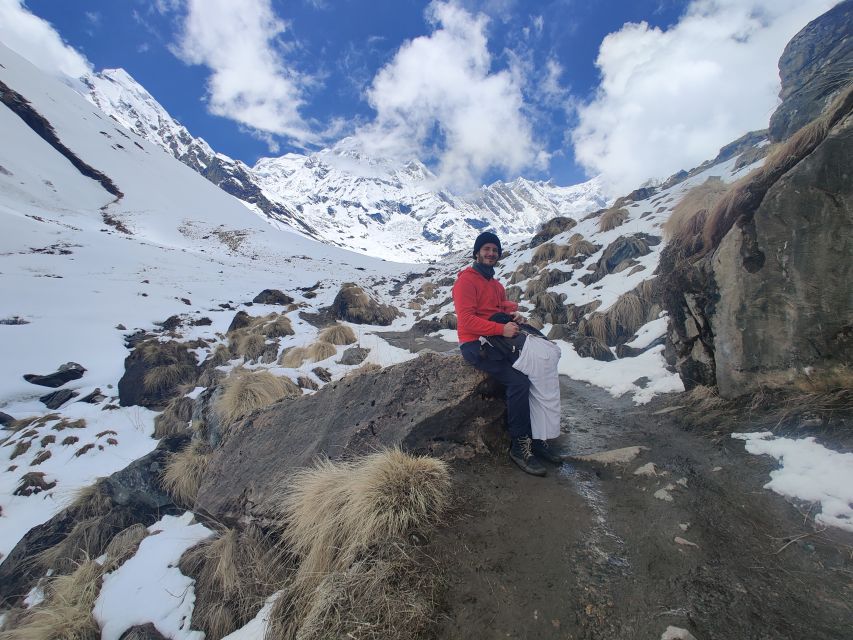
- Annapurna Base Camp reaches 4,130 meters, with sunrise and sunset views of the surrounding mountain range.
- Ghandruk and Chomrong add real local character, with traditional and modern Gurung villages along the route.
- The walk includes waterfalls, forest trails, and mountain views, not just high-altitude terrain.
- Jhinu provides a natural hot bath, a welcome reward after the descent.
- The $276 price can be strong value, but check whether you are booking the full-board and porter option.
- Raju and Terrence are names to request if possible, based on the particularly strong praise for their care and problem-solving.
What the $276 price really covers
At $276 per person, this trek is priced for people who want an organized Himalayan route without paying for a private luxury trip. You receive airport arrival and transfer arrangements, one night in a three-star Kathmandu hotel with breakfast, mountain guesthouse accommodation, permits, transport from Kathmandu to Pokhara, and the road connections at either end of the trek.
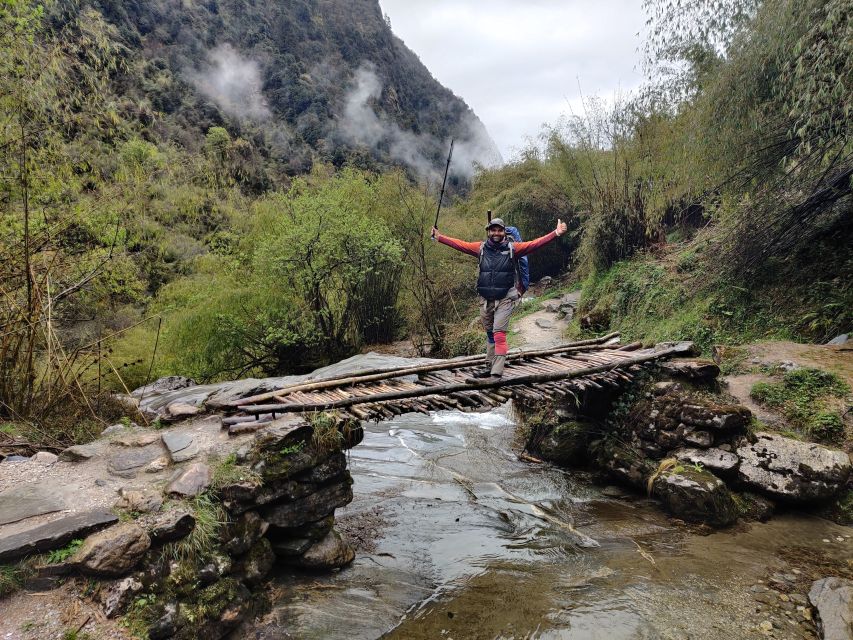
The guide and porter arrangement matters. The stated setup provides one porter for every two people when the relevant inclusion is selected. That keeps your daypack lighter, which makes a noticeable difference on long uphill and downhill sections. You should confirm at booking that your selected price includes the full-board meal plan and porter service, since those are marked as options rather than universal inclusions.
The five mountain nights are in guesthouses, in twin-sharing rooms. This is the right level of comfort to expect: useful shelter and a place to sleep, not hotel-style facilities. Hot and cold drinks, alcoholic drinks, tips for the guide and porter, travel insurance, Pokhara accommodation, and lunch and dinner in Kathmandu are not included.
I see good value here if you want the main pieces arranged for you. The price is less attractive if you expect every meal, every city hotel, and all drinks to be covered. Add those costs before comparing it with another trek.
More Annapurna Treks in Kathmandu
- Annapurna Circuit Trek with Tilicho Lake
★ 5.0 · 368 reviews - Annapurna base camp trek 5 Days
★ 5.0 · 252 reviews - 14-Day Private Annapurna Base Camp Trek
★ 5.0 · 180 reviews
Day 1: Kathmandu, a short welcome before the hills
Your first day begins at Tribhuvan International Airport, where a representative meets you with a name sign and transfers you to the hotel. You receive a trek briefing and meet your guide, which gives you a chance to ask about the walking schedule, equipment, and the altitude ahead.
Kathmandu sits at about 1,350 meters, so this first night is not an acclimatization stop for the high mountains in any serious sense. It is mainly a practical reset after your flight. Use it to organize your daypack, check that your passport and permits are in order, and make sure your towel and other personal items are ready.
The listed hotel is three-star and includes breakfast on a twin-sharing basis. Lunch and dinner are your responsibility, so allow for that when working out the real cost.
Day 2: Kathmandu to Ghandruk by road
Day two is the least active but one of the longest. You leave early for an eight to nine-hour journey by tourist bus from Kathmandu to Pokhara, followed by a private vehicle toward Ghandruk. Long road days can test your patience, but they also let you reach the trekking area quickly without adding several extra walking days.
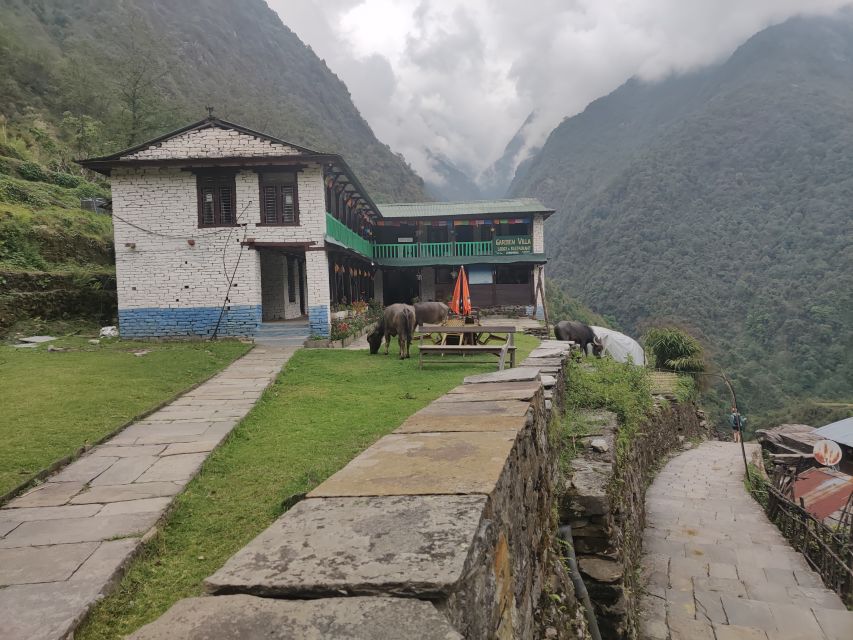
Ghandruk is a well-known Gurung village and one of the most appealing cultural stops on the route. The village gives the trek a human setting before the trail climbs into the higher Annapurna region. You are not simply moving from one mountain lodge to another; you are passing through communities with their own traditions and hospitality.
The schedule says you explore Ghandruk and spend the night at Birethanti. That means you should confirm the exact overnight point and vehicle plan before departure, since Ghandruk and Birethanti are listed separately. The day already includes many hours on the road, so do not expect a full sightseeing afternoon.
Day 3: Ghandruk and Chomrong toward Sinuwa
The walking begins in earnest on day three, with six to seven hours on the trail toward Sinuwa. The route passes through Chomrong, described as a modern Gurung village, and gives you a closer look at local life as the path starts to feel more remote.
This is also where the route begins delivering the scenery promised by the trek. You pass waterfalls and forested sections, with views toward Annapurna South and Hiunchuli. The mountain sights are not limited to the final base camp viewpoint, which is important if cloud later affects the higher days.
Chomrong also marks a point where the route feels more physically serious. You will gain and lose height on stone steps and uneven trails, so good footwear and a steady pace matter. Six to seven hours is a full walking day, especially if you are carrying more than a light daypack.
Sinuwa is the night stop, at a listed maximum altitude of 2,340 meters. The guesthouse stay keeps the evening simple: eat, prepare for the next day, and rest. If you prefer a slow trek with short walking days, this itinerary may feel brisk.
Same trailhead, a different route:
- Everest Base Camp Trek – 14 Days
★ 5.0 · 1,499 reviews - Everest Base Camp Trek
★ 5.0 · 842 reviews - Everest Base Camp Helicopter Tour landing at Everest View Hotel
★ 5.0 · 668 reviews - Everest Base Camp Trekking
★ 5.0 · 485 reviews
Day 4: Sinuwa to Deurali through forest and waterfalls
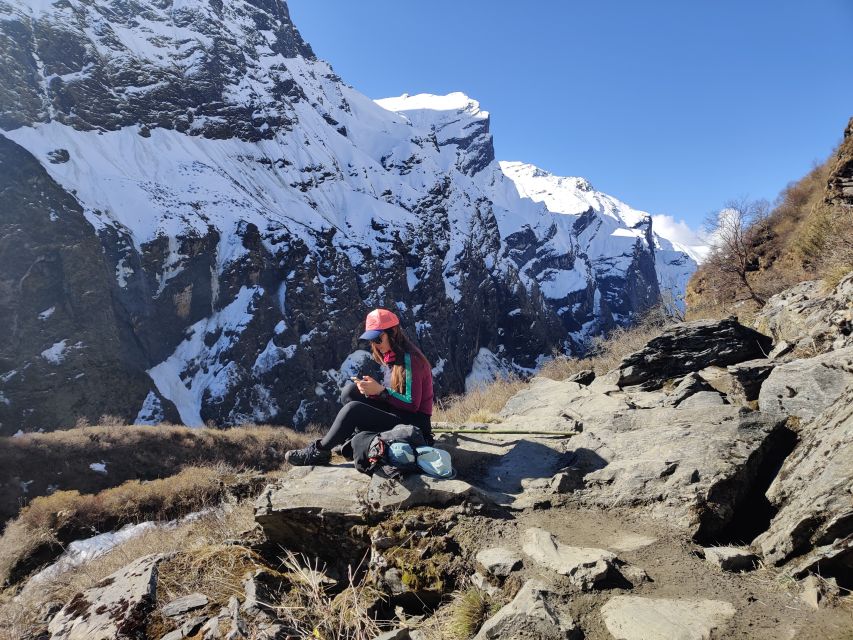
The fourth day continues from Sinuwa to Deurali, taking around six to seven hours. You pass through dense forest and the small settlement of Himalaya, where tea houses provide a useful place to pause.
I like this section because it gives the trek a strong sense of progression. The lower route includes village life and broad views, while this day shifts toward forest, waterfalls, and higher mountain terrain. You can expect the setting to feel quieter and more enclosed before it opens around the base camp area.
Deurali sits at about 3,230 meters. That altitude is high enough for you to take the evening seriously. Walk slowly, drink water, and tell your guide if you feel unwell. The itinerary does not include a separate acclimatization day, so your guide’s attention and your own pacing are important.
You spend the night at Deurali Guest House. Mountain accommodation at this point is functional rather than plush, and the combination of altitude and a long walking day can make an early night a good idea.
Day 5: Deurali to Annapurna Base Camp via Machhapuchhre Base Camp
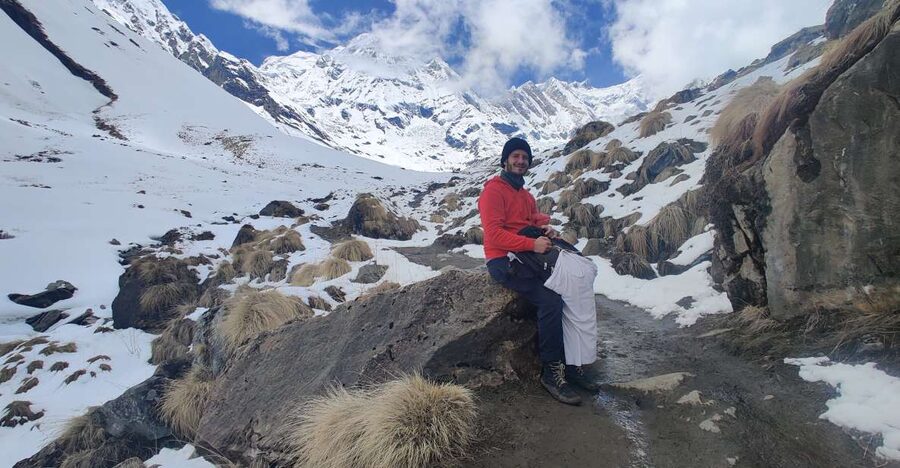
Day five is the central event: five to six hours from Deurali to Annapurna Base Camp, passing through Machhapuchhre Base Camp. The trail moves through a high valley before reaching the base camp at 4,130 meters.
The reward is the close view of the Annapurna range. Annapurna I rises to 8,091 meters and is the world’s tenth-highest mountain, so reaching its base is more than a scenic photo stop. You are standing in a major Himalayan setting, surrounded by peaks rather than viewing them from a distant road.
The schedule highlights sunset toward the west. If the weather is clear, this can be one of the best moments of the trek, as the light changes across the mountains. The base camp guesthouses are your overnight accommodation, and staying there lets you experience the site after the day walkers have moved on.
At 4,130 meters, altitude is the key concern. The itinerary does not promise medical support or a guaranteed clear view, and mountain weather can change. Your guide should help you judge your pace, but you should also be honest about symptoms. Do not treat reaching the camp as more important than your health.
Sunrise at base camp and the long descent
Day six begins with sunrise at Annapurna Base Camp and breakfast before you retrace the route through Deurali, Himalaya, and Dobhan toward Bamboo or Sinuwa. The morning view is a strong reason to spend the night at base camp rather than visit only during the day.
The descent takes several hours, and downhill walking can be hard on knees and ankles. The return route is not a quick stroll after the main achievement. You are still covering a substantial distance, so trekking poles, included when selected, can be especially useful.
The overnight location is listed as Bamboo or Sinuwa, with the exact stop depending on the day’s pace and conditions. That flexibility is sensible, but it also means you should not assume the same schedule every group will follow. Ask your guide where you will sleep and how much walking remains before setting off.
Day 7: Jhinu hot bath and the road to Pokhara
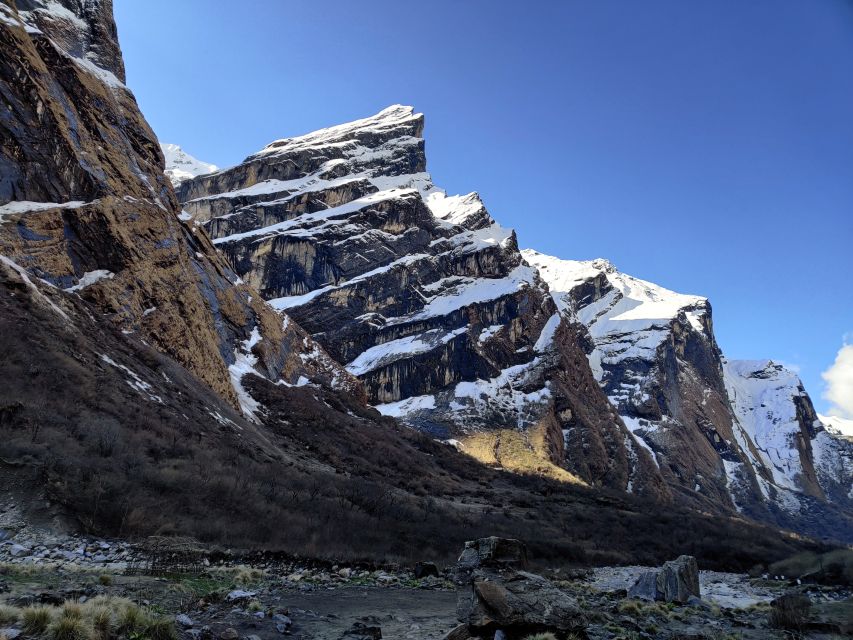
The final walking day takes five to six hours toward Simrung via Jhinu. Jhinu is known for its natural hot bath, which gives you a pleasant break after several days of climbing and descending.
The hot bath is not just a decorative extra. After the long route from base camp, warm water can make the final day feel less like an exit and more like a reward. You should still allow enough time for the walk to Simrung, since the day includes both hiking and transport.
From Simrung, you take a shared Jeep for about an hour and a half to Pokhara. Accommodation and meals in Pokhara are not included, so arrange your own night there if you are not leaving immediately. The journey ends in Pokhara rather than Kathmandu, which is useful if you plan to continue in the region, but you need to organize your onward travel separately.
How the transport affects the experience
This is a point-to-point trip with several different vehicles. You use a tourist bus from Kathmandu to Pokhara, a private vehicle from Pokhara toward Ghandruk, and a shared Jeep from Simrung back to Pokhara.
That arrangement keeps costs down, especially the shared Jeep at the end. It also means the road portions will not all feel equally comfortable or private. The Kathmandu to Pokhara drive alone takes eight to nine hours, so I would not book this trek immediately after a late international arrival.
Pickup is included, and you are asked to wait five to ten minutes before the scheduled time in your hotel lobby or at the main entrance of your residence or apartment. Small groups are limited to 14 people, which is a useful middle ground: large enough to keep the price reasonable, but small enough for a guide to monitor the group.
Guides, porters, and personal care
Guide support is one of the strongest reasons to choose an organized version of this route. The trip operates in English and Hindi, and the guide leads you through the changing terrain, high-altitude sections, guesthouse stops, and transport connections.
Two guide names deserve special attention. Raju is praised for explaining the trek clearly and handling small problems with care. Terrence is also singled out for being present when difficulties arose and for finding practical solutions, including during poor weather. You cannot assume either guide will be assigned, but you can ask if one is available when booking.
The porter system is helpful, especially on the six to seven-hour days. One porter for every two people is a shared arrangement, not a personal porter carrying every item you own. Pack with restraint and keep essentials in your daypack, including your passport, water, towel, and anything you need during the day.
What to pack and who should choose this trek
The stated essentials are a towel, passport or passport copy, and a daypack. The operator supplies returnable sleeping bags, duffle bags, and trekking poles when included in your booking.
You should still think carefully about what you need for seven days of changing temperatures and long walks. The supplied information does not give a full clothing list, so check directly before departure rather than assuming every item is provided. A daypack is particularly important because you need easy access to personal items while the porter carries the larger bag.
This trek suits you best if you:
- Want to reach Annapurna Base Camp in one organized week
- Are comfortable with six to seven-hour walking days
- Like village visits and local guesthouse stays
- Want a guide and arranged transport rather than planning each connection yourself
- Can manage steep or uneven trails without mobility assistance
It is not suitable for children under eight, people with mobility impairments, or people over 95 according to the stated restrictions. Those restrictions do not replace a personal health assessment, especially with a high point of 4,130 meters.
Weather, flexibility, and cancellation
The trek can operate in difficult conditions, but the route may need practical changes. One booking made during severe weather was handled with flexibility, with alternative solutions offered rather than a rigid approach. That is useful on a mountain trip, where road access and trail conditions can change.
You can cancel up to 24 hours before departure for a full refund, and the reserve-now, pay-later option lets you hold a place without paying immediately. Still, read the final booking terms carefully and make sure your travel insurance covers trekking at the planned altitude.
The trip is offered with free cancellation within that stated window, but that does not mean every outside cost, such as flights or independent hotel bookings, will be refunded.
Should you book this Annapurna trek?
I would book this trek if you want the classic Annapurna Base Camp route with the main practical pieces handled for you: permits, guide, mountain accommodation, transport, and equipment loans. The Gurung villages, waterfalls, base camp sunrise, and Jhinu hot bath give the week more variety than a simple out-and-back mountain walk.
I would pause if you dislike long road journeys, shared transport, basic guesthouses, or a brisk schedule. Before paying, confirm whether your chosen option includes full-board meals and the porter, clarify the Ghandruk and Birethanti overnight plan, and ask which guide is assigned.
For a fit person who wants a focused Himalayan trek at a moderate price, this is a strong choice. It is not the softest introduction to Nepal, but it offers the important moments without adding unnecessary luxury or extra days.
FAQ
How high is Annapurna Base Camp?
Annapurna Base Camp is at 4,130 meters, or 13,549 feet.
How long is the trek from Deurali to Annapurna Base Camp?
The walk from Deurali to Annapurna Base Camp takes about five to six hours via Machhapuchhre Base Camp.
How many days does the full experience take?
The experience lasts seven days, beginning with arrival in Kathmandu and ending with the drive from Simrung to Pokhara.
Is transport from Kathmandu to Pokhara included?
Yes. Transport from Kathmandu to Pokhara by tourist bus is included.
Is transport from Pokhara to Ghandruk included?
Yes. The trip includes transport from Pokhara to Ghandruk by private vehicle.
Is the return from Simrung to Pokhara included?
Yes. The return trip from Simrung to Pokhara takes about one and a half hours by shared Jeep.
Are meals included?
Full-board meals during the trekking days are included if you select the relevant inclusion option. Lunch and dinner in Kathmandu, meals in Pokhara, and hot, cold, and alcoholic drinks during the trek are not included.
Is a porter provided?
A porter for every two people is included if the relevant inclusion option is selected.
Can I cancel the booking?
You can cancel up to 24 hours in advance for a full refund. The trip also offers a reserve-now, pay-later option.
More 7-Day Experiences in Kathmandu
- 7 Days Langtang Valley Private Trek From Kathmandu
★ 5.0 · 10 reviews - 7 Days Langtang Valley Trek from Kathmandu
★ 5.0 · 3 reviews - All Inclusive Langtang Valley Trek – 7 Days
★ 5.0 · 2 reviews - Kilimanjaro climb by Lemosho Route (7-day)
★ 5.0 · 651 reviews
Just added around Kathmandu
- Everest Base Camp Trek★ 5.0 · 3 reviews
- Everest Base Camp Trek★ 5.0 · 7 reviews
- 15 Days Private Everest Base Camp Trek★ 5.0 · 30 reviews
- Everest Base Camp Trek★ 5.0 · 57 reviews
- 14 Days of Adventure Trekking to Everest Base Camp★ 5.0 · 2 reviews
- 14-Day Everest Base Camp Trek★ 5.0 · 20 reviews
- From Kathmandu: Private 14-Day Everest Base Camp Trek★ 5.0 · 20 reviews
- 14 Days Everest Base Camp Trek★ 5.0 · 4 reviews
Annapurna Base Camp Treks, compared.




Trekking in Annapurna/Langtang/Everest/Upper Mustang regions
Read our review →


Kathmandu to Annapurna Base Camp (ABC) 5-Day Trek
Read our review →Browse the lists this trek appears in