
Review · KATHMANDU
From Kathmandu: Private 14-Day Everest Base Camp Trek
Everest Base Camp is not a quick mountain walk. This 14-day private trek from Kathmandu carries you from the narrow runway at Lukla through Sherpa villages, suspension bridges, Buddhist monasteries, and high glacial valleys to EBC at 5,364 meters. The route also includes Kala Patthar, the best high viewpoint on the trip at 5,545 meters.
I like the two built-in acclimatization days, one in Namche Bazaar and another in Dingboche. I also like that the price includes the Lukla flights, permits, accommodations, meals, a guide, a porter, and loaned cold-weather gear. The main consideration is the altitude: good fitness helps, but careful pacing and the willingness to turn back matter more than speed.
Key points to know before booking
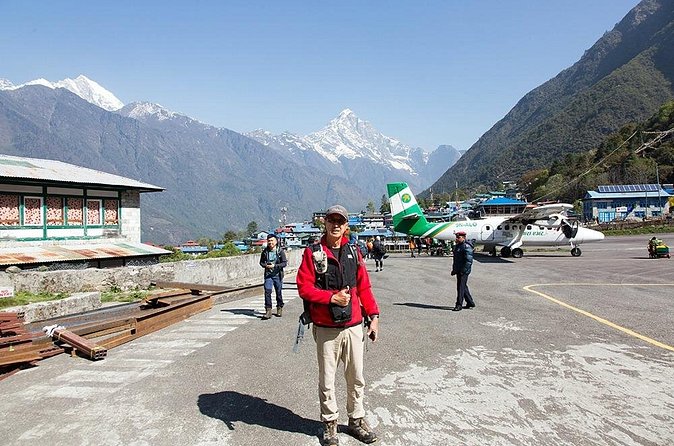
- Lukla is part of the adventure: The 30-minute flight lands at Tenzing Hillary Airport, one of the world’s most challenging airstrips.
- Two acclimatization days protect your schedule: You pause in Namche at 3,438 meters and Dingboche at 4,360 meters.
- Kala Patthar is the visual high point: The early-morning hike reaches 5,545 meters and offers the most dramatic Everest-area views.
- This is a private trip: Only your own group participates, with an experienced trekking guide and Sherpa porter.
- The $1,650 price covers major essentials: Flights, permits, national park fees, lodging, meals, transfers, and basic equipment are included.
- Guide quality matters greatly: Guides associated with Cordial Trek include Raj Tamang, Prakash Neupane, Pratip, and Nabin. Ask who will lead your group before you pay.
Why the route from Kathmandu works so well
I like this itinerary because it gives you the full Khumbu experience rather than dropping you into the high country and rushing you upward. You begin with Kathmandu logistics, then fly to Lukla and walk almost the entire route through the Sherpa heartland.
The route follows the classic approach to Everest Base Camp. You pass through Namche Bazaar, Tengboche, Deboche, Dingboche, Lobuche, and Gorakshep before reaching EBC. That gradual climb is not just scenic planning. It gives your body a better chance to adjust to thinner air.
The tour is private, so your pace can be discussed with your guide. That matters on a trek where one person may feel fine while another needs a slower morning, a longer lunch, or a rest day. The guide and porter are not decorative extras here. Their judgment, especially above Dingboche, can shape the entire trip.
More Everest Base Camp Treks in Kathmandu:
- Everest Base Camp Trek – 14 Days
★ 5.0 · 1,499 reviews - Everest Base Camp Trek
★ 5.0 · 842 reviews - Everest Base Camp Helicopter Tour landing at Everest View Hotel
★ 5.0 · 668 reviews
Day 1 in Kathmandu: a soft landing before the mountains
Your trip begins at Tribhuvan International Airport, where a Cordial Trek representative meets you and takes you to your hotel. The first day is intentionally light, with no major sightseeing demand and no hiking requirement.
That is useful after an international flight. You can check your equipment, confirm the next morning’s flight, and get a final briefing. The tour provides a down jacket, sleeping bag, and duffle bag as returnable equipment, which reduces the amount of specialist gear you need to bring from home.
The package does not include your Nepal visa, personal spending, insurance, or guide and porter gratuities. Travel insurance is compulsory, so arrange it before departure. A policy that covers high-altitude trekking and emergency evacuation is the sensible choice, though the supplied details do not specify a required coverage limit.
Day 2: the short flight to Lukla
The flight from Kathmandu to Lukla takes about 30 minutes, but the short duration does not make it ordinary. Tenzing Hillary Airport sits at a high mountain settlement and is known for its demanding approach.
Once in Lukla, you meet the support staff and begin walking toward Phakding. The first day on foot is relatively short compared with later stages, which helps you ease into the trek. The village route introduces you to the rhythm of the trip: walk, pause, eat, and sleep at a higher altitude.
Flights on this route depend on weather and operating conditions. One useful practical detail is that the company has worked hard to place trekkers on direct Kathmandu to Lukla flights during difficult periods. Still, you should keep some flexibility around the flight days. A delayed flight can affect the whole plan.
Days 3 and 4: arriving in Namche Bazaar
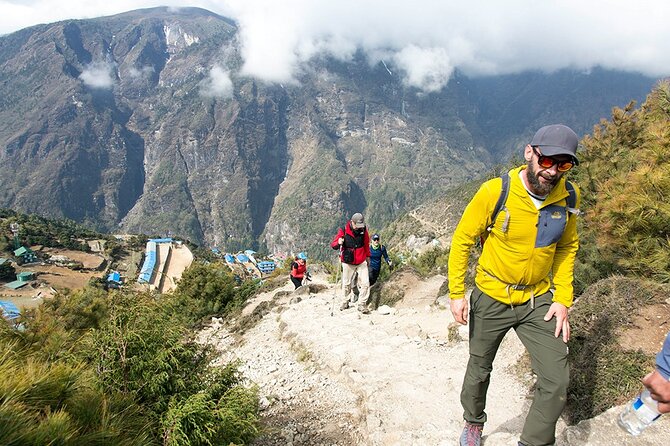
From Phakding, you walk to Namche Bazaar in about six hours, reaching 3,438 meters. The trail passes through Manjo and the entrance area of Sagarmatha National Park, with river crossings and mountain paths leading toward the famous trading town.
Namche is more than a stopping point. It is the main service center of the Khumbu Valley, and its curved bowl of buildings gives you a clear sense that the ordinary road network has ended. Cafes, pubs, and shops make it a welcome place to pause, though prices generally rise as supplies are carried farther into the mountains.
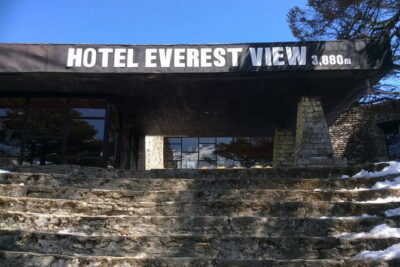
The second day is for acclimatization. You take a guided outing toward the Everest View Point and Hotel Everest View, which opened in 1971 and offers broad views of the surrounding peaks. This is a smart use of a rest day. You gain altitude during the excursion, then sleep again at the lower Namche elevation.
Do not treat this as a free day for strenuous wandering. The purpose is to let your body adjust. Drink steadily, walk at an easy pace, and tell your guide about headaches, nausea, unusual fatigue, or poor sleep.
A few more treks around Kathmandu worth a look
- 14-Day Private Annapurna Base Camp Trek
★ 5.0 · 180 reviews - 14 Days Private Tour Everest Base Camp Trek
★ 5.0 · 105 reviews - 15 Days Private Everest Base Camp Trek
★ 5.0 · 30 reviews - 5 Day Private Guided Trekking in Annapurna Base Camp
★ 5.0 · 25 reviews
Days 5 and 6: monasteries, river valleys, and Dingboche
The walk from Namche to Deboche takes about six hours and reaches roughly 3,820 meters. Along the way, the trail passes through the mountain settlement of Tengboche, home to the well-known Tengboche Monastery.
The monastery is one of the cultural highlights of the route. The trek is not only a mountain-view contest. Buddhist prayer flags, monasteries, Sherpa villages, and local religious life give the journey a human setting. You will have time to absorb the place, though the exact amount of sightseeing depends on walking speed and daily conditions.
From Deboche, you continue to Dingboche in about five hours, reaching 4,360 meters. The route passes the Lobuche River and enters a more open, higher valley. At this point, the air feels noticeably thinner, and a modest uphill stretch can take more effort than expected.
Your guide should keep the pace controlled here. A private trip is especially useful because the walking day can be adjusted more easily than on a large group departure.
Day 7: the second acclimatization day
Dingboche provides the second major acclimatization pause. At 4,360 meters, this is an important checkpoint before the route climbs toward Lobuche, Gorakshep, and Base Camp.
You take a guided hike in the area rather than simply staying in bed. That matters because a gentle outing helps your body adapt while giving you a chance to see more of the high valley. The key is moderation. This is not the day to prove how fast you can climb.
At this elevation, appetite, sleep, and energy can change. Keep your guide informed. The most valuable service your guide provides may be recognizing when a planned target needs to be changed.
Day 8: high country at Lobuche
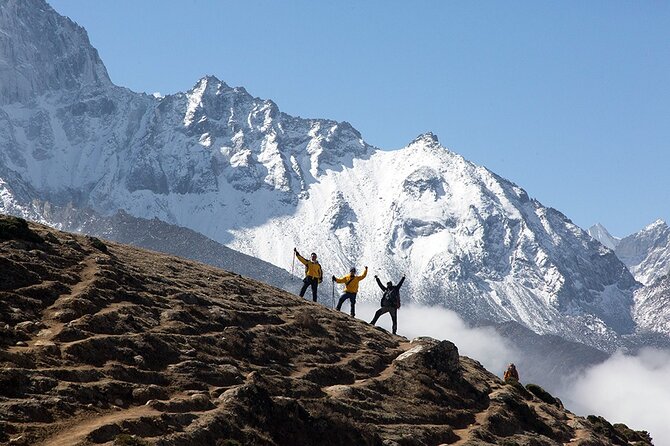
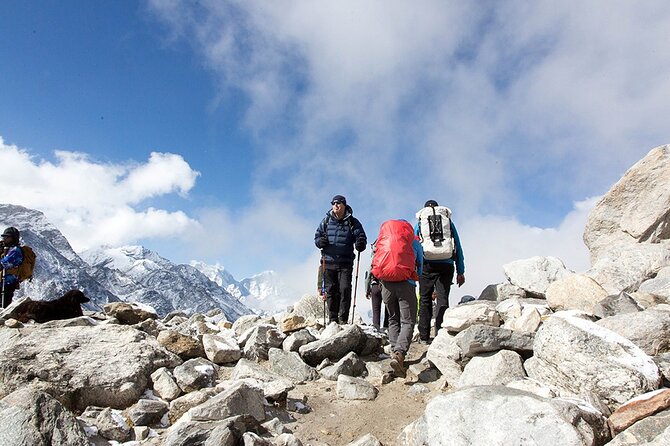
The walk from Dingboche to Lobuche takes about four to five hours and reaches 4,940 meters. The route now feels stark and exposed, with the Khumbu Glacier and high peaks setting the tone.
Lobuche is close to the glacier and functions as a practical overnight stop before the final push. You should expect a short walking day on paper to feel demanding in practice. At nearly 5,000 meters, the lack of oxygen affects everyone differently.
This is a good place to check small details: charge your phone if possible, organize your daypack, refill water, and keep warm layers close. Your duffle bag is handled by the porter, but you need your own essentials with you during the day.
Day 9: Gorakshep and Everest Base Camp
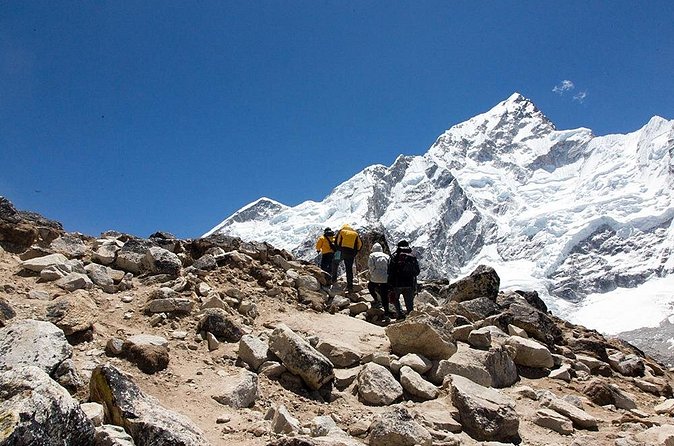
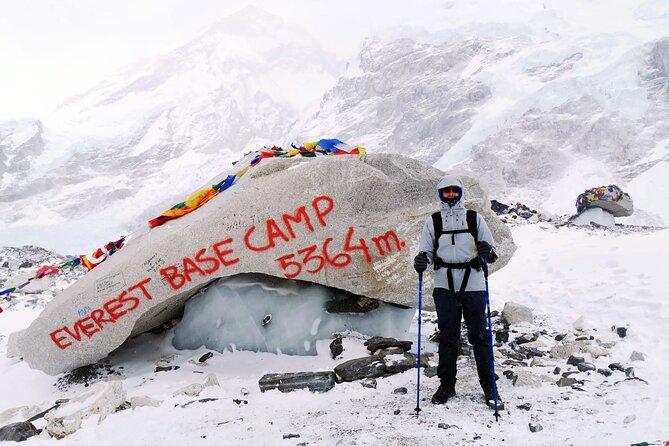
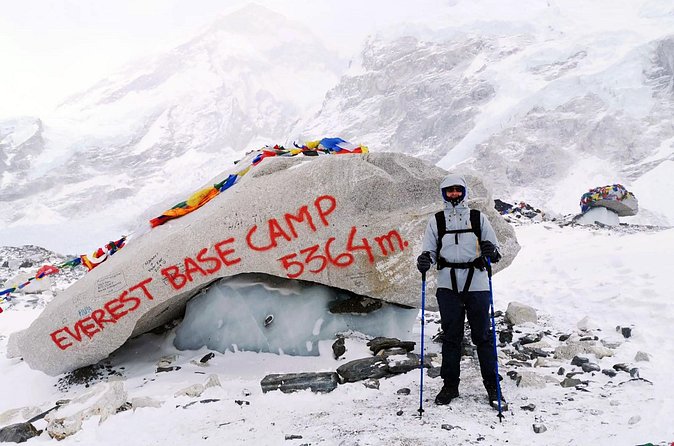
You walk from Lobuche to Gorakshep, a settlement at about 5,164 meters. From there, the route continues to Everest Base Camp at 5,364 meters.
The walk to EBC is one of the trip’s signature moments, but it is not the place where you see Everest best. Base Camp is famous because mountaineering expeditions use it as a staging area, and the surrounding glacier terrain gives you a close look at the physical setting of an Everest climb. The view can be rough and rocky rather than postcard neat.
The day is long because you must reach Base Camp and return to Gorakshep. At this elevation, every step takes patience. Stay with the group, follow your guide’s pace, and keep enough water and warm clothing available.
Day 10: Kala Patthar at 5,545 meters
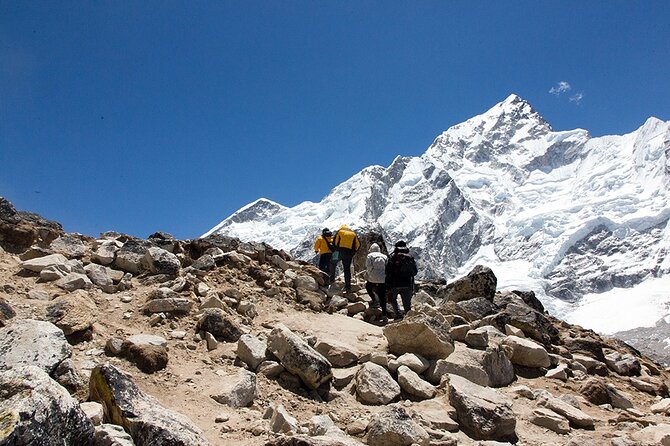
The early-morning hike to Kala Patthar is a three-hour round trip from Gorakshep. At 5,545 meters, it reaches a higher point than Base Camp and provides the trip’s most rewarding mountain viewpoint.
This is where you are most likely to appreciate the scale of Everest and the surrounding peaks. The early start is practical, not just dramatic. Morning conditions can offer clearer views before clouds build, though mountain weather is never guaranteed.
Kala Patthar is also the hardest short climb of the route for many people. The distance is modest, but the altitude is severe. Walk slowly and do not let the lure of the summit turn the morning into a race.
Afterward, the route descends through the high valley, with the next stages taking you toward Pheriche and Tengboche. The supplied schedule places the overnight return to Namche on Day 11, so confirm the exact overnight stop and walking sequence with the operator before departure.
Days 11 and 12: retracing the trail to Lukla
The return route heads through Pheriche and Tengboche toward Namche Bazaar, taking about six to seven hours. Descending is easier on the lungs, but it can be hard on tired knees and ankles.
Namche is a pleasant place to spend the night after the high camps. You can use the cafes and local pubs, and the lower elevation usually feels welcome after Gorakshep. It also gives you a final chance to enjoy the town before the long walk back to Lukla.
On Day 12, you walk through Phakding to Lukla in about seven to eight hours. This is a long final trekking day, but it closes the route in a satisfying way. You spend the night in Lukla and have time to visit the local bazaar. The schedule also includes a farewell with the support crew.
The return is not simply a transfer. Walking back helps you see familiar villages from a new direction and gives you time to appreciate how far you have come.
Day 13 and Day 14: flight home and a clean finish
You fly from Lukla back to Kathmandu on Day 13, then check into your hotel with free time in the evening. As with the outbound flight, weather can affect the schedule.
The final day includes a trip certificate and airport drop-off three hours before departure. Airport transfers are included, which is helpful after a demanding trek and reduces the need to arrange transport while tired.
What the $1,650 price really covers
At $1,650 per person, the price is strong if you want a package that handles the main logistics. It includes:
- Return Kathmandu to Lukla domestic flights
- Airport transfers
- Accommodations
- An experienced trekking guide and Sherpa porter
- Trekking permits and national park fees
- Down jacket, sleeping bag, and duffle bag on a returnable basis
- Breakfast, lunch, and dinner as specified in the package
- Trekking map, company T-shirt, and trip certificate
You still need to budget for personal expenses, your Nepal visa, travel insurance, tips, any meals not specified, and a solo-traveler surcharge if applicable. Group discounts are available, so the per-person value may improve for a larger private group.
The package is particularly useful if you do not want to arrange permits, flights, airport pickups, lodging, and support staff separately. Ask for the exact accommodation standard and meal details before booking, since those specifics are not fully laid out.
Who should book this private Everest trek?
This trip suits you if you want the classic Everest Base Camp route with a private guide, built-in acclimatization, and a set schedule. It is a good fit for people who value logistical help and want more personal attention than a large group can provide.
You need moderate physical fitness and the ability to walk for several hours on consecutive days. The tour does not require technical climbing, but the altitude makes it demanding. A private departure does not remove the risks of high-altitude trekking.
Guide selection is worth discussing. Guides named in connection with Cordial Trek include Raj Tamang, Prakash Neupane, Pratip, and Nabin. Raj is especially associated with careful health checks and systematic decisions during the trek. Ask who is available, how many people the guide has led to EBC, and what happens if someone needs to slow down or descend.
Should you book it?
I would consider this trek a good-value choice if you want the classic route, a private group, and major costs bundled into one price. The strongest features are the two acclimatization days, included Lukla flights, support crew, and the chance to see both Everest Base Camp and Kala Patthar.
I would not book it without travel insurance, flexible flight plans, and a clear conversation about altitude response. You should also confirm the assigned guide, accommodation details, meal coverage, and any solo supplement.
Book it if you want a carefully paced route through the Khumbu Valley and are ready for real physical effort. Skip it if your schedule cannot absorb weather delays or if you want a relaxed sightseeing holiday rather than a high-altitude trek.
FAQ
How long is the Everest Base Camp trek?
The experience lasts 14 days, including arrival and departure days in Kathmandu, the trek from Lukla to Everest Base Camp, acclimatization stops, and the return flight.
What is the highest point on the itinerary?
Kala Patthar is the highest scheduled point at 5,545 meters, or 18,193 feet. Everest Base Camp reaches 5,364 meters.
Are flights from Kathmandu to Lukla included?
Yes. The package includes return domestic flights between Kathmandu and Lukla.
Is this a private tour?
Yes. Only your group participates in the activity.
What equipment is supplied?
A down jacket, sleeping bag, and duffle bag are supplied as returnable equipment. The package also includes a trekking map.
Are meals included?
Breakfast, lunch, and dinner are included as specified in the package. Any unspecified meals and personal expenses are not included.
Is travel insurance required?
Yes. Travel insurance is listed as compulsory, but the supplied information does not state a specific coverage amount.
Can I cancel for a full refund?
You can receive a full refund if you cancel at least 24 hours before the experience start time. Cancellations or changes made within 24 hours are not refunded or accepted. If poor weather or insufficient numbers cancel the trip, you are offered another date or experience, or a full refund.
Just added around Kathmandu
- Everest Base Camp Trek★ 5.0 · 3 reviews
- Everest Base Camp Trek★ 5.0 · 7 reviews
- 15 Days Private Everest Base Camp Trek★ 5.0 · 30 reviews
- Everest Base Camp Trek★ 5.0 · 57 reviews
- 14 Days of Adventure Trekking to Everest Base Camp★ 5.0 · 2 reviews
- 14-Day Everest Base Camp Trek★ 5.0 · 20 reviews
- 14 Days Everest Base Camp Trek★ 5.0 · 4 reviews
- 14 Days Private Everest Base Camp Trekking Tour★ 5.0 · 5 reviews
Everest Base Camp Treks, compared.
Everest Base Camp Helicopter Tour landing at Everest View Hotel
Read our review →
Tibet Tour 8 Days Lhasa to Everest Base Camp Small Group Tour
Read our review →
Dubai: Private Luxury Everest Yacht Cruise from Dubai Marina
Read our review →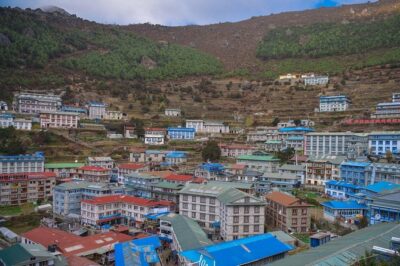
Browse the lists this trek appears in