
Review · KATHMANDU
Annapurna Base Camp Trekking
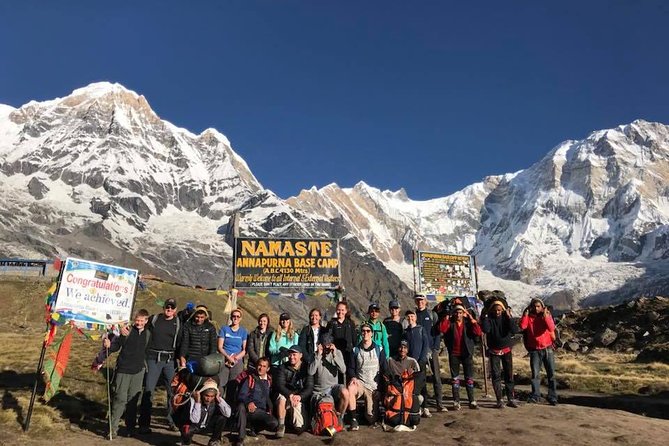
Annapurna Base Camp gives you a rare combination: high Himalayan views without a technical climb, plus villages, forests, waterfalls, and warm springs along the way. The trail reaches 4,130 meters and forms a dramatic mountain amphitheater around Annapurna South, Annapurna III, Hiunchuli, Fang, Machhapuchhare, and Gangapurna.
I like the route for two clear reasons. First, it changes scenery almost every day, from Poon Hill sunrise and rhododendron forest to snowy peaks and stone-built mountain villages. Second, the package takes care of the main practical chores, including tea-house lodging, meals on the trail, a guide, a porter, road transfers, and the Pokhara to Kathmandu flight.
The main caution is the pace. This is a moderate physical trek, not a gentle sightseeing tour, and several days are listed as full-day outings. You also need at least two people to operate the trip, and drinks, hot showers, heaters, city meals, tips, insurance, and the Nepal visa cost extra.
The trek at a glance
- 4,130-meter destination: You reach Annapurna Base Camp inside a striking mountain amphitheater.
- Poon Hill sunrise: A short early morning outing adds one of the route’s best viewpoints before the main trek continues.
- Gurung, Magar, and Thakali villages: The route brings you into communities where stopping for a conversation adds meaning to the scenery.
- Tea-house travel: You sleep in simple mountain lodges rather than camping, with breakfast, lunch, and dinner included during the trek.
- Guided private departure: Only your own group takes part, with one porter provided for every two people.
- Kathmandu and Pokhara included: The package combines city time, road transfers, trekking, and the return domestic flight.
Why Annapurna Base Camp is such a satisfying route
The appeal is not only the final destination. Annapurna Base Camp is the payoff, but the route earns it gradually. You pass through traditional villages, dense rhododendron forest, cooler middle hills, and high mountain country before reaching the base camp basin.
The Annapurna range is especially impressive because the peaks appear to gather around a deep, glacier-covered center. Annapurna South, Annapurna III, Hiunchuli, Fang, Machhapuchhare, and Gangapurna create a powerful setting once you reach the upper trail.
I also like that the route offers cultural contact without turning the trek into a staged village visit. Gurung, Magar, and Thakali communities live along the trail, and the best moments may come from pausing for a simple conversation rather than hurrying toward the next viewpoint.
You should still keep your expectations practical. Tea-house trekking means basic mountain accommodation, not resort comfort. Hot showers and heater use cost extra, and bottled water, drinks, juice, desserts, and other extras are not covered.
More Annapurna Treks in Kathmandu
- Annapurna Circuit Trek with Tilicho Lake
★ 5.0 · 368 reviews - Annapurna base camp trek 5 Days
★ 5.0 · 252 reviews - 14-Day Private Annapurna Base Camp Trek
★ 5.0 · 180 reviews
Days 1 and 2: Kathmandu to Pokhara
Your trip begins at Tribhuvan International Airport in Kathmandu. Arrival and departure transport are included, along with accommodation in Kathmandu and breakfast. The first day is mainly for getting settled.
On day two, you continue to Pokhara and have time around Phewa Lake. Pokhara is a calmer base for the trek, and a walk beside the lake gives you a pleasant change from Kathmandu’s airport and city arrival experience.
The supplied plan lists the Kathmandu to Pokhara transfer as a drive. That matters because a road journey takes more time than a flight, but it also gives you a first look at Nepal beyond the capital. The return from Pokhara to Kathmandu is listed as a flight on day 13, with airport tax included.
Days 3 and 4: Nayapul, Ulleri, and Ghorepani
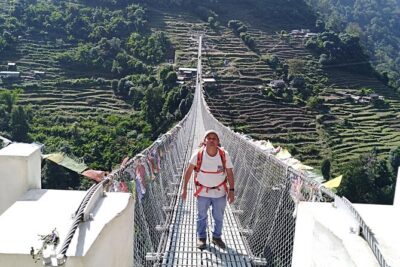
The trekking section starts with a drive from Pokhara to Nayapul. From there, you walk toward Ulleri and spend the night in a tea house or lodge.
Ulleri is an early test of your legs. The route has uphill work from the start, so do not treat the first trekking day as a warm-up stroll. Your guide can help set a steady rhythm, and keeping your pack light is one reason the included porter service is useful.
Day four continues to Ghorepani. The area is known for forested trails and mountain views, with the route passing through the kind of rhododendron country that gives the Annapurna trek much of its color and character.
The accommodation is simple but practical. Your trekking package includes breakfast, lunch, and dinner, so you do not need to arrange every meal as you go. You do need to budget for drinks, mineral water, hot showers, and heater charges.
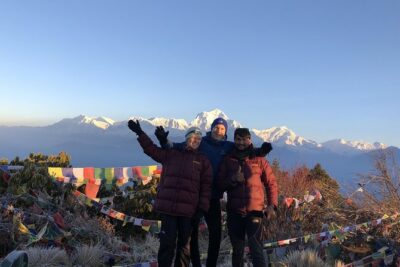
Day 5: Poon Hill at sunrise
The Poon Hill outing is listed as 45 minutes, making it one of the shortest and most rewarding parts of the schedule. You go early for sunrise, then return to the trekking route.
The short duration does not mean it is effortless. A pre-dawn start and uphill walk can feel demanding after the previous days, especially if you are not used to early mountain mornings. Still, Poon Hill gives the trip a strong viewpoint before you continue toward Annapurna Base Camp.
This is also a good place to understand the trip’s rhythm. Some moments are about walking for hours through changing terrain. Others, like Poon Hill, ask you to get up early for a concentrated view and then carry on.
Same trailhead, a different route:
- Everest Base Camp Trek – 14 Days
★ 5.0 · 1,499 reviews - Everest Base Camp Trek
★ 5.0 · 842 reviews - Everest Base Camp Helicopter Tour landing at Everest View Hotel
★ 5.0 · 668 reviews - Everest Base Camp Trekking
★ 5.0 · 485 reviews
Days 6 and 7: Chhomrong and Deurali
From Poon Hill, the trek continues to Chhomrong. Chhomrong is an important stop on the way toward the sanctuary and gives you another mountain village setting before the trail climbs farther into cooler country.
The next overnight is at Deurali. By this point, the surroundings become more focused on the high mountains, and the trail’s physical demands become more noticeable. The plan lists both days as roughly 12-hour activity blocks, although actual walking time can vary with conditions, pace, and stops.
You should take the word moderate seriously. This is not described as an extreme expedition, but it is still a multi-day mountain trek with long days and a high final destination. A reasonable fitness base will make the experience much more enjoyable.
Days 8 and 9: Annapurna Base Camp and Bamboo
Day eight is devoted to the Annapurna mountain range and a 360-degree mountain view. The schedule does not provide a detailed stop name for the base camp day, but the tour description identifies Annapurna Base Camp at 4,130 meters as the central goal.
This is the moment when the route’s separate pieces come together. You have moved from village trails and forest into a high basin surrounded by major peaks. The views include Annapurna III, Annapurna South, Hiunchuli, Fang, Machhapuchhare, and Gangapurna.
Altitude deserves attention here. The package says you should have moderate physical fitness, but it does not provide a separate acclimatization plan or medical schedule. You should discuss health concerns with your doctor before booking and follow your guide’s advice on pace and symptoms.
After the high point, day nine takes you toward Bamboo for another tea-house night. The return direction lets you see the route differently, but the descent can still be tiring, especially on knees and legs after the long climb.
Days 10 and 11: Jhinu Danda and Pothana
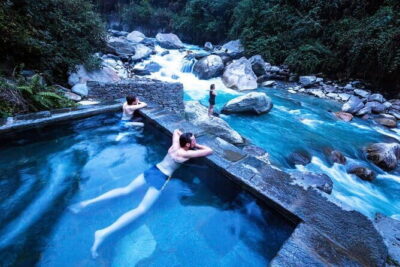
Day ten brings you to Jhinu Danda, where the plan includes a hot spring visit. This is a welcome change after several demanding days on foot. It gives you a chance to rest your muscles in a natural setting, though the schedule does not specify how long you stay there.
The route then continues toward Pothana on day 11. Pothana marks another shift toward lower country and the end of the main mountain section. You still need to walk, but the feeling changes as the trail moves away from the high base camp area.
The package includes a trekking porter, with one porter for every two people. That arrangement is useful, but you should pack responsibly and confirm how your personal gear will be divided. You will still carry a daypack with essentials such as water, clothing layers, documents, and anything you need during the day.
Days 12 to 14: Pokhara, Kathmandu, and departure
On day 12, you return to Pokhara from the trek and have time to visit around Phewa Tal. This gives you a softer landing after the mountain section and lets you enjoy Pokhara without having to rush straight to the airport.
Day 13 includes the flight back to Kathmandu and a free day in the capital. The flight and airport tax are included, but the listed plan says accommodation and breakfast in the cities are included while main meals in the cities are not. Plan for your own lunch and dinner in Kathmandu and Pokhara.
The final day is departure from Kathmandu for your onward journey. Airport departure transport is included, and the activity ends back at the meeting point.
What the $1,779 price really covers
At $1,779 per person, this is not a bare trekking permit with a guide attached. The price includes a fair amount of organization:
- Accommodation in Kathmandu and Pokhara with breakfast
- Tea-house accommodation during the trek
- Breakfast, lunch, and dinner during the trekking section
- Trekking guide and porter, including their insurance
- Trekking duffel bag and regional map
- Kathmandu to Pokhara road transport
- Pokhara to Nayapul and Phedi to Pokhara transfers
- Pokhara to Kathmandu flight and airport tax
- Arrival and departure transport
- Government taxes and office service charges
That bundle can offer good value if you want one company to arrange the moving parts. It is especially useful for a first multi-day trek, since you do not have to arrange every lodge, meal, transfer, and porter separately.
The package does not include international airfare, travel insurance, the Nepal entry visa, drinks, desserts, juice, mineral water, hot showers, heater charges, city meals, or tips. The listed visa figures are US$50 for 30 days and US$30 for 15 days, obtained on arrival.
The price is based on a minimum of two people. Since the activity is private, only your group participates. That gives you more control than a large shared departure, but solo booking is not supported under the stated terms.
Guides, porters, and the human side of the trek
The strongest part of this experience is likely to be the support team. Names connected with past departures include Anuj, Hari, Expansion, Ramesh, Gyanendra, Gyan Bahadur Karki, Dev, Bishnu, Dharma, and Bishal. You should not assume a particular person will lead your departure, but these names show the company has used a sizeable guide and porter team.
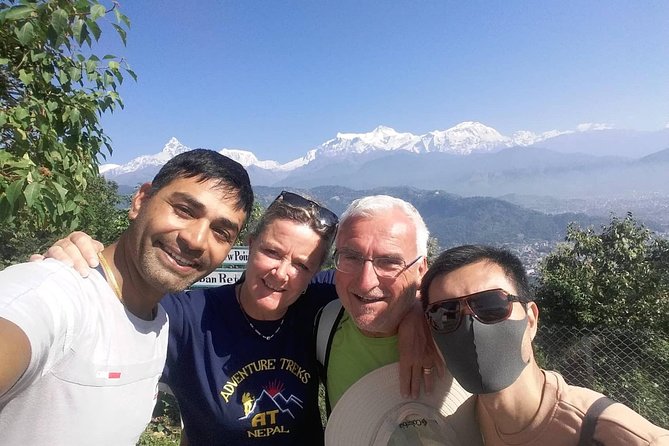
The feedback supplied for this experience repeatedly emphasizes friendly communication, careful organization, strong porter support, and guides who helped people feel safe. Families with teenagers completed the trek, and first-time multi-day trekkers described receiving advice before departure and support on the trail.
That is important because a guide does more than point out the route. On a long trek, you need someone who can help manage pace, explain local culture, assist with practical decisions, and notice when the group needs a pause. The exact level of medical support is not included in the formal package details, so do not assume that a dedicated medic joins every departure.
Tips for the guide, porter, and driver are not included. Bring a separate budget for those customary costs.
Who should book this trek
I would recommend it to you if you want a substantial Himalayan trek but prefer tea houses to tents. It suits people who want mountain views, village contact, forest walking, and a structured support team in one package.
It can also work well for families with older children or teenagers who are fit and comfortable with long walking days. The existing feedback includes a family group with children aged 14, 16, and 19, but that does not remove the need to judge your own family’s stamina carefully.
I would hesitate to recommend it if you want a relaxed holiday with short walks, private bathrooms, or flexible rest days. The route is physically demanding, and the plan does not highlight spare days for delays or recovery. Travel insurance is your responsibility, and the cancellation terms are strict: the experience is non-refundable and cannot be changed after booking.
Practical advice before you commit
Pack for changing temperatures rather than one type of weather. The route moves from lower hills to 4,130 meters, so layers are more useful than one heavy item. Your trekking duffel bag is included, but confirm the packing limit and what your porter will carry before you arrive.
Tell the company about dietary requirements when booking. Meals during the trek are included, but city meals are not, and drinks and water are extra throughout the mountain section.
Keep some cash available for personal expenses. The package specifically excludes drinks, hot showers, heater charges, tips, and visa fees, so the headline price is not your final spending figure.
Finally, treat the 14 days as an approximate schedule. Mountain roads, weather, walking pace, and domestic flights can affect timing. The itinerary gives you a useful framework, but you should leave your international travel plans with enough breathing room.
Should you book Annapurna Base Camp Trekking?
Book this trek if you want the full Annapurna mix: a 4,130-meter mountain goal, Poon Hill sunrise, traditional villages, forest trails, a hot spring, and organized tea-house support. The included meals, porter, guide, transfers, and domestic flight make the $1,779 cost easier to justify than a package that covers only the walking days.
Think twice if you are not prepared for long days, basic lodging, extra costs on the trail, or a firm non-refundable booking. For a fit pair or private group seeking a well-supported first Himalayan trek, this is a strong and practical choice.
FAQ
How long does the Annapurna Base Camp trek take?
The full experience lasts approximately 14 days, including time in Kathmandu and Pokhara, the trek, the return flight, and departure.
What is the highest point on the trek?
Annapurna Base Camp is at 4,130 meters.
How many people are needed to operate the trip?
A minimum of two people is required for the trip to run.
Is this a private tour?
Yes. Only your group participates in the activity.
What accommodation is provided during the trek?
You stay in tea houses or mountain lodges during the trekking section. Kathmandu and Pokhara accommodation with breakfast are also included.
Are meals included?
Breakfast, lunch, and dinner are included during the trek. Breakfast is included with accommodation in Kathmandu and Pokhara. Main meals in the cities are not included.
Is a guide included?
Yes. A trekking guide with insurance is included.
Is a porter included?
Yes. The package provides one trekking porter for every two people, with porter insurance included.
Is the Kathmandu to Pokhara flight included?
The listed plan includes a Kathmandu to Pokhara drive. The Pokhara to Kathmandu flight, including airport tax, is included on day 13.
What is not included in the price?
International airfare, travel insurance, the Nepal entry visa, drinks, desserts, juice, mineral water, heater charges, hot showers, city meals, and tips for the guide, porter, and driver are not included.
Just added around Kathmandu
- Everest Base Camp Trek★ 5.0 · 3 reviews
- Everest Base Camp Trek★ 5.0 · 7 reviews
- 15 Days Private Everest Base Camp Trek★ 5.0 · 30 reviews
- 14-Day Everest Base Camp Trek★ 5.0 · 20 reviews
- Everest Base Camp Trek★ 5.0 · 57 reviews
- 14 Days of Adventure Trekking to Everest Base Camp★ 5.0 · 2 reviews
- From Kathmandu: Private 14-Day Everest Base Camp Trek★ 5.0 · 20 reviews
- 14 Days Everest Base Camp Trek★ 5.0 · 4 reviews
Annapurna Base Camp Treks, compared.
Trekking in Annapurna/Langtang/Everest/Upper Mustang regions
Read our review →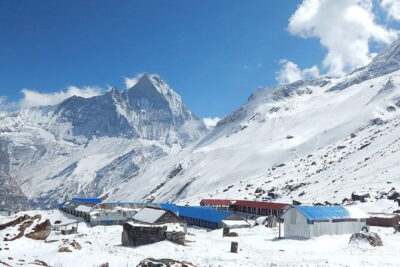
Kathmandu to Annapurna Base Camp (ABC) 5-Day Trek
Read our review →
Browse the lists this trek appears in