
Review · KATHMANDU
All Inclusive Langtang Valley Trek – 7 Days
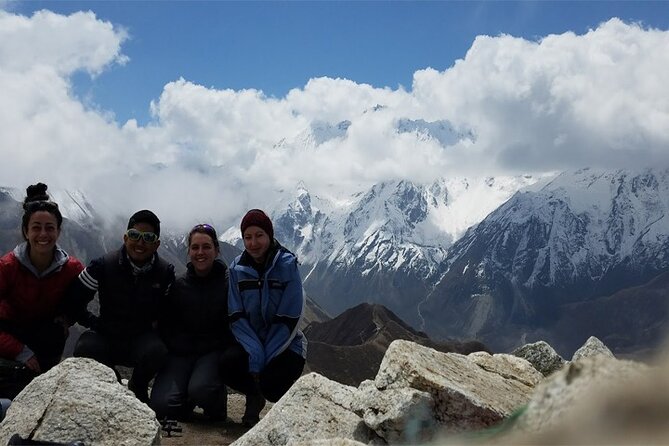
The best part of this seven-day trek is how quickly you leave Kathmandu’s noise behind and reach a high Himalayan valley beneath Langtang Lirung. In a few hours by road, you go from rice terraces and mountain foothills to pine forest, suspension bridges, yak pasture, glaciers, and Buddhist villages.
I like the small private-group format, limited to your own booking and a maximum of 10 people. I also like the practical inclusions: permits, meals, bus transport, a guide, and one porter for every two clients are covered in the $599 price.
The main caution is the schedule. Several days are described as 12-hour days, and the route reaches demanding altitude. The information also needs clarification around Tserko Ri, the stated maximum altitude, meal counts, and the exact day-seven sightseeing plan before you pay.
Key points to know before you book
- Langtang Lirung is the visual prize: Snow peaks, icefalls, pine forest, streams, and open yak pasture shape the route.
- Syabrubesi is your trailhead: The road journey from Kathmandu takes about five to six hours and covers roughly 117 kilometers.
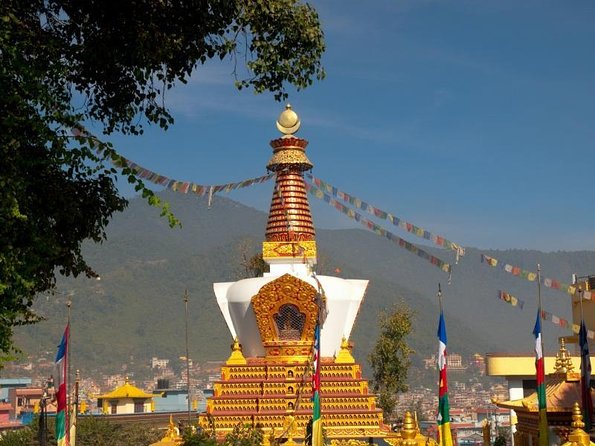
- Kyanjin Gompa is the high point of the trek: You can see Langtang Lirung, Genjempol, Kenga Himal, a cheese factory, a Buddhist monastery, and possibly hike toward Tserko Ri.
- The price covers the major basics: Permits, taxes, guide, porter support, meals, trekking shirt, duffel bag, and Kathmandu transport are included.
- Altitude deserves respect: The trip warns of walking at about 3,870 meters, while Tserko Ri is listed at 5,033 meters.
- The group stays personal: Only your party participates, with no more than 10 people on a booking.
Why Langtang works well in seven days
Langtang is one of Nepal’s more reachable Himalayan trekking regions. It lies north of Kathmandu, and the road brings you close to the trailhead without requiring a domestic flight. That saves both money and airport time, though the road ride is long and the route can be tiring before the walking even begins.
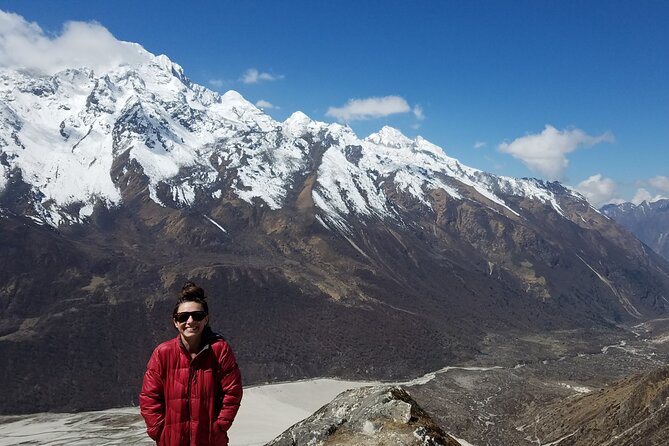
The scenery changes in stages. Near Kathmandu, you see settled hills and cultivated terraces. Farther north, the valley tightens into forest and river country. Higher up, the views open toward snow-covered peaks and glaciers. Mount Langtang Lirung, at 7,246 meters, is the main mountain presence throughout the upper valley.
I like this progression because you do not simply arrive at a high viewpoint and leave. You walk through several kinds of Himalayan scenery, with lodges and villages providing a human rhythm along the way.
This is not a gentle sightseeing holiday. The schedule uses long walking days, and the information provided calls out demanding altitude and changing weather. You should be comfortable with sustained uphill and downhill walking, but no special technical climbing ability is described.
More Langtang Treks in Kathmandu:
- Langtang Valley Trek
★ 5.0 · 140 reviews - Langtang Valley Trek
★ 5.0 · 61 reviews - Langtang Valley Trek
★ 5.0 · 50 reviews
Day 1: The long road to Syabrubesi
Your first major task is reaching Syabrubesi, the usual starting point for the Langtang Valley walk. The drive from Kathmandu takes about five to six hours for approximately 117 kilometers, although the itinerary gives the first day a total duration of about 12 hours.
The road trip is part of the experience. You pass mountain scenery and rice terraces before arriving at Syabrubesi bazaar, a compact settlement lined with lodges and hotels. You spend the night here, which is useful because it places you at the trailhead rather than forcing you to start walking after a long morning transfer.
The practical drawback is simple: road travel in the mountains can feel longer than the distance suggests. If you prefer a private jeep, the operator lists an extra $150 per group, paid directly to the Kathmandu office. The standard package uses a bus from Kathmandu to Syabrubesi and back.
The meeting information gives Tribhuvan International Airport as the start point at 9:15 a.m., while the itinerary also refers to Kathmandu stops. Confirm exactly where your first-day pickup takes place, especially if you arrive before the tour date or are staying away from the central Kathmandu area.
Day 2: Forest trails, rivers, and Lama Hotel
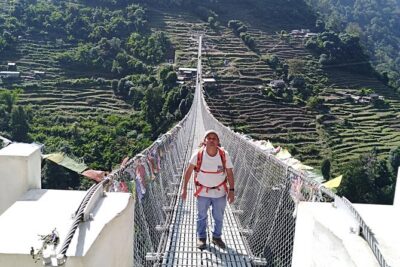
The second day takes you into Langtang National Park. The trail leaves the main road and drops toward a camping area before crossing the Bhote Koshi on a suspension bridge. From there, the route climbs toward Thulo Syabru and later crosses the Langtang Khola.
The walking then continues through forest toward Changtang, also known as Lama Hotel. The itinerary describes a set of six lodges there, and you spend the night in one of them.
This section is likely to feel more about forest and river sounds than wide mountain views. That is not a weakness. It gives the trek a steady build, with bridges, climbs, and changing vegetation preparing you for the open upper valley.
The stated duration is about 12 hours, which is a serious day. I would ask the operator how much of that time is actual walking and how much allows for stops. The wording also combines Thulo Syabru with the route to Lama Hotel, so you should confirm the precise path and overnight location.
Day 3: The first open views of Langtang Valley
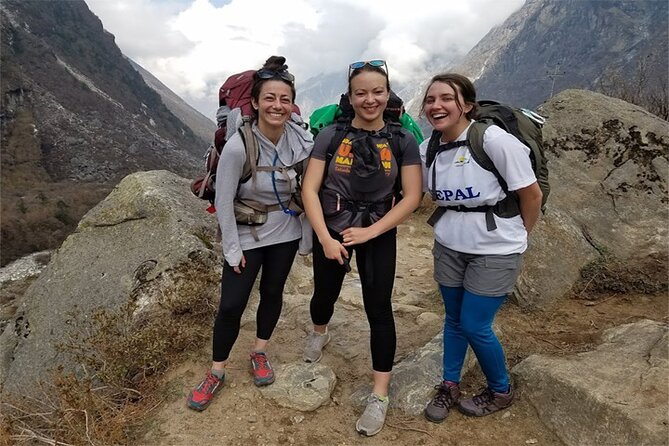
A short climb from Lama Hotel brings you to a trail opening into Langtang Valley. This is where the route begins to feel distinctly Himalayan, with views toward Langtang Lirung and broad mountain scenery replacing much of the enclosed forest.
The trail passes through more woodland before reaching a meadow. Here, you may see yak and wild goats grazing. That detail matters because the valley is not only about distant peaks. It also has working pasture, animal life, and a slower local pattern that makes the walk feel connected to the place.
You should expect another long day, listed at about 12 hours. The route description does not specify the overnight settlement for this day, so ask for the exact lodge name or village before departure. That information will help you judge the day’s walking time and know what facilities to expect.
The upper valley is the reason to choose this trek instead of a shorter foothill walk. You get the reward of moving steadily toward the high mountains, rather than seeing them only from a distant road.
A few more treks around Kathmandu worth a look
- 7 Days Langtang Valley Private Trek From Kathmandu
★ 5.0 · 10 reviews - 7 Days Langtang Valley Trek from Kathmandu
★ 5.0 · 3 reviews - From Kathmandu: 7-Day Annapurna Basecamp Trek
★ 5.0 · 2 reviews - Kilimanjaro climb by Lemosho Route (7-day)
★ 5.0 · 651 reviews
Day 4: Kyanjin Gompa and the high valley
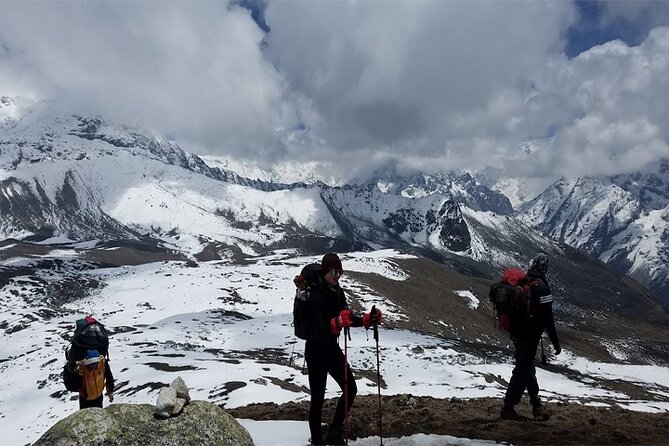
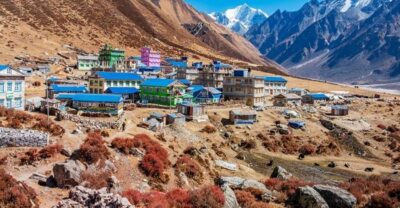
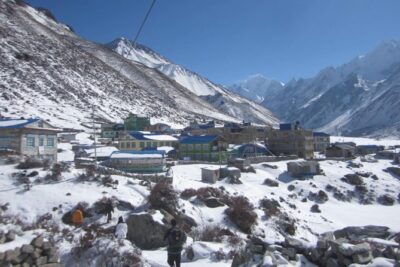
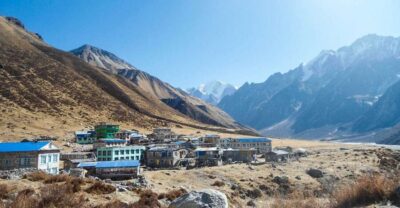
Day four takes you uphill toward Kyanjin Gompa. The route passes Sindum and Yamphu, follows the Laja Khola, and reaches a viewpoint overlooking Kyanjin Gompa and the icefall descending from Langtang Lirung and Kinshung.
This viewpoint sounds like one of the strongest moments of the trip. You see the settlement below and high ice and rock above it, with the surrounding peaks giving the valley its enclosed, remote feeling. The walk ends at Kyanjin Gompa, where you stay overnight.
The itinerary also allows time to visit the monastery, a cheese factory, and the area around Tserko Ri. It describes Tserko Ri as a hike that can provide wide mountain views, with Langtang Lirung, Genjempol, and Kenga Himal among the visible ranges.
Here, I would ask a very specific question before booking: is Tserko Ri included as a guided ascent, an optional walk, or simply a nearby attraction? The information lists Tserko Ri at 5,033 meters and gives the stop only two hours, while the general altitude warning refers to approximately 3,870 meters. Those figures do not describe the same level of effort. Your guide should explain the intended high point, expected duration, and whether the hike depends on weather and health.
Do not treat the high-altitude section as a casual add-on. Even fit people can feel the effects of elevation. The operator requires insurance that covers medical expenses and emergency repatriation, and it recommends speaking with your doctor before departure.
Day 5: Downhill through the Langtang Valley
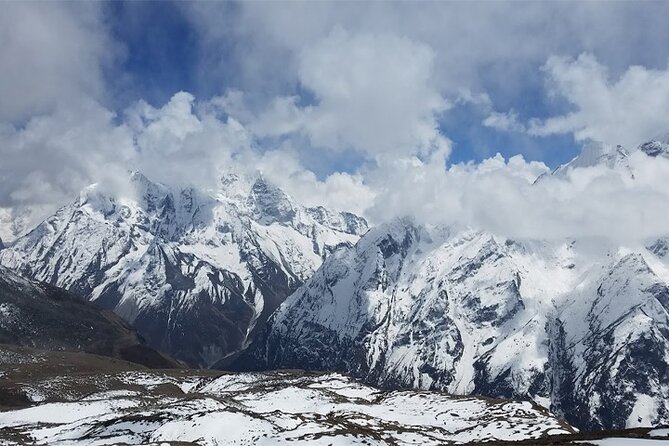
After breakfast, you retrace the route toward Lama Hotel. The stated appeal is the changing view back through Langtang Valley, with mountains appearing from different angles as you descend.
Downhill walking is not always easier than climbing. It can be hard on knees, especially after a high point and several days on foot. Trekking poles may be useful, though the provided information does not say that they are supplied. You can buy or rent required trekking gear in Kathmandu or Pokhara, and the guide can help arrange it.
Returning to Lama Hotel also means you are following a familiar route in reverse. That may sound repetitive, but mountain views often change with light, weather, and direction. It also gives you a clear sense of how far you have traveled from the forested lower trail.
Day 6: Back to Syabrubesi
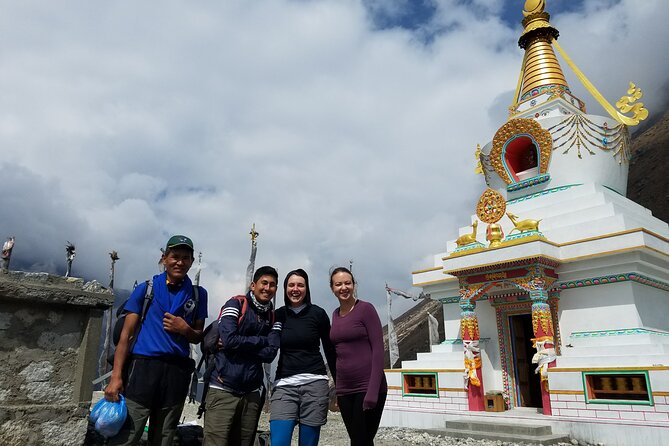
The sixth day ends the walking portion. After about five hours on foot, you arrive back in Syabrubesi, the same settlement where the trek began.
This is a shorter walking day than the itinerary’s earlier 12-hour sections, which gives you some breathing room before the road journey back to Kathmandu. The supplied schedule does not clearly state whether you sleep in Syabrubesi or continue by road that day. Ask the operator to confirm the overnight plan and transport timing.
That small detail matters. If the bus leaves the same day, you may spend many hours walking and then riding. If you stay overnight, the return becomes less rushed but may affect the timing of day seven.
Day 7: Return to Kathmandu and possible sightseeing
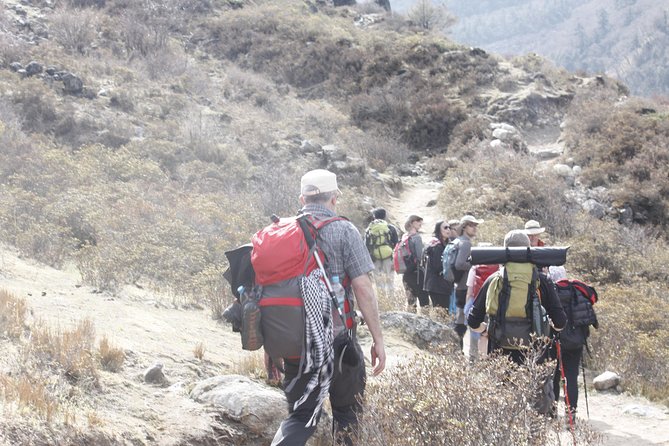
The final day is assigned about 12 hours for the Kathmandu Valley. The listed places include Swayambhunath Temple and Chandragiri Hills, with Kathmandu as the main destination.
Swayambhunath gives you a cultural stop in the capital after several days in the mountains. Chandragiri Hills offers another high viewpoint near Kathmandu. The itinerary does not say whether both visits are guaranteed, included in the transport plan, or dependent on your arrival time from Syabrubesi.
I would confirm this in writing. The core trek is easy to understand, but the Kathmandu sightseeing portion is less precise. You should also ask which entrance fees, if any, are covered, since the inclusion list specifically mentions permits, taxes, fees, and handling charges but does not spell out every sightseeing admission.
What the $599 price really covers
At $599 per person, the package has solid practical value if you want a guided trek with the main costs gathered in one payment. Included are permits, taxes, handling charges, a professional guide, porter support at a ratio of two clients to one porter, Kathmandu to Syabrubesi bus transport, tea or coffee, and seven lunches and dinners.
You also receive a Himalayan Recreation trekking T-shirt and duffel bag. Extra luggage can be left at your Kathmandu hotel and collected after the trek, which is useful if you are carrying more than you need in the mountains.
The meal count needs clarification. The inclusions list seven dinners, six breakfasts, and seven lunches. A seven-day schedule may not require seven breakfasts depending on arrival and departure times, but you should ask which meals are served on which days. Alcohol is not included and can be purchased separately. Personal expenses are also your responsibility.
The group arrangement adds value. This is described as a private activity for your own party, with a maximum of 10 people. You avoid being placed with a large mixed group, while still benefiting from a guide and shared porter system. A non-English guide costs an additional $150 per group.
The two available pieces of direct feedback about the company describe organized service, attentive staff, and strong personal rapport. The named team includes Bishnu, Ashok, and Santosh. Since those comments concern a longer trek rather than this exact seven-day route, ask who will lead your departure and whether one of those guides is available.
What is included, and what you still need
The package handles the major trek framework, but you should budget for personal spending, drinks, visa costs, and equipment that you choose to rent or buy.
You must arrange travel insurance covering medical treatment and emergency repatriation. Proof is required on the first day. You are also responsible for visa requirements. Nepal visas are available from embassies abroad or on arrival at Tribhuvan International Airport, with the listed fees of $25 for 15 days, $40 for 30 days, and $100 for 90 days. Two passport photos are required for an airport visa, and the airport process can involve long lines.
The minimum age is five, but the demanding altitude and long walking days matter more than the stated age limit. For a child, ask the operator how the daily schedule would be adjusted. The information says most people can participate, but it does not promise an easy pace.
Free cancellation is available if you cancel at least 24 hours before the local start time. Changes or cancellations inside that window are not accepted for a refund.
Who should choose this trek
I would choose this tour if you want a short Himalayan trek from Kathmandu without arranging every permit, meal, transfer, and porter yourself. It suits you if you value mountain scenery, lodge-based travel, a private group, and a route that reaches Kyanjin Gompa in one week.
It is also a good fit if you want a first Nepal trek with a clear mountain focus but do not have time for a two-week expedition. The named staff feedback points to an attentive, organized approach, though you should still confirm your actual guide and daily schedule.
I would hesitate if you dislike long road transfers, 12-hour walking days, uncertain weather, or high altitude. I would also hesitate if you want a slow acclimatization plan. The schedule moves steadily upward and then turns around, with limited spare time if you need a rest day.
Should you book the All Inclusive Langtang Valley Trek?
Book it if the combination of Langtang Lirung views, Kyanjin Gompa, included logistics, and a private group matches what you want from Nepal. At $599, it offers a useful package for a seven-day trek, especially with permits, food, transport, guide service, and porter support included.
Before booking, get clear answers about the exact guide, day-two and day-three distances, the Tserko Ri plan, the 3,870-meter warning versus the 5,033-meter summit figure, day-six accommodation, day-seven sightseeing, and the meal schedule. If those details line up with your fitness and insurance, this is a practical way to reach one of Nepal’s most dramatic valleys without building the trip from scratch.
FAQ
Where does the trek start?
The trip starts in Kathmandu, with the listed meeting point at Tribhuvan International Airport. The walking begins in Syabrubesi after the road journey from Kathmandu.
How long is the drive from Kathmandu to Syabrubesi?
The drive takes about five to six hours and covers roughly 117 kilometers.
How long is the full experience?
The trek lasts approximately seven days, including the journey from Kathmandu to Syabrubesi, the walk through Langtang Valley, the return to Syabrubesi, and the trip back to Kathmandu.
Is this a private or shared tour?
It is described as a private activity for your own group. A booking can include a maximum of 10 people.
What meals are included?
The package lists seven dinners, six breakfasts, and seven lunches, along with coffee or tea. Alcoholic drinks and personal expenses are not included.
Is a guide included?
Yes. A professional guide is included, and the operator states that its leaders have basic first aid training and know the closest medical facilities.
Is porter support included?
Yes. The stated arrangement is one porter for every two clients.
Is travel insurance required?
Yes. You must have insurance covering medical expenses and emergency repatriation, and proof must be shown to the tour leader on the first day.
Can I rent trekking equipment?
Required trekking gear can be bought or rented in Kathmandu or Pokhara. The guide can help arrange it.
Can I cancel for a full refund?
Yes, if you cancel at least 24 hours before the experience start time. Cancellations or changes made less than 24 hours before the local start time are not accepted for a refund.
Just added around Kathmandu
- Everest Base Camp Trek With Local Expert Sherpa Guide★ 5.0 · 15 reviews
- Everest Base Camp Trek with Helicopter Return – 10 Days★ 5.0 · 9 reviews
- Everest Base Camp Trek Via Salleri★ 5.0 · 9 reviews
- Everest Base Camp Trek★ 5.0 · 33 reviews
- Everest Base Camp Trek Via Gokyo Lake and Cho La Pass★ 5.0 · 8 reviews
- Everest Base Camp Trek – 16 Days★ 5.0 · 16 reviews
- Everest Base Camp Trek -17 Days★ 5.0 · 9 reviews
- 12 Days Everest Base Camp Trek★ 5.0 · 53 reviews
Langtang Valley Treks, compared.
Trekking in Annapurna/Langtang/Everest/Upper Mustang regions
Read our review →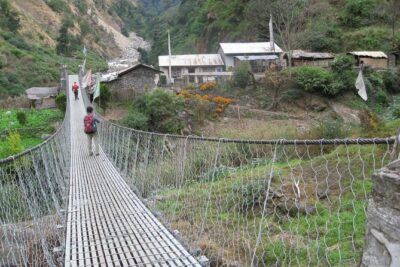
7 Days Langtang Valley Private Trek From Kathmandu
Read our review →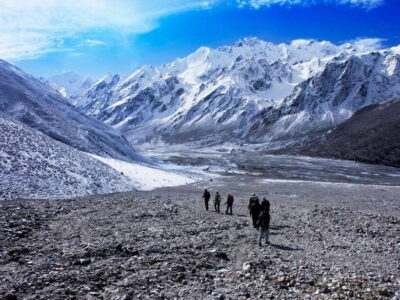
Browse the lists this trek appears in