
Review · KATHMANDU
Everest Base Camp Trek
Everest Base Camp is not a sightseeing stop you simply reach and photograph. It is the reward at the end of a demanding high-altitude walk through Sherpa villages, stone paths, suspension bridges, and enormous Himalayan scenery. This 14-day private trek gives you a guide, porter, accommodation, meals, permits, and domestic flights, so you can focus on walking steadily rather than sorting out every detail yourself.
I like two things right away: the private format, which lets you set a sensible pace, and the two acclimatization days in Namche and Dingboche. The drawback is clear too. This is a hard trek, with long days above 4,000 meters and one especially demanding day to Everest Base Camp and back.
- Private guiding keeps the pace personal: You are not tied to a large group’s walking speed.
- The route reaches 5,364 meters at Base Camp: Expect thin air, cold mornings, and serious physical effort.
- Two acclimatization days are built in: You hike higher, then return to sleep lower.
- Lukla flights are part of the package: Transfers through Ramechap are included, along with the early start.
- Porter support limits your load: One porter is provided for every two trekkers, with a maximum carrying allowance of 25 kilograms.
- The price covers the major trek costs: Meals, lodges, permits, guide, porter, Kathmandu hotel nights, and flights are included.
What the $1,790 price really covers
At $1,790 per person, this is not just a guided walk. The price includes airport pickup and drop-off, two nights in a three-star Kathmandu hotel, round-trip flights to Lukla via Ramechap, lodge accommodation during the trek, full-board meals, permits, a certified English-speaking guide, and porter support.
That makes the package useful for a first Himalayan trek. You are not separately arranging food, village lodges, domestic flights, or national park paperwork. A trekking map, achievement certificate, first aid kit, government taxes, and office service charges are also included.
The value depends on what you normally organize yourself. If you are comfortable booking mountain lodges, arranging flights, finding a guide, and managing permits, you may prefer a more independent approach. If you want one company handling the moving parts, the price is easier to justify.
Some expenses remain yours. Travel insurance, international airfare, the Nepal entry visa, hot and cold drinks, snacks, personal equipment, hot showers during most of the trek, and tips are excluded. The visa is listed at $40 for 30 days on arrival, but you should still confirm current requirements before departure.
Kathmandu to Lukla: a very early start
Day one is for arriving in Kathmandu, meeting the local team, and getting settled. The actual mountain journey begins early on day two, with a listed start time of 2:15 a.m. You drive to Ramechap, then fly to Lukla before walking onward to Phakding.
That early departure is one of the practical realities of this route. The package includes transfers between Kathmandu and Ramechap, which removes a major transport headache, but you should be ready for a short night. The flight schedule and mountain weather can affect the day, so a flexible attitude helps.
The first walk is about 8 kilometers and takes roughly three hours. Phakding sits at 8,699 feet, making it a gentler introduction than the higher villages later in the route. You stay in a lodge and begin the rhythm that defines the trek: breakfast, walking, lunch on the trail or in a village, afternoon arrival, dinner, and an early night.
More Everest Base Camp Treks in Kathmandu:
- Everest Base Camp Trek – 14 Days
★ 5.0 · 1,499 reviews - Everest Base Camp Helicopter Tour landing at Everest View Hotel
★ 5.0 · 668 reviews - Everest Base Camp Trekking
★ 5.0 · 485 reviews
Namche Bazaar brings the first real climb
On day three, you walk 10 to 12 kilometers to Namche Bazaar, usually in about six hours. This is where the trek begins to feel serious. The altitude rises sharply, and the route requires a steady pace rather than a race.
Namche is the main trading and service center in the Khumbu region. It is also your first important acclimatization stop. The village setting, mountain views, and busy trail activity make it a memorable place to spend time, but the practical point is more important: your body needs time to adjust.
The private guide is especially useful here. A good guide can help you slow down before you feel exhausted, watch for altitude symptoms, and decide when a rest is wiser than pushing ahead. The company assigns one professional English-speaking guide and one porter for every two trekkers. The maximum group size is 15, though this particular booking is described as private for your own group.
Everest View Hotel is an acclimatization hike, not a shortcut
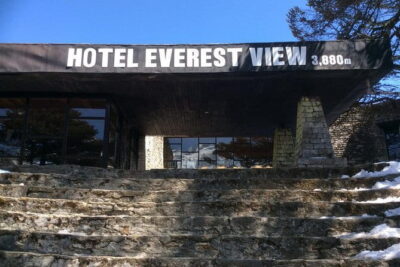
Day four is set aside for acclimatization, with a three to four hour hike of about 3 to 4 kilometers toward the Everest View Hotel at 12,995 feet. You climb higher during the day, then return to Namche to sleep at a lower elevation.
That pattern matters. The point is not simply to collect another viewpoint. It gives your body a chance to experience higher altitude without forcing you to spend the night there. You should still expect the air to feel thinner and the walk to be tiring.
This is one of the itinerary’s strongest features. A rushed Base Camp schedule can turn altitude into the main story. Here, the route gives you two planned adjustment days, one in Namche and another in Dingboche.
Tengboche adds monasteries and mountain scenery
The route continues to Tengboche on day five. The listed distance is 10 to 11 kilometers, with about five hours of walking. At an elevation of 12,660 feet, you are now well into the high mountain portion of the trek.
Tengboche is known for its monastery and its broad Himalayan views. The stop adds cultural interest to what could otherwise become a sequence of distances and elevations. You are not just walking toward a famous mountain. You are moving through communities where Buddhist practice and mountain life shape the setting.
The lodge accommodation is described as the best available twin-sharing option. This is mountain lodging, not a city hotel. At Phakding, Namche, and Lukla, private bathrooms with hot showers are included, but hot showers are otherwise listed as an extra or unavailable cost. Pack with the expectation that comfort becomes simpler as you climb.
A few more treks around Kathmandu worth a look
- Annapurna Circuit Trek with Tilicho Lake
★ 5.0 · 368 reviews - Everest Base Camp Trekking – 13 Day
★ 5.0 · 365 reviews - Everest Base Camp Trek
★ 5.0 · 350 reviews - Everest Base Camp Trek -14 Days
★ 5.0 · 321 reviews
Dingboche gives you another day to adjust
Day six takes you to Dingboche, at 14,464 feet, after an 11 to 12 kilometer walk of about five hours. At this point, the altitude is not a small detail. Even a fit person may notice that normal walking feels slower and that recovery takes longer.
Day seven is another acclimatization day. The plan is a four to five hour hike to Nagarjun Hill and back, covering 5 to 6 kilometers. As in Namche, you go higher during the day and return to Dingboche for the night.
I like this design because it does not treat fitness as a substitute for acclimatization. You can be strong, well trained, and still struggle with altitude. The guide’s role is not only to show the way. It is also to monitor how you are coping and help you avoid turning a manageable problem into an emergency.
Lobuche and Gorakshep mark the hardest stretch
On day eight, you walk 11 to 12 kilometers to Lobuche, taking about five hours. The village sits at 16,105 feet. The air is colder and thinner, and the route can feel much harder than the distance suggests.
Day nine is the trek’s major test. You walk from Lobuche to Gorakshep at 16,990 feet, continue to Everest Base Camp at 5,364 meters, then return to Gorakshep. The full distance is listed as 14 to 15 kilometers, with about eight hours on foot.
This is the day when private guiding has real value. You can stop for water, adjust your pace, and take breaks without worrying about holding up a large party. You should not expect a quick out-and-back photo stop. The walk is long, the altitude is high, and the return to Gorakshep still has to be completed after reaching Base Camp.
Everest Base Camp itself is a seasonal mountaineering staging area, not the summit of Everest. The achievement is reaching the foot of the climbing route after days of walking from Lukla. The surrounding peaks and glacial terrain provide the drama, but your physical condition determines how much you can appreciate it.
Kala Patthar offers the big viewpoint
Day ten begins with a hike to Kala Patthar, followed by a descent to Pheriche. The listed walking distance is 13 to 14 kilometers and the walking time is about seven hours. The itinerary gives Kala Patthar as 11,283 feet, though the route description also places the trek in the much higher Gorakshep and Base Camp zone. Ask the operator to confirm the exact elevation and timing before departure.
Kala Patthar is included because it provides one of the route’s most valued mountain viewpoints. The hike is another early and demanding effort after Base Camp day, so it should not be treated as an easy sightseeing add-on.
The descent to Pheriche is welcome, but downhill walking can still be hard on tired knees. Trekking poles, sturdy boots, and a controlled pace are sensible parts of the equipment list.
The return to Lukla is long but rewarding
Day eleven takes you back to Namche, covering 14 to 15 kilometers in about seven hours. Day twelve is the longest listed walking day by distance, 18 to 19 kilometers to Lukla, with about seven hours on the trail.
The return route gives you a different view of familiar places. You will also feel the physical cost of the outward journey. Descending does not mean effortless. Long hours, uneven paths, and tired feet can make the final days surprisingly demanding.
You fly from Lukla to Ramechap on day thirteen, then drive back to Kathmandu. Day fourteen is departure day. Because mountain flights depend on conditions, it is wise to avoid scheduling an important international connection too tightly after the trek. The package includes the transport, but no operator can control mountain weather.
Food, lodges, and what you need to carry
Full-board meals are included throughout the trek, with breakfast, lunch, dinner, and tea or coffee. Seasonal fruit is also provided. Vegetarian meals are available if you request them when booking.
Drinks beyond the included tea and coffee, snacks, and personal purchases cost extra. Carrying some personal snacks can be useful for long days, but keep the load light. One porter serves two trekkers and can carry up to 25 kilograms in total, so your packing choices affect both comfort and the porter’s workload.
The company supplies a complimentary waterproof and windproof duffel or kit bag. You also need a separate large bag or suitcase for items left in Kathmandu, plus a day pack of about 20 to 22 liters.
The equipment list is serious for good reason. Plan on:
- Warm layers, thermal tops and bottoms, and fleece or wool clothing
- Waterproof shell jacket and trousers
- Hiking boots with spare laces
- Warm socks, gloves, a hat, and sun protection
- Sleeping bag rated to about 0 degrees Fahrenheit
- Headlamp with spare batteries
- Water bottles, trekking poles, and plastic bags to keep gear dry
- Toiletries, toilet paper, wet wipes, and hand sanitizer
- Sunglasses with UV protection
- A basic first aid kit and any personal medication
You can buy trekking equipment in Kathmandu if you arrive without something essential. The supplied information notes that much local gear is made in Nepal or imported from China. Still, do not rely on last-minute shopping for properly broken-in boots.
What the guide and porter add to the experience
The guide is central to the trek. You need someone to keep you on the correct route, communicate with lodges, help manage the daily pace, and respond if you feel unwell. The itinerary includes a certified English-speaking guide, porter services, their accommodation, food, insurance, and required work-related costs.
Several guide names appear in the supplied experience history, including Ram, Shyam, Vishma, Paban, Ramesh, Ram Saran, and Ramkrishna. Your assigned guide may be different, so treat these as examples rather than a promised roster. The strongest pattern is clear: personal communication, careful support, and help during difficult sections are major parts of the service.
You should still take responsibility for your own fitness, equipment, insurance, and medical decisions. Travel insurance is not included, and the trek requires a strong level of physical fitness. Service animals are allowed, but you should confirm practical arrangements before booking a high-altitude walking trip with one.
Who should book this Everest trek
This trek suits you if you want Everest Base Camp without managing every permit, lodge, meal, flight, and transfer yourself. It is especially useful for first-time Himalayan hikers, solo bookers who want a private guide, and pairs who prefer to walk at their own rhythm.
It is not a casual holiday. The route includes long days, high altitude, basic lodge conditions, early starts, and weather-sensitive flights. You should arrive ready to walk for several hours on consecutive days and accept that the guide may recommend a slower pace or a change in plans.
The minimum booking is two people, and the maximum is 15. That means a solo person cannot book this specific arrangement alone, though a solo trekker can join another booking only if the operator offers that option. Confirm the group arrangement before paying.
Free cancellation is available up to 24 hours before the experience start time. Cancellations or changes inside that window are not refundable, and poor weather or failure to reach the minimum number of participants may lead to a new date or a full refund.
Should you book the 14-day Everest Base Camp Trek?
I would choose this trek if you want a well-supported route to Base Camp and value having the major logistics bundled into one price. The private guide, two acclimatization days, porter support, meals, permits, and flights give the trip a practical structure.
I would pause if you are not comfortable with high altitude, basic lodges, long walking days, or a 2:15 a.m. start. The experience is demanding, and the most important preparation is honest fitness training, proper insurance, and light but warm packing.
For an active hiker who wants personal attention and a clear route through the Everest region, $1,790 is a strong package value. Just remember that the mountain provides the schedule. Weather, altitude, and your own condition can matter more than the printed itinerary.
FAQ
How long does the Everest Base Camp Trek take?
The trek lasts approximately 14 days, including arrival and departure in Kathmandu, the flight and drive transfers, acclimatization days, the walk to Base Camp, and the return to Lukla.
What is included in the $1,790 price?
The price includes airport pickup and drop-off, two nights in a three-star Kathmandu hotel, round-trip flights to and from Lukla via Ramechap, transfers, meals during the trek, lodge accommodation, a guide, porter support, permits, a first aid kit, a trekking map, a trip certificate, taxes, and office service charges.
Is a guide provided?
Yes. The package includes one certified English-speaking professional guide. A porter is also included for every two trekkers.
How difficult is this trek?
It is described as a challenging trek for people with a strong level of physical fitness. Walking days range from about three to eight hours, with distances reaching 18 to 19 kilometers and elevations rising above 5,000 meters.
Are meals included?
Yes. Breakfast, lunch, dinner, tea, coffee, and seasonal fruit are included during the trek. Vegetarian food is available if requested at the time of booking.
Do I need to bring trekking equipment?
Yes. Personal trekking equipment is not included. You need suitable boots, warm and waterproof clothing, a sleeping bag, headlamp, water bottles, trekking poles, and other items on the equipment list. A waterproof duffel or kit bag is supplied.
Can I cancel for a full refund?
You can cancel at least 24 hours before the experience start time for a full refund. Cancellations or changes made less than 24 hours before the start time are not refunded. If poor weather or insufficient bookings cancel the trek, you are offered another date or a full refund.
Just added around Kathmandu
- Everest Base Camp Trek★ 5.0 · 3 reviews
- Everest Base Camp Trek★ 5.0 · 7 reviews
- 15 Days Private Everest Base Camp Trek★ 5.0 · 30 reviews
- Everest Base Camp Trek★ 5.0 · 57 reviews
- 14 Days of Adventure Trekking to Everest Base Camp★ 5.0 · 2 reviews
- 14-Day Everest Base Camp Trek★ 5.0 · 20 reviews
- 14 Days Everest Base Camp Trek★ 5.0 · 4 reviews
- From Kathmandu: Private 14-Day Everest Base Camp Trek★ 5.0 · 20 reviews
Everest Base Camp Treks, compared.
Everest Base Camp Helicopter Tour landing at Everest View Hotel
Read our review →
Tibet Tour 8 Days Lhasa to Everest Base Camp Small Group Tour
Read our review →
Dubai: Private Luxury Everest Yacht Cruise from Dubai Marina
Read our review →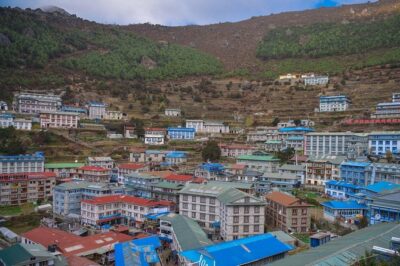
Browse the lists this trek appears in