
Review · KATHMANDU
Annapurna base camp trek 5 Days
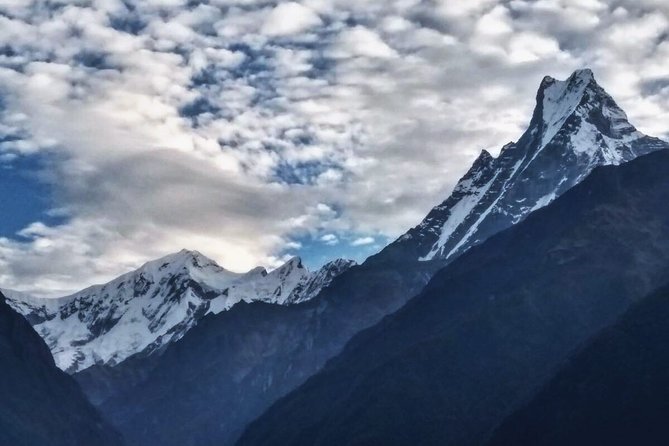
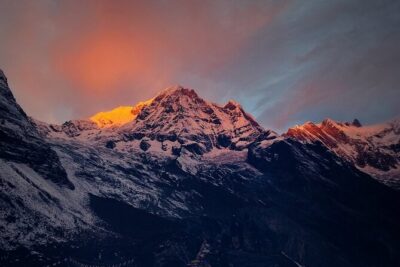
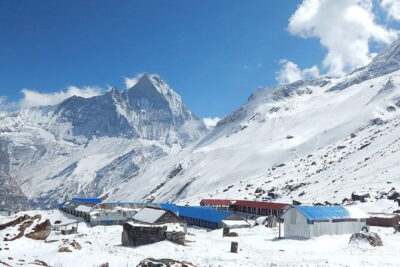
Annapurna Base Camp is the star here, but the journey matters just as much. You move from Kathmandu to Pokhara by tourist bus, then trade roads for stone trails through rhododendron, bamboo, and oak forests. At the top, the white wall of the Annapurna Range and the sharp profile of Fish Tail, or Machhapuchare, give you the kind of mountain views that make tired legs seem like a fair bargain.
I like the simple all-in structure: tea house lodging, meals, permits, transport, and a guide are covered. I also like the small-group size, capped at 12 people, because it keeps the trek more personal and easier to manage than a large walking party.
The main caution is the six-day schedule. It is short for a high mountain trek, and the plan includes long transport days, steep sections, and limited room for delays. Two poor experiences specifically point to a guide forgetting water-purification tablets and seeming unclear about the route, so you should confirm the daily plan and carry a backup water solution.
Key points at a glance
- The trek begins with a seven-hour bus ride: You travel from Kathmandu to Pokhara on the first morning, then spend time around Pokhara Lakeside.
- Fish Tail is a central visual reward: Machhapuchare appears above the route, along with several tall peaks in the Annapurna Range.
- Five days of meals are included: Breakfast, lunch, and dinner are covered during the trek, while food in Kathmandu and Pokhara is not.
- The route uses tea houses: Lodges on the trail, a down jacket, and sleeping bags are included in the package.
- The group is limited to 12 people: You get a guided small-group walk rather than a large organized procession.
- The schedule ends in Pokhara: After returning from the trail via Siwai, the final day includes a stop at Pokhara Museum.
Why this short Annapurna route works
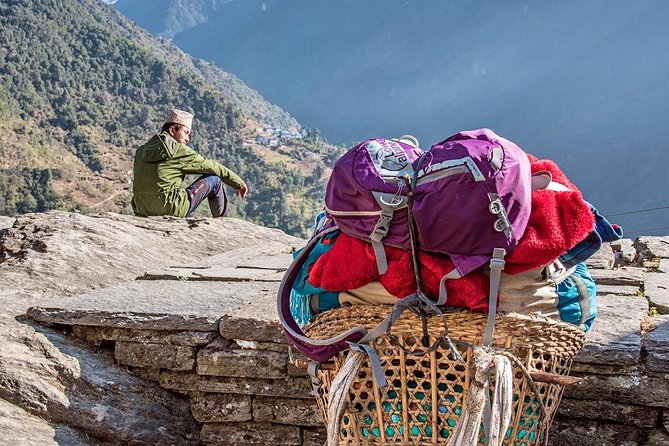
This is a practical way to see a famous section of the Himalaya without arranging every transfer and permit yourself. The route has a clear rhythm: road travel to Pokhara, a jeep transfer toward the trail, several days on foot, then a return to Pokhara.
The appeal is variety. You pass through forest, hill villages, stone steps, and open mountain viewpoints before reaching Annapurna Base Camp. You are not simply walking toward one viewpoint and turning around. The scenery changes as you gain height, and the trail gives you time to notice the forest as well as the peaks.
The package is priced at $699 per person. That includes airport transfers, ground transport, a tourist bus to Pokhara, a local English-speaking guide, permits, tea house lodging, meals on the trek, a down jacket, sleeping bags, insurance listed for the guide and staff, and several small extras such as a T-shirt, achievement certificate, and farewell dinner.
That is a useful level of coverage for a short Nepal trek. You are not paying only for the walking days. The price also absorbs the road connections, local jeep, lodging arrangements, and permit work. You still need to budget for food in Kathmandu and Pokhara, your arrival visa, tips, and personal travel insurance.
More Annapurna Treks in Kathmandu
- Annapurna Circuit Trek with Tilicho Lake
★ 5.0 · 368 reviews - 14-Day Private Annapurna Base Camp Trek
★ 5.0 · 180 reviews - Annapurna Base Camp Trekking
★ 5.0 · 116 reviews
Day 1: Kathmandu to Pokhara and Lakeside
The first day starts early, at about 6:45 a.m., with a scenic drive from Kathmandu to Pokhara along the Prithvi Highway. The bus ride takes roughly seven hours, so this is mainly a transport day rather than a hiking day.
That long drive is the chief weakness of the schedule. You lose much of the morning and afternoon to the road, and delays could affect your time in Pokhara. Still, road travel gives you a useful transition from the capital to the lakeside resort town, and the journey is included rather than left for you to arrange.
After arriving, you visit Pokhara Lakeside. This is a gentle way to get your bearings before the trail begins. You have a chance to walk around the tourist area, see the lake district, and spend the night in Pokhara before the early mountain departure.
Food in Pokhara is not included, so remember that the meal package starts with the trek. The same applies to extra accommodation outside the planned schedule.
Day 2: Siwai, Birethati, and the climb toward Chhomrong
After breakfast at your Pokhara hotel, you take a local jeep toward Siwai. The drive takes about two hours, and Birethati is a stop or entry point before reaching the trail area.
From there, the walk leads toward Chhomrong Cottage. The listed walking time is about five hours, making this your first proper trekking day. Expect a day that combines transport, trail access, and a substantial walk rather than a quick stroll after breakfast.
Chhomrong is important because it marks the shift from road-based travel to the main mountain route. The overnight tea house setting gives you the first real taste of the trek’s basic rhythm: walk during the day, eat at the lodge, and sleep with the next morning’s trail in mind.
Your accommodation is in trekking lodges rather than standard city hotels. That keeps the cost manageable and places you close to the route, but it also means you should be ready for simple facilities. The supplied down jacket and sleeping bag are useful inclusions, especially since temperatures can change sharply as you gain height.
Day 3: Sinuwa and the forest trail
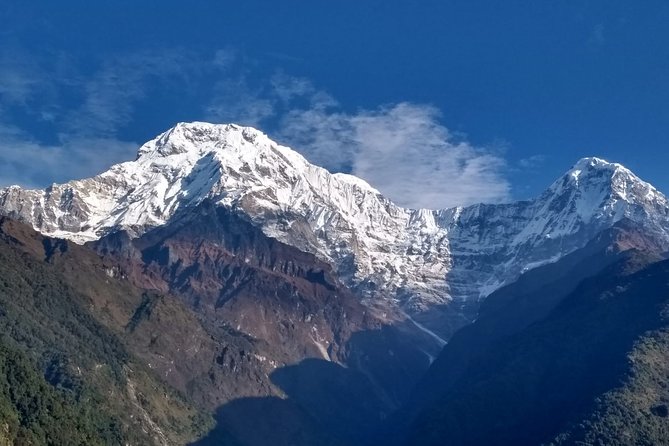
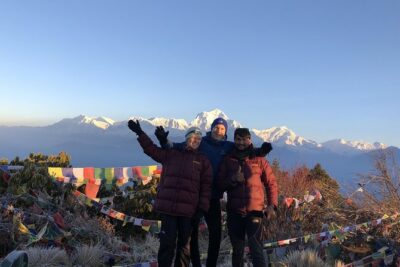
The third day begins with tea and, weather permitting, a sunrise view over the white mountains from the lodge. That small morning pause is one of the nicer details in the plan. Mountain views are never guaranteed, so the weather will control how much you see.
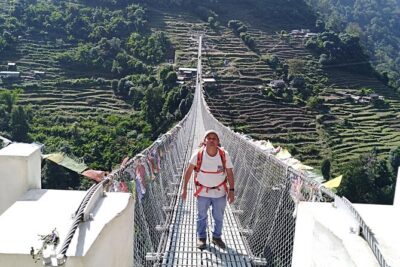
After breakfast, you continue toward Sinuwa Hilltop Lodge and Restaurant in Upper Sinuwa. The trail passes through the forest belt that gives this trek much of its character. Rhododendron, bamboo, and oak create a greener, more enclosed walk than the open high mountain sections later on.
The written timing for this day is unclear, with one section showing only six minutes. Do not treat that as a reliable walking estimate. Ask the guide for the expected start time, distance, elevation change, and lodge destination before setting out.
Upper Sinuwa is more than a place to sleep. It is a useful point for watching the weather and judging how your body is handling the climb. You should use the evening to sort your pack, refill water, and ask about the next day’s route. The experience is supposed to include water-purification tablets, but two poor accounts describe a guide forgetting them and initially asking hikers to pay for water. Carrying your own purification tablets or another approved backup is sensible.
Same trailhead, a different route:
- Everest Base Camp Trek – 14 Days
★ 5.0 · 1,499 reviews - Everest Base Camp Trek
★ 5.0 · 842 reviews - Everest Base Camp Helicopter Tour landing at Everest View Hotel
★ 5.0 · 668 reviews - Everest Base Camp Trekking
★ 5.0 · 485 reviews
Day 4: Reaching Annapurna Base Camp
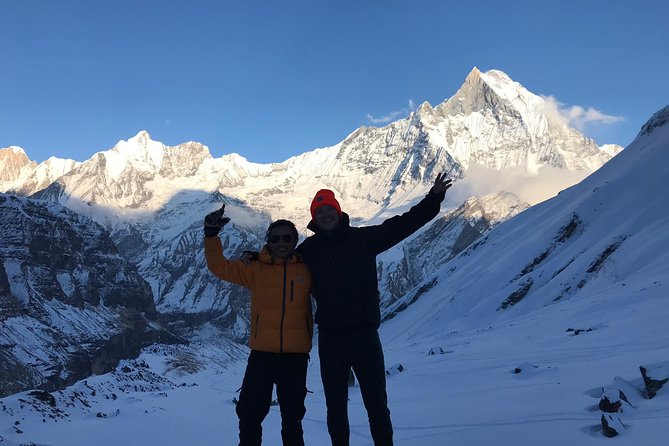
Day four is the emotional center of the trip. After breakfast, you walk toward Annapurna Base Camp, described as the base area of the world’s tenth-tallest mountain. This is the day when the earlier forests and uphill effort pay off with a greater sense of exposure and mountain scale.
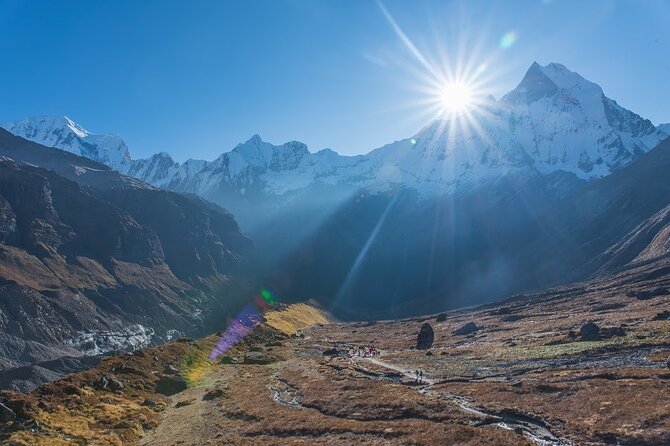
The scenery becomes the main event. The Annapurna peaks rise above the route, and Machhapuchare, known as Fish Tail, is one of the most memorable shapes in the range. The route is not sold as a sightseeing drive. You earn the views step by step, with the guide handling navigation and the practical arrangements.
The high point of the day is not just taking a photograph at Base Camp. It is the change in surroundings as the trail leaves the forest and brings you closer to the snowy peaks. You get a clearer sense of the scale of the Annapurna Range because you have walked through several different mountain zones to reach it.
You should keep your expectations realistic. This is a demanding day within a compact six-day program, and the schedule offers little spare time. A moderate fitness level is required. You do not need to be an elite athlete based on the stated requirements, but you should be comfortable walking for several hours, handling steep sections, and repeating that effort on following days.
Day 5: Sunrise views and the return to Sinuwa
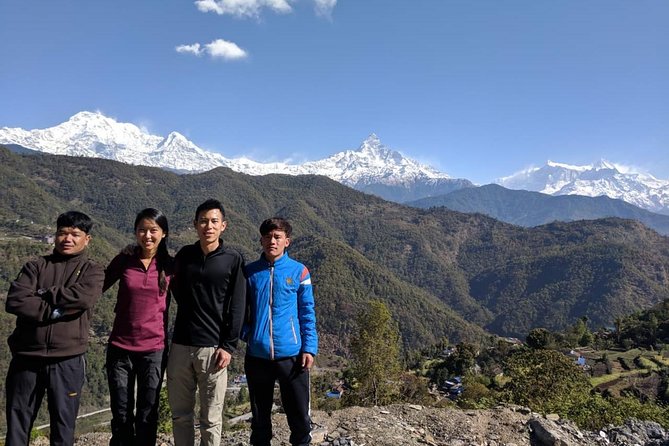
The fifth day begins with a short walk upward to seek sunrise views over Machhapuchare and Annapurna. This is a good use of the early morning, when the mountain light can be especially clear if the weather cooperates.
After breakfast, you return toward Sinuwa. The listed walking time is about six hours, so this is still a full trekking day, not a relaxed descent. Going downhill can be hard on knees and thighs, particularly after the previous day’s climb.
The route back also gives you a second look at places you passed quickly on the way up. Forest sections can feel different in the opposite direction, and the changing angle may reveal views that were hidden earlier. I would treat this day as a steady walk rather than a race to the lodge.
The guide’s role matters here. A good guide keeps the group together, manages the pace, and confirms where meals and lodging are arranged. Since the package promises an English-speaking guide who handles the logistics, you should expect clear communication about the walking plan. If the guide appears unsure, ask direct questions early rather than waiting until the trail becomes difficult.
Day 6: Jhinu hot spring, Siwai, and Pokhara
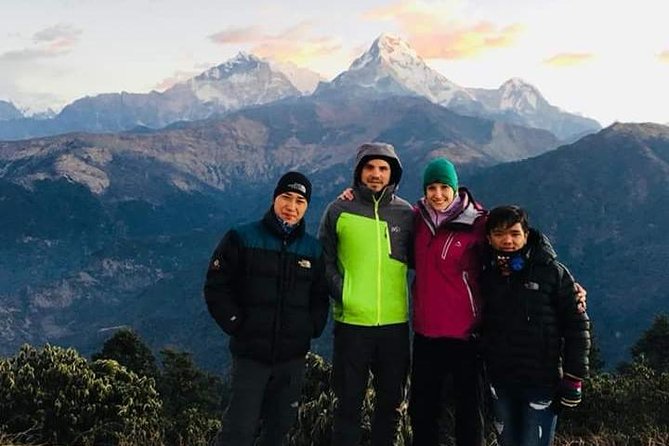
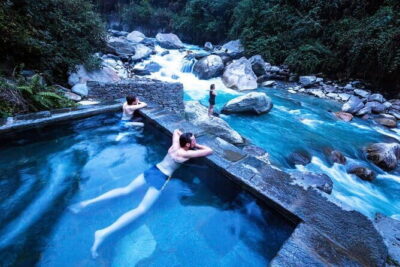
The final day follows the trail back toward Chhomrong before descending steeply to the Jhinu hot spring area. The route from Jhinu Danda continues downhill to Siwai and takes about two hours from that point before you board a local jeep.
Jhinu adds a pleasant change after several days of mountain walking. The stop is not presented as a long spa visit, so treat it as a feature of the route rather than the main purpose of the day. The steep descent is the practical concern. Trekking poles, if you use them, would be helpful, though equipment beyond the supplied items is not specified.
After reaching Siwai, the local jeep takes you back toward Pokhara. The plan includes a stop at Pokhara Museum after breakfast, though the exact timing is not provided. This gives the final day a useful cultural element instead of ending with transport alone.
The trip ends in Pokhara, not Kathmandu. That matters when planning flights or onward travel. Airport pickup and drop-off are included, but you should confirm exactly which airport transfer is covered and how it fits with your post-trek plans.
What the $699 price really covers
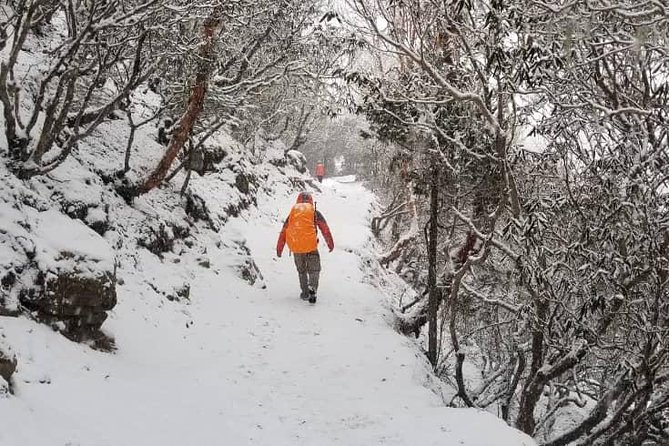
At $699, this is not a bare walking package. The strongest value comes from the collection of services bundled together:
- Airport pickup and drop-off
- Tourist bus from Kathmandu to Pokhara
- Local ground transport, including the jeep connection
- Trekking permits
- Tea house accommodation
- Breakfast, lunch, and dinner for five days
- An English-speaking local guide or Sherpa
- Down jacket and sleeping bag
- Listed insurance, equipment, staff salary, and transport costs
- Farewell dinner, T-shirt, and certificate
The included meals are particularly useful because food logistics can become a nuisance on a short, tightly timed trek. You still pay for meals in Kathmandu and Pokhara, and tips are not included.
The package also advertises free cancellation up to 24 hours before the start time. Inside that window, the payment is not refundable and changes are not accepted. Poor weather may lead to a different date or a full refund, according to the stated terms.
Group size, fitness, and guide standards
A maximum of 12 people is a sensible group size for this route. It is large enough to share the experience but small enough for the guide to keep track of the party. It also helps explain why the tour can include shared arrangements without feeling like a mass outing.
You should have moderate physical fitness. The plan includes a seven-hour bus ride, a two-hour jeep transfer, several hours of walking, steep descents, and repeated days on the trail. The hardest part may not be one isolated climb. It may be recovering quickly enough to walk again the next morning.
The guide is meant to arrange permits, lodges, meals, transport, and route details so you can focus on the mountains. That service is central to the value of a guided trek. Yet the two low-scoring accounts raise a fair warning about basic preparation, especially water treatment and familiarity with the route.
Bring your own purification tablets even though water tablets are expected as part of the arrangements. Also ask for a clear daily briefing. That simple step can prevent confusion about distances, meal stops, and where the group will sleep.
Who should book this trek
I would recommend this trip to you if you want a classic Annapurna experience but prefer a package that handles the main logistics. It suits hikers who like mountain scenery, tea house lodging, and a small organized group, rather than people seeking luxury hotels or a private custom route.
It is also a good fit if you are already in Nepal and want transport and permits arranged from Kathmandu through Pokhara. The route provides a strong mix of forest walking, mountain viewpoints, and a famous base camp without requiring a long expedition.
I would be more cautious if you dislike early starts, long road journeys, basic lodge accommodation, or steep descents. You should also avoid booking it without checking your return plans, since the trek finishes in Pokhara and the mountain schedule has little extra time for disruption.
Should you book the Annapurna Base Camp trek?
Book it if the price, compact format, and included logistics match what you want. The strongest reasons are the Fish Tail and Annapurna views, the five days of included trek meals, and the fact that permits, tea houses, transport, and a guide are handled together.
Before paying, confirm the exact guide, daily walking times, water arrangements, and the airport transfer details. Pack backup purification tablets and allow flexibility around weather. With those checks in place, this is a good-value short trek for a reasonably fit hiker who wants Nepal’s high mountain scenery without planning every step alone.
FAQ
How long does the Annapurna Base Camp experience take?
The full program lasts approximately six days. The first day is travel from Kathmandu to Pokhara, followed by trekking and return transport to Pokhara.
What is included in the price?
The price includes private transportation, airport transfers, the tourist bus to Pokhara, trekking permits, tea house lodging, an English-speaking guide, down jacket, sleeping bags, and meals during the trek. Breakfast, lunch, and dinner are included for five days.
Is food in Kathmandu and Pokhara included?
No. Food in Kathmandu and Pokhara is not included. The included meal package applies to the trekking portion.
How large is the group?
The activity has a maximum of 12 participants.
What fitness level is required?
You should have a moderate level of physical fitness. The program includes several hours of walking, steep trail sections, and a steep descent toward the Jhinu hot spring.
What happens if bad weather cancels the trek?
The experience requires good weather. If poor weather causes cancellation, you will be offered another date or a full refund. Free cancellation is also available if you cancel at least 24 hours before the start time.
More 5-Day Experiences in Kathmandu
- Kathmandu to Annapurna Base Camp (ABC) 5-Day Trek
★ 5.0 · 102 reviews - 5 Day Private Guided Trekking in Annapurna Base Camp
★ 5.0 · 25 reviews - 5-Day Sunrise Tour in Kathmandu Near Everest
★ 5.0 · 12 reviews - Pokhara: 5-Day Annapurna Base Camp (ABC) Trek
★ 5.0 · 9 reviews
Just added around Kathmandu
- Everest Base Camp Trek★ 5.0 · 3 reviews
- Everest Base Camp Trek★ 5.0 · 7 reviews
- 15 Days Private Everest Base Camp Trek★ 5.0 · 30 reviews
- Everest Base Camp Trek★ 5.0 · 57 reviews
- 14 Days of Adventure Trekking to Everest Base Camp★ 5.0 · 2 reviews
- 14-Day Everest Base Camp Trek★ 5.0 · 20 reviews
- From Kathmandu: Private 14-Day Everest Base Camp Trek★ 5.0 · 20 reviews
- 14 Days Everest Base Camp Trek★ 5.0 · 4 reviews
Annapurna Base Camp Treks, compared.
Trekking in Annapurna/Langtang/Everest/Upper Mustang regions
Read our review →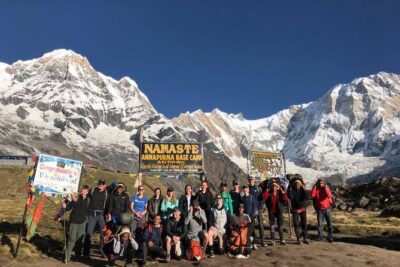
Kathmandu to Annapurna Base Camp (ABC) 5-Day Trek
Read our review →
Browse the lists this trek appears in