
Review · KATHMANDU
Everest Base Camp Trekking
The real prize here is the slow approach to Everest, not simply standing at Base Camp for a few minutes. You walk through pine forests, Sherpa villages, Buddhist sites, glacier country, and high valleys, with Ama Dablam, Thamserku, and other great peaks appearing along the way. The scenery builds day by day, which makes the final arrival feel earned.
I like the small maximum group of 10, since a guide can keep a closer eye on the pace and how you are handling the altitude. I also like that airport transfers, teahouse lodging, meals, flights to Lukla, and local transport are arranged together. The main caution is clear: this is a serious high-altitude trek for active, moderately fit people. It is not a casual sightseeing trip.
Key points to know before booking
- Reach Everest Base Camp on a 14-day route: The trek includes Kathmandu, Lukla, Namche Bazaar, Dingboche, Base Camp, Kala Patthar, and the return to Lukla.
- Expect a small guided group: The maximum is 10 people, with personal attention from the guide and support staff.
- Acclimatization is built in: A shorter hiking day and viewpoint walk in Namche helps your body adjust before the route climbs higher.
- The mountain views keep changing: Ama Dablam, Thamserku, Everest, Lhotse, and glacier scenery appear from different angles.
- Teahouse travel keeps the trip practical: Accommodation, meals, and local transportation are included, so you do not have to arrange each day yourself.
- Good fitness matters: Steep trails, rocky ground, cold weather, and high altitude make this demanding even for active people.
Why the walk to Base Camp matters
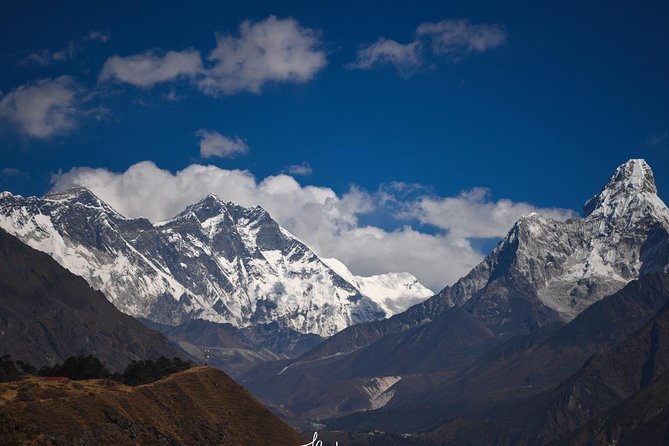
Everest Base Camp is the headline, but the route is the real experience. You pass from Kathmandu’s urban streets to Lukla’s mountain air, then follow the Dudh Koshi River through forests and settlements before reaching the high Khumbu valleys.
That gradual change is important. You do not simply fly in, take a photograph, and fly out. The route gives you time to adjust physically and to see how mountain communities live. Along the way, your guide can explain local culture, the people of the Himalaya, Buddhist traditions, and the practical realities of trekking in this region.
The price is $1,350 per person. For a 14-day trip, that is a useful value if you want the main logistics handled in one package. Teahouse accommodation, meals, local transportation, airport pickup, and the guided route are included. The information provided does not specify every extra cost, so I would ask what is included beyond those listed items before paying, especially for personal purchases and any optional services.
More Everest Base Camp Treks in Kathmandu:
- Everest Base Camp Trek – 14 Days
★ 5.0 · 1,499 reviews - Everest Base Camp Trek
★ 5.0 · 842 reviews - Everest Base Camp Helicopter Tour landing at Everest View Hotel
★ 5.0 · 668 reviews
Day 1: A soft landing in Kathmandu
Your trip begins at Tribhuvan International Airport, where an airport representative meets you and takes you to the hotel by private tourist vehicle. You can rest or visit the company office to go over the details.
This first day is more useful than it may sound. International flights can leave you tired, and the next morning starts early. Use this time to check your passport details, understand the flight and trekking plan, and make sure your clothing is ready for changing conditions.
Kathmandu is also your buffer against delays. The trip operates in all weather, and the mountain section depends heavily on conditions, so having the first day in the city gives the schedule some breathing room.
Day 2: Flying from Kathmandu to Lukla
After breakfast, you transfer early to the domestic airport for the flight to Lukla. The journey offers sunrise views across snow-covered mountains before landing at Tenzing-Hillary Airport.
This is one of the memorable transitions of the trek. Kathmandu disappears quickly, and the mountains begin to feel close. Lukla is the practical gateway to the Khumbu, and from here the trip becomes a walking journey.
The early start and flight are worth noting. You need to be comfortable with a full day that begins before most people are properly awake. The tour handles the flight and transfer arrangements, which removes a major piece of planning from your hands.
Day 3: Pine forest, river crossings, and Sagarmatha National Park
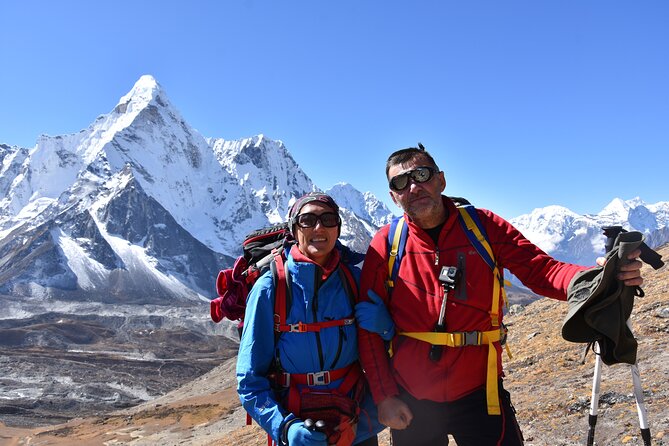
The trail passes through pine forests and follows the Dudh Koshi River, with views toward Mount Thamserku. You pass small settlements before reaching the checkpoint for Sagarmatha National Park.
This is a fine introduction to trekking in the Khumbu. The path is not just a line between airports and Base Camp. It moves through changing vegetation, rivers, bridges, and villages, giving you a sense of the region before the higher, barer country begins.
A guide is especially useful here because the route has many turns, settlements, and shared paths. You can focus on walking and scenery instead of constantly checking directions.
A few more treks around Kathmandu worth a look
- Annapurna Circuit Trek with Tilicho Lake
★ 5.0 · 368 reviews - Everest Base Camp Trekking – 13 Day
★ 5.0 · 365 reviews - Everest Base Camp Trek
★ 5.0 · 350 reviews - Everest Base Camp Trek -14 Days
★ 5.0 · 321 reviews
Day 4: Namche Bazaar and the first acclimatization walk
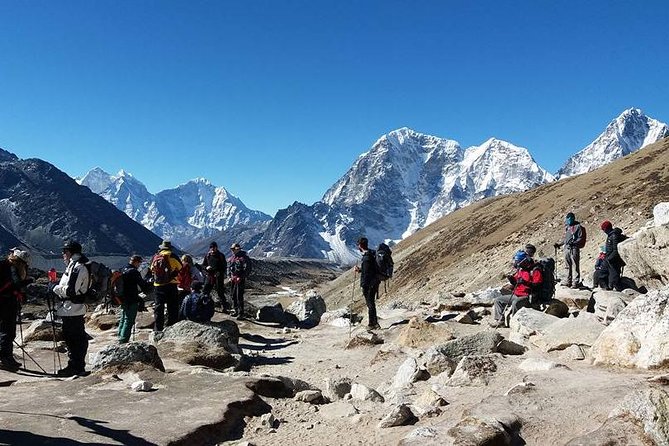
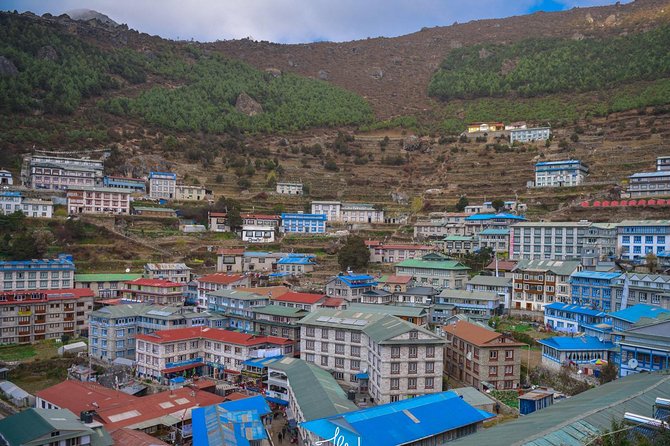
Namche Bazaar is the largest settlement in the Khumbu and one of the most practical stops on the route. You can find ATMs, internet cafes, restaurants, and bakeries here, although the purpose of the day is acclimatization rather than sightseeing.
The plan includes a short hike to a nearby viewpoint. This is good trekking practice: you climb a little higher, take in the views, and return to Namche rather than pushing onward too soon. The pace may feel slow, but that slower day has real value at altitude.
Namche is also one of the last places on the route with a wider mix of services. Enjoy the food and facilities, but do not mistake this stop for a city break. You are already in a mountain environment, and the next days become more remote and physically demanding.
Day 5: The route toward Phorse
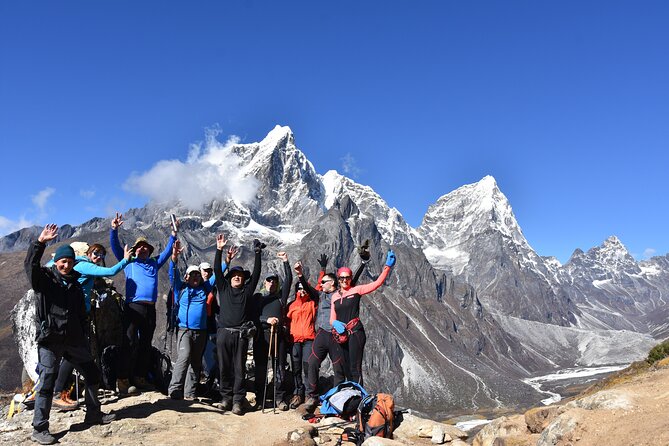
From Namche, the trail heads toward Phorse, passing the Mugla Pass and opening views of Ama Dablam, Khumbu, and Thamserku. The route then descends toward the Dudh Koshi before crossing the river.
This section gives you some of the trek’s best mountain drama without yet being at the highest point. Ama Dablam is particularly striking from the Khumbu route, and the changing angles help you understand how quickly the valley rises around you.
The descent and river crossing also show why fitness matters. Uphill walking gets the attention, but downhill sections can be hard on your legs, especially after several days. Use trekking poles if you normally rely on them, and take the downhill slowly.
Day 6: Buddhist culture and Dingboche
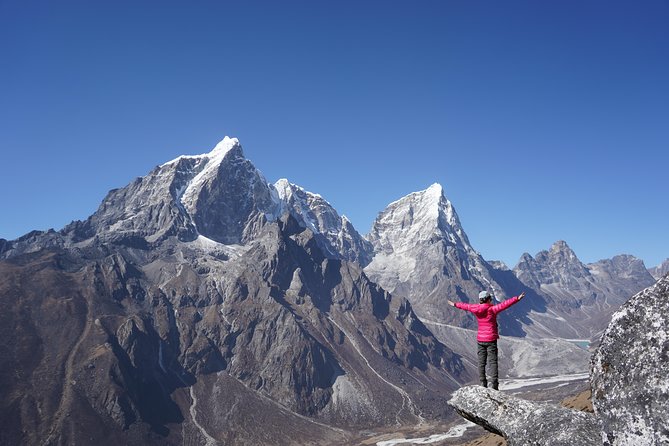
The trail from Phorse to Dingboche passes through alpine forest and villages including Pangboche and Shomare. The route also includes a visit to the region’s largest Buddhist monastery.
This is one of the more meaningful cultural parts of the trek. The monastery is not simply a scenic stop. It connects the dramatic mountains with the religious life of the communities that live here.
Dingboche is an important high-altitude settlement. By this point, even a moderate incline can feel demanding. You will want to keep a steady pace, drink regularly, and pay close attention to your guide’s instructions.
Day 7: Glacier country and the memory of early Everest expeditions
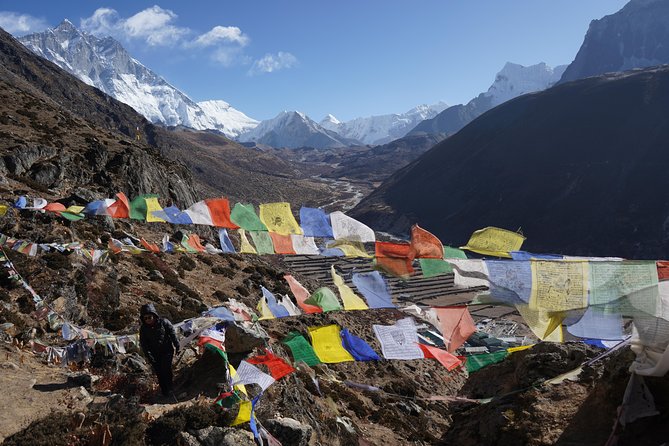
The route climbs from Duglha through the Khumbu Khola valley. Along the way, you pass Dusa, associated with yak herders, and Phulong Karp, described as the camp of the first successful Everest expedition in 1953. The itinerary also mentions views toward Cho La Lake.
This day connects present-day trekking with the history of Everest climbing. You are not only walking through impressive high country. You are following terrain linked with the early expeditions that made Everest famous around the world.
The elevation and cold now become serious considerations. The route is rougher and more exposed, and you should expect a slower pace. This is where a small group helps. A guide can keep the day organized while paying attention to how each person is coping.
Day 8: Prayer flags above the Khumbu Glacier
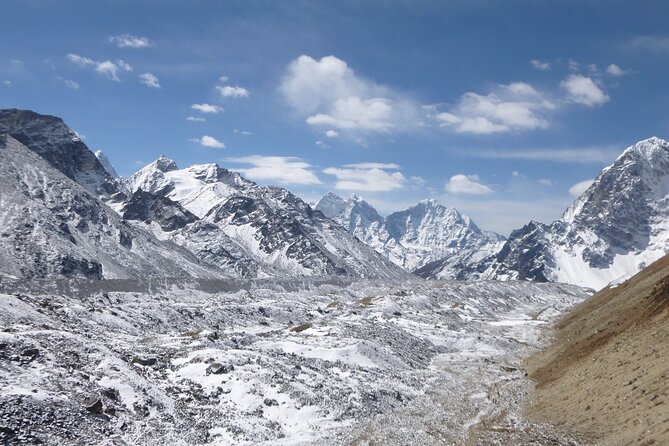
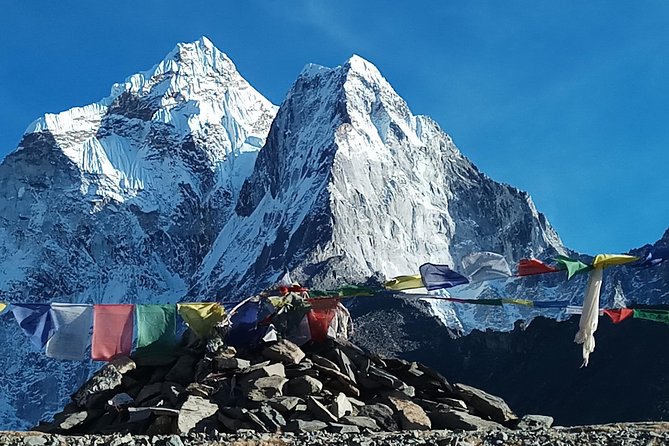
After walking up the steep terminal moraine of the Khumbu Glacier, you climb toward Chupki Lhara. The slopes are marked by boulders and collections of stones decorated with prayer flags.
This is a stark and memorable section. The glacier moraine is not a smooth trail, and the rocky ground requires careful footing. The prayer flags add a human and spiritual touch to an otherwise severe mountain setting.
Do not judge your progress by distance alone. At altitude, a short walk over uneven ground can take much longer than expected. You will get more from this day if you accept the pace rather than trying to maintain your low-altitude walking speed.
Day 9: Everest Base Camp
The approach to Base Camp is the emotional center of the trek. The route includes a panoramic viewpoint at Thangma Riju, where you can see snow-covered peaks in every direction. Everest itself is not visible from that point, which is a useful reminder that the world’s highest mountain does not appear from every angle in the Khumbu.
The trek then reaches Everest Base Camp, with about 30 minutes listed for the stop. The experience is more about reaching the route’s goal than spending hours at a permanent visitor site. Base Camp changes with the climbing season, and the surroundings are dominated by rock, ice, moraine, and enormous peaks.
You should also set expectations correctly. Base Camp is not the highest viewpoint on this itinerary, and it does not provide the classic sunrise view of Everest. That comes the next morning from Kala Patthar.
Day 10: Kala Patthar at sunrise
The trek begins very early so you can see the mountains as darkness gives way to daylight. The route leads to Kala Patthar, the best-known viewpoint on this itinerary for a close view of Everest and the surrounding peaks.
This early start is tough, but the timing gives the day its purpose. The changing light can reveal Everest and nearby peaks in a way that differs completely from the previous afternoon. The itinerary lists a 30-minute stop at Kala Patthar, though the total walking time depends on the group’s pace and conditions.
The route mentions peaks including Lingtr… , with the provided description cut short. Even without a full list, the main point is clear: Kala Patthar is the place for the classic high mountain panorama, while Base Camp is the place for the achievement of reaching the expedition route.
Days 11 and 12: A long return through Pheriche and Pangboche
The return route descends through Duglha, Pheriche, Orsho, and Shomare before reaching Pangboche. You can explore the old monastery in Pangboche, adding another cultural stop after the high point of the trek.
Day 12 continues downhill toward the Dudh Koshi and a suspension bridge, with the route passing through additional villages. The trail may be lower than Base Camp, but descending does not mean easy. Steep rocky ground can be harder on tired knees than an uphill section is on your lungs.
The advice here is simple: slow down. Keep your balance, watch your footing, and do not let excitement about the finish make you careless. Your guide and porter team are important during this part of the trip, when fatigue can affect concentration.
Day 13: Returning to Kathmandu
The mountain flight from Lukla brings you back to Kathmandu. Once in the city, you have time for shopping and walking around before an evening celebration for completing the trek.
This is a welcome change of pace. After days of basic mountain accommodation and long walking hours, Kathmandu gives you a chance to rest and reconnect with city life. It is also a useful day for any shopping you want to do before departure.
The flight schedule is weather-sensitive by nature, and the tour information says it operates in all weather conditions. You should still understand that mountain transport can be affected by conditions, so keeping a flexible attitude is wise.
Day 14: A final Kathmandu morning
The final day allows time for more shopping and sightseeing around Kathmandu Valley before your scheduled flight from Tribhuvan International Airport.
The day is not packed with a listed activity, which is sensible. You may want a quiet morning after the trek, or you may prefer one last walk through the city. The exact amount of free time depends on your flight schedule.
Guides, porters, and the small-group advantage
The strongest part of this experience is the human support. The named guides associated with past trips include Biru, Ambar, Ramesh, and others. One account specifically praised Biru’s company and guidance, while another described Ambar and porter Kanchar as especially helpful and reassuring.
The company owners, Arjun and Raj, are also described as responsive with questions and trip coordination. That matters before a trek like this, since your concerns may involve flights, clothing, fitness, altitude, or what to expect from teahouse accommodation.
A small group of no more than 10 is a sensible middle ground. You get the social side of a group trek without the feel of a large procession. It also gives the guide a better chance to notice when someone is struggling.
What the $1,350 price really buys you
At $1,350 per person, the value comes from coordination rather than luxury. You receive airport pickup, the Kathmandu to Lukla flight arrangement, local transport, teahouse accommodation, meals, and guided support over roughly two weeks.
Teahouses are practical mountain lodging, not high-end hotels. If you want a comfortable, organized route to Base Camp without arranging each bed, meal, transfer, and trail day yourself, the package makes sense.
I would ask for a written list of inclusions before booking. The supplied information confirms the main services above, but it does not spell out every possible expense. Also remember that group discounts are offered, so ask how the discount is applied to your party.
Who should book this Everest trek
This route suits you if you are active, moderately fit, and ready for long days on steep, rocky trails. You should be comfortable with basic teahouse accommodation, early starts, variable weather, and a group schedule.
It is not the right pick if you want a gentle holiday, a fully private itinerary, or a trip with no physical uncertainty. The high altitude is a major part of the challenge, and the route operates in all weather conditions.
The experience is especially good for a first organized Everest Base Camp trek. You get a guide, support staff, a limited group size, and the main logistics handled for you. Solo trekkers can also fit into the group format, as several past trips included people traveling alone.
Final call: should you book it?
Book this trek if reaching Everest Base Camp matters to you, but you also want the route, lodging, meals, transfers, and mountain flights organized in one package. The strongest reasons to choose it are the small group, the gradual itinerary, the support of guides such as Biru and Ambar, and the mix of mountain scenery and Sherpa culture.
Think twice if you are not used to strenuous walking or if you expect comfort at every stage. Before booking, confirm the full list of inclusions and ask how the group discount works. For an active person who accepts the effort and uncertainty, this is a well-structured way to reach one of the world’s great trekking goals.
FAQ
How long is the Everest Base Camp trek?
The experience lasts approximately 14 days, including arrival and departure days in Kathmandu, the trek from Lukla to Everest Base Camp, the return to Lukla, and the flight back to Kathmandu.
Where does the trek begin?
The trip begins with pickup at Tribhuvan International Airport in Kathmandu, Nepal. An airport representative takes you to your hotel by private tourist vehicle.
How many people can join the group?
The group has a maximum of 10 travelers, allowing for a small-group trekking experience and more personal attention from the guide.
Is airport pickup included?
Yes. Airport pickup from Tribhuvan International Airport is offered at the start of the experience.
What is included in the price?
The experience includes teahouse accommodation, meals, local transportation, guided trekking, and the mountain flights and route logistics described in the itinerary. Ask the provider to confirm the complete list of inclusions before booking.
Do I need a passport?
Yes. A current valid passport is required on the day of travel. Your passport name, number, expiry date, and country are required at booking for all participants.
How fit do I need to be?
You should have a strong level of physical fitness. The trip includes steep, rocky trails, high-altitude walking, early starts, and long days in changing weather.
Can I cancel for a full refund?
Yes, if you cancel at least 24 hours before the experience start time. Cancellations made less than 24 hours before the start time are not refunded, and changes within that period are not accepted.
Just added around Kathmandu
- Everest Base Camp Trek★ 5.0 · 3 reviews
- Everest Base Camp Trek★ 5.0 · 7 reviews
- 15 Days Private Everest Base Camp Trek★ 5.0 · 30 reviews
- Everest Base Camp Trek★ 5.0 · 57 reviews
- 14 Days of Adventure Trekking to Everest Base Camp★ 5.0 · 2 reviews
- 14-Day Everest Base Camp Trek★ 5.0 · 20 reviews
- From Kathmandu: Private 14-Day Everest Base Camp Trek★ 5.0 · 20 reviews
- 14 Days Everest Base Camp Trek★ 5.0 · 4 reviews
Everest Base Camp Treks, compared.
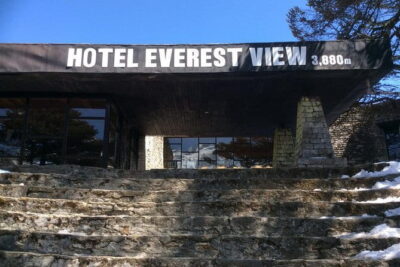
Everest Base Camp Helicopter Tour landing at Everest View Hotel
Read our review →
Tibet Tour 8 Days Lhasa to Everest Base Camp Small Group Tour
Read our review →
Dubai: Private Luxury Everest Yacht Cruise from Dubai Marina
Read our review →
Browse the lists this trek appears in