
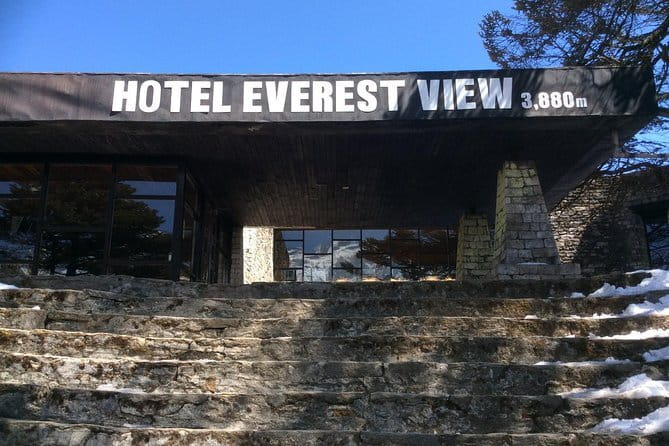
Review · KATHMANDU
Everest Base Camp Trek – 14 Days
Everest Base Camp is not a quick photo stop. It is a serious high-altitude trek through Sherpa villages, Buddhist monasteries, suspension bridges, and the Khumbu Glacier. This 14-day route gives you the two acclimatization days that matter most, at Namche Bazaar and Dingboche, before the hard push to base camp.
I like the small-group setup, with no more than 14 people, and I like that your guide and porters handle the practical work while you concentrate on walking. Guides such as Maddy, Kishor, Chris, and Rajendra Khatry have been named on recent departures, with porters carrying the main load.
The main caution is altitude. You need moderate fitness, patience, and a willingness to accept delays or changes. The Lukla flight can shift to Manthali Airport during busy trekking months, and no itinerary can make the high Himalaya predictable.
Key points before you book
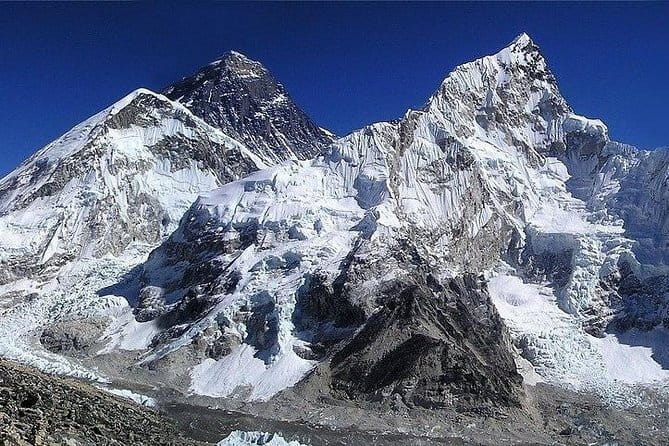
- Reach Everest Base Camp at 5,365 meters: The route includes the famous glacier-side destination, followed by the demanding climb to Kala Patthar at 5,555 meters.
- Two useful acclimatization days: You pause at Namche Bazaar and Dingboche rather than racing uphill every day.
- Porters carry your main luggage: One porter is assigned for every two clients, with a 15-kilogram domestic flight limit.
- Small groups keep the trip personal: The maximum group size is 14, and the package includes a first-aid trained, government licensed English-speaking guide.
- A lot is included in $1,800: Flights, permits, meals on trek, accommodation, staff costs, filtered water, and transfers are covered.
- Expect simple mountain accommodation: Twin-share guesthouses are included, with attached toilets only in Lukla, Phakding, and Namche.
Why the 14-day schedule works
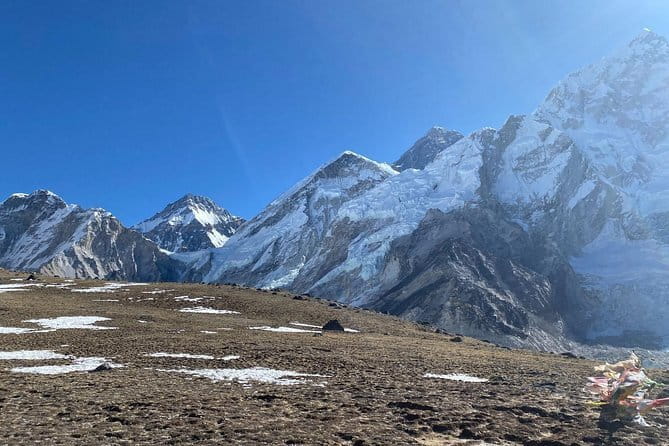
The classic mistake on an Everest Base Camp trek is treating it like a long walk with a high point at the end. It is really an altitude-management exercise. Your body needs time to adjust as the route climbs from Lukla to more than 5,000 meters.
This plan builds in a full acclimatization day at Namche Bazaar and another at Dingboche. Those are not wasted days. They let you climb higher for views, then sleep lower, which is a useful way to help your body adjust.
The schedule also avoids making the return trip an afterthought. After base camp and Kala Patthar, you descend through familiar villages to Namche and Lukla before flying back to Kathmandu. The final stretch is still tiring, but descending usually feels more manageable than gaining height.
More Everest Base Camp Treks in Kathmandu:
- Everest Base Camp Trek
★ 5.0 · 842 reviews - Everest Base Camp Helicopter Tour landing at Everest View Hotel
★ 5.0 · 668 reviews - Everest Base Camp Trekking
★ 5.0 · 485 reviews
Days 1 and 2: Kathmandu to Lukla
Your trip begins with an airport pickup at Tribhuvan International Airport. An Ace the Himalaya representative meets you outside the terminal, then transfers you to your Kathmandu hotel in a private tourist vehicle.
Two nights in Kathmandu are included, with breakfast and three-star twin-share accommodation. Lunch and dinner in the capital are yours to arrange, which gives you freedom to choose your own restaurants, but you should budget for those meals.
The next stage is the flight toward Lukla and Tenzing-Hillary Airport. The flight itself is short and scenic, but the practical detail matters: during the busiest trekking months, flights may operate from Manthali Airport in Ramechhap rather than Kathmandu because of airport congestion. Confirm the departure point with the operator before you set your morning plans.
Luggage is limited to 15 kilograms on the domestic flight. Since a porter carries your main trekking bag, pack a small daypack with water, warm clothing, sun protection, medication, and anything you need during the walk.
Days 3 and 4: Suspension bridges and Namche Bazaar
From Lukla, the trail follows the Dudh Koshi River toward Namche Bazaar. You cross several suspension bridges decorated with prayer flags, and the path enters Sagarmatha National Park.
This is the first stretch where the trek feels properly Himalayan. The route passes through Sherpa settlements and forested sections before the larger climb toward Namche. The walking is not technical, but it can be tiring because the trail rises and falls instead of simply going uphill.
Namche is one of the most important stops on the route. It is a trading town and a practical place to rest, eat, and adjust to the thinner air. You spend a full acclimatization day here, with a shorter hike to a Sherpa Museum.
The museum stop adds useful context to the trip. You see material connected with Sherpa customs and local mountain life instead of treating Namche as just a bed for the night. I also like the fact that the schedule does not force you onward immediately. At this altitude, sensible pacing is worth more than an extra few miles.
Day 5: Tengboche and its famous monastery
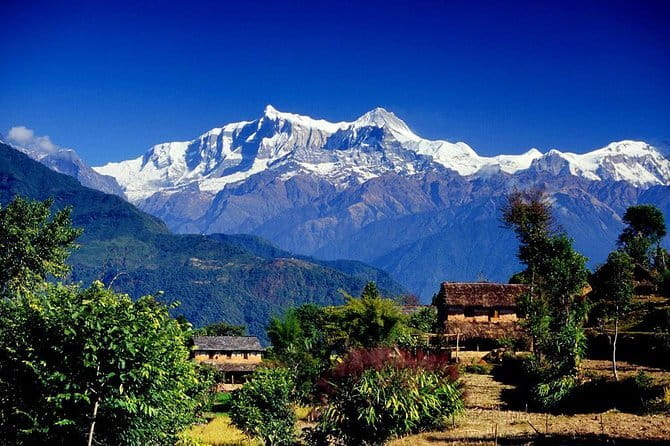
The path follows the Dudh Koshi again, with mountain views opening as you gain height. You descend toward Debuche, cross the Imja Khola, and continue through Pangboche before reaching Tengboche at about 3,860 meters.
Tengboche Gompa is one of the cultural high points of the trek. Prayer flags, mani stones, and the monastery give this day a very different feel from a standard mountain hike. You have a chance to see Buddhist traditions woven into daily life in the Khumbu region.
There is also a physical price. The route has repeated climbs and descents, and the air is noticeably thinner than it was around Namche. Keep your pace steady. A guide can help you judge when to slow down, drink, or stop.
A few more treks around Kathmandu worth a look
- Annapurna Circuit Trek with Tilicho Lake
★ 5.0 · 368 reviews - Everest Base Camp Trekking – 13 Day
★ 5.0 · 365 reviews - Everest Base Camp Trek
★ 5.0 · 350 reviews - Everest Base Camp Trek -14 Days
★ 5.0 · 321 reviews
Days 6 and 7: Dingboche and Nangkartshang Peak
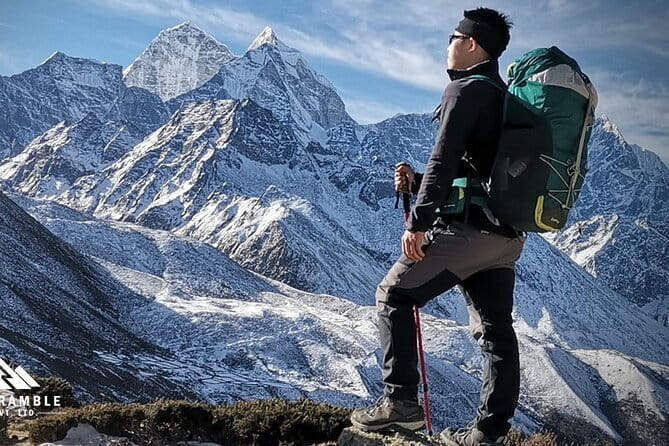
The trail continues to Dingboche after crossing another suspension bridge near Debuche and passing through Pangboche. The setting becomes more open as the route leaves much of the lower forest behind.
Dingboche is at high altitude, so the second full acclimatization day is especially valuable. Instead of gaining ground toward base camp, you take a shorter hike to Nangkartshang Peak above the village.
This is a smart form of sightseeing. You work hard enough to gain height and views, then return to Dingboche to sleep. The walk is still demanding, but it is less punishing than carrying on directly toward Lobuche.
You should not treat the acclimatization day as an easy holiday. It is a chance to move, test how you feel, and tell your guide if you have symptoms of altitude sickness. A guide who is trained in first aid and emergency procedures is one of the more important inclusions on this trip.
Day 8: The memorials near Lobuche
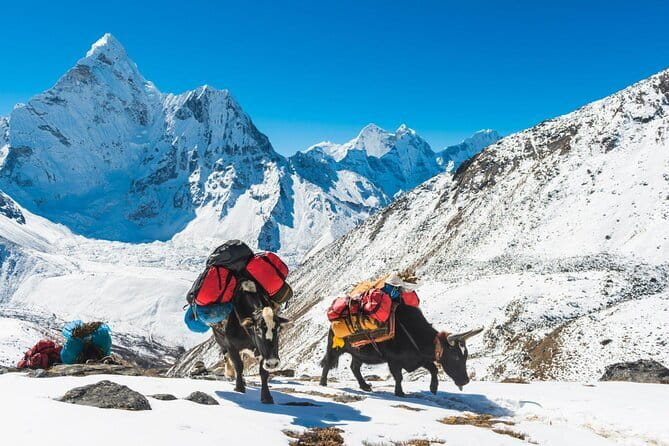
The trail leaves Dingboche and follows the lateral moraine of the Khumbu Glacier toward Lobuche. Along the way, you pass stone memorials dedicated to climbers who died on nearby peaks.
This is a quiet and sobering part of the route. Everest can look like a personal challenge on paper, but these memorials make the mountain’s risks plain. They also give the walk more meaning than a simple checklist of viewpoints.
Lobuche is a high settlement, and the cold and thin air can make this day feel harder than its distance suggests. Keep snacks handy and use your daypack for layers, water, and sun protection. Your porter will carry the larger bag, but you still need to manage your own essentials.
Day 9: Everest Base Camp at 5,365 meters
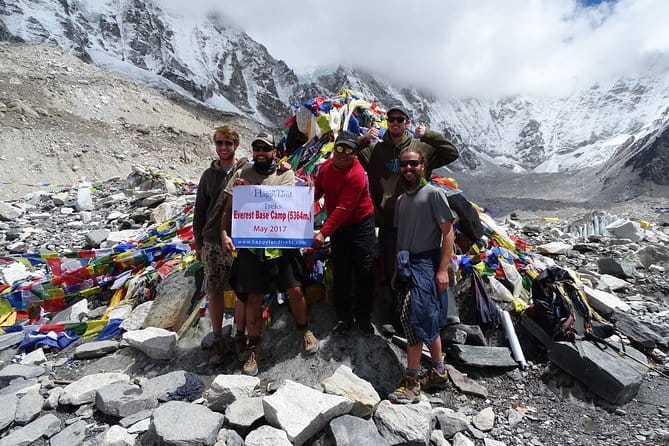
The walk to Everest Base Camp is one of the hardest days. You follow the Khumbu Glacier and climb over uneven ground before reaching the base camp area at 5,365 meters.
Base camp is the emotional target of the trip, but it is not a polished attraction. Conditions can be rough, the glacier terrain is irregular, and the view of Mount Everest itself is not always the best from the camp. The importance is being at the starting point for summit expeditions and surrounded by the high peaks of the Khumbu.
During spring, you may see expedition activity around base camp. That can add interest, though conditions and access vary. Your time there is relatively short compared with the effort required to reach it, so keep expectations realistic. The walk itself, and the route through the glacier country, are much of the experience.
Day 10: Kala Patthar and the best mountain views
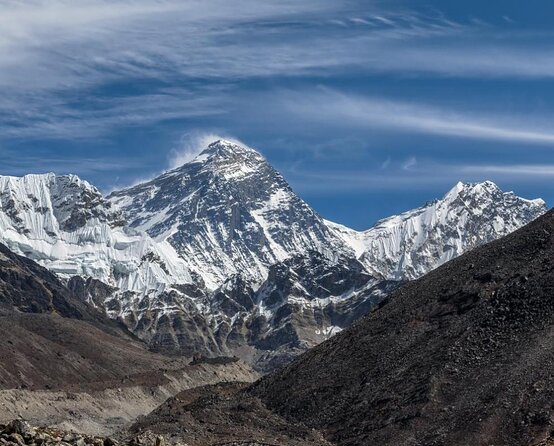
The climb to Kala Patthar is often the toughest and most rewarding day. At 5,555 meters, the small peak is higher than Everest Base Camp and gives you a better viewpoint toward Mount Everest and the surrounding summits.
The climb is steep and the air is very thin. You may need to take short steps and frequent pauses. That is normal. Reaching the top is less about speed than steady effort.
For many people, Kala Patthar provides the strongest mountain views of the whole trip. Base camp is the famous destination, but Kala Patthar is the viewpoint that can make the scale of Everest easier to understand. If you have limited energy, listen to your guide and focus on reaching a safe point rather than forcing the summit.
Days 11 and 12: Descending to Namche and Lukla
After base camp and Kala Patthar, the route turns back through Pangboche and Tengboche to Namche Bazaar. The descent gives your legs a different challenge. Knees can complain, and uneven stone paths still require care.
Returning to Namche in the afternoon is useful because it breaks up the long journey to Lukla. You spend the next day trekking back to the airport town where the adventure began.
The last trekking day is a good time to reflect on the route, but do not expect it to feel effortless. Even downhill walking can be long, and the trail remains uneven. The included porters continue to carry your main luggage, allowing you to walk with a lighter pack.
Days 13 and 14: Flying back to Kathmandu
The flight from Lukla back to Kathmandu takes about 35 minutes when conditions allow. It offers one last look at the mountains before you return to the city.
On arrival, an airport representative meets you and transfers you onward. Your final day includes a drop-off at Tribhuvan International Airport for your departure from Nepal.
The flight schedule is one of the trip’s main uncertainties. Weather, congestion, and mountain conditions can affect timing. Leave enough margin around your international flight, and ask the operator how they handle changes if the Lukla flight is delayed.
What the $1,800 price really covers
At $1,800 per person, this is not a bare-bones hiking package. The price includes Kathmandu transfers, two nights of three-star accommodation with breakfast, domestic flights, trekking permits, rural municipality fees, accommodation during the trek, and standard breakfast, lunch, and dinner on trekking days.
It also covers staff salary, insurance, equipment, and medicine for the trekking team. Filtered water is provided on the trail using a Katadyn Pocket Water Filter, and seasonal fruit is included. Those details reduce the number of small purchases you need to make in remote villages.
The biggest practical value is the porter service. One porter carries the main luggage for two clients, which makes a major difference on steep days. You still need to carry your daypack, and the 15-kilogram flight allowance applies.
The price does not include international airfare, Nepal visa fees, personal equipment, drinks, Kathmandu lunches and dinners, travel insurance, or tips. You need insurance that specifically covers high-altitude emergency rescue and evacuation. Tipping is expected, so include it in your budget rather than treating it as an optional surprise.
Guides, group size, and the human side
The maximum group size is 14, which is small enough for a guide to keep track of the group without creating a private-trek price. The guide is first-aid trained, government licensed, and English speaking.
Specific departures have included guides named Maddy, Kishor, Chris, and Rajendra Khatry, along with porters such as Saman and Sher. Your assigned team will depend on the departure date, but these names give you an idea of the personal contact that can shape the trip. A good guide does more than point out the path. They monitor pace, explain Sherpa and Buddhist customs, and help make decisions when altitude or weather changes the plan.
Solo booking is possible, but there is an important cost detail. The advertised price is based on two people booking, and it can also apply to a solo booking if there is an existing group or someone to share accommodation with. If not, a $250 single surcharge applies on arrival. The same surcharge applies if you request a solo departure rather than joining a group.
Who should book this trek
This trip suits you if you want the famous Everest route but prefer a planned package with staff support. It is a good match for someone who wants to focus on walking and scenery rather than arranging flights, permits, lodges, meals, and porter logistics separately.
You should have moderate physical fitness and be ready for long trekking days at high altitude. The itinerary includes demanding climbs to Everest Base Camp and Kala Patthar, so it is not a relaxed sightseeing tour.
It also suits solo bookers who like meeting a small group. The group structure can make a long, difficult route feel less isolated, while the single surcharge provides a clear option if shared accommodation is not available.
The trek is less suitable if you need fixed transport times, dislike simple mountain guesthouses, or want a luxury experience. Attached toilets are included only in Lukla, Phakding, and Namche, and the route becomes increasingly basic at higher elevations.
Should you book the Everest Base Camp Trek?
I would book this tour if you want the classic Everest Base Camp route with strong logistical support and a sensible acclimatization plan. The package combines porters, meals, permits, flights, filtered water, emergency planning, and a small group at a price that is reasonable for what it covers.
Go in with clear expectations. You are signing up for thin air, cold conditions, long walking days, simple accommodation, possible flight changes, and a serious climb to Kala Patthar. If that sounds like the kind of challenge you want, this 14-day plan gives you a well-supported way to take it on.
FAQ
Where does the Everest Base Camp trek start?
The experience starts with airport pickup at Tribhuvan International Airport in Kathmandu. The trekking route begins after the domestic flight to Lukla.
How long does the trek last?
The full experience lasts approximately 14 days, including Kathmandu stays, flights, trekking days, acclimatization days, and airport transfers.
What is the maximum group size?
The group can include a maximum of 14 travelers.
Are flights between Kathmandu and Lukla included?
Yes. The Kathmandu to Lukla and Lukla to Kathmandu airfare, including airport departure tax, is included.
Where does the Lukla flight depart during peak season?
During busy trekking periods, flights may shift from Kathmandu to Manthali Airport in Ramechhap because of congestion at Kathmandu airport.
What luggage allowance applies to the domestic flight?
The domestic flight luggage allowance is 15 kilograms.
Is porter service included?
Yes. Porter service is included for 11 days, with one porter assigned for every two clients.
Is travel insurance included?
No. You need to arrange your own travel insurance, including cover for emergency high-altitude rescue and evacuation.
Just added around Kathmandu
- Everest Base Camp Trek★ 5.0 · 3 reviews
- Everest Base Camp Trek★ 5.0 · 7 reviews
- 15 Days Private Everest Base Camp Trek★ 5.0 · 30 reviews
- Everest Base Camp Trek★ 5.0 · 57 reviews
- 14 Days of Adventure Trekking to Everest Base Camp★ 5.0 · 2 reviews
- 14-Day Everest Base Camp Trek★ 5.0 · 20 reviews
- From Kathmandu: Private 14-Day Everest Base Camp Trek★ 5.0 · 20 reviews
- 14 Days Everest Base Camp Trek★ 5.0 · 4 reviews
Everest Base Camp Treks, compared.
Everest Base Camp Helicopter Tour landing at Everest View Hotel
Read our review →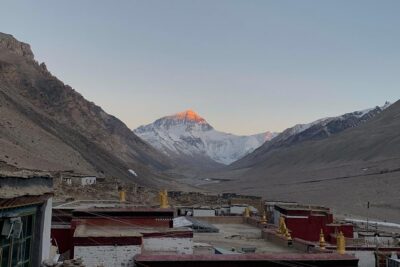
Tibet Tour 8 Days Lhasa to Everest Base Camp Small Group Tour
Read our review →
Dubai: Private Luxury Everest Yacht Cruise from Dubai Marina
Read our review →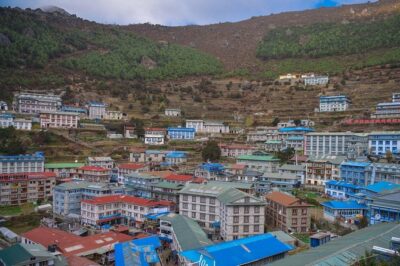
Browse the lists this trek appears in