
Review · ARUSHA
Kilimanjaro Marangu Route 6 Days. (Oldest, easiest & well established)
The Marangu Route takes you from coffee country to the roof of Africa in six days, using basic huts instead of tents. The big prize comes on Day 5, when you climb by torchlight toward Gillman’s Point for sunrise above the ice fields.
I like the route’s clear hut-to-hut format and its extra acclimatization day at Horombo. I also like the small maximum group size of 15, plus the chance to work with named staff such as James and John Sanford.
The catch is simple: Marangu may be called the easiest Kilimanjaro route, but it is still a hard, high-altitude climb. The summit day is long, cold, and physically demanding, and the $2,000 price should be checked carefully for exactly what is included beyond meals, park fees, guides, porters, and transport.
Key points to know before you book
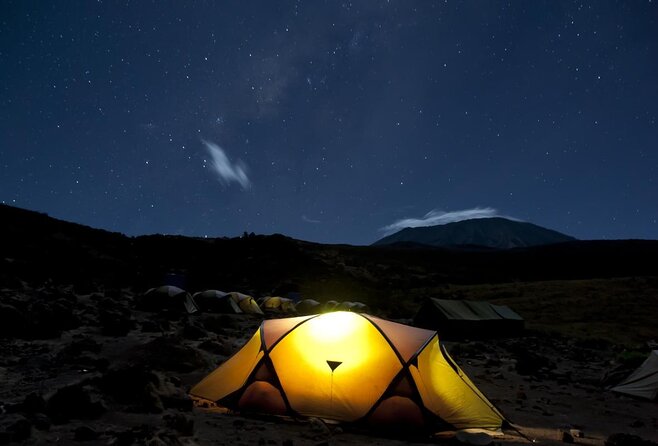
- Sunrise summit attempt: You leave Kibo Hut soon after midnight and aim for Gillman’s Point at 5,685 meters.
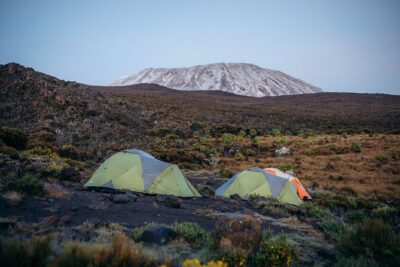
- Hut accommodation: Mandara, Horombo, and Kibo provide basic shelter, so you do not camp in tents on this route.
- Useful acclimatization day: Day 3 includes a walk toward Mawenzi Peak, reaching about 4,600 meters before returning to Horombo.
- Changing mountain zones: The route passes coffee plantations, rainforest, alpine meadow, moorland, volcanic desert, and scree.
- Small group limit: The tour accepts a maximum of 15 people, with pickup offered and an 8:00 am start.
- Practical price check: The $2,000 fee includes listed meals and park-related fees, but tips, visas, flights, insurance, laundry, and personal costs are extra.
Why Marangu works well for a first Kilimanjaro climb
Marangu is the oldest and most established route up Kilimanjaro. It approaches the mountain from the southeast and follows a direct trail to the summit area. For a first climb, that straightforward design can make the whole week easier to understand.
You walk from hut to hut rather than carrying camping equipment between tent sites. That does not make the climb soft, but it removes one layer of expedition work. At the end of a tiring day, you reach a fixed shelter with dormitory-style accommodation rather than helping set up camp.
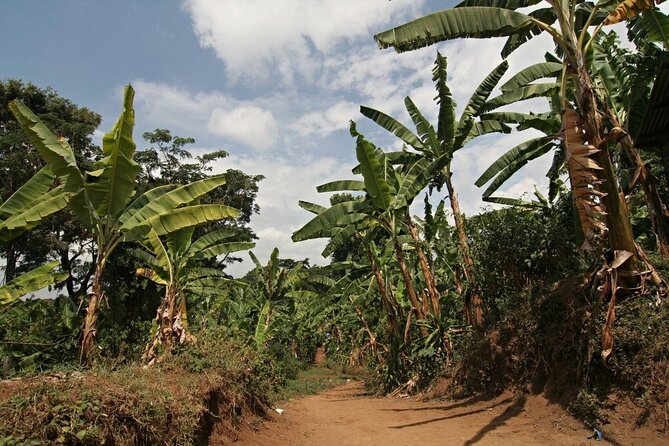
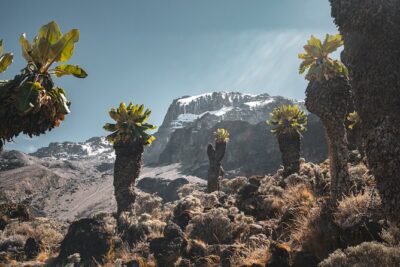
The route also offers a clear change in scenery. You begin among coffee plantations and thick rainforest, then pass into open heath, alpine meadow, moorland, and the stark upper slopes. The plants become smaller and stranger as you gain height, with giant heathers, groundsels, and lobelias appearing along the way.
There is one important warning. The word easiest can mislead you. You still gain thousands of meters, sleep at altitude, and face a summit morning that begins in darkness. The route’s real advantage is its simplicity and hut system, not a lack of physical strain.
More Kilimanjaro Climbs in Arusha
- 8-Day Small-group Lemosho Kilimanjaro Summit Trekking
★ 5.0 · 186 reviews - 7-Day Machame Kilimanjaro Summit Tour from Arusha
★ 5.0 · 125 reviews - Mountain Kilimanjaro Day Hike
★ 5.0 · 102 reviews
From Arusha to Marangu Gate on Day 1
The first morning begins at 8:00 am, with pickup offered from the arranged meeting point. The drive to Marangu takes about two hours and runs through the semi-tropical foothills of Kilimanjaro. On a clear day, you may catch views of the snow-covered summit before the walking begins.
Marangu sits at about 1,372 meters. At the gate, you meet the guide and porter team, complete registration for the national park, and sort out any final supplies. This is the useful, practical start to the climb: check your pack, confirm what the porters carry, and make sure you have what you need for the first night.
The walk to Mandara Hut takes roughly four to five hours, with about six hours allowed for the full day. The first section runs through coffee-growing areas before entering dense rainforest. This is one of the most enjoyable parts of the route because it feels alive and close around you.
Look for bright birdlife, colobus monkeys, and other monkey species. Mosses, lichens, flowers, and orchids add detail to the shaded trail. You will not yet have the wide mountain views found higher up, but the forest gives you a gentle introduction to the altitude and pace.
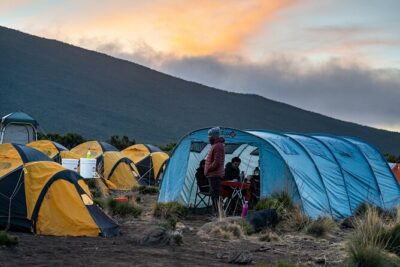
Mandara Hut is the first overnight stop. The accommodation is basic, and you should expect a mountain hut rather than hotel comfort. The key advantage is that the route is fixed and easy to follow, with the support crew handling the practical mountain work.
Horombo Hut and the first big change in scenery
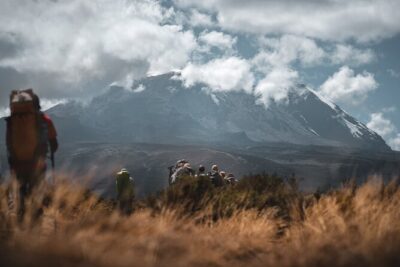
Day 2 is steeper. You climb through the last part of the rainforest, then reach rolling alpine meadow with tall, giant heather. The thick forest falls away, and the two main peaks come into view: snowy Kibo and rocky Mawenzi.
This is a memorable change. You can finally see the scale of the mountain and understand that the summit is still a long way above you. The trail then crosses open heath and reaches bleak moorland, where vegetation becomes shorter and less dense.
The day gains about 1,000 meters and takes five to seven hours, depending on your pace. Horombo Huts provide the night’s shelter. The buildings are similar in basic style to Mandara Hut, with dormitory accommodation and limited facilities.
I would treat this as a serious day, even if the walking distance sounds manageable. The height begins to matter here. Walk slowly, drink regularly, and pay attention to how you feel. You are not trying to win the mountain.
The route’s support system matters at this point. The package is designed around guides, porters, and a cook, but gratuities for all three are not included. Set aside money for tips and clarify the company’s preferred tipping practice before departure.
Day 3 gives your body time to adjust
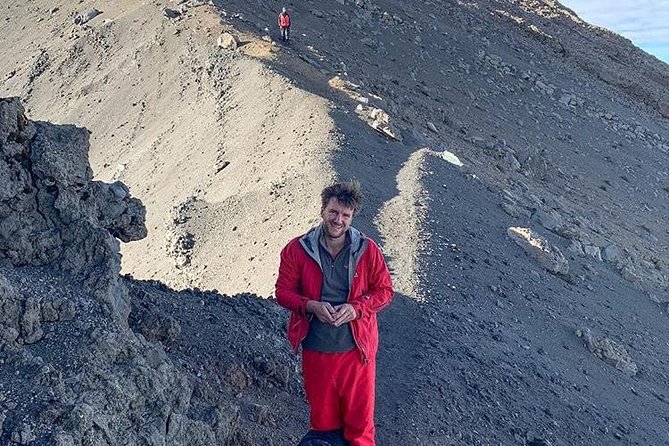
The third day is not a rest day in the usual sense. It is an acclimatization day at Horombo, and it may be one of the most valuable parts of the six-day schedule.
You can make a round-trip walk toward the base of Mawenzi Peak. The outing takes about four to five hours and reaches around 4,600 meters before returning to the hut. That gives you a controlled taste of higher altitude without committing to the full summit push.
The scenery is dramatic. Mawenzi has a jagged, rocky profile that contrasts with the smoother, snowier Kibo. The route around Horombo gives you time to look carefully at the mountain rather than rushing from one overnight stop to the next.
For you, the main benefit is time. A six-day climb is still fairly compact, but this extra day breaks up the upward progress. It gives your body a chance to adjust before Kibo Hut and the summit attempt.
Keep your expectations realistic. An acclimatization day can improve your chances, but it cannot guarantee a successful summit. If you feel unwell, tell the guide rather than trying to hide symptoms. The provided information does not set out a detailed medical or evacuation plan, so ask the operator about those procedures before you go.
Same trailhead, a different route:
- 4 Days Mount Meru Trekking
★ 5.0 · 55 reviews - 4 days Best experience Kilimanjaro Hike, Serengeti &Ngorongoro
★ 5.0 · 54 reviews - From Arusha/Moshi: Kilimanjaro Hike Marangu Route Day Trip
★ 4.5 · 54 reviews - Mount Kilimanjaro Day Hike Through Marangu Route to Mandara Hut
★ 5.0 · 37 reviews
Across the Saddle to Kibo Hut
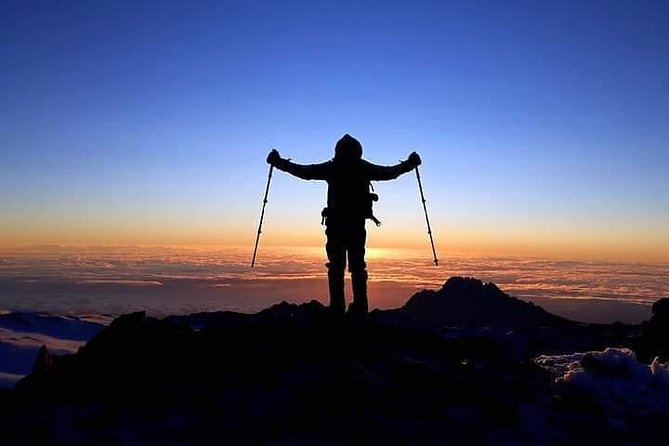
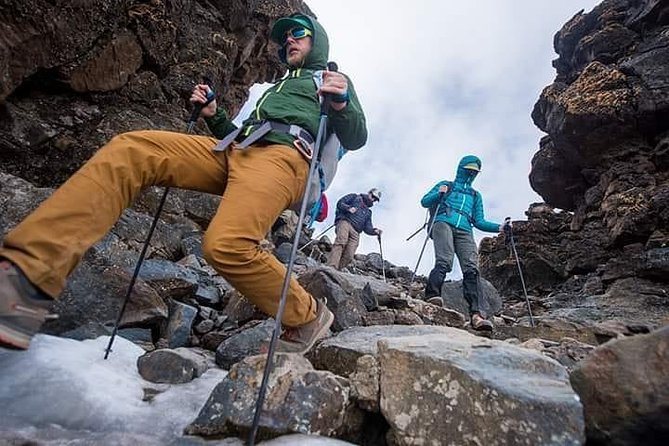
On Day 4, the trail becomes rockier and more severe. The flowers and larger alpine plants thin out, while giant groundsels and lobelias appear in the sparse moorland.
You skirt Mawenzi Peak, pass Last Water, and cross the Saddle. This broad, dry area between Mawenzi and Kibo has an almost lunar appearance. It is exposed and stark, with little shelter and a growing sense that you are entering the mountain’s upper zone.
The walk to Kibo Hut takes five to seven hours. Kibo Hut sits at about 4,705 meters and offers dormitories behind dry-stone walls, with limited facilities. This is not a place for comfort or a long evening. You prepare for the summit, repack your belongings, and leave non-essential items with the porters.
That last detail is worth taking seriously. A lighter day pack will make the final climb less tiring, but you still need warm clothing, water, food or snacks as arranged, and anything essential for the cold night start. Ask the crew exactly what you should carry and what can safely remain behind.
The final evening may feel short because the summit schedule starts soon after midnight. Try to organize your gear before resting. A head torch or reliable flashlight is essential for the dark ascent, although the supplied details do not state whether one is provided.
The midnight climb to Gillman’s Point
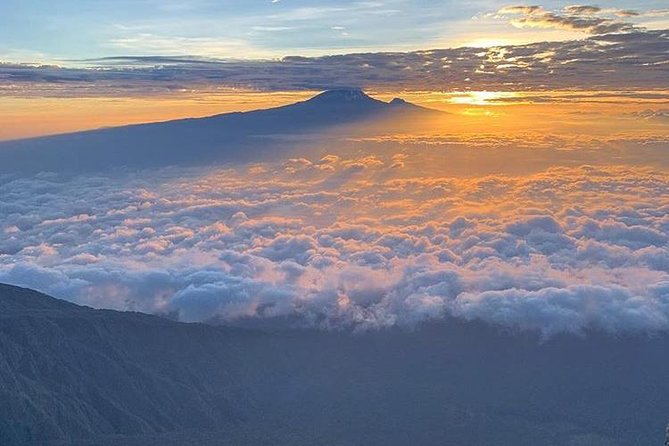
Day 5 is the hardest day by a wide margin. The guide wakes you soon after midnight, and you begin climbing in extreme cold by torchlight.
The trail zigzags up a long scree slope. Because the scree is frozen at this hour, it can be easier to walk on than loose daytime gravel, but the gradient remains steep. After about two hours, you reach Hans Meyer’s Cave, named for the German geologist who made the first successful ascent in 1889.
The toughest part comes next. About three hours beyond the cave, you reach the crater rim at Johannes Notch. From there, a short scramble leads to Gillman’s Point at 5,685 meters, ideally in time for dawn.
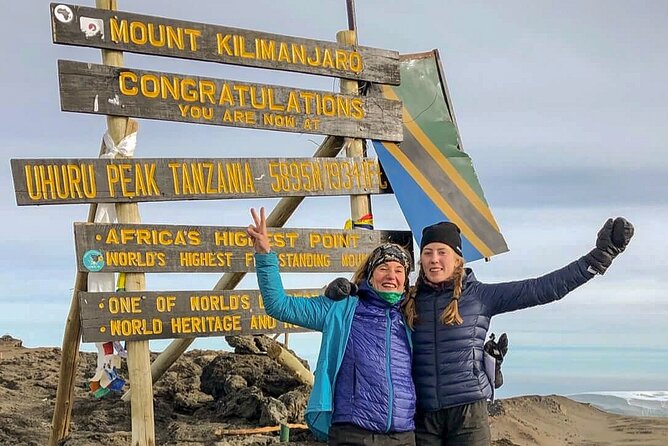
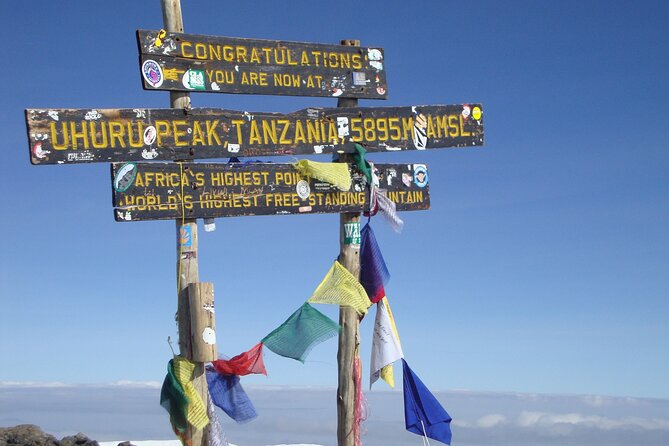
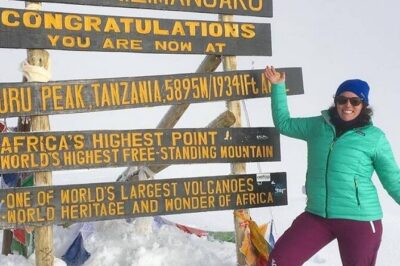
The sunrise is the emotional high point of the trip. From Gillman’s Point, you look across the upper mountain toward ice fields and rugged volcanic peaks as the light spreads over the summit area. The supplied trip details also describe continuing toward Uhuru Peak, and one account specifically recalls reaching Uhuru Peak for sunrise. Because the exact summit schedule can depend on conditions, fitness, and the guide’s decision, ask the operator whether Uhuru Peak is the stated goal for your group or whether Gillman’s Point is the formal route endpoint.
This is where the tour’s greatest strength and its main risk meet. The route gives you a well-established line to follow, but the altitude can affect people unpredictably. A moderate fitness level is required, and you should be ready for a slow pace, cold conditions, and a very long day.
After the summit section, you descend to Kibo Hut, collect your gear, and continue downward toward Horombo. The descent is easier on your breathing but hard on tired legs. Expect this to be a full mountain day, not merely a quick summit visit.
The long return through the rainforest
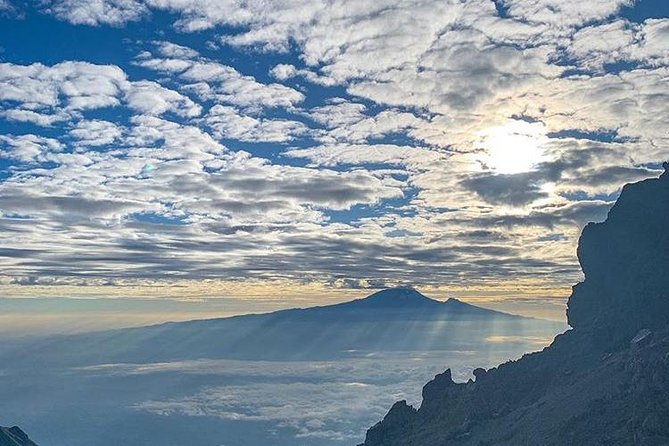
Day 6 continues downhill across alpine meadow and past Mandara Hut. You then re-enter the rainforest and follow the trail back to Marangu Gate.
The descent lets you notice how much the environment has changed since Day 1. At the gate, you board the vehicle for the journey back to Arusha. Breakfast and lunch are included for this day, and the full package lists breakfast, lunch, and dinner for six days.
The return may feel triumphant, but it is also a time to check your belongings and settle any final practical matters with the team. The activity ends back at the meeting point.
What the $2,000 price really gives you
At $2,000 per person, this is not a budget walk, but a Kilimanjaro climb requires a large support operation. The stated price includes all fees and taxes, plus six breakfasts, six lunches, and six dinners. You also have a guide, porters, and a cook involved in the program, although the supplied details do not clearly spell out every service included in the price.
That last point matters. The itinerary places you in Mandara, Horombo, and Kibo huts, but the inclusion list does not separately name accommodation. Before paying, ask for a written breakdown covering hut fees, transport from Arusha, park entry, rescue or emergency arrangements, and porter support.
You must pay separately for tips and gratuities, visas, international flights, laundry, travel insurance, and personal items. Those costs can add up, especially if you need warm clothing, equipment, or extra nights in Arusha.
The group limit of 15 is a useful middle ground. It is small enough for the guide team to keep track of the group, but not necessarily intimate. Ask how many guides and porters are assigned to that maximum group, and how the group is handled if some people move faster or slower.
The guide team and the human side of the climb
The company is African polecat safaris. James is named as the person who discusses the Kilimanjaro plan and recommends the Marangu Route. John Sanford is identified as the head guide, and the accounts connected with the trip place strong emphasis on his encouragement and leadership.
Those names are useful when you contact the operator. Ask whether James and John Sanford will be involved in your departure, or whether they are examples from another group. A named point of contact is helpful, but you should confirm the actual team for your dates.
The climb is also built around the porters and cook. Their work supports the hut-to-hut format, but tips are excluded, so plan for that responsibility from the start. A good trip depends on clear communication about luggage, food, pacing, and health.
Who should choose this six-day climb?
I would consider this route for a first-time Kilimanjaro climber who wants a clear trail, fixed hut stops, and a built-in acclimatization day. It suits someone with moderate fitness who is comfortable walking for several hours on consecutive days and facing one especially long summit day.
It may also appeal to you if you prefer not to sleep in tents. The huts are basic, and facilities are limited, but the arrangement is simpler than a camping route.
I would be cautious if you want a relaxed holiday with only a little walking. The summit attempt begins around midnight, conditions are very cold, and the altitude is the central challenge. You should also think twice if you need private rooms, hotel-style facilities, or a guaranteed summit result.
Cancellation is free if you cancel at least 24 hours before the local start time. Inside that window, the amount paid is not refunded, and late changes are not accepted.
Should you book the Marangu Route?
Book it if you value a direct, well-established route with hut accommodation, a small maximum group, and an acclimatization day. The rainforest, Mawenzi views, the Saddle, and the sunrise climb give the week plenty of variety.
Before committing, get the $2,000 price explained in writing, confirm the actual guides, ask what happens if you cannot continue, and check whether accommodation and transport are fully covered. If those answers are clear, this is a practical first Kilimanjaro climb with a strong human element and a memorable route to the summit area.
FAQ
Where does the Kilimanjaro Marangu Route tour start?
The tour starts at the meeting point with an 8:00 am start time. Pickup is offered, and the experience begins with transport from Arusha toward Marangu.
How long does the trek last?
The program lasts approximately six days. Daily mountain sections are generally listed as about six hours, although the summit day is much longer in practice because it begins soon after midnight and includes the climb to Gillman’s Point, the descent, and further walking.
What route does the trek follow?
The trek follows the Marangu Route, approaching Kilimanjaro from the southeast. The program passes through rainforest, alpine meadow, heath, moorland, the Saddle between Mawenzi and Kibo, and the upper volcanic slopes.
Where do you sleep on the mountain?
You stay at Mandara Hut, Horombo Huts, and Kibo Hut. These are basic mountain shelters with dormitory accommodation and limited facilities.
Is there an acclimatization day?
Yes. Day 3 is used for acclimatization at Horombo. You can walk toward the base of Mawenzi Peak, reaching about 4,600 meters before returning to the hut.
What meals are included?
Breakfast, lunch, and dinner are listed for six days. The final day specifically includes breakfast and lunch.
What is not included in the price?
Tips and gratuities for the mountain guide, porters, and cook are not included. Visas, international flights, laundry, travel insurance, and personal items are also excluded.
More 6-Day Experiences in Arusha
- 6-day Private Camping Safari Tour from Kilimanjaro Airport
★ 5.0 · 27 reviews - 6 Days: Hiking Kilimanjaro via Machame Route
★ 5.0 · 24 reviews - 6 Days best adventure kilimanjaro ,Tarangire ,Serengeti &Ngorongoro crater
★ 5.0 · 24 reviews - 6-Day Guided Tour in Machame Route Mt Kilimanjaro
★ 5.0 · 17 reviews
Just added around Arusha
- Mt. Kilimanjaro: Shira plateau to Cathedral point 3872m Day hike★ 5.0 · 7 reviews
- 5 days safari, hiking & culture (Serengeti & kilimanjaro)★ 5.0 · 27 reviews
- One Day Hike from Kilimanjaro to Mandara★ 5.0 · 2 reviews
- 3 Days Mount Meru trekking★ 4.5 · 7 reviews
- climb the KILIMANJARO via Lemosho route★ 5.0 · 4 reviews
- 6 Day: Hiking Kilimanjaro via Machame Route★ 5.0 · 2 reviews
- Private 8 day Northern Circuit Kilimanjaro Climb★ 5.0 · 8 reviews
- Kilimanjaro Waterfalls Hike & Moshi Hot Springs Day Trip Tour★ 5.0 · 4 reviews
Kilimanjaro Climbs, compared.
8-Day Small-group Lemosho Kilimanjaro Summit Trekking
Read our review →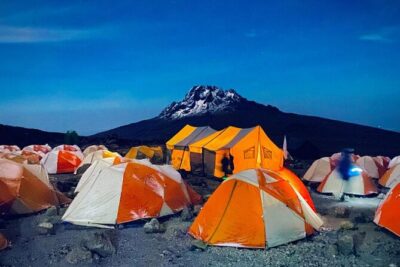
Climbing Kilimanjaro through 7 days Machame Route
Read our review →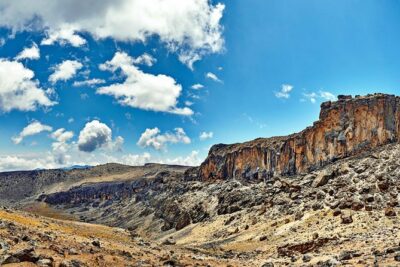
Browse the lists this trek appears in