
Review · MOSHI
Climbing Kilimanjaro through 7 days Machame Route
Kilimanjaro’s Machame Route gives you a full mountain story in seven days: rainforest on the lower slopes, wide volcanic views, the dramatic Barranco Wall, and a summit night followed by a different descent. The route is demanding, but its gradual rise and walk high, sleep low pattern give you a strong chance of reaching the top.
I like the experienced mountain crew, with guides who have at least eight years on Kilimanjaro and Wilderness First Responder training. I also like the practical care built into the trek: daily health checks, cooked meals, private tents, a dining tent, and emergency oxygen carried on the mountain.
The main drawback is the route’s popularity. Machame is the busiest Kilimanjaro route, and its steeper sections can feel crowded. Seven days also gives you less acclimatization time than longer versions, so your fitness, pacing, and response to altitude still matter.
Key points to know before booking
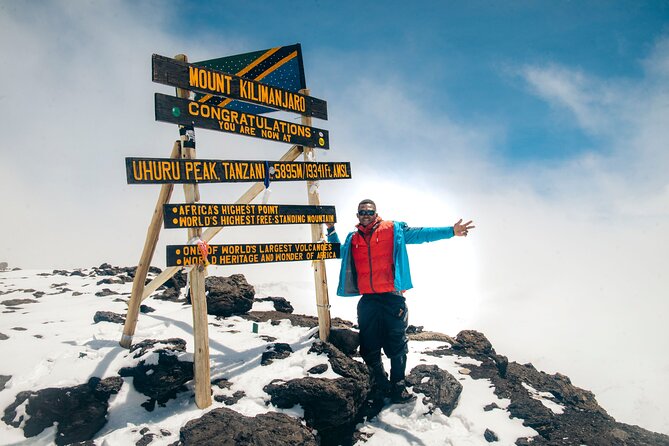
- Machame Gate begins at 1,800 meters, then the route climbs through rainforest before joining the Shira section.
- Lava Tower and Barranco Camp help with acclimatization, using the useful walk-high, sleep-low rhythm.
- The Barranco Wall is steep but not presented as a technical climb, so expect hands-on scrambling and careful footwork.
- The summit day is the hardest section, after which you descend by the Mweka trail instead of retracing the ascent.
- Meals, camping equipment, porters, guides, and private transportation are included, while Moshi hotels before and after the climb cost extra.
- The tour costs $2,425 per person and is operated as a private activity for your group, with group discounts available.
Why seven days on Machame works
The Machame Route is often called the Whiskey Route, a playful contrast with the Marangu Route, known as the Coca Cola Route. The nickname is not a warning that you need climbing skills. Machame is considered more demanding because it is longer and steeper in places, not because it requires technical mountaineering.
That extra effort has a useful payoff. The route approaches Kilimanjaro from the southwest, then crosses the southern side before reaching the summit. You do not simply walk uphill every day and sleep higher each night. The route rises to Lava Tower, then drops toward Barranco Camp, helping your body adjust to altitude.
I like this seven-day format because it gives you a varied route and a separate descent trail. You see more of the mountain than you would on an out-and-back walk, and each day has a different feel. Still, seven days is not a soft option. You need a moderate level of fitness, patience with slow walking, and the discipline to listen to your guide.
The operator places strong emphasis on pole pole, the Swahili idea of going slowly. That matters more than speed on Kilimanjaro. A steady pace helps you conserve energy, notice altitude symptoms early, and arrive at camp with enough strength to eat and rest.
More Kilimanjaro Climbs in Moshi
- Kilimanjaro climb by Lemosho Route (7-day)
★ 5.0 · 651 reviews - Kilimanjaro climb, Machame Route (7-day)
★ 5.0 · 262 reviews - Kilimanjaro Climbing Lemosho Route 8 Days.
★ 5.0 · 186 reviews
Day 1: Machame Gate and the rainforest
The climb starts at Machame Gate, at 1,800 meters. Private transport takes you from the meeting point at Moshi Leopard Hotel to the trailhead, with the activity ending back at the same meeting point after the descent.
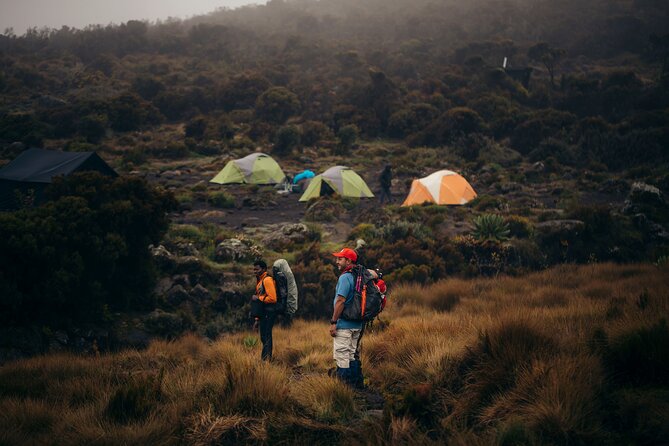
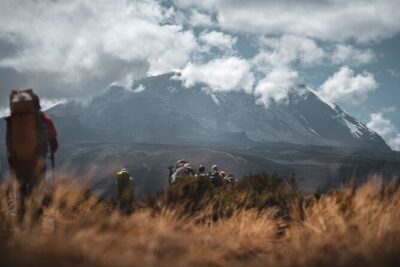
The first day leads through Kilimanjaro’s rainforest. This is one of the most pleasant openings on the mountain because the vegetation changes quickly as you gain height. Expect a wooded trail, damp conditions at times, and a clear sense that you are leaving ordinary roads behind.
Your guide sets the pace, while porters carry the camping equipment and supplies. A chef prepares the meals, and a waiter is also part of the mountain crew. That support lets you focus on walking rather than carrying a full expedition load.
The practical challenge is that the first day can feel deceptively easy. You are still fresh, and the forest offers shade. Do not use that as a reason to walk quickly. The goal is to arrive at camp ready for the next morning, not to win the first stage.
Day 2: Leaving the forest for Shira Camp
The route continues upward toward Shira Camp, where the Lemosho Route joins from the west. This transition is one of Machame’s appealing features. The thick forest gives way to more open ground, and the mountain begins to feel larger around you.
Shira is important because it marks the start of the high-altitude section. The change in scenery is rewarding, but your body may begin to notice the thinner air. Drink regularly, eat even when your appetite fades, and tell the guide about headaches, nausea, unusual tiredness, or dizziness.
The crew’s daily health checks are useful here. They are not a substitute for your own judgment, but they create a routine for spotting problems early. Guides with Wilderness First Responder certification can assess your condition and advise you on the safest next step.
Day 3: The Lava Tower and the walk-high, sleep-low rhythm
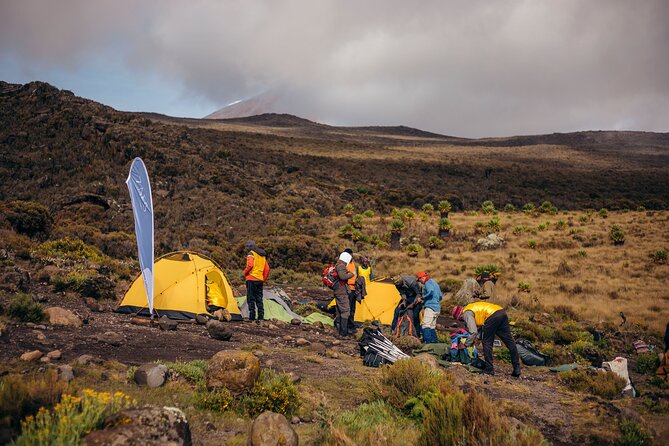
From Shira, the route crosses the southern side of Kilimanjaro and reaches Lava Tower before continuing toward Barranco. This is a key day for acclimatization.
The value is not only the scenery. You climb high during the day, then sleep lower at Barranco. That pattern gives you exposure to higher altitude without forcing you to spend the night at the highest point reached. It is one reason Machame has a strong summit record compared with shorter, more direct routes.
This stage can be tiring even if the walking distance does not look extreme on paper. The altitude changes the effort. A pace that feels comfortable near Moshi may feel slow and heavy here. Let the guide control the rhythm, and treat lunch as part of the climb rather than an interruption.
The included food is a real part of the package’s value. Breakfast, lunch, and dinner are freshly prepared on the mountain, with tea and coffee available. The supplied information does not promise a particular menu, so you should share dietary needs before departure rather than assume every preference can be handled at the last minute.
Same trailhead, a different route:
- Climbing Kilimanjaro – Machame Route
★ 5.0 · 170 reviews - Kilimanjaro climb, Lemosho Route (8-day)
★ 5.0 · 148 reviews - Kilimanjaro climb, Lemosho Route (6-day)
★ 5.0 · 129 reviews - Kilimanjaro climb, Marangu route (6-day)
★ 5.0 · 72 reviews
Day 4: Barranco Camp and the Great Barranco Wall
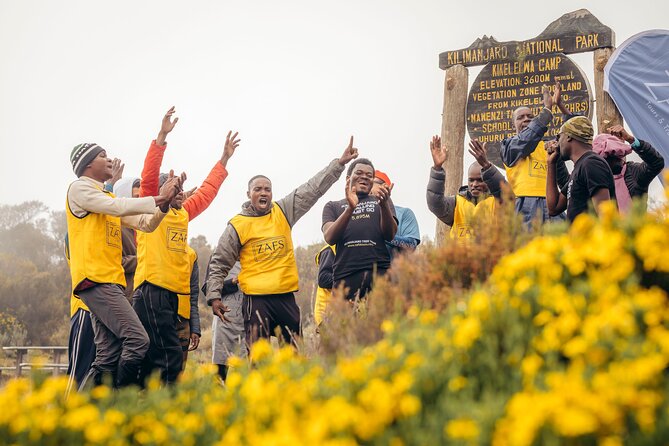
Barranco Camp is reached after the Lava Tower section. The camp sits below one of the route’s most memorable features, the Great Barranco Wall.
The wall looks more intimidating than it is. This is not described as a technical rock climb, but it is steeper than the forest paths and requires careful movement. You may use your hands in places, and the guide will help with route choice and pace. Do not rush because other groups are nearby. Good footing matters more than speed.
The wall is also where the route can feel most crowded. Machame is the busiest route on Kilimanjaro, so you should expect other groups on the trail and around some camps. That can reduce the sense of solitude, but it also means the route has a social energy and a well-established support system.
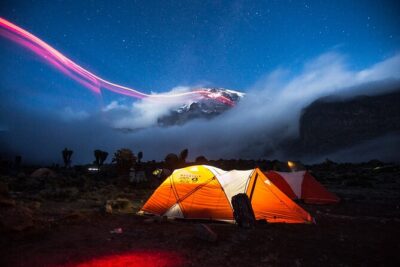
Barranco itself is a good place to rest and take in the mountain. The operator provides a private tent for you, a separate dining tent, tables, chairs, mattresses, cutlery, and cooking equipment. Those details may sound basic, but a sheltered place to eat and a proper mattress become valuable after several days on foot.
Day 5: Toward Barafu Camp
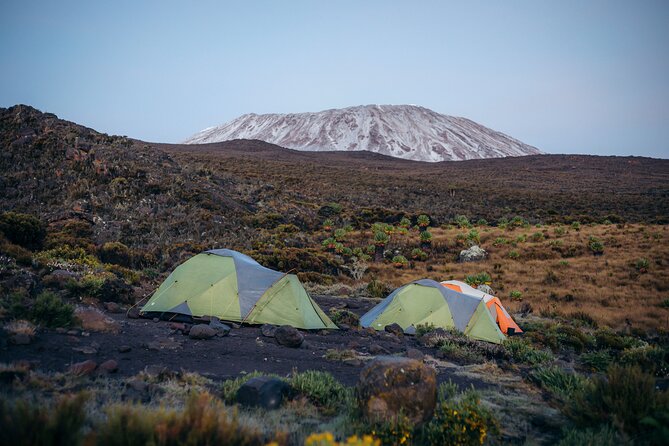
After Barranco, the route continues across the southern slopes toward Barafu Camp. The ground becomes more exposed, and the comfort of the lower forest is long gone. This is a day to conserve energy because Barafu is the launch point for the summit attempt.
The guide’s role becomes especially important here. You need clear advice on food, water, clothing, rest, and symptoms of altitude sickness. The operator says the guides have completed the mountain more than 100 times as a team, and the named guides associated with the company include Alex, Gabriel, Mushi, Farooq, Musa, Danis, and Frank.
The crew also carries emergency oxygen. That is reassuring, but you should not treat oxygen as a guarantee that altitude problems can be ignored. It is emergency equipment, not a shortcut to acclimatization. The safest plan remains slow walking, honest health updates, and following the guide’s decision if a descent is needed.
Barafu can be a tense camp because the summit push is close. Try to eat and rest even if excitement makes sleep difficult. The best preparation for the summit is not a burst of last-minute effort. It is conserving what you have.
Day 6: The summit attempt and descent toward Mweka
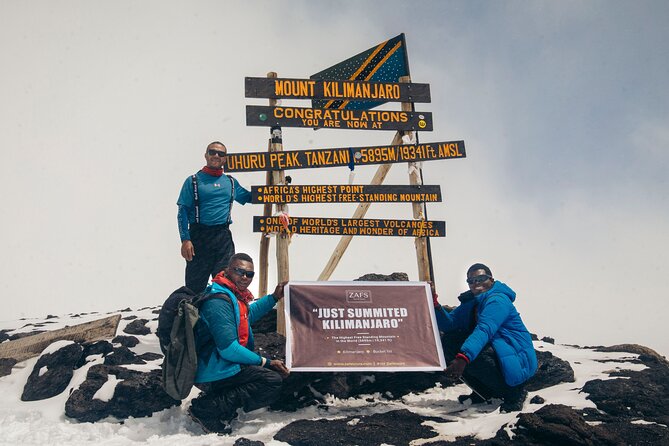
The summit day is the physical and mental test of the trip. You leave Barafu and climb toward the top in cold, thin air, with the most demanding walking of the route ahead. The supplied itinerary does not give an exact departure time or walking duration, so confirm those details with ZAFS Tours before you go.
Your guide sets the pace and provides motivation. Several customer accounts describe guides who stayed close, adjusted to individual ability, and helped people continue when the climb became difficult. That kind of support matters more than cheerful talk. On summit day, you want calm decisions and steady encouragement.
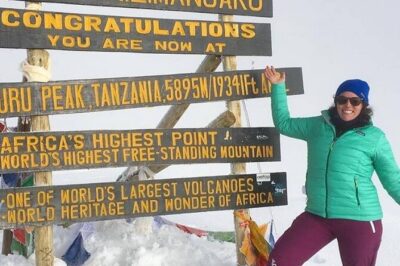
Reaching the summit is not the end of the day. After time at the top, you descend by the Mweka trail rather than returning over the same route. This is a major advantage of the itinerary. The descent gives you a new route and gets you away from the summit zone, but it also adds fatigue after your hardest climb.
The summit day can be cold, exhausting, and longer than you expect. Keep your attention on one section at a time. Eat small amounts if a full meal feels unappealing, and report symptoms early. Your goal is a safe return, not simply a photograph at the highest point.
Day 7: Mweka descent and return to Moshi
The final stage follows the Mweka trail down the mountain. After the exposed upper slopes, the return to lower ground should feel like a major change, though tired legs can make the descent harder than expected.
At the end, private transportation returns you to the meeting point at Moshi Leopard Hotel. The package covers the mountain meals, crew, camping equipment, fees, and transport connected with the activity. Accommodation in Moshi before or after the climb is not included, though it can be arranged on request.
Plan your post-climb schedule with some breathing room. The supplied details do not promise a fixed arrival hour, and mountain timing can shift. A relaxed plan after the descent is wiser than booking an important same-day connection.
What the $2,425 price includes
At $2,425 per person, this is not a basic walk-in-the-park excursion. The price covers a full seven-day supported expedition with private transport, park fees and taxes, camping equipment, food, guides, porters, a chef, and a waiter.
The camping package is more complete than a simple tent-and-sleeping-bag arrangement. You get private tents, a dining tent, crew tents, tables, chairs, mattresses, cutlery, and utensils. Freshly cooked breakfast, lunch, and dinner reduce the need for you to carry food and cooking supplies.
The safety structure also adds value. Guides have a minimum of eight years of mountain experience and Wilderness First Responder certification. Daily health checks and emergency oxygen show that altitude and medical concerns are taken seriously.
You still need to budget for Moshi accommodation before and after the trek, since it is excluded. You should also clarify any personal equipment, tips, travel insurance, flights, and special food arrangements before paying. Those items are not listed as included.
Group discounts are available, and the activity is private for your group. That combination may suit families, friends, or a pre-arranged party that wants its own pace. Ask how the discount works and whether the quoted price changes with group size.
Food, tents, and the human support system
The mountain crew is central to this experience. You are not only hiring a guide. You have porters, a chef, a waiter, and support staff handling the daily camp routine.
Food receives especially strong praise in the supplied customer comments. Meals are described as timely and tasty, with some people surprised by how comfortable the dining setup felt on the mountain. Keep your expectations sensible, but fresh cooking at altitude is a meaningful advantage.
The guides are also praised for explaining the flora, fauna, and local culture, rather than treating the climb as a silent march uphill. Alex, Gabriel, Mushi, Farooq, Musa, Danis, and Frank are names connected with positive experiences through the company. Availability can vary, so do not assume a particular guide will lead your group unless ZAFS confirms it.
The best care is often quiet: a guide matching your pace, a porter checking that you are comfortable, or a staff member making sure you eat. Several accounts describe the crew as friendly, patient, and motivating. That support can make the difference when the climb becomes uncomfortable.
Who should choose this climb
Choose this trek if you want the classic Machame scenery and are comfortable with a physically demanding week. It suits someone with moderate fitness who can walk for several days, tolerate basic camping, and accept that altitude may affect the plan.
It is also a good fit if you value support. The daily checks, cooked meals, private tents, emergency oxygen, and large mountain crew give you structure throughout the climb. First-time high-altitude trekkers may appreciate that guidance, though no operator can remove the risks of altitude.
Think twice if you want quiet trails, a short route, or a relaxed sightseeing holiday. Machame is busy, the wall sections are steep, and the summit day is hard. A longer route could offer more acclimatization, but this seven-day version offers a strong balance between time, scenery, and support.
The activity starts at 12:00 am according to the supplied booking details, which may refer to a default or overnight start time. Confirm the exact pickup and departure schedule before you travel. Confirmation is received at booking, and cancellation is free if made at least 24 hours before the local start time. Changes or cancellations inside that window are not refunded, and a minimum number of participants is required.
Should you book the Machame Route with ZAFS Tours?
I would consider this a strong choice if your priority is a well-supported, scenic Kilimanjaro climb rather than the cheapest possible package. The route gives you rainforest, Shira, Lava Tower, Barranco Wall, Barafu, a summit attempt, and a different descent in seven days.
The main decision is not the scenery. It is your comfort with the effort and the crowds. If you can manage a moderate fitness challenge, walk slowly, and follow the guide’s health advice, the route offers a sensible path to the summit. If you need maximum solitude or more time for acclimatization, compare it with a longer route before booking.
FAQ
How long is the Kilimanjaro climb?
The Machame Route activity lasts approximately seven days, including the ascent, summit attempt, and descent by the Mweka trail.
Where does the climb start and finish?
The meeting point is Moshi Leopard Hotel on Market Street in Tanzania. The activity ends back at the meeting point after the mountain trek.
What is included in the $2,425 price?
The price includes private transportation, fees and taxes, private tents, a dining tent, crew tents, tables, chairs, mattresses, cutlery, utensils, coffee or tea, daily breakfast, lunch, dinner, guides, a chef, a waiter, and porters.
Is accommodation in Moshi included?
No. Accommodation before and after the hike in Moshi is not included, but it is available on request.
What level of fitness is required?
You should have a moderate level of physical fitness. The route is longer and steeper in places than the Marangu Route, and the summit day is the most demanding section.
Can I cancel for a full refund?
Yes, if you cancel at least 24 hours before the experience start time. Cancellations or changes made less than 24 hours before the local start time are not refunded.
More 7-Day Experiences in Moshi
- Private Kilimanjaro Hike 7 Day Lemosho Route
★ 5.0 · 60 reviews - 7-Day Machame Kilimanjaro Summit Tour from Arusha
★ 5.0 · 125 reviews - 7 Days Kilimanjaro via Machame route affordable price
★ 5.0 · 110 reviews - 7-Day: Inca Trail Trek to Machu Picchu Group Tour
★ 5.0 · 40 reviews
Just added around Moshi
- Mount Kilimanjaro National Park Day Trip★ 5.0 · 7 reviews
- Mount Kilimanjaro Day Hike – All-Inclusive, No Hidden Fees★ 4.0 · 7 reviews
- Moshi, Kilimanjaro: Local Market Shopping Experience★ 5.0 · 2 reviews
- Moshi: Kilimanjaro Climb Marangu Route Guided Tour★ 4.3 · 6 reviews
- Kilimanjaro: Village Walk, Coffee Tour, Waterfall, and Lunch★ 4.5 · 56 reviews
- Kilimanjaro: Day trip -hike to Mandara Hut Kilimanjaro 2700m★ 5.0 · 3 reviews
- #1. Best Kilimanjaro Day hike Tour-Machame Route-ISMANI★ 4.2 · 47 reviews
- Private Kilimanjaro Hike 7 Day Lemosho Route★ 5.0 · 60 reviews
Kilimanjaro Climbs, compared.
8-Day Small-group Lemosho Kilimanjaro Summit Trekking
Read our review →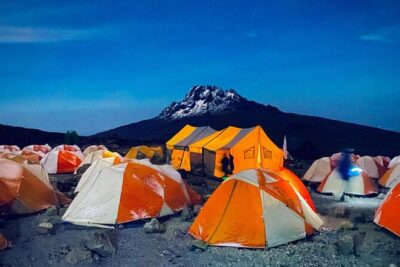
7-Day Machame Kilimanjaro Summit Tour from Arusha
Read our review →Browse the lists this trek appears in