
Review · ARUSHA
8-Day Small-group Lemosho Kilimanjaro Summit Trekking
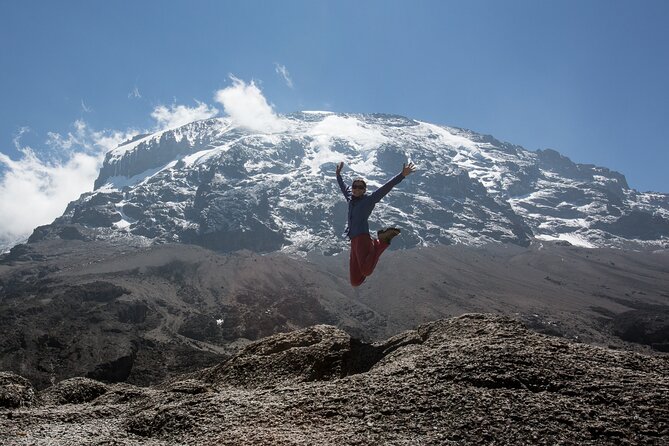
Kilimanjaro’s Lemosho route gives you eight days to cross rainforest, high moorland, volcanic desert, and the arctic summit zone before reaching Uhuru Peak at 19,340 feet. That extra time matters: the route builds in several acclimatization days rather than rushing you uphill.
I like the small-group format, capped at 15 people, because guides can keep a closer eye on energy, comfort, and altitude symptoms. I also like that the price includes camping gear, meals, park fees, and transfers, so you are not assembling a complicated mountain trip from separate pieces.
The main caution is simple: this is a serious high-altitude trek, not an easy sightseeing walk. The long summit night begins around midnight, and the final ascent over loose scree can be physically and mentally tough even for fit hikers.
Key points to know before booking
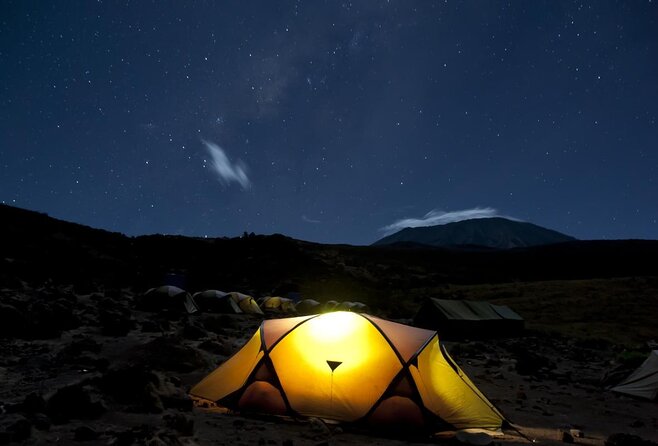
- Lemosho gives you eight days for acclimatization, including a full day on the Shira Plateau and a high-point trek to Lava Tower before sleeping lower at Barranco.
- The summit attempt starts at midnight, with six to seven hours to Stella Point, another hour to Uhuru Peak, and a long descent to Mweka Camp.
- Small groups are capped at 15 people, though some departures may be much smaller, including groups of four or five.
- The package includes the practical essentials, including camping equipment, meals, admission fees, and round-trip hotel transfers from Arusha.
- The crew is a major part of the experience, with guides including Amani, Raymond, Goodluck, Herment Mosha, Manny, Cinga, and others assigned across different departures.
- You need strong physical fitness, and the route still carries real altitude risk despite its high summit success rate.
Why Lemosho is a strong choice for Kilimanjaro
Lemosho approaches Kilimanjaro from the west, beginning at Londorossi Gate. It is prized for its gradual rise and changing scenery. You start among tall forest trees, then move through heather and volcanic rock before joining the southern circuit toward the summit.
That route design is useful for your body. You spend several days gaining height at a measured pace, and Day 4 takes you up to the high Lava Tower before dropping to Barranco Camp. This classic climb high, sleep lower pattern gives you a better chance to adjust to thin air than a faster itinerary.
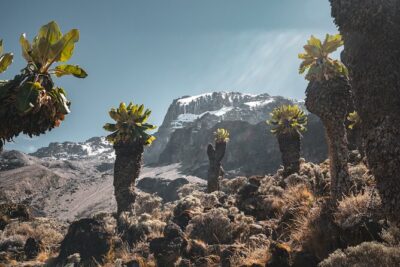
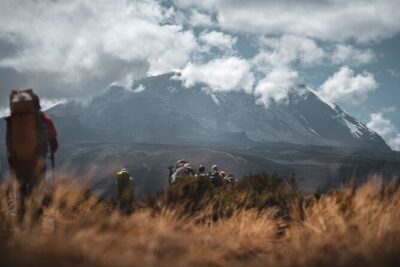
The scenery changes almost every day. You will not simply walk through one type of mountain terrain for a week. The route moves from damp forest to open grassland, then to the stark Shira Plateau, giant senecio plants, lava formations, and finally bare volcanic slopes.
There is also a social advantage. The group limit is 15, and some departures have been much smaller. A group of four or five can feel friendly and manageable, while a larger group gives you more company but may move at a less personal pace.
More Kilimanjaro Climbs in Arusha
- 7-Day Machame Kilimanjaro Summit Tour from Arusha
★ 5.0 · 125 reviews - Mountain Kilimanjaro Day Hike
★ 5.0 · 102 reviews - 4 days Best experience Kilimanjaro Hike, Serengeti &Ngorongoro
★ 5.0 · 54 reviews
Day 1: Londorossi Gate to Mti Mkubwa
After a hotel night in Arusha, you are collected for the drive to the western entrance of Kilimanjaro. The first trail section begins at Londorossi Gate and climbs gently through montane forest to Mti Mkubwa Camp, also called Big Tree Camp.
This is a sensible opening day. The walk covers about 3 miles and takes roughly three to four hours, reaching around 7,742 feet. You get a first taste of the trail without being thrown into a punishing climb.
The forest is likely to be cool and damp, and the pace should feel controlled. Your guide will begin watching how you walk, breathe, and handle the altitude. That early attention is useful later, since the crew learns your normal pace before the harder days arrive.
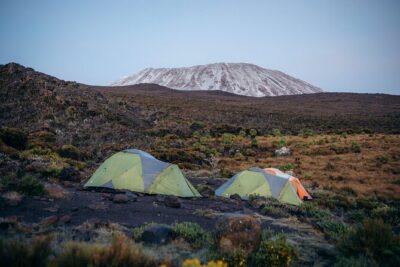
Your tent should already be set up when you reach camp. That small detail matters after a first day of travel and hiking. You can focus on eating, organizing your sleeping bag, and resting instead of wrestling with camp equipment.
Day 2: Heather country and the Shira Ridge
The trail climbs out of the forest into tall grasses, heather, volcanic rock, and lichen. You walk about 4.9 miles toward the Shira Ridge, reaching roughly 11,500 feet.
This is the first day when Kilimanjaro feels properly high and open. The trees fall away, the air becomes thinner, and the mountain begins to reveal itself across the plateau. The contrast with the previous day’s forest is one of Lemosho’s rewards.
The listed walking time is roughly five to six hours, though the schedule gives an approximate four-hour activity block. Treat all times as estimates. Mountain pace depends on weather, group fitness, trail conditions, and the number of breaks your guides call.
The first views of Kibo, Kilimanjaro’s main summit cone, can appear on the horizon. This is also the point where you should start taking hydration and pacing seriously. The best approach is deliberately slow. You are not trying to prove anything on Day 2.
Day 3: A full day on the Shira Plateau
Day 3 is one of the route’s most useful sections. You trek east across the Shira Plateau toward Kibo, with the option to visit the collapsed Shira Cone, the oldest of Kilimanjaro’s three volcanic cones.
The day covers about 8.7 miles and takes five to seven hours, ending at Moir Camp around 13,800 feet. A huge gorge and an old lava flow give this camp a stark setting.
This day is not filler. It lets you gain altitude gradually while spending time in high terrain before the summit push. You may notice that walking becomes more tiring at this elevation even when the trail is not steep. That is normal, but symptoms such as a severe headache, confusion, or worsening nausea need immediate attention from the guide.
The Shira Plateau also gives you some of the best open views of the trek. You are walking through a broad volcanic world rather than a narrow forest trail. The sense of space helps make this route feel different from a standard up-and-down mountain hike.
Same trailhead, a different route:
- 4 Days Mount Meru Trekking
★ 5.0 · 55 reviews - From Arusha/Moshi: Kilimanjaro Hike Marangu Route Day Trip
★ 4.5 · 54 reviews - Mount Kilimanjaro Day Hike Through Marangu Route to Mandara Hut
★ 5.0 · 37 reviews - 5 days safari, hiking & culture (Serengeti & kilimanjaro)
★ 5.0 · 27 reviews
Day 4: Lava Tower, then the Barranco Valley
This is the key acclimatization day. You climb toward Lava Tower, listed at about 15,000 feet, then descend to Barranco Camp at roughly 13,000 feet.
The walking distance is about 4.3 miles, but the altitude change makes this day more demanding than the number suggests. After Lava Tower, the trail reaches a junction toward Arrow Glacier before dropping through a zone of giant senecio plants and toward Barranco.
The benefit is clear: you spend time high, then sleep lower. That does not remove altitude risk, but it gives your body a useful chance to adjust. You should move slowly and tell the guide promptly if you feel unwell.
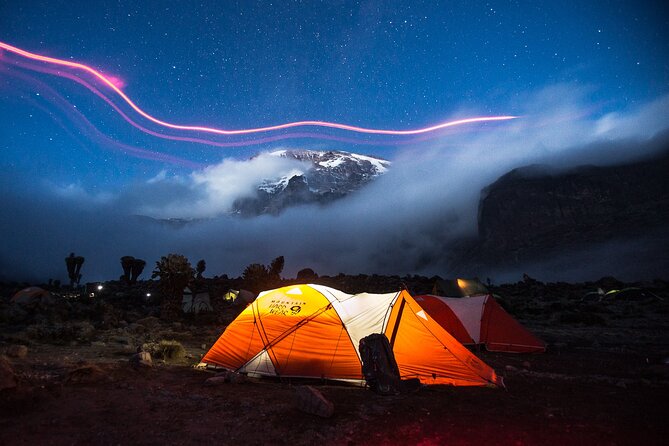
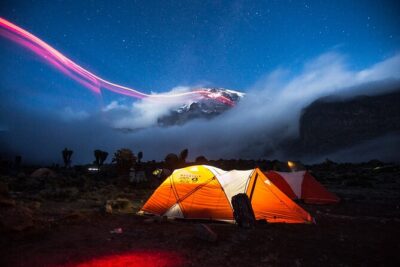
Barranco Camp sits below the huge Barranco Wall. Clouds can move through the valley, and the camp may feel exposed and dramatic. It is one of the most memorable camp settings on the route, but do not expect a quiet hotel-like evening. You are camping at altitude, and rest is the main event.
Day 5: Up the Barranco Wall to Karanga
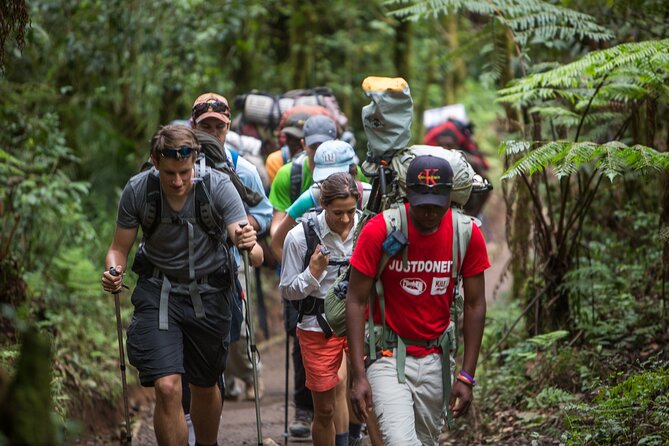
Today begins with the Barranco Wall, one of the most adventurous sections of the non-technical route. You climb for about 2.2 miles, taking four to five hours, before continuing through the Karanga Valley to camp at around 13,100 feet.
The wall can look intimidating from below, but this is a hiking route rather than a technical climbing route. Your guide helps set the pace and shows you where to place your feet. Some short sections may require you to use your hands for balance.
This is a good example of why a small group can help. The guide has more chance to watch how each person handles the steeper sections, rather than simply pushing a large line uphill.
After the wall, the trail continues across the southern circuit. You reach Karanga Camp after a relatively short day by Kilimanjaro standards. Take advantage of that time. Eat well, drink regularly, and prepare clothing for colder, more exposed terrain ahead.
Day 6: Kosovo Camp and the final preparations
The route climbs toward Barafu Camp, with views of both Kibo and Mawenzi peaks, before continuing to Kosovo Camp at about 16,000 feet. The walk covers around 2.6 miles and takes five to six hours.
Kosovo Camp is on an exposed ridge. You are advised to learn the nearby terrain before darkness, which is practical advice for summit night. You may leave camp around midnight, so the afternoon is for resting, eating, checking clothing, and organizing your headlamp, water, gloves, and warm layers.
This day can feel oddly short in distance but long in effort. At 16,000 feet, every step costs more. Do not waste energy wandering around camp or trying to make the day feel productive. Your real job is to preserve strength for the summit.
The guides and support crew become especially important here. The operation has used lead guides such as Amani, Raymond, Goodluck, Herment Mosha, and Manny on different departures, with assistant guides and porters supporting the camp routine. The strongest praise attached to this company centers on patience, safety checks, encouragement, and practical care.
Day 7: Stella Point, Uhuru Peak, and Mweka Camp
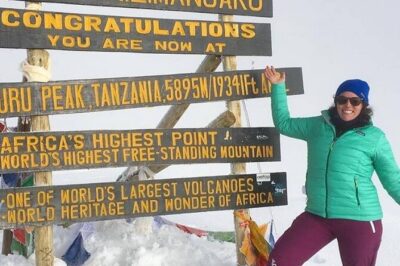
Summit day is the toughest section. You start around midnight and climb through the dark toward Stella Point on the crater rim. The ascent is listed at six to seven hours, followed by about one more hour to Uhuru Peak.
The route crosses heavy scree between the Rebmann and Ratzel glaciers. This is slow, tiring ground. The trail is steep in places, the air is thin, and the darkness can make the climb feel endless.
Reaching Stella Point is a major psychological lift. From there, Uhuru Peak is visible, but the final hour should not be underestimated. You are already tired, and the altitude is at its highest. Your guide will set a slow pace, and you may need to stop often.
At 19,340 feet, Uhuru Peak is the highest point in Africa. The sunrise, if the timing and weather cooperate, is one of the great rewards of the trip. Keep your summit stop sensible. Cold, fatigue, and altitude do not improve with a long celebration.
The descent is not an afterthought. You return through the summit area and continue down to Mweka Camp, covering about 13 miles in total, with approximately 5 kilometers uphill and 12 kilometers downhill. The full day is listed at around 11 hours, though the ascent and descent estimates together can run longer depending on conditions.
Reaching Mweka Camp gives you a proper emotional release. You have completed the hardest part, but your legs will be tired, and the descent can be rough on knees and feet. Trekking poles can be useful, though the supplied details do not confirm whether they are provided, so ask before departure.
Day 8: The walk to Mweka Gate
The final morning takes you about 6.4 miles downhill to Mweka Gate, with three to four hours of walking. The route returns you toward lower forest, and the change in air and vegetation can feel dramatic after the summit zone.
A Climb Kili vehicle waits at the gate to transfer you back to your Arusha hotel. That return ride is valuable. After eight days on foot, arranging a taxi or sorting out transport would be an unnecessary chore.
You should expect the final day to be physically easier than summit day but not effortless. Downhill walking can expose sore knees and blistered feet. Keep your pace controlled, even when the finish is close.
What the $2,895 price gives you
At $2,895 per person, this is a major purchase, but the package includes the pieces that can make Kilimanjaro planning expensive and complicated: hotel transfers, park admission, camping equipment, meals, guides, porters, and camp support.
The value is not only in the gear. It is in having a coordinated crew manage the route, camps, food, and timing while you concentrate on walking and altitude. The all-inclusive structure also makes budgeting easier.
You should still ask for a written list of exactly what is included before paying. The supplied details confirm camping equipment, fees, meals, and transfers, but they do not specify every personal item, hotel nights, tips, or optional equipment. Those details can affect the real cost.
The strong points are the eight-day schedule, the small-group limit, and the route’s acclimatization pattern. If the price is near the top of your budget, I would value the extra day and support more than a cheaper, faster itinerary. Kilimanjaro is not a good place to save money by cutting acclimatization.
Food, camping, and crew support
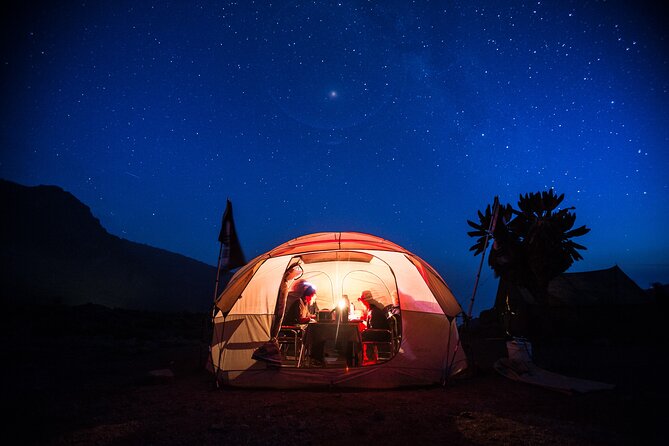
Meals are included, which removes one daily concern at altitude. The crew’s food and camp work have received especially strong praise, along with attention to comfort and safety.
Past departures have included cooks and support staff who handled hot drinks, tents, and meals, with names such as Simon, Thomas, and Balthasar associated with the operating team. Staff can vary by departure, so do not book expecting one specific guide unless Climb Kili confirms that person for your dates.
The guide team’s role is more important than entertainment. Good guides ask how you feel, control the pace, and make sensible decisions when someone struggles. Several named guides, including Amani, Raymond, Goodluck, Herment Mosha, Manny, Cinga, and Steve, have been connected with successful climbs under the company.
You should also expect a real team effort from porters and camp staff. Treating that crew fairly matters. Ask about tipping guidance before you go, since the supplied information does not state an amount.
Who should book this Kilimanjaro trek?
This trek suits you if you want a serious mountain challenge with a measured schedule and organized support. It works for first-time high-altitude hikers as well as experienced climbers, provided you meet the stated strong fitness requirement.
It is a good choice for solo people who want to join a group, couples, friends, and small family groups. The group limit gives you a chance to form a close team without committing to a private departure.
It is not suitable if you dislike camping, cannot manage long walking days, or expect a comfortable lodge-based holiday. The summit day is especially demanding, and no operator can guarantee that every person will reach Uhuru Peak.
The advertised summit success is very high, but you should treat that as encouragement, not a promise. Altitude affects people unpredictably. A careful guide will prioritize your health over a summit photograph.
Practical details before you commit
Pickup is offered, and the listed start time is 8:00 a.m. Confirmation is provided within 48 hours of booking, subject to availability. The activity accepts mobile tickets and has a maximum group size of 15.
Free cancellation is available if you cancel at least 24 hours before the local start time. Changes or cancellations inside that window are not accepted and are not refunded.
Before departure, confirm the exact hotel pickup point, the included gear, the sleeping arrangements, the tipping policy, and the names of the assigned guide team. Those questions are more useful than simply asking about the summit success rate.
Should you book the 8-day Lemosho trek?
I would choose this trek if you want the scenic western approach, a slower altitude schedule, and a full-service camp operation. The best reasons to book are the extra acclimatization time, the small-group limit, and the strong focus on guide support.
I would hesitate only if you are underprepared for the summit night or if $2,895 leaves no room for personal gear and other trip costs. Train for long uphill and downhill days, arrive ready for cold conditions, and understand that the summit is never automatic.
For a fit hiker who wants Kilimanjaro handled by an experienced local crew, this is a well-structured choice. It gives you enough time to adjust, enough scenery to make the route rewarding, and enough support to let you focus on the mountain.
FAQ
Where does the trek begin?
The trek begins on the western side of Mount Kilimanjaro at Londorossi Gate, after pickup from your Arusha hotel.
How long is the Kilimanjaro trek?
The experience lasts approximately eight days, ending with a transfer from Mweka Gate back to your hotel.
What route does this trek use?
It uses the Lemosho route, crossing the western forest, Shira Plateau, southern circuit, Barranco, Karanga, Kosovo, and the summit route to Uhuru Peak.
What is the highest point reached?
The summit is Uhuru Peak at 19,340 feet, or approximately 5,895 meters.
Is camping equipment included?
Yes. Camping equipment is included, along with meals and admission fees.
How large is the group?
The maximum group size is 15 people. Individual departures may be smaller.
How fit do I need to be?
You should have a strong level of physical fitness. The trek includes long walking days and a midnight summit ascent followed by a long descent.
Can I cancel for a full refund?
Yes, if you cancel at least 24 hours before the experience start time. Cancellations or changes made less than 24 hours before the local start time are not refunded or accepted.
Just added around Arusha
- Mt. Kilimanjaro: Shira plateau to Cathedral point 3872m Day hike★ 5.0 · 7 reviews
- 5 days safari, hiking & culture (Serengeti & kilimanjaro)★ 5.0 · 27 reviews
- One Day Hike from Kilimanjaro to Mandara★ 5.0 · 2 reviews
- 3 Days Mount Meru trekking★ 4.5 · 7 reviews
- climb the KILIMANJARO via Lemosho route★ 5.0 · 4 reviews
- 6 Day: Hiking Kilimanjaro via Machame Route★ 5.0 · 2 reviews
- Private 8 day Northern Circuit Kilimanjaro Climb★ 5.0 · 8 reviews
- Kilimanjaro Waterfalls Hike & Moshi Hot Springs Day Trip Tour★ 5.0 · 4 reviews
Kilimanjaro Climbs, compared.
Climbing Kilimanjaro through 7 days Machame Route
Read our review →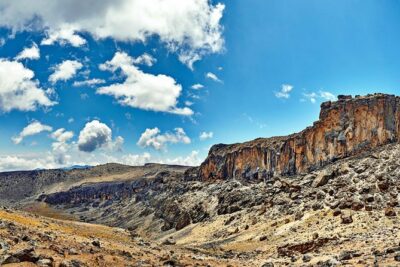
7-Day Machame Kilimanjaro Summit Tour from Arusha
Read our review →Browse the lists this trek appears in