
Review · ARUSHA
Private 8 day Northern Circuit Kilimanjaro Climb
The Northern Circuit gives you the fullest tour of Kilimanjaro. You begin on the western side, circle beneath the remote northern slopes, summit from the east, and descend through the south. That long arc lets you see far more of the mountain than a quick up-and-down route.
I like two things right away: the route’s quiet camps and broad views, and the extra days for acclimatization. The private format also means your group is not tied to strangers’ pace. The main drawback is clear: this is a demanding high-altitude trek, with long camping days, rough ground, and a brutal summit night.
Key points at a glance
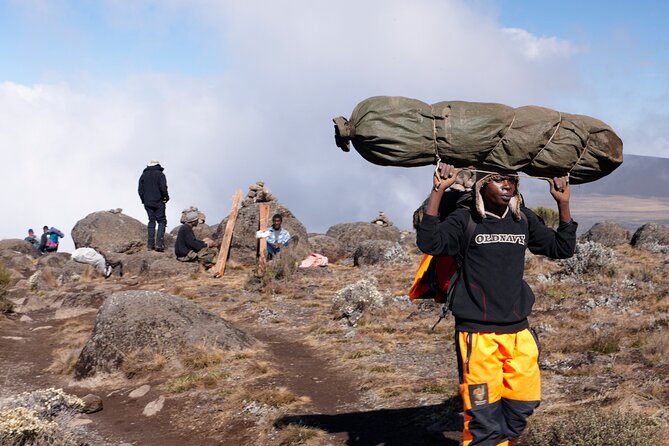
- The least-used main route: The Northern Circuit takes you around Kilimanjaro’s western and northern slopes before joining the eastern summit path.
- Eight days for acclimatization: The gradual rise from 2,389 meters to 4,717 meters gives your body more time to adjust before summit night.
- A full mountain circuit: You cross or connect with sections associated with the Lemosho, Rongai, Marangu, and Mweka routes.
- A private climb: Only your own group participates, useful if you want control over walking speed, rest stops, and daily rhythm.
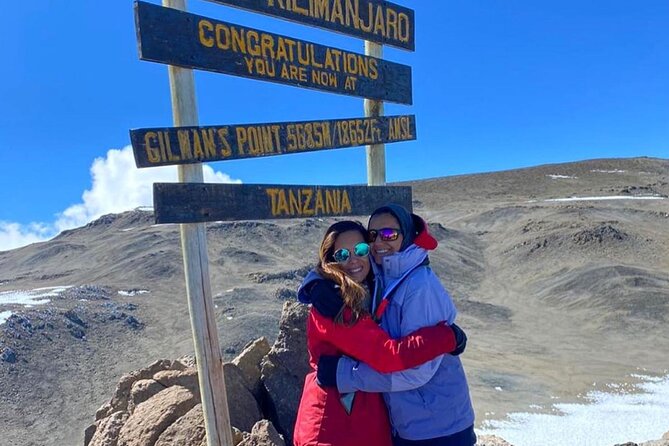
- Two summit markers: Reach Uhuru Peak at 5,895 meters, or Gilman’s Point on the crater rim at about 5,719 meters, where certificates are issued.
- A serious final push: You leave School Hut around midnight, climb through Hans Meyer Cave and Gilman’s Point, then continue to Uhuru Peak before descending.
Why the Northern Circuit earns eight days
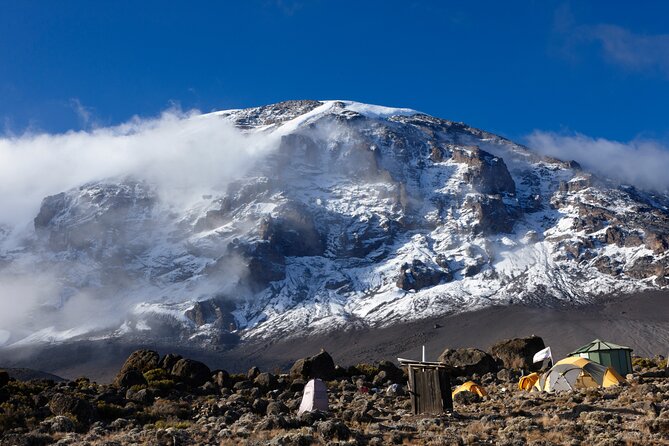
Kilimanjaro is not a technical climb in the usual mountaineering sense, but altitude makes it hard. The summit rises to 5,895 meters, where every step costs more effort and the air feels thin. The value of the Northern Circuit is not simply extra scenery. It is the slower build toward the summit.
You start at 2,389 meters at the Lemosho trailhead and spend the first several days moving through different altitude zones. The route reaches Moir Hut at 4,161 meters, climbs as high as 4,402 meters on the northern slopes, then takes you to School Hut at 4,717 meters before the summit attempt.
That pattern includes useful up-and-down walking. You gain height, lose some of it, and gain again. It can feel inefficient, but it helps you spend time high on the mountain without sleeping at the highest possible point too early.
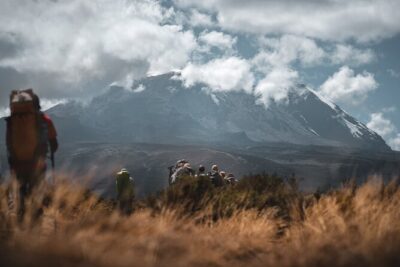
The route is also quieter than the better-known paths. You will not have the same steady stream of climbers found on the Marangu or shorter Machame approaches. If you like open views, simple camps, and long stretches where the mountain feels remote, this route is a strong choice.
More Kilimanjaro Climbs in Arusha
- 8-Day Small-group Lemosho Kilimanjaro Summit Trekking
★ 5.0 · 186 reviews - 7-Day Machame Kilimanjaro Summit Tour from Arusha
★ 5.0 · 125 reviews - Mountain Kilimanjaro Day Hike
★ 5.0 · 102 reviews
Day 1: From Londorossi Gate to Mti Mkubwa
Your 9:00 am start takes you toward Londorossi Gate, where registration formalities are completed. From there, the vehicle continues another 12 kilometers to the trailhead. That final road section can take 45 minutes to 1 hour 30 minutes, depending on conditions, so do not expect the walking day to begin at the gate.
The first trek covers about 5 kilometers, with roughly 400 meters of ascent. You walk from 2,389 meters to Mti Mkubwa, also called Big Tree Camp, at 2,785 meters. The walking time is listed at about four hours.
This is a gentle introduction by Kilimanjaro standards. The trail passes through some of the mountain’s most pristine forest, with a cool, shaded feel that makes the first day pleasant. Your tent is already erected when you arrive, and a snack awaits you.
That small detail matters. You are not carrying a full camping load or spending your first tired evening putting up shelter. The staff handles the camp setup while you settle in, eat, and prepare for the next day.
Day 2: Shira One and the first view of Kibo
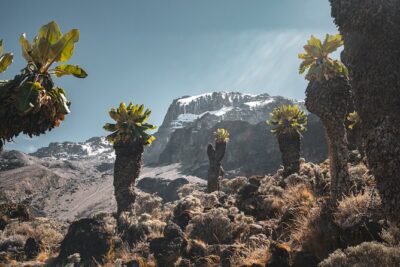
Day two is one of the most varied sections of the route. You begin among trees, then move into the heather and moorland zone. The change is striking. The forest gives way to open ground, grasses, and wild flowers, with much wider views.
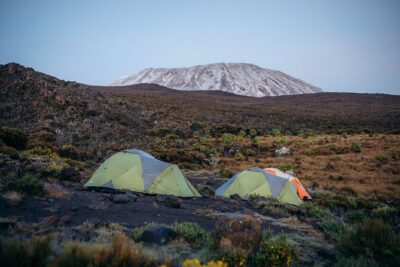
The route rounds the northern slopes of Shira Ridge, Kilimanjaro’s lesser-known third summit. You eventually get your first proper glimpse of Kibo, the snow-covered main summit. The day ends at Shira One Camp, at 3,504 meters, on the western edge of the Shira Plateau.
The walking time is about seven hours. A mild headache can appear at this altitude, and that is your reminder to slow down. The guides will likely use the phrase pole pole, meaning slowly. Follow it. A strong first-day pace does not help you later.
Shira One is valuable because it puts you high enough to begin adjusting, while still leaving several days before the summit. You can look across the plateau toward Kibo, but you should not mistake the view for proof that the summit is close. Kilimanjaro’s scale is deceptive.
Day 3: Moir Hut at 4,161 meters
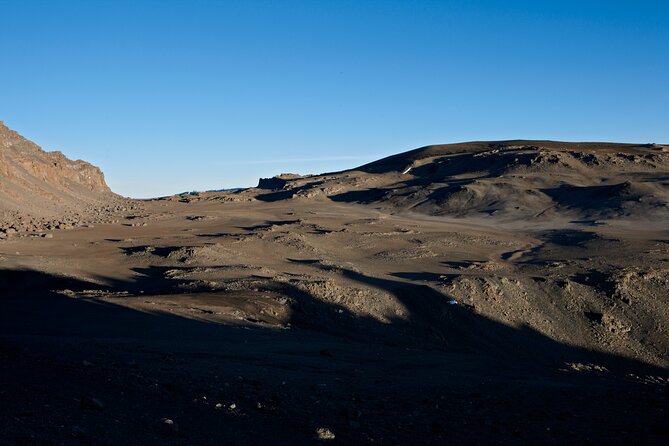
The morning begins with a short walk to Simba Camp and a junction with the 4WD emergency track from Shira 2. From there, the trail passes between boulders, around petrified lava flows, and through grassy sections.
You cover about 9.7 kilometers and gain 657 meters, arriving at Moir Hut at 4,161 meters after roughly six hours. The hut name can be misleading. This is a campsite, not a hotel room. Your tent is the important shelter.
A cave appears shortly before the camp, and the area has a rough, volcanic feel. If you still have energy, the plan includes an optional sunset acclimatization walk to a ridgeline at about 4,300 meters. That adds 1.9 kilometers and 139 meters of ascent.
This extra climb is useful because it lets you go higher during the day, then sleep lower at Moir Hut. It is also a good test of your condition. If the short acclimatization walk feels unusually hard, tell your guide. Headaches, nausea, dizziness, and unusual weakness should not be brushed aside.
Same trailhead, a different route:
- 4 Days Mount Meru Trekking
★ 5.0 · 55 reviews - 4 days Best experience Kilimanjaro Hike, Serengeti &Ngorongoro
★ 5.0 · 54 reviews - From Arusha/Moshi: Kilimanjaro Hike Marangu Route Day Trip
★ 4.5 · 54 reviews - Mount Kilimanjaro Day Hike Through Marangu Route to Mandara Hut
★ 5.0 · 37 reviews
Day 4: Around Kibo’s northern face
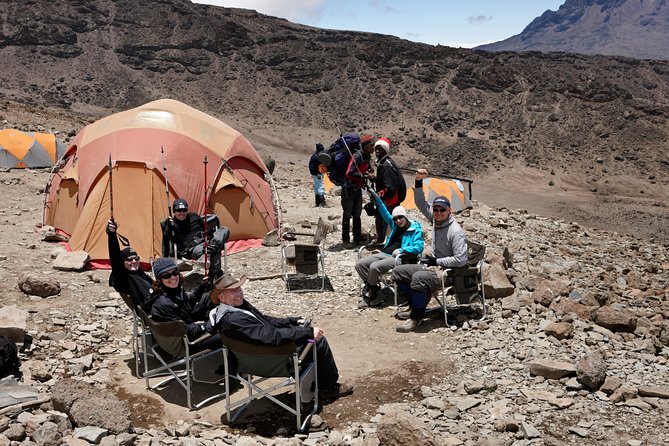
Day four is a quiet, strenuous day. You climb to about 4,402 meters, then descend to Second Pofu Camp at 4,033 meters. The total walking time is around six hours, but the number does not tell the whole story.
The trail starts with a steep, barren climb to 4,300 meters. After that, you traverse the northern face of Kibo, dropping into valleys and climbing out again. The route has a repeating rhythm of ascent and descent that can tire your legs more than a steady climb.
The solitude is the reward. You are now on the quieter side of the mountain, with broad views and fewer signs of human activity. It is a good place to appreciate why this route takes longer than many alternatives.
Altitude symptoms are possible here, especially a headache. Drink often, walk slowly, and speak plainly with your guide about how you feel. Do not try to hide symptoms to appear tough. A private group helps because the day can be adjusted around your actual condition.
Day 5: Third Cave and the growing presence of Mawenzi
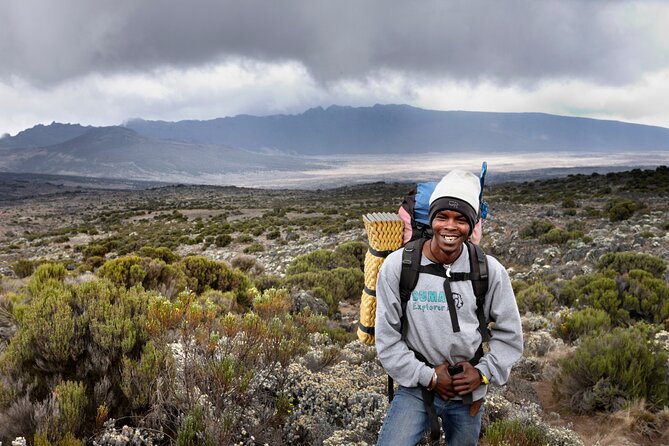
The next 6.8 kilometers continue along the northern slopes. The gradients are less severe than the previous day, but the trail still rises and falls often. You reach Third Cave Campsite after about four hours.
Kibo remains to your right, while Mawenzi begins to loom ahead. Mawenzi is Kilimanjaro’s jagged secondary summit, and its shape gives this section a different character from the broad slopes around Kibo.
This is a shorter walking day, but do not waste it by racing into camp. Your body is still adjusting, and the repeated climbs can leave you more tired than expected. Use the time to eat, drink, inspect your feet, and organize the clothing you will need for the summit attempt.
Day 6: School Hut and preparation for summit night
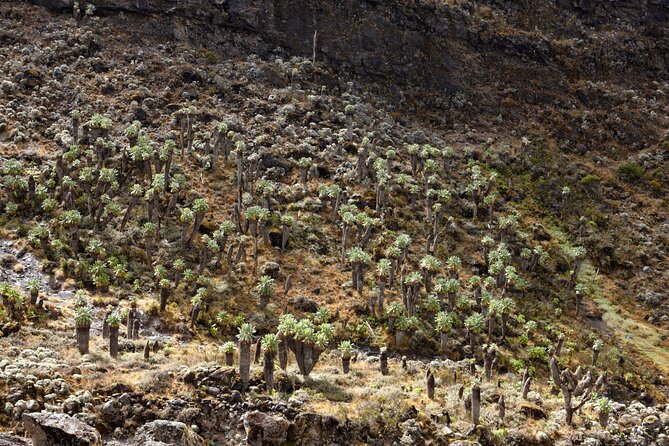
Day six covers only 4.9 kilometers, but it climbs 781 meters from Third Cave, at 3,936 meters, to School Hut, at 4,717 meters. The walking time is about four hours, and you should arrive in the early or middle part of the afternoon.
This is a deceptively hard day. The distance is short, but the height gain is serious. You are moving toward the summit zone, where the air is thin and each uphill section takes more effort.
Once at School Hut, the goal is rest. You are expected to sleep as soon as possible because the wake-up call comes around 11:00 pm or midnight. The staff wakes you for meals, which is helpful because most people do not feel like thinking about food at that hour.
Eat anyway. Summit night is long, and you need the energy. Put warm layers, water, snacks, and essential items within easy reach before you lie down. A private climb is especially useful here because the group can prepare together without dealing with a large camp schedule.
Day 7: The long night to Uhuru Peak
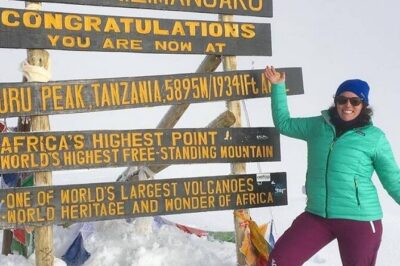
This is the day that decides the trip. You leave School Hut around midnight and climb toward Hans Meyer Cave at 5,259 meters, then continue to Gilman’s Point on the crater rim at about 5,719 meters. From there, the trail reaches Uhuru Peak at 5,895 meters.
The full day is listed at around 15 hours. The final 550 meters are particularly difficult. The cold, darkness, steep ground, and lack of oxygen combine to make this less a sightseeing walk than a test of patience and steady effort.
Gilman’s Point is one of Kilimanjaro’s three summit points. Reaching it means you have reached the crater rim, and a certificate is issued for that achievement. Uhuru Peak is the highest point and the main goal, but the guide decides how long you can safely remain at the top based on your condition, timing, and weather.
Expect only a short stay at Uhuru Peak, about 30 minutes is listed. Take the photographs you want, absorb the view if conditions allow, and listen to your guide. Staying longer is not automatically better at this altitude.
After the summit, you descend 4.86 kilometers to Barafu Camp, where you have breakfast and rest for about an hour. Then the descent continues another 6.6 kilometers toward the lower mountain. This is a punishing day even after success, so save some energy for the long walk down.
Day 8: Down the Mweka Trail and back to Arusha
After breakfast, you continue down the Mweka Trail to Mweka Gate at 1,633 meters. The listed walking time is about four hours. At the gate, those who reached Uhuru Peak or Gilman’s Point collect their certificates.
A vehicle waits to return you to your hotel and onward to Arusha. After several nights in a tent, a hot shower and a cold drink will feel well earned.
The final descent is not glamorous, but it provides a clean ending. You move from the high volcanic slopes back toward lower ground, finish the formalities, and leave the mountain behind without needing to retrace the western approach.
Food, camping, and the Duma team
The package includes eight lunches, seven breakfasts, and seven dinners. That covers the meals during the seven nights on the mountain, with the first day beginning around the trail and the final breakfast followed by the descent.
Food becomes part of your performance at altitude. You may not feel hungry, especially before the summit attempt, but eating is practical rather than optional. The supplied information confirms that vegetarian meals can be accommodated, and one Duma trip included a birthday cake, so mention dietary needs and special occasions when booking.
The staff sets up tents before you arrive at camp, which reduces daily chores. This is one of the better comforts on a route where the physical work is already substantial.
Names connected with Duma’s Kilimanjaro operations include Emanuel, Imran, Humphrey, Colman, Dickson, and Mariam. Your booking should confirm the actual guide and crew assigned to your group. The strongest praise attached to the company centers on safety, organization, supportive staff, and good food, including vegetarian meals.
Duma has also been associated with the Kilimanjaro Porters Assistance Project, known as KPAP. That matters because porter treatment is an important part of responsible climbing. Ask for current details about crew welfare, tipping, porter loads, and the number of staff assigned to your group.
Is the $2,999 price fair?
At $2,999 per person, this is not a budget walk. You are paying for an eight-day private expedition rather than a short guided hike. The value comes from the long route, greater acclimatization time, park access, camping support, meals, guide and porter crew, and transport back to your hotel.
The private format is important. A large price can feel less attractive if you only want a basic route and are happy to share every decision with strangers. It makes more sense if you value a small, dedicated group and want the pace shaped around your own condition.
The strongest financial reason to choose this route is the time. A failed summit attempt can make a cheaper, shorter itinerary poor value. No operator can promise the top, but eight days gives you a more sensible schedule than rushing upward.
Pickup is offered, mobile tickets are available, and confirmation is received at booking. Cancellation is free if made at least 24 hours before the local start time. Changes or cancellations inside that window are not refunded.
Who should book this climb?
I would choose this route if you want to see the mountain from several sides and prefer a quieter path. It suits people with strong physical fitness who can commit to six long days of walking, camping, and altitude adjustment before the summit push.
It is also a good fit if you like having the same private crew throughout the experience. Couples, families with serious hiking experience, and small groups of friends may appreciate that control.
I would think twice if you want comfortable accommodation, short walking days, or a relaxed wildlife trip with a little mountain scenery added. This is a real high-altitude climb. The summit night begins around midnight and can last until the following afternoon.
FAQ
How long is the Northern Circuit Kilimanjaro climb?
The climb lasts approximately eight days, including the final descent to Mweka Gate and transport back to your hotel in Arusha.
Where does the climb begin?
You begin with a drive to Londorossi Gate, complete registration, and continue by vehicle about 12 kilometers to the trailhead at the Lemosho starting point.
What time does the experience start?
The stated start time is 9:00 am.
Is this a private tour?
Yes. Only your own group participates in the activity.
What is the highest point reached?
Uhuru Peak is 5,895 meters above sea level. Gilman’s Point is reached on the crater rim at about 5,719 meters.
Which camps are used?
The route includes Mti Mkubwa, Shira One, Moir Hut, Second Pofu, Third Cave, and School Hut before the summit attempt.
How long is the summit day?
The summit day is listed at about 15 hours. It begins around midnight from School Hut and includes the climb to Uhuru Peak and the descent toward the lower camps.
Are meals included?
Yes. The package includes eight lunches, seven breakfasts, and seven dinners.
Is strong fitness required?
Yes. The additional information states that participants should have a strong physical fitness level.
Can I cancel for a full refund?
Yes, if you cancel at least 24 hours before the experience start time. Cancellations made less than 24 hours in advance are not refunded.
Should you book it?
Book this climb if you want the quietest, fullest route around Kilimanjaro and are willing to trade speed for acclimatization. The private setup, prepared camps, included meals, and long approach make the $2,999 price easier to justify.
Do not book it because you expect a guaranteed summit. Altitude, weather, and your health still decide the final result. Book it because you want a carefully paced attempt, a broad look at the mountain, and enough time to give yourself a fair chance at Uhuru Peak.
Just added around Arusha
- Mt. Kilimanjaro: Shira plateau to Cathedral point 3872m Day hike★ 5.0 · 7 reviews
- 5 days safari, hiking & culture (Serengeti & kilimanjaro)★ 5.0 · 27 reviews
- One Day Hike from Kilimanjaro to Mandara★ 5.0 · 2 reviews
- 3 Days Mount Meru trekking★ 4.5 · 7 reviews
- climb the KILIMANJARO via Lemosho route★ 5.0 · 4 reviews
- 6 Day: Hiking Kilimanjaro via Machame Route★ 5.0 · 2 reviews
- Kilimanjaro Waterfalls Hike & Moshi Hot Springs Day Trip Tour★ 5.0 · 4 reviews
- 6 Days Kilimanjaro Climbing Machame route★ 4.0 · 4 reviews
Kilimanjaro Climbs, compared.
8-Day Small-group Lemosho Kilimanjaro Summit Trekking
Read our review →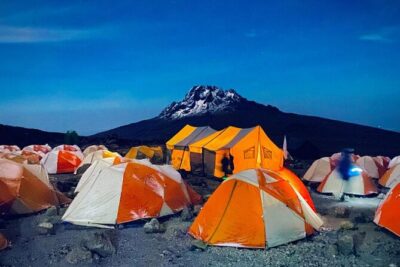
Climbing Kilimanjaro through 7 days Machame Route
Read our review →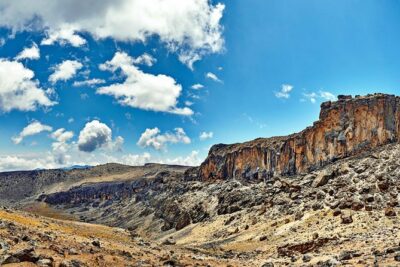
Browse the lists this trek appears in