
Review · KATHMANDU
Pokhara: 5-Day Annapurna Base Camp (ABC) Trek
Annapurna Base Camp gives you a rare Himalayan payoff in only five trekking days: you walk from warm rice country into a huge mountain bowl surrounded by the Annapurna peaks. The route passes through Gurung villages, thick forest, Jhinu’s hot springs, and Machhapuchhre Base Camp before reaching ABC at 4,130 meters.
I like the practical setup. Your Pokhara hotel pickup, road transport, conservation permits, tea house lodging, and registered guide are covered, and your luggage can stay in Pokhara while you walk. I also like the personal feel of a private group, with guides such as Santosh, Prabit, and Ramit praised for clear communication, pacing, and care.
The catch is the schedule. Five days is efficient but demanding, especially on the long climb to Deurali and the descent to Bamboo. You need solid basic fitness, and you should confirm whether the price includes full-board meals, since the information lists meals under the included options but also says to choose the full-board plan.
Key points to know before you book
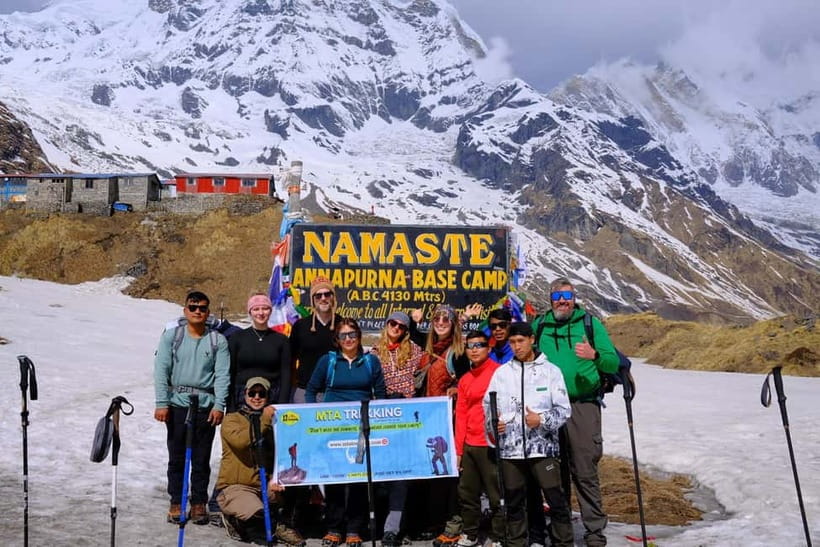
- ABC in five days: You reach the famous base camp at 4,130 meters, then spend the following morning enjoying the mountain bowl before descending.
- A private trek with a guide: Hotel pickup, a registered English-speaking guide, permits, and transport from Pokhara are included.
- Gurung culture along the trail: Villages such as Jhinu and Sinuwa offer a closer look at local mountain life than a faster point-to-point trip by road.
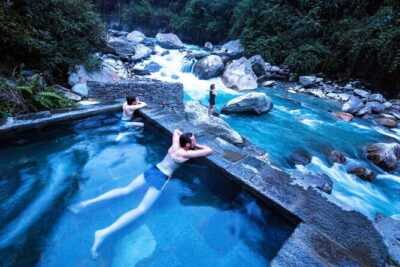
- Hot springs at Jhinu: You can stop at the natural hot springs near the start and end of the trek, though the soak is optional.
- Tea house nights: Accommodation is simple mountain lodging, with basic comforts and extra charges for showers, Wi-Fi, drinks, water, and laundry.
- A demanding timetable: Walking days run roughly four to six hours, with steep sections and a serious altitude gain.
Why the five-day ABC route works
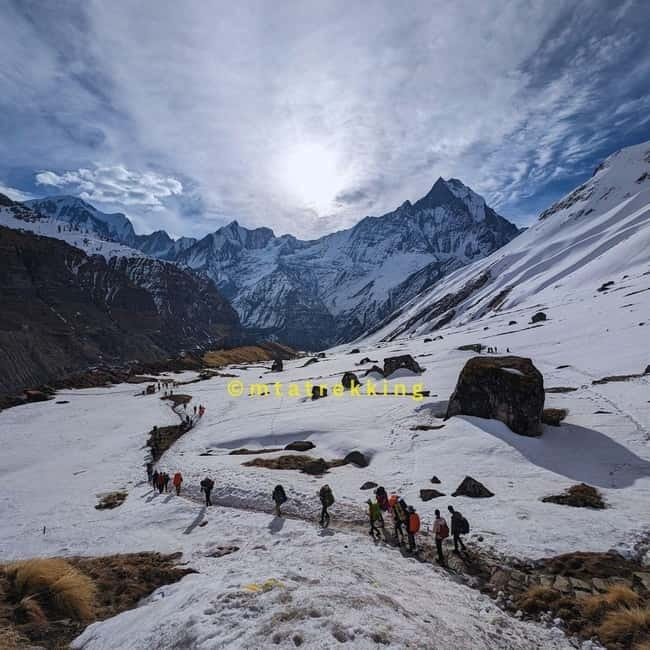
The Annapurna Base Camp route is popular for good reason. You begin near Pokhara, a relaxed lakeside city, and finish in a high mountain sanctuary where snowy peaks rise close around you. The scenery changes quickly, which keeps the walk interesting even when your legs begin to complain.
This version trims the approach into a compact five-day plan. That makes sense if you have limited time in Nepal, but it also means there is little room for a slow start or an extra rest day. I would choose this schedule only if you are comfortable walking for several hours on consecutive days and accepting a brisk pace.
The private format helps. Your guide can adjust rest stops and walking speed more easily than a large fixed group. One recent guide, Prabit, was especially careful about equipment and readiness, while Ramit was praised for balancing walking time with rest. That is exactly what matters on a high-altitude trek. The mountains do not care about your timetable, but a good guide can help you avoid turning tiredness into a bigger problem.
More Annapurna Treks in Kathmandu
- Annapurna Circuit Trek with Tilicho Lake
★ 5.0 · 368 reviews - Annapurna base camp trek 5 Days
★ 5.0 · 252 reviews - 14-Day Private Annapurna Base Camp Trek
★ 5.0 · 180 reviews
From Lakeside Pokhara to the trail at Sinuwa
Your day begins with pickup at a hotel in the Lakeside area or at Pokhara International Airport. A jeep or SUV takes you toward Siwai, the last road point for this route, with about three hours of road travel before the walking begins.
The drive is not the main event, but it matters because it saves a long approach on foot. Once you start walking, the route heads toward Lower Sinuwa at about 2,300 meters. The stated walking time is roughly five to six hours, depending on the exact pace and stops.
Jhinu is an important early stop. The village is known for its natural hot springs, which offer a chance to loosen stiff legs. You may not have time for a long soak on the way up, so treat the springs as an optional bonus rather than the central feature of the day.
The first walking day introduces the mix that makes this route appealing. You may pass terraced rice fields, forested sections, and traditional villages, with mountain views opening and closing as the trail changes direction. Sinuwa is not a luxury stop. Expect a simple tea house night and a full first day on foot.
Sinuwa to Deurali, the day that tests your legs
The second day is roughly six hours from Lower Sinuwa to Deurali at about 3,200 meters. This is where the trip begins to feel like a serious Himalayan trek rather than a scenic village walk.
You will move through changing forest and steeper mountain terrain. The exact feel of the route depends on weather and trail conditions, but the key point is steady ascent. You are gaining altitude while also covering enough ground to keep the five-day plan on schedule.
Deurali is a useful overnight point because it places you close to the high section of the route. The benefit is a shorter walk to base camp the next day. The drawback is that you finish the day tired and sleep at a higher altitude, where some people notice headaches, poor sleep, or shortness of breath.
Altitude sickness is possible at ABC’s height, even though the information for this trip describes it as uncommon. Take symptoms seriously. Tell your guide if you feel unwell, walk at a controlled pace, and follow the guide’s advice rather than trying to prove something to the mountain.
This is also the day when your clothing system matters. Bring comfortable clothes for walking, a change of clothes, and comfortable shoes with reliable grip. Cash is useful for small personal costs because hot showers, Wi-Fi, drinks, bottled water, and laundry are not covered.
Deurali to Machhapuchhre Base Camp and ABC
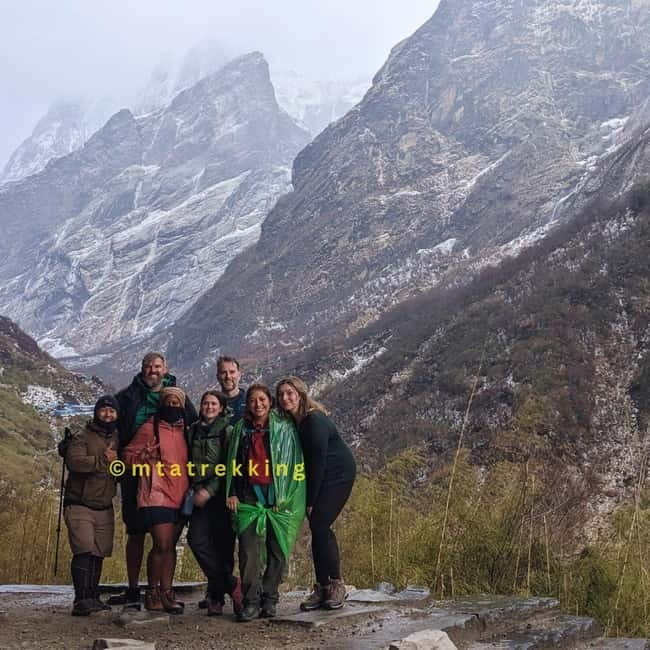
The third day is the high point of the trip, both literally and emotionally. From Deurali, you walk toward Machhapuchhre Base Camp, then continue to Annapurna Base Camp. The walking time is listed at about four to six hours, depending on conditions and pace.
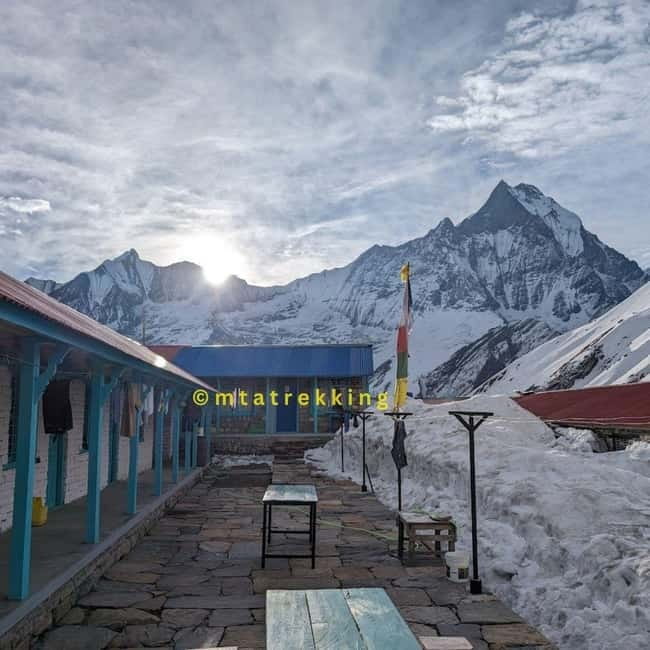
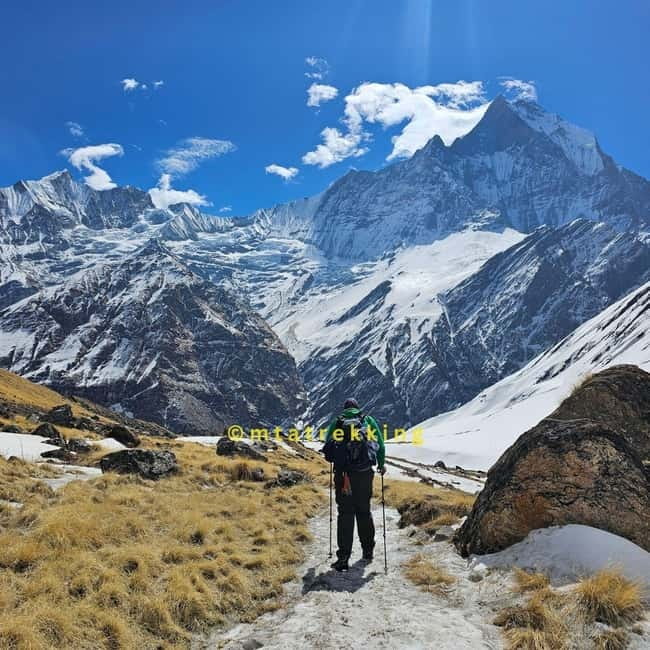
Machhapuchhre means Fishtail, and the stop gives you a close view of one of Nepal’s most recognizable peaks. It is not just a quick photo pause. It marks the transition into the high mountain bowl around ABC, where the peaks feel much closer and the vegetation becomes less important than rock, snow, sky, and steep ridges.
At 4,130 meters, Annapurna Base Camp is the main reward. You reach a broad mountain setting surrounded by the Annapurna range, with the south face of Annapurna providing the kind of view that explains why people make this demanding walk. The base camp itself is not a city or a grand complex. It is a high mountain destination where the scale of the peaks does the talking.
Plan your expectations around weather. The information promises scenic views, sunset, and sunrise opportunities, but Himalayan conditions can change quickly. A cloudy arrival does not mean the trip has failed. Your guide can help you make the most of clear spells, and the next morning may offer a different view.
The elevation also changes the way a short walk feels. Four hours at high altitude can be harder than a longer walk at a lower level. Move slowly, drink as advised, and do not treat the schedule as a race.
Same trailhead, a different route:
- Everest Base Camp Trek – 14 Days
★ 5.0 · 1,499 reviews - Everest Base Camp Trek
★ 5.0 · 842 reviews - Everest Base Camp Helicopter Tour landing at Everest View Hotel
★ 5.0 · 668 reviews - Everest Base Camp Trekking
★ 5.0 · 485 reviews
Sunrise at ABC and the descent to Bamboo
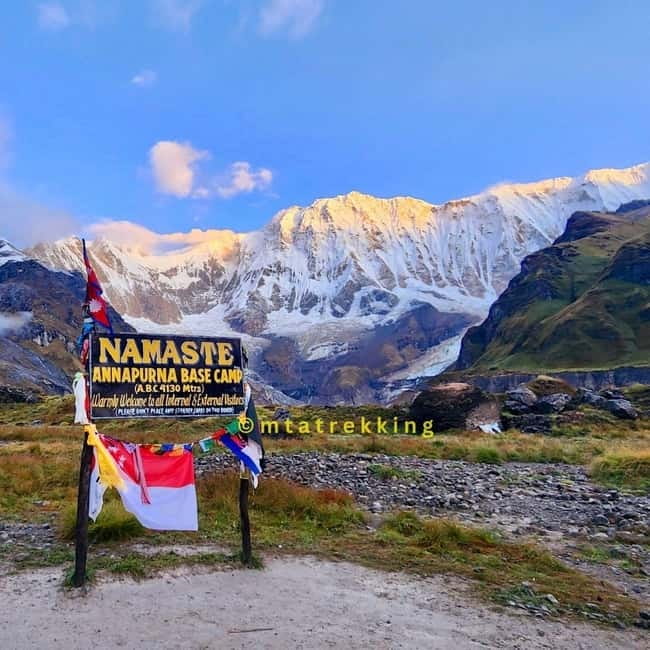
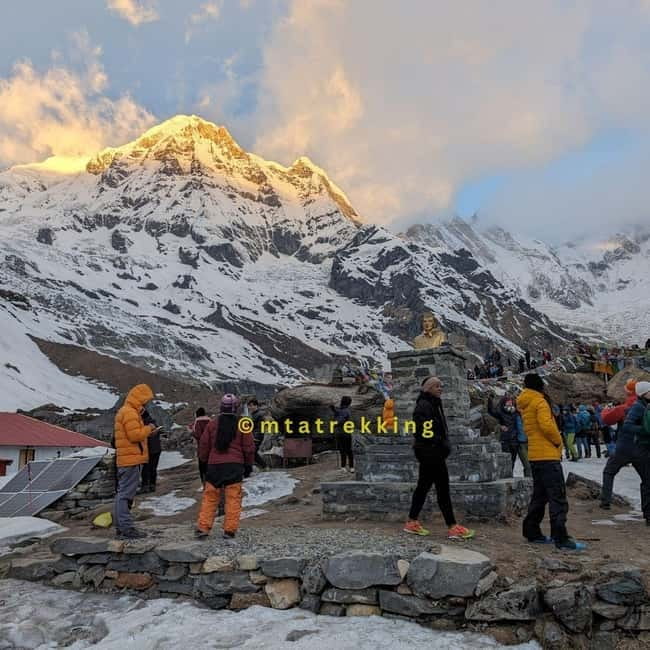
The fourth day begins with more time at Annapurna Base Camp before the long descent to Bamboo at around 2,400 meters. The sunrise is one of the strongest reasons to keep your camera ready. The high peaks can catch the first light, and the open view toward Annapurna’s south face can be unforgettable.
The descent is easier on the lungs but not always on the knees. You will retrace sections of the route through changing terrain, and the downhill hours can feel surprisingly tough after the early start at base camp.
Bamboo is a welcome stopping point because you return to a much lower elevation. It is another tea house night, with the same basic arrangement and the same extra costs for personal comforts. If you prefer a hot shower, Wi-Fi, drinks, or bottled water, carry cash and ask your guide or lodge staff about current prices.
This day also shows why the private group setup has real value. A guide can help manage the pace, keep the group together, and suggest sensible breaks. Ramit was especially noted for handling rest and travel times well, which is the kind of quiet organization you appreciate when your legs are tired.
Bamboo to Jhinu and the final drive to Pokhara
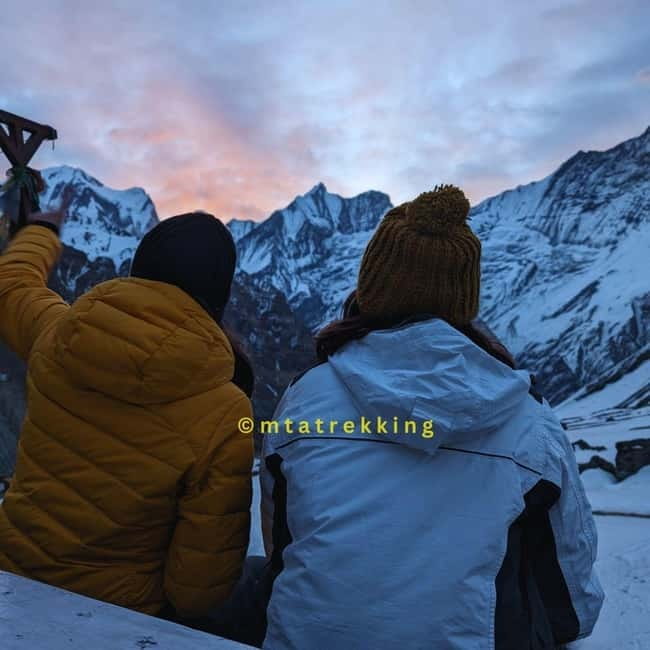
The last trekking day takes you from Bamboo toward Jhinu Danda, with the listed walking time around six hours. The trail returns toward warmer, greener country, and you may notice the difference in air and vegetation as you lose altitude.
Jhinu is the natural finale because of its hot springs. You can stop for an optional soak before meeting the vehicle. This is a pleasant way to finish, but do not count on it as a guaranteed long bathing session. Walking time, road timing, and weather can affect how much time you have.
A jeep or SUV then returns you to Pokhara in about three hours. The trip ends back in Lakeside, so you are not left to arrange your own transfer after a tiring descent. That hotel drop-off is a small but useful detail, especially if you have an early onward journey.
Tea houses, meals, and what the price covers
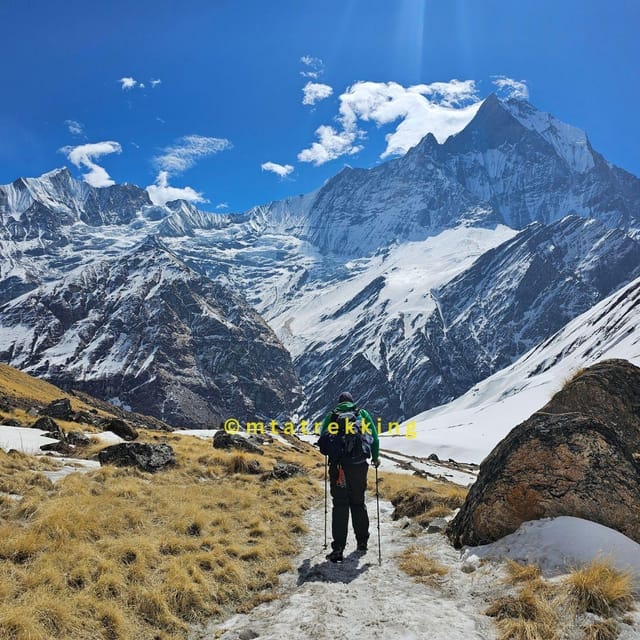
At $136 per person, the trip offers strong value if the quoted plan matches your needs. You receive private transport from Pokhara to Siwai and back, tea house accommodation, Annapurna Conservation Area and government permits, TIMS, taxes, a registered English-speaking guide, first aid equipment, hotel pickup and drop-off, and storage for luggage in Pokhara.
The price needs one careful check: the information says meals are included when you choose the full-board option. Do not assume every booking tier includes food. Confirm the exact meal arrangement before paying, because buying meals independently on the trail can change your daily budget.
A porter is not included. Porter service costs $20 per day, and that can be worthwhile if you want your guide to focus on walking support rather than carrying a heavy load. If you carry your own bag, pack lightly. Mountain lodging is simple, and you will be happier with less weight.
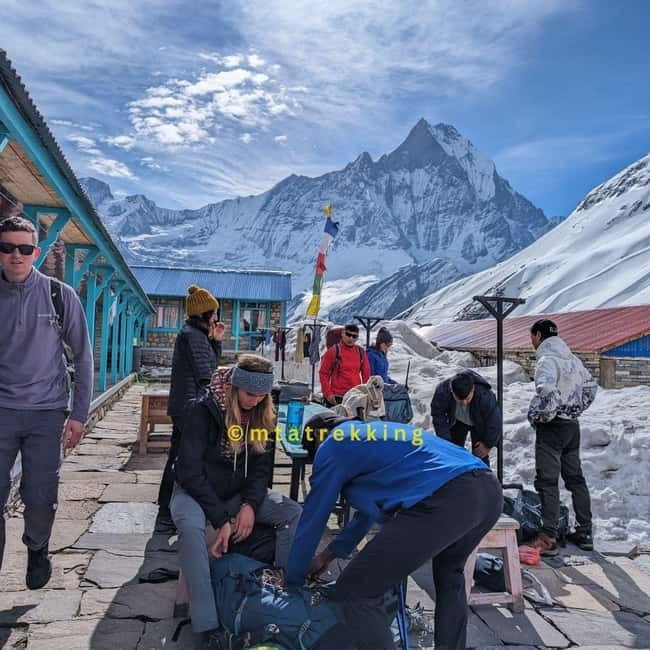
The tea houses give you a practical way to sleep along the route without camping. Do not expect hotel service. The tradeoff is clear: basic accommodation in exchange for a lower price and a route that does not require you to carry shelter or cooking equipment.
Weather, monsoon conditions, and safety
June through August brings a higher chance of heavy rain and changeable weather. The lower trails can become wet and slippery, and leeches may be a nuisance. Long trousers tucked into gaiters and insect repellent can help.
Good rain gear is essential during the monsoon. Listen to your guide if conditions affect the route or timing. The fact that transport and walking times are planned does not mean the mountain will follow a strict clock.
Outside the monsoon, weather can still change at altitude. Bring layers, dry clothing, and cash for practical needs. A first aid kit is provided, but it is not a substitute for personal medication, travel insurance, or rescue coverage.
Rescue and insurance are not included. You should arrange suitable insurance before setting out, with coverage for trekking at 4,130 meters. That is especially important because altitude problems can develop even in fit people.
Who should choose this trek
I would recommend this trip to you if you want the classic ABC goal but have only five days available from Pokhara. It suits people who enjoy walking through villages and forests, want a private guide, and prefer tea houses over camping.
You should be comfortable with several hours of walking each day and with steep uphill and downhill sections. The trip is not suitable for pregnant women, wheelchair users, people with mobility impairments, visually impaired people, people already experiencing altitude sickness, or anyone over 70 according to the stated restrictions.
That age limit is a firm booking condition, not a comment on general fitness. If you are close to the limit or have a medical concern, clarify your situation before reserving.
I also think this route suits people who value human support. The strongest parts of the experience are not only the mountain views. They are the guide’s pacing, equipment checks, cultural explanations, and practical help when you are tired. Guides Santosh, Prabit, and Ramit have each been associated with recent departures, but you should confirm who will lead your trek.
Should you book the five-day ABC trek?
Book it if you want a compact, guided route to Annapurna Base Camp and you are ready for a demanding schedule. The combination of private transport, permits, tea houses, luggage storage, and an English-speaking guide makes $136 a sensible starting price, provided you select the correct meal option and budget for personal costs.
I would not choose it if you want leisurely walking days, guaranteed comfortable accommodation, or plenty of spare time for weather delays. A longer itinerary would be gentler, but this five-day plan gives you a strong mountain experience in a tight window.
For the best chance of enjoying it, build fitness before arrival, pack light, carry cash, bring rain protection, and treat altitude seriously. If the idea of reaching a high mountain sanctuary after passing Gurung villages and hot springs sounds worth a few sore muscles, this is a practical way to do it.
FAQ
How long is the Annapurna Base Camp trek?
The trek lasts five days and four nights, including transport from Pokhara and the return drive.
Where does the trek start?
Pickup is available from hotels and locations in the Lakeside area of Pokhara, as well as Pokhara International Airport.
How high is Annapurna Base Camp?
Annapurna Base Camp is at 4,130 meters, or about 13,550 feet.
Is transport from Pokhara included?
Yes. Private transport by jeep or SUV is provided from Pokhara to Siwai and back to Pokhara.
Is accommodation included?
Yes. The trip includes tea house accommodation during the trek.
Are meals included?
Meals are included when you choose the full-board meal option. Confirm the exact option at booking.
Is a porter included?
No. Porter service costs $20 per day.
What does the guide speak?
The tour includes a professional, government-registered English-speaking trekking guide.
Can I visit the hot springs at Jhinu?
Yes. Visiting the natural hot springs at Jhinu is optional and appears on the route near the start and end of the trek.
What personal costs are not included?
Hot showers, Wi-Fi, drinks, mineral water, laundry, rescue, insurance, and porter service are not included.
More 5-Day Experiences in Kathmandu
- Kathmandu to Annapurna Base Camp (ABC) 5-Day Trek
★ 5.0 · 102 reviews - 5 Day Private Guided Trekking in Annapurna Base Camp
★ 5.0 · 25 reviews - 5-Day Sunrise Tour in Kathmandu Near Everest
★ 5.0 · 12 reviews - From Kathmandu: 5-Day Gosaikunda Lake Trek
★ 5.0 · 6 reviews
Just added around Kathmandu
- Everest Base Camp Trek with Helicopter Return – 10 Days★ 5.0 · 9 reviews
- Everest Base Camp Trek With Local Expert Sherpa Guide★ 5.0 · 15 reviews
- Everest Base Camp Trek Via Salleri★ 5.0 · 9 reviews
- Everest Base Camp Trek★ 5.0 · 33 reviews
- Everest Base Camp Trek Via Gokyo Lake and Cho La Pass★ 5.0 · 8 reviews
- Everest Base Camp Trek – 16 Days★ 5.0 · 16 reviews
- Everest Base Camp Trek -17 Days★ 5.0 · 9 reviews
- 14 days Everest Base Camp Trek★ 5.0 · 18 reviews
Annapurna Base Camp Treks, compared.
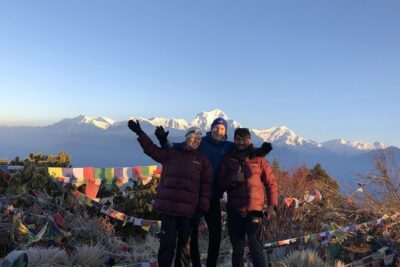
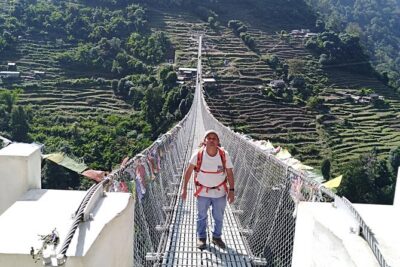
Trekking in Annapurna/Langtang/Everest/Upper Mustang regions
Read our review →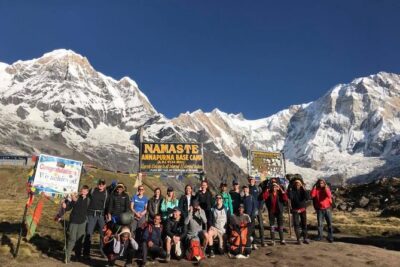
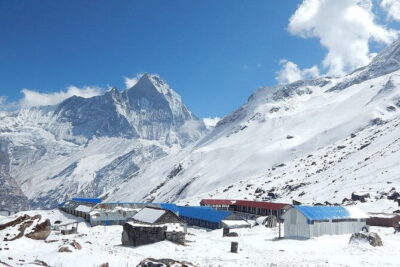
Kathmandu to Annapurna Base Camp (ABC) 5-Day Trek
Read our review →Browse the lists this trek appears in