
Review · KATHMANDU
5 Day Private Guided Trekking in Annapurna Base Camp
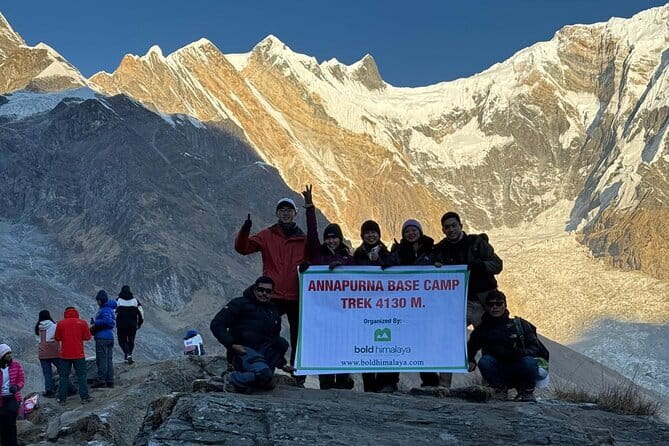
Annapurna Base Camp is the prize here, but the route earns it honestly. You walk from Siwai through forests, villages, waterfalls, and high mountain country before reaching a bowl of peaks that includes Annapurna South, Annapurna I, Machapuchare, and Hiunchuli.
I like the private format, which lets your guide match your pace, and I like the practical price: $225 includes transport, permits, four breakfasts, four lunches, four dinners, and the guide’s costs. The main catch is the schedule. Five days makes this a brisk mountain walk, and you need moderate fitness, especially on the climb toward base camp.
Key points at a glance
- A private route to 4,130-meter Annapurna Base Camp: You walk with only your own group and a guide.
- Sirjan is the guide name to know: Feedback repeatedly praises his care, steady support, and attention to walking pace.
- Machapuchare Base Camp comes before ABC: The sacred Fishtail peak gives the route one of Nepal’s most memorable mountain scenes.
- Four nights of meals are covered: Breakfast, lunch, and dinner are included, but drinks, desserts, insurance, and tips are extra.
- Jhinu Danda hot springs add a welcome recovery stop: They are a natural way to ease tired legs.
- The route returns by jeep from Siwai to Pokhara: That saves you from repeating the entire walk on foot.
Why this five-day trek works
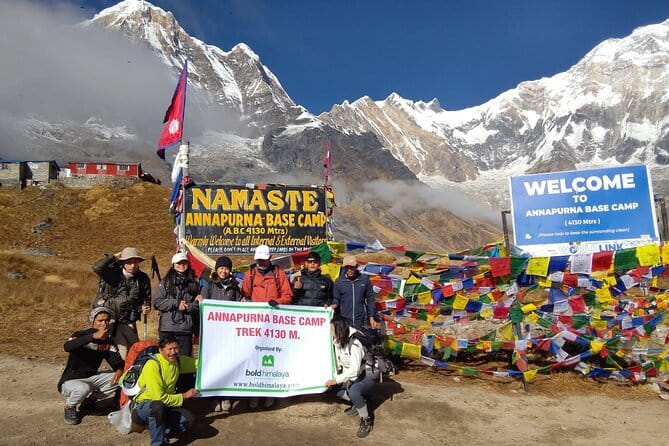
This is a compact route into the Annapurna Sanctuary, a high mountain bowl surrounded by steep Himalayan peaks. You begin near Pokhara and gradually trade terraced fields and village paths for bamboo forest, waterfalls, alpine meadows, and snow-covered summits.
The private setup matters. You are not tied to a large group’s slowest pace or forced to follow a fixed rhythm that does not suit you. A good guide can also adjust breaks and check how you are handling the altitude. Sirjan is named repeatedly in the trip material, and his strongest qualities are simple ones: he stays attentive, walks with the group, and helps make the route feel manageable. One account also spells his name Srijan, so confirm the guide’s name when you book.
The price is strong for what is included. At $225 per person, you receive private transportation, the trekking permit and TIMS card, a guide with meals, lodging, salary, and insurance covered, plus four breakfasts, four lunches, and four dinners. Seasonal fruit is also included.
You still need to budget for drinks, desserts, travel insurance, and tips for the trekking crew. The price does not include porter service as a named inclusion, although some past trip arrangements used porters. Ask directly if you need one. That is especially important if you want to carry only a daypack.
More Annapurna Treks in Kathmandu
- Annapurna Circuit Trek with Tilicho Lake
★ 5.0 · 368 reviews - Annapurna base camp trek 5 Days
★ 5.0 · 252 reviews - 14-Day Private Annapurna Base Camp Trek
★ 5.0 · 180 reviews
Day 1: From Pokhara to Siwai and into the foothills
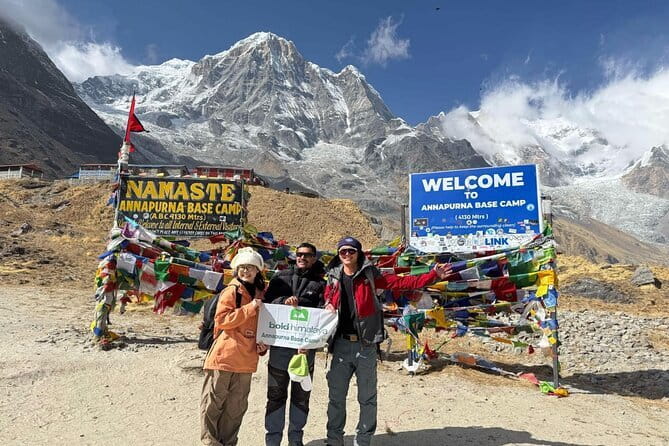
Your first day begins with transport from Pokhara to Siwai, the trailhead for the walk. The ride takes you away from the city and toward the smaller roads and rural settlements that frame the Annapurna route.
At Siwai, the walking starts. The route moves through a mix of forests, terraced fields, and villages, giving you a gradual introduction rather than dropping you straight into high-altitude terrain. You get a sense of how people live in the foothills, where the trail is both a walking route and a link between communities.
The supplied schedule describes this day in broad terms and does not state the overnight village or walking hours. That makes one question worth asking before departure: exactly where will you sleep on night one, and how many hours will you walk after reaching Siwai? A five-day plan can vary quite a bit depending on the chosen overnight stops.
The driving and walking combination also explains why pickup details deserve clarification. The experience is listed in connection with Kathmandu, but the actual trek starts from Pokhara. Pickup is offered, yet the information does not clearly state whether that means pickup in Pokhara, Kathmandu, or another agreed location. Confirm this before paying for separate transport.
Day 2: Bamboo, Dovan, and the Modi Khola
After breakfast in Sinuwa, the trail enters thicker forest. Bamboo becomes a major feature, and the route follows the Modi Khola River through a cooler, more enclosed section of the valley.
This is a satisfying day for people who like changing scenery. You pass waterfalls and hear the river below or beside the path, while the forest keeps the route shaded in places. The walk feels more remote than the first day, even though it remains part of a well-used trekking corridor.
Dovan is one of the route’s useful markers. It signals that you are moving deeper into the valley and closer to the high country. The forests also bring a chance to see some of the Annapurna Conservation Area’s plant and animal life. The itinerary does not promise particular wildlife sightings, so think of this as a biodiversity bonus, not a scheduled encounter.
The footing and altitude begin to matter more here. A moderate fitness level is required, and you should expect sustained walking rather than a sightseeing stroll. Your private guide can help manage the pace, but no guide can remove the physical work. Keep your expectations realistic: this is a genuine trek with uphill and downhill sections.
Day 3: Machapuchare Base Camp and Annapurna Base Camp
Day three is the emotional center of the trip. You start early after breakfast and walk through rhododendron forest toward Machapuchare Base Camp, often shortened to MBC. The route may also pass yak herders, a striking sign that you are entering a higher, more open part of the valley.
After lunch, you continue toward Annapurna Base Camp at about 4,130 meters. The final approach changes the feel of the walk. Trees give way to alpine ground, and the mountain walls begin to dominate the view.
Machapuchare, or Fishtail, is sacred and is not climbed. Its sharp double summit is one of Nepal’s most recognizable peaks. Seeing it from its base camp gives the route a clear sense of place, rather than making ABC feel like a random finish line.
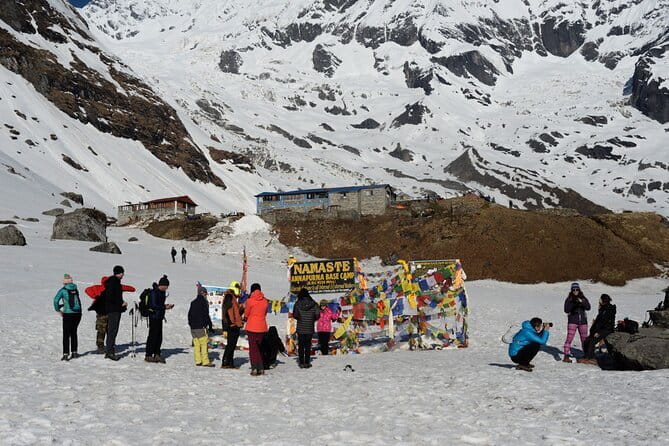
Annapurna Base Camp itself sits in a high mountain sanctuary surrounded by giant peaks. Annapurna South, Annapurna I, Machapuchare, and Hiunchuli create the main visual drama. This is the point where the earlier forest walking pays off. You have not simply driven to a viewpoint. You have crossed several ecological zones on foot and reached the center of the mountain amphitheater under your own power.
The listed stop at Annapurna Base Camp is shown as about three hours with admission included. That likely refers to time at the site, not the full walking day, so ask for the expected total walking hours. Day three is the hardest day to treat casually. The altitude is high, the air is thinner, and the schedule begins early. If you feel unwell, tell your guide at once.
Same trailhead, a different route:
- Everest Base Camp Trek – 14 Days
★ 5.0 · 1,499 reviews - Everest Base Camp Trek
★ 5.0 · 842 reviews - Everest Base Camp Helicopter Tour landing at Everest View Hotel
★ 5.0 · 668 reviews - Everest Base Camp Trekking
★ 5.0 · 485 reviews
Day 4: Sunrise above the Annapurna Sanctuary
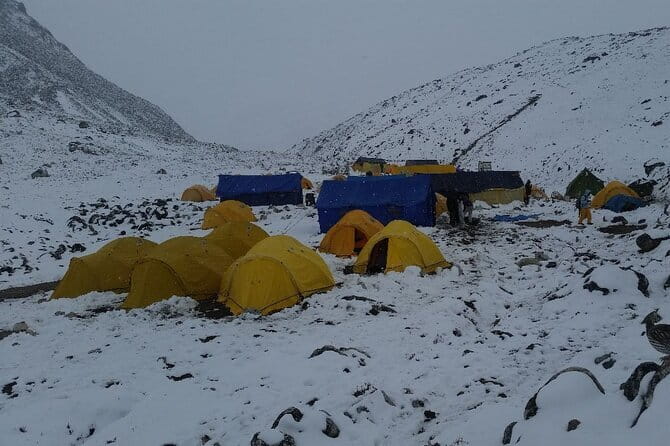
The reward for sleeping at ABC is an early view of sunrise over the Annapurna massif. Morning light can change the color and shape of the peaks quickly, so have warm layers ready and keep your camera close.
After sunrise, you descend through the same dramatic mountain country, passing Machapuchare Base Camp and Deurali. Descending is usually easier on the lungs than climbing, but it can be tough on knees and ankles. Trekking poles, if you use them, can be useful here, though they are not listed as supplied equipment.
The return route lets you see familiar places from a new angle. Waterfalls, ridges, and the Modi Khola corridor take on a different character when you are heading down. The day is also a good reminder that an Annapurna Base Camp trek is not finished when you arrive at the summit destination. You still have a long descent before the transport home.
The itinerary does not identify the night’s exact village or lodging. Your guide should confirm that plan before you leave ABC. Tea houses are part of the normal route experience, and one account specifically describes the tea house stays as pleasant and manageable, but this package does not list individual properties.
Day 5: Down through bamboo and back to Pokhara
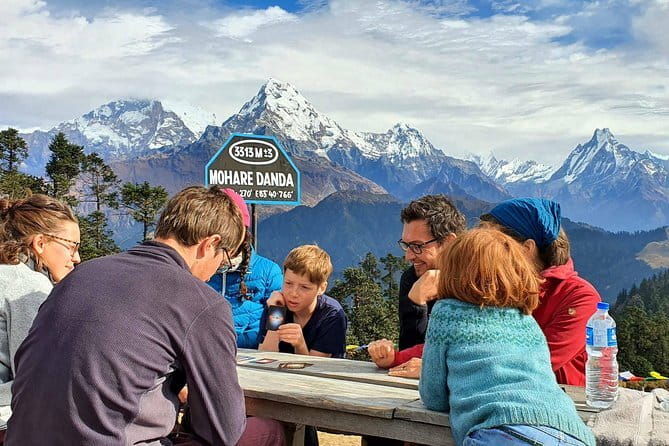
The final day continues downhill through bamboo and forest toward Siwai. After several days at altitude, the return to greener surroundings feels welcome.
At Siwai, Bold Himalaya’s guide arranges a jeep for the return to Pokhara. This is a practical feature. Instead of retracing the entire route on foot, you finish the trek where the road begins and use transport for the last leg.
The schedule does not specify the drive time or arrival hour in Pokhara. If you have a flight, hotel transfer, or another tour booked that evening, leave a generous buffer. Mountain roads and trail timing can be unpredictable, and the experience requires suitable weather.
The food, permits, and what the price really covers
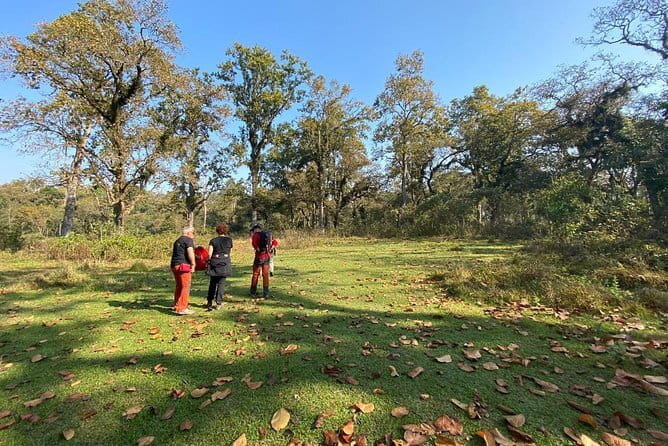
The $225 rate includes the major costs that can quietly add up on a mountain trip. Private transportation, trekking permits, the TIMS card, guide accommodation, guide meals, guide salary, and guide insurance are all covered.
You also receive four breakfasts, four lunches, and four dinners. That matches the four-night, five-day schedule. Seasonal fruit is included as well, which is a small but welcome addition on a demanding walk.
Drinks are not included. This means you should expect to pay separately for water and other beverages along the route. Desserts and extra meal items are also outside the package. Travel insurance is your responsibility, and tips for the trekking crew are not included.
The strongest value comes from the private guide arrangement. Sirjan is praised for checking on the group, staying close, and helping people keep a comfortable pace. That kind of support matters more than fancy extras on a route where weather, energy, and altitude can change the day’s feel.
Porters are not listed among the included services. Some group accounts mention three porters, while another mentions a trek with porters, but that does not establish that porter service comes with this exact five-day booking. Ask before you arrive. If you want porter support, get the cost and luggage limit in writing.
Who should book this trek?
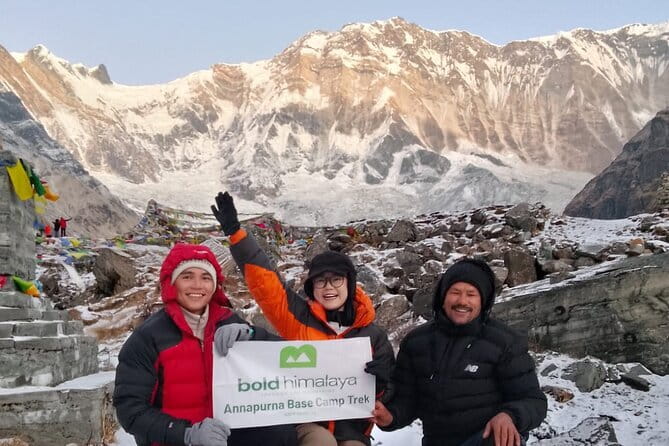
This route suits you if you want a private Himalayan trek without organizing every permit, meal, vehicle, and guide detail yourself. It also works well for friends or couples who want their own pace and do not want to join a large group.
You need moderate physical fitness. The route includes several days of walking, forest paths, uphill sections, a high-altitude finish, and a long descent. You should be comfortable spending most of the day on your feet.
The trek is less suitable if you want a relaxed holiday with short walks and generous recovery time. Five days is efficient, but not leisurely. It is also not a good choice if you have not discussed altitude concerns with a doctor or if you are unwilling to walk at a steady pace.
Group discounts are available, which may make the cost better for friends traveling together. Since this is a private activity, only your group participates. Confirm the final group price and pickup point before booking.
Practical details before you commit
Confirmation is provided at booking. The cancellation policy allows a full refund if you cancel at least 24 hours before the experience begins. A cancellation inside that window is not refundable, and late changes are not accepted.
Weather is important. If poor conditions force cancellation, you are offered another date or a full refund. That policy is useful on a mountain trek, where safety and trail conditions can change quickly.
Use the time before departure to ask four direct questions: where you meet the vehicle, where each night is spent, whether porters are included or available, and the expected walking hours on day three. Those details are not fully spelled out, and knowing them will make the $225 package easier to judge.
Also confirm whether you should arrive in Pokhara before day one. The route clearly begins with transport from Pokhara to Siwai, while the experience is listed under Kathmandu. That may simply reflect the company’s broader operating base, but it is worth clearing up.
Should you book the Annapurna Base Camp trek?
I would book this trek if you want a short, private route with strong inclusions and a guide who stays involved. The combination of Machapuchare Base Camp, Annapurna Base Camp, village paths, waterfalls, and the return jeep gives you a lot in five days.
I would pause if you need a slow schedule, precise overnight details before booking, or porter service included by default. Ask those questions first. If the timing and support match your needs, $225 is a fair price for a well-supported route into one of Nepal’s great mountain settings.
FAQ
Where does the trek begin?
The walking section begins at Siwai. Day one includes transport from Pokhara to Siwai before the trek starts.
Does the tour include pickup?
Pickup is offered, but the provided details do not clearly state the exact pickup city. Since the itinerary begins in Pokhara while the experience is listed in connection with Kathmandu, confirm the meeting point before booking.
Is this a private trek?
Yes. Only your group takes part in the activity.
How long is the experience?
The trek lasts approximately five days.
What mountain destination does the trek reach?
The route reaches Annapurna Base Camp, at about 4,130 meters, and also passes Machapuchare Base Camp.
Is a guide included?
Yes. The package includes a guide, along with the guide’s salary, accommodation, meals, and insurance. Sirjan is the guide name used most often in the trip information.
Are meals included?
Yes. Four breakfasts, four lunches, and four dinners are included, along with some seasonal fruit.
Are drinks included?
No. Drinks are not included, so you pay for them separately.
Are trekking permits included?
Yes. The trekking permit and TIMS card are included, as are all listed fees and taxes.
Is travel insurance included?
No. You must arrange your own travel insurance. Tips for the trekking crew are also not included.
What happens after the trek?
After descending to Siwai on day five, the guide arranges a jeep for the return journey to Pokhara.
Can I cancel for a full refund?
Yes, if you cancel at least 24 hours before the experience start time. Cancellations made less than 24 hours in advance are not refundable.
More 5-Day Experiences in Kathmandu
- Kathmandu to Annapurna Base Camp (ABC) 5-Day Trek
★ 5.0 · 102 reviews - 5-Day Sunrise Tour in Kathmandu Near Everest
★ 5.0 · 12 reviews - Pokhara: 5-Day Annapurna Base Camp (ABC) Trek
★ 5.0 · 9 reviews - From Kathmandu: 5-Day Gosaikunda Lake Trek
★ 5.0 · 6 reviews
Just added around Kathmandu
- Everest Base Camp Trek★ 5.0 · 3 reviews
- Everest Base Camp Trek★ 5.0 · 7 reviews
- 15 Days Private Everest Base Camp Trek★ 5.0 · 30 reviews
- Everest Base Camp Trek★ 5.0 · 57 reviews
- 14 Days of Adventure Trekking to Everest Base Camp★ 5.0 · 2 reviews
- 14-Day Everest Base Camp Trek★ 5.0 · 20 reviews
- From Kathmandu: Private 14-Day Everest Base Camp Trek★ 5.0 · 20 reviews
- 14 Days Everest Base Camp Trek★ 5.0 · 4 reviews
Annapurna Base Camp Treks, compared.




Trekking in Annapurna/Langtang/Everest/Upper Mustang regions
Read our review →


Kathmandu to Annapurna Base Camp (ABC) 5-Day Trek
Read our review →Browse the lists this trek appears in