
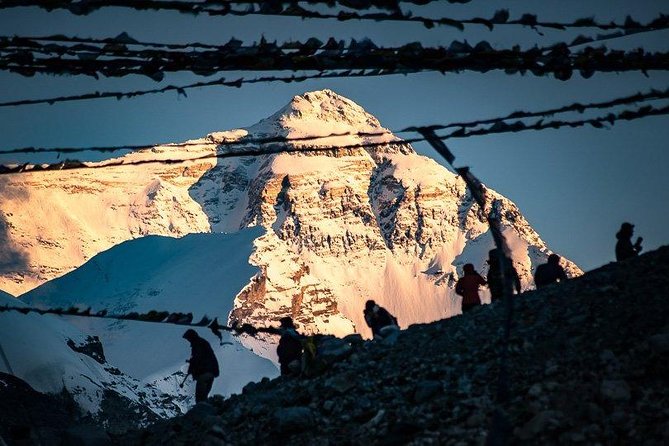
Review · KATHMANDU
Everest Base Camp Trek Via Salleri
The best thing about the Salleri route is that it lets you reach Everest Base Camp without starting with a flight to Lukla. You begin on the road, then walk through quieter villages, river valleys, terrace farms, and Sherpa settlements before joining the classic Everest trail at Phakding.
I like the slower approach and the chance to see a less-used side of the Khumbu. I also like that the price covers local transport, permits, accommodation, a guide, porters, a down jacket, sleeping bag, and duffle bag. The main drawback is the long road journey from Kathmandu, plus the fact that your own meals, insurance, drinks, and personal costs are extra.
Key points to know before you book
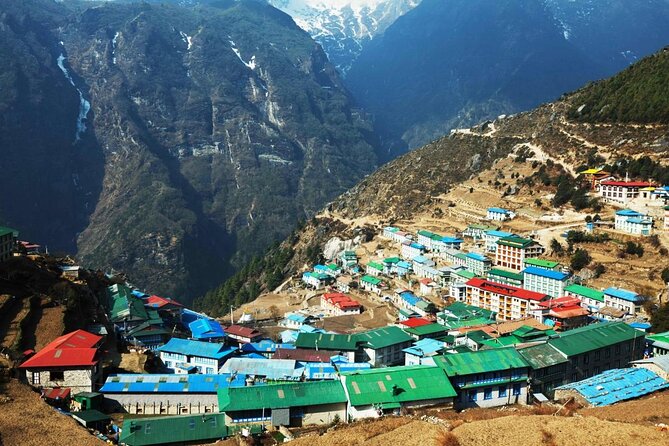
- Salleri changes the opening days: You trade a Lukla flight for a long jeep ride and a gradual walk through Takshindo, Khari Khola, and Puiyan.
- The route reaches 5,545 meters: Kala Patthar is higher than Everest Base Camp, so the two acclimatization days are important, not decorative rest stops.
- The package is staff-focused: Your guide and porters’ food, lodging, wages, equipment, and insurance are covered, while your own meals are not.
- You get a private trip: Only your group participates, with airport transfer and local jeep transport included.
- The company’s guiding team has earned strong praise: Guides named Pooja, Prem, Prakash, Manoj, Neel, Ram, Lal, and Himsange have been singled out for care, organization, English communication, and help during difficult moments.
- The return follows the same lower trail: You come down through Namche, Phakding, Puiyan, Khari Khola, and Takshindo before driving back to Kathmandu.
Why start at Salleri instead of Lukla?
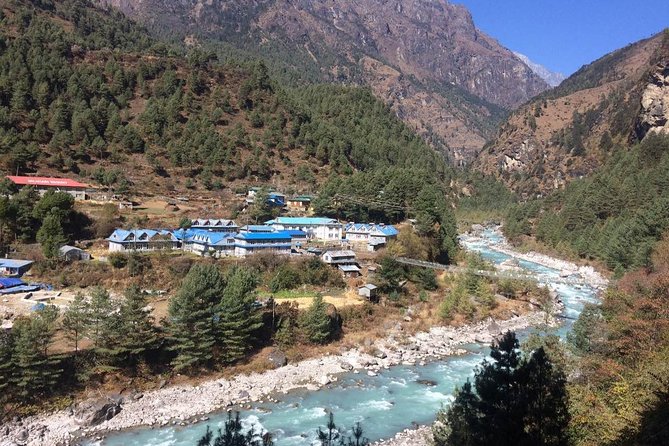
The Salleri approach is a good fit if you want the Everest Base Camp journey to feel like a trek from the beginning. Instead of landing at a high mountain airstrip, you drive from Kathmandu toward Phaplu and Ringmo, then walk into the hills.
That choice adds time and road travel, but it also gives your body a gentler start. The early walking days take place at lower elevations than the upper Khumbu, allowing you to build a rhythm before Namche Bazaar and the high valleys.
You’ll also see villages that many people miss when they fly to Lukla. Takshindo, Khari Khola, and Puiyan are not just overnight labels. They mark a quieter approach through farm terraces, narrow valleys, forested hillsides, and settlements linked by footpaths.
The trade-off is clear. The road from Kathmandu to Phaplu and onward to Ringmo takes about eight hours, followed by a short walk to Takshindo. If you dislike long jeep rides, this opening may feel tiring. If you value a slower, less standard route, it is one of the strongest reasons to choose this trip.
More Everest Base Camp Treks in Kathmandu:
- Everest Base Camp Trek – 14 Days
★ 5.0 · 1,499 reviews - Everest Base Camp Trek
★ 5.0 · 842 reviews - Everest Base Camp Helicopter Tour landing at Everest View Hotel
★ 5.0 · 668 reviews
Day 1: Kathmandu arrival and a practical start
Your trip begins with arrival at Tribhuvan International Airport in Kathmandu. Airport transfer is included, and the meeting point is in Thamel, with the main departure listed for 6:15 a.m. the next morning.
That early start matters. You are not simply stepping onto a trail from the city. The first transfer is a major part of the route, and getting out early gives the jeep a better chance of completing the road section according to plan.
The itinerary does not set out a sightseeing program in Kathmandu, so treat this first day as an arrival and preparation day. You’ll want to use it to organize your personal items, check your equipment, and confirm how meals will work. The company provides a duffle bag, down jacket, sleeping bag, trekking map, team T-shirt, and achievement certificate.
Days 2 to 5: The quieter approach through Takshindo and Puiyan
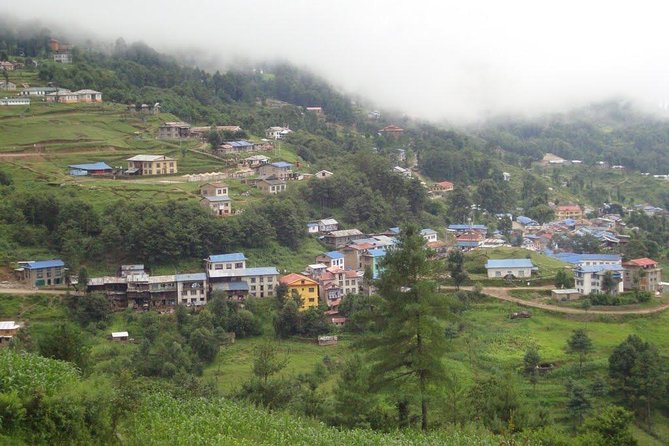
Day 2 is the longest transport day. You drive from Kathmandu to Phaplu and Ringmo, then walk for about 30 minutes to Takshindo, at 3,071 meters. The route includes a visit to Takshindo Gompa, one of the early cultural highlights.
Takshindo gives you an immediate sense of the area’s Sherpa character. The villages here sit around river valleys and mountain slopes, with pasture and terrace farming below the high peaks. It is a more intimate introduction than arriving by air at Lukla and immediately joining the main trail.
On Day 3, you walk from Takshindo to Khari Khola. The elevation figure supplied for this section appears inconsistent with the general direction of the route, so confirm the daily ascent and descent with the operator before departure. The important point is that this is a full trekking day through small settlements and changing valley terrain.
Day 4 links Khari Khola with Puiyan, listed at 2,890 meters. Day 5 continues from Puiyan to Phakding, at 2,652 meters. By Phakding, you join the familiar Everest Base Camp corridor used by trekkers heading from Lukla.
I like this part of the itinerary because it gives you time to adjust to walking before the trail becomes crowded and demanding. You are not racing straight into Namche. The drawback is repetition on the return, since Days 16 through 18 retrace the same lower route.
Days 6 and 7: Phakding, Namche, and the first real test
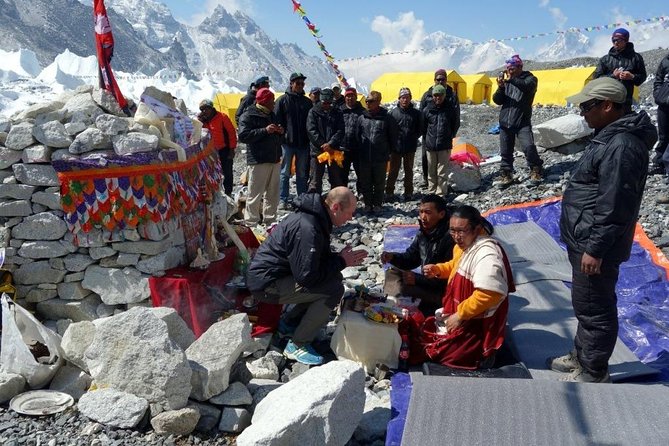
From Phakding, Day 6 takes you to Namche Bazaar at 3,440 meters. This is one of the major walking days, and it marks a clear change in the trip. The villages become more closely tied to the high mountain economy, and Namche functions as the main trading and supply center for the Khumbu.
You should expect the walk to feel harder than the lower approach. The elevation rises, and the route includes sustained uphill sections. Namche is not simply a place to sleep. It is where you pause and let your body catch up.
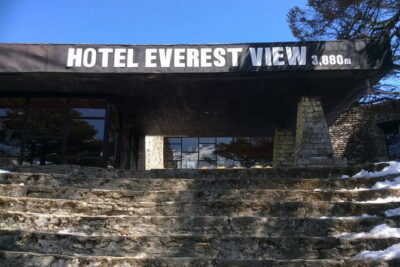
Day 7 is an acclimatization day with a hike to the Everest View Hotel. The point is not to cover distance. You walk higher during the day and return to Namche to sleep lower, a useful pattern before moving farther up the valley.
I consider this one of the most valuable days in the schedule. A rushed Everest itinerary often treats acclimatization as wasted time. Here, it is built into the plan. Use it for a steady hike, mountain views, and rest rather than trying to add extra mileage.
A few more treks around Kathmandu worth a look
- Everest Base Camp Trekking
★ 5.0 · 485 reviews - Annapurna Circuit Trek with Tilicho Lake
★ 5.0 · 368 reviews - Everest Base Camp Trekking – 13 Day
★ 5.0 · 365 reviews - Everest Base Camp Trek
★ 5.0 · 350 reviews
Days 8 to 10: Tengboche and Dingboche acclimatization
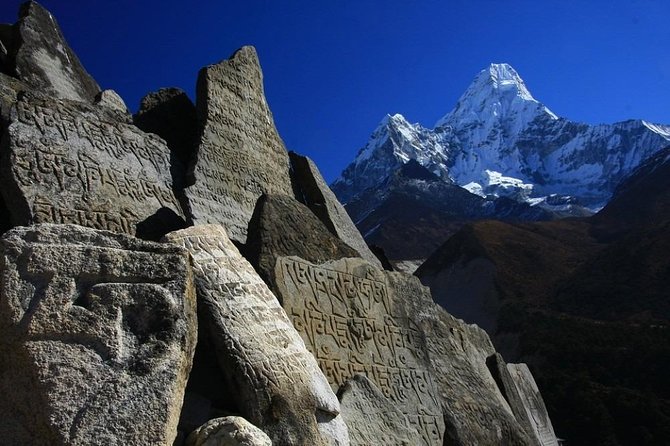
Day 8 takes you from Namche to Tengboche, at 3,860 meters. Tengboche is known for its monastery setting and broad mountain views. It is also an important transition point, since you are now moving into the higher part of the Khumbu.
The supplied schedule labels the next day as Day 19, but the sequence clearly places it on Day 9. That day takes you from Tengboche to Dingboche, at 4,410 meters. The elevation gain is serious, and you’ll notice that the air feels thinner as the route leaves the lower valleys behind.
Day 10 is another acclimatization day. The plan calls for a hike to Nagerjun and a return to Dingboche. This is a useful pause before the trail reaches nearly 5,000 meters.
You should not judge these days by how much ground they cover. At this altitude, a shorter walking day can be more useful than a long one. The schedule gives you two separate acclimatization points, at Namche and Dingboche, which is a sensible feature for a route that reaches Kala Patthar.
Days 11 to 13: Lobuche, Base Camp, and Kala Patthar
Day 11 links Dingboche with Lobuche, at 4,910 meters. This is a high, demanding section, and your pace should be steady. Lodging becomes more basic as you climb, and the cold can be more noticeable.
On Day 12, you walk from Lobuche to Everest Base Camp at 5,364 meters, then continue to Gorakshep. Reaching Base Camp is the emotional center of the trek, but remember that the famous summit route begins there. You are visiting the base camp area, not climbing Mount Everest.
Gorakshep is listed as the night’s stop. At this point, the day’s distance and altitude can make the final approach feel long. You’ll want to keep your pack light, drink regularly, and follow the guide’s pace rather than chasing a fast arrival.
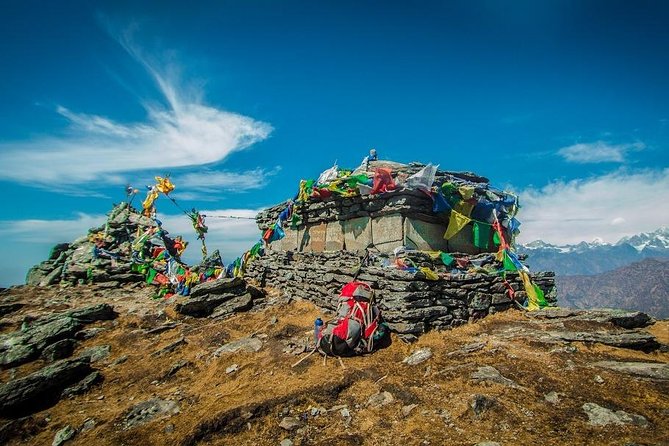
Day 13 begins with the climb to Kala Patthar, at 5,545 meters, before descending to Pheriche at 4,210 meters. Kala Patthar is higher than Base Camp and is the trip’s highest point. It is included for the mountain panorama and the sense of scale it gives to the surrounding peaks.
The descent to Pheriche is welcome, but it still makes for a demanding day. This is where the value of a supportive guide and porter team becomes very clear. Company guides who have led earlier trips, including Ram, Pooja, Prakash, Manoj, Prem, Neel, Lal, and Himsange, have been praised for clear explanations, friendly care, and practical help when plans or health problems changed.
The exact guide for your departure is not specified, so ask for the name and qualifications before you book. The company promises one experienced guide and one porter for every two hikers. That ratio is useful because you carry less, while the group still has direct support on the trail.
Days 14 to 19: The long return to Kathmandu
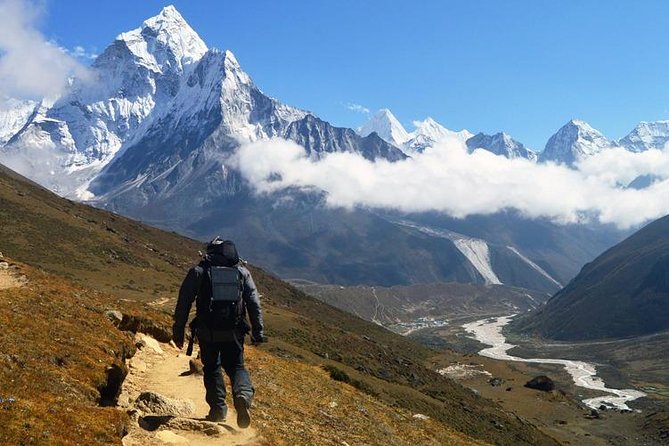
Day 14 takes you from Pheriche back to Namche. This is a substantial descent, with a welcome return to a lower elevation. Namche gives you a more comfortable pause before the final days.
Day 15 continues from Namche to Phakding. Days 16 and 17 reverse the approach, taking you from Phakding to Puiyan, then Puiyan to Khari Khola. Day 18 goes from Khari Khola to Takshindo.
This return route is practical rather than new. You see the lower villages again from a different direction, but the main purpose is to bring you back to the roadhead without adding another flight. If you prefer a constantly changing itinerary, the repeated trail may test your patience. If you like knowing the route and walking at a measured pace, it is straightforward.
Day 19 includes the drive from Takshindo through Ringmo and Phalpu to Kathmandu. The listed driving time is about eight hours, with another 30-minute walk included in the day’s transport description. This is another long transfer, so keep expectations realistic. Road travel in the mountains can be tiring, and the schedule should be treated as approximate.
Day 20 is the farewell day. The activity ends back at the Kathmandu meeting point.
What the $1,952 price really covers
At $1,952, this is not a bare-bones trek. The package includes local jeep transport, airport transfers, all listed fees and taxes, a guide, porters, accommodation, staff food and wages, staff equipment and insurance, Sagarmatha National Park permits, and the TIMS fee.
You also receive a duffle bag, down jacket, sleeping bag, trekking map, team T-shirt, and trip certificate. These inclusions reduce the amount of gear you need to arrange yourself.
The important catch is that your own meals are excluded. Food for the guide and porters is included, but you pay for your breakfasts, lunches, dinners, drinks, and other personal items. Laundry and beverages are also extra, as are international flights, travel insurance, and tips.
That makes the final cost higher than the headline figure. Still, the package offers reasonable value if you want a private arrangement with transport, permits, equipment, and staff already organized. Before paying, ask for an estimated daily meal budget and confirm exactly which lodges are used.
The inclusion notes mention attached bathrooms and hot showers at Lukla, Phakding, and Namche. Since this itinerary uses Salleri rather than Lukla, confirm how that provision applies to your departure. Phakding and Namche are on the route, but Lukla is not.
Accommodation, porters, and the human side of the trek
The company promises the best available lodges along the route, but it does not name them. Expect the standard tea-house style of accommodation used on this trek, with comfort varying by village and altitude. Ask if you want the exact lodging plan.
The porter arrangement is one porter for two hikers. Pack carefully and stay within the operator’s weight rules, even though the limit is not specified here. You’ll still want a small daypack for water, layers, medication, and personal items.
The strongest human feature is the staff support. Earlier clients have described guides taking care of lodging and meals, explaining mountain facts and trek history, and helping after an accident. One account also describes the team arranging jeeps quickly when a flight was not possible, although this particular route is designed around road transport.
The practical lesson is to communicate early. Tell your guide if you feel unwell, if your boots are causing trouble, or if you need to change pace. A friendly team is helpful, but your honest information lets them act before a small issue becomes a serious one.
Who should choose this Everest Base Camp trek?
Choose this route if you want:
- A 20-day private trek with a slower opening
- A road-based alternative to the Lukla approach
- Time in smaller villages such as Takshindo, Khari Khola, and Puiyan
- Two planned acclimatization days
- Porters, local transport, permits, and basic gear arranged for you
- A route that includes both Everest Base Camp and Kala Patthar
Think twice if you want a short, fast trip, dislike long jeep rides, or prefer not to repeat trail sections on the way back. You also need moderate physical fitness, and the altitude demands patience. Travel insurance is not included, so arrange it independently.
The cancellation policy is simple: cancel at least 24 hours before the 6:15 a.m. start for a full refund. Changes or cancellations inside 24 hours are not accepted for a refund. Poor weather may lead to a new date or a full refund.
Should you book it?
I would choose the Salleri route if your priority is a fuller journey rather than the quickest path to Base Camp. The early villages, Takshindo Gompa, gradual gain in altitude, and private format give the trek more texture than a simple Lukla-to-Base-Camp schedule.
The $1,952 price is strongest for someone who values organization and staff support. Add a realistic budget for your meals, drinks, insurance, tips, and personal expenses, and confirm the lodge plan, guide assignment, meal costs, and the Lukla shower note before booking.
If you are ready for long road days, repeated lower-trail sections, and serious high-altitude walking, this is a well-planned alternative. If you want fewer days and less logistical complexity, choose a shorter Everest program instead.
FAQ
Where does the Everest Base Camp trek via Salleri start?
The trek begins with pickup and a meeting at Thamel in Kathmandu. The listed start time is 6:15 a.m.
How long does the trek take?
The complete program lasts about 20 days, including arrival, trekking, the return drive, and the farewell day.
Does this route fly to Lukla?
No. The itinerary uses local jeep transport from Kathmandu toward Phaplu and Ringmo, then begins walking near Takshindo. Lukla is not part of the listed route.
What is the highest point on the itinerary?
Kala Patthar is the highest point, at 5,545 meters or 18,188 feet. Everest Base Camp is listed at 5,364 meters or 17,594 feet.
Are meals included for the person booking?
No. Your meals are not included. Food for the guide and porters is included, while your drinks, meals, and personal expenses are extra.
Are permits included?
Yes. The package includes Sagarmatha National Park permits, the TIMS fee, and all listed fees and taxes. You should bring two passport-size photos for the permit process.
Is this a private activity?
Yes. Only your group participates in the activity.
What equipment is provided?
The package includes a duffle bag, down jacket, sleeping bag, trekking map, team T-shirt, and trip achievement certificate.
What happens if bad weather cancels the trip?
If poor weather causes cancellation, you’ll be offered a different date or a full refund. For ordinary cancellations, you must cancel at least 24 hours before the start time for a full refund.
Just added around Kathmandu
- Everest Base Camp Trek★ 5.0 · 3 reviews
- Everest Base Camp Trek★ 5.0 · 7 reviews
- 15 Days Private Everest Base Camp Trek★ 5.0 · 30 reviews
- 14 Days of Adventure Trekking to Everest Base Camp★ 5.0 · 2 reviews
- 14-Day Everest Base Camp Trek★ 5.0 · 20 reviews
- Everest Base Camp Trek★ 5.0 · 57 reviews
- From Kathmandu: Private 14-Day Everest Base Camp Trek★ 5.0 · 20 reviews
- 14 Days Everest Base Camp Trek★ 5.0 · 4 reviews
Everest Base Camp Treks, compared.
Everest Base Camp Helicopter Tour landing at Everest View Hotel
Read our review →
Tibet Tour 8 Days Lhasa to Everest Base Camp Small Group Tour
Read our review →
Dubai: Private Luxury Everest Yacht Cruise from Dubai Marina
Read our review →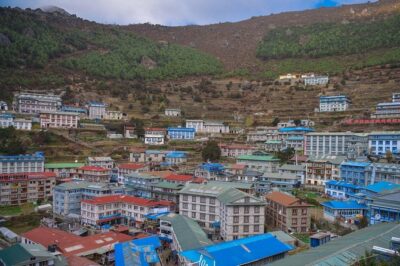
Browse the lists this trek appears in