
Review · CHINA
Tibet Tour 8 Days Lhasa to Everest Base Camp Small Group Tour
Everest is the headline, but Potala Palace and Jokhang Temple give this trip its strongest opening. In eight days, you move from Lhasa’s sacred streets to glacier passes, old monasteries, and the north face of Mount Everest without having to build the route yourself.
I like the small maximum of 12 people, since it gives you a better chance to hear your English-speaking Tibetan guide. I also like the practical inclusions: permits, hotels, transport, breakfast, entrance tickets, an oxygen cylinder, and airport or train-station pickup. The main drawback is the pace. Long high-altitude drives, including a 12-hour day to Everest Base Camp, leave little room for wandering.
Key points to know before booking
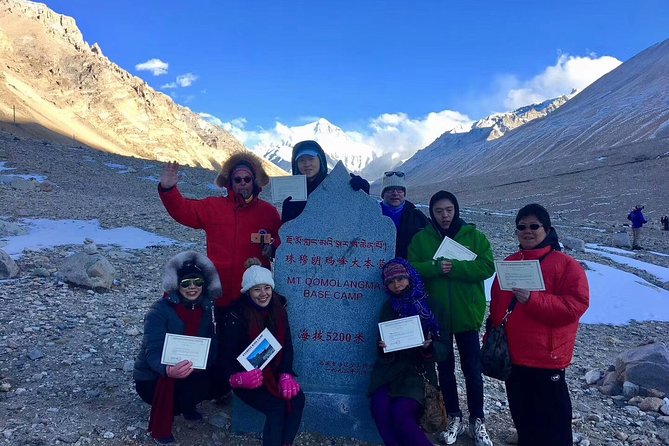
- Everest Base Camp takes a full day: The drive includes Lhatse, Tsola Pass, Gyatsola Pass, and the entrance to the Everest area.
- The group is limited to 12 people: This is small enough for easier communication with the guide without paying for a private tour.
- Major permits are arranged: You provide passport and visa copies in advance, while the operator handles the Tibet Travel Permit and other required permits.
- The route mixes famous sights and local places: Potala Palace and Jokhang Temple share the schedule with Dadong Village, Barkhor Street, Pelkor Chode, and Rongbuk Monastery.
- Most meals are not included: Breakfasts, a welcome dinner, and a stated lunch are covered, but you should budget for most other lunches and dinners.
- The trip ends with departure from Tibet: Your permit is limited for this tour, so you need to leave Tibet on Day 8 unless a separate arrangement is made.
Why this Lhasa to Everest route works
At $949 per person, this tour offers good value if you want the major sights arranged in one package. Tibet travel involves permits, fixed routes, long distances, local transport, and booking hotels at several stops. Here, those jobs are handled for you.
The price is based on two people sharing a room. It includes accommodation in Lhasa and Shigatse, breakfast, transport by van or minibus, fuel, a local driver, an English-speaking guide, entrance tickets, and the Everest Base Camp shuttle bus. You also receive drinking water, a Tibet map, liability travel insurance, and an oxygen cylinder in the vehicle.
That list matters in Tibet. You are not simply paying for sightseeing. You are paying for a trip that deals with paperwork and the practical limits of high-altitude travel. A single-room supplement may apply, and the price of getting to Lhasa by train or plane is separate.
The group size is capped at 12. That is not the same as a private trip, but it is far more manageable than a large coach. You can ask questions, keep the guide close at busy sites, and avoid spending the whole day waiting for a very large group.
More Everest Base Camp Treks in the world:
- Everest Base Camp Trek – 14 Days
★ 5.0 · 1,499 reviews - Everest Base Camp Trek
★ 5.0 · 842 reviews - Everest Base Camp Helicopter Tour landing at Everest View Hotel
★ 5.0 · 668 reviews
Day 1: A gentle arrival in Lhasa
Your Tibetan guide meets you at the airport or train station and takes you to your hotel in central Lhasa. The transfer follows the Yarlung Tsangpo River area and gives you an early look at the setting before sightseeing begins.
This first day is mainly about arrival and settling in. Since Lhasa is at high altitude, the lack of a packed sightseeing schedule is useful. You can check into the hotel, drink water, and adjust before the serious touring starts.
The operator includes airport or train-station pickup and hotel transfer. You should arrange this service with the supplier rather than assuming that any vehicle waiting outside will be yours.
Day 2: Potala Palace, Jokhang Temple, and the Barkhor
The Potala Palace is the visual and historical centerpiece of Lhasa. Built into the hill above the city, it served as the winter palace of the Dalai Lama and has been in use since the seventh century.
The scheduled visit lasts about 90 minutes. That is enough to see key halls and collections, but it is not a slow, open-ended visit. You should expect stairs and a structured visit inside the palace. Take your time when the group pauses, because the building can feel like a sequence of grand rooms, religious objects, and narrow passages rather than one single viewing platform.
After lunch, you visit Jokhang Temple, another major religious site in Lhasa. The temple is especially important for its statue of Buddha Sakyamuni shown at the age of 12. The visit also lasts about 90 minutes.
I like the way the day pairs the palace with the temple. Potala explains the political and religious power of Tibet’s former rulers, while Jokhang brings you closer to active Buddhist practice. The contrast makes the two visits more useful than seeing either one alone.
The final stop is Barkhor Street, a short 30-minute visit around Jokhang. This is where you can watch pilgrims complete a kora, a religious circuit around the temple, and browse the old market. The tour also notes the chance to taste Tibetan tea with local people in a tea shop.
Half an hour is brief. If Barkhor interests you, use your free time in Lhasa carefully, since this stop may give you only a first look. The street is one of the better places on the route to observe daily religious life rather than simply admire a monument.
Day 3: Dadong Village, Drepung, and Sera
The third day begins around Dadong Village, about 25 kilometers southwest of central Lhasa. It is described as a well-protected old Tibetan village, with the visit combined with Drepung Monastery.
The scheduled stop lasts about three hours. This is a welcome change from major-ticket sights because it adds a village setting to the route. You get a better sense of how Tibetan buildings and rural life fit around the larger religious centers.
In the afternoon, the tour goes to Sera Monastery, one of Tibet’s three great Gelug monasteries. The visit lasts about two hours, and the famous monk debates generally take place from around 3 to 5 p.m.
Timing is important here. The debate session is the reason many people want to visit Sera, so the afternoon schedule is well chosen. The debates are a public religious exercise, with monks testing ideas through questions, gestures, and quick replies. You should follow your guide’s instructions about where to stand and how to observe respectfully.
The combination of Dadong, Drepung, and Sera gives this day more range than another round of city monuments. The tradeoff is that the day remains organized and time-limited, so you will not have the freedom of a full independent visit.
A few more treks around the world worth a look
- Mount Etna: Trek to 3000m with cable car and 4×4
★ 4.6 · 3,823 reviews - Bali: Mount Batur Sunrise Trek With Guide and Breakfast
★ 4.8 · 3,461 reviews - From Chania: Full-Day Samaria Gorge Trek Excursion & Guide
★ 4.6 · 3,191 reviews - Mount Etna: Summit Crater Trek with Cable Car
★ 4.8 · 1,875 reviews
Day 4: Yamdrok Lake, Karo Glacier, and Gyantse
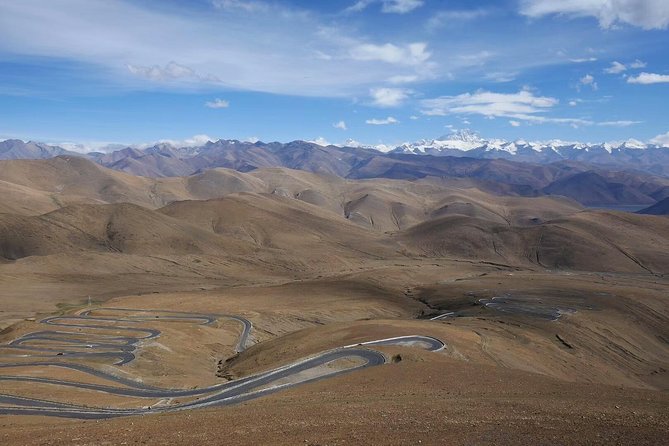
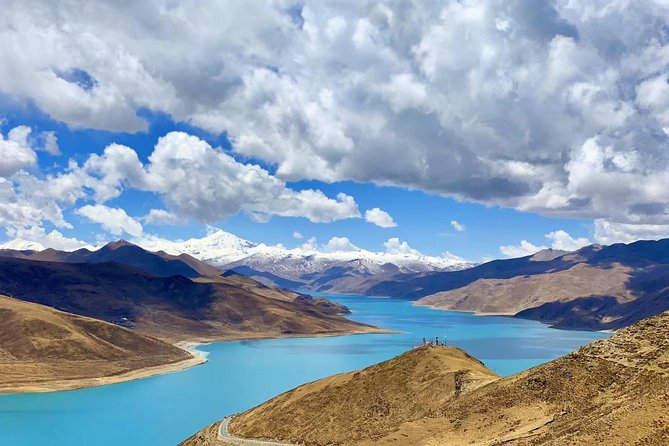
Day 4 is the first major road day. You leave Lhasa for Shigatse, crossing Gampala Pass at about 4,790 meters. From the pass, you get a view of Yamdrok Yumtso, a lake listed at roughly 4,400 meters.
The lake is surrounded by snow-capped mountains, and the stop lasts about 30 minutes. That is enough for photographs and a first look, but not enough for a long walk along the shore. At this altitude, a short stop may also be welcome.
The route continues past Karo La Glacier, viewed from the roadside. You also pass Manak Dam Lake and can hang prayer flags at Simila Mountain Pass. These short roadside stops break up the drive and let you see how much of this journey is about the road itself.
In Gyantse, you visit Pelkor Chode Monastery and the Gyantse Kumbum, with a distant view of Gyantse Fortress. The monastery visit lasts about 90 minutes before you continue to Shigatse.
This day suits you if you enjoy changing scenery and historic towns more than long indoor visits. It is also one of the more demanding days physically, because the route reaches high passes and includes considerable time in the vehicle. Bring water, keep your pace slow, and do not treat a short stop as a reason to rush.
Day 5: The 12-hour push to Everest Base Camp
The road to Mount Everest Base Camp is the tour’s longest and hardest sightseeing day. After the necessary travel permit arrangements, you drive toward Lhatse, where lunch is planned, then continue through Tsola Pass at about 4,600 meters and Gyatsola Pass at about 5,248 meters.
The drive lasts around 12 hours. That is the central fact to weigh before booking. The reward is entry into the Everest area and the chance to reach the base camp zone, but the day leaves little time for leisurely stops.
The route takes you through some of Tibet’s highest passes before reaching Mount Everest territory. In a comfortable van or minibus, with an experienced local driver and oxygen in the vehicle, the day is more manageable than arranging the same route alone. Still, you should expect a tiring ride, not a relaxed sightseeing circuit.
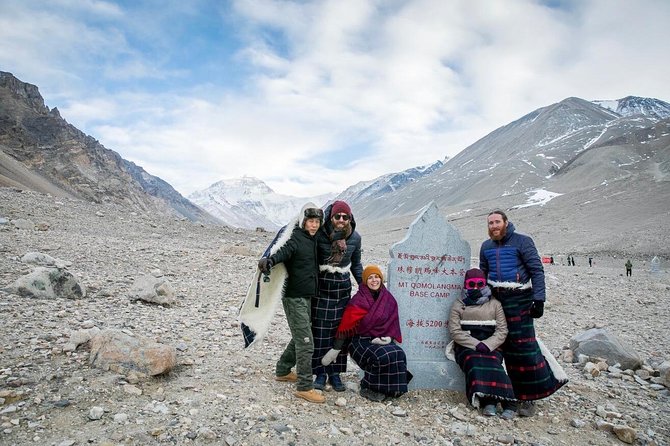
The Everest Base Camp visit is listed with an Echo bus, which is included. This means the final approach is organized rather than left to private vehicles. The tour includes accommodation, but the supplied schedule does not specify the exact overnight property for this part of the route, so confirm the sleeping arrangements before you pay.
Day 6: Sunrise at Rongbuk Monastery
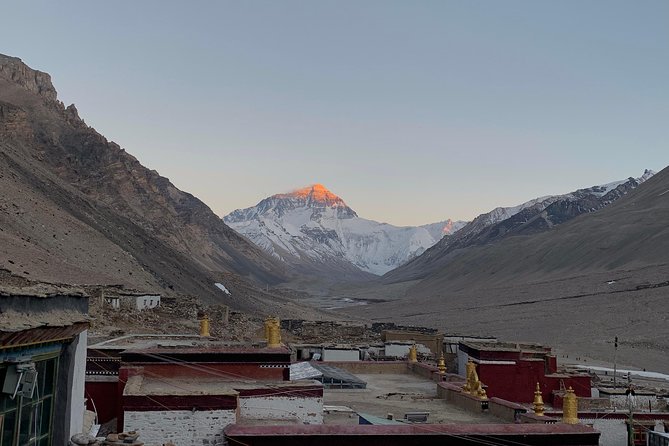
Rongbuk Monastery is the best viewing point named on the route for Mount Everest. In the morning, you can watch the sun appear over the summit and see Everest in front of you as a snow-covered pyramid.
The visit is scheduled for about one hour. Sunrise conditions depend on weather and visibility, so this is a moment to keep expectations sensible. A clear view is never something a mountain route can promise.
Rongbuk is also important because it gives the trip a religious setting at the edge of the Everest region. You are not only checking off a famous mountain viewpoint. You are seeing a monastery connected with one of the world’s most dramatic high-altitude places.
From November 15 to February 15, the operator provides winter care at the Rongbuk guest house, including a hot-water bottle and electric blanket. That seasonal support is useful because nights in this part of Tibet can be extremely cold. The tour also supplies oxygen in the vehicle, but you should still treat the altitude seriously and follow your guide’s advice.
Day 7: Tashilunpo and the long road back
The morning visit is to Tashilunpo Monastery in Shigatse, the seat of Tibet’s second-highest incarnation, the Panchen Lama. The visit lasts about two hours.
Afterward, you drive roughly 280 kilometers back to Lhasa. This is another long transport day, though less punishing than the outward push to Everest. It gives you a final chance to watch the countryside pass by, but not much room for extra sightseeing.
Tashilunpo is a fitting final monastery because it connects the route back to Tibet’s major religious institutions. After remote Everest country, returning to a large monastery in Shigatse helps bring the trip back toward the settled world of Lhasa.
Day 8: Departure from Tibet
The final day is for leaving Tibet by air or train. The tour’s Tibet Permit is limited to this program, so you cannot simply assume that you may stay longer under the same arrangement.
If you want more time in Tibet, you need to book another tour or ask the operator to help with a new plan. Airport or railway drop-off assistance can also be arranged through the supplier.
What is included, and what still costs extra
The included list is one of the tour’s strongest points:
- Tibet Travel Permit and other necessary Tibet permits, excluding the Chinese L visa
- Chinese visa invitation letter if needed
- English-speaking Tibetan guide
- Experienced local driver and vehicle fuel
- Airport or train-station pickup and transfer to Lhasa
- Hotels in Lhasa and Shigatse, based on twin sharing
- Breakfasts, listed as six breakfasts
- Entrance tickets for the listed sites
- Everest Base Camp Echo bus
- Welcome dinner
- Drinking water and a Tibet map
- Oxygen cylinder in the vehicle
- Liability travel insurance
- Government taxes and service charges
You pay separately for your flight or train to Lhasa, tips, and most lunches and dinners. The information states that a welcome dinner and one lunch are included, so plan a food budget for the rest of the route.
The itinerary stop descriptions sometimes show admission as not included, while the main inclusions list says entrance fees for all listed sites are covered. Because of that inconsistency, I would confirm the ticket coverage with Tibet Vista before booking. It is a small question that can prevent an awkward surprise at the gate.
Permits, visas, and booking timing
Do not treat the permit process as a last-minute detail. You should book at least 10 working days ahead so the operator has time to obtain the Tibet Permit.
You must provide passport and China L visa copies in advance. The supplied instructions ask for these documents at least 20 days before departure, so allow more time than the minimum booking window.
Your visa path depends on how you enter Tibet. If you fly from Kathmandu, you should not apply for a China L visa in advance. Instead, you need a Tibet Group Visa from the Chinese Embassy in Kathmandu through a travel agency, using an invitation letter from the tour supplier.
If you fly or take a train to Lhasa from a Chinese city, you need to apply for the China L visa through the Chinese Embassy in your home country. This is a major planning point, so settle the route before you buy nonrefundable transport.
Who should book this tour
I would choose this trip if you want to see Lhasa, central Tibet, and Everest Base Camp in one organized route. It fits someone who values permits, transport, hotels, and site tickets being handled by one operator.
It also suits you if you are comfortable with long drives and a moderate level of physical fitness. The high passes, early mountain viewing, and 12-hour Everest day are not minor details.
I would look elsewhere if you want several free afternoons, slow photography stops, or the option to change plans as you go. This is a fixed route with a clear start and finish, and Day 8 requires departure from Tibet unless you arrange something else.
Should you book it?
Book this tour if your main goal is a practical first visit to Tibet with Everest Base Camp included. The $949 price is strong for a small group when permits, hotels, transport, entrance tickets, breakfasts, and the Everest shuttle are counted together.
Before booking, confirm the exact accommodation near Everest, the entrance-ticket wording, and the meal plan. If those details suit you, this is a well-organized way to cover Tibet’s biggest sights without handling the permit maze and mountain transport alone.
FAQ
How long is the Tibet tour?
The tour lasts eight days, from arrival in Lhasa through departure from Tibet on Day 8.
What is the maximum group size?
The tour has a maximum of 12 participants.
Is airport or train-station pickup included?
Yes. Pickup and transfer from the Lhasa airport or train station to your hotel are included and should be arranged with the tour supplier.
Is the Tibet Travel Permit included?
Yes. The Tibet Travel Permit and other necessary Tibet permits are included, but the Chinese L visa is not included.
Do I need to provide passport and visa documents?
Yes. You need to provide passport and China L visa copies in advance. The instructions request them at least 20 days before travel.
Are meals included?
Six breakfasts, a welcome dinner, and one stated lunch are included. Most other lunches and dinners are not included.
Is transportation included?
Yes. Transport by comfortable van or minibus, fuel, an experienced local driver, and the Everest Base Camp Echo bus are included.
Is accommodation included?
Yes. Accommodation is included, with hotels in Lhasa and Shigatse based on twin sharing. A single-room supplement may be available for an additional charge.
Is oxygen available during the tour?
An oxygen cylinder is provided in the vehicle. The tour also offers a hot-water bottle and electric blanket at the Rongbuk guest house from November 15 to February 15.
What is the cancellation policy?
You can receive a full refund if you cancel at least six full days before the start time. Cancellation two to six days before departure may receive a 50 percent refund, while cancellation less than two days before departure is nonrefundable. If poor weather cancels the experience, you are offered another date or a full refund.
Just added around the world
- Everest Base Camp Trek★ 5.0 · 3 reviews
- Everest Base Camp Trek★ 5.0 · 7 reviews
- 15 Days Private Everest Base Camp Trek★ 5.0 · 30 reviews
- Everest Base Camp Trek★ 5.0 · 57 reviews
- 14 Days of Adventure Trekking to Everest Base Camp★ 5.0 · 2 reviews
- 14-Day Everest Base Camp Trek★ 5.0 · 20 reviews
- From Kathmandu: Private 14-Day Everest Base Camp Trek★ 5.0 · 20 reviews
- 14 Days Everest Base Camp Trek★ 5.0 · 4 reviews
Everest Base Camp Treks, compared.
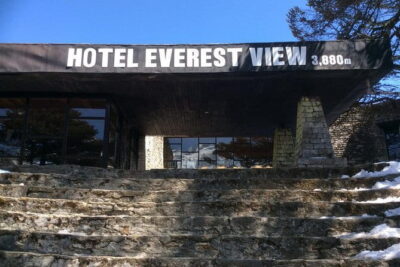
Everest Base Camp Helicopter Tour landing at Everest View Hotel
Read our review →
Dubai: Private Luxury Everest Yacht Cruise from Dubai Marina
Read our review →
Browse the lists this trek appears in