
Review · ITALY
Mount Etna: Trek to 3000m with cable car and 4×4
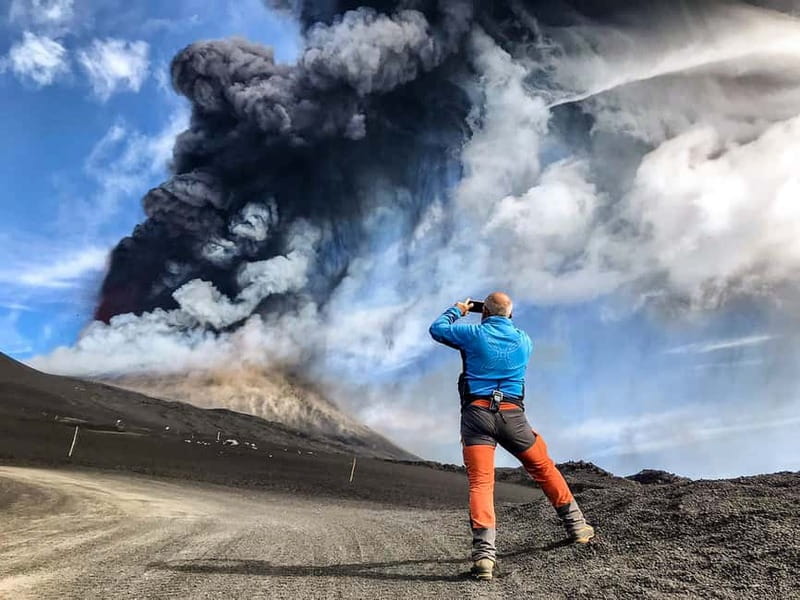
Mount Etna gives you a close look at an active volcano without requiring a full summit climb. The cable car and 4×4 take you high above Sicily, then you walk across black volcanic sand to about 3000 meters, passing craters, lava flows, and the Barbagallo crater.
I like the way the tour combines transport with a proper mountain walk, and I like the guides’ strong reputation for explaining Etna clearly while watching the group. Guides such as Antonio, Giuseppe, Michele, Dario, and Marco are often praised for their care and energy. The main catch is that the advertised $65 price excludes €45 for the cable car and 4×4, paid at the meeting point.
Key points to know before you book
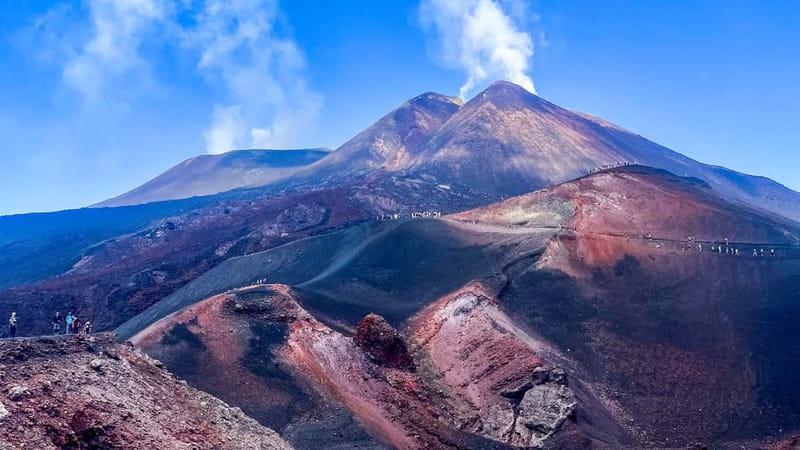
- You reach 3000 meters without climbing the whole mountain: The cable car rises to about 2500 meters, a 4×4 continues to roughly 2800 meters, and the walk handles the final section.
- The walk is real mountain trekking: Expect three to four hours on loose volcanic gravel, black sand, uneven ground, and some steep or narrow sections.
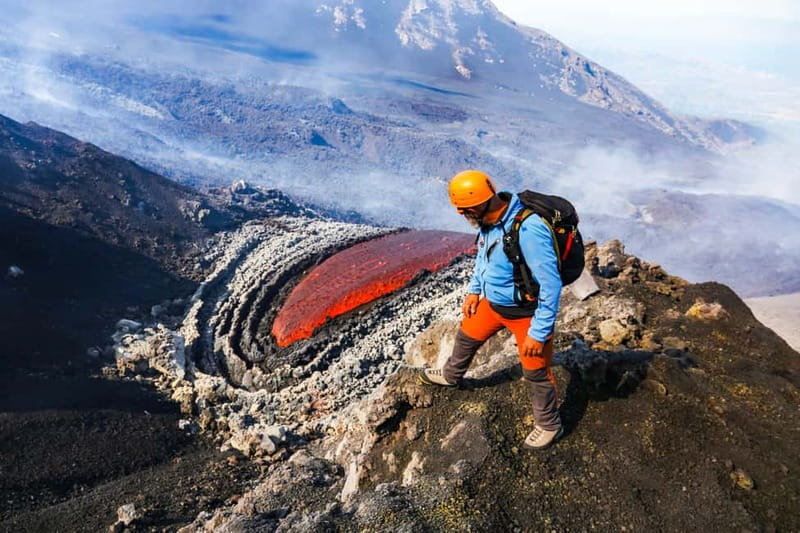
- The lava channel is the tour’s most unusual stop: You can enter a lava channel and see the remains of a recent flow, along with a 2002 effusive vent.
- The guides are a major strength: English, French, and Italian groups are available, and guides including Antonio, Giuseppe, Michele, and Dario are noted for clear explanations and careful pacing.
- Weather changes quickly at altitude: Bring gloves, warm layers, sunglasses, sunscreen, and your own waterproof jacket if possible.
- The true cost is closer to the listed price plus €45: Equipment is supplied, but food and water are not.
Why this Etna trip works so well
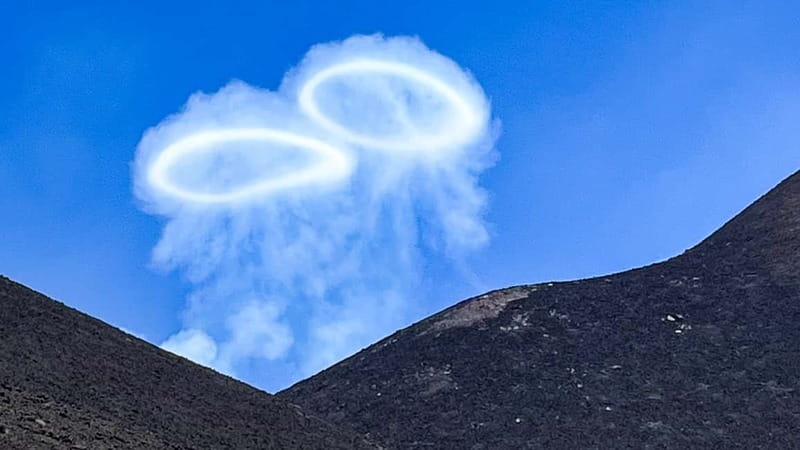
Mount Etna is not simply a scenic mountain stop. It is an active volcano, and the upper slopes show that clearly. Black ash, fresh-looking lava, collapsed cones, and broad volcanic valleys replace the usual Alpine scenery.
I think this tour hits a useful middle ground. You get far higher than a basic viewpoint visit, but the lifts remove much of the long, punishing ascent. You still earn the final views on foot, so it feels like a mountain outing rather than a bus ride with a photo stop.
The route reaches about 3000 meters at Torre del Filosofo, a high point near the summit area. The tour does not promise a climb into the summit craters themselves. Instead, you view them from a permitted route, then visit lateral craters and volcanic features that offer a safer and more practical way to understand the mountain.
The overall schedule is around five hours, with about three to four hours of walking. Actual timing can vary. Some groups finish in about four hours, while delays at the cable car or a slower pace can push the outing later. If you have an airport transfer, bus connection, or fixed afternoon plan, leave room in your schedule.
More Volcano Treks in Italy
- Mount Etna: Summit Crater Trek with Cable Car
★ 4.8 · 1,875 reviews - Etna: summit craters trekking with volcano guide 3350mt
★ 4.7 · 1,712 reviews - Catania: Mount Etna Trekking Tour Beyond the Tourist Trails
★ 4.9 · 1,596 reviews
Meeting at Rifugio Sapienza
Your day starts at the Guide Alpine Etna Sud shelter beside Rifugio Giovanni Sapienza. This is the main visitor area on the southern side of Etna and the departure point for the cable car.
You are asked to arrive about 45 minutes before departure. That early arrival matters because the staff fit you with equipment and organize language groups. The advertised departure times are 9:30 and 10:30, but the start can run late while everyone is checked in and transported uphill.
The area can feel crowded and a little hurried at first, especially during busy periods. Parking and the cable car queues add to the wait. Still, arriving early gives you time to sort your boots, ask about the route, and avoid starting the walk already flustered.
If you arrive from Catania by AST bus, plan carefully. The bus is used by many people heading to Etna, and seats can fill quickly. The tour operator waits for passengers arriving by the AST service, but you should still arrive early at the Catania bus stop. Check the current bus schedule before your trip, since transport times and mountain operations can change.
Cable car to 2500 meters
The cable car carries you from the Rifugio Sapienza area to about 2500 meters. The ride saves a large section of steep walking and gives you a quick sense of how fast the environment changes.
At the lower station, Etna can look like a broad, open mountain. Higher up, vegetation gives way to dark volcanic ground and exposed slopes. On a clear day, the view opens toward Sicily’s Ionian coast and the interior of the island.
The cable car does not always operate. High winds, technical problems, or volcanic conditions can shut it down. When that happens, the operator may use 4×4 vehicles or other mountain transport instead. You lose the cable car view, but the tour can still continue if conditions allow.
The cable car also creates one of the day’s practical delays. Your guide cannot simply gather the group and walk away from the queue. Build patience into your schedule, particularly in high season.
4×4 ride to roughly 2800 meters
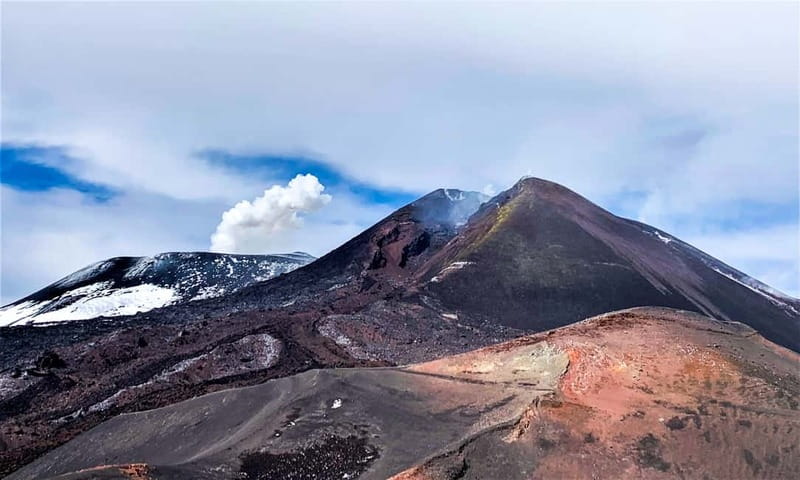
From the upper cable car station, a 4×4 bus or mountain vehicle takes you to about 2800 meters. This short ride crosses rough volcanic ground and puts you close to the walking route.
The transport is valuable because the air is already thinner at this height, and the final ascent would be much harder if you began from Rifugio Sapienza. It also lets the tour cover more volcanic features during a half-day outing.
The vehicle portion is not a private safari. It is shared transport connected with the cable car system, and waiting is part of the process. In some conditions, the 4×4 may operate in place of the cable car for part or all of the ascent.
The €45 transport charge covers the cable car and 4×4 service. It is separate from the $65 tour price and is paid locally, preferably in cash. This is the detail most likely to surprise people comparing prices online, so include it in your budget from the start.
Same trailhead, a different route:
- Mount Etna: Guided Trek 3,000 Meters to the Summit
★ 4.8 · 1,407 reviews - Stromboli: Sunset Trekking at Sciara del Fuoco
★ 4.6 · 1,372 reviews - Etna Sunset Tour: Volcano trek, Cave & tasting from Catania
★ 4.8 · 1,290 reviews - From Catania: trek on Mount Etna, Lava Cave & tasting Tour
★ 4.8 · 563 reviews
Walking from 2800 to 3000 meters
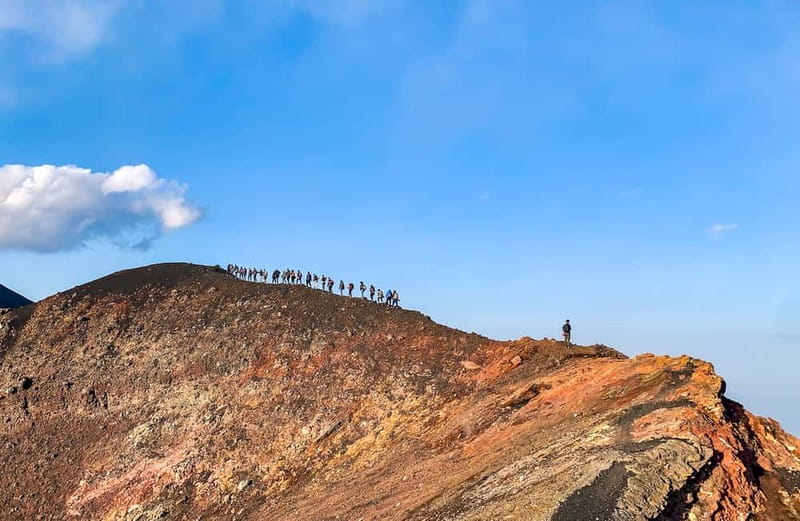
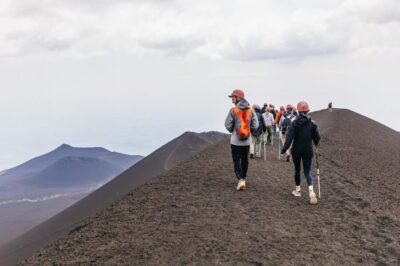
The foot section begins near 2800 meters and climbs toward Torre del Filosofo at about 3000 meters. On paper, the height gain sounds modest. In practice, loose ash, gravel, wind, and thin air make it feel like a proper hike.
The first half hour can be the toughest part. Your breathing may feel different, and the loose surface makes every step less efficient. A steady pace helps. The guides usually stop at useful points, and good guides such as Antonio, Giuseppe, and Dario are praised for keeping mixed-age groups together.
You do not need to be an expert mountaineer, but you should have basic hiking ability and a fair level of fitness. This is not a gentle stroll suitable for everyone. The route can include slippery sections, uneven rocks, steep edges, and narrow ledges. If you are uncomfortable with heights, that may matter more than the total distance.
The operator supplies ankle boots, thick socks, a helmet, a disposable liner for the helmet, a jacket, a backpack, and trekking poles when available. This is a real benefit if you are traveling light or did not pack mountain gear.
Bring your own hiking shoes if you have them and prefer a known fit. Some supplied boots may be worn, and a few pairs have been described as slippery. Try everything on carefully before leaving the shelter and speak up if the fit is poor.
Barbagallo crater and the black volcanic slopes
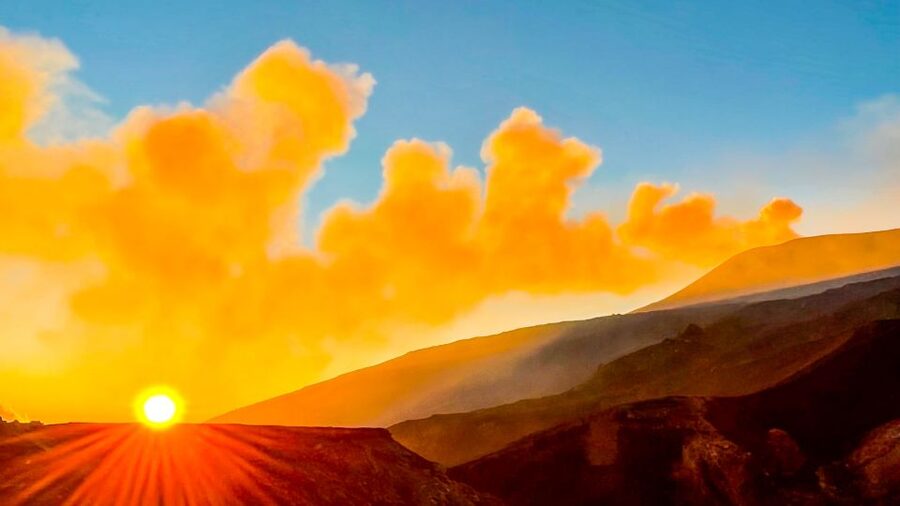
One of the main stops is the lateral Barbagallo crater at around 2900 meters. Unlike the distant view of a famous summit, a lateral crater lets you examine the smaller volcanic cones that form around Etna during eruptions.
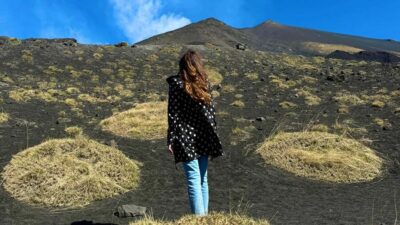
The ground here is usually the star of the show. Black sand and red-brown volcanic rock create a stark setting, with ridges and cones spread across the upper mountain. The route is visually simple but never dull because the color and texture change with every turn.
Your guide helps make sense of what you are seeing. Antonio, Michele, Giuseppe, and others are praised for explaining eruptions, changing volcanic forms, local stories, and the way lava reshapes the mountain. The best guides also draw diagrams in the sand or stop at a feature rather than rushing past it.
Clear weather makes a huge difference. From a high mound, you may see toward the Ionian Riviera and across the interior of Sicily. Cloud can cover those views within minutes. Even in fog, the walk remains atmospheric, but you should not book this solely for a guaranteed panorama.
Lava flows, the 2002 vent, and the lava channel
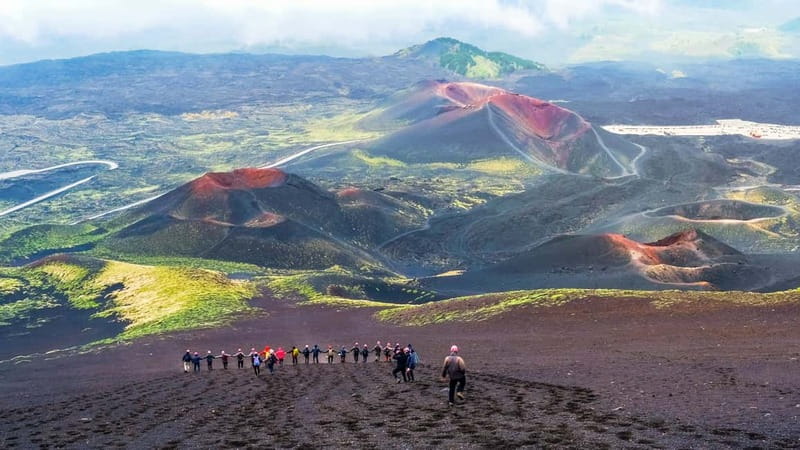
The tour’s most distinctive section involves recent lava flows and an effusive vent from the 2002 eruption. You are not simply looking at a distant black ribbon. The route brings you close to the structures created as lava moved and cooled.
You also enter a lava channel. This is a hollow or passage formed by moving lava, and it gives you a more direct sense of how an eruption builds and reshapes the mountain. Helmets are supplied for a reason, and you should follow the guide’s instructions closely inside and around the feature.
The phrase last lava flow should not be understood as a promise of molten lava under your feet. Volcanic activity and access conditions change, and the tour may show recent solidified flows rather than glowing rock. A separate extension to view fresh activity may sometimes be offered at an extra charge, but it is not part of the standard price described here.
The 2002 vent adds useful context. Etna’s upper slopes are not fixed scenery. A route that looks established today may be altered by a later eruption, rockfall, or restricted access. That changing character is part of what makes the outing different from a normal mountain walk.
Views over Bove Valley
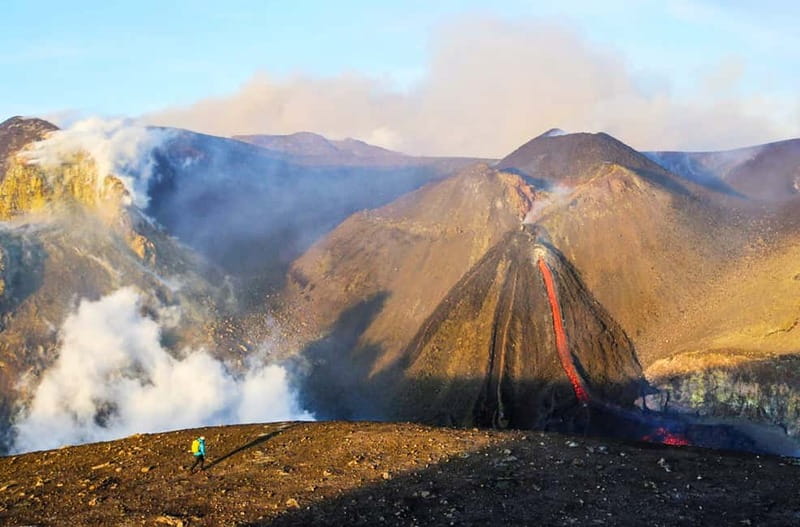
Later in the route, you descend on foot along sandy volcanic slopes toward the cable car station. A mound overlooking Bove Valley provides one of the broadest views of the day.
Bove Valley is a huge volcanic depression on Etna’s eastern side. From above, it gives you a sense of the scale of the volcano and the force of past eruptions. On a clear day, the view stretches toward the coast and inland Sicily.
The descent is often easier on your lungs than the climb, but loose ash can make it awkward. Trekking poles help with balance, though the number available is limited. Take short steps, keep your weight controlled, and do not race downhill simply because the route is descending.
This is also where the supplied equipment earns its keep. Boots protect your ankles from shifting gravel, while the jacket helps when wind moves across the open slopes. Still, bring your own warm and waterproof layer. The supplied jackets may not be enough for everyone, especially in cold months.
Guides, languages, and group size
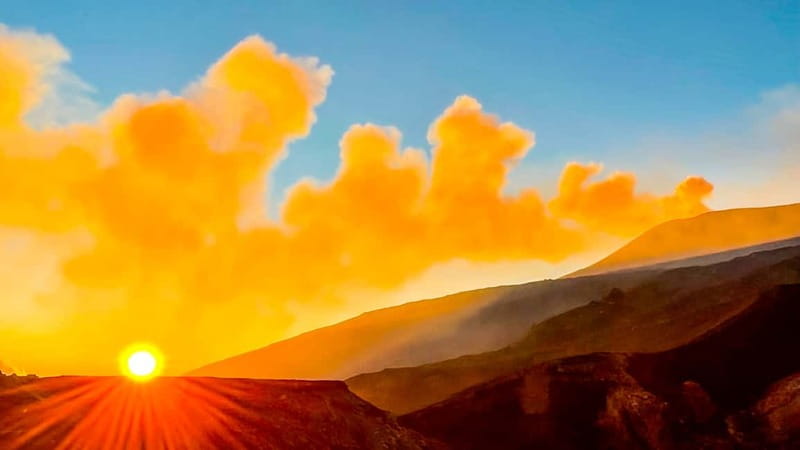
The guiding is one of the strongest parts of this trip. The available languages are English, French, and Italian, and groups are usually separated by language when numbers allow.
Guides named in guest feedback include Antonio, Giuseppe, Michele, Dario, Marco, Paride, Gianni, Francesco, and Silvo. Their styles differ, but the qualities you want are consistent: clear explanations, attention to slower walkers, regular stops, and calm handling of poor visibility.
Group size is less predictable. Some outings have around 10 or 11 people, while others reach 20 or more, with reports of groups up to about 27. A smaller group makes it easier to hear every explanation and move at your own pace. A large group can mean more waiting and less personal attention, though the guides still divide people by language where possible.
Fog makes group management especially important. In poor visibility, the guide may keep everyone close together and reduce the pace. That is sensible, but it can make the walk feel slower than expected.
Price, equipment, and what to pack
At $65 per person, the guided portion is fairly priced, especially since it includes transport equipment at the shelter and a guide for a high-altitude walk. But the actual cost includes another €45 for the cable car and 4×4, paid on site.
The provided gear also saves you from packing bulky mountain equipment. You receive:
- Ankle trekking boots
- Thick socks
- Helmet and disposable liner
- Kway jacket
- Backpack
- Trekking poles, in limited supply
You still need to bring water and lunch. There is no packed meal included. Some food may be available at the shelter area, but carrying your own snack is the safer choice, especially if the walking section runs long.
Wear long pants. Shorts are not allowed. Pack sunglasses, sunscreen, gloves, warm layers, and rain gear. Temperatures can be much lower at 3000 meters than at sea level, and wind can make the upper slopes feel colder still.
Who should book this Etna walk?
This tour suits you if you want more than a cable car viewpoint and you are comfortable walking on rough ground for several hours. It is a good choice for active adults, older walkers who are fit and steady, and families with children old enough to manage the route. The official minimum age is six.
You should think twice if you have heart, respiratory, mobility, or balance problems. The activity is not suitable for wheelchair users, visually impaired people, pregnant women, people with motion sickness, or anyone over 95. Children under six are not accepted.
The key question is not simply Can you walk three hours? It is Can you walk three hours at high altitude on loose volcanic ground? If the answer is uncertain, speak with the operator before booking.
Should you book the 3000-meter Etna tour?
I would book this tour if you want a well-supported introduction to Etna’s upper slopes without attempting a full summit outing. The combination of cable car, 4×4, lateral craters, a lava channel, the 2002 vent, and Bove Valley gives you a strong range of volcanic sights in one half-day.
Book it with realistic expectations. Weather may hide the coast, the cable car may stop running, queues can delay the start, and the hike is harder than the short altitude gain suggests. Budget the extra €45, carry food and water, and bring warmer clothing than you think you need.
If you are fit, curious about volcanoes, and willing to accept a little mountain chaos, this is one of the most rewarding ways to experience Etna from Sicily.
FAQ
How long does the Mount Etna tour last?
The full outing takes about five hours. The walking portion lasts around three to four hours, though some groups finish sooner depending on weather, pace, and transport delays.
How high does the tour go?
The tour reaches about 3000 meters at Torre del Filosofo. You travel by cable car to about 2500 meters, continue by 4×4 to roughly 2800 meters, then walk the remaining section.
Is the cable car and 4×4 included in the $65 price?
No. The cable car and 4×4 cost €45 per person and are paid at the meeting point on the morning of the tour. Cash is preferred to speed up check-in.
What equipment does the operator provide?
The operator provides ankle trekking boots, thick socks, helmets, disposable helmet liners, Kway jackets, backpacks, and a limited number of trekking poles.
What should I bring?
Bring sunglasses, sunscreen, rain gear, long pants, water, and a packed lunch or snack. Gloves and extra warm layers are also sensible, particularly in colder months.
Where does the tour meet?
The meeting point is the Guide Alpine Etna Sud shelter beside Rifugio Sapienza on Mount Etna’s southern side.
Is the walk difficult?
The walk requires a basic hiking background and a reasonable level of fitness. You will walk on loose gravel, black sand, uneven volcanic ground, and some steep or narrow sections at high altitude.
Is the tour available in English?
Yes. Live guiding is available in English, French, and Italian. Groups may be divided by language, depending on the number of participants.
Just added around Italy
- Wild Walk – Discovering the hidden paths★ 5.0 · 31 reviews
- Wine Hiking Sip & Trek★ 5.0 · 3 reviews
- Innerkofler-De Luca via ferrata to Monte Paterno★ 4.0 · 4 reviews
- Dolomites Trekking Experience★ 4.5 · 3 reviews
- Trekking an Island of Palmaria★ 4.5 · 6 reviews
- BarCa Winery Cinqueterre Trekking & Wine Tasting & Pesto Class★ 5.0 · 48 reviews
- Mount Etna Advanced Trekking: Private Full-Day Tour from Catania★ 5.0 · 21 reviews
- Trekking in the morning on Mount Etna★ 5.0 · 2 reviews
Volcano Treks, compared.
Mount Etna: Summit Crater Trek with Cable Car
Read our review →
Etna: summit craters trekking with volcano guide 3350mt
Read our review →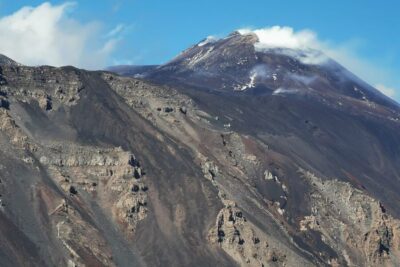
Mount Etna Trekking Tour Beyond the Tourist Trails
Read our review →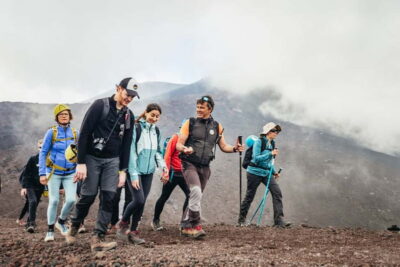
Mount Etna: Guided Trek 3,000 Meters to the Summit
Read our review →
Etna Sunset Tour: Volcano trek, Cave & tasting from Catania
Read our review →
Browse the lists this trek appears in