
Review · KATHMANDU
Mardi Himal Trek
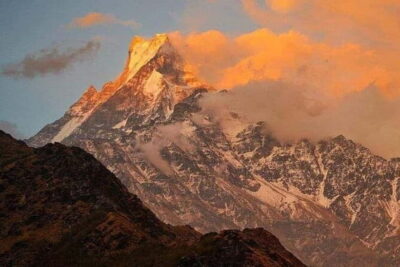
Mardi Himal gives you a close look at Nepal’s high country without the long commitment of the Annapurna Circuit or Everest Base Camp. The prize is Mardi Himal Base Camp, reached after days of forest paths, stone steps, mountain lodges, and wide views of Machhapuchhre, Mardi Himal, and the Annapurna range.
I like two things right away: the route is short enough for a first Himalayan trek, and the private format lets your guide adjust the pace. I also like the practical package, which includes domestic flights, permits, a guide, porter, mountain lodging, meals, and city transfers. Guide Birendra is specifically praised for careful arrangements, patience, humor, and taking good photographs.
The main catch is altitude. Mardi Base Camp sits around 4,500 meters, and the final day is a serious seven-hour effort. Cold nights, basic lodges, steep paths, limited WiFi, and the possibility of rough weather are part of the deal, not small print.
The best parts at a glance
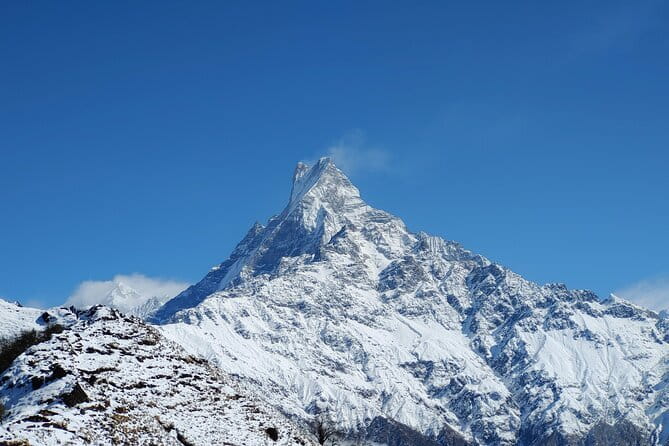
- Mardi Base Camp at about 4,500 meters: The trek’s high point brings the biggest mountain views and the strongest sense of achievement.
- A gentle start from Kande: You ease into the route through Deurali before reaching the forest camps.
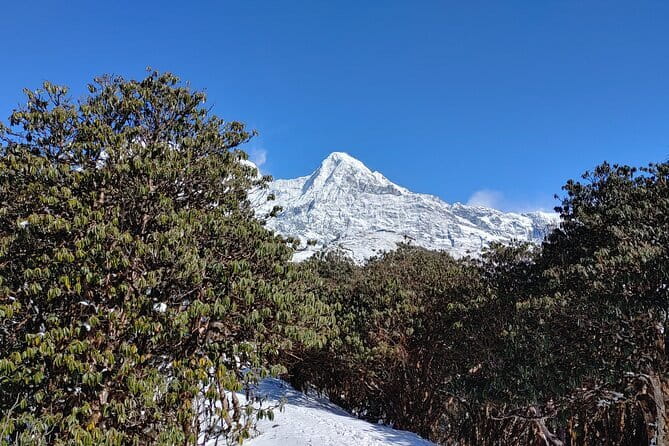
- Rhododendron and pine woods: Spring can bring bright color to the forest, while the trees provide shade on lower sections.
- Private guiding with a porter: Your group travels alone, with a licensed guide and porter carrying much of the load.
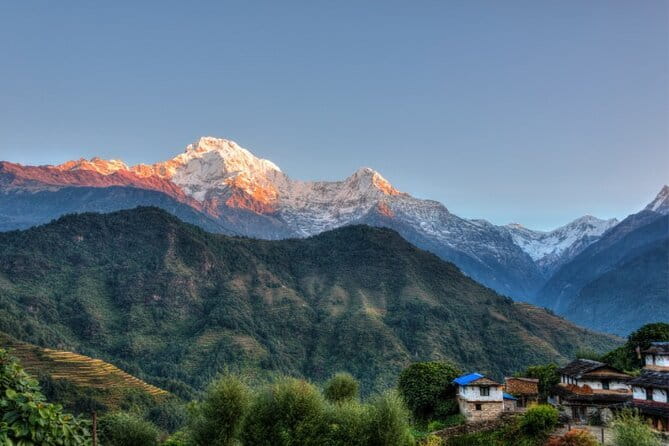
- Lwang village and tea gardens: The return route adds village life, ancestral houses, and an early morning tea-garden walk.
- A useful Nepal package: Flights between Kathmandu and Pokhara, permits, city hotels, meals on trek, and transfers are included.
Why Mardi Himal works for a first Himalayan trek
Mardi Himal is often called an easier Himalayan route, but that needs a little explaining. The trail is less demanding than many longer Nepal treks, and the itinerary builds upward in stages. Still, you walk for as long as seven hours, reach high altitude, and spend nights in simple mountain lodges.
That combination makes this a good first trek for someone with moderate physical fitness who is ready to train. You do not need technical climbing skills, but you do need to be comfortable walking uphill for several hours and descending on tired knees.
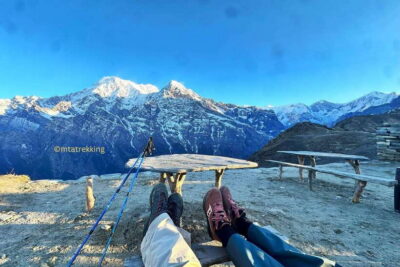
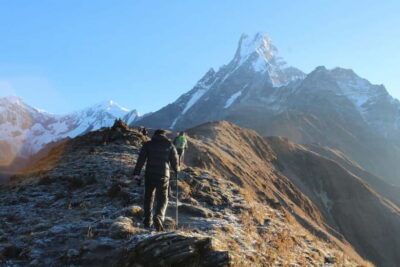
The route is especially appealing because the views arrive in stages. You begin with village paths and forest, then reach open ridges where the Annapurna Massif and Machhapuchhre come into view. The scenery changes often enough that the walking does not feel like one long climb.
I also like the way the itinerary includes a lower-altitude cultural finish. After the high camps, you descend to Sidding and continue to Lwang, where old houses and tea gardens give the trip a more local feel. It is not only a race to a viewpoint.
More Mardi Himal Treks in Kathmandu:
- 4 Days Mardi Himal Base Camp Trek – 4500 Meters
★ 5.0 · 9 reviews - 13 Days Adventurous Mardi Himal Trek From Kathmandu
★ 5.0 · 2 reviews - Pokhara: 4-Day Mardi Himal Trek
★ 4.9 · 59 reviews
Day 1: Kathmandu and an easy arrival
Your trip begins at Kathmandu airport, where a company representative or tour leader meets you and drives you to Thamel. You check into a three-star hotel and have time to rest.
This is a useful first day rather than a sightseeing marathon. International arrivals, airport formalities, and Kathmandu traffic can sap your energy. A quiet afternoon gives you time to sort your bags and prepare for the mountains.
The package includes your Kathmandu hotel and breakfast, but meals in Kathmandu are generally your responsibility unless specifically listed. Keep some Nepalese rupees handy for drinks, snacks, tips, WiFi, and other personal costs.
Day 2: Flying to Pokhara and walking from Kande
You take an early flight from Kathmandu to Pokhara, then drive to Kande. Starting early matters here. It gives you more daylight for the trail and gets the walking under way before the day becomes hot.
The first hike lasts about five hours. The route gradually rises toward Deurali, with the trail becoming more mountain-like as you leave the road behind. This is a sensible opening day because your body gets used to the rhythm without an immediate high-altitude push.
Pokhara is also an important part of the trip. It is the gateway to the trek and returns to the schedule twice, giving you a comfortable contrast with the basic mountain lodges. On the way back, you have more time to see the city.
Day 3: Deurali to Forest Camp through the trees
After a meal in Deurali, you walk for roughly six hours toward Forest Camp. The trail begins fairly level, then becomes a more sustained climb through woodland.
This section is about atmosphere rather than huge views. Forest paths feel cooler and quieter, and the route passes through rhododendron and pine. In spring, rhododendrons can bring strong color to the hillsides. If you travel outside spring, the appeal is more about shade, tree cover, and the gradual change in altitude.
Forest Camp is a practical overnight stop. You are high enough to feel that the mountain trek has properly begun, but not yet at the exposed upper camps. Expect lodge accommodation and a simpler evening than you would have in Pokhara.
A few more treks around Kathmandu worth a look
- Everest Base Camp Trek – 14 Days
★ 5.0 · 1,499 reviews - Everest Base Camp Trek
★ 5.0 · 842 reviews - Everest Base Camp Helicopter Tour landing at Everest View Hotel
★ 5.0 · 668 reviews - Everest Base Camp Trekking
★ 5.0 · 485 reviews
Day 4: Forest Camp to Low Camp and above 3,000 meters
The fourth day covers about five hours. Since you are now above 3,000 meters, the schedule shortens the walking time and gives your body more room to adjust.
The trail continues through mixed woodland, with lunch planned at Low Camp. From here, the route begins to feel more open, and mountain views become more important. Your guide may adjust the exact pace or stopping plan depending on how the group is responding to the height.
This is the point to take altitude seriously. Drink water often, eat even if your appetite drops, and tell your guide if you develop a headache, unusual tiredness, dizziness, or nausea. The itinerary itself includes shorter days for acclimatization, but no schedule can remove the effects of altitude.
Day 5: A shorter acclimatization day near High Camp
Another five-hour walking day follows. The purpose is not simply to cover ground. It gives you additional time above 3,000 meters before the major push to Base Camp.
The route continues upward toward High Camp, and the scenery becomes more open. Lodges at this height are basic, and personal comforts become limited. Hot showers, WiFi, drinks, and small extras usually cost more or may not be available in the same way as in town.
Cold-weather clothing matters. One person who completed the route stressed bringing enough warm layers and noted that food is available at the mountain lodges, including pizza at High Camp. That is useful advice: carry snacks you personally like, but you do not need to pack every meal from Kathmandu.
Day 6: The main event, Mardi Himal Base Camp
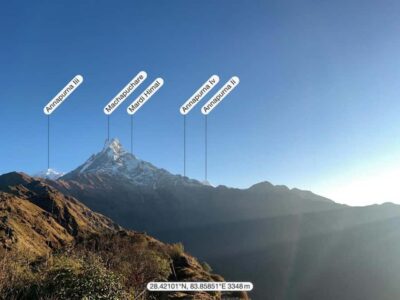
This is the longest and most exciting day, at about seven hours. After breakfast, you head toward Mardi Himal Base Camp and pass a viewpoint with broad views of the Annapurna range, Machhapuchhre, and Mardi Himal.
The climb to Base Camp is the emotional center of the trip. The path is higher and more exposed, and the air is thinner. The reward is a much stronger sense of scale than you get in the forest sections below.
You should treat the time estimate as a guide, not a promise. Your speed, weather, trail conditions, and altitude response all matter. A private group is helpful here because your guide can set a steady pace and make sensible decisions if someone needs more time.
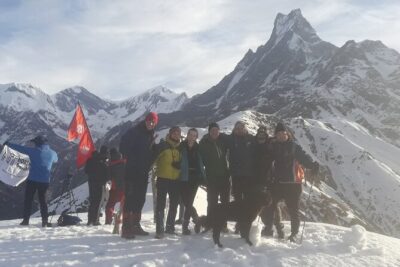
Reaching about 4,500 meters is a genuine achievement, especially for a first trek. Take photographs, but do not rush the moment. The best part may be the pause at the viewpoint, when the mountains open in front of you and the effort of the past days suddenly makes sense.
Day 7: Descending to Sidding
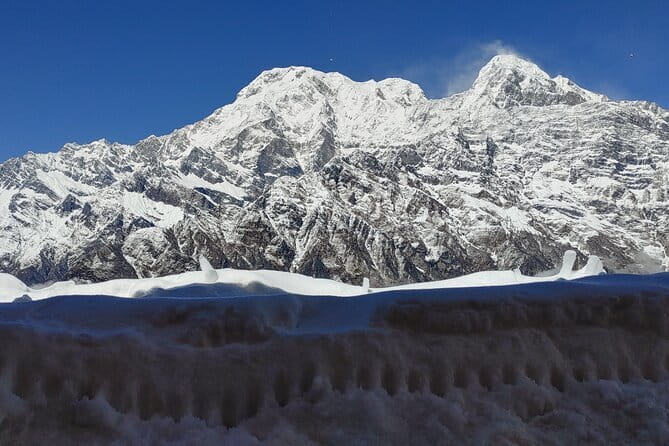
After breakfast at altitude, you begin the descent to Sidding. The walk takes about six hours and returns through rhododendron and pine woods.
Downhill walking can be harder on the knees than uphill walking, especially after the Base Camp day. Trekking poles are worth considering, though the supplied information does not say that they are provided. Good footwear and careful steps will help more than speed.
You may eat at Low Camp depending on timing, then continue downward. Sidding offers a more settled village setting after the high lodges. The descent also gives you a physical reset, with thicker air and a warmer feel as you lose height.
Day 8: A gentler route to Lwang
The walk to Lwang takes about six hours and is described as one of the prettiest days, with mostly level terrain. After the hard climb and descent, that change is welcome.
Lwang is known here for its old ancestral houses and village character. This is where the trip feels less like a mountain objective and more like a walk through rural Nepal. You get a look at a community that is easy to miss on a faster in-and-out trek.
The lower route also gives your legs a break. Even so, six hours is still a full day, and the surface may vary. Keep your day pack light and save enough energy for the final approach.
Day 9: Tea gardens, then back to Pokhara
An early morning walk takes you around the tea gardens near Lwang. Sunrise is the reason to get up early, with the first light changing the look of the hills and village.
You return to the guesthouse for a final breakfast before continuing to Pokhara. The day includes about five hours of walking and travel, so it is not only a relaxed transfer.
Pokhara is a welcome change after the lodges. The package includes accommodation and breakfast there, while other meals are generally not included. Use this evening to rest, wash clothes, and enjoy a meal beside the lake.
Day 10: Pokhara sights and a slower pace
After breakfast at a lakeside restaurant, you have time to see Pokhara with a guide. The listed sightseeing options include Davis Waterfall and Gupteswor Mahadev Cave.
This city day adds value to the package because the trip does not end the instant you leave the trail. You can see two well-known local sights without arranging every transfer yourself.
It also gives your body a recovery day. After several long walks, a relaxed city schedule is welcome. The plan is still guided, so tell your guide if you want more time at one place rather than trying to fit in too many stops.
Day 11: Kathmandu and a final city tour
You fly back to Kathmandu and spend the day exploring the city with a town guide. The itinerary describes visits to popular cultural and heritage sites, though it does not specify every stop.
This final day is useful for anyone who wants more than a mountain walk. Kathmandu provides a strong cultural finish, but city traffic can affect timing, so keep your expectations flexible.
The tour ends back at the Mission Himalaya Treks and Expeditions meeting point in Thamel. Airport and city transfers are included by private vehicle, which simplifies the start and finish.
What the $1,058 price really covers
At $1,058 per person, the price is not just for a lodge-to-lodge hike. It includes:
- Private ground transfers for airport, city, and sightseeing movements
- Kathmandu to Pokhara and return flights, including the guide’s ticket
- Three-star hotels in Kathmandu and Pokhara with breakfast
- ACAP and TIMS permits
- A government-licensed, ministry-trained trekking guide
- Guide meals, lodging, and insurance
- A porter with meals, lodging, salary, and insurance
- Twin-sharing lodge accommodation during the trek
- Eight lunches, eight dinners, and ten breakfasts
- Taxes, GST, and company service charges
- A down jacket, sleeping bag, and duffel bag on request, returned afterward
That is a strong bundle for someone who wants a planned trek rather than a collection of separate bookings. The porter is especially useful. You still carry a day pack, but the heavy load is handled for you.
The price does not include international flights, Nepal visa fees, travel or rescue insurance, most meals in Kathmandu and Pokhara, drinks, WiFi, hot showers, tips, or personal purchases. Budget extra for those items. If you leave the trek early, the unused costs are not refundable.
Guides, porters, and the private format
The package uses a licensed guide and an experienced porter, with the required meals, lodging, salary, and insurance included for the porter. That is better than treating portering as an afterthought.
Birendra is a guide name associated with this departure and is praised for careful planning, friendly service, humor, patience, and photography. You should still confirm your assigned guide when booking, since staff can change.
Because this is a private activity, only your group participates. That matters if one person walks more slowly, if the weather changes, or if you want to pause for photographs. It also means you do not get the social mix of a large group, so choose this style based on your preference.
The practical drawbacks to consider
The word easy can mislead you. Mardi Himal is manageable for a fit beginner, but the Base Camp day reaches high altitude and lasts about seven hours. You should train with long uphill walks before arriving.
Accommodation on the trek is at the best available lodges, not luxury hotels. Twin sharing is the standard, and comforts such as hot showers and WiFi may cost extra. Food is available, but choices can narrow at high camps.
Weather can also change the experience. Mountain views depend on conditions, and the route can feel much harder in cold or wet weather. Bring warm layers, waterproof protection, and enough personal snacks.
The start and end dates are listed as operating daily from February 28, 2024 through November 25, 2026. Confirmation is received at booking, and free cancellation is available up to 24 hours before the start time. Changes or cancellations inside that window are not accepted for a refund.
Who should book this trek?
I would recommend Mardi Himal to a fit first-time trekker who wants big Himalayan views in 11 days and prefers a prepared package. It suits you if you value a guide, porter, included permits, domestic flights, and private transfers.
It is also a good choice for experienced hikers who want a shorter Nepal route with a strong mountain finish. The forest sections, high ridges, village stays, and Pokhara days give the trip variety.
I would think twice if you dislike basic lodging, long downhill walks, cold nights, or fixed multi-day schedules. This is not a casual sightseeing tour. It is a proper high-altitude trek with a comfortable support system around it.
Should you book the Mardi Himal Trek?
Book it if Mardi Base Camp and Annapurna views are your main goals, but you want a route shorter and less demanding than Nepal’s major long-distance treks. The combination of a private guide, porter, included permits, flights, meals, and city days makes the $1,058 price reasonable for a first organized trek.
Go in with realistic expectations. You will work hard, sleep simply, spend extra on personal comforts, and need to respect altitude. If you prepare your legs, bring warm clothes, and listen to your guide, this route offers a fine first taste of Nepal’s high mountains.
FAQ
How long is the Mardi Himal Trek?
The full experience lasts approximately 11 days, including Kathmandu, Pokhara, the trek, return flights, and city sightseeing.
What is the highest point on the trek?
Mardi Himal Base Camp is reached at about 4,500 meters.
Is the trek suitable for beginners?
It is considered suitable for novice hikers, but you should have moderate physical fitness. The route includes walks of up to seven hours and high-altitude sections.
Are flights between Kathmandu and Pokhara included?
Yes. Return domestic flights between Kathmandu and Pokhara are included, including the guide’s ticket.
Are permits included?
Yes. The package includes the required ACAP and TIMS permits.
Is accommodation included?
Yes. Three-star hotel accommodation in Kathmandu and Pokhara with breakfast is included, along with twin-sharing accommodation at the best available mountain lodges during the trek.
Are meals included?
Ten breakfasts, eight lunches, and eight dinners are included. Meals in Kathmandu and Pokhara are not included unless specifically listed.
Is this a private tour?
Yes. Only your group participates in the activity, and the tour ends back at the Mission Himalaya Treks and Expeditions meeting point in Thamel.
Just added around Kathmandu
- Everest Base Camp Trek★ 5.0 · 3 reviews
- Everest Base Camp Trek★ 5.0 · 7 reviews
- 15 Days Private Everest Base Camp Trek★ 5.0 · 30 reviews
- 14-Day Everest Base Camp Trek★ 5.0 · 20 reviews
- Everest Base Camp Trek★ 5.0 · 57 reviews
- 14 Days of Adventure Trekking to Everest Base Camp★ 5.0 · 2 reviews
- From Kathmandu: Private 14-Day Everest Base Camp Trek★ 5.0 · 20 reviews
- 14 Days Everest Base Camp Trek★ 5.0 · 4 reviews
Mardi Himal Treks, compared.
Pkr. Backpacker Group Dep.: 4 Day Mardi Himal Base Camp Trek
Read our review →Browse the lists this trek appears in