
Review · POKHARA
Private Mardi Himal Trek
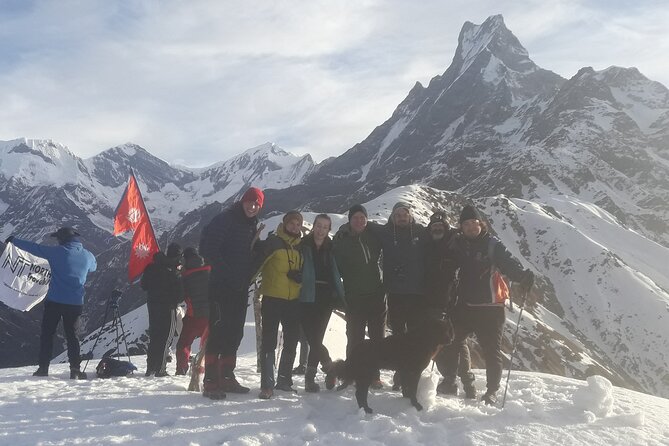
The best thing about this private Mardi Himal Trek is its compact route to big Himalayan views. In five days, you move from Pokhara through forest, ridge country, and high mountain lodges toward Mardi Himal Base Camp, with Machhapuchhre and Annapurna South filling the horizon. A female guide leads the experience, creating a supportive feel for anyone who prefers a woman at the front of the group.
I like the flexible pacing and the practical inclusions. You get a private car to the trailhead, a porter for every two trekkers, permits, meals, a sleeping bag, trekking poles, and microspikes. The guides, including Bhim, Saugat, Yakub, and others on past departures, are praised for good pacing, local insight, and calm support.
The main consideration is that this is still a high-altitude trek, not a gentle walk. You reach High Camp at about 3,700 meters, and the Base Camp day can be tiring. Also, the return from Siding uses a shared jeep, drinks cost extra, and the listed 11:45 pm start time needs confirmation before you go.
Key points to know before you book
- High Camp reaches about 3,700 meters, so steady fitness and sensible pacing matter.
- The Base Camp hike is optional in length, with a shorter viewpoint walk available if you prefer.
- A private car takes you from Pokhara to Kande, while the return from Siding uses a shared jeep.
- The $399 price includes four breakfasts, five lunches, four dinners, permits, lodges, a guide, porter support, and gear.
- A female guide is part of the experience’s design, but you should confirm the assigned guide’s name before departure.
- Water and drinks are not included, and mountain prices can be high, so budget for them separately.
Why Mardi Himal works well in five days
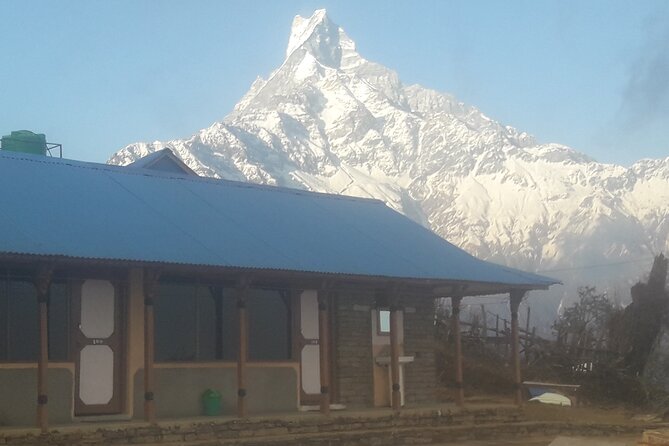
Mardi Himal gives you a taste of Nepal’s Annapurna region without requiring a two-week schedule. You gain forest trails, ridge walks, snow-country views, and basic mountain lodges in a short run from Pokhara.
That compact format is the appeal. If you have only a few days in Nepal, you can fit the trek around time in Pokhara. You also avoid the larger, more established feel of some better-known routes. The trail brings you closer to quiet forest and open ridges, though the short schedule means several days still require six hours of walking.
This is a private trip, so your group sets the pace within the fixed route. That matters on a mountain trail. A strong walker can keep moving, while a slower group can ask for more breaks without being tied to strangers. Past guide teams have included Bhim, Saugat, Yakub, and porters such as Manjung, Menjom, Tashi, Kazoo, and Gobinda. The strongest praise is for guides who adjust the pace, explain local culture, and keep the mood reassuring when the altitude begins to bite.
More Mardi Himal Treks in Pokhara:
- Pokhara: 4-Day Mardi Himal Trek
★ 4.9 · 59 reviews - From Pokhara: 4-Day Mardi Himal Base Camp Trek
★ 4.9 · 31 reviews - From Pokhara: 5-Day Mardi Himal Base Camp Trek
★ 5.0 · 10 reviews
Day 1: Kande to Deurali through forest
Your private car or van takes you from Pokhara to Kande, a drive of roughly one to one and a half hours. From Kande, the trek begins on foot toward Deurali, with about five hours of walking listed for the day.
The trail passes through forest and gives you early views toward Annapurna South and Hiunchuli. This is a good opening day because the scenery changes gradually. You start with green woodland rather than an immediate high ridge, giving your legs time to settle into the trek.
Deurali is your first overnight stop. Accommodation is in a clean mountain lodge, with basic comfort rather than hotel service. The price includes dinner, and this first evening is a useful time to sort your sleeping bag, adjust your pack, and ask your guide about the next day’s elevation gain.
There is a small planning detail worth checking. The meeting information gives a start time of 11:45 pm, while the day plan describes a daytime drive from Pokhara. That may be an administrative error or a pickup instruction that needs clarification. Confirm the exact departure time with the operator before you arrive.
Day 2: Forest Camp and the climb to Low Camp
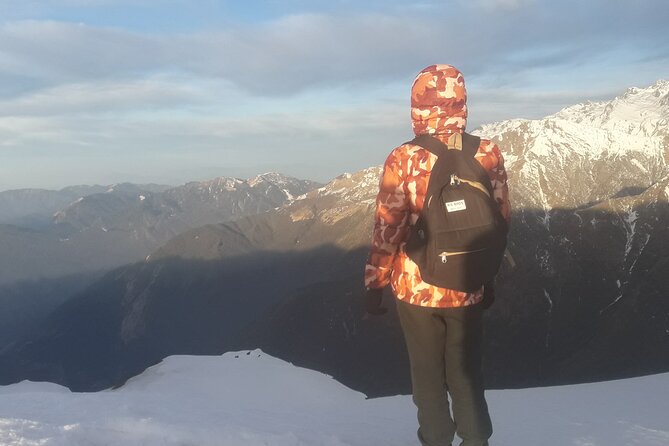
The second day moves higher, with about six hours of trekking. The route reaches Forest Camp at approximately 2,600 meters after around four hours, where you stop for lunch before continuing toward Low Camp.
This section is about gradual altitude gain and changing views. The forest begins to open, and you get wider views along the trail. It is not the day for racing. A good guide will keep the pace even, and the private format gives you more room to ask for a pause when needed.
The plan refers to trekking from Pothana as part of this section, while the first day is described as Kande to Deurali. Since mountain itineraries can use different overnight points or route descriptions, ask the operator to confirm the exact walking sequence and lodge locations. That is especially useful if you are planning your own luggage or checking weather conditions.
Low Camp is your overnight stop. The lodge will be simple, and food options may be limited compared with Pokhara. Your package includes breakfast, lunch, and dinner for the trek, but drinks are extra. One practical warning is important here: bottled water and other drinks can be expensive in the mountains. Ask your guide about refill options and carry enough cash for purchases.
Day 3: Low Camp to High Camp at 3,700 meters
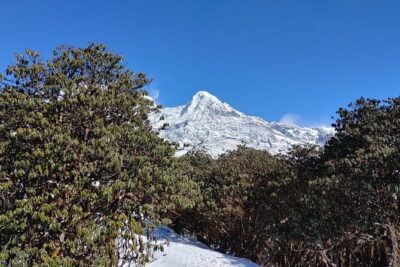
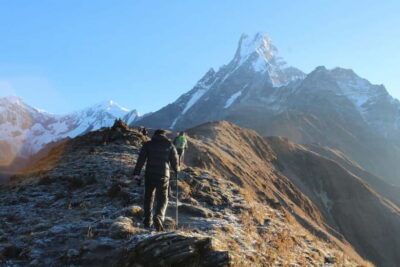
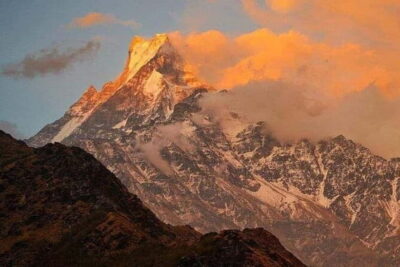
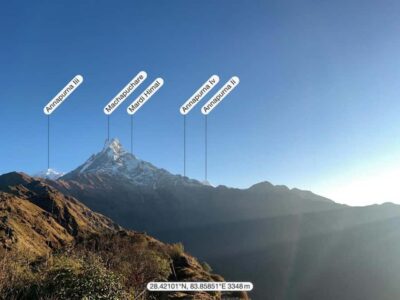
Day three is the physical heart of the trek. You walk from Low Camp to High Camp in about four hours, though the full day is listed at roughly six hours. The reward is a more open ridge and strong views toward Machhapuchhre, also called Fishtail, and Annapurna South.
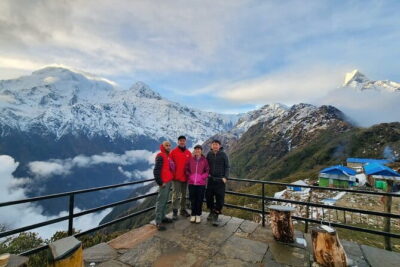
This is where the trip changes from a forest walk to a high mountain outing. The air is thinner, the trail feels more exposed, and the weather can change quickly. You need to walk slowly and pay attention to how you feel. The route is not described as a technical climb, but the altitude is real.
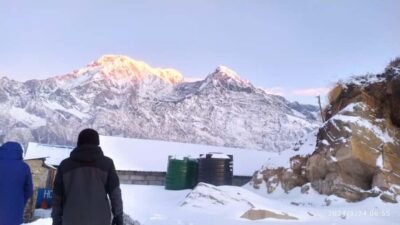
High Camp sits at about 3,700 meters, and you sleep in a lodge there. The included sleeping bag is useful, particularly in cold months. It is rated for temperatures down to minus 25 degrees, though personal comfort varies and you should still bring warm clothing.
The equipment package also includes trekking poles and microspikes. Microspikes are particularly helpful if sections of the trail are icy. They do not replace careful footing, and you should ask the guide when to use them.
Guides on this route are valued for more than navigation. Bhim, in particular, has been praised for explaining Nepalese culture and keeping people comfortable during winter hikes. Saugat has been noted for matching pace to ability. Those are exactly the traits you want at High Camp: clear judgment, patience, and no pressure to prove anything.
A few more treks around Pokhara worth a look
- Pokhara: 3-Day Ghorephani and Poon Hill Private Trek
★ 5.0 · 58 reviews - 4-Day Private Poon Hill Trekking Tour
★ 5.0 · 58 reviews - Pokhara: 2-Day Ghorephani and Poon Hill Private Trek
★ 4.6 · 50 reviews - Pokhara: 4-Day Private Trek Tour
★ 4.9 · 43 reviews
Day 4: Mardi Himal Base Camp or the shorter viewpoint
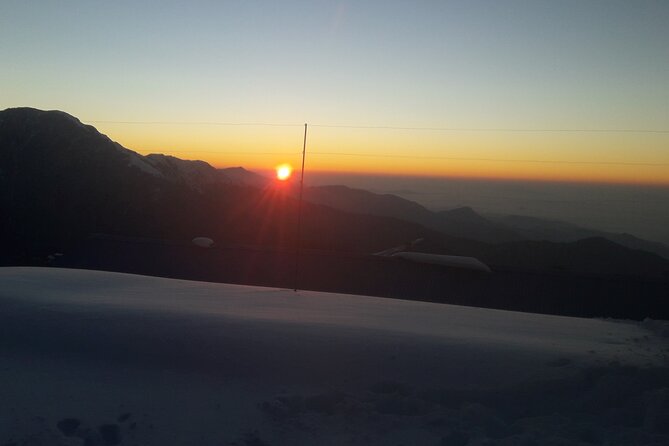
The fourth day is the visual highlight. From High Camp, you hike toward Mardi Himal Base Camp, with a round trip of about four to five hours. You can also choose a viewpoint partway along the route if you want a shorter outing.
This choice is one of the package’s best features. The Base Camp walk gives you the fullest version of the high ridge experience, but it is not compulsory. If the weather is poor, your legs are tired, or altitude symptoms appear, stopping at the viewpoint is the sensible decision. You still get mountain scenery without treating the itinerary like a test.
After returning to High Camp, you descend to Badal Danda at about 3,210 meters. The day is listed at approximately six hours, so do not assume the Base Camp excursion is a quick morning stroll. You will already be walking at altitude, then descending to the overnight lodge.
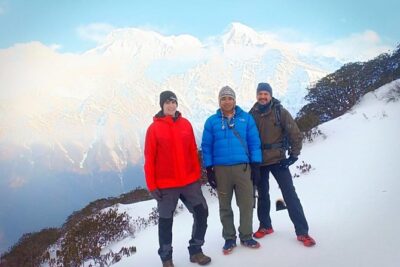
The views toward Machhapuchhre and Annapurna South are the main reason to make this effort. Clear weather is important, and mountain visibility is never guaranteed. A private trip helps because your guide can discuss the day’s conditions and your energy rather than simply moving a fixed group along.
You spend the night at a lodge in Badal Danda. By this point, the route has delivered its highest walking, and the descent should feel easier for many people. Still, downhill walking can be hard on knees, so trekking poles are more than a nice extra.
Day 5: Badal Danda, Siding, and the ride to Pokhara
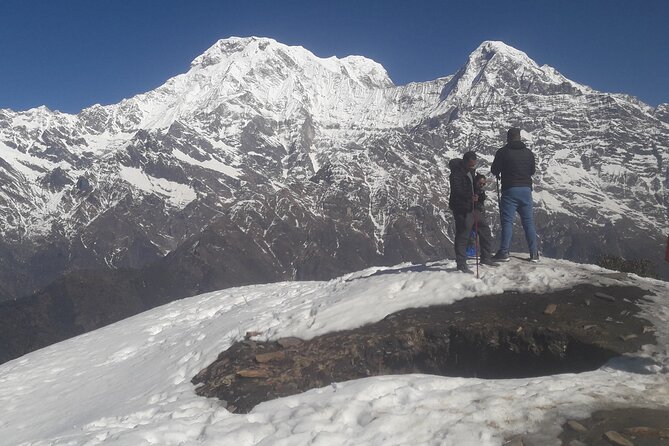
The final walking day takes about five hours from Badal Danda to Siding Village. From Siding, you return to Pokhara by shared jeep.
This is a satisfying finish because the route moves from high ridge country back toward settled villages. The walk is still long enough to require energy, but it marks the end of the high-altitude section. Once you reach Siding, the shared jeep provides the practical link back to the city.
The shared ride is one of the less polished parts of the package. It is included, but it is not the same as having a private vehicle waiting only for your group. Road conditions and waiting time can affect the journey, and you should keep that in mind if you have a flight or fixed appointment in Pokhara.
There is also an optional extension. Instead of returning immediately, you can add a day from Siding to Lwang via Ghalel, a five to six hour walk. That adds another village section and changes the trip from five days to six. Confirm the extra cost and transport details before choosing it, since the advertised $399 package is built around the five-day plan.
What the $399 price really covers
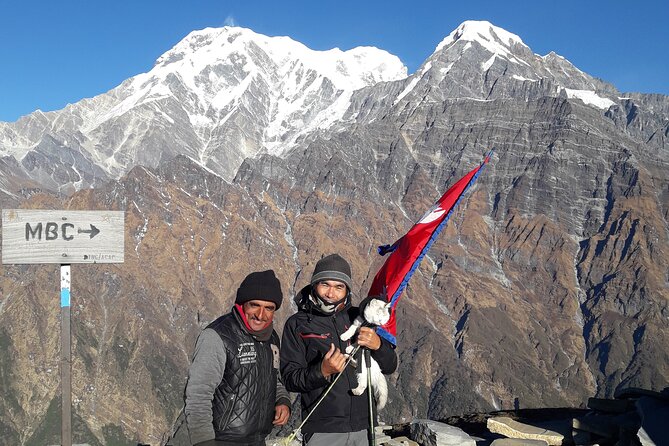
At $399, this is a strong value if you use the included services. The price covers:
- Private transport from Pokhara to Kande
- Shared jeep transport from Siding to Pokhara
- Lodge accommodation along the trek
- ACAP and TIMS permits
- An English-speaking, government-registered, experienced guide
- First aid trained guide support
- One porter for every two trekkers
- A kitbag for your belongings
- Sleeping bag, trekking poles, and microspikes
- Four breakfasts, five lunches, and four dinners
- Government and local taxes
- A completion certificate
The porter ratio is especially useful. You are not expected to carry every item for five days, although you should keep day-to-day essentials in your own small pack. A kitbag gives the porter a clear load to carry and helps keep your belongings organized.
The package does not include drinks, insurance, accommodation in Kathmandu or Pokhara, or tips for the guide and porter. Those exclusions are normal for this type of trek, but they affect the final cost. You should also set aside money for water and personal snacks.
How hard is the trek?
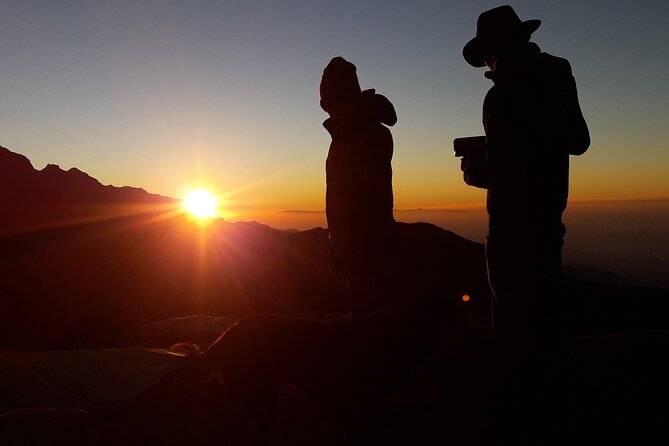
The tour asks for a moderate level of fitness. That phrase should be taken seriously. The walking days run roughly five to six hours, and the route reaches 3,700 meters before the Base Camp outing.
You do not need technical climbing experience based on the information provided. You do need to manage long walking days, uneven trails, cold nights, and altitude. If you exercise regularly and can comfortably walk for several hours, this route may suit you. If you are unused to hills, you should prepare before arriving.
The private format is a major help. Your guide can adjust the pace, and the Base Camp day gives you a shorter viewpoint option. Still, no guide can remove the effects of altitude. Move slowly, drink regularly, and tell your guide immediately if you feel unwell.
The female guide focus
The tour is designed around an expert female guide, which will appeal to women who want a supportive female-led mountain experience or to anyone who values that style of leadership. The description highlights both trekking instruction and local cultural insight.
No assigned guide’s name is provided in advance, so confirm this before booking if having a female guide is essential to your decision. Past guide teams have included several named male guides, such as Bhim, Saugat, and Yakub, so it is sensible to ask exactly who will lead your departure.
The most useful qualities to look for are not just gender or language ability. Ask about pacing, first aid training, altitude support, and the guide-to-porter arrangement. The package states that the guide is fluent in English, government registered, experienced, and first aid trained.
Who should book this trek?
I would recommend it to you if you want:
- A short Himalayan trek based from Pokhara
- A private trip instead of a fixed group
- Strong views of Machhapuchhre and Annapurna South
- A female-led trekking experience
- Meals, permits, porter help, and basic gear bundled into one price
- Flexibility to choose the Base Camp walk or a shorter viewpoint
I would hesitate if you want private transport for every part of the trip, hotel-level accommodation, or a relaxed schedule with very short walking days. I would also think twice if you have no experience with sustained uphill walking and are not prepared to train first.
Should you book the Private Mardi Himal Trek?
Book it if you want a well-priced five-day route with serious mountain scenery and useful support built in. The strongest parts are the private pacing, included equipment, porter assistance, and option to shorten the highest day.
Before paying, confirm three things: the exact pickup time, the name and gender of your assigned guide, and the detailed overnight route between Kande, Deurali, Pothana, Forest Camp, and Low Camp. If those details are clear, the trip offers a practical way to reach high Himalayan viewpoints without committing to a much longer expedition.
Free cancellation is available if you cancel at least 24 hours before the local start time. Inside that window, the payment is not refunded.
FAQ
How long is the Private Mardi Himal Trek?
The main route takes approximately five days. You can also add a sixth day from Siding to Lwang via Ghalel.
What is the highest point on the trek?
High Camp is listed at approximately 3,700 meters. The route then continues toward Mardi Himal Base Camp on day four.
Is a female guide included?
The experience is presented as a female-guided trek. Since the guide’s name is not provided, confirm the assigned guide before departure if this is important to you.
Are meals included?
Yes. The package includes five lunches, four breakfasts, and four dinners during the trek. Drinks are not included.
Is transport included?
Yes. A private car or van takes you from Pokhara to Kande. The return from Siding to Pokhara is by shared jeep.
What happens if I do not want to hike all the way to Base Camp?
You can choose a viewpoint partway along the route instead. The shorter option is offered on the fourth day before descending to Badal Danda.
Just added around Pokhara
- Pokhara: Sarangkot Sunrise & Panoramic Annapurna View Tour★ 4.8 · 10 reviews
- Pokhara: Majestic Mardi Base Camp Guided Trek with HotSpring★ 5.0 · 6 reviews
- Pokhara: Bungee Jumping Experience Near Annapurna★ 5.0 · 9 reviews
- Pokhara: Annapurna Day Hike with Panoramic Views★ 4.3 · 7 reviews
- Pokhara: 9-Day Annapurna Base Camp Trek with Poon Hill★ 5.0 · 6 reviews
- Pokhara: 7-Day Annapurna Base Camp Trek & Hot Spring★ 4.0 · 3 reviews
- Pokhara: 5-Day Ghorepani and Poon Hill Private Trek★ 5.0 · 4 reviews
- Pokhara: 5-Day Trek to Annapurna Base Camp and Hot Springs★ 5.0 · 4 reviews
Mardi Himal Treks, compared.
Pkr. Backpacker Group Dep.: 4 Day Mardi Himal Base Camp Trek
Read our review →Browse the lists this trek appears in