
Review · POKHARA
From Pokhara: 4-Day Mardi Himal Base Camp Trek
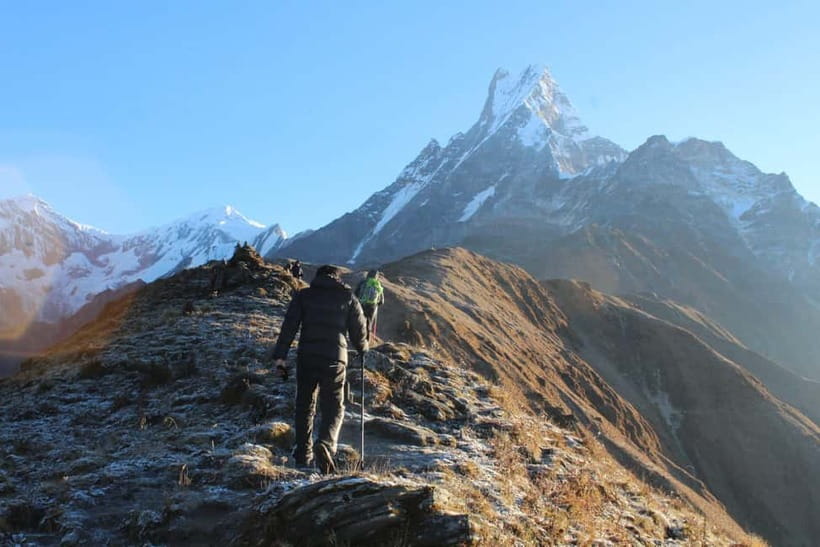
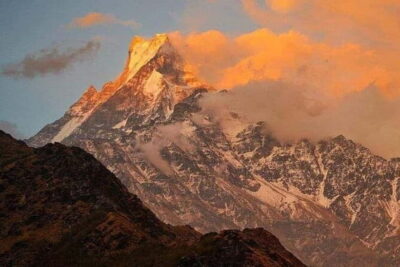
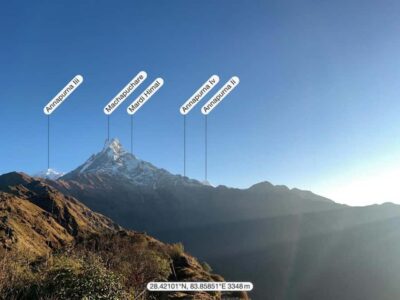
The best part of this Mardi Himal trek is how quickly the scenery changes. In four days, you move from Pokhara by car to forest paths, quiet mountain villages, alpine meadows, and high viewpoints looking toward Machapuchhre and Annapurna South. You can reach the viewpoint at about 4,200 meters, with Base Camp near 4,500 meters as an option if your health, timing, and conditions allow.
I like the private format, since your guide can adjust the pace and stop when you need a rest. I also like the route’s variety: rhododendron and oak woods on one day, snowy peaks the next, then a descent through villages. The main drawback is that four days makes the trek demanding, and some people may reach the viewpoint rather than Base Camp because of time, weather, or tired legs.
Key points to know before booking
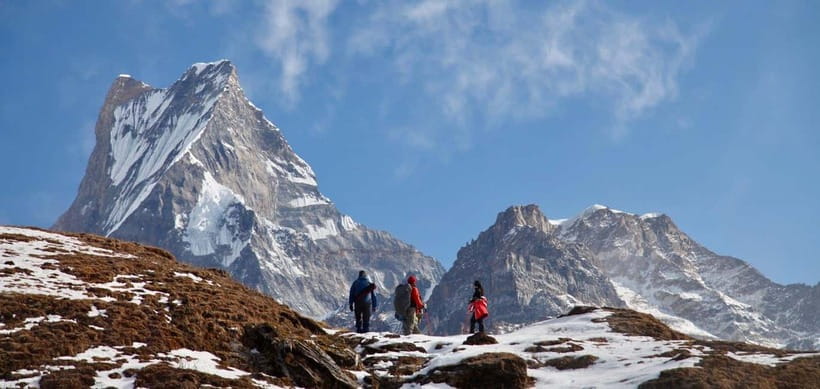
- High Camp at 3,580 meters: Spend a night above the tree line with clear views toward Machapuchhre and Annapurna South.
- A serious final climb: Steep steps and uphill sections make fitness more important than the four-day duration suggests.
- Base Camp is optional: The plan includes Mardi Himal Viewpoint, with the higher Base Camp walk offered if you are fit and conditions permit.
- Private guide support: Guides such as Anil, Santosh, Bala, Tanka, and Chandra have been praised for patience, route knowledge, cultural explanations, and flexible pacing.
- Tea house nights: Expect simple mountain lodging, shared-style facilities where applicable, and meals available along the trail.
- Strong overall value: At $138 per person, the price includes transport, permits, guide costs, lodging, and other trek expenses, though the meal option deserves careful checking.
Why this short trek works so well from Pokhara
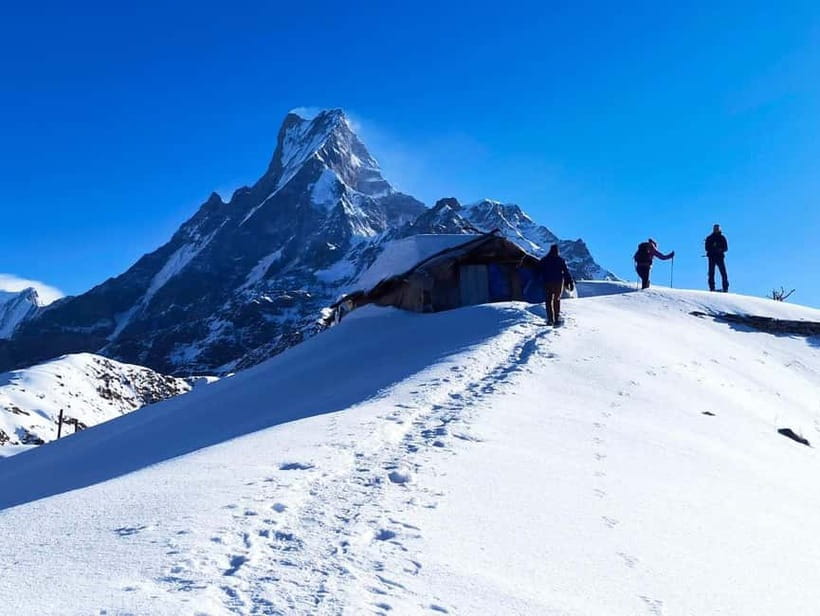
The Mardi Himal route gives you a taste of high Himalayan trekking without committing to a long circuit. You begin near Pokhara, spend three nights in the mountains, and return by road after reaching the high viewpoints. That makes it a practical choice if your Nepal trip also includes time in Pokhara, Chitwan, Kathmandu, or another region.
I especially like the change in scenery. The first day feels wooded and gentle compared with what follows. By the second day, the path rises through rhododendron and oak forest. On the third morning, you are walking above the forest toward a broad mountain view. The final day brings you down to villages and a road connection.
This is not an easy four-day walk. The total schedule includes long uphill stretches, with about six to seven hours of walking on Day 2 and an early start for the high viewpoint on Day 3. Several people found the stairs and steep sections tough, especially without much training. You should have a reasonable level of fitness and be in good health before you book.
The private setup helps. Your guide can slow the pace, suggest breaks, and adjust the plan when the group needs it. Guides named in the feedback include Anil, Anil Nepali, Santosh, Santos, Bala, Tanka, Dhanapati, Chandra, Bishnu, Jeet Bhadur, Golman, and others. The guide assigned to you may vary, but the most praised qualities are consistent: patience, care, local information, and practical help on steep climbs.
More Mardi Himal Treks in Pokhara:
- Pokhara: 4-Day Mardi Himal Trek
★ 4.9 · 59 reviews - Private Mardi Himal Trek
★ 5.0 · 42 reviews - From Pokhara: 5-Day Mardi Himal Base Camp Trek
★ 5.0 · 10 reviews
Day 1: Kande to Forest Camp through Australian Camp
Your morning begins with pickup in Pokhara, the Lakeside area, Sarangkot, or Pokhara International Airport. The drive to Kande takes about an hour. A private car makes this start easy, since you do not need to arrange a separate taxi or find the trailhead on your own.
From Kande, you walk toward Australian Camp and Pothana. This first section introduces the route with forest paths, mountain views, and village scenery. It is a useful warm-up, though the five to six hours of walking should not be underestimated. You are already gaining height and spending most of the day on your feet.
Forest Camp sits at about 2,550 meters. The stop is simple but well placed for the next day. You spend the night in a tea house, where the point is shelter, food, and rest rather than comfort in the city-hotel sense.
This first night also gives you a chance to check your gear. Keep warm clothing, water, a headlamp, and personal items close by rather than buried in a porter’s bag. Rain is possible on the lower trail, and one trekker had wet weather on the first day, so a waterproof layer is useful even when the morning begins clear.
Day 2: The long climb from Forest Camp to High Camp
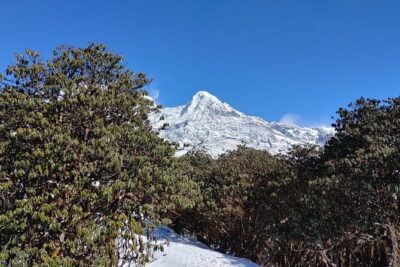
Day 2 is the hardest sustained walking day for many people. The route climbs for around six to seven hours through dense rhododendron and oak forest. The trees provide shade in places, but the uphill work continues for much of the day.
Your guide matters most here. Guides such as Golman and Santosh have been praised for helping with bags during steep stair sections, suggesting rest points, and keeping the pace manageable. If you are a first-time trekker, tell your guide early when you need a break. Waiting until you are exhausted makes the climb much harder.
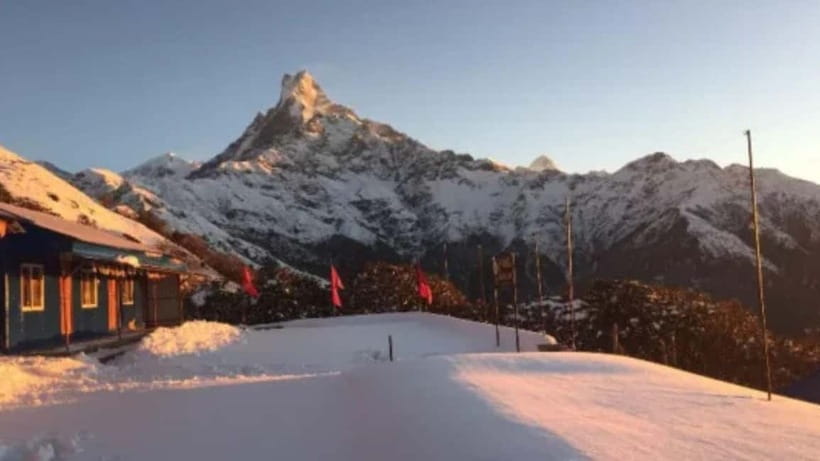
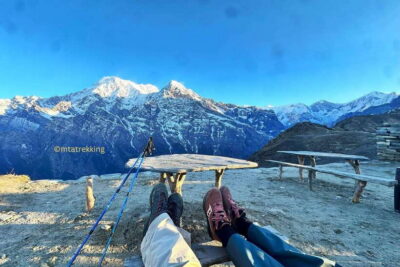
As you rise, the forest begins to thin and the views open. High Camp is at about 3,580 meters, where you can see toward Machapuchhre and Annapurna South. The setting is the reward for a demanding day, but it is also where cold becomes a real concern. Temperatures can change sharply with altitude, and the high camp night may feel very cold.
The tea house is functional and basic. Bring layers, warm socks, and a sleeping bag if needed. A trekking stick can also help on the ascent and the next morning’s descent. Both sleeping bags and trekking sticks may be supplied as part of the gear support, but confirm what you will receive before departure.
Do not make High Camp a late-night social stop. The next morning begins early, and the sunrise walk is the key part of the trek. Eat, drink, organize your daypack, and get as much sleep as the tea house allows.
Day 3: Sunrise at Mardi Viewpoint and the optional Base Camp walk
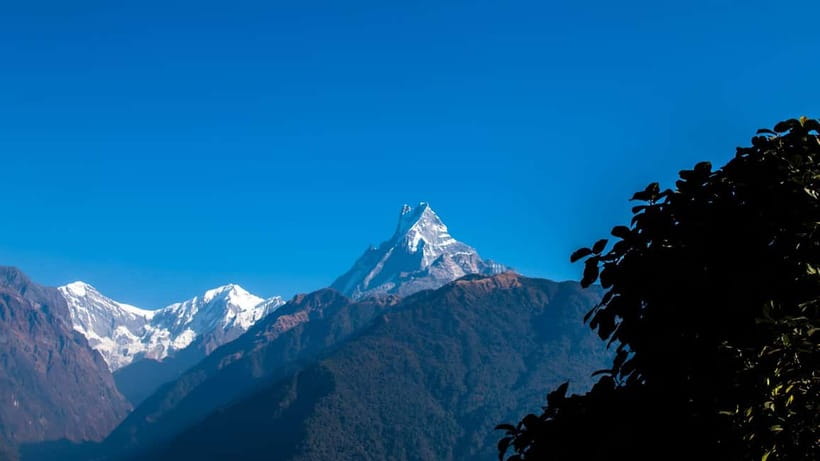
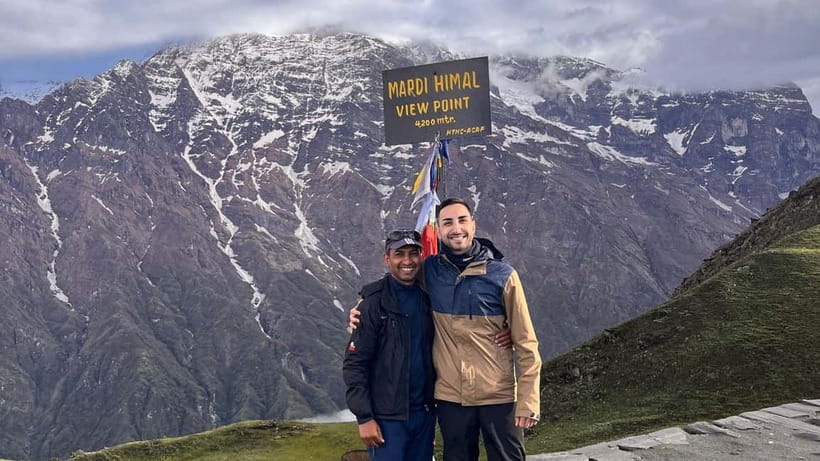
Day 3 begins before sunrise with a three to four-hour walk toward Mardi Himal Viewpoint. The viewpoint is listed at about 4,200 meters, and the route may include steep steps and exposed-feeling high sections. You will want a headlamp, warm layers, water, and gloves for this part.
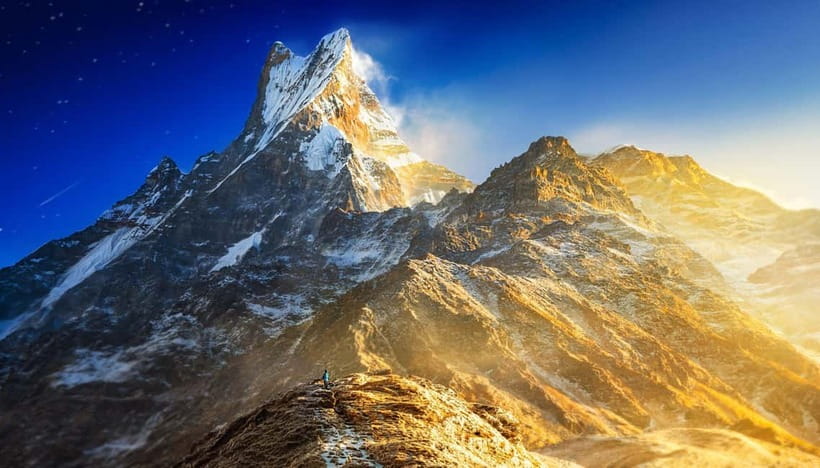
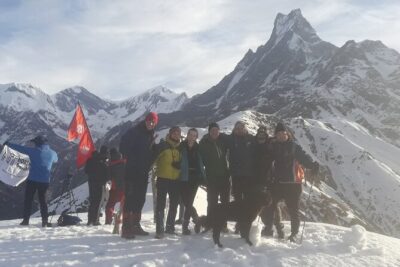
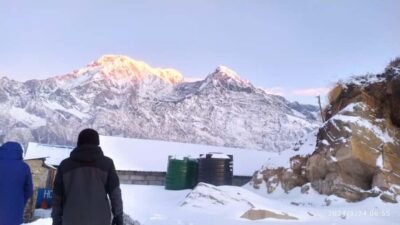
The reward is the morning light over the Annapurna range and Machapuchhre. Clear conditions can produce the trek’s finest views, with the peaks taking on color as the sun rises. Cloud is always a possibility in the mountains, so you should treat sunrise as a chance rather than a promise. One person reached the mountains but did not get the full sunrise because of cloud cover.
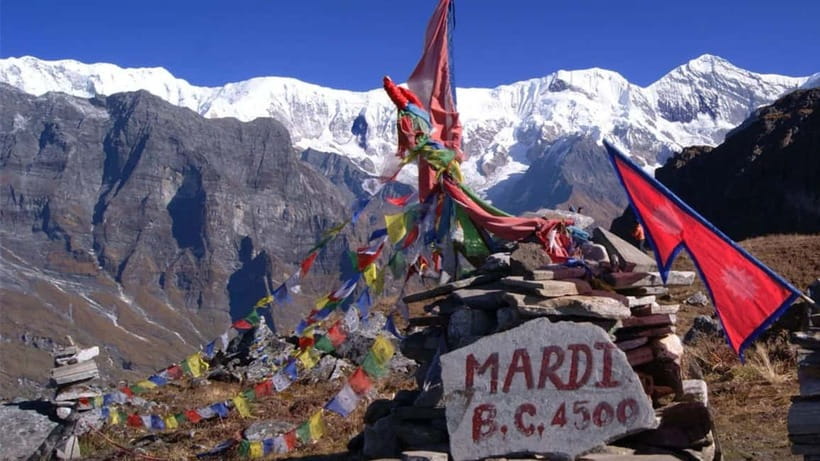
The itinerary includes an optional walk onward to Mardi Himal Base Camp at about 4,500 meters. This is an important point to understand before booking. The four-day schedule is tight, and not every participant reaches Base Camp. Your guide may recommend stopping at the viewpoint if weather, timing, altitude, or fatigue makes that the sensible choice.
If you continue, the extra height increases the physical demand. Take your guide’s advice seriously, especially if you develop a headache, unusual weakness, or other signs that you are not coping well with the altitude. Emergency rescue services are available if needed, but travel insurance is mandatory and should include suitable mountain coverage.
After the high section, you descend to Low Camp at about 2,970 meters. The descent takes roughly three to four hours. Downhill walking can be harder on knees than the climb is on lungs, especially after the early morning start. Trekking poles and careful foot placement help.
Low Camp offers another tea house night. The drop in altitude should feel welcome, though you will still be tired. This is a good evening to ask your guide about the next day’s walking time, arrange your pack, and keep your camera protected.
A few more treks around Pokhara worth a look
- Pokhara: 4-Day Ghorepani, Poonhill & Ghandruk Mountain Trek
★ 5.0 · 132 reviews - 4-Day Private Poon Hill Trekking Tour
★ 5.0 · 58 reviews - Pokhara: 4-Day Private Trek Tour
★ 4.9 · 43 reviews - Pokhara: 4-Day Beautiful Ghorepani Poon Hill & Ghandruk Trek
★ 4.8 · 21 reviews
Day 4: Low Camp, Siding, Lumre, and the road to Pokhara
The last day takes you downhill for around four to five hours toward Siding Village. After the higher mountain sections, the return through village country gives the trek a different feel. You see more signs of daily life, and the route becomes a gradual transition from remote mountain paths to road access.
From Siding, you continue for about an hour toward Lumre. The route information also includes Lumre canyons and Lwang Ghalel, so your exact walking stops may depend on the guide and the day’s timing. The final drive back to Pokhara takes about an hour.
This ending is one reason the route works well for a short holiday. You do not need to retrace every step to the starting point. Instead, the trail finishes at a village road connection, and your transport takes you back to town.
Expect tired legs by the time you arrive in Pokhara. Plan a quiet evening rather than a packed sightseeing schedule. Your guide and driver return you to a Lakeside location or Pokhara International Airport, depending on the arrangement.
Tea houses, food, and what the $138 price covers
At $138 per person, this is a strong package price if the listed inclusions apply to your booking. It covers round-trip transport, permits, TIMS fees, tea house lodging, a government-certified English-speaking guide, guide expenses, taxes, a first aid kit, and luggage storage in Pokhara. A porter and meals are included if you select those options.
The word if matters here. The meal-inclusive option has drawn a sharp complaint from one person who found it much more expensive than ordering directly at the tea houses. Another trekker who did not choose the meal option spent about 3,600 Nepalese rupees per person per day on meals and drinks. Costs can vary, but you should compare the two options before paying.
Ask exactly what the meal package includes. Breakfast, lunch, and dinner are listed, but extra drinks and additional items may cost more. If you prefer to choose food as you go, the non-meal option may offer better control over your spending. If you value simple planning and do not want to think about daily menus and bills, paying in advance can still be convenient, provided the price is reasonable.
The tea houses are simple mountain lodges, not polished hotels. You are paying for access to the route, a bed, food options, and a place to warm up. Carry cash for personal expenses, drinks, tips, and anything outside the included package.
Guide support is a major part of the value
A private guide can make this trek much more manageable. The best use of the guide is not just navigation. Your guide can judge the pace, explain local customs, help you settle into the tea houses, and tell you when a break is sensible.
Anil received praise for his patience, attention, humor, photography, and cultural explanations. Santosh was valued for practical advice and flexibility. Bala was described as kind and encouraging during difficult sections. Chandra was especially patient with less experienced walkers. Tanka was praised for his care and easy conversation, while Bishnu brought explanations of Nepalese history, traditions, holidays, plants, and nature.
These details matter because the route is not simply a walk between two points. You spend long hours with the same person, often when you are tired. A guide who listens and keeps you calm can change the whole experience.
A porter is available if selected. That is worth considering for the steep sections, especially if you are carrying camera equipment, warm clothing, or several days of personal items. Pack a light day bag with water, snacks, layers, sunscreen, and valuables, and let the porter handle the heavier load where appropriate.
Who should book this four-day route?
I would recommend it to you if you want serious mountain scenery but have limited time. It suits people who are comfortable walking for five to seven hours a day and who understand that the final viewpoint requires real effort.
It is also a good choice for a first Himalayan trek when you want private support. Several first-time or less-trained trekkers completed the route with patient guides, but their experience should not be read as proof that the walk is easy. Your fitness, weather, pace, and response to altitude will shape the day.
Solo women may also appreciate the private guide arrangement. One person traveling alone felt comfortable with her guide and found the route well supported. You should still carry insurance, keep emergency contacts available, and follow the guide’s advice at higher elevations.
This is less suitable if you want a relaxed holiday with short walks, private bathrooms, or guaranteed Base Camp access. It is also not ideal if you dislike cold nights, basic lodging, steep stairs, or changing weather.
Packing advice for a cold and demanding trek
Bring clothing for both warm lower sections and cold high points. Your core kit should include:
- Hiking shoes with good grip
- Warm layers, gloves, and a hat
- Waterproof clothing and protection for your camera
- Comfortable trekking pants and a change of clothes
- A reusable water bottle
- Cash for personal expenses
- Passport or ID card
- Travel insurance details
- Hand sanitizer or tissues
- A camera and spare protection for wet weather
You must provide a copy of your passport at least one day before departure so the permits can be arranged. Keep your personal medication with you, and tell the guide about health concerns before the trek begins.
Practical booking advice and final verdict
Pickup is available from hotels in Pokhara Lakeside, Sarangkot, and Pokhara International Airport. The operator confirms the time after booking, and the guide and car are scheduled to arrive five minutes early with your name and booking details. English, Hindi, and Nepali support is available.
The activity allows cancellation up to 24 hours before departure for a full refund, and you can reserve now and pay later. Availability and starting times should still be checked for your dates.
You should book this trek if you want a compact, scenic route with a private guide, strong mountain views, and a clear mix of forest, high country, and villages. At $138, it offers very good value when the included services match your booking. Before paying, check the meal and porter options carefully, and accept that Mardi Himal Base Camp is optional rather than guaranteed.
FAQ
How long is the Mardi Himal trek from Pokhara?
The trek lasts four days. Walking takes about five to seven hours on the first two days, three to four hours for the high viewpoint and descent on Day 3, and about five hours on the final day, followed by a drive to Pokhara.
What is the highest point on the trek?
The Mardi Himal Viewpoint is about 4,200 meters. Mardi Himal Base Camp is approximately 4,500 meters and is optional if you are fit and conditions allow.
Is transport from Pokhara included?
Yes. Round-trip transport between your hotel, Pokhara International Airport, and the trek route is included. Pickup is available in the Lakeside and Sarangkot areas and at Pokhara International Airport.
Are meals included in the price?
Breakfast, lunch, and dinner are included if you select the meal option. Check the exact cost before booking, since extra drinks and items are not included, and ordering directly at tea houses may cost less.
Where do you sleep during the trek?
You stay in simple tea houses or lodges at Forest Camp, High Camp, and Low Camp. These are basic mountain accommodations rather than city-style hotels.
Do you need a guide and permits?
The experience includes a professional English-speaking guide, and the package includes required trekking permits, paperwork, and TIMS fees. You must provide a passport copy at least one day before the trek.
What fitness level do you need?
You should be in good health and have a reasonable level of fitness. The route includes steep stairs, long uphill sections, cold high-altitude walking, and a demanding early morning trip to the viewpoint.
Just added around Pokhara
- Pokhara: Sarangkot Sunrise & Panoramic Annapurna View Tour★ 4.8 · 10 reviews
- Pokhara: Majestic Mardi Base Camp Guided Trek with HotSpring★ 5.0 · 6 reviews
- Pokhara: Bungee Jumping Experience Near Annapurna★ 5.0 · 9 reviews
- Pokhara: Annapurna Day Hike with Panoramic Views★ 4.3 · 7 reviews
- Pokhara: 9-Day Annapurna Base Camp Trek with Poon Hill★ 5.0 · 6 reviews
- Pokhara: 7-Day Annapurna Base Camp Trek & Hot Spring★ 4.0 · 3 reviews
- Pokhara: 5-Day Ghorepani and Poon Hill Private Trek★ 5.0 · 4 reviews
- Pokhara: 5-Day Trek to Annapurna Base Camp and Hot Springs★ 5.0 · 4 reviews
Mardi Himal Treks, compared.
Pkr. Backpacker Group Dep.: 4 Day Mardi Himal Base Camp Trek
Read our review →Browse the lists this trek appears in