
Review · ARUSHA
6-Day Guided Tour in Machame Route Mt Kilimanjaro
The striking thing about this six-day Machame Route climb is how quickly Kilimanjaro changes around you. You begin in thick rainforest, cross heather and moorland, sleep beneath the Barranco Wall, and finish among scree, glaciers, and the icy summit zone. It is a non-technical climb, but summit night is a serious physical test.
I like the small group size, capped at six, and the careful route design that takes you high to Lava Tower before dropping to Barranco Camp for acclimatization. I also like the strong human element: guides such as Goodluck, Herment, Amani, and Emanuel are repeatedly singled out for calm support, while the porter teams handle camp and meals with impressive care.
The main caution is simple: six days is not a leisurely schedule for Kilimanjaro. You need strong fitness, and the summit day combines a midnight start, a long ascent, and a long descent. The advertised 98% summit success rate is encouraging, but it cannot remove the effects of altitude or guarantee that you will reach Uhuru Peak.
Key points to know before booking
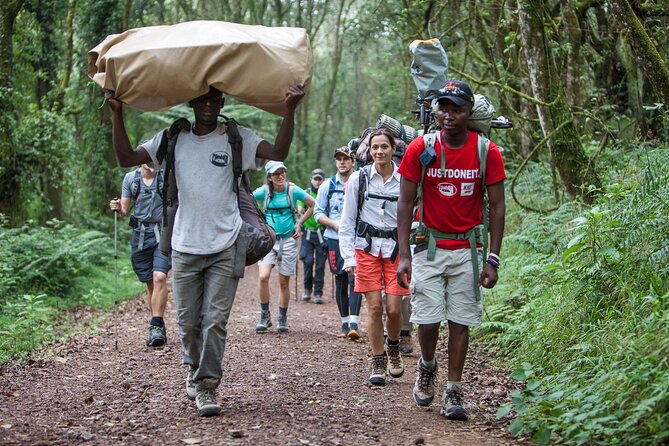
- Six days on the Machame Route: You pass through rainforest, moorland, alpine desert, and the Arctic zone before reaching Uhuru Peak.
- A maximum of six people: This allows closer contact with the lead guide and a more manageable pace than a large expedition.
- Lava Tower acclimatization: The route takes you to roughly 15,000 feet before descending to Barranco Camp, a useful high-and-low pattern for altitude adjustment.
- A midnight summit push: Expect six to seven hours to Stella Point, another hour to Uhuru Peak, then four to six hours descending to Mweka Camp.
- A strong support crew: Camp setup, cooking, guiding, and porter support are central to the experience.
- Pickup and mobile tickets: Pickup is offered, with the stated meeting point at Summit Lodge in Arusha at 8:00 a.m.
The Machame Route gives you five mountain worlds
Machame is popular for a good reason. It does not simply point uphill for six days. Instead, the scenery shifts in broad stages, and each change gives you a new sense of where you are on the mountain.
You start in the rainforest zone, where the path is winding and often damp. Higher up, the trees thin out and give way to heather and moorland. After that come the high, open slopes, the alpine desert near Kibo, and finally the cold Arctic zone around the summit.
That variety makes the route feel like a real journey rather than a long staircase. It also means you should pack for several climates. Warm, wet conditions lower down can become freezing and windy near the top.
The route is suitable for a beginning trekker with good fitness, not just an experienced climber. It is non-technical, so you do not need rock-climbing skills, but you do need to walk for several hours on consecutive days and cope with altitude.
More Kilimanjaro Climbs in Arusha
- 8-Day Small-group Lemosho Kilimanjaro Summit Trekking
★ 5.0 · 186 reviews - 7-Day Machame Kilimanjaro Summit Tour from Arusha
★ 5.0 · 125 reviews - Mountain Kilimanjaro Day Hike
★ 5.0 · 102 reviews
Day 1: Rainforest from Machame Gate to Machame Camp
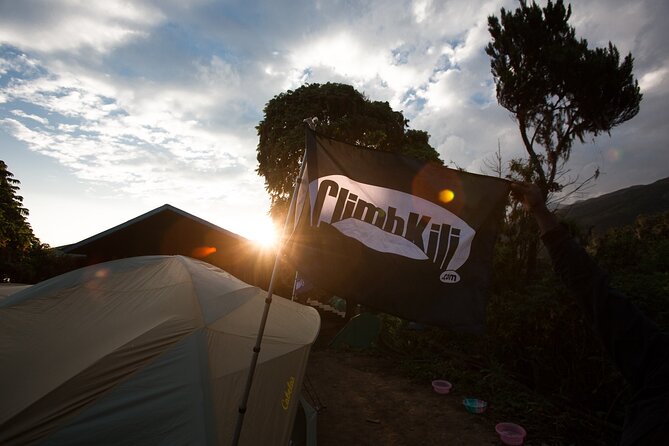
Your morning begins with breakfast at the hotel, followed by a transfer from Arusha to Machame Gate. The climb starts around the park entrance, where the trail enters dense rainforest and follows a ridge.
The listed walking distance is about 6.8 miles, with roughly five to seven hours on foot, although the schedule also gives a shorter four-hour estimate. Either way, this is a full first day once you include the transfer, park formalities, and the steady uphill pace.
The lower trail can be muddy and slippery. Gaiters and trekking poles are genuinely useful here, especially if rain has passed through. Wear footwear with good grip and keep rain protection close at hand rather than buried in your duffel.
Machame Camp is the first overnight stop. Your tent is set up before or around your arrival, and dinner follows. That detail matters more than it sounds. After a wet climb through the forest, having camp ready means you can focus on dry clothes, water, and rest instead of pitching a tent.
The first day is not the highest or hardest, but it sets the rhythm. Walk slowly, drink regularly, and do not race simply because you feel fresh.
Day 2: Heather and moorland at Shira Camp
After breakfast, the trail leaves the forest and climbs through heather and moorland. The trees fall away, the air feels more open, and the path crosses a small valley before following a steep, rocky ridge.
The day covers about 2.8 miles and takes four to six hours according to the schedule. The short distance does not mean it is easy. The trail continues upward, and the rocky ground demands careful footing.
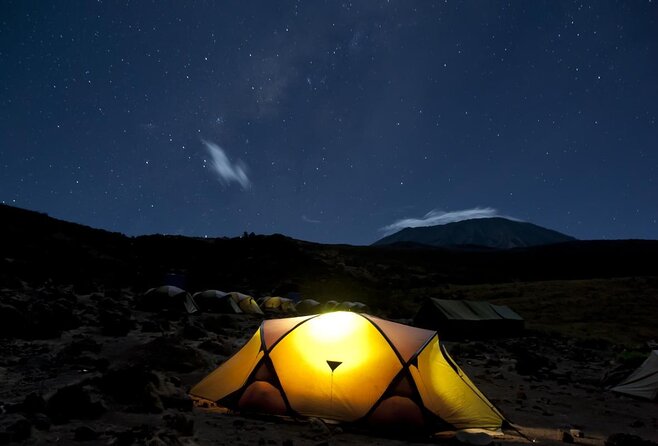
You finish at Shira Camp, around 12,500 feet. This is your first night at a height where altitude may become noticeable. Headaches, poor sleep, reduced appetite, and unusual tiredness can occur at altitude, so tell your guide early if something feels wrong. Do not try to hide symptoms to appear tough.
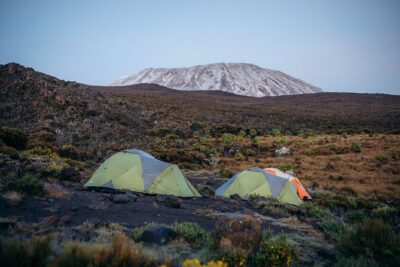
The camp lies near the end of the ridge, close to a dry river gorge. The setting is far more open than the forest, with broad views and a sense that the mountain is becoming more severe. The path remains non-technical, but the combination of height and uphill walking begins to separate a casual hike from a real mountaineering effort.
Day 3: Lava Tower first, Barranco Camp later
Day three is the key acclimatization day. You leave Shira and gradually approach Kibo, the main volcanic peak, before climbing toward Lava Tower at roughly 15,000 feet.
The route description gives a walking time of four to six hours for the Lava Tower section, with a separate estimate of six to eight hours for the longer Shira to Barranco journey. The distance figures also vary, so treat this as a long mountain day rather than a fixed mileage exercise.
The important part is the route profile: you climb high, rest near Lava Tower, then descend to Barranco Camp. That high-and-low pattern gives your body time to begin adjusting without sleeping at the maximum height reached that day.
After Lava Tower, the path descends through a striking Senecio forest. Waterfalls appear along the way, and the trail eventually reaches Barranco Camp at about 13,000 feet. The camp sits in the shadow of the Barranco Wall, with clouds often drifting through the valley.
This is one of the most memorable sections of the route, but it can also be tiring. You have spent much of the day gaining height only to lose it again. That can feel frustrating if you are watching the numbers, but the descent serves a purpose. Follow the guide’s pace and treat the day as preparation for summit night, not wasted effort.
Same trailhead, a different route:
- 4 Days Mount Meru Trekking
★ 5.0 · 55 reviews - 4 days Best experience Kilimanjaro Hike, Serengeti &Ngorongoro
★ 5.0 · 54 reviews - From Arusha/Moshi: Kilimanjaro Hike Marangu Route Day Trip
★ 4.5 · 54 reviews - Mount Kilimanjaro Day Hike Through Marangu Route to Mandara Hut
★ 5.0 · 37 reviews
Day 4: Barranco Wall and Karanga Valley
The fourth day begins with the Barranco Wall, one of the route’s most adventurous stretches. It is not described as a technical climbing section, but you should expect steep ground, uneven rock, and sections where you use your hands for balance.
The listed walk is about 2.2 miles and four to five hours. Again, the modest distance is deceptive. The Barranco Wall makes the morning feel active, and the trail then continues through the Karanga Valley on the South Circuit path.
You camp at Karanga Camp at roughly 13,100 feet. This day is shorter than summit day, giving you time to eat, rest, and prepare for the biggest challenge ahead.
I like this part of the schedule because it breaks the climb into sensible pieces. You are not asked to go directly from Barranco to the summit. Still, do not assume a short day means a relaxed day. Keep your pack light, secure your poles, and take your time on the wall.
Day 5: Stella Point, Uhuru Peak, and the long descent
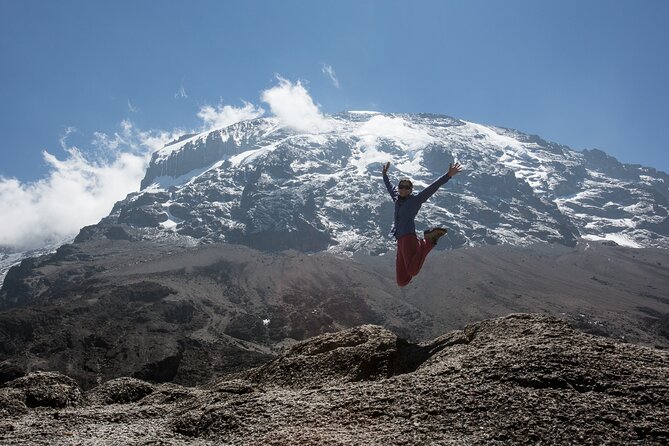
Summit night begins around midnight. You leave camp in darkness and climb toward Stella Point on the crater rim. The ascent is described as six to seven hours, followed by about one more hour to Uhuru Peak, the highest point in Africa.
This is the toughest section of the climb. The trail is steep, and heavy scree can make every step slide backward. You may feel cold, tired, short of breath, or simply discouraged. The guides’ role matters most here. Goodluck, Herment, and other lead guides named in the experience’s history have been praised for patience, encouragement, and close attention to people who struggle.
The route passes between the Rebmann and Ratzel glaciers before reaching Stella Point. From there, you can see the summit, but the final hour still requires effort. Do not let the remaining distance fool you. At this altitude, a short section can take much longer than expected.
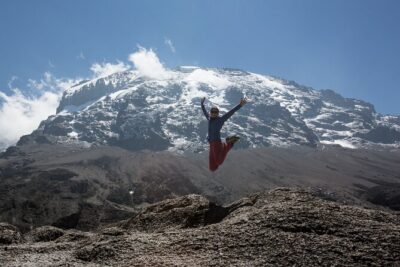
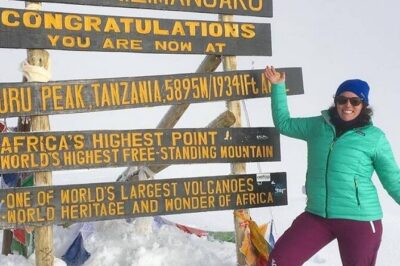
If conditions and your health allow, you continue to Uhuru Peak at 19,340 feet. Sunrise from the crater rim is the great reward, with glaciers and the broad African sky around you.
Then comes the part many people underestimate: the descent. You return down the mountain to Mweka Camp, covering about 12 kilometers after the summit portion. The full day is listed at around 11 hours, with four to six hours of descent after the ascent.
You should think of summit day as two hikes joined together. Save some energy, eat when you can, and keep your water accessible. The descent may feel easier on your lungs but harder on tired legs and knees.
Day 6: Mweka Gate and the return to Arusha
The final morning is a downhill walk of about 6.4 miles to Mweka Gate. The listed time is three to four hours.
After several nights in tents and several days at altitude, the forest on this side of the mountain can feel wonderfully ordinary. You finish the park portion at the gate, where the Climb Kili vehicle waits to transfer you back to your hotel.
This is not a sightseeing day in the usual sense. It is the practical end of the climb, but it also gives you a chance to think back over the route. The last descent may be easier than summit day, though tired feet can make it feel longer than expected.
The supplied schedule calls the experience six days, while the overview refers once to a seven-day Machame route. For booking, confirm the exact version, camp sequence, and dates with Climb Kili. The detailed day-by-day plan provided here is a six-day itinerary.
What the Climb Kili support team adds
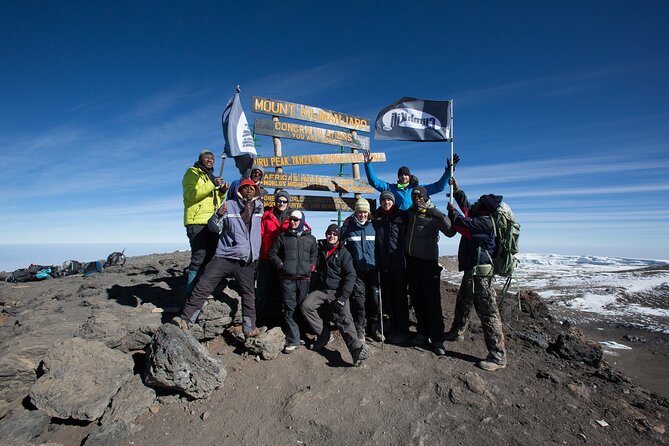
Kilimanjaro is not a self-guided walk. Your guide sets the pace, monitors the group, and helps manage altitude concerns. Porters carry expedition equipment and prepare camp, while the cook provides meals at the mountain camps.
The strongest praise is aimed at the whole crew rather than only one feature. Goodluck, Herment, Amani, Emanuel, Minja, and assistant guides such as Gabby, Florian, Gabi, Omi, and Lede are among the names associated with successful climbs. Your own guide will depend on the departure, so treat these names as examples rather than a promise.
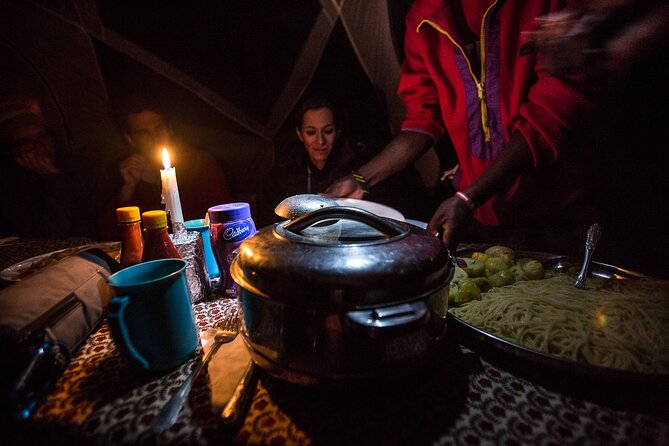
Food is another practical strength. The crew is described as providing three hot meals a day, with vegetarian requests accommodated on some departures. That can make a major difference when you are burning energy day after day and facing a cold summit night.
Camp service also matters. Tents are reported to be ready before the group arrives, and personal belongings are made available at camp. You should still confirm what equipment and meals are included in your specific booking, since the supplied details do not list every inclusion.
Is the $2,495 price good value?
The price is $2,495 per person. That is a substantial amount, but it covers more than access to a trail. You are paying for guiding, mountain logistics, transfers connected with the climb, porters, camp support, cooking, and the organization needed to move a small group up and down Kilimanjaro.
A maximum of six people is a meaningful part of the value. A small group can move at a steadier pace, give the lead guide more time with each person, and make it easier to discuss altitude symptoms or a change in condition.
The reported 98% summit success rate is also a useful sign of confidence, though you should read it as a company statistic, not a personal guarantee. Six days can be more demanding than a longer itinerary because there is less time for gradual acclimatization.
Before paying, ask Climb Kili to spell out what the $2,495 includes. The supplied information confirms pickup is offered and that mobile tickets are available, but it does not provide a full equipment list, hotel arrangement, park fee breakdown, or porter tipping guidance.
Who should book this climb?
This route suits you if you want a major physical challenge with a professional support crew and a small group. It can work for a first-time high-altitude trekker who has trained properly and is ready for long uphill and downhill days.
It also suits families and mixed-age groups when everyone meets the fitness demands. The experience has been used by parents with teenage children and by climbers in their fifties, but age alone does not predict success. Fitness, pacing, health, and altitude response matter more.
You should think twice if you want a gentle holiday, dislike camping, or prefer a slow schedule with extra acclimatization days. You also need to be comfortable starting the hardest day at midnight and walking for up to 11 hours.
The meeting point is Summit Lodge, Sakina Raskazone, Arusha, at 8:00 a.m. Pickup is offered, but confirm the exact pickup arrangement before the trip. Confirmation is issued within 48 hours of booking, subject to availability. Free cancellation applies when you cancel at least 24 hours before the local start time.
Should you book the six-day Machame Route?
Book it if you want the classic Kilimanjaro progression, a maximum six-person group, and a crew known for attentive guides, ready camps, hot meals, and strong summit support. The Lava Tower acclimatization day and the dramatic Barranco section are especially good reasons to choose this route.
I would not book it without training or without asking detailed questions about inclusions and the six-day versus seven-day wording. For a fit person who accepts a hard summit night, $2,495 can be reasonable value. For anyone worried about altitude, a longer itinerary may be worth comparing before committing.
FAQ
Where does the climb begin?
The stated meeting point is Summit Lodge, Sakina Raskazone, Arusha, Tanzania. The start time is 8:00 a.m., and pickup is offered.
How long is the Machame Route experience?
The detailed schedule lasts six days. It includes five mountain days plus the descent to Mweka Gate on day six.
How large is the group?
The activity has a maximum of six people.
How fit do I need to be?
You should have a strong physical fitness level. The route includes several hours of walking on most days, a midnight summit start, six to seven hours to Stella Point, about one further hour to Uhuru Peak, and a long descent.
What happens on summit day?
You start around midnight, climb to Stella Point on the crater rim, continue for about one hour to Uhuru Peak if conditions allow, then descend to Mweka Camp for dinner and celebration.
Can I cancel for a full refund?
Yes, if you cancel at least 24 hours before the experience’s local start time. Cancellations or changes made less than 24 hours before the start are not accepted for a refund.
More 6-Day Experiences in Arusha
- 6-day Private Camping Safari Tour from Kilimanjaro Airport
★ 5.0 · 27 reviews - 6 Days: Hiking Kilimanjaro via Machame Route
★ 5.0 · 24 reviews - 6 Days best adventure kilimanjaro ,Tarangire ,Serengeti &Ngorongoro crater
★ 5.0 · 24 reviews - 6 Days Kilimanjaro Climbing Machame route
★ 4.0 · 4 reviews
Just added around Arusha
- Mt. Kilimanjaro: Shira plateau to Cathedral point 3872m Day hike★ 5.0 · 7 reviews
- 5 days safari, hiking & culture (Serengeti & kilimanjaro)★ 5.0 · 27 reviews
- One Day Hike from Kilimanjaro to Mandara★ 5.0 · 2 reviews
- 3 Days Mount Meru trekking★ 4.5 · 7 reviews
- climb the KILIMANJARO via Lemosho route★ 5.0 · 4 reviews
- 6 Day: Hiking Kilimanjaro via Machame Route★ 5.0 · 2 reviews
- Private 8 day Northern Circuit Kilimanjaro Climb★ 5.0 · 8 reviews
- Kilimanjaro Waterfalls Hike & Moshi Hot Springs Day Trip Tour★ 5.0 · 4 reviews
Kilimanjaro Climbs, compared.
8-Day Small-group Lemosho Kilimanjaro Summit Trekking
Read our review →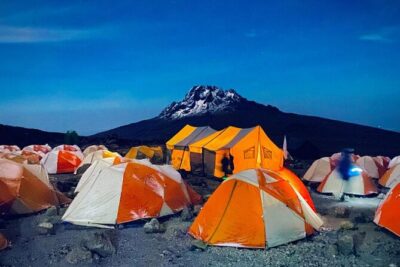
Climbing Kilimanjaro through 7 days Machame Route
Read our review →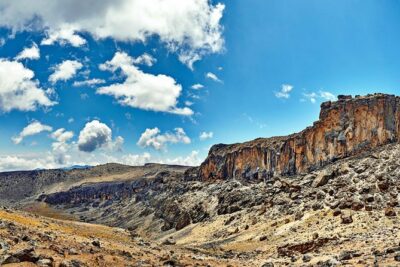
Browse the lists this trek appears in