
Review · ARUSHA
7 days Kilimanjaro climb via Machame route (Whiskey route)
Kilimanjaro’s Machame Route gives you the mountain’s best scenery in seven demanding days. You move from wet rainforest to open moorland, volcanic rock, glaciers, and a sunrise summit push. It is called the Whiskey Route for good reason: this is the tougher, more adventurous choice, not the easy way up.
I like the strong acclimatization day that climbs to Lava Tower before dropping to Barranco, and I like that the price includes park and rescue fees, tents, meals, purified water, and a full mountain crew. The main catch is the pace. The route is steep, summit night begins around 11:30 p.m., and previous hiking or high-altitude experience will help.
Key points to know before you book
- Lava Tower and Barranco make the acclimatization plan worthwhile: You climb to about 4,630 meters, then sleep lower at Barranco Camp.
- Summit night is the hardest test: Expect a midnight start, heavy scree, cold, thin air, and a long descent afterward.
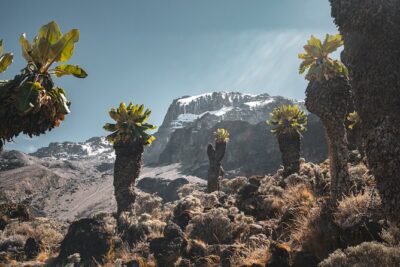
- The scenery changes every day: Rainforest, moorland, Shira Plateau, alpine desert, glaciers, and snow all appear on this route.
- A large support team is part of the package: Guides, assistant guides, cooks, and porters handle meals, water, camp, and route support.
- The $2,300 price covers major essentials: Park fees, rescue fees, tents, food, drinking water, and mess facilities are included.
- The seven-day plan suits fit, determined hikers: If you prefer a slower climb with more time to adjust, compare this with a longer itinerary.
Why the Machame Route is Kilimanjaro’s popular hard choice
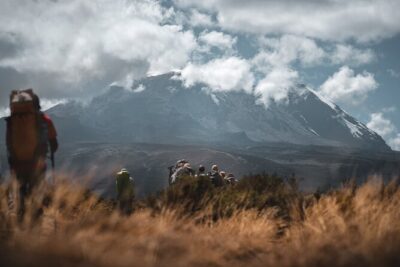
The Machame Route approaches Kilimanjaro from the south and gives you a changing mountain rather than one repeated view. You start under dripping forest canopy, cross the Shira Plateau, pass Lava Tower and Barranco, then reach the high camps before the summit push.
That variety is the route’s biggest reward. The trail does not simply point uphill for a week. It rises, drops, crosses valleys, and moves through several ecological zones. The route is also more rugged than the gentler Marangu approach, with steep sections, rocky ground, and a summit night that tests both legs and patience.
The seven-day schedule is better than a very short Kilimanjaro climb because it includes a useful high-altitude exposure on Day 3. Still, seven days is not a guarantee of an easy summit. You will gain altitude quickly, sleep in exposed camps, and spend much of the week walking slowly over uneven ground.
The group can contain up to 16 people. That is large enough to bring different walking speeds and energy levels into play, so ask how the guide handles anyone who needs a slower pace or extra attention.
More Kilimanjaro Climbs in Arusha
- 8-Day Small-group Lemosho Kilimanjaro Summit Trekking
★ 5.0 · 186 reviews - 7-Day Machame Kilimanjaro Summit Tour from Arusha
★ 5.0 · 125 reviews - Mountain Kilimanjaro Day Hike
★ 5.0 · 102 reviews
Day 1: From Arusha to Machame Gate and the rainforest
Your morning begins with pickup in Arusha, about 1,400 meters above sea level, after breakfast at your hotel. The drive goes to Machame Village, where you can buy mineral water and collect a packed lunch.
The final approach to Machame Gate depends on road conditions. If the road is passable, the vehicle continues closer to the gate. If not, you may walk roughly three muddy kilometers, which can take about an hour. This is a small detail with a big practical effect, so wear shoes you are happy to get dirty before the main hike even begins.
At the gate, you register and enter the rainforest almost at once. The forest is often wet, and rain can turn the path into a slippery, muddy track. Trekking poles, waterproof trousers, and a rain cover for your daypack are especially useful here.
The first hike takes about seven hours and ends at Machame Camp. A lunch stop comes roughly halfway through the walk. The day is not technically the highest or most dramatic, but it sets the rhythm for the week: slow steps, damp gear, and steady eating and drinking.
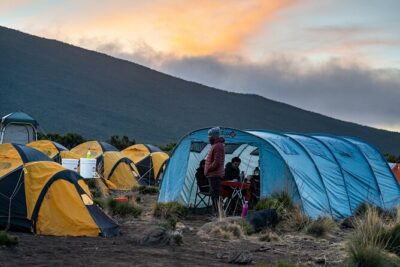
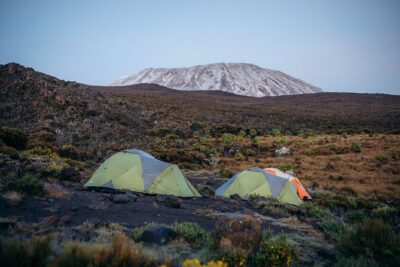
You sleep in a private, waterproof, four-season mountain tent. The camp service includes a mess tent with tables and chairs, which matters after a long day when standing around in wet clothes is not appealing.
Day 2: Moorland and the open Shira Plateau
Day 2 leaves the forest behind. You climb for about an hour to the top of the trees, then continue for roughly two hours through moorland. The terrain opens up, and the trail feels less enclosed than the previous day.
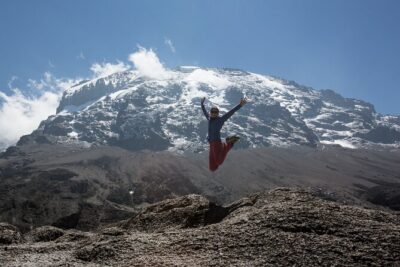
After lunch and a rest, the route follows a rocky ridge toward the Shira Plateau. The view toward the Western Breach and its glaciers gives you an early look at the high mountain ahead. You are now west of Kibo, the main volcanic cone of Kilimanjaro.
The day covers about nine kilometers and takes around six hours. Shira Camp sits at about 3,840 meters, and the exposure makes the night colder than the first. Temperatures can fall well below freezing, so a warm sleeping bag and dry nighttime layers are not optional luxuries.
Porters boil water for drinking and washing. The inclusion of purified drinking water and washing water is valuable, but do not expect a hotel-style wash. This is mountain camping, with basic facilities and cold conditions.
This is also the point where some people begin to notice the altitude. A headache does not automatically mean you must stop, but you should tell the guide about symptoms rather than trying to hide them. The guide needs accurate information to judge your pace and safety.
Day 3: Lava Tower, altitude symptoms, and the drop to Barranco
Day 3 is the cleverest part of the route plan and one of the hardest days on your body. You leave the Shira area and cross semi-desert terrain toward Lava Tower, reaching about 4,630 meters after roughly five hours of walking.
The trail becomes rockier as you approach the tower. Lunch is served in a designated area before the route climbs the rocky scree to the high point. Breathlessness, headaches, and irritability can appear here, even if you felt fine at lower camps.
The key is what happens next. Instead of sleeping at Lava Tower, you descend about 680 meters to Barranco Camp. This climb high and sleep lower pattern gives your body a useful chance to adjust. You still feel the effects of the altitude, but the overnight elevation is kinder than the day’s highest point.
The day takes about six hours. It may not feel like a rest day, but the descent makes the following stages more manageable. Walk slowly, drink regularly, and keep your lunch and warm layers easy to reach.
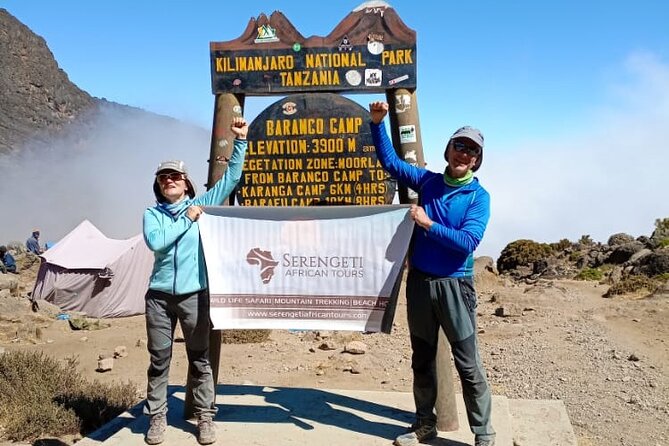
Barranco Camp is surrounded by steep volcanic walls and feels more dramatic than the earlier camps. You finish the day tired, but you have also completed the route’s most important altitude exercise.
Same trailhead, a different route:
- 4 Days Mount Meru Trekking
★ 5.0 · 55 reviews - 4 days Best experience Kilimanjaro Hike, Serengeti &Ngorongoro
★ 5.0 · 54 reviews - From Arusha/Moshi: Kilimanjaro Hike Marangu Route Day Trip
★ 4.5 · 54 reviews - Mount Kilimanjaro Day Hike Through Marangu Route to Mandara Hut
★ 5.0 · 37 reviews
Day 4: The Barranco Wall and Karanga Valley
Day 4 begins with the Barranco Wall. From below, it can look intimidating. The route is described as a Class 2 scramble, so you should expect to use your hands in places, but it is not presented as technical climbing.
The wall is the day’s main challenge, yet it is relatively short. At the top, you can look toward Heim Glacier and see clouds below you when conditions allow. This is one of the most satisfying viewpoints on the route because the morning’s effort pays off quickly.
After the wall, the trail rises and falls through the Karanga Valley. The day covers about five kilometers and takes roughly four to five hours, although the full camp routine is listed at about six hours.
I like this stage because it gives you time to recover from Lava Tower without wasting a day. You continue gaining ground while keeping the walking distance moderate. The up-and-down trail can still tire your legs, especially after several nights in a tent.
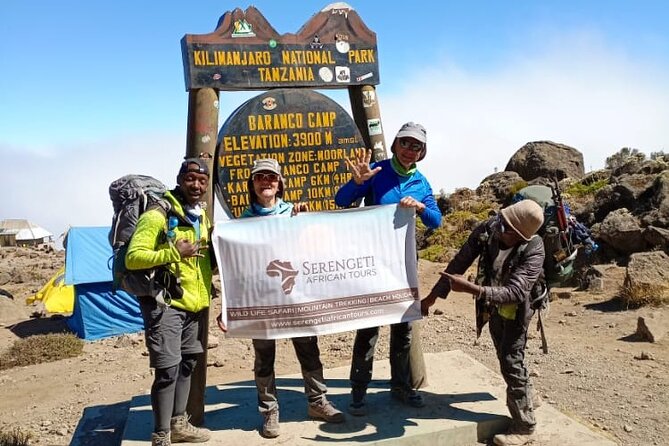
Karanga Camp sits at about 3,959 meters. Use the afternoon to eat, drink, organize your summit gear, and sleep if you can. The summit push begins the next night, so this is the time to check batteries, gloves, headlamp, water bottles, and warm clothing.
Day 5: Barafu Camp and preparation for the summit
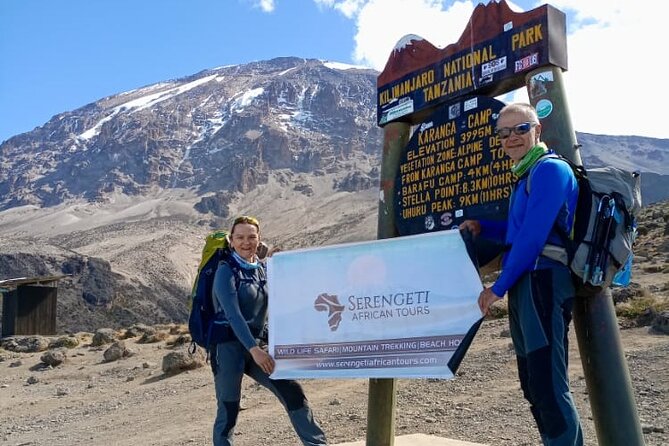
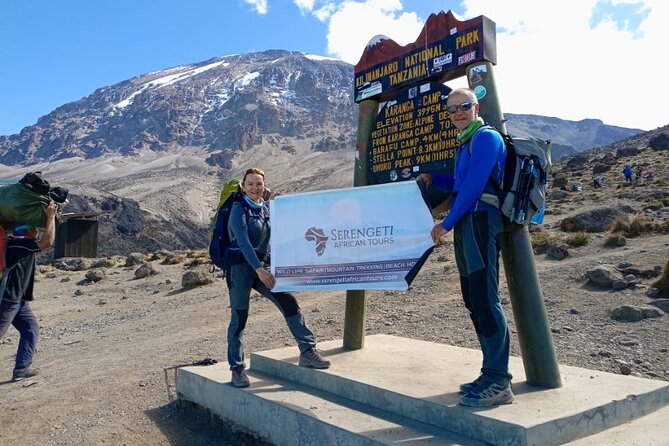
From Karanga, you walk toward Barafu Hut, covering about four kilometers in two to three hours. The route joins the Mweka Route, which you use for the descent.
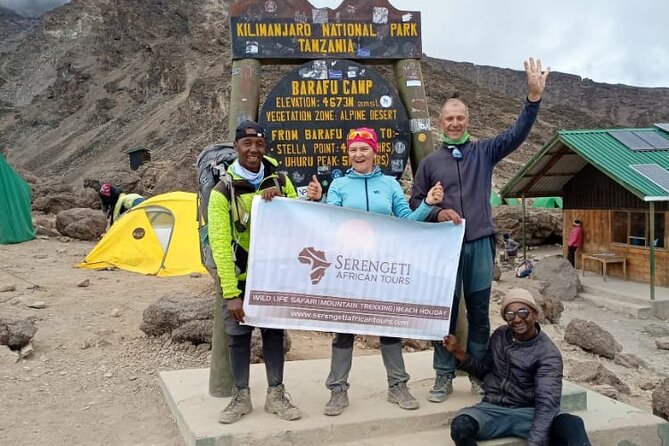
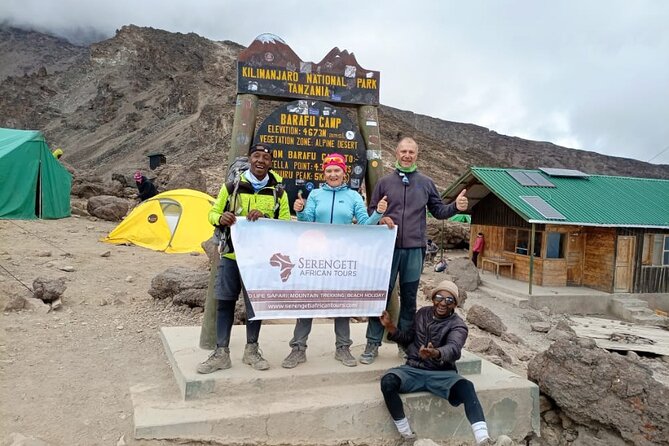
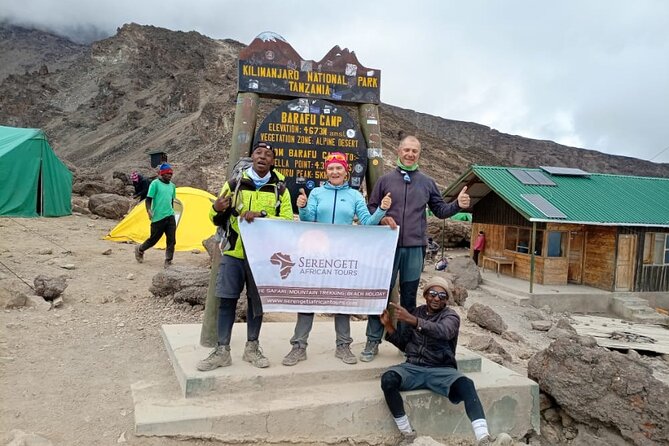
Barafu Hut sits at about 4,550 meters on a rocky, exposed ridge. The name means ice in Swahili, and the setting explains it. There is no accessible water at Barafu Camp, so this is the last water point for the porters before the summit effort.
The support crew prepares water in advance, but your own bottles and hydration system must be ready. Ask your guide how much water you should carry for summit night and keep enough capacity for the long descent.
The camp can be windy and rocky. Your tent will be exposed, and it is wise to learn where your sleeping area, dining tent, and route out of camp are before darkness. An early dinner follows, then you try to rest.
This is not a long walking day, but it is an important mental day. You know the summit attempt is next. Eat even if your appetite is low, keep your gear simple, and avoid wasting energy repacking your bag again and again.
Day 6: Stella Point, Uhuru Peak, and the long descent
You rise around 11:30 p.m. for tea and biscuits, then begin the summit attempt in darkness. The route heads northwest through heavy scree toward Stella Point on the crater rim.
The climb to Stella Point takes about six hours for many people and is often the most difficult section of the entire trip. The combination of cold, darkness, thin air, and loose volcanic rock makes progress slow. Your guide and support team set the pace, and the slow rhythm is exactly what you need.
At Stella Point, around 5,685 meters, you may reach the rim in time for sunrise. Weather controls the view, so treat the sunrise as a possibility rather than a promise. You will have a short rest before continuing.
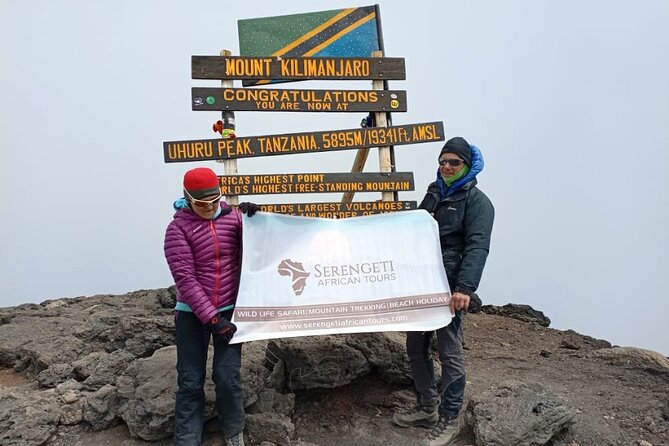
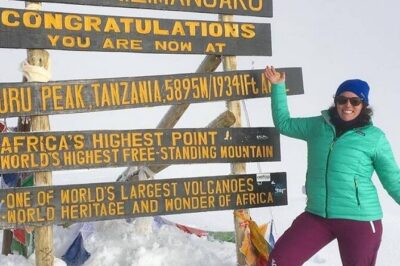
From Stella Point, the route usually crosses snow on the way to Uhuru Peak, at 5,895 meters. The final two hours can feel very long. Summit time depends on weather conditions, and you should follow the guide’s instructions rather than lingering in the cold for photographs.
The descent begins after the summit. This is where tired legs can become a problem. Loose scree is hard on knees and ankles, and you still have a substantial walk to the lower camp. The schedule describes the summit section as about six hours, but you should think of it as the central physical challenge of the entire climb, not a neat half-day outing.
A successful summit depends on more than fitness. You need to respond honestly to altitude symptoms, accept a slow pace, and let the guide make safety calls. Reaching Stella Point earns a green certificate, while reaching Uhuru Peak earns a gold certificate.
Day 7: Forest descent, certificates, and the return to Arusha
After breakfast, the crew celebrates with dancing and singing at camp. This is also the time to present tips to the guide, assistant guides, cooks, and porters. Tipping is not included in the $2,300 price, so bring a plan for this expense.
You then descend for about three hours to Mweka Gate through forest. The listed distance is about 15 kilometers, followed by another hour and roughly three kilometers to Mweka Village.
At the national park office, you sign your name and collect your completion certificate. The process marks the end of the mountain portion, but you still need to return from the meeting point in Arusha after the activity ends there.
The last descent may feel easy compared with summit night, but do not underestimate it. Knees often complain on downhill trails, and wet forest conditions can make footing uncertain.
What the $2,300 price really covers
At $2,300 per person, the package is not simply a guide and a trail permit. It includes:
- Park fees and rescue fees
- Professional mountain guides
- Private waterproof four-season tents
- Mess tents with tables and chairs
- Breakfast, lunch, and dinner on the mountain
- Fresh, nutritious meals in generous portions
- Clean, purified drinking water
- Porters and mountain support
Those inclusions make the price easier to assess. Park and rescue charges are substantial parts of a Kilimanjaro climb, while tents, food, water, cooking, camp setup, and porters require a large operation behind the scenes.
You still need to budget for international flights, personal climbing gear, and tips. Group discounts may be available, but confirm the exact saving before booking. The maximum group size is 16, so ask whether your booking is private or shared and how many people are expected on your dates.
The meal support is one of the package’s practical strengths. You do not need to carry seven days of food, and the cook prepares large portions. Even so, bring personal snacks you know you can eat at altitude.
The people who shape the climb
The most important part of a Kilimanjaro trip is the crew. The company’s team includes guides, assistant guides, cooks, and porters, and the names most closely associated with this operation include Lucas, James, Gasto, and David.
Lucas handles trip communication and planning for some bookings. James, Gasto, and David have each led or supported climbs connected with this company. Your exact guide is not specified in the booking information, so confirm the name before departure if that matters to you.
The crew’s role goes well beyond pointing at the trail. Guides set the pace, watch for altitude problems, and help decide when conditions are unsafe. Cooks keep food coming, while porters move camp equipment and water. Treating the staff fairly matters both ethically and practically, especially on a route where the crew carries the infrastructure that makes the climb possible.
Who should choose this seven-day climb?
Choose it if you have moderate fitness and enjoy long days outdoors. Previous hiking, backpacking, or high-altitude experience is useful, though the package does not require a specific technical climbing qualification.
This is a good match for someone who wants:
- The most scenic route rather than the easiest route
- A challenging but organized group climb
- A high camp and a dramatic summit night
- Full meals and tent support
- A route with a climb-high, sleep-lower section
- A chance to use a well-established support team
Think twice if you dislike wet conditions, cold camping, steep trails, or early-morning physical effort. The Machame Route is not a casual walk with a summit photo at the end. The short itinerary leaves less spare time if you struggle with altitude or need a slower adjustment.
Small practical details that matter
The listed start time is 12:00 a.m., while the itinerary describes an early breakfast and morning pickup. Confirm the exact pickup time with Serengeti African Tours before you arrive in Arusha.
Pickup is offered from Arusha, and the activity ends back at the meeting point. Mobile ticketing and confirmation at booking make the start simple, but you still need to arrive with suitable personal gear because climbing equipment is not included.
The route is near public transportation, although the actual climb begins with arranged transport to Machame Village and the park gate. Free cancellation is available if you cancel at least 24 hours before the local start time. Changes or cancellations inside that window are not accepted for a refund.
Should you book the Machame Route?
I would book this seven-day climb if the scenery matters as much to you as the summit, and if you are comfortable with a hard week rather than a gentle introduction to trekking. The Lava Tower descent, Barranco Wall, glacier views, and changing zones give the route real variety.
The price is reasonable for the listed inclusions, especially park fees, rescue cover, mountain tents, meals, water, and crew support. Before paying, confirm the guide, group size, exact pickup time, tipping expectations, and personal gear list.
Choose it for challenge, scenery, and strong logistical support. Choose a longer itinerary instead if altitude is your main concern or you want more time to adjust. For a fit hiker with realistic expectations, this is a serious and rewarding way to reach Africa’s highest summit.
FAQ
How long is the Kilimanjaro Machame Route tour?
The climb lasts approximately seven days, beginning and ending at the meeting point in Arusha.
What is included in the $2,300 price?
The price includes park fees, rescue fees, professional mountain guides, private waterproof four-season tents, a mess tent, all mountain meals, purified drinking water, and porter support.
Is personal climbing gear included?
No. Personal climbing gear is not included, and flights are also excluded.
How difficult is the Machame Route?
The route is considered difficult, steep, and challenging, especially because this itinerary reaches the summit in seven days. Moderate physical fitness is required, and hiking or high-altitude experience is useful.
What happens on summit night?
You rise around 11:30 p.m., have tea and biscuits, and hike through the night toward Stella Point at 5,685 meters. From there, you continue toward Uhuru Peak at 5,895 meters, usually crossing snow near the summit.
What certificate do I receive?
You receive a green certificate if you reach Stella Point and a gold certificate if you reach Uhuru Peak.
Can I cancel for a full refund?
Yes, if you cancel at least 24 hours before the experience start time. Cancellations or changes made less than 24 hours before the local start time are not accepted for a refund.
More 7-Day Experiences in Arusha
- KILIMANJARO MACHAME ROUTE, (Climb 7days)
★ 5.0 · 16 reviews - 7 Day Kilimanjaro Climb Lemosho Route & 2 Day Safari
★ 5.0 · 16 reviews - 7 Days Kilimanjaro Climb Machame Route
★ 5.0 · 15 reviews - 7 Days Kilimanjaro trek via Machame route
★ 5.0 · 13 reviews
Just added around Arusha
- Mt. Kilimanjaro: Shira plateau to Cathedral point 3872m Day hike★ 5.0 · 7 reviews
- 5 days safari, hiking & culture (Serengeti & kilimanjaro)★ 5.0 · 27 reviews
- One Day Hike from Kilimanjaro to Mandara★ 5.0 · 2 reviews
- 3 Days Mount Meru trekking★ 4.5 · 7 reviews
- climb the KILIMANJARO via Lemosho route★ 5.0 · 4 reviews
- 6 Day: Hiking Kilimanjaro via Machame Route★ 5.0 · 2 reviews
- Private 8 day Northern Circuit Kilimanjaro Climb★ 5.0 · 8 reviews
- Kilimanjaro Waterfalls Hike & Moshi Hot Springs Day Trip Tour★ 5.0 · 4 reviews
Kilimanjaro Climbs, compared.
8-Day Small-group Lemosho Kilimanjaro Summit Trekking
Read our review →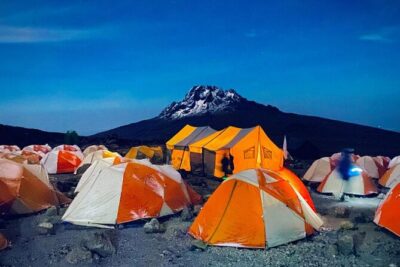
Climbing Kilimanjaro through 7 days Machame Route
Read our review →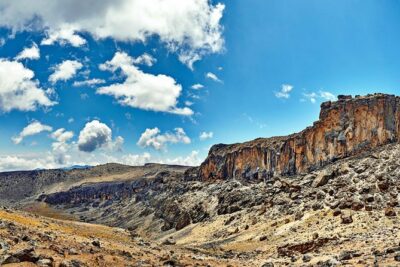
Browse the lists this trek appears in