
Review · ARUSHA
7 Days Kilimanjaro trek via Machame route
Kilimanjaro’s Machame Route gives you a proper mountain journey, not just a quick walk toward a summit. In seven days, you move from coffee farms and mossy cloud forest to the open Shira Plateau, the rough Barranco Wall, and the cold alpine desert around Barafu Camp. I especially like the varied scenery and the careful acclimatization day that climbs high before sleeping lower. I also like that meals, purified water, tents, park fees, rescue fees, and airport transfers are built into the $2,800 price.
The main drawback is the route’s popularity. You will have a private trip with your own group, but the trail itself can be busy with other climbers. Summit day is also a serious test: you start around midnight, climb by headlamp for roughly six hours, and then descend to camp. Guides such as Gasto James are praised for using a slow pole pole pace, singing, encouragement, and close support, but no guide can remove the effects of altitude.
Key points at a glance
- Seven days from Machame Gate to Mweka Gate: The route takes you through five distinct mountain zones before returning through the forest.
- A useful acclimatization profile: Day 3 climbs to about 4,530 meters before descending to Barranco Camp.
- The Barranco Wall is the hands-on section: Expect a roughly 90-minute scramble where you may use your hands.
- A midnight summit attempt: The climb to Stella Point is steep and tiring, followed by a gentler but still demanding walk to Uhuru Peak.
- A strong support package: Private tents, a mess tent, cooks, porters, guides, meals, purified water, park fees, rescue fees, and airport transfers are included.
- A guide-led experience with a warm human touch: Gasto James and his team receive repeated praise for safety, singing, food, encouragement, and helping people continue at a steady pace.
Why the Machame Route works so well
Machame is often chosen because it combines access, scenery, and a route plan that gives you time to adjust to altitude. You leave Arusha for Machame Gate by vehicle, driving through villages and coffee farms for about an hour and a half. At the gate, staff register the climb while porters and guides prepare the loads and equipment.
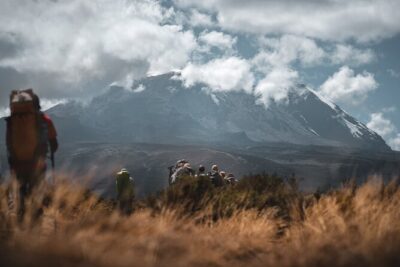
This is a private activity, meaning only your own group takes part in the organized trek. That does not mean you will have the mountain to yourself. Machame is described as the most popular camping route overall, so camps and parts of the trail can feel social and busy.
I like the way the route changes character almost every day. You start under thick forest and finish among glaciers, volcanic rock, and open high-altitude ground. The price also makes more sense once you consider what is covered. A private mountain tent, cooks, porters, guides, food, water, park fees, rescue fees, and transport are not small extras.
You still need to budget for climbing gear, tips, and visa fees. The supplied information also lists lunch seven times, dinner six times, and breakfast seven times, which matches the trek’s full mountain support but is worth checking with the operator before booking.
More Kilimanjaro Climbs in Arusha
- 8-Day Small-group Lemosho Kilimanjaro Summit Trekking
★ 5.0 · 186 reviews - 7-Day Machame Kilimanjaro Summit Tour from Arusha
★ 5.0 · 125 reviews - Mountain Kilimanjaro Day Hike
★ 5.0 · 102 reviews
Day 1: Machame Gate and the mossy cloud forest
The first day begins with the drive from Arusha to Machame Gate. The stated hiking time is about six hours, so this is not merely a gentle introduction. Registration and preparations take place at the gate, then you follow a forest trail toward Machame Camp.
The lower slopes are among the most atmospheric parts of the trek. Moss-covered trees give the forest a cool, almost storybook feel. As you gain height, the trees thin and heathers, tall grasses, and wildflowers appear. On a clear day, you may get your first strong view of Kibo Peak, the volcanic summit area you are working toward.
Your support team goes ahead to prepare camp. That matters after a first long day, since you can reach the campsite, settle in, and eat without having to organize shelter or cooking yourself. The forest trail may be muddy or slippery in wet conditions, though the provided details do not give a season-specific forecast, so you should be ready for changing ground underfoot.
Day 2: Shira Plateau and the first altitude changes
Day 2 takes about six hours and includes several uphill sections. The advice to carry plenty of water is important. On a clear day, the trail can feel hot, even as the air becomes cooler with height.
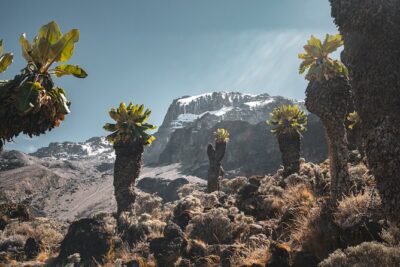
There are viewpoints toward the plains and forests below, as well as Kibo and Mawenzi peaks above. You also see the mountain vegetation change. Smaller trees give way to high-altitude plants such as Senecio kilimanjari and Lobelia deckenii. These unusual plants help mark the transition from ordinary mountain forest to Kilimanjaro’s higher zones.
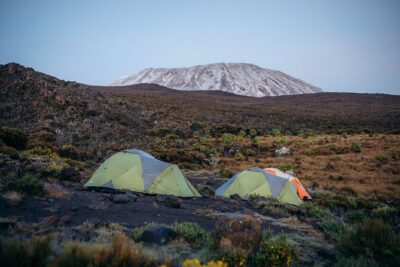
After lunch, you climb onto the Shira Plateau, formed when lava flows filled the Shira crater. Shira Camp gives you a broad setting for the evening, with Kibo to the west and Mount Meru to the east. The open views are a sharp contrast to the enclosed forest of Day 1.
This is also where you may begin noticing the practical side of altitude. You do not need to race. The team’s repeated use of pole pole, meaning slowly, fits the route well. A measured pace gives you more time to drink, watch how your body responds, and enjoy the changing views.
Day 3: High to 4,530 meters, then down to Barranco
Day 3 is one of the most intelligently designed days on the route. You finish only about 110 meters higher than you began, but you climb roughly 690 meters during the day and reach around 4,530 meters before descending to Barranco Camp.
That up-and-down pattern helps you spend time at altitude without sleeping at the day’s highest point. It is a long day of about seven hours, and the physical effort comes before the descent, so do not mistake the small net gain for an easy outing.
You cross the Shira Plateau, pass the junction with the Shira and Lemosho routes, and continue through increasingly barren high ground. After lunch, you reach the highest point of the day and then descend to Barranco.
A faster option can include a detour by Lava Tower, a roughly 300-foot lava formation. The details describe this as an option for faster hikers, not a required part of the route. I would treat it as something to discuss with your guide rather than a target to chase. The purpose of the day is acclimatization, not collecting extra altitude at the expense of your energy.
Barranco is a favorite camp for the mountain staff, and it is easy to understand why. The setting places you near one of the route’s most memorable sections, the Barranco Wall, while the descent from the day’s high point gives your body a chance to recover before the next morning.
Same trailhead, a different route:
- 4 Days Mount Meru Trekking
★ 5.0 · 55 reviews - 4 days Best experience Kilimanjaro Hike, Serengeti &Ngorongoro
★ 5.0 · 54 reviews - From Arusha/Moshi: Kilimanjaro Hike Marangu Route Day Trip
★ 4.5 · 54 reviews - Mount Kilimanjaro Day Hike Through Marangu Route to Mandara Hut
★ 5.0 · 37 reviews
Day 4: Scrambling over the Barranco Wall
Day 4 covers about seven hours and begins with the most hands-on trail section so far. After breakfast, you spend roughly an hour and a half scrambling up the Barranco Wall.
This is not described as technical climbing, but you may use your hands in places. The wall is the sort of section where a calm guide and a sensible pace matter more than speed. If you are uneasy with steep, rough ground, tell the guide early and let the group move at a pace that keeps you comfortable.
Once over the wall, the route becomes fairly level for a while. Then you make a short, steep descent into the green Karanga River Valley. That contrast is part of the appeal: bare rock and scrambling give way to a greener valley before the route turns toward the high camps.
The day is not especially long by summit-day standards, but it still takes about seven hours. You should expect tired legs, particularly after the previous day’s high climb and descent. The reward is a route section with more character than a simple uphill path.
Day 5: Alpine desert and Barafu Camp
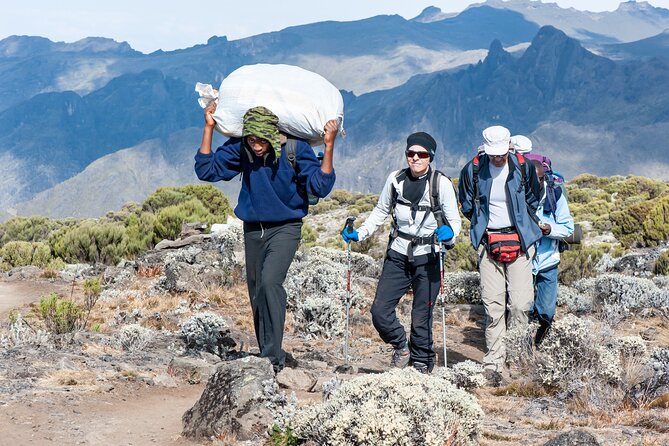
The hike to Barafu Camp takes about seven hours. Vegetation becomes sparse, and the trail passes through alpine desert. This can feel stark after the forest, but it also opens the views toward Kibo and Mawenzi.
Along the way, you see several of Kibo’s glaciers and pass the junction where the Mweka descent route connects with the Machame trail. The route description places the Heim, Kersten, and Decken Glaciers along the approach to Barafu. These features help you understand the mountain as a volcanic mass with ice high above, not simply a single cone viewed from a distance.
Barafu Camp offers views of both Kibo and Mawenzi. It is also where the practical challenge of the schedule becomes clear. After dinner, you are expected to sleep, at least briefly, because the summit attempt starts before midnight.
This is a good night to organize your clothing, headlamp, water, and personal climbing gear. Your mountain crew provides tents, food, water, and camp support, but personal gear is not included. Keep the items you need for the summit easy to reach, since you will be preparing in darkness and with limited energy.
Day 6: Stella Point, Uhuru Peak, and the long descent
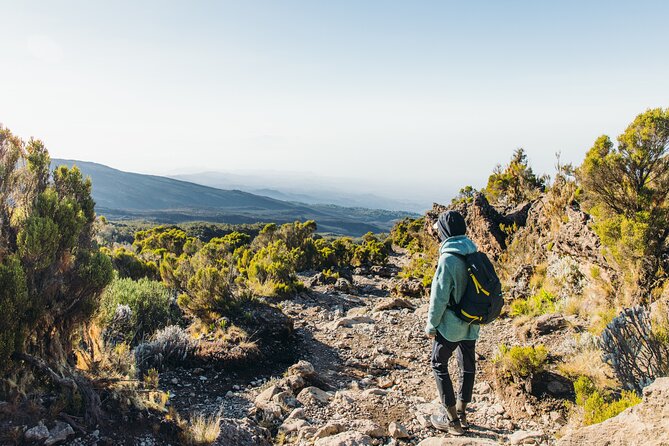
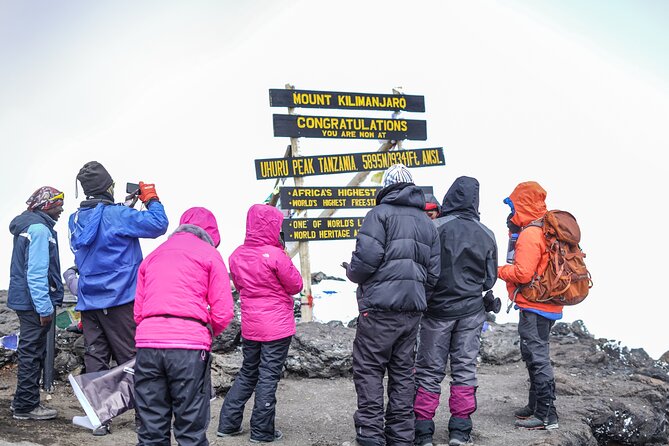
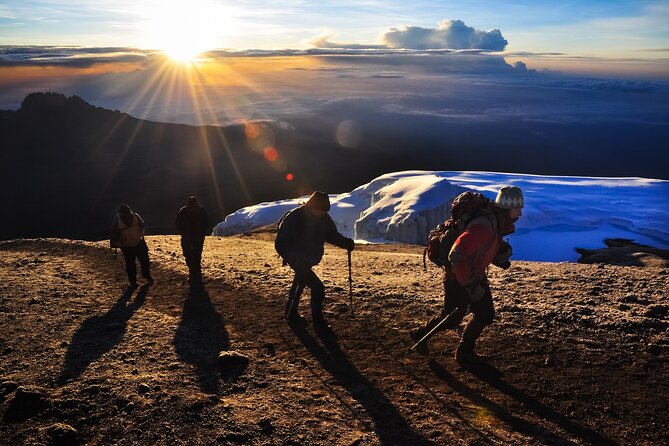
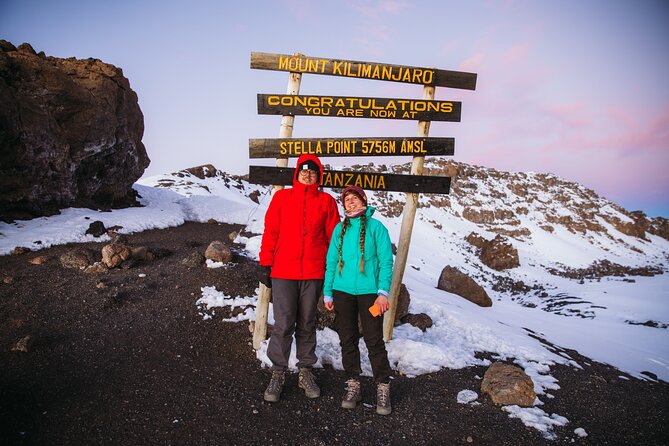
Summit day begins around midnight. You hike for roughly six hours by headlamp toward the crater rim. The steep climb to Stella Point is the hardest part of the trek, and altitude makes every step slower.
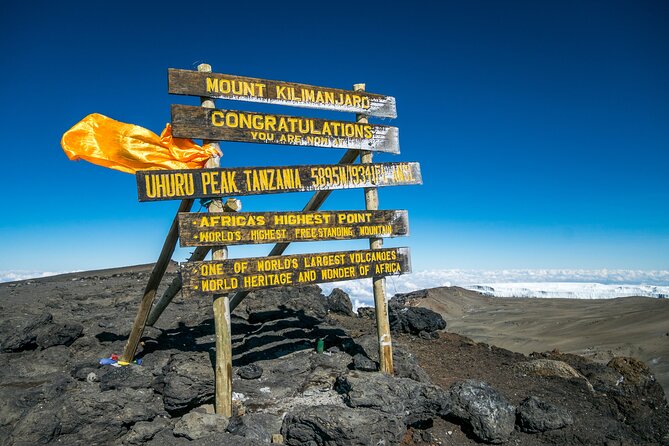
The route becomes more gradual after Stella Point. That does not make the final section easy. The walk along the crater rim toward Uhuru Peak takes about an hour, and the altitude can make this gradual climb feel long. The summit is the high point of the entire trek, but the day is far from over once you reach it.
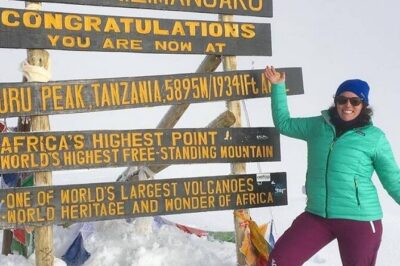
You have time for photographs at Uhuru Peak before starting the descent. The way down gives you views of the crater, clouds, mountain slopes, and glaciers. You then continue toward Mweka Camp. The supplied itinerary lists about six hours for this day, but the midnight start and summit section make it feel like the most demanding day by far.
The personal support described around this part of the trek is a real strength. Gasto James and his team are repeatedly praised for singing during the final ascent, keeping people moving pole pole, and helping those who struggle continue safely. The encouragement may lift your mood, but you still need to be honest about symptoms and follow the guide’s decisions. Reaching the top is never more important than responding properly to altitude problems.
Day 7: Forest descent to Mweka Gate
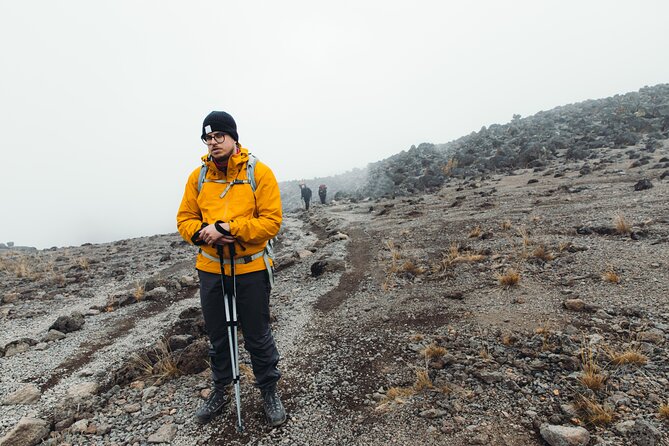
The final day takes you through the forest to Mweka Gate, with about six hours of hiking. After the exposed upper mountain, the return to trees can feel like a major change in climate and scenery.
The trail may be slippery after rain, so poles and careful footing are useful if you bring them. At the lower station of Mweka Gate, vehicles meet the group for the return to Arusha.
This last walk is longer than many people expect because descending can be hard on knees and tired legs. Plan to keep your pace controlled, even though the summit is behind you. The trip ends with transport rather than another night on the mountain.
What the $2,800 price really covers
At $2,800 per person, this is not a bare-bones trek. The package includes:
- Private, waterproof mountain sleeping tents
- Professional mountain guides
- Porters and cooks
- Park fees and rescue fees
- All meals on the mountain
- A mess tent with tables and chairs
- Clean, purified drinking water
- Airport transfers
The mess tent is a useful detail. It gives you a dedicated place to eat rather than relying only on your sleeping tent. Food is also one of the most praised parts of the experience, with repeated positive comments about the meals and the care provided by the team.
The price does not include personal climbing gear, tips, or visa fees. Those omissions are normal enough for this type of trip, but they affect your real budget. Ask for a current gear list and tipping guidance before you leave.
The information gives a start time of 7:30 pm, while Day 1 describes leaving Arusha at 9 am. I would confirm the exact pickup and briefing schedule before booking, since those times may refer to different parts of the arrangement.
Who should book this Kilimanjaro trek?
I would recommend it to you if you want a full mountain route with changing scenery, a private group arrangement, and strong logistical support. It suits people with moderate physical fitness who can handle several six- to seven-hour hiking days, a rough scramble, and a midnight summit attempt.
It is less suitable if you want quiet trails, short walking days, or a relaxed holiday with no demanding physical test. Machame is a popular route, and the camps may feel busy. The seven-day schedule also leaves little room for a rest day if you need one.
I would also look closely at the operator’s guide structure and ethical standards before paying. The available information gives a long operating history and identifies Mountain Warriors Tours and Safaris as the provider. The strongest practical praise centers on Gasto James and the wider team, especially their steady pacing, safety support, food, singing, and encouragement.
Booking is flexible in one useful way: cancellation is free up to 24 hours before the local start time for a full refund. Inside that 24-hour window, the amount paid is not refunded, and changes are not accepted.
Should you book it?
Book this trek if the combination of seven days, varied scenery, private group support, and a fully supplied camp system fits what you want from Kilimanjaro. The route gives you a well-shaped altitude profile, a memorable Barranco Wall section, and a proper summit attempt rather than a rushed approach.
Before booking, confirm the pickup time, personal gear requirements, tip expectations, and the exact summit support plan. If you accept that the trail can be busy and that summit day will be hard, the package offers a strong balance of mountain experience and practical support. If your priority is solitude or a gentler schedule, choose a longer route instead.
FAQ
How long is the Machame Route trek?
The trek lasts approximately seven days. You travel from Machame Gate to Uhuru Peak and descend through Mweka Gate before returning to Arusha.
Is this a private tour?
Yes. Only your group participates in the private tour arrangement. The Machame trail itself is popular, so you may still encounter many other climbers.
What meals are included?
Breakfast is included for seven days, lunch is listed seven times, and dinner is listed six times. All meals while on the mountain are included.
Is drinking water provided?
Yes. The package includes clean, purified drinking water.
Is personal climbing gear included?
No. Personal climbing gear is not included. Tips and visa fees are also separate.
What is the cancellation policy?
You can cancel at least 24 hours before the local start time for a full refund. Cancellations or changes made within 24 hours are not accepted and are not refunded.
More 7-Day Experiences in Arusha
- KILIMANJARO MACHAME ROUTE, (Climb 7days)
★ 5.0 · 16 reviews - 7 Day Kilimanjaro Climb Lemosho Route & 2 Day Safari
★ 5.0 · 16 reviews - 7 days Kilimanjaro climb via Machame route (Whiskey route)
★ 5.0 · 16 reviews - 7 Days Kilimanjaro Climb Machame Route
★ 5.0 · 15 reviews
Just added around Arusha
- Mt. Kilimanjaro: Shira plateau to Cathedral point 3872m Day hike★ 5.0 · 7 reviews
- 5 days safari, hiking & culture (Serengeti & kilimanjaro)★ 5.0 · 27 reviews
- One Day Hike from Kilimanjaro to Mandara★ 5.0 · 2 reviews
- 3 Days Mount Meru trekking★ 4.5 · 7 reviews
- climb the KILIMANJARO via Lemosho route★ 5.0 · 4 reviews
- 6 Day: Hiking Kilimanjaro via Machame Route★ 5.0 · 2 reviews
- Private 8 day Northern Circuit Kilimanjaro Climb★ 5.0 · 8 reviews
- Kilimanjaro Waterfalls Hike & Moshi Hot Springs Day Trip Tour★ 5.0 · 4 reviews
Kilimanjaro Climbs, compared.
8-Day Small-group Lemosho Kilimanjaro Summit Trekking
Read our review →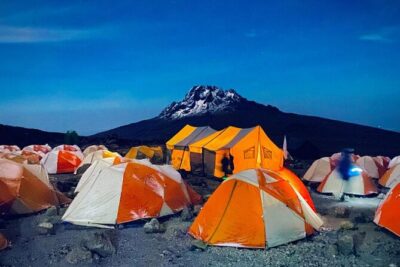
Climbing Kilimanjaro through 7 days Machame Route
Read our review →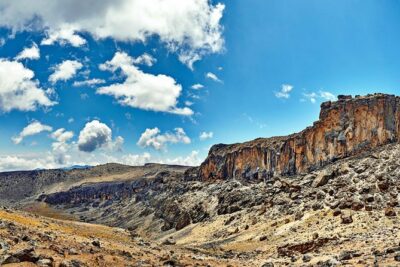
Browse the lists this trek appears in