
Review · ARUSHA
6 days Kilimanjaro Climbing Machame Route in Tanzania
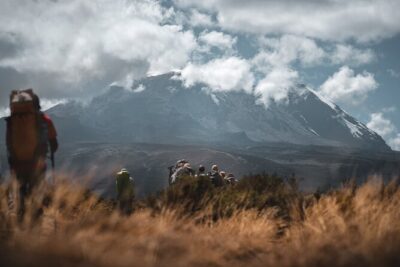
The Machame Route earns its Whisky Route nickname honestly: it is tougher, more scenic, and less sheltered than the hut-based Marangu Route. You climb through rainforest, moorland, semi-desert, and ice-capped high country, sleeping in tents every night on the mountain.
I like the careful climb-high, sleep-lower pattern on Day 3, and I like the support from a small local team. Guide Eli is singled out for being friendly and dependable, while Peter handles trip planning. The main catch is the pace: six days is the shortest sensible choice here, and summit night is a hard, cold, long push.
Key points before you book
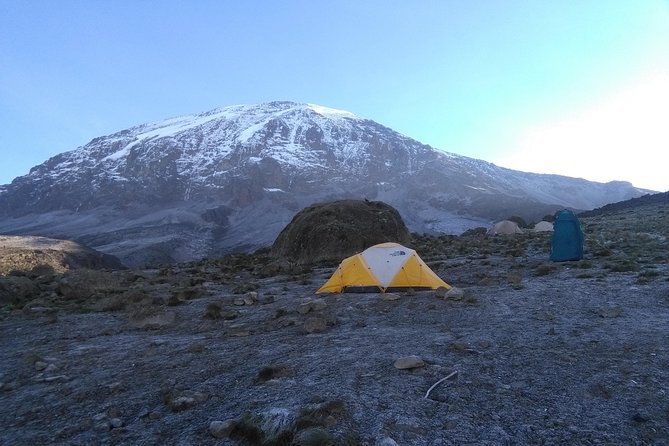
- The scenic route: Machame gives you rainforest, Shira Plateau, Lava Tower, Barranco Wall, and views of Mawenzi and Kibo.
- A real acclimatization day: Day 3 climbs to about 4,630 meters before dropping to Barranco Camp.
- Tent camping only: This is not the route for anyone wanting mountain huts.
- A midnight summit start: You reach Stella Point near sunrise, then continue toward Uhuru Peak.
- Private group format: Only your party participates, with private transport and shared return transfer listed.
- Strong local support: The team includes Peter in trip coordination and guide Eli, with Elisafi and John also mentioned in past trip notes.
Why Machame is worth the extra effort
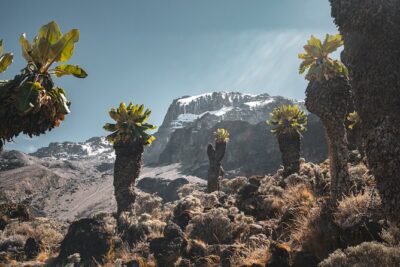
Machame is the route I would look at first if you want scenery and do not mind giving up hut beds. The trail rises through Kilimanjaro’s montane forest, crosses open moorland, skirts the Lava Tower, and reaches the dramatic Barranco Wall before the summit push. It feels like a changing mountain journey, not simply a long staircase to the top.
The tradeoff is clear. Machame is longer and harder than Marangu, and the route uses tents rather than huts. You need a moderate level of fitness, patience with slow uphill walking, and comfort with early starts, basic camp life, and changing temperatures.
The six-day schedule costs $2,800 per person. That is a serious amount, but the price includes national park fees, private transportation, dinner, two nights of accommodation, and a round-trip shared transfer. Since the exact meal and accommodation arrangements are not fully detailed, I would ask for a written list of what is covered before paying. The value depends heavily on the quality of the mountain crew and how clearly the operator handles those details.
More Kilimanjaro Climbs in Arusha
- 8-Day Small-group Lemosho Kilimanjaro Summit Trekking
★ 5.0 · 186 reviews - 7-Day Machame Kilimanjaro Summit Tour from Arusha
★ 5.0 · 125 reviews - Mountain Kilimanjaro Day Hike
★ 5.0 · 102 reviews
Day 1: Machame Gate to forest camp
The day begins with a drive from Moshi to Kilimanjaro National Park’s gate, taking about 45 minutes. The stated meeting point is in Arusha, with a 9:00 am start, so confirm the exact pickup location if you are staying in Arusha rather than Moshi. The end transfer returns you to your hotel in Moshi, which makes this detail worth settling early.
At the gate, the route enters montane forest. The trail winds upward along a ridge, with roots, wet ground, and slippery mud lower down. This is a steady introduction rather than a technical climb, but the first day still lasts about five to seven hours over 11 kilometers.
You gain from 1,830 to 3,000 meters. That jump is enough to remind you that altitude, not just distance, will shape the week. Gaiters and trekking poles are especially useful here, and rain gear should be easy to reach rather than buried in your main bag.
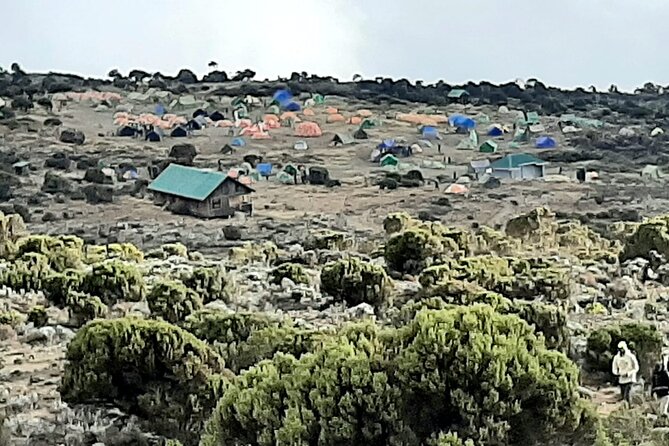
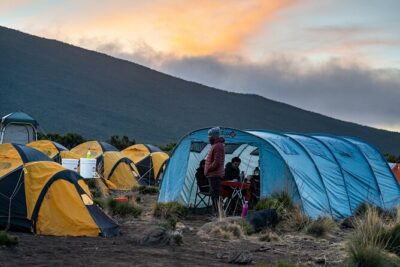
Machame Camp is the first overnight stop. The forest setting is attractive, but do not expect a gentle stroll followed by hotel comforts. This is tent camping, and the early days set the tone for the practical side of the trip.
Day 2: Heather country and Shira Camp
After breakfast, the forest gives way to moorland. The vegetation becomes lower and more open as the trail crosses a small valley and climbs a steep, rocky ridge covered in heather.
This is a short day by distance, only five kilometers, but it gains about 840 meters. The listed walking time is four to five hours. A short route can still feel demanding when the trail points upward almost all day.
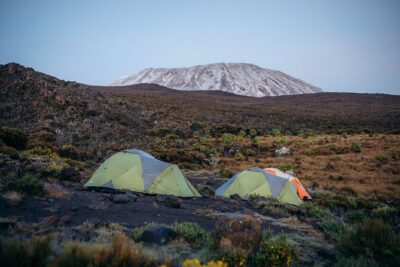
The route turns west toward a river gorge before reaching Shira Camp at about 3,840 meters. Shira is important because it puts you high on the mountain early. You may feel fine here, or you may notice a headache, poor sleep, or a slower pace. Those signs deserve attention, not bravado.
I like the way this day creates time to settle into the mountain rhythm. You walk, rest, eat dinner, and sleep at altitude without also covering a huge distance. The drawback is that the quick gain can be uncomfortable for anyone who arrives unprepared for high-altitude walking.
Day 3: Lava Tower, the acclimatization test
Day 3 is the smartest part of the schedule. From the Shira Plateau, you head east along a ridge and pass the junction toward Kibo, Kilimanjaro’s main summit cone. The trail then turns southeast toward Lava Tower, also called the Shark’s Tooth.
The route reaches roughly 4,630 meters before dropping to Barranco Camp at about 3,986 meters. The distance is 11 kilometers, and walking takes about five to seven hours. The vegetation is semi-desert, with a much barer feel than the forest and heather zones below.
This is a classic climb-high, sleep-lower day. You spend time at a greater altitude, then descend to sleep. That helps your body adjust and makes this day more useful than a simple march to a higher camp.
The views are a major reward, but Lava Tower is also where the mountain can begin to feel serious. If you are tired, cold, or struggling with altitude symptoms, tell the guide. A good guide should care more about your condition than the timetable.
Barranco Camp gives you a lower sleeping point than Lava Tower, but you are still close to 4,000 meters. Keep warm layers, water, and necessary personal items close at hand. This is not the evening to sort through a buried duffel in the dark.
Same trailhead, a different route:
- 4 Days Mount Meru Trekking
★ 5.0 · 55 reviews - 4 days Best experience Kilimanjaro Hike, Serengeti &Ngorongoro
★ 5.0 · 54 reviews - From Arusha/Moshi: Kilimanjaro Hike Marangu Route Day Trip
★ 4.5 · 54 reviews - Mount Kilimanjaro Day Hike Through Marangu Route to Mandara Hut
★ 5.0 · 37 reviews
Day 4: Barranco Wall and Barafu Camp
Day 4 starts with the Barranco Wall, the route’s most memorable piece of terrain before the summit. It is steep, but the information provided does not describe it as a technical climbing section. Expect careful footwork and a slower pace as the trail works upward.
The route continues through the Karanga Valley, with lunch at about 4,200 meters, then joins the Mweka Trail. From there, you climb to Barafu Hut at roughly 4,600 meters. The day covers nine kilometers and takes about eight hours.
This is a demanding day because the trail gains height while your body is already working at altitude. Barafu is the high camp for the summit attempt, and the schedule leaves you with dinner, rest, and preparation before the midnight start.
The South Circuit provides views of both Mawenzi and Kibo. That wider view matters because the mountain is not only about the final peak. You get different angles of the summit area, along with a clearer sense of the route still ahead.
The practical challenge is sleep. You reach camp after a long climb, then need to rest before getting up around midnight. Organize your summit clothes, headlamp, snacks, water, and warm layers before lying down. You do not want to make decisions at 11:30 pm while cold and tired.
Day 5: Stella Point, sunrise, and Uhuru Peak
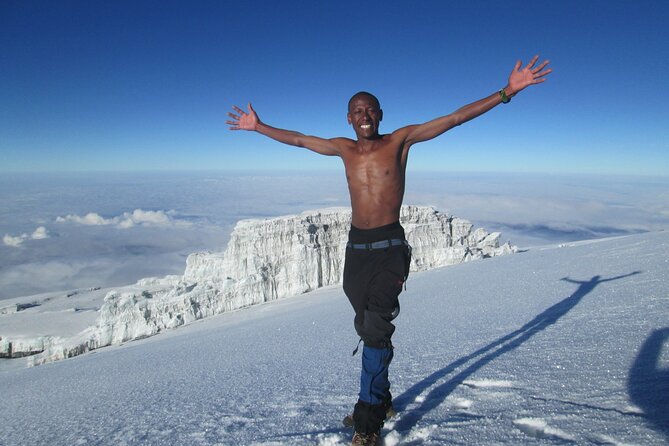
Summit day is the hardest section by far. The listed start time is midnight, and the first goal is Stella Point on the crater rim at about 5,685 meters. The route climbs northwest through heavy scree, where every step can slide backward.
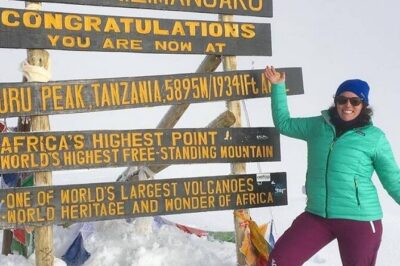
The ascent to the summit is listed as five kilometers, taking six to eight hours. From Stella Point, you continue through snow for about two hours toward Uhuru Peak, the top of Kilimanjaro at 5,895 meters. Weather determines how much of the sunrise you see, but reaching Stella Point around that time gives you a strong chance at a memorable dawn if conditions cooperate.
This is where fitness, pacing, and mental strength matter more than speed. Walk slowly. Stay with the guide. Keep sipping water and use the clothing you packed for very cold conditions. The route description calls this the most mentally and physically challenging part, and that is a fair warning.
The descent is another 12 kilometers and takes about three hours according to the schedule. That is a long return after the ascent, even though the downhill direction helps. You drop to about 3,100 meters, where the air is easier and the vegetation begins to change.
Do not think of reaching the summit as the end of the day. You still have a long descent, and tired legs can make downhill walking awkward. Trekking poles become useful again here.
Day 6: Mweka Gate and the return to Moshi
The last morning continues downhill from about 3,100 to 1,830 meters. The route covers 10 kilometers and takes three to four hours, passing back into forest.
Lower sections can be wet and muddy. Shorts and a T-shirt may be enough in warmer conditions, but keep rain gear and a warmer layer within reach. The mountain can change quickly, and your vehicle ride is not until you reach Mweka Gate.
At the gate, you receive your summit certificates. Twende Africa Tours provides a vehicle from Mweka to your Moshi hotel, with the drive taking about 30 minutes. After six days of walking, that short transfer will feel very welcome.
The schedule says the activity ends back at the meeting point, but the transport details refer to Moshi. Ask for the exact drop-off plan if your hotel is in Arusha or elsewhere. This is a small point, yet it prevents an unnecessary surprise after the climb.
What the support team adds
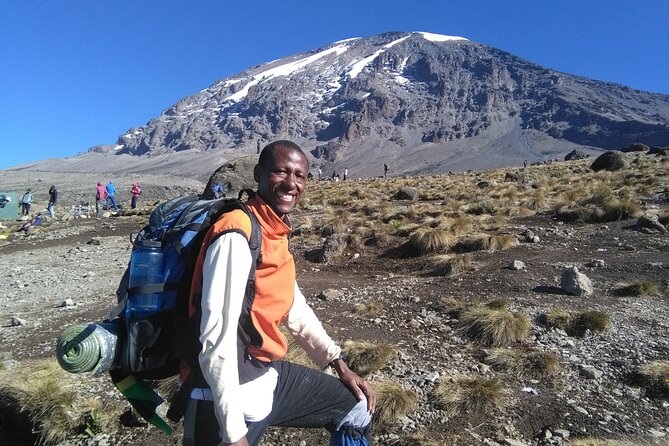
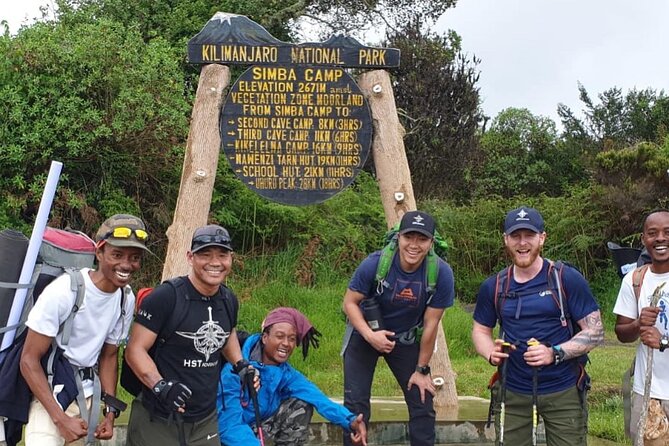
A Kilimanjaro climb depends on the crew as much as the route. The team connected with this trip includes Peter, who is described as handling planning and booking, and guide Eli, who is specifically praised for being friendly, reliable, and attentive to the group’s needs.
Elisafi and John are also named in trip notes, along with the porters and cooking team. One useful detail is the direct praise for the porters’ heavy carrying work and for the food prepared on the mountain. You should still ask how the porter team is organized and what baggage limits apply, since those details are not provided here.
The tour is private, so only your group participates. That gives you a more personal setup than a large shared departure. The return transfer is described as shared, so distinguish between the private mountain activity and the shared transport when you confirm the booking.
What $2,800 really buys
At $2,800 per person, this is not a budget hike. Still, Kilimanjaro costs include far more than guiding time. The package includes national park fees, private transportation, dinner, two nights of accommodation, and a round-trip shared transfer.
The price also buys a six-day route rather than a rushed five-day plan. That extra day matters because altitude adjustment is one of the biggest factors in reaching the top. A past trip note gives the same practical advice: do not choose less than six days if you can avoid it.
The information does not clearly list every meal, tent arrangement, sleeping equipment item, airport transfer, or accommodation location. It also lists souvenir photos and landing and facility fees as not included. I would request a full cost sheet before booking, especially if you are comparing this package with another operator.
Free cancellation is available if you cancel at least 24 hours before the start time. Changes or cancellations inside that window are not accepted for a refund.
Who should choose this climb
This trip suits you if you want the scenic Machame Route, accept tent camping, and can handle long uphill days at altitude. It is aimed at people with moderate fitness, not complete beginners looking for a soft introduction to mountain walking.
You should be comfortable with:
- Five to eight hours of walking on most days
- A midnight start for summit day
- Cold conditions near the summit
- Mud in the forest
- A steep ridge at Barranco Wall
- Basic camp accommodation
- A long descent after reaching the summit
Children must be accompanied by an adult. Passport name, number, expiry date, and country are required for every participant when booking. Confirmation is provided within 48 hours, subject to availability.
Should you book the Machame Route?
I would recommend this climb if the scenery matters as much to you as the summit and you are willing to camp. The route offers a strong progression from forest to ice, plus the useful Lava Tower acclimatization day. The local team, especially guide Eli and coordinator Peter, gives the package a personal feel.
I would pause if you want hut accommodation, dislike very early starts, or have only limited time for altitude adjustment. Before paying $2,800, confirm the Arusha versus Moshi pickup details, the two included accommodation nights, meals beyond dinner, and exactly what equipment the mountain crew supplies.
For a fit hiker who wants a private six-day Kilimanjaro attempt and understands that the summit night will be severe, this is a well-shaped route with good scenic value. Go in prepared, walk slowly, and treat the mountain with respect.
FAQ
How long is the Kilimanjaro Machame Route experience?
The climb lasts approximately six days.
Where does the activity start?
The stated starting point is Arusha, in Tanzania’s Arusha Region, with a 9:00 am start time.
Where does the climb finish?
The activity ends back at the meeting point, while the final transfer is described as a drive from Mweka Gate to a hotel in Moshi.
Is pickup available?
Yes. Pickup is offered, and private transportation plus a round-trip shared transfer are listed among the inclusions.
Do I sleep in huts or tents?
The Machame Route uses tents only. Hut accommodation is associated with the Marangu Route, not this experience.
How difficult is the climb?
The activity requires a moderate level of physical fitness. Machame is longer and slightly more challenging than Marangu, with a steep Barranco Wall and a difficult summit night.
What time does summit day begin?
The summit attempt begins very early, at about midnight on Day 5.
How high is Uhuru Peak?
The summit elevation is listed as 5,895 meters, or about 19,300 feet.
Are national park fees included?
Yes. National park fees are included in the price.
Can I cancel for a full refund?
Yes, if you cancel at least 24 hours before the experience start time. Cancellations or changes made less than 24 hours before the start are not accepted for a refund.
More 6-Day Experiences in Arusha
- 6-day Private Camping Safari Tour from Kilimanjaro Airport
★ 5.0 · 27 reviews - 6 Days: Hiking Kilimanjaro via Machame Route
★ 5.0 · 24 reviews - 6 Days best adventure kilimanjaro ,Tarangire ,Serengeti &Ngorongoro crater
★ 5.0 · 24 reviews - 6-Day Guided Tour in Machame Route Mt Kilimanjaro
★ 5.0 · 17 reviews
Just added around Arusha
- Mt. Kilimanjaro: Shira plateau to Cathedral point 3872m Day hike★ 5.0 · 7 reviews
- 5 days safari, hiking & culture (Serengeti & kilimanjaro)★ 5.0 · 27 reviews
- One Day Hike from Kilimanjaro to Mandara★ 5.0 · 2 reviews
- 3 Days Mount Meru trekking★ 4.5 · 7 reviews
- climb the KILIMANJARO via Lemosho route★ 5.0 · 4 reviews
- 6 Day: Hiking Kilimanjaro via Machame Route★ 5.0 · 2 reviews
- Private 8 day Northern Circuit Kilimanjaro Climb★ 5.0 · 8 reviews
- Kilimanjaro Waterfalls Hike & Moshi Hot Springs Day Trip Tour★ 5.0 · 4 reviews
Kilimanjaro Climbs, compared.
8-Day Small-group Lemosho Kilimanjaro Summit Trekking
Read our review →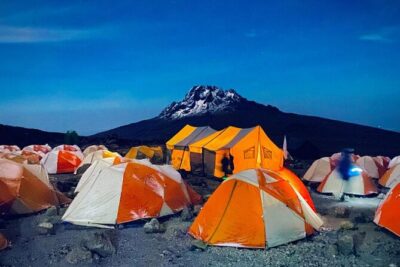
Climbing Kilimanjaro through 7 days Machame Route
Read our review →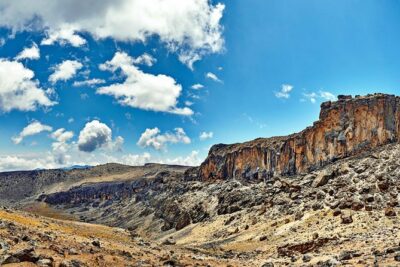
Browse the lists this trek appears in