
Review · KATHMANDU
Private Annapurna Circuit Trek
Thorong La Pass is the big prize here: at 5,416 meters, it is a serious high-altitude crossing reached without technical climbing. The route earns that effort with changing scenery, from forest and river valleys to dry mountain country and Tibetan-style villages. I especially like the private format, since guides have adjusted other treks for fitness, weather, and time limits.
I also like the built-in acclimatization day in Manang and the practical inclusions: permits, meals, an experienced guide, trekking poles, crampons, and hotel nights before and after the walk. The main concern is the schedule. The pass day is long and strenuous, and the package does not include a porter, bottled or boiled water, travel insurance, or rescue insurance.
Key points to know before booking
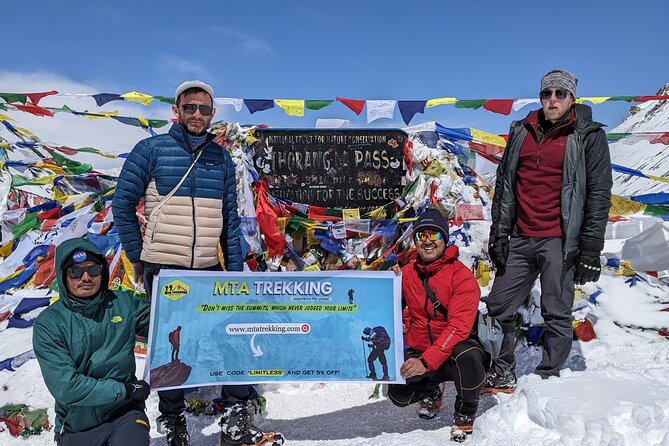
- Thorong La reaches 5,416 meters, making altitude the central challenge of the trek.
- Manang provides two nights, including a rest and acclimatization day before the higher trail.
- The route ends in Pokhara after Jomsom, with views through the Kali Gandaki Gorge and a major change from dry mountains to green valleys.
- Your group is private, so the pace and daily plan may be more adaptable than on a fixed group departure.
- Meals, permits, guide services, poles, and crampons are included, but porter service and insurance are not.
- The $1,150 price includes several hotel nights and a foot massage, giving the package useful value if you want a fairly organized trek.
What the $1,150 Annapurna Circuit package really gives you
At $1,150 per person, this is not simply a guided walk. The price covers an 11-day arrangement beginning in Kathmandu and finishing in Pokhara, with transport, accommodation, meals during the trek, permits, guide services, equipment, and selected hotel stays.
You receive one hotel night before the trek and one after it, plus another hotel night in Pokhara. Breakfast, lunch, and dinner are included during the trekking portion, with 11 dinners, 10 breakfasts, and 9 lunches listed in the package. That takes care of a major daily worry, though you still need money for drinks, extra water, showers, laundry, bar bills, and personal snacks.
The package also includes the ACAP permit and TIMS, along with all listed fees and taxes. Trekking poles and crampons are supplied, which matters on a route where the final pass can involve snow or icy conditions. The equipment is useful, but you should still confirm what type and size of crampons are available before setting out.
This is a private activity, so only your own group takes part. That can make a real difference on a high-altitude trek. A guide may be able to adjust the pace, respond to your condition, or discuss a change in transport if weather or fitness becomes a problem. The company has also handled itinerary changes on other treks, including shortening a route with a jeep when time or strength required it.
There is no porter included. You will need to carry your own main bag unless you arrange and pay for porter service separately. That is an important cost and comfort issue, especially on the days above 4,000 meters. Travel and rescue insurance are also your responsibility, and they should be treated as essential for this route.
More Annapurna Treks in Kathmandu
- Annapurna Circuit Trek with Tilicho Lake
★ 5.0 · 368 reviews - Annapurna base camp trek 5 Days
★ 5.0 · 252 reviews - 14-Day Private Annapurna Base Camp Trek
★ 5.0 · 180 reviews
Kathmandu to Besisahar: a gentle start with practical details
Day one begins in Kathmandu with pickup, a transfer to a deluxe budget hotel, time to freshen up, and a trip briefing from MTA Trekking. It is a short first day, but it gives you a chance to settle in and hear how the next stages will work.
On day two, you take public transportation to Besisahar in Lamjung. The journey is listed at about four to five hours and gives you views of rural Nepal before the higher mountain section begins. Besisahar is a useful overnight stop because it breaks up the approach and keeps the first travel day manageable.
The use of public transportation keeps the package practical, but it may not offer the same comfort or privacy as a private vehicle. If you care about departure times, luggage handling, or road comfort, ask MTA Trekking exactly what transport is planned for your date.
Chame to Pisang: forests, villages, and prayer flags
The next drive takes you from Besisahar to Chame, with a stated travel time of two to three hours. Along the way, you pass Gurung and Magar villages, pine and rhododendron forests, and a roadside waterfall. At Dharapani, the team registers the permits before continuing to Chame.
Chame is your first trekking-lodge night. The plan allows time to arrive in the afternoon, eat a home-cooked meal, and rest. That is a sensible rhythm because the following days shift from road travel to regular walking.
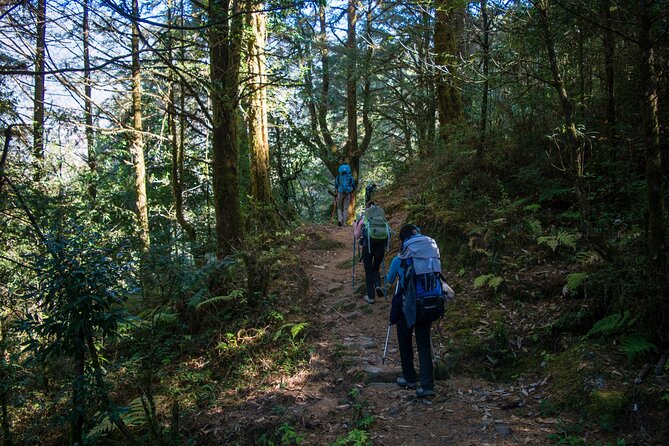
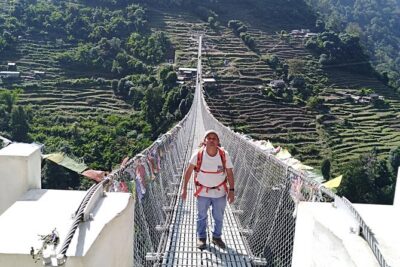
On day four, you hike from Chame to Pisang for roughly four to five hours. Apple orchards, rhododendron and conifer forests, suspension bridges, and colorful prayer flags make this one of the more varied lower sections of the route.
You also get views of Paungda Danda, described as a flat-topped mountain. Pisang has an alpine feel, and the afternoon arrival leaves time to relax rather than race straight into dinner. You should still expect a real walking day, with bridges and changing elevation rather than a flat village stroll.
Pisang to Manang: mountain views and Braga monastery
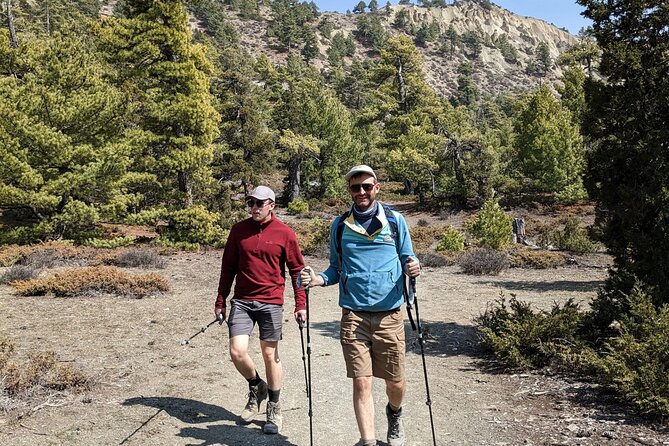
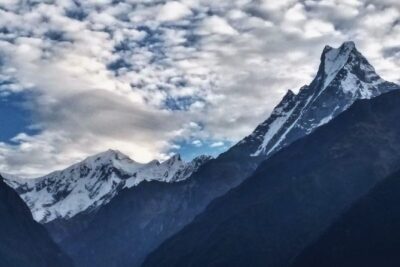
The walk from Pisang to Manang takes about five to six hours. You pass evergreen forest and the villages of Humde and Braga, with views toward Gangapurna, Pisang Peak, and the Annapurna range.
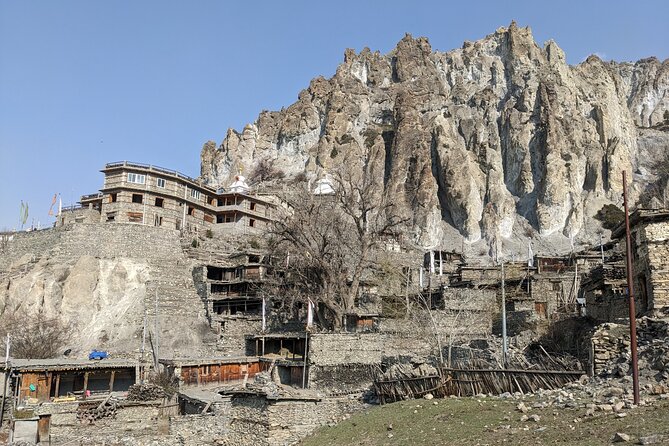
The major cultural stop is Braga monastery, described as roughly 900 years old. Its presence gives this part of the trek more meaning than a simple mountain walk. The route also may include views of alpine lakes, depending on the exact trail and conditions.
Manang is one of the larger communities in the Annapurna region and serves as the key pause before the highest section. Your arrival there is not just about reaching another overnight stop. It gives your body time to adjust before Yak Kharka, Thorong Phedi, and the pass.
Same trailhead, a different route:
- Everest Base Camp Trek – 14 Days
★ 5.0 · 1,499 reviews - Everest Base Camp Trek
★ 5.0 · 842 reviews - Everest Base Camp Helicopter Tour landing at Everest View Hotel
★ 5.0 · 668 reviews - Everest Base Camp Trekking
★ 5.0 · 485 reviews
Manang acclimatization: the day that protects the rest of the trek
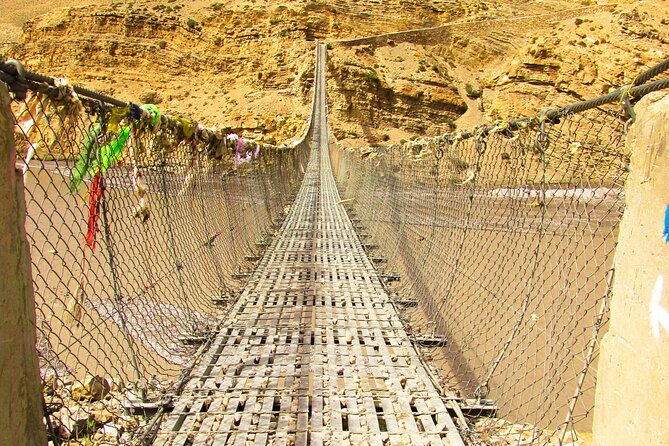
Day six is set aside in Manang for acclimatization. You can rest, restock supplies, eat at local restaurants, or take a day hike to Gangapurna Lake or Kicho Tal.
I consider this one of the strongest parts of the schedule. The trek does not push straight from Manang into the highest terrain. The extra day gives you a chance to notice how your body is handling the altitude before the route becomes harder.
The plan does not promise that everyone will take the same acclimatization walk, so discuss the day with your guide. The useful goal is not to prove how far you can go. It is to stay comfortable enough to continue safely toward the pass.
Yak Kharka and Thorong Phedi: the serious high-altitude section
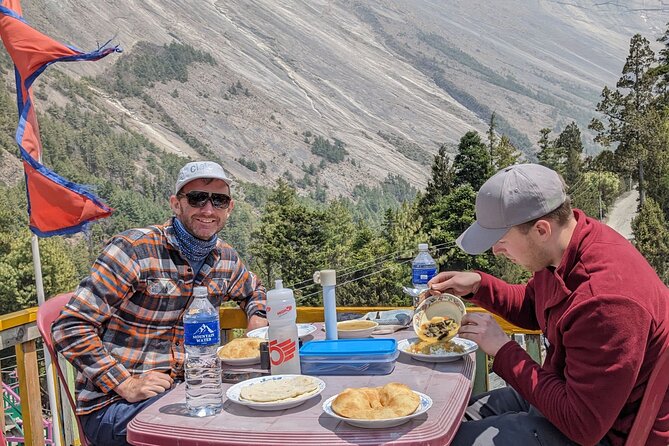
The walk from Manang to Yak Kharka takes about four hours and crosses several suspension bridges. The elevation is around 4,000 meters, so the schedule specifically calls for a slow pace and continued acclimatization.
Yak Kharka is a small settlement with a bakery and teahouse accommodation. That detail matters after a high walk. You should expect simple lodging, not resort comfort, but a bakery and a warm meal can feel like a real luxury at this point.
Day eight takes you from Yak Kharka to Thorong Phedi in about four to five hours. The route includes another suspension bridge and climbs to around 4,600 meters. Thorong Phedi offers views toward Gangapurna, Tilicho Peak, and the Annapurna range.
This is a day to conserve energy. The next morning is the most demanding part of the trek, so avoid treating Thorong Phedi as a place for a late-night celebration. The altitude, not the distance alone, is what makes this section difficult.
Thorong La to Muktinath: the hardest day of the trek
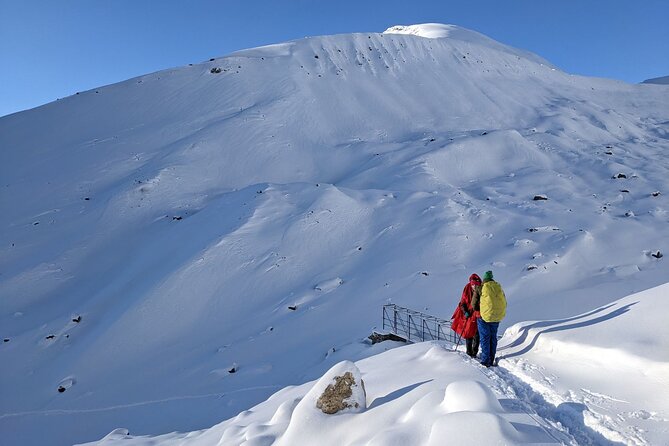
Day nine is the test. You climb to Thorong La Pass at 5,416 meters, then descend to Muktinath. The full day is listed at around eight hours, and it is described as long and strenuous.
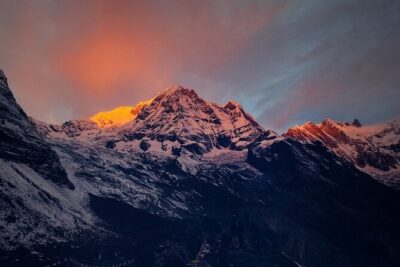
At the top, you may see Dhaulagiri and Manaslu, two of the world’s highest mountains. The views are the reward, but the pass should not be treated casually. Carry only what you need, keep your pace steady, and follow your guide’s advice about altitude and conditions.
The descent to Muktinath changes the mood of the trek. Muktinath is sacred to both Hindus and Buddhists, so it is more than a convenient overnight stop. After the effort of the pass, the town provides a place to rest and reflect, with a strong spiritual character tied to the surrounding mountains.
The package includes crampons, but conditions can vary. Ask before departure when they are normally used and how the guide handles poor weather. The route is described as nontechnical, yet that does not mean easy. You still need moderate physical fitness and preparation for a high pass.
Jomsom and Pokhara: from dry mountains to green valleys
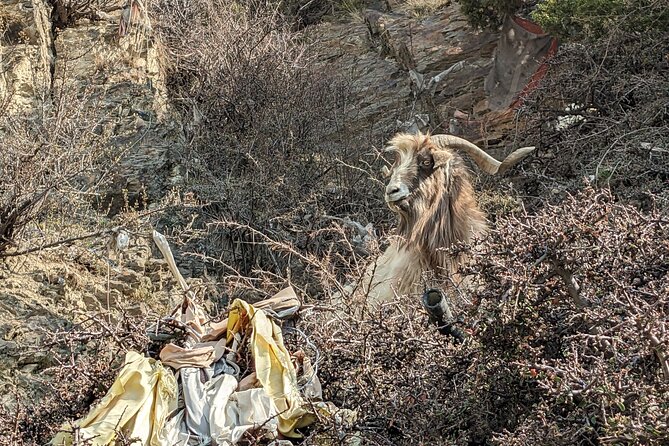
Day ten takes you to Jomsom in about five hours. The route moves through the drier side of the Annapurna region, and Jomsom is an important stopping point before the final journey.
The last day continues toward Pokhara, with about seven hours of travel or trekking listed. You pass through the Kali Gandaki Gorge, traditional villages, terraced fields, and views of the Annapurna and Dhaulagiri ranges.
This final section gives the trip a satisfying change of scenery. You begin among forests and river valleys, cross high, dry country, then return toward greener valleys. The transition helps you understand how much terrain the Annapurna Circuit covers in a relatively short package.
The schedule ends in Pokhara, where the package includes one hotel night and a one-hour foot massage after the trek. That is a welcome practical touch after the pass and long descent.
Guides, private pacing, and the human side of the trek
The company has used guides named Ghanshyam, Jeevan, and Shishir on its Nepal trekking trips. Shishir is noted for a cheerful manner, strong knowledge of the Annapurna route, and a habit of singing Nepali songs while walking. Ghanshyam is described as attentive and willing to adapt to individual needs.
You should not assume a particular guide will lead your departure. Ask MTA Trekking who is assigned before booking, especially if guide style matters to you. The strongest theme in the guide feedback is flexibility: adapting a route to weather, fitness, and available time rather than treating the plan as unchangeable.
That matters on the Annapurna Circuit. A private trek works best when you speak openly about how you feel. Tell the guide early if you are struggling, rather than waiting until the pass day.
Where this trek fits your travel style
I would recommend this experience to someone who wants a guided Himalayan trek but does not want to join a large group. It suits people who value local villages, monastery visits, changing scenery, and a clear support structure.
You should have moderate physical fitness and be ready for several hours of walking on consecutive days. The most demanding part is not the first forest section. It is the combination of altitude, cold, long walking time, and the Thorong La crossing.
This is less suitable if you want a relaxed holiday with short walks and guaranteed comfort each night. Teahouses are part of the experience, and the package does not include a porter. It is also not the right choice without suitable travel and rescue insurance.
Booking details worth checking first
Confirmation is provided at booking, and pickup is offered. Group discounts may be available, so ask how the discount works for your party size.
The cancellation terms are strict close to departure. You can receive a full refund if you cancel at least six full days before the start time, while cancellations two to six full days ahead receive a 50 percent refund. Less than two full days before the start time is nonrefundable, and the cut-off follows local time.
Before paying, confirm the exact hotel names, transport arrangements, guide assignment, porter options, water arrangements, and equipment sizes. These questions do not change the route, but they make the $1,150 cost easier to judge.
Should you book the private Annapurna Circuit Trek?
I would book this trek if you want the classic high point of Thorong La, a private guide, built-in acclimatization, and a package that covers many routine costs. The included meals, permits, hotel nights, equipment, and post-trek massage add useful value.
I would hesitate only if carrying your own luggage is a problem, if you are not ready for an eight-hour pass day, or if you have not arranged insurance. Ask about a porter and exact transport before booking.
For a fit walker who wants mountain scenery, local communities, and a serious but nontechnical pass crossing, this is a well-structured way to tackle the Annapurna Circuit in 11 days.
FAQ
How long is the Annapurna Circuit trek?
The experience lasts approximately 11 days, beginning in Kathmandu and ending in Pokhara.
What is the highest point of the trek?
The highest point is Thorong La Pass at 5,416 meters above sea level.
Is Thorong La a technical climbing route?
No. The pass can be crossed without technical climbing skills, although it is still a demanding high-altitude walk.
Is this a private tour?
Yes. Only your own group participates in the activity.
Is a guide included?
Yes. An experienced guide is included in the package.
Are meals included?
Breakfast, lunch, and dinner are included during the trek. The package lists 11 dinners, 10 breakfasts, and 9 lunches.
Is a porter included?
No. Porter service is not included. Extra porters can be arranged at an additional cost.
Are trekking poles and crampons included?
Yes. Trekking poles and crampons are included.
Is travel or rescue insurance included?
No. Travel and rescue insurance are not included, so you need to arrange them separately.
Just added around Kathmandu
- Everest Base Camp Trek★ 5.0 · 3 reviews
- Everest Base Camp Trek★ 5.0 · 7 reviews
- 15 Days Private Everest Base Camp Trek★ 5.0 · 30 reviews
- Everest Base Camp Trek★ 5.0 · 57 reviews
- 14 Days of Adventure Trekking to Everest Base Camp★ 5.0 · 2 reviews
- 14-Day Everest Base Camp Trek★ 5.0 · 20 reviews
- From Kathmandu: Private 14-Day Everest Base Camp Trek★ 5.0 · 20 reviews
- 14 Days Everest Base Camp Trek★ 5.0 · 4 reviews
Annapurna Base Camp Treks, compared.
Trekking in Annapurna/Langtang/Everest/Upper Mustang regions
Read our review →
Kathmandu to Annapurna Base Camp (ABC) 5-Day Trek
Read our review →Browse the lists this trek appears in