
Review · KATHMANDU
From Kathmandu: 11-Day Annapurna Base Camp Trek
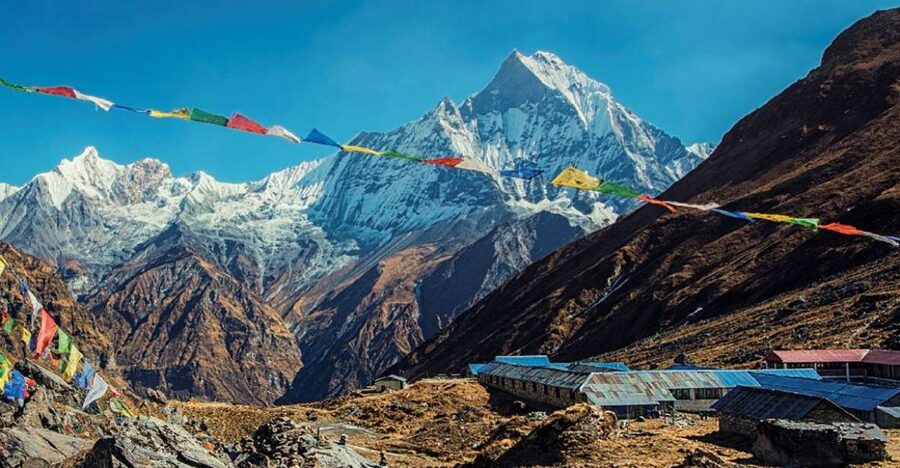
Annapurna Base Camp is the prize here, but the route earns its keep long before you reach it. You walk past waterfalls, terraced fields, Gurung villages, and forests before entering the high mountain bowl beneath Annapurna I, one of the world’s highest peaks.
I like the short 11-day format, which fits a major Himalayan trek into a manageable holiday. I also like that flights, permits, meals, a porter, a sleeping bag, and a down jacket are included, so you do not have to assemble the trip piece by piece.
The main consideration is altitude. The trail rises from Pokhara at 823 meters to Annapurna Base Camp at 4,130 meters in only several days. The schedule is efficient, but you need to arrive fit, pace yourself, and accept that mountain weather can affect plans.
Key points to know before booking
- Annapurna Base Camp at 4,130 meters: The trek reaches the famous mountain sanctuary through Machhapuchhre Base Camp.
- A useful short route: Eleven days gives you the core Annapurna experience without the longer 14-day option.
- Pokhara begins the walking portion: A 30-minute flight and a drive to Nayapul lead into the foothills.
- Gurung culture along the trail: Ghandruk is a major early stop, with time to visit the Gurung museum if schedules allow.
- Support is built into the price: You get a licensed English-speaking trek leader, one porter for every two trekkers, permits, meals, and mountain equipment.
- Best conditions in spring and autumn: March through May and September through November usually offer the clearest balance of warmth and views.
Why this 11-day route works
This trek is designed for people who want Annapurna Base Camp but cannot spare two full weeks. You still get the essential rhythm of the journey: a lowland start, steady climbing, nights in simple mountain lodges, a high point at base camp, and a descent through hot-spring country at Jhinu Danda.
The route is not a casual sightseeing trip. Walking days range from three to eight hours, and the long return from Annapurna Base Camp to Bamboo can take seven to eight hours. You will spend several days above 2,000 meters, with the summit night at 4,130 meters.
That compressed schedule is both its strength and its limit. You save time, but there is less room for a slow acclimatization plan or spare days for weather delays. I would choose it if your Nepal holiday is tight and you are comfortable with long walking days. If you want a gentler pace, the 14-day Annapurna Sanctuary Trek deserves a close look.
More Annapurna Treks in Kathmandu
- Annapurna Circuit Trek with Tilicho Lake
★ 5.0 · 368 reviews - Annapurna base camp trek 5 Days
★ 5.0 · 252 reviews - 14-Day Private Annapurna Base Camp Trek
★ 5.0 · 180 reviews
Kathmandu to Pokhara: setting up the trek
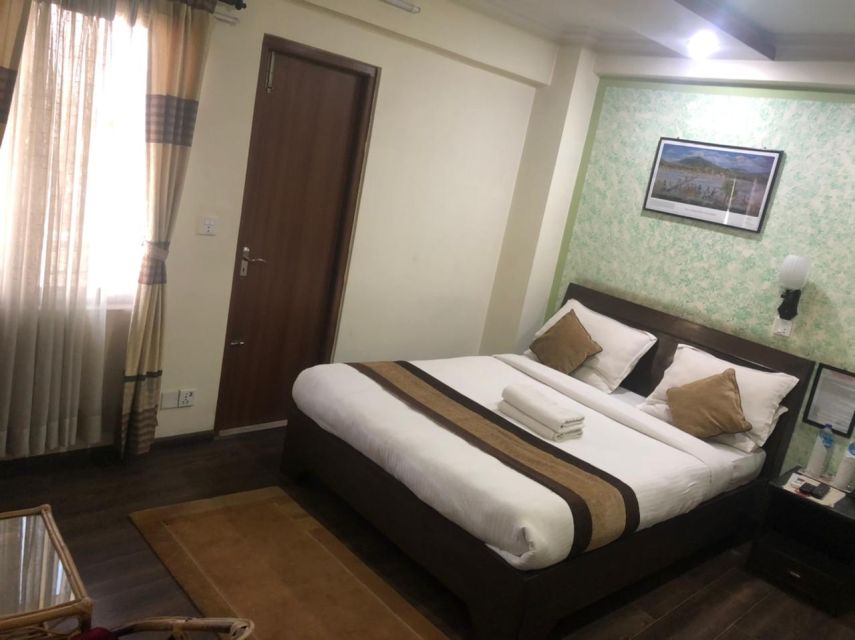
Day one is based in Kathmandu at about 1,300 meters. The package includes a welcome dinner, giving you a simple first evening before the walking begins. The included Kathmandu hotel is a three-star property, with breakfast provided during the included hotel nights.
On day two, you fly for about 30 minutes to Pokhara. Sit on the right side of the plane if you want the best chance of seeing the Himalayas during the flight. That small seating tip is one of the more useful details in the plan.
Pokhara sits beside a lake and is known for views toward Dhaulagiri, Manaslu, Machhapuchhare, and Annapurna. After landing, an Alpine Club of Himalaya representative meets you at the airport. A private vehicle then takes you for about one hour and 20 minutes to Nayapul, near Birethanti, where the trek begins.
You walk for five to six hours to Ghandruk. This village is mainly home to the Gurung community and makes a strong first night on the trail. If time permits, you can visit the Gurung museum, though the wording of the schedule makes clear that this is not guaranteed.
Ghandruk to Chhomrong: the trail gets serious
Ghandruk to Chhomrong takes five to six hours on day three. The route moves through the foothills and continues the steady upward pattern that defines this trek. You are not yet at extreme altitude, but the walking is now a daily commitment rather than a short village stroll.
Chhomrong sits at 2,170 meters and is an important point on the route. From here, the mountain setting becomes more pronounced, and the trail turns toward the sanctuary. You should treat this night as part of your adjustment to thinner air, even though the schedule does not call for a rest day.
One practical point matters here: the tour is built around a group schedule. The trek leader sets the pace and handles the route, permits, and day-to-day organization. A German guest gave the organization high marks and specifically praised the guides for being kind, helpful, and ready to answer questions about both logistics and local subjects. That is useful reassurance for anyone trekking in Nepal for the first time.
Chhomrong to Bamboo: forests and waterfalls
Day four takes you from Chhomrong to Bamboo in four to five hours. The route passes through the sort of scenery that makes the Annapurna area so appealing: wooded slopes, mountain streams, waterfalls, and steeply cut valleys.
The schedule includes seven nights in teahouses or guesthouses. These are practical mountain lodgings rather than full-service hotels. You get a bed and meals, but you should expect a simpler setup than in Kathmandu or Pokhara. The package supplies a down jacket and sleeping bag, which reduces the amount of bulky gear you need to carry.
Bamboo is at 2,310 meters. The modest altitude gain from Chhomrong may look small on paper, but the trail can still feel demanding because you are walking day after day. This is where a steady pace matters more than trying to finish quickly.
All breakfast, lunch, and dinner are included during the trek. Lunch and dinner in Kathmandu and Pokhara are not included, so keep some money aside for those city meals and personal expenses.
Same trailhead, a different route:
- Everest Base Camp Trek – 14 Days
★ 5.0 · 1,499 reviews - Everest Base Camp Trek
★ 5.0 · 842 reviews - Everest Base Camp Helicopter Tour landing at Everest View Hotel
★ 5.0 · 668 reviews - Everest Base Camp Trekking
★ 5.0 · 485 reviews
Bamboo to Deurali: the high mountain approach
The walk from Bamboo to Deurali takes three to four hours, making it one of the shorter days. Deurali sits at 3,230 meters, so the altitude gain is more important than the number of walking hours.
This is a good day to pay attention to how your body feels. The package includes a medical kit carried by the trek leader, but that should not be treated as a substitute for travel insurance. Rescue insurance is not included, and you are responsible for arranging suitable travel and evacuation cover.
The scenery changes as you climb. The route leaves much of the lower forest behind and moves toward the high mountain zone. Rhododendron forests are one of the visual features promised along the way, especially during the spring season when the flowering period can add color to the route. The tour information does not promise a particular bloom date, so treat that as a seasonal possibility rather than a guarantee.
Annapurna Base Camp at 4,130 meters
Day six is the main event. You walk from Deurali to Machhapuchhre Base Camp at 3,700 meters, then continue to Annapurna Base Camp at 4,130 meters. The full day takes five to six hours.
Machhapuchhre, also called Fishtail, is one of the mountain names tied closely to the Pokhara and Annapurna region. From this point, the route enters the high sanctuary, with steep peaks surrounding the trail. You are there to see Annapurna Base Camp, but the approach is just as important. The changing scale of the mountains makes the final arrival feel earned.
Annapurna I rises to 8,091 meters and is the highest point in the Annapurna massif. The massif also includes thirteen peaks above 7,000 meters and sixteen more above 6,000 meters. You do not climb Annapurna I on this trip. You walk to its base, surrounded by some of the world’s most serious high peaks.
The overnight stay at 4,130 meters is the trek’s biggest physical test. Keep your pace calm, drink according to your guide’s advice, and do not let the excitement of reaching base camp push you into overexertion. Since the route is short, there is no extra acclimatization day listed here.
The long descent to Bamboo
Day seven takes you from Annapurna Base Camp back to Bamboo in seven to eight hours. This is the longest walking day in the schedule, and it comes immediately after the high point.
The descent is easier on breathing but can be hard on knees and legs. Good footwear and trekking poles, if you use them, are worth considering. The tour does not list trekking poles among the supplied equipment, so ask the operator if you want to confirm availability.
Returning to Bamboo also gives you a fast change in climate and scenery. The high mountain bowl gives way to lower forest again. It is a full day, but it avoids adding another night at altitude.
Jhinu Danda and the final walk out
From Bamboo, you walk five to six hours to Jhinu Danda on day eight. The village sits at 1,760 meters, so this is a major drop from the base camp area.
Jhinu Danda is commonly associated with natural hot springs, but the provided schedule does not specifically promise a hot-spring visit. You can ask the trek leader what time and access allow. Do not build your entire expectation around it, but it is a sensible place to look forward to after several days on foot.
Day nine brings a six-hour walk to Naya Pul, followed by a one-hour drive to Pokhara. The walking is not over until this day ends, so save some energy after the lower altitude starts to feel easier. Back in Pokhara, the package includes a hotel night with breakfast.
Flying back to Kathmandu
Day ten is a flight from Pokhara to Kathmandu. This keeps the return journey short and avoids repeating the long road transfer between the two cities.
The Kathmandu and Pokhara hotel arrangements cover three nights in total, with breakfast included. The package does not cover extra nights caused by an early arrival, late departure, or an early return from the mountain. That matters if you plan international flights with no spare time.
Day eleven is departure day. Airport transport is included, with breakfast listed for the final morning. International airfare is not included, and neither is the Nepalese visa fee.
What the $1,699 price includes
At $1,699 per person, the value depends on how much of the trip you would otherwise arrange yourself. The package includes domestic flights, private ground transport, three hotel nights, seven teahouse nights, all trekking meals, permits, staff costs, a porter, and equipment such as a down jacket and sleeping bag.
The porter arrangement is one porter for every two trekkers. That gives you help with the main load, but you should still expect to carry a daypack with water, layers, documents, and personal items.
You also receive an English-speaking, government-licensed trek leader. Staff costs include salaries, insurance, equipment, food, and accommodation. That is a significant part of the price, since a supported trek is not just a room and a route map.
You still need to budget for your international flights, visa, personal expenses, city lunches, city dinners, excess baggage, insurance, and any extra hotel nights. The duffel bag, trekking map, and T-shirt are useful additions, but they do not remove the need for proper personal clothing and footwear.
Choosing the right season
Spring, from March through May, and autumn, from September through November, are presented as the best periods. You can expect the best chance of sunny, warm conditions and clear mountain views during these months.
Winter from December through February may offer a quieter trail and more personal space, but temperatures can be harsh. The schedule does not promise a particular level of snow or trail access, so you should ask about current conditions before setting out.
The monsoon period runs from June through August. Rain is expected, and mountain views may be less reliable. The tour can still operate, but the weather is a serious part of your decision.
Who should book this trek
I would recommend this trip to a fit adult who wants a guided Himalayan walk and has only 11 days available. It suits you if you value having permits, flights, transport, meals, porters, and basic equipment handled in one plan.
It is also a good match if you want more than a mountain photograph. The route includes Gurung culture at Ghandruk, terraced farmland, forests, waterfalls, and daily contact with villages and teahouses. The mountain goal is important, but the lower trail gives the trip its human scale.
I would hesitate if you need a slow itinerary, dislike basic accommodation, or want several spare days for weather and altitude. In that case, the 14-day Annapurna Sanctuary option may fit better. You should also reconsider if you have not prepared for five to eight hours of walking on consecutive days.
Should you book the Annapurna Base Camp trek?
Book it if you want a well-supported, time-efficient route to Annapurna Base Camp and appreciate having the major costs arranged in advance. The especially useful strengths are the licensed English-speaking leader, one porter for two trekkers, included permits, domestic flights, meals, and mountain gear.
Before paying, confirm the current flight schedule, the hotel and teahouse standards, the group size, and the plan for altitude concerns. Also arrange travel and rescue insurance, since it is not included.
The clearest reason to choose this trek is simple: in 11 days, you get from Kathmandu to one of Nepal’s great mountain destinations without giving up villages, forests, and local contact along the way. Just remember that the shorter schedule demands more from you each day.
FAQ
How long is the Annapurna Base Camp trek?
The full activity lasts 11 days, including arrival and departure days, flights between Kathmandu and Pokhara, the trek, and hotel stays.
What is the highest point of the trek?
Annapurna Base Camp is at 4,130 meters, or 13,545 feet. The route also passes Machhapuchhre Base Camp at 3,700 meters.
Are domestic flights included?
Yes. The package includes flights from Kathmandu to Pokhara and from Pokhara back to Kathmandu.
Are meals included?
Breakfast, lunch, and dinner are included during the trek. Breakfast is included at the three-star hotels in Kathmandu and Pokhara. Lunch and dinner in those cities are not included.
What equipment is provided?
The package provides a down jacket, sleeping bag, duffel bag, T-shirt, and trekking map. A medical kit is carried by the trek leader.
What is the best time to go?
Autumn, from September through November, and spring, from March through May, are listed as the best seasons. Winter can be colder but quieter, while June through August brings monsoon rain.
Just added around Kathmandu
- Everest Base Camp Trek★ 5.0 · 3 reviews
- Everest Base Camp Trek★ 5.0 · 7 reviews
- 15 Days Private Everest Base Camp Trek★ 5.0 · 30 reviews
- Everest Base Camp Trek★ 5.0 · 57 reviews
- 14 Days of Adventure Trekking to Everest Base Camp★ 5.0 · 2 reviews
- 14-Day Everest Base Camp Trek★ 5.0 · 20 reviews
- From Kathmandu: Private 14-Day Everest Base Camp Trek★ 5.0 · 20 reviews
- 14 Days Everest Base Camp Trek★ 5.0 · 4 reviews
Annapurna Base Camp Treks, compared.




Trekking in Annapurna/Langtang/Everest/Upper Mustang regions
Read our review →


Kathmandu to Annapurna Base Camp (ABC) 5-Day Trek
Read our review →Browse the lists this trek appears in