
Review · KATHMANDU
Circle the Annapurna: A Life-Changing Trek Adventure
The big draw here is the Annapurna Circuit, a long mountain journey that changes character every few days. You begin with Kathmandu streets and low valleys, climb through Manang to the high Thorong La pass, then descend through Muktinath, Marpha, Tatopani, and Poon Hill. Few treks pack such a wide range of scenery and local cultures into one trip.
I like the built-in acclimatization day in Manang, which gives your body time to adjust before the highest section. I also like the human side of the trip: guides such as Govinda and Dhruba, porters including Purna and Keshab, and the presence of Badri for planning and support. The main caution is simple: this is a serious trek, not a casual walking holiday, and the 5,416-meter pass demands strong fitness and steady pacing.
Key details before you book
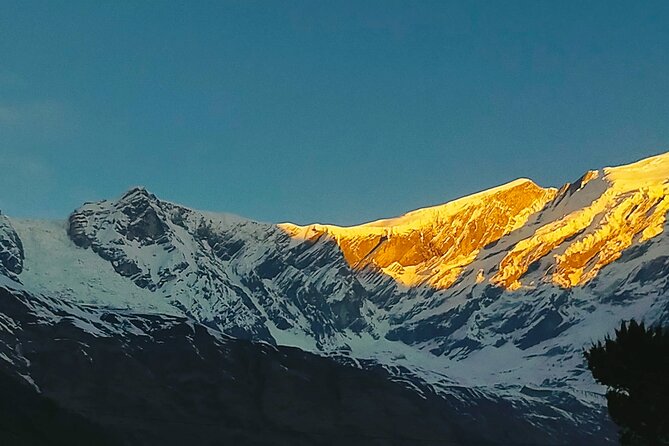
- Thorong La reaches 5,416 meters, making the pass day the physical high point of the trip.
- The route includes Manang, Muktinath, Marpha, Tatopani, Poon Hill, and Ghandruk, not just a quick out-and-back mountain walk.
- Three meals a day are included during the trek, along with overnight tea-house accommodation.
- The group is limited to 10 people, a useful size for mountain logistics and personal guide support.
- The price is $2,100 per person, including trek lodging, Kathmandu bed-and-breakfast accommodation, staff wages, and office staff costs.
- A rest day in Manang is built into the schedule, an important feature before the high-altitude climb.
Why this Annapurna route earns its reputation
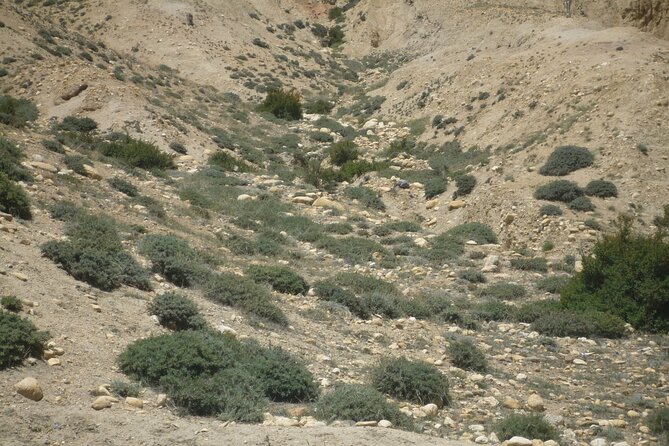
The Annapurna Circuit works because it keeps changing. The first days follow lower valleys and river country. Higher up, the air becomes thinner, the villages more spare, and the mountains more immediate. After Thorong La, the route shifts again into the dry valleys around Muktinath and Mustang, then drops toward orchards, hot springs, and the forested hills near Poon Hill.
That variety is the real value of the journey. You are not spending three weeks looking at one type of mountain view. You see different elevations, communities, foods, building styles, and weather patterns as the trail rises and falls.
The cultural side is just as important. The route passes through areas associated with Gurung and Thakali communities, and the overnight tea houses give you a direct connection to local hospitality. You should expect simple accommodation rather than hotel-style comfort, but the food is a meaningful part of the experience. The available information specifically highlights delicious tea-house meals, a useful reminder that basic lodging does not mean uninteresting eating.
More Annapurna Treks in Kathmandu
- Annapurna Circuit Trek with Tilicho Lake
★ 5.0 · 368 reviews - Annapurna base camp trek 5 Days
★ 5.0 · 252 reviews - 14-Day Private Annapurna Base Camp Trek
★ 5.0 · 180 reviews
Kathmandu begins the trip gently
Day one is for arrival in Kathmandu, transfer to the hotel, and settling in at about 1,334 meters. The schedule gives you a practical start rather than rushing you straight into the mountains.
Day two includes sightseeing in the Kathmandu Valley and preparation for the trek. This is useful because you can handle final arrangements before leaving the city. It also gives you a first look at Nepal beyond the trail, though lunch and dinner in Kathmandu are not included in the price.
The meeting point is on Bagawan Bahal Marg in Kathmandu, and the stated start time is 6:15 am. That early departure matters on day three, when you face a long drive toward Ngadi. If you prefer a trip with little road time, this section may test your patience. If you see the drive as part of the transition from city to mountain country, it becomes a gradual introduction to rural Nepal.
The lower valley days from Ngadi to Chame
Day three is listed as an eight to nine-hour drive covering about 200 kilometers to Ngadi at 890 meters. Road conditions and mountain traffic can make long drives feel longer, so keep your expectations realistic. This is transportation, not sightseeing at a relaxed pace.
From Ngadi, the walking begins. The trek to Jagat takes four to five hours and covers about seven kilometers, reaching 1,300 meters. The next day continues to Dharapani at 1,860 meters, another five to six hours and about eight kilometers.
These first walking days are important for finding your rhythm. You are gaining height steadily, but not yet facing the hardest altitude. I would treat them as training days for the longer sections ahead. Pay attention to your feet, hydration, and pack setup now, while small problems are still easy to solve.
Dharapani to Chame takes another five to six hours and about eight kilometers, ending at 2,670 meters. Chame is a useful point in the route because the mountains begin to feel closer and the schedule moves into higher country. You are no longer simply walking through a warm valley. The route is now preparing you for the thin air around Manang and beyond.
Lower Pisang and Manang set up the high country
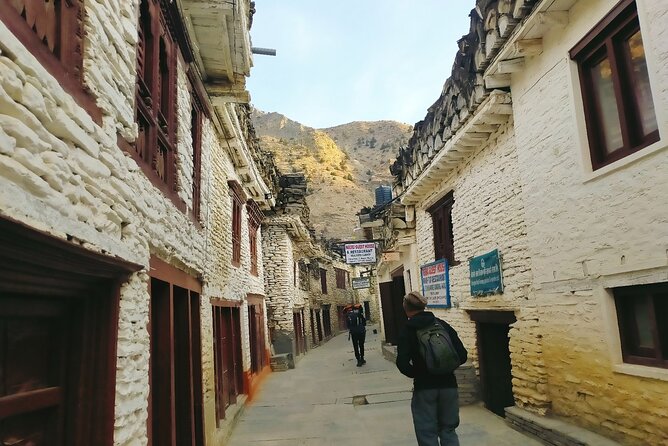
The trek to Lower Pisang is about seven kilometers and takes four to five hours, reaching 3,200 meters. The next day continues to Manang at 3,500 meters, with five to six hours of walking over roughly eight kilometers.
Manang is one of the key stops on the whole trip. The schedule includes a full rest day there, which I consider one of the strongest features of the plan. At this altitude, a rest day is not wasted time. It gives you a chance to slow down before the route climbs above 4,000 meters.
You can use the day to rest, organize your clothing, and pay attention to how your body feels. The supplied information does not promise a specific acclimatization activity, so do not assume an included excursion. The important point is that you are not asked to climb higher every day without a break.
The route’s cultural appeal also becomes clearer around this section. You are moving through communities with distinct local traditions, and the tea houses provide the setting for meals and overnight stays. I like this format because it keeps the trek connected to inhabited places rather than reducing the experience to camps and logistics.
Same trailhead, a different route:
- Everest Base Camp Trek – 14 Days
★ 5.0 · 1,499 reviews - Everest Base Camp Trek
★ 5.0 · 842 reviews - Everest Base Camp Helicopter Tour landing at Everest View Hotel
★ 5.0 · 668 reviews - Everest Base Camp Trekking
★ 5.0 · 485 reviews
Yak Kharka and Thorong Phedi bring the real test
After Manang, the route climbs to Yak Kharka at 4,050 meters. This is a four to five-hour walk of about seven kilometers. The distance may look modest, but altitude changes the effort. A short day at 4,000 meters can feel tougher than a longer day lower down.
The following day reaches Thorong Phedi at 4,525 meters after another four to five hours and about seven kilometers. This is the last major staging point before Thorong La. You are now in the section where fitness, acclimatization, weather, and pacing all matter.
The company requires a strong physical fitness level, and that warning deserves attention. You should be comfortable with repeated five to six-hour walking days, steep climbs, and a long pass day. The schedule is demanding even though the daily distances are not extreme on paper.
Thorong La is the defining day
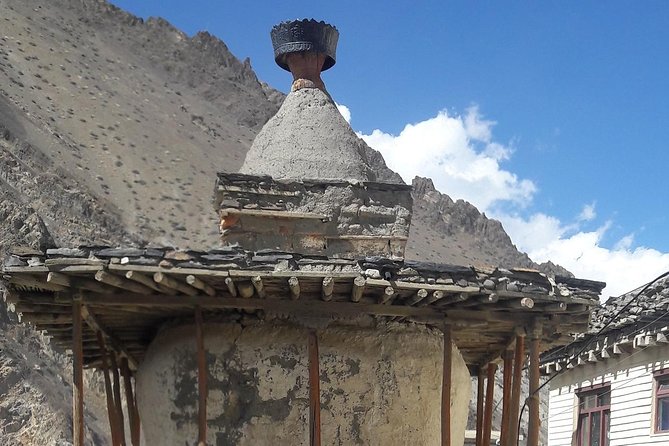
Day twelve crosses Thorong La at 5,416 meters before descending to Muktinath at 3,800 meters. The day is expected to take seven to eight hours and cover about nine kilometers.
This is the trek’s biggest physical challenge and its most memorable achievement. The pass is high enough that you should not treat the crossing as a photo stop with a little walking attached. The climb begins from Thorong Phedi, and the descent to Muktinath adds another demanding section after you reach the top.
A strong guide matters here. The team has used guides including Govinda, also written as Gobinda in the provided names, and Dhruba. Purna and Keshab have served as porters, while Badri has handled planning and support. That human structure is valuable on a high pass day, where clear decisions and steady encouragement can make the difference between a tough success and an unsafe push.
Weather is also a factor. The cancellation terms state that poor weather can lead to a different date or a full refund if the experience itself is canceled. That protection does not make the pass predictable, so keep some flexibility in your plans.
Muktinath to Marpha changes the mood
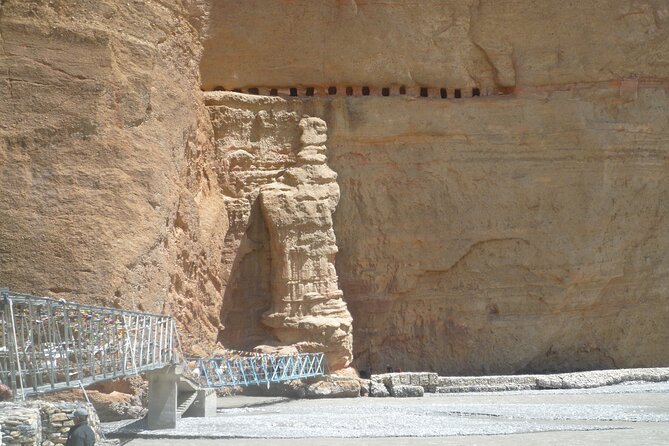
After the pass, the route drops to Muktinath at 3,800 meters. The following day takes you to Kagbeni at 2,810 meters in four to five hours over about six kilometers.
This descent is welcome after the high pass, but it is not just an easy cooldown. Downhill walking can be hard on knees, especially after a long ascent. Muktinath and Kagbeni also mark a shift in the character of the route, with drier mountain country and a different visual feel from the greener lower valleys.
From Kagbeni, you continue to Marpha at 2,670 meters. The walk takes five to six hours and covers about eight kilometers. Marpha is associated with Thakali culture and is one of the places where the route’s food and village life become part of the reward. Your overnight tea-house stay here is not a luxury break, but it offers a welcome change after the high pass.
The next stage reaches Ghasa at 2,010 meters, again five to six hours and about eight kilometers. The steady drop in altitude should help your breathing, although the walking remains substantial. This section gives you a chance to appreciate the route’s gradual transformation instead of racing from one famous stop to the next.
Tatopani, Poon Hill, and Ghandruk finish strongly
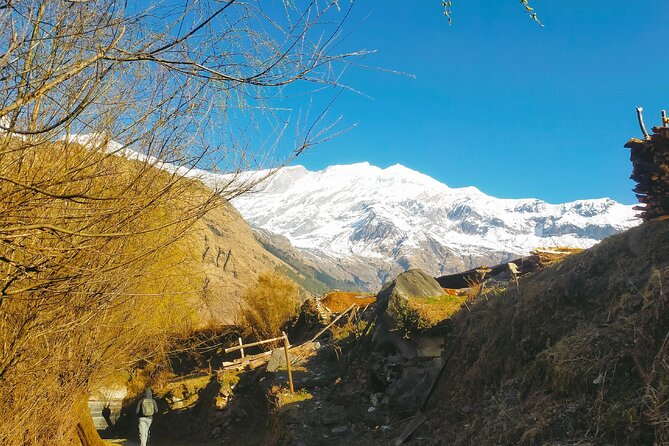
Day sixteen takes you to Tatopani at 1,190 meters after five to six hours and about seven kilometers. The lower altitude gives the trip a warmer, easier feel after the cold high country. Tatopani is also a useful psychological reset before the route climbs again toward Ghorepani.
The trek to Ghorepani reaches 2,860 meters and takes five to six hours over about eight kilometers. That climb can feel surprisingly demanding because your body has already worked hard for more than two weeks. Do not assume the final third of the trip is automatically easy.
The next morning includes a one-hour hike to Poon Hill at 3,210 meters, followed by a six to seven-hour trek to Ghandruk at 2,600 meters. The full day covers about 15 kilometers, making it one of the longest walking days in the schedule.
Poon Hill is a fitting final viewpoint, especially for anyone who wants a strong mountain panorama without adding another major high pass. Ghandruk then provides a cultural finish before the route heads down toward Nayapul. The combination of a sunrise-style viewpoint, a long descent, and a village stay gives the closing days their own character.
The return to Pokhara and Kathmandu
The final walking section reaches Nayapul at 950 meters after four to five hours and about seven kilometers. From there, the group drives about 1.5 hours to Pokhara at 820 meters.
Pokhara is included as a stop, but the schedule does not describe a full sightseeing program there. Think of it as a transition point after the trek rather than a separate city tour. Day twenty offers either a six to seven-hour drive or a 30-minute flight back to Kathmandu. The choice will affect both your time and your budget, since the listed price does not include every extra service.
Day twenty-one is reserved for your flight home. The length of the experience makes it important to plan your international flight carefully, with enough time for the final transfer and any changes caused by weather.
What the $2,100 price actually covers
At $2,100 per person, this is not a bare trail permit and guide arrangement. The package includes three meals during the trek, all overnight accommodation while walking, and bed-and-breakfast accommodation in Kathmandu.
It also covers the salaries and wages of office staff, travel and rescue fees for office staff, and meals and accommodation for that staff. Those less visible costs are part of organized trekking, even if they do not create a direct sightseeing moment for you.
The value depends on how much support you want. If you prefer to arrange every tea house, meal, transfer, and staff detail yourself, the price may seem high. If you want a structured 21-day route with local staff, included trek lodging, meals, Kathmandu accommodation, and a small group capped at 10, the cost is easier to justify.
You still need to budget for Kathmandu lunches and dinners, beverages, personal equipment, extra services, insurance, international airfare, Nepal visa fees, airport departure tax, and possible transport choices. Rescue and trip cancellation insurance are specifically excluded, and I would regard proper insurance as essential for a high-altitude trek.
Who will get the most from this trek
This trip suits you if you want the full Annapurna Circuit rather than a short mountain sampler. You should enjoy long walking days, basic tea-house accommodation, changing weather, and a route that asks for patience as well as fitness.
It can also suit older walkers who are well prepared. One couple over 55 completed an Annapurna Circuit trip with additional sightseeing, and the wider team received praise for professional planning and support. That does not mean age is irrelevant. Your personal fitness and medical advice matter far more than a number.
The small group limit is helpful. A maximum of 10 people gives the guide a better chance to keep track of the group and respond to individual needs than a large departure would. Names such as Govinda, Dhruba, Purna, Keshab, and Badri are worth noting if you want to ask about guide assignments before booking.
I would not choose this trip if you want guaranteed comfort, short walks, or a flexible cancellation policy. The experience is non-refundable and cannot be changed for personal reasons. It is also weather-dependent, so you need to accept that mountain plans can move beyond your control.
Should you book the Annapurna Circuit Trek?
Book it if you want a demanding, well-supported journey with major altitude gains, a famous high pass, local tea houses, and a route that keeps changing from Kathmandu to Pokhara. The rest day in Manang, the group size of 10, and the inclusion of meals and trek accommodation make the structure sensible.
Before paying, confirm which guide will lead your departure, what personal equipment you must bring, and whether you plan to drive or fly between Pokhara and Kathmandu. If you are physically ready and comfortable with simple lodging, this has the ingredients of a life-changing mountain trip. If you are unsure about high altitude or long walking days, choose a shorter Nepal route instead.
FAQ
How long does the Annapurna Circuit trek take?
The planned experience lasts approximately 21 days, including arrival in Kathmandu, sightseeing and preparation, the trek, the return to Kathmandu, and departure.
Where does the experience start?
It starts at Bagawan Bahal Marg 29, Kathmandu 44600, Nepal. The stated start time is 6:15 am.
Where does the experience end?
The experience ends back at the stated meeting point in Kathmandu before your flight home.
What is the highest point on the route?
The highest point is Thorong La at 5,416 meters.
Is a rest day included?
Yes. Day nine is a rest day in Manang at approximately 3,500 meters.
Are meals included?
Three meals a day are included during the trek. Lunch and dinner in Kathmandu, beverages, and other unlisted expenses are not included.
Where do I sleep during the trek?
Overnight accommodation is included throughout the trek. The route uses tea houses, with Kathmandu accommodation provided on a bed-and-breakfast basis.
How large is the group?
The activity accepts a maximum of 10 people.
What happens if poor weather cancels the experience?
If the experience is canceled because of poor weather, you are offered a different date or a full refund. Personal cancellations or requested amendments are non-refundable.
Just added around Kathmandu
- Everest Base Camp Trek★ 5.0 · 3 reviews
- Everest Base Camp Trek★ 5.0 · 7 reviews
- 15 Days Private Everest Base Camp Trek★ 5.0 · 30 reviews
- Everest Base Camp Trek★ 5.0 · 57 reviews
- 14 Days of Adventure Trekking to Everest Base Camp★ 5.0 · 2 reviews
- 14-Day Everest Base Camp Trek★ 5.0 · 20 reviews
- From Kathmandu: Private 14-Day Everest Base Camp Trek★ 5.0 · 20 reviews
- 14 Days Everest Base Camp Trek★ 5.0 · 4 reviews
Annapurna Base Camp Treks, compared.




Trekking in Annapurna/Langtang/Everest/Upper Mustang regions
Read our review →


Kathmandu to Annapurna Base Camp (ABC) 5-Day Trek
Read our review →Browse the lists this trek appears in