
Review · KATHMANDU
Annapurna Sanctuary Trek ( 11 Days)
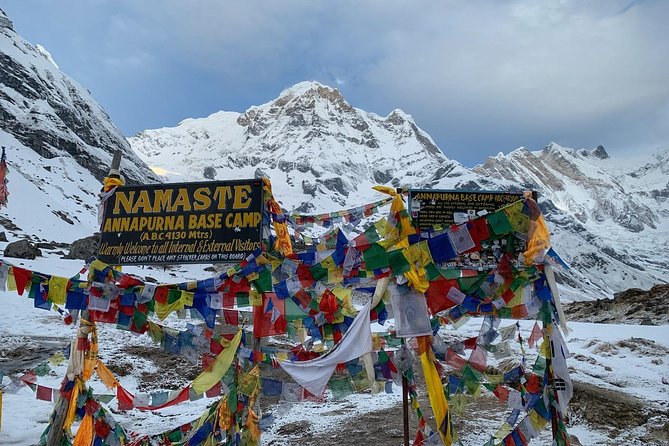
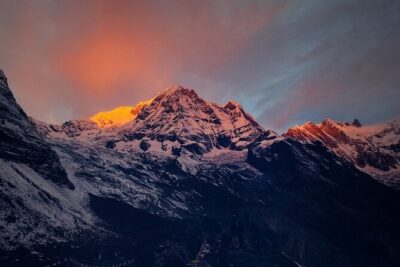
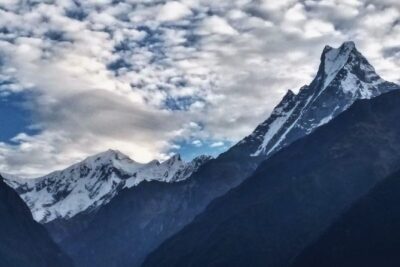
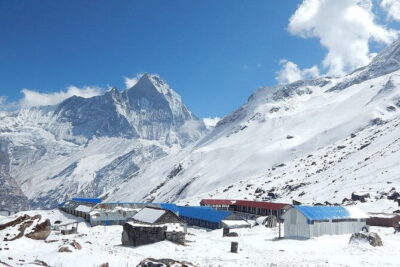
The great prize here is Annapurna Base Camp at 4,130 meters, where Annapurna South, Machhapuchhre, Dhaulagiri, Hiunchuli, and Nilgiri rise around you. I like that the trek combines serious Himalayan scenery with comfortable teahouse lodging and a warm-spring stop at Jhinu Danda. I also like the built-in time for Kathmandu and Pokhara, so you get culture and city life, not just trail miles.
The main caution is the pace. You climb and descend steep stone steps, reach high altitude quickly, and spend long days on foot. This is a good choice if you have moderate fitness and can handle seven trekking days, but it is not a gentle sightseeing holiday. The schedule also lists the same route details for Days 5 and 6, so confirm the exact daily plan before departure.
Key points at a glance
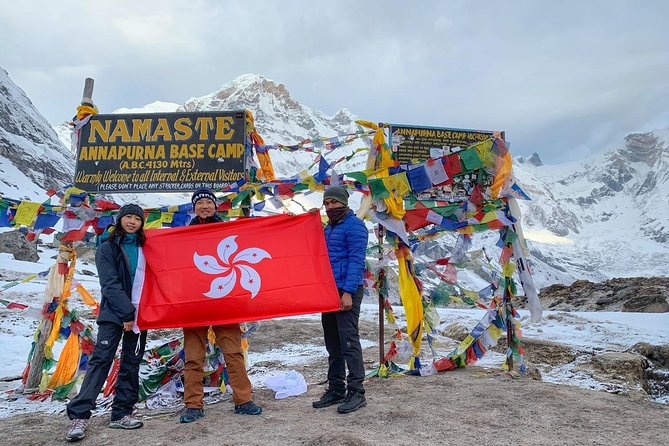
- Annapurna Base Camp at 4,130 meters: Reach the heart of the Annapurna Massifs after a two-hour hike from Machhapuchhre Base Camp.
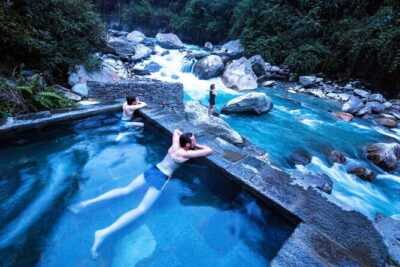
- Jhinu Danda hot springs: Finish the first trekking day with the option of soaking in natural hot springs.
- Gurung villages and mountain culture: Pass through Chhomrong and other settlements shaped by old local traditions.
- Full trekking support: An English-speaking guide, one porter for every two clients, permits, meals, and teahouse lodging are included.
- Kathmandu and Pokhara included: See major temple sites in Kathmandu and have free time beside Phewa Lake.
- Small private arrangement: A minimum of two people is required, and only your own group takes part.
Why this 11-day Annapurna trek works well
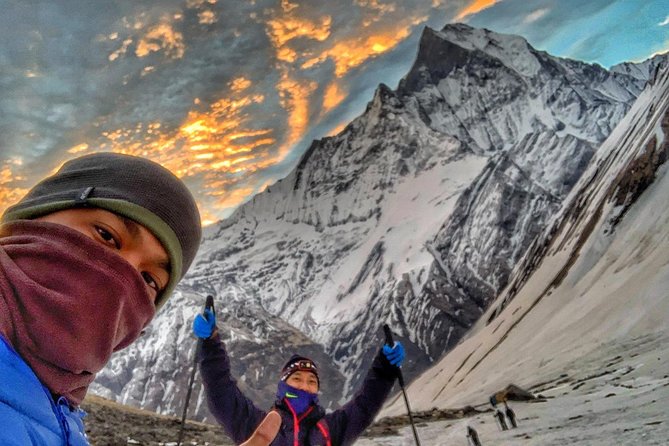
This route gives you a lot in a short time. In 11 days, you see Kathmandu’s major cultural sites, fly to Pokhara, trek through forests and villages, sleep near Machhapuchhre Base Camp, reach Annapurna Base Camp, then return to Pokhara and Kathmandu.
I like the balance. You are not spending every hour on a trail, yet the trek still reaches a famous Himalayan destination. The route also uses teahouses and lodges instead of camping, which keeps your pack lighter and makes the trip less demanding at night.
The price is $1,300. That is not a bare trail package. It includes two domestic flights, hotels in Kathmandu and Pokhara, seven nights of full-board teahouse or lodge accommodation, a guide, porter service, permits, sightseeing entries in Kathmandu, private transport, a medical kit, and a farewell dinner. International airfare, Nepalese visa fees, insurance, personal costs, tips, and meals in Kathmandu and Pokhara are extra.
For a private trek with this much included, the price offers useful value. The biggest practical saving is the porter arrangement: one porter carries gear for two clients. You should still pack sensibly and keep your day bag light.
More Annapurna Treks in Kathmandu
- Annapurna Circuit Trek with Tilicho Lake
★ 5.0 · 368 reviews - Annapurna base camp trek 5 Days
★ 5.0 · 252 reviews - 14-Day Private Annapurna Base Camp Trek
★ 5.0 · 180 reviews
Day 1: A soft landing in Kathmandu
Your airport arrival is met by a representative from K.J. Adventure Nepal Private Limited, who transfers you to the hotel and helps with check-in. You also receive a briefing about the trek and the days ahead.
This first night is more than a formal arrival. Kathmandu can be noisy, crowded, and tiring after an international flight. Having someone meet you and explain the plan helps you get your bearings without having to sort out every detail alone.
Accommodation is at Kantipur Village or a similar hotel, with breakfast included. The listed meeting point is Nepali Ghar Hotel on Amrit Marg in Kathmandu, though you should confirm the exact pickup details before you travel.
Day 2: Kathmandu’s temple circuit
The second day is devoted to Kathmandu Valley. You visit Kathmandu Durbar Square, Swayambunath, Pashupatinath, and Bouddhanath, with an English-speaking sightseeing guide.
This is a useful introduction to Nepal before you head into the mountains. Kathmandu Durbar Square gives you historic palace and temple architecture. Swayambunath, often called the Monkey Temple, is set on a hill. Pashupatinath is one of the country’s most important Hindu religious sites, while Bouddhanath is known for its large Buddhist stupa.
The entrance fees for the sightseeing sites are included. Afterward, the trek team goes over basic trekking matters and helps arrange your backpack for the morning. That small preparation session matters because poor packing can make every uphill section harder.
Day 3: Pokhara, Matkyu, and Jhinu Danda
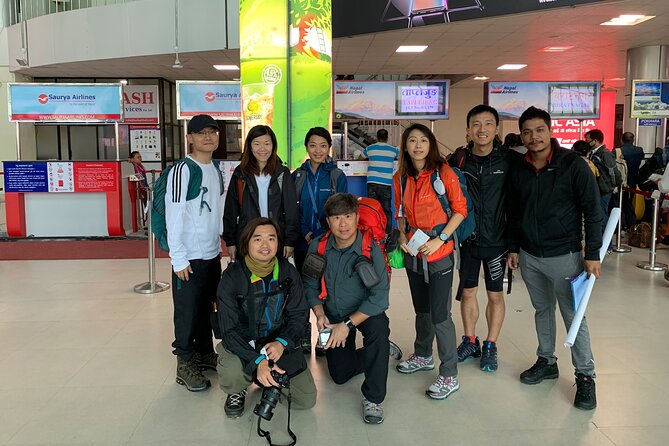
A short flight takes you from Kathmandu to Pokhara, then a private vehicle or jeep carries you for about two hours to Matkyu. This is where your walking begins.
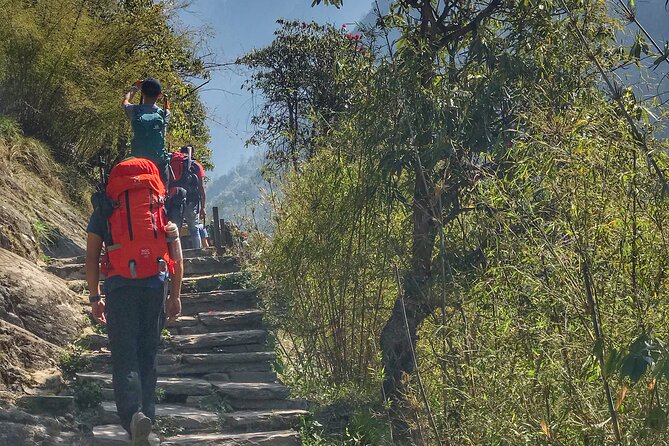
The first trail section follows the Modi River and passes through oak and rhododendron forest. The climb is relatively short, but stone steps make it more demanding than the distance may suggest. At Jhinu Danda, you spend the night in a lodge and can visit the natural hot springs if you want to ease tired legs.
Jhinu Danda is a smart first stop. You get your first real taste of trekking, but you also have the option of a warm soak. The forest and river setting provide a fine change from Kathmandu’s streets.
Same trailhead, a different route:
- Everest Base Camp Trek – 14 Days
★ 5.0 · 1,499 reviews - Everest Base Camp Trek
★ 5.0 · 842 reviews - Everest Base Camp Helicopter Tour landing at Everest View Hotel
★ 5.0 · 668 reviews - Everest Base Camp Trekking
★ 5.0 · 485 reviews
Day 4: Chhomrong and the climb to Upper Sinuwa
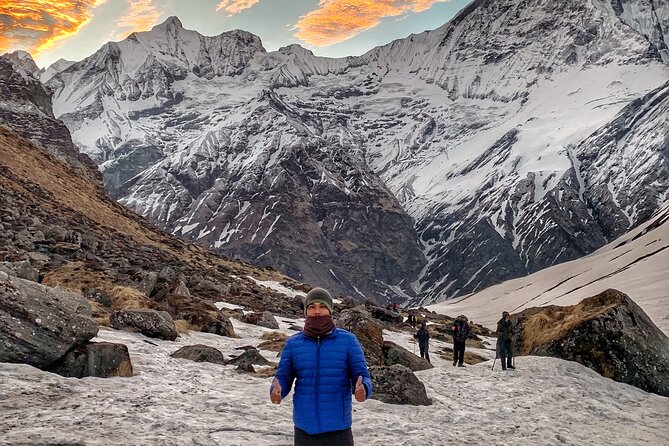
The morning starts with an uphill section toward Chhomrong, a Gurung village. This is one of the best places to notice the human side of the route. Gurung communities in the area maintain distinctive customs and ways of life, with cultural links reaching back toward Tibetan traditions.
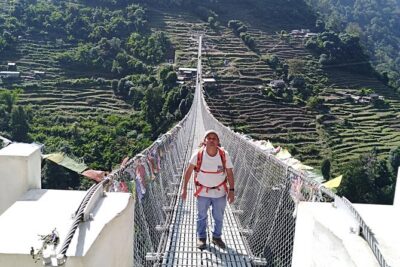
From Chhomrong, the trail drops down steep stone stairs to a suspension bridge over Chhomrong Khola. The river below is fast and clear, and the bridge crossing gives you a memorable change of pace. After the bridge, you climb again to Upper Sinuwa at 2,340 meters.
This up-and-down pattern is typical of the trek. Do not judge a day by its map distance alone. A route can look short but still demand plenty from your knees and lungs because of repeated stairs.
Day 5: Forests, Hinku Cave, Deurali, and Machhapuchhre Base Camp
The path climbs through thick forest, then opens enough to reveal the glacial river below. You pass through a drier forest toward Hinku Cave, a landmark linked with early Annapurna I expeditions.
After Hinku Cave, the trail continues toward Deurali, where you stop for lunch. The route then becomes more strenuous as it rises toward Machhapuchhre Base Camp, often shortened to MBC. At the end of the day, you are rewarded with views of Machhapuchhre and other peaks.
The stay at MBC is a major turning point. Trees begin to thin, temperatures drop, and the mountains feel much closer. Accommodation is in a hotel or lodge, but conditions at this height are simpler than in Pokhara or Kathmandu. Expect the mountain setting to matter more than comfort.
The supplied schedule repeats this same section on Day 6, so ask K.J. Adventure to clarify whether Day 5 is intended as the hike to MBC and Day 6 as a short acclimatization or early morning walk. The published plan clearly places an overnight at MBC, then takes you to Annapurna Base Camp on Day 7.
Day 6: A high-altitude morning at MBC
The second night near Machhapuchhre Base Camp gives you time to absorb the setting before the final walk to Annapurna Base Camp. The route is high, exposed, and physically serious compared with the lower forest sections.
You will want warm clothing, water, and a steady pace. The trek does not describe a separate acclimatization day, so you should pay attention to how you feel and tell your guide if you develop symptoms of altitude sickness. The itinerary provides professional support, but no schedule can replace honest communication about your health.
This is also the point where the route’s appeal becomes very clear. The forested trail has given way to a broad mountain world, with Machhapuchhre and the surrounding peaks dominating the view.
Day 7: Annapurna Base Camp and the return to Dhovan
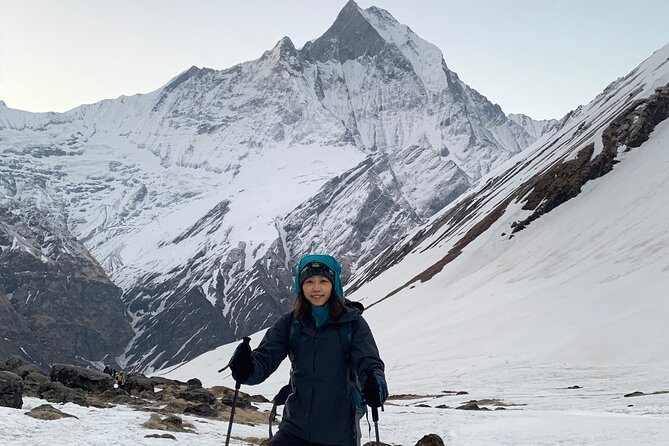
From MBC, it takes about two hours to hike to Annapurna Base Camp. The trail is described as wide and clear, but the altitude makes this short distance more demanding than it sounds.
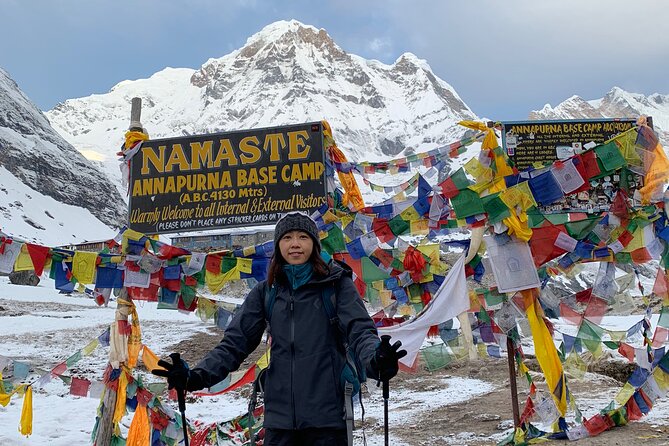
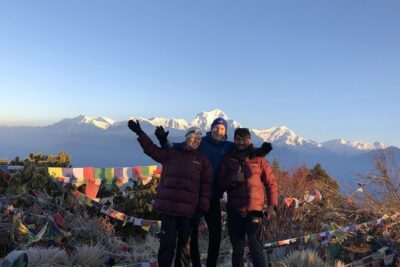
Annapurna Base Camp sits at 4,130 meters. From here, you can see Annapurna South, Annapurna, Dhaulagiri, Machhapuchhre, Hiunchuli, Nilgiri, and other high Himalayan peaks. The feeling is not just about a viewpoint. You are standing in a mountain amphitheater at the foot of the Annapurna Massifs.
After time at base camp, you retrace the route through MBC, Deurali, and Himalaya before spending the night at Dhovan. This is a long day because the summit section and descent are combined. Take photographs early, but do not linger so long at base camp that you rush the return.
Day 8: Back through Sinuwa to Chhomrong
After breakfast, the trail is mostly downhill toward Upper Sinuwa. You pass through bamboo forest, cross back over the Chhomrong Khola, and then climb for about an hour to Chhomrong.
Downhill walking may sound easy, but hundreds of stone steps can be tough on knees and ankles. Trekking poles would be useful, though the tour information does not state that they are supplied, so confirm this before you leave.
The overnight in Chhomrong gives you another chance to see village life up close. The route is not only about mountains. Staying in local settlements helps you understand how communities support the trail economy and maintain daily routines in a difficult mountain setting.
Day 9: Jhinu Danda, Matkyu, and Pokhara
You retrace the trail toward Matkyu, passing through forest and descending many stone stairs along the Modi River. From Matkyu, a jeep returns you to Pokhara.
This final trekking day can feel surprisingly demanding because you have already walked to high altitude and back. The reward is a comfortable city night at Hotel Da Yatra Courtyard or a similar property, with breakfast included.
Pokhara is known as Nepal’s city of lakes. You can spend your free time boating on Phewa Lake, cycling around the city, or enjoying its evening entertainment and live concerts. Lakes Begnas and Rupa are also associated with Pokhara, though this schedule does not specify visits to them.
Day 10: Return to Kathmandu
After breakfast, you fly back to Kathmandu. Once you reach the hotel, you have time to rest and freshen up before the farewell dinner arranged by the local representative.
The domestic flights are included and operated by Buddha Air. Weather can affect mountain flights, so keep your schedule flexible and avoid placing an important international connection too close to this domestic flight.
Day 11: Airport transfer and departure
On the final day, the representative takes you from the hotel to the airport according to your flight time. The trip ends in Kathmandu.
The program requires at least two people and is described as a private activity for your own group. Group discounts are available, though the exact discount is not provided. Confirmation is received at booking, and pickup is offered.
Guides, porters, and day-to-day support
The trek includes an experienced English-speaking trekking guide and porter service at a ratio of one porter for two clients. An English-speaking guide also handles the Kathmandu sightseeing day.
One guide named in the available trip feedback is Prajwol, who was praised for explaining what was needed during the trek. You should not assume he will lead every departure, but you can ask K.J. Adventure if he is available for your dates.
The support matters because the route includes bridges, steep stairs, forest paths, high-altitude sections, and changing weather. The operator also supplies a duffel, trekking map, medical kit, permits, and a trip completion certificate.
Food, lodging, and what the price really covers
Seven trekking lunches, seven trekking dinners, and ten breakfasts are included. Meals in Kathmandu and Pokhara are not included beyond breakfast, so budget separately for those city days.
Teahouses and lodges are a major advantage on the Annapurna route. You avoid carrying camping equipment and usually sleep in established mountain accommodation. Still, you should keep expectations practical: the higher you go, the simpler the facilities may become.
The included porter service also makes the price more useful. You can carry a daypack while your porter handles the main load, but pack only what you need. Tips for guides and porters are not included and should be treated as a separate cost.
Who should book this trek?
I would recommend it to anyone who wants a classic Nepal trek with strong mountain views, cultural stops, and organized support. It suits people who prefer lodges over tents and who like having transport, permits, meals, and guides arranged in advance.
It is less suitable if you dislike steep stairs, cold nights, basic mountain lodging, or a fixed schedule. You need moderate physical fitness, and the route reaches 4,130 meters without a separate full acclimatization day shown in the plan.
Travel insurance and rescue insurance are not included. You should arrange both before departure, especially for a high-altitude trek. The operator requires good weather for the experience, and a cancellation caused by poor weather offers either another date or a full refund.
Should you book the Annapurna Sanctuary Trek?
Book it if you want a well-supported route to Annapurna Base Camp and value the combination of Kathmandu temples, Pokhara lakes, Gurung villages, forest trails, and high Himalayan views. The included flights, porter, guide, permits, meals, and teahouse stays make $1,300 a reasonable package price for a private trip.
Before paying, confirm the exact Day 5 and Day 6 schedule, ask who will guide your departure, and check what extra costs you should expect for tips, city meals, insurance, and personal spending. If you are fit enough for steep daily climbs and accept simple lodges at altitude, this is a strong way to reach one of Nepal’s most impressive mountain settings without organizing every detail yourself.
FAQ
How long is the Annapurna Sanctuary Trek?
The experience lasts approximately 11 days, including arrival and departure in Kathmandu, sightseeing in Kathmandu, domestic flights, seven trekking days, and time in Pokhara.
What is the highest point on the trek?
Annapurna Base Camp is the highest listed point, at an elevation of 4,130 meters.
What is included in the $1,300 price?
The price includes two-way Buddha Air flights between Kathmandu and Pokhara, Kathmandu and Pokhara hotels, teahouse or lodge accommodation during the trek, meals while trekking, an English-speaking trekking guide, porter service, permits, private transport, Kathmandu sightseeing fees, a medical kit, a duffel, a map, a completion certificate, taxes, and a farewell dinner.
Are meals included?
Ten breakfasts, seven lunches, and seven dinners are included. Lunch and dinner in Kathmandu and Pokhara are not included.
Is this a private tour?
Yes. The activity is private, so only your group participates. A minimum of two people is required for booking.
Is a guide provided?
Yes. An experienced English-speaking trekking guide is included, along with an English-speaking guide for Kathmandu sightseeing.
What is not included?
International airfare, the Nepalese visa fee, travel and rescue insurance, extra hotel nights, personal expenses, tips, and meals in Kathmandu and Pokhara are not included.
Can I cancel for a full refund?
You can receive a full refund if you cancel at least 24 hours before the experience start time. Cancellations or changes made within 24 hours are not refunded or accepted. If poor weather cancels the experience, you are offered another date or a full refund.
Just added around Kathmandu
- Everest Base Camp Trek★ 5.0 · 3 reviews
- Everest Base Camp Trek★ 5.0 · 7 reviews
- 15 Days Private Everest Base Camp Trek★ 5.0 · 30 reviews
- Everest Base Camp Trek★ 5.0 · 57 reviews
- 14 Days of Adventure Trekking to Everest Base Camp★ 5.0 · 2 reviews
- 14-Day Everest Base Camp Trek★ 5.0 · 20 reviews
- From Kathmandu: Private 14-Day Everest Base Camp Trek★ 5.0 · 20 reviews
- 14 Days Everest Base Camp Trek★ 5.0 · 4 reviews
Annapurna Base Camp Treks, compared.
Trekking in Annapurna/Langtang/Everest/Upper Mustang regions
Read our review →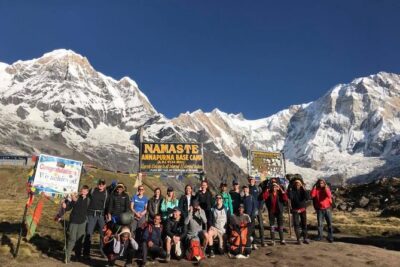
Kathmandu to Annapurna Base Camp (ABC) 5-Day Trek
Read our review →Browse the lists this trek appears in