
Review · KATHMANDU
Annapurna Luxury Circuit Trek
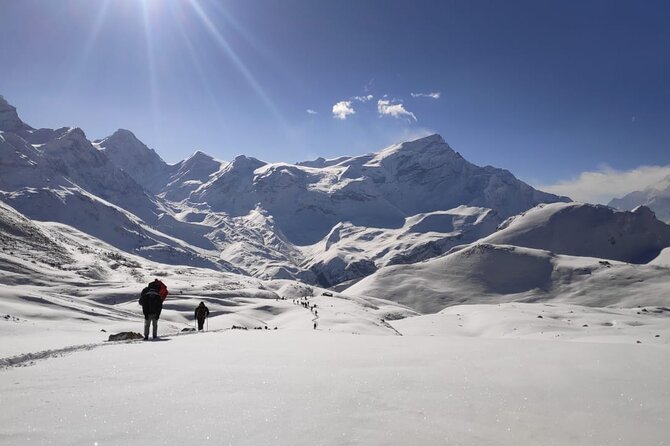
The big draw here is the Annapurna Circuit’s dramatic change of scenery. You begin among green hills and river valleys, climb through pine and juniper country, cross the high Thorong La Pass, then descend toward Mustang’s dry valleys and apple-growing villages. It is one of Nepal’s best routes for seeing several distinct regions in one trip.
I like the built-in acclimatization day in Manang and the small maximum group of 10. I also like that porters carry luggage while you focus on the walking. The main caution is that the itinerary contains several mismatched details, including references to Namche, Lobuche, Everest Base Camp, and a Kathmandu to Lukla flight. Get the final route and inclusions in writing before paying.
Key points to know before booking
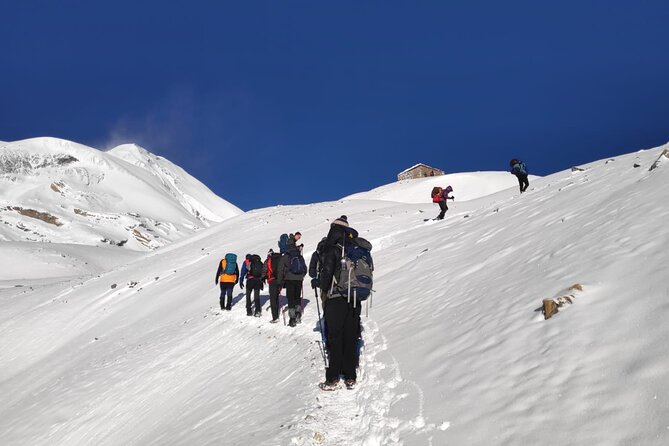
- Thorong La is the trip’s high point: You cross the 5,416-meter pass on day nine, making acclimatization and steady pacing essential.
- Luxury means comfort within a trekking setting: You receive four-star hotels in Kathmandu and Pokhara, but much of the route uses lodges and teahouses.
- Manang gives you a useful rest day: The schedule includes time for short hikes, mountain views, and an introduction to altitude sickness at the Himalayan Rescue Association.
- A porter carries shared luggage: One porter serves two guests, so pack lightly and confirm the exact baggage allowance.
- Transportation is part of the experience: The plan includes long road journeys, a Jomsom to Pokhara flight, and a Pokhara to Kathmandu flight.
- The published details need checking: Some day descriptions belong to other Himalayan routes, so ask for a corrected day-by-day plan.
A high-altitude circuit with a soft landing
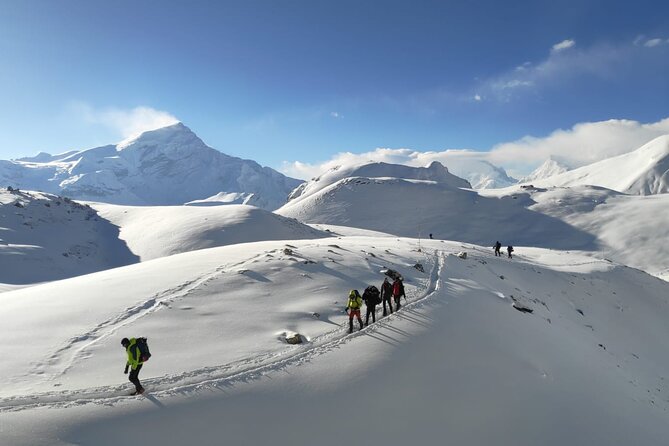
At $2,000 per person, this is not a full-service luxury holiday in the usual hotel sense. It is a guided Himalayan trek with a few useful comforts: airport pickup, organized transfers, porters, meals, permits, two nights in a four-star Kathmandu hotel, and two nights in a four-star Pokhara hotel.
That distinction matters. In Kathmandu and Pokhara, you have a proper hotel base. In Chame, Upper Pisang, Manang, Thorong High Camp, Muktinath, and other mountain stops, you should expect trekking lodges or teahouses. The word luxury here points to organization, private support, better planning, and less luggage on your back rather than spa facilities at 4,000 meters.
The route is physically demanding. You reach Manang at 3,540 meters, Ladar at about 4,230 meters, and Thorong La at 5,416 meters. You need a moderate fitness level, comfort with long walking days, and patience for rough roads and changing weather.
More Annapurna Treks in Kathmandu
- Annapurna Circuit Trek with Tilicho Lake
★ 5.0 · 368 reviews - Annapurna base camp trek 5 Days
★ 5.0 · 252 reviews - 14-Day Private Annapurna Base Camp Trek
★ 5.0 · 180 reviews
Kathmandu pickup and the long road to Besisahar
Your trip begins with airport pickup in Kathmandu. A representative waits outside the terminal with a Nepal Trek Adventure and Expedition sign, then directs you to the vehicle for the hotel transfer. That simple arrival service is useful after a long international flight, especially if this is your first visit to Nepal.
The second day involves a six to seven-hour drive to Besisahar. This is not a quick transfer. Roads wind through green hills, terraced fields, river valleys, and traditional towns, giving you an early look at rural Nepal before the serious walking begins.
Besisahar is mainly a staging point, but it helps break up the journey. You can rest, eat local food, and prepare for the next road section. If you dislike long vehicle rides, this opening may feel slow. The payoff is that the route reaches the Annapurna region without requiring you to walk every lower section.
From Besisahar, you drive another six to seven hours to Chame. The road passes through woods, fields, small settlements, rivers, and suspended bridges. Chame sits at about 2,670 meters and has mountain views, traditional houses, and a more distinctly high-country feel.
Chame to Upper Pisang, where the walking begins
The itinerary describes the move from Chame to Upper Pisang as a walking day through forest, streams, and rocky ground. Upper Pisang gives you a first strong look at the Annapurna range and the valley below.
This is one of the route’s rewarding changes. The lower hills feel green and settled, while Upper Pisang begins to look more Tibetan in its architecture and culture. Local monasteries and village lanes offer more interest than simply reaching the next overnight stop.
You stay in a teahouse, so keep expectations realistic. A cozy lodge can provide a warm bed, food, and a place to rest, but it is not the same as a four-star hotel. Carry a sleeping bag suitable for high-altitude conditions unless the operator confirms bedding standards.
One published timing for this day lists 16 hours, which is almost certainly a data error or an unclear combination of driving and walking time. Ask for the expected walking hours and elevation gain for every day. That information is more useful than a broad promise of a luxury experience.
Manang and the smart pause for acclimatization
The route from Upper Pisang to Manang follows the Marsyangdi Valley. As you climb, forests thin out, the air becomes colder, and the ground turns drier. Manang sits at 3,540 meters and is surrounded by major peaks, including Annapurna III, Gangapurna, and Tilicho Peak.
Manang is more than an overnight stop. It is the place where the schedule gives your body time to adjust. You can explore traditional Tibetan-style buildings, take a short walk to a higher point, and return to sleep at the lower elevation of the village.
The planned acclimatization day also includes Gangapurna and the ice lakes, plus a visit to Vraja village and the Himalayan Rescue Association. Learning about acute mountain sickness here is practical, not decorative. You should know the warning signs before the route climbs toward 4,000 meters and above.
I would treat this rest day as essential. Do not turn it into a hard sightseeing hike just because you feel strong in the morning. Walk high enough to see the terrain, then return, drink water, eat, and report headaches, nausea, unusual tiredness, or poor coordination to your guide.
The guides are described as experienced and safety-focused, and the company’s associated trekking staff names include Binod, Shiva, and TB. Because some of those names also appear in material for other Nepal routes, ask specifically who will lead your Annapurna Circuit group and how many porters and guides will be assigned.
Same trailhead, a different route:
- Everest Base Camp Trek – 14 Days
★ 5.0 · 1,499 reviews - Everest Base Camp Trek
★ 5.0 · 842 reviews - Everest Base Camp Helicopter Tour landing at Everest View Hotel
★ 5.0 · 668 reviews - Everest Base Camp Trekking
★ 5.0 · 485 reviews
Ladar and the approach to Thorong High Camp
After Manang, the route heads toward Ladar, listed at about 4,230 meters. You pass through juniper and pine country, small settlements, and increasingly dry mountain terrain. Tibetan influence becomes stronger in the buildings and village life.
The walking is described as five to six hours, but altitude makes distance feel different. A day that looks moderate on paper can become tiring when every uphill section comes with thinner air. Keep your pace slow and even. This is not the place to race ahead of your group.
The next stage reaches Thorong High Camp. Here, the route becomes steeper and more exposed, with fewer trees and more snow-covered slopes depending on conditions. The surrounding peaks are impressive, but the real story is preparation for the pass the following day.
High Camp is basic. You are there because of its position, not its amenities. Cold, wind, and limited sleeping comfort are part of the deal. Keep gloves, warm layers, water, snacks, headlamp, and personal medication close by rather than buried in a porter’s bag.
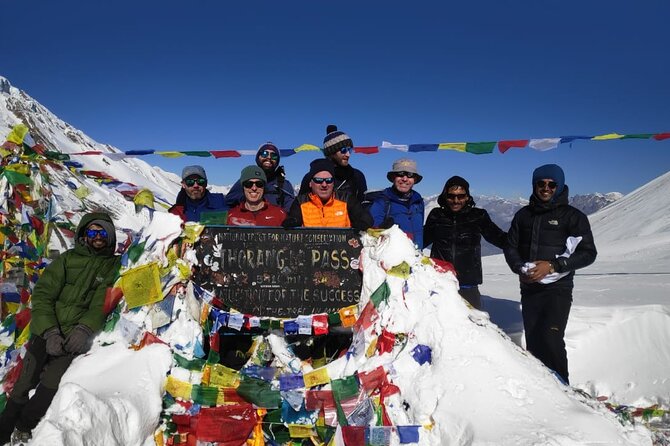
Crossing 5,416-meter Thorong La
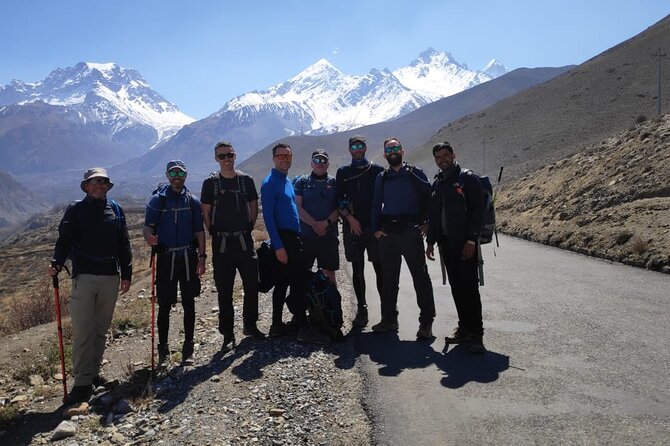
Thorong La is the hardest and most memorable day of the circuit. You climb to 5,416 meters, cross the pass, and then descend toward Muktinath. The total day is listed at roughly six to seven hours, though weather, trail conditions, and your pace can change that.
The pass rewards patience. You see broad mountain views, steep slopes, and the dramatic transition from the Manang side into Mustang. The descent is not easy simply because it goes downhill. Your knees take the strain, and tired legs can make loose ground awkward.
Muktinath gives the day a strong cultural finish. The site is important to both Hindu and Buddhist communities, with temples and natural spring water sources. Approach respectfully, follow local instructions, and allow time to notice the place rather than treating it only as the end of a difficult hike.
This section is also why travel insurance is not optional. The operator requires medical and emergency evacuation coverage, and your policy should specifically cover trekking at the elevations on this route.
Mustang villages, Marpha, and Jomsom
The itinerary places you in the Mustang area after the pass, with Muktinath and Jomsom as key stops. The route description refers to Marpha to Jomsom, although Marpha is not clearly placed in the preceding daily plan. That is another detail to confirm before departure.
The Mustang side feels drier and more open than the forested lower valleys. Around Marpha, you may find stone houses and apple orchards, while Jomsom is a larger administrative center with shops, hotels, and places to eat. The Kali Gandaki River shapes this section of the journey.
Jomsom is also known for strong winds. Morning flights are often favored in mountain regions because weather can shift later in the day, but the supplied schedule does not promise a guaranteed departure time. Build flexibility into your onward plans if possible.
The plan suggests time for the Jomsom Museum and hot springs, but it does not give a detailed schedule for either. Ask whether these are included visits or simply optional ideas. That small clarification helps you avoid assuming more sightseeing time than the trek allows.
Flying to Pokhara and returning to Kathmandu
Day 11 calls for a morning flight from Jomsom to Pokhara, with views of Annapurna and Dhaulagiri. The flight is a welcome break after the pass and long mountain days, though flights in mountainous Nepal depend on weather and operating conditions.
Pokhara offers a complete change of pace. You can rest beside Fewa Lake, look toward the hills, and enjoy the city’s restaurants and evening activity. Two nights in a four-star hotel are included, which makes this a useful recovery stop rather than a rushed airport connection.
The next day includes a short flight from Pokhara to Kathmandu and a farewell dinner. Another night in a Kathmandu four-star hotel is included before airport transfer on day 13.
There is an important paperwork issue here. The inclusions mention a Kathmandu to Lukla and return flight, which belongs to the Everest region, not this Annapurna itinerary. The day-by-day plan instead uses road transfers and a Jomsom to Pokhara flight. Have the operator remove or correct the Lukla reference before booking.
What the $2,000 price really covers
The price offers reasonable value if the included services match the written plan. You receive permits, airport pickup, porters, hotels in Kathmandu and Pokhara, meals, transfers, and organized guiding. For a high-altitude trip with several moving parts, having one company arrange the route can reduce stress.
The included meals are listed as 11 dinners, 12 breakfasts, and 11 lunches. Drinks are not included, including alcoholic, hot, and cold beverages. Budget extra for tea, bottled drinks, snacks, charging, personal equipment, and any costs not named in the inclusions.
Tips for the guide and porter are expected. That should be part of your planning from the start, not an awkward surprise at the end.
The value is weaker if you expect luxury accommodation throughout. Teahouses are part of the Annapurna experience, and the higher you go, the more basic conditions become. You are paying for support and structure around a demanding trek, not a hotel room with a mountain-view bathtub.
Who should book this circuit
I would recommend it to you if you want the classic Annapurna route with road transfers, porter support, organized acclimatization, and hotel recovery time in the cities. It suits someone who has moderate fitness, accepts basic mountain lodging, and wants cultural stops as well as big peaks.
It is less suitable if you want a gentle holiday, fixed hotel standards every night, or a completely polished itinerary with no wording errors. It is also not the right choice if you are unwilling to walk at high altitude or arrange serious travel insurance.
Before booking, ask for five written confirmations:
- The corrected 13-day route, including whether Marpha is included
- The actual flights, especially the apparent Lukla error
- Expected walking hours and elevations for each day
- The name of your guide and the porter baggage allowance
- Exact hotel and teahouse standards, plus the full meal plan
FAQ
How long is the Annapurna Luxury Circuit Trek?
The trip lasts approximately 13 days, including airport pickup, road transfers, trekking days, the Jomsom to Pokhara flight, the Pokhara to Kathmandu flight, and departure transfer.
What is the highest point on the trek?
The highest point is Thorong La Pass at 5,416 meters. The crossing is scheduled for the day after staying near Thorong High Camp.
Is an acclimatization day included?
Yes. Day six is a rest and acclimatization day in Manang at about 3,540 meters. Activities include short walks, views of Gangapurna and the ice lakes, and a visit connected with the Himalayan Rescue Association.
Are hotels included?
Two nights at a four-star hotel in Kathmandu and two nights at a four-star hotel in Pokhara are included. Mountain nights are described as lodge or teahouse stays.
Are meals included?
The inclusions list 11 dinners, 12 breakfasts, and 11 lunches. Alcoholic drinks and other hot or cold drinks are excluded.
What happens if I cancel?
You can receive a full refund if you cancel at least 24 hours before the local start time. Cancellations or changes made within 24 hours are not refunded or accepted. Poor weather or failure to meet the minimum group size may lead to a different date, another experience, or a full refund.
Should you book it?
Book this trek if you want a supported Annapurna crossing and appreciate having porters, city hotels, organized transport, and a planned altitude break. The mountain route itself is the star, especially Manang, the Thorong La crossing, and the change into Mustang.
I would not book until the operator corrects the itinerary inconsistencies. The references to Lukla, Namche, Lobuche, and Everest Base Camp are too important to ignore. Once the route, flights, guide assignment, and accommodation standards are confirmed in writing, the $2,000 price can make sense for a well-supported Himalayan adventure.
Just added around Kathmandu
- Everest Base Camp Trek★ 5.0 · 3 reviews
- Everest Base Camp Trek★ 5.0 · 7 reviews
- 15 Days Private Everest Base Camp Trek★ 5.0 · 30 reviews
- Everest Base Camp Trek★ 5.0 · 57 reviews
- 14 Days of Adventure Trekking to Everest Base Camp★ 5.0 · 2 reviews
- 14-Day Everest Base Camp Trek★ 5.0 · 20 reviews
- From Kathmandu: Private 14-Day Everest Base Camp Trek★ 5.0 · 20 reviews
- 14 Days Everest Base Camp Trek★ 5.0 · 4 reviews
Annapurna Base Camp Treks, compared.




Trekking in Annapurna/Langtang/Everest/Upper Mustang regions
Read our review →


Kathmandu to Annapurna Base Camp (ABC) 5-Day Trek
Read our review →Browse the lists this trek appears in