
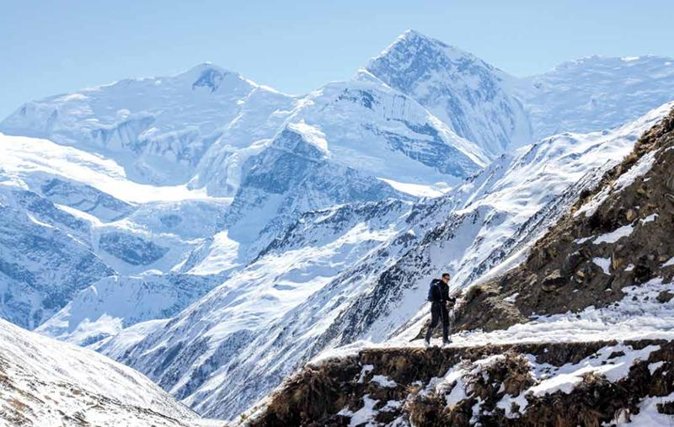
Review · KATHMANDU
Annapurna Circuit with Tilicho Lake Trek
The real prize here is Tilicho Lake, reached by a tough side trip from the classic Annapurna Circuit. You cross forests, high valleys, Tibetan-style villages, and the Thorong La Pass, with a guide handling the route while you focus on putting one foot in front of the other.
I like the small group limit of eight, which keeps the trek more personal, and I like that meals, permits, porters, sleeping gear, and the Jomsom to Pokhara flight are bundled in. The catch is simple: this is not a gentle mountain stroll. Long days, thin air, rough trails, and a pass at high altitude demand good fitness and a sensible attitude.
Key points before you book
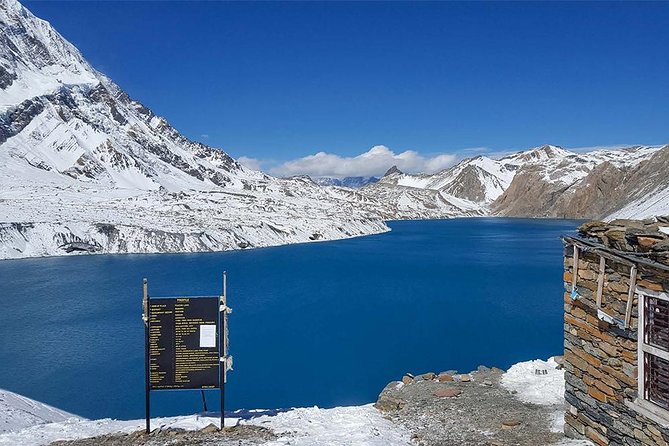
- Tilicho Lake adds the special challenge: The side trip takes two long days and reaches one of the highest points on this route.
- The Thorong La crossing is the big test: Day 10 brings a long, early start in cold and potentially snowy conditions.
- A maximum of eight people keeps the group manageable: You will not be part of a large trekking crowd.
- Porters carry shared and personal gear: One porter is provided for every two people, with a stated limit of 10 kilograms of personal luggage per person.
- The price covers many costly basics: Teahouse lodging, meals, permits, guide, porter support, transport, and the Jomsom to Pokhara flight are included.
- The schedule needs clarification: The detailed plan runs for 13 days, while the overview refers to an 18-day itinerary. Confirm the exact departure plan before paying.
Why Tilicho Lake changes the Annapurna Circuit
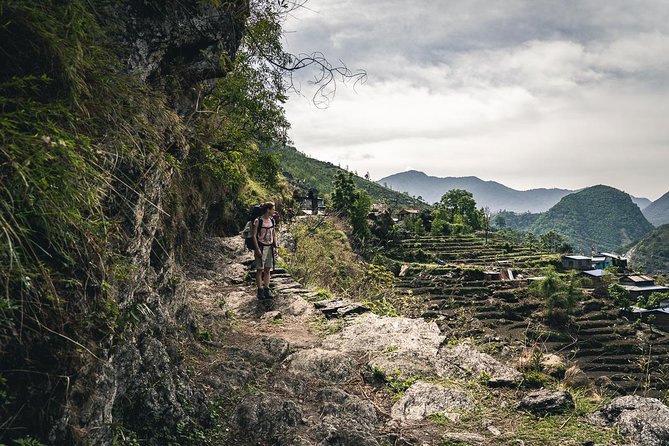
The Annapurna Circuit already gives you a strong mix of scenery and village life. Adding Tilicho Lake makes the trip harder, but it also gives the itinerary a sharper sense of purpose.
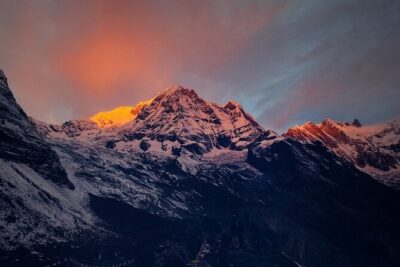
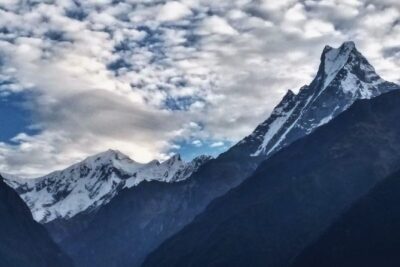
You begin in the lower Marsyangdi Valley and gradually move into colder, higher country. The route shifts from river valleys and forest to dry mountain slopes, stone villages, and open views toward Tilicho Peak. By the time you reach the lake, you have earned the sight through several days of steady climbing.
The side trip is not a quick photo stop. Day 6 takes you from Khangsar toward Tilicho Base Camp, and Day 7 is a long out-and-back walk to the lake itself. The schedule lists eight hours on the first day and nine on the second, so you need to be ready for slow progress and tired legs.
That difficulty is also the point. If you want a short Himalayan walk with plenty of spare time, this is the wrong choice. If you want a serious trek with a major mountain goal, Tilicho gives the Annapurna route an extra layer of reward.
More Annapurna Treks in Kathmandu
- Annapurna Circuit Trek with Tilicho Lake
★ 5.0 · 368 reviews - Annapurna base camp trek 5 Days
★ 5.0 · 252 reviews - 14-Day Private Annapurna Base Camp Trek
★ 5.0 · 180 reviews
Day 1: Kathmandu to Chame by road
The trip starts with a long drive from Kathmandu to Besisahar and onward toward Chame. The route follows the Kathmandu to Pokhara highway before turning along the Marsyangdi River, with about nine hours of travel listed for the day.
This is a practical opening rather than a scenic highlight. You save trekking days by driving farther into the valley, but the road journey can be tiring. The itinerary description refers to a narrow, paved section beside the river, so do not expect a relaxed coach ride all the way.
Chame is your first mountain base on the route. From here, the walking begins in earnest. Private transport is included, which removes the need to arrange this complicated opening transfer yourself.
Day 2: Forests and bridges on the way to Pisang
The walk toward Pisang takes about six hours through a narrow valley and thick forest. You cross two bridges, one at about 2,910 meters and another at about 3,040 meters.
This day gives you a useful first taste of altitude. The walking time is moderate, but the steady rise matters. You will see Lamjung Himal and other snow-covered peaks when the weather is clear.
The forest offers shade and a welcome change from the road travel of Day 1. At the same time, the narrow valley can make the route feel enclosed until the views open up. I would treat this as a settling-in day: walk steadily, drink regularly, and do not race ahead because the trail looks easy.
Day 3: Pisang to Manang and the first real altitude
The route climbs toward Manang for roughly five hours. A steep ridge brings views over the Manang Valley and toward Tilicho Peak, listed at 7,134 meters.
You also pass Humde and its airstrip, at about 3,280 meters. That figure matters. You are now high enough for altitude symptoms to become a real concern, even if you feel strong at lower elevations.
Manang is a larger village by local standards, and it serves as a useful base for the next day. The route gives you a quick change from green valley to drier, more open mountain country.
Same trailhead, a different route:
- Everest Base Camp Trek – 14 Days
★ 5.0 · 1,499 reviews - Everest Base Camp Trek
★ 5.0 · 842 reviews - Everest Base Camp Helicopter Tour landing at Everest View Hotel
★ 5.0 · 668 reviews - Everest Base Camp Trekking
★ 5.0 · 485 reviews
Day 4: A rest day in Manang
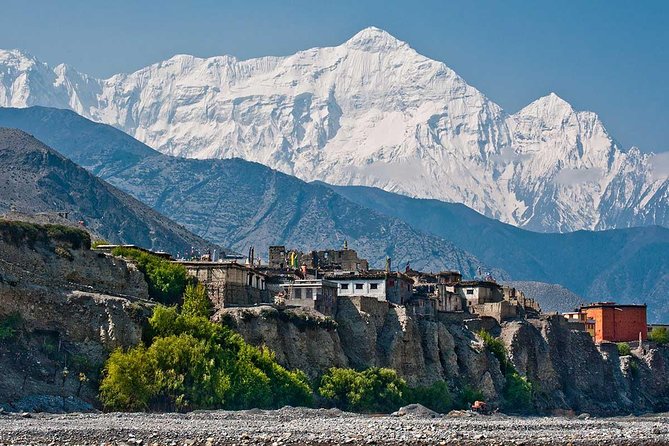
The rest day in Manang is one of the most important parts of the plan. You are meant to adjust to the higher altitude, not simply fill a free day.
The schedule allows about six hours for exploring the village and spending time with local people, but you should not read that as six hours of hard walking. Keep the day gentle. Short walks, village exploration, and rest are more useful than trying to squeeze in a major outing.
This pause also makes the later Tilicho side trip more realistic. A hurried itinerary can turn altitude into a serious problem. Here, the extra day gives your body time to catch up with the route.
Days 5 and 6: Khangsar and Tilicho Base Camp
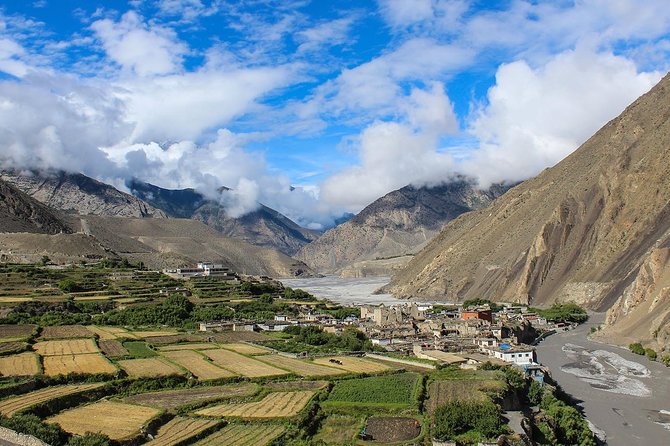
From Manang, you follow the river and cross the Khangsar Khola by bridge before climbing to Khangsar Village. The walking time is listed at about four hours, making this one of the shorter days.
Khangsar has a Tibetan character, and its position marks the turn toward Tilicho. You leave the main Annapurna route for a side valley, so the rhythm changes. The next goal is no longer simply the pass ahead. It is the lake high above the valley.
On the way toward Tilicho Base Camp, you pass a gompa and climb toward a high ridge. Two route choices are described: an older, more difficult trail and a newer, easier option. Having a guide matters here, since route conditions and practical trail choices can affect how hard the day feels.
The day is listed at eight hours and includes the admission ticket. Keep your pack as light as possible and let the porter arrangement do its job. You still need to carry water, layers, and personal essentials, but there is no reason to carry the full load yourself.
Day 7: The long walk to Tilicho Lake
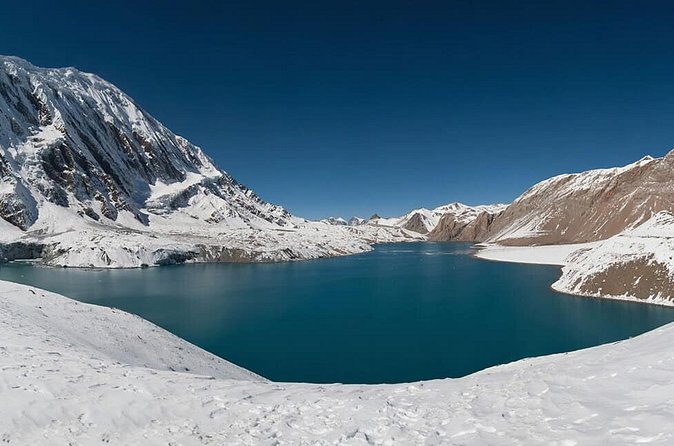
You start early from Base Camp for the lake. The schedule gives this day about nine hours, and the early departure is more than a suggestion. Strong winds often build later in the day as warm valley air meets colder mountain air.
That timing can make the difference between a more comfortable walk and a punishing one. The final approach is high, exposed, and physically demanding. You should expect slower steps, colder conditions, and the need for patience.
Tilicho Lake is the emotional high point of the trek. Its setting below the high peaks gives you the kind of mountain view that makes the long approach worthwhile. The return to Base Camp is part of the same demanding day, so save energy for the way back.
This is also the day that best shows the limits of the trip. If you are only moderately fit, or if you have not prepared for long uphill walks, the lake excursion may feel overwhelming. The experience is aimed at active hikers, not casual sightseers.
Days 8 and 9: Toward Yak Kharka and Thorong Phedi
After Tilicho, you descend from Base Camp and then climb about 500 meters toward Yak Kharka. The route passes through Tengi, leaves the Marsyangdi Valley, and heads toward the Thorong region.
The listed walking time is about seven hours. You will be tired from the lake day, so this stage tests recovery as much as strength. The mountains feel more open and stark here, with fewer signs of the lower valley.
The following day takes you toward Thorong Phedi and the Thorong La trail, with about five hours of walking. You climb to a ridge, descend toward the Kone River, cross a wooden bridge, and continue along a narrow trail.
This is a useful staging day before the pass. It is not the hardest day by hours, but the altitude makes ordinary climbs feel heavier. Follow the guide’s pace rather than treating the trek like a race.
Day 10: Crossing Thorong La to Muktinath
The Thorong La crossing is the main physical challenge of the Annapurna Circuit. The day begins early and includes a climb to the pass, with high altitude, cold, and possible heavy snow mentioned as concerns.
The itinerary lists about eight hours to Muktinath. That is a long day in demanding conditions. The route rises to Thorong La before descending toward Muktinath, so reaching the top is not the end of the work.
This is where the included guide and first-aid kit have real value. A guide can help with route choices, pacing, and the practical decisions that become harder when you are tired and short of breath. Still, support does not remove the need for your own preparation.
Muktinath gives you a welcome change after the pass. You have crossed from the Manang side toward the Kali Gandaki region, and the feel of the route begins to shift again.
Days 11 and 12: Jomsom and the flight to Pokhara
From Muktinath, you continue toward Jomsom by either the Kagbeni or Lupra route. The walk follows the Kali Gandaki River and takes about six hours.
Jomsom is described as a cold valley with useful amenities, making it a practical place to finish the walking section. It also gives you a little time to come down from the pass before the flight.
The next morning starts early for the flight to Pokhara. The flight takes about two hours according to the schedule, and it includes views of snow-covered peaks. This transfer is one of the package’s strongest practical features. After many days on foot, you avoid retracing the full route by road.
Flights in mountain regions are always tied to local conditions, so keep your plans flexible beyond Pokhara. The supplied schedule includes the flight, but it does not promise a particular departure time beyond the stated morning plan.
Day 13: Pokhara to Kathmandu by tourist coach
The final day uses a tourist coach from Pokhara to Kathmandu, with about seven hours on the road. Breakfast is included, and overnight accommodation in Kathmandu is arranged according to the agreed category and bed-and-breakfast plan.
This is another long transport day. You should avoid scheduling an international flight immediately after arrival unless the operator confirms the timing is safe. International airfare is not included, and neither are Nepal entry visa fees or travel and medical insurance.
The plan says accommodation in Kathmandu is not included in the package, yet it also refers to an overnight arrangement at the end. That wording needs clarification. Ask exactly which Kathmandu night is covered, if any, and what hotel category applies.
What the $1,093.34 price really covers
At $1,093.34 per person, the value depends on how much of the included support you would otherwise have to arrange yourself. The package includes teahouse or guesthouse accommodation during the trek, a certified guide, one porter for every two people, private transport, permits, taxes, a first-aid kit, sleeping bags, duffel bags, meals, and the Jomsom to Pokhara flight.
It includes breakfast for all 13 days, dinner for 11 days, and lunch for 11 days. Drinks, alcohol, and other food purchases are extra. Kathmandu accommodation is also listed as not included, so budget for that unless the operator confirms otherwise.
The permits are important. The Annapurna Conservation Area Permit and TIMS registration are included, which saves paperwork and separate payment. The porter support is just as useful on a route with two long high-altitude side-trip days.
A maximum group size of eight gives the price more appeal. You receive organized logistics without being placed in a large walking group. Group discounts may also be available, though the exact saving is not stated.
Who should book this trek
I would choose this trip if you want a serious Himalayan trek with a clear route, a small group, and a major side objective. It suits fit, active people who can handle several hours of walking on consecutive days and who accept that altitude can slow even strong hikers.
You should be comfortable with simple teahouse or guesthouse accommodation. This is not a hotel-based mountain holiday. Food is provided, but the package does not include drinks or every meal and snack you may want along the way.
The route is less suitable if you want a relaxed schedule, private rooms throughout, or a soft landing after every long day. It is also a poor match if you have no time to prepare physically.
The operator states that confirmation is provided at booking, and passport name, number, expiry date, and country are required for every participant. Pickup is offered, and the meeting time is listed as 8:00 am.
Cancellation is flexible up to 24 hours before the start time for a full refund. Changes or cancellations inside that window are not accepted for a refund.
The final call
Book this trek if Tilicho Lake and Thorong La are the reasons you want to visit the Annapurna region. You get a guide, porter support, permits, meals, gear, transport, and the Jomsom flight in one package, with a group capped at eight.
Before booking, ask the provider to resolve the 13-day versus 18-day wording and confirm the Kathmandu hotel arrangement. If you are fit, prepared for altitude, and happy with basic mountain lodging, the price looks strong for the amount of support included. If you want an easy holiday, choose a shorter and lower route instead.
FAQ
How long is the Annapurna Circuit with Tilicho Lake Trek?
The detailed day-by-day plan runs for 13 days. The general description refers to an 18-day itinerary, so you should confirm the exact length of your departure with Nepal Social Treks and Expedition before booking.
What is the maximum group size?
The group can include a maximum of eight people.
Is a guide included?
Yes. A certified professional guide is included. NC Sherpa is a named guide associated with this experience.
Are porters included?
Yes. The package provides one porter for every two people to carry personal gear and group equipment. The stated personal luggage limit is 10 kilograms per person.
Are meals included?
Breakfast is included for all 13 days. Dinner is included for 11 days, and lunch is included for 11 days. Drinks, alcohol, and additional food and drinks are not included.
Is the Jomsom to Pokhara flight included?
Yes. The package includes the Jomsom to Pokhara flight, scheduled for the morning after the Jomsom walking section.
Are trekking permits included?
Yes. The Annapurna Conservation Area Permit and TIMS are included, along with fees and taxes.
Is Kathmandu accommodation included?
The package states that Kathmandu accommodation is not included, although the final day also refers to an overnight stay in Kathmandu based on the agreed category. Confirm this detail with the provider.
Do I need travel insurance?
Yes, you should arrange your own travel and medical insurance. It is not included in the package.
Just added around Kathmandu
- Everest Base Camp Trek★ 5.0 · 3 reviews
- Everest Base Camp Trek★ 5.0 · 7 reviews
- 15 Days Private Everest Base Camp Trek★ 5.0 · 30 reviews
- Everest Base Camp Trek★ 5.0 · 57 reviews
- 14 Days of Adventure Trekking to Everest Base Camp★ 5.0 · 2 reviews
- 14-Day Everest Base Camp Trek★ 5.0 · 20 reviews
- From Kathmandu: Private 14-Day Everest Base Camp Trek★ 5.0 · 20 reviews
- 14 Days Everest Base Camp Trek★ 5.0 · 4 reviews
Annapurna Base Camp Treks, compared.
Trekking in Annapurna/Langtang/Everest/Upper Mustang regions
Read our review →
Kathmandu to Annapurna Base Camp (ABC) 5-Day Trek
Read our review →Browse the lists this trek appears in