
Review · KATHMANDU
Annapurna Circuit Trekking: 15 days
The great draw here is the chance to cross Thorong La at 5,416 meters, then descend toward Muktinath and the Kali Gandaki region. You also get a close look at village life, mountain customs, and the changing scenery of the Annapurna Conservation Area, not just a quick photo stop at a famous peak.
I like the built-in acclimatization day in Manang and the practical support from Himalayan Trekking Path. Ramhari Neupane, along with guides such as Dendi and Shiva, has helped organize difficult treks with care. The main caution is simple: this is a demanding high-altitude walk, and the long drive from Kathmandu to Khudi can be rough.
Key points at a glance
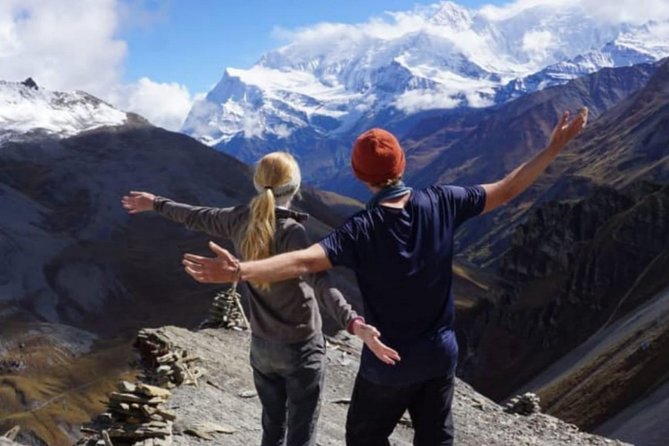
- Thorong La is the central challenge: The 5,416-meter pass is the trek’s hardest and most memorable day.
- Manang gives you a rest day: Day 10 breaks up the climb and helps you prepare for higher ground.
- The route changes quickly: You move from low valleys and villages to dry, high mountain country within days.
- Meals and transport are included: Breakfast, lunch, dinner, private transport, permits, taxes, and a professional guide are covered.
- The price includes city hotels: Two nights in Kathmandu and two nights in Pokhara are part of the package.
- You need moderate fitness: Walking days reach seven or eight hours, with a major altitude gain before the pass.
From Kathmandu to the Annapurna foothills
This 15-day trip begins with airport pickup and a private car transfer to Hotel Dream City in Kathmandu. That first night is useful for getting settled, sorting your bags, and meeting the trekking team before the road journey begins.
Day two is set aside for Kathmandu’s major sights. In about seven hours by private car and guide, you visit Pashupatinath, Boudhanath, Swayambhunath, and Kathmandu Durbar Square. These are not minor warm-up stops. They give you a quick look at Nepal’s religious life, Buddhist and Hindu traditions, and the capital’s old urban core.
I like having this sightseeing day before the trek because it gives the trip some cultural weight. You are not simply being rushed from airport to trailhead. The drawback is that seven hours of sightseeing can feel full, especially if you have just arrived from a long international flight.
On day three, you drive to Khudi, at about 800 meters. The journey takes around eight hours, so you should think of it as a full travel day, not a short transfer before an afternoon walk. Road conditions can affect the pace, and the long drive is one of the less polished parts of the schedule.
Still, Khudi puts you close to the lower section of the circuit. The change from Kathmandu to a smaller mountain settlement begins here, and the next day you start walking.
More Annapurna Treks in Kathmandu
- Annapurna Circuit Trek with Tilicho Lake
★ 5.0 · 368 reviews - Annapurna base camp trek 5 Days
★ 5.0 · 252 reviews - 14-Day Private Annapurna Base Camp Trek
★ 5.0 · 180 reviews
Sirung, Jagat, and the first long walking days
Day four takes you to Sirung at approximately 2,200 meters. The stated walking time is seven hours. This is a serious first trekking day, and you will already notice that the trip is built around full days on foot rather than short scenic walks.
The lower part of the circuit is valuable because it shows how quickly the region changes. You begin among warmer valleys and inhabited settlements, then gain height through narrower mountain country. Sirung gives the route a village-based feel rather than making the trek only about high passes.
Day five continues to Jagat, listed at 1,300 meters, with six to seven hours of walking. The elevation figure is lower than Sirung, so the day may involve a descent or a route variation. I would ask the operator to confirm the exact overnight sequence before departure, since the published elevations do not form a simple steady climb.
That point matters. Trekking itineraries in Nepal can change because of roads, weather, trail conditions, and local arrangements. A good guide should explain the day’s route clearly each morning. The team’s reputation for being supportive and flexible is useful here, particularly if the planned schedule needs to change.
Day six brings you to Dharapani at 1,960 meters after seven to eight hours. This is another long day, so the trip rewards people who are comfortable walking for much of the day with a pack or day bag.
Dharapani to Chame and Pisang
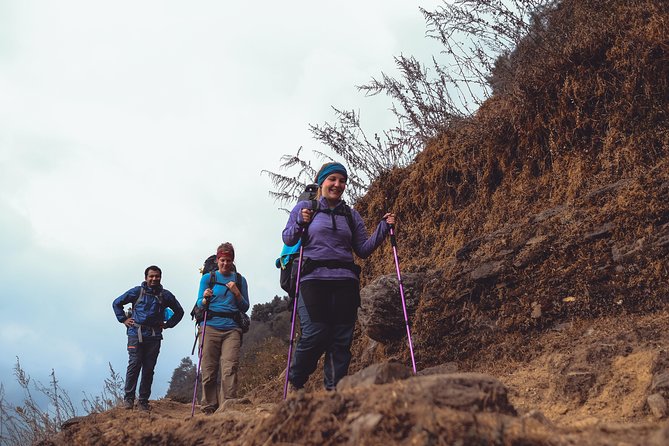
From Dharapani, day seven leads to Chame at 2,710 meters. The walk takes five to six hours. Chame is one of the circuit’s important stops because you are now moving into more recognizably high mountain country, with cooler air and bigger views ahead.
Day eight continues to Pisang at 3,300 meters, again taking five to six hours. This is where altitude becomes a real part of the trip, not just a number on the itinerary. You may find your pace naturally slows, and the guide’s judgment becomes more important than trying to arrive early.
The route does not promise luxury. The package includes meals and trekking accommodation, but it does not cover personal comforts such as hot water, showers, laundry, extra batteries, or charging. Bring cash for these small costs, along with a power bank and spare batteries.
The included meals are a real benefit. Breakfast, lunch, and dinner are covered during the organized portion of the trip, so you do not need to negotiate every meal as you go. Drinks are extra, including water, tea, coffee, beer, and soft drinks.
Manang at 3,519 meters and the key rest day
Day nine takes you to Manang, at 3,519 meters, after six to seven hours. Manang is the trip’s main acclimatization base and one of its most important stops.
Day ten is a rest day in Manang. That does not necessarily mean sitting indoors all day. It gives your body time to adjust before the itinerary climbs above 4,000 meters, and it creates breathing room in a schedule that otherwise has many long walking days.
I consider this rest day essential rather than optional. The itinerary climbs from Manang to Yak Kharka, Thorong Phedi, and then the pass in quick succession. You should use the day to rest, drink fluids, and follow the guide’s advice rather than treating it as a chance to add a hard side trip.
Altitude is the central safety issue on this route. The package is designed for people with moderate physical fitness, but fitness alone does not prevent altitude problems. You should be honest with the guide if you feel unwell, and understand that the schedule may need to change.
One earlier participant could not complete the circuit, and the team arranged an alternative program including Chitwan, Pokhara, and Gorkha. That is a useful sign of practical judgment, but you should not treat a substitute route as guaranteed. The safest choice always depends on conditions and your health.
Same trailhead, a different route:
- Everest Base Camp Trek – 14 Days
★ 5.0 · 1,499 reviews - Everest Base Camp Trek
★ 5.0 · 842 reviews - Everest Base Camp Helicopter Tour landing at Everest View Hotel
★ 5.0 · 668 reviews - Everest Base Camp Trekking
★ 5.0 · 485 reviews
Yak Kharka, Thorong Phedi, and the pass
Day eleven takes you to Yak Kharka at 4,110 meters in about four hours. The shorter walking time is welcome, but the altitude makes this a meaningful day. At this height, a modest climb can feel far harder than a longer walk lower down.
Day twelve continues to Thorong Phedi at 4,600 meters. The stated walking time is four hours. This is the final staging point before the pass, and you should expect the next morning to be the most demanding part of the trek.
Day thirteen is the big one: six to seven hours from Thorong Phedi over Thorong La at 5,416 meters and down to Muktinath. The pass provides the high point of the entire circuit, both physically and visually. You get wide views of the Annapurna Massif, the Dhaulagiri Range, and other snow-covered peaks.
The descent matters as much as the climb. After reaching the pass, you still have several hours of walking, and tired knees can become a problem. Good boots, walking poles, layers, gloves, sun protection, and a small day pack are practical essentials.
Muktinath adds cultural interest to the day. The stop connects the high mountain route with an important pilgrimage setting, and it gives you a different sense of the region after the stark terrain around Thorong La.
The road to Tatopani and Pokhara
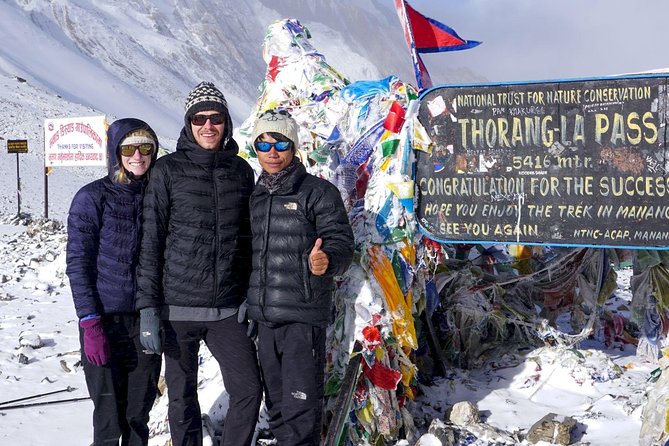
Day fourteen switches from trekking to driving, taking you to Tatopani at 1,200 meters. After the pass, this lower elevation should feel like a major change. The itinerary does not give a drive duration, so you should ask the operator for the expected road time and vehicle details.
Tatopani means hot water, and the name is associated with hot springs in Nepal. The supplied schedule does not specifically promise hot spring access, so you should not assume that a soak is included. It does list hot water and showers among personal expenses, which means comfort stops may cost extra.
Day fifteen takes you from Tatopani to Pokhara. Two hotel nights at Crystal Palace Hotel in Pokhara are included in the overall package, although the daily schedule ends with the transfer. Pokhara is a pleasant place to slow down after the trek, but additional activities or extra nights are not included.
The private transportation is a valuable part of this arrangement. It reduces the need to organize airport transfers, sightseeing vehicles, and post-trek connections yourself. It also makes the trip feel more like one coordinated program, though private transport does not remove Nepal’s long road times.
What the $1,300 price really covers
At $1,300 per person, the package covers a substantial amount: airport pickup, private transportation, guide services, fees and taxes, trekking meals, two nights at Hotel Dream City in Kathmandu, and two nights at Crystal Palace Hotel in Pokhara.
That is a fair value for someone who wants one company to handle the major pieces. You are paying for organization as much as for transport. The guide, permits, meals, hotels, and city transfers can add up quickly if arranged separately.
The price is not all-inclusive. You still need to budget for Nepal’s visa, international and domestic flights, insurance, drinks, tips, personal purchases, charging, laundry, hot water, showers, and any extra porter services. Lunch and dinner in the cities are also excluded.
I would also ask for clear confirmation about trekking lodge accommodation, porter arrangements, and the exact number of included hotel nights before paying. The package clearly lists the Kathmandu and Pokhara hotels, but it does not give the names or standards of every overnight stop along the trail.
Guide support and the human side of the trip
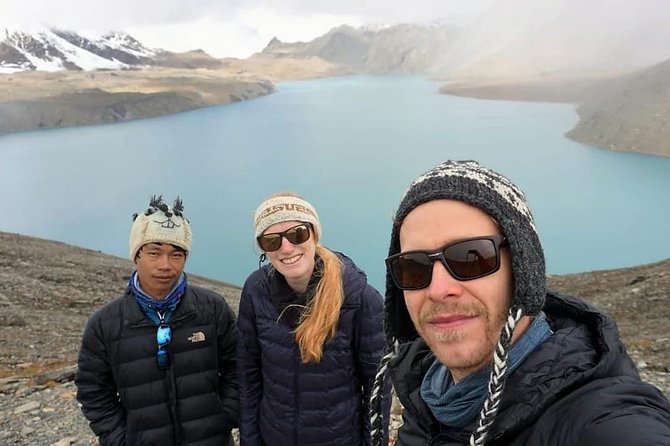
The strongest part of this experience is the personal support attached to it. Ramhari Neupane manages Himalayan Trekking Path, and guides named Dendi and Shiva have handled demanding itineraries for the company. Porter Susan is also specifically associated with helping at high altitude.
You should not expect a guide to remove every difficulty. The route remains long, high, and sometimes uncomfortable. What good support can do is help you make sensible choices, keep the schedule organized, and notice when a person needs a slower pace or a changed plan.
The company has also shown flexibility when someone could not finish the circuit. That matters in the Himalayas, where a safe alternative is better than forcing a route simply because it was printed in advance.
This is a private activity, so only your own group participates. That can be a strong advantage if you want the pace adjusted to your condition, though a private trip may feel less social than joining a larger trekking group.
Who should book this trek
I would choose this trip if you want the classic Annapurna Circuit experience in a compact 15-day format, with a guide and major logistics arranged in advance. It suits people who enjoy long walking days, changing scenery, village contact, and a clear physical goal.
It is less suitable if you want a relaxed holiday, dislike long road transfers, or have no experience with sustained walking. The itinerary includes several seven to eight-hour days and reaches 5,416 meters.
Book only after confirming the current route, road conditions, accommodation details, porter support, and what happens if weather or altitude forces a change. Free cancellation is available up to 24 hours before the start time, while weather cancellations offer a different date or a full refund.
Should you book the Annapurna Circuit Trek?
I would recommend it for a fit and well-prepared person who wants strong mountain scenery, cultural stops, and a supported crossing of Thorong La without arranging every detail alone. The included meals, private transport, city hotels, and acclimatization day give the $1,300 price real value.
I would pause if you are unsure about high altitude or expect hotel-style comfort throughout. Ask direct questions before booking, pack for cold conditions, carry money for extras, and treat the itinerary as a plan that may change. If you want a serious Himalayan trek with practical support, this is a convincing option.
FAQ
How long is the Annapurna Circuit trek?
The experience lasts approximately 15 days, beginning with arrival in Kathmandu and ending with the transfer from Tatopani to Pokhara.
What is the highest point on the route?
The highest point is Thorong La Pass at 5,416 meters.
Is airport pickup included?
Yes. Arrival in Kathmandu includes a private car transfer from the airport to the hotel.
What sights are included in the Kathmandu tour?
The sightseeing day includes Pashupatinath, Boudhanath, Swayambhunath, and Kathmandu Durbar Square.
Are meals included?
Breakfast, lunch, and dinner are included as part of the trekking package. Drinks such as water, tea, coffee, beer, and soft drinks are not included.
Are Kathmandu and Pokhara hotels included?
Yes. Two nights at Hotel Dream City in Kathmandu and two nights at Crystal Palace Hotel in Pokhara are included.
Is transportation included?
Yes. Private transportation is included, including the airport transfer, sightseeing vehicle, road journeys, and the transfer toward Pokhara listed in the schedule.
Is travel insurance included?
No. You must arrange your own travel insurance.
What level of fitness is required?
The experience requires a moderate physical fitness level. Walking days range from about four to eight hours, with a high-altitude crossing at Thorong La.
Can I cancel for a full refund?
You can cancel at least 24 hours before the experience starts for a full refund. Changes or cancellations made less than 24 hours before the start time are not accepted for a refund.
Just added around Kathmandu
- Everest Base Camp Trek★ 5.0 · 3 reviews
- Everest Base Camp Trek★ 5.0 · 7 reviews
- 15 Days Private Everest Base Camp Trek★ 5.0 · 30 reviews
- Everest Base Camp Trek★ 5.0 · 57 reviews
- 14 Days of Adventure Trekking to Everest Base Camp★ 5.0 · 2 reviews
- 14-Day Everest Base Camp Trek★ 5.0 · 20 reviews
- From Kathmandu: Private 14-Day Everest Base Camp Trek★ 5.0 · 20 reviews
- 14 Days Everest Base Camp Trek★ 5.0 · 4 reviews
Annapurna Base Camp Treks, compared.




Trekking in Annapurna/Langtang/Everest/Upper Mustang regions
Read our review →


Kathmandu to Annapurna Base Camp (ABC) 5-Day Trek
Read our review →Browse the lists this trek appears in