
Review · NEPAL
Annapurna Circuit Trekking 13 Days
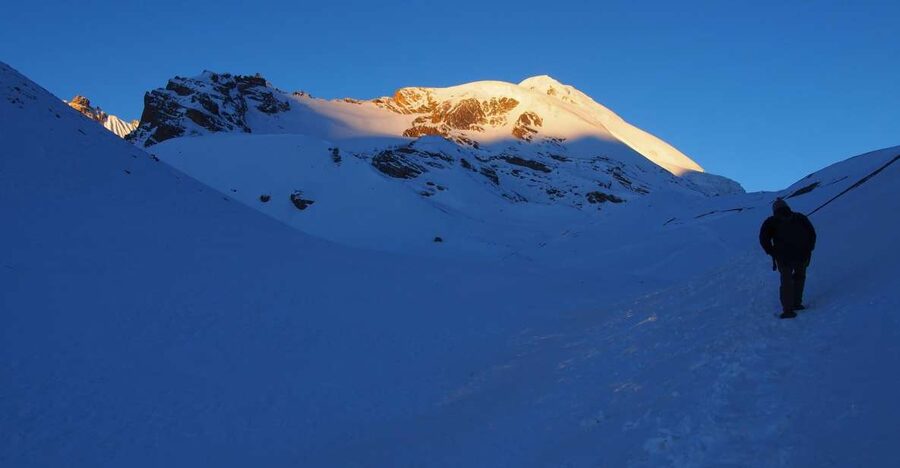
Crossing Thorong La Pass at 5,416 meters is the great prize here. You begin among river valleys, forests, and villages, then move into high mountain country, Tibetan Buddhist settlements, dry Mustang, and the Kali Gandaki Valley. Few treks change this much in 13 days.
I like the strong variety of scenery, from the Marshyangdi River to Muktinath and Poon Hill. I also like the practical package: permits, meals, tea-house beds, a guide, sleeping bag, down jacket, and transport are covered. The main caution is the pace. Thorong La comes after several long walking days, and the high altitude is serious, so this suits fit hikers more than casual walkers.
Key points
- Thorong La is the demanding centerpiece: The pass reaches 5,416 meters and requires a long 7 to 8-hour day from Thorong Phedi to Muktinath.
- The route changes character often: Expect river valleys, pine forests, Manang’s Tibetan Buddhist culture, dry Lower Mustang, hot springs, and a sunrise climb to Poon Hill.
- A rest day comes at the right time: Day six in Manang gives you space to adjust before the trail rises above 4,000 meters.
- The $970 price covers a lot: Meals, permits, 12 nights of basic tea-house lodging, guide costs, selected transport, and trekking gear are included.
- Small groups keep things personal: The group limit is 12, and guides speak English, Nepali, and Hindi.
- Guide choice may matter: If available, ask for Rabin. A solo trekker also found Ganesh attentive, patient, adaptable, and strong on mountain judgment.
From the Marshyangdi River to Thorong La
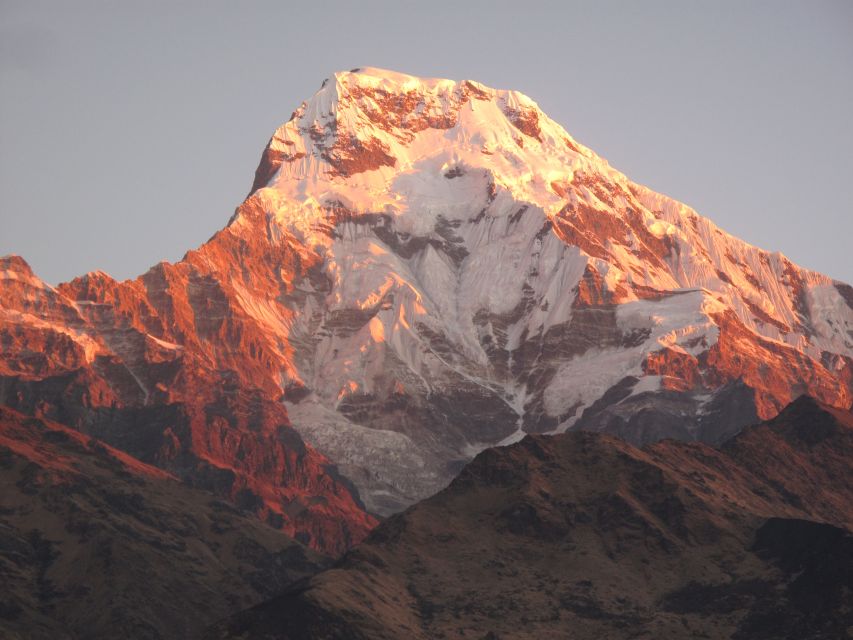
This trek works because it does not give you the same Nepal twice. The first days follow the Marshyangdi River through green valleys and local settlements. By Manang, the air is thinner and the culture feels distinctly Tibetan Buddhist. After Thorong La, the country turns dry and windswept, with Muktinath, Kagbeni, Jomsom, and the Kali Gandaki Valley leading you toward hot springs and Poon Hill.
You will walk for most of the 13 days, though the first and eleventh days use road transport. The walking days range from four to eight hours. That sounds manageable on paper, but altitude changes the equation. A four-hour walk at 4,000 meters does not feel like an easy stroll.
The route is best for people who want a classic Himalayan trek with a clear high point, not for those seeking a relaxed village holiday. You need patience, basic fitness, and a willingness to sleep in simple tea houses. The reward is an unusually varied route with plenty of cultural change along the way.
More Annapurna Treks in Nepal:
- Annapurna Circuit Trek with Tilicho Lake
★ 5.0 · 368 reviews - Annapurna base camp trek 5 Days
★ 5.0 · 252 reviews - 14-Day Private Annapurna Base Camp Trek
★ 5.0 · 180 reviews
What the $970 package really covers
At $970 per person, the trip offers solid value if you plan to use the included services. The package covers airport pickup, the taxi to the Kathmandu bus station, public transport toward the trail, a taxi from the trek’s end to Pokhara, a tourist bus from Pokhara to Kathmandu, and one night in a Pokhara hotel with breakfast.
You also get a government-licensed guide. The company covers the guide’s food, lodging, salary, equipment, and insurance, so you are not asked to manage those costs on the trail. Meals include breakfast, lunch, and dinner during the trek, while 12 nights are in basic twin-sharing tea houses.
Permits for the Annapurna Circuit are included. You can also use a sleeping bag, down jacket, and duffel bag if needed, then return them after the trip. A first-aid kit with ordinary medical supplies and an oximeter is provided, along with an Annapurna Circuit map.
There are clear extras. Nepal’s entry visa, international flights, Kathmandu lodging, city meals, drinks, personal spending, and private transport are not included. A porter costs an additional $250 if you want one. The included arrangement is therefore best for someone comfortable carrying a daypack and managing personal belongings without porter support.
Day 1: The long road to Jagat
The opening transfer takes about eight to nine hours, traveling from Kathmandu through Besisahar toward Jagat at 1,100 meters. The road day is not the most glamorous part of the trek, but it gets you to the trail quickly within a tight 13-day schedule.
You should treat this as a full travel day, not as spare time. Public transport keeps the price down, but it also means less control than a private vehicle. The useful point is that the trek begins at a lower altitude, giving you time to ease into the route before the serious climb.
Day 2: Jagat to Dharapani
The walk from Jagat to Dharapani at 1,960 meters takes six to seven hours. This is your first proper day on foot, with the Marshyangdi River Valley providing the main setting.
The appeal is the gradual change from lower valley greenery toward higher mountain country. You will encounter waterfalls, forests, and local communities, with the trail beginning to feel like a journey through several different parts of Nepal rather than one fixed mountain scene.
Six to seven hours is a long first walk. Keep your early pace calm. The aim is not to prove anything on day two, but to arrive with enough energy for the next morning.
A few more treks around Nepal worth a look
- Everest Base Camp Trek – 14 Days
★ 5.0 · 1,499 reviews - Everest Base Camp Trek
★ 5.0 · 842 reviews - Everest Base Camp Helicopter Tour landing at Everest View Hotel
★ 5.0 · 668 reviews - Everest Base Camp Trekking
★ 5.0 · 485 reviews
Day 3: Dharapani to Chame
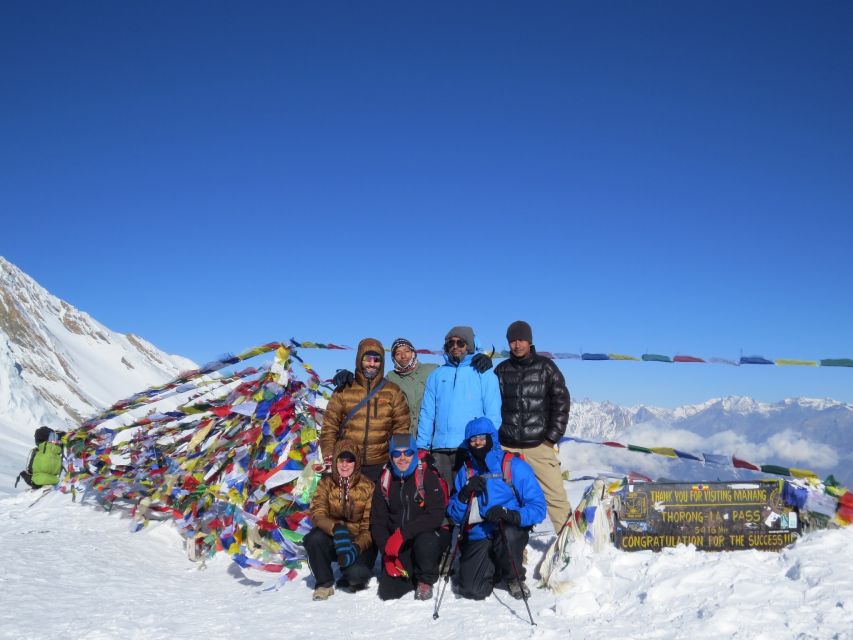
The trail rises to Chame at 2,710 meters in five to six hours. Chame is the administrative center of Manang District, and this portion of the route brings you farther into the mountain zone.
The altitude is now high enough for you to pay attention to your body, but the route still offers a good mix of forest and river scenery. Your guide can help you keep the pace sensible, especially if you are walking in a small group with different fitness levels.
Basic tea houses are part of the experience. They provide a bed and meals, but you should not expect hotel comforts. Twin-sharing accommodation keeps the price reasonable and puts you closer to the everyday rhythm of the route.
Day 4: Chame to Pisang
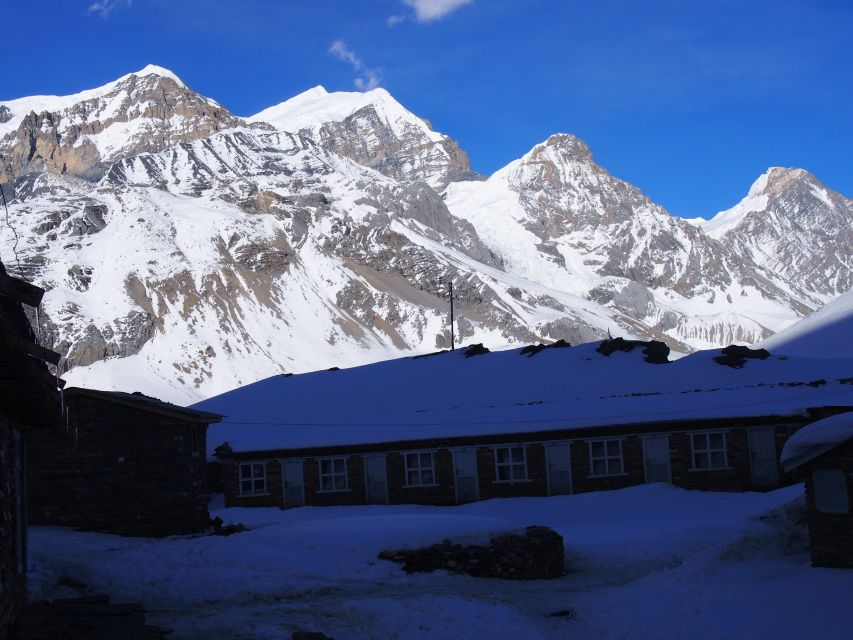
The five to six-hour walk to Pisang reaches 3,300 meters. This is an important altitude gain, and the surroundings begin to feel more open and alpine.
Pisang is one of the places where the route’s cultural and geographic shift becomes clear. You are leaving the lower, greener valleys and moving toward the dry high country around Manang. Take time to notice the change rather than treating this day as just another uphill section.
At this point, food becomes part of your energy plan. Three included meals each day are useful because you do not have to search for restaurants or arrange your own trail meals. Drinks and snacks are your responsibility, so budget for personal purchases.
Day 5: Pisang to Manang
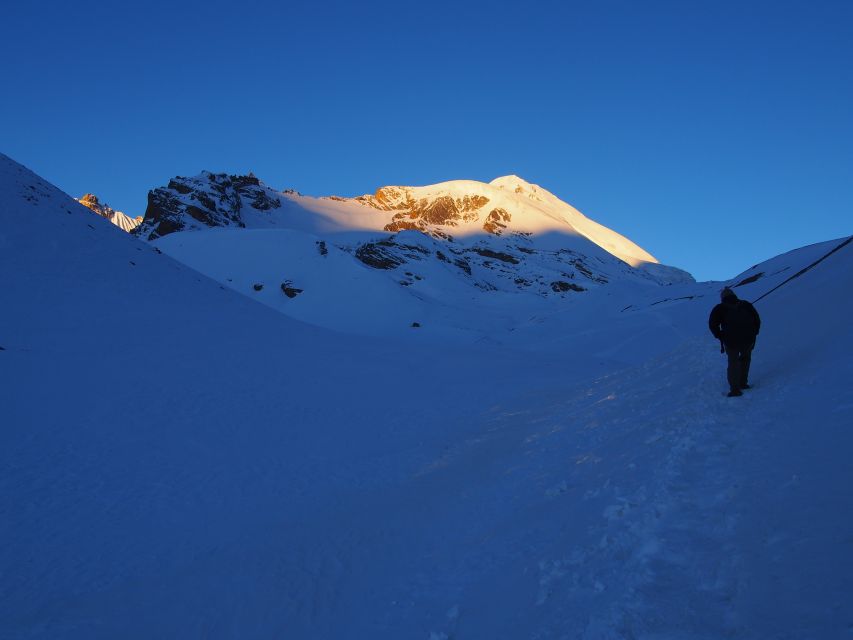
The six to seven-hour walk to Manang at 3,540 meters is one of the most rewarding days before the pass. Manang is known for its Tibetan Buddhist culture, and it gives the trek a stronger sense of place than a simple mountain crossing.
This is where I like the itinerary’s pacing. You reach Manang before the highest sections, and the next day is set aside for acclimatization. That pause matters. You can use it to rest and explore at a modest pace instead of rushing straight toward the pass.
Manang is also where altitude becomes a daily concern. Walk slowly, drink regularly, and tell your guide if you feel unwell. The supplied oximeter is a practical tool, but it does not replace careful judgment or a clear conversation with your guide.
Day 6: Acclimatization in Manang
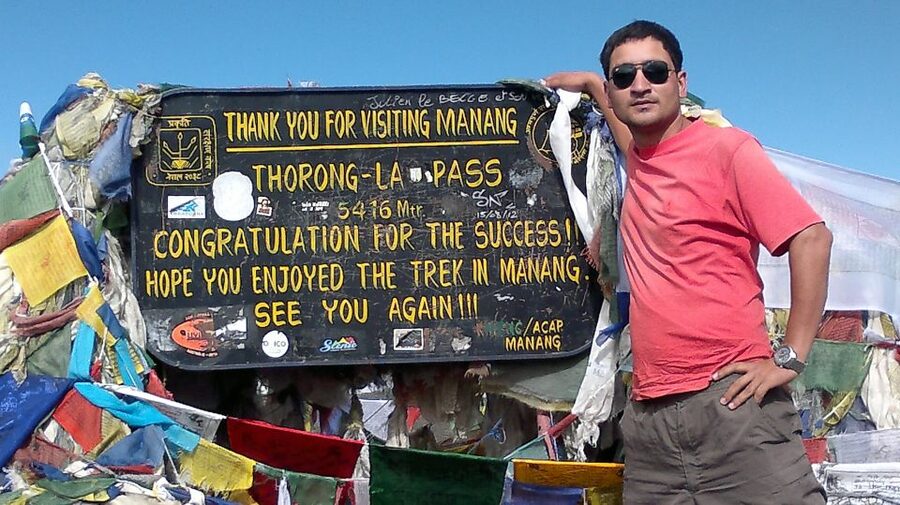
The Manang rest day is not a wasted day. It breaks the climb into sensible stages and gives your body time to adjust before the trail moves above 4,000 meters.
You are not promised a specific side trip, so think of this as a flexible day for rest and gentle local exploration. The value lies in staying at the same altitude rather than gaining more height too quickly.
This is also a good day to check your equipment. Make sure your sleeping bag, down jacket, boots, and daypack are working well. After Manang, the walking becomes more exposed to altitude and weather, so small problems become more annoying later.
Day 7: Manang to Yak Kharka
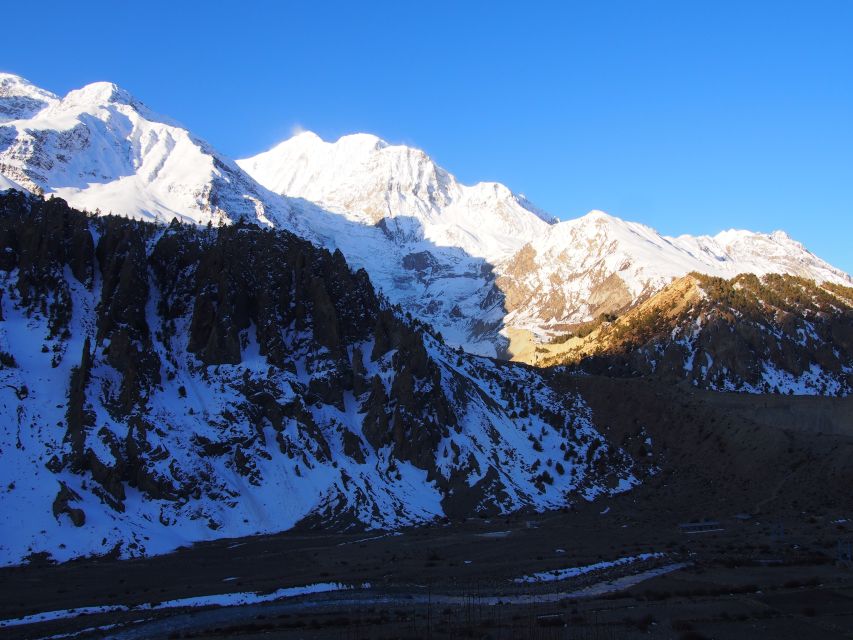
The walk to Yak Kharka at 4,120 meters takes four to five hours. The shorter duration may look easy, but the altitude makes it a serious day.
The route now enters the high mountain zone, where the air is thin and the scenery is more open. Your priority is a steady pace. You do not need to hurry into Yak Kharka, and you should not treat the four-hour estimate as a race.
This is one of the clearest reasons to choose a guided trip. A guide can watch the group, help set a practical pace, and respond if someone struggles. A small group of up to 12 people is large enough to provide company but small enough for direct attention.
Day 8: Yak Kharka to Thorong Phedi
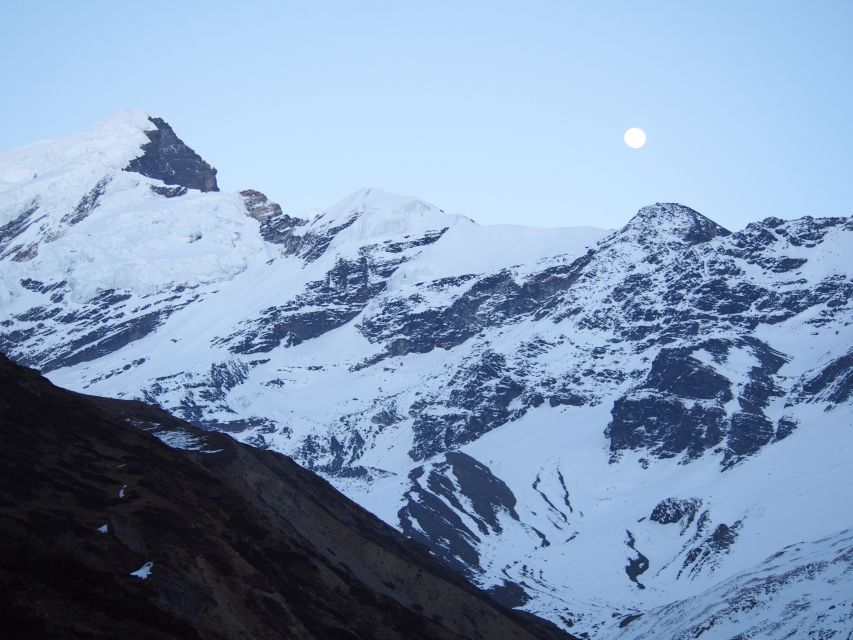
The four to five-hour walk to Thorong Phedi at 4,450 meters positions you beneath the pass. The name means the foot of Thorong, and the stop is mainly about preparing for the next day.
Do not underestimate this short-looking stage. You are sleeping high, and the following morning brings the hardest section of the trek. Use the afternoon to rest, organize warm layers, and keep your personal gear easy to reach.
You will want an early start for the pass crossing. The itinerary does not state a precise departure time, so your guide will set the plan according to conditions and group needs.
Day 9: Crossing Thorong La to Muktinath
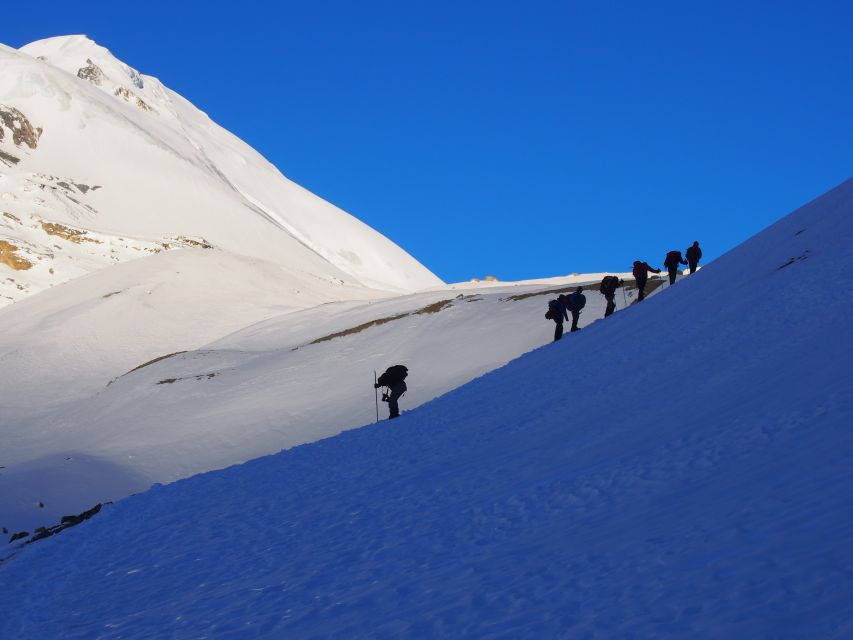
This is the trek’s big day: seven to eight hours from Thorong Phedi over Thorong La at 5,416 meters, then down to Muktinath at 3,802 meters.
The climb is physically demanding because of both altitude and duration. The pass is technical in the sense that it is a high, serious mountain crossing, though the supplied information does not describe climbing equipment or roped sections. You should expect a strenuous hike, not technical mountaineering.
The payoff is the huge change in mountain scenery and the sight of the Annapurna peaks and surrounding country. Reaching the top is a memorable moment, but the descent to Muktinath still requires care. Tired legs and loose footing can make the second half of the day just as testing.
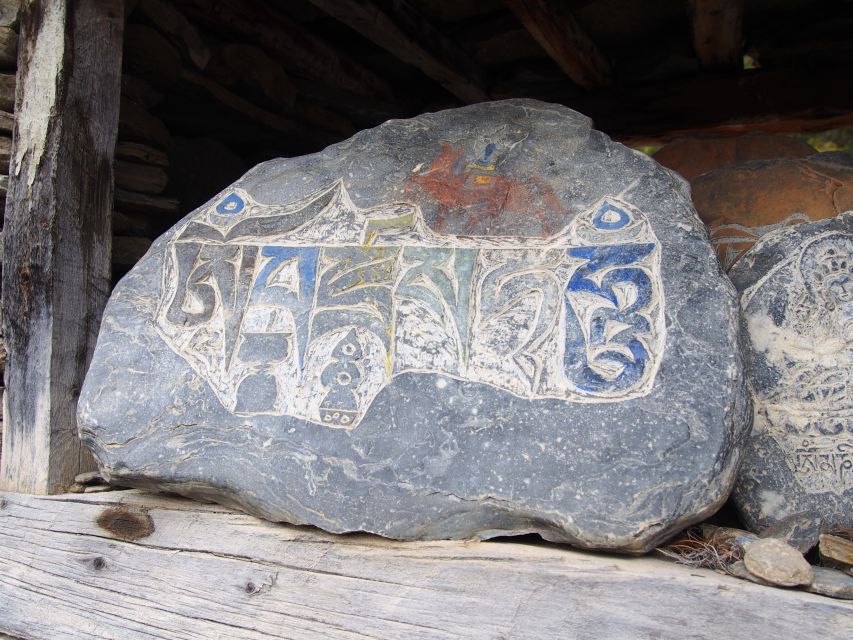
Muktinath is a spiritual center and an important pilgrimage site. It gives the route a different focus after the physical challenge of the pass. You are no longer simply climbing higher. You are moving through a place with strong religious meaning.
Day 10: Muktinath to Jomsom
The walk to Jomsom at 2,743 meters takes five to six hours. You lose altitude, which many people find welcome after Thorong La, and enter the windy Kali Gandaki Valley.
The route also passes through the character of Lower Mustang, a dry region that feels very different from the green Marshyangdi Valley. Kagbeni is one of the notable places along this part of the journey, adding another cultural stop before Jomsom.
Wind can shape your experience here, so keep a warm layer handy even as you descend. The contrast is part of the appeal: one day you are above 5,000 meters, and soon after you are walking through a broad, dry valley with a different climate and visual character.
Day 11: Jomsom to Tatopani
The journey from Jomsom to Tatopani uses transport and takes about four to five hours. Public transport is included, helping keep the trip affordable.
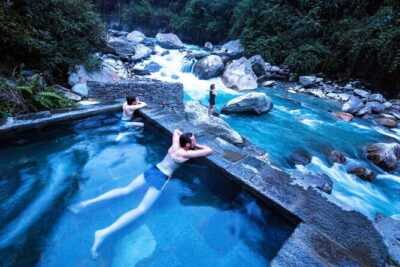
Tatopani means hot water, and the stop is known for its natural hot spring. After the high pass and several long walking days, this is a welcome chance to relax your muscles.
The road section also gives your feet a break. It is less romantic than walking every kilometer, but it makes the 13-day schedule possible. If you prefer a slower, fully foot-based route, this compact itinerary may feel rushed.
Day 12: Tatopani to Ghorepani
The seven to eight-hour walk to Ghorepani at 2,750 meters is another long day. You climb again after the major descent from Thorong La, so the change may surprise you.
This section joins the Lower Annapurna route and passes through Sikha before reaching Ghorepani. The return to greener country creates another strong contrast with dry Mustang and the Kali Gandaki Valley.
You need to save some energy for the next morning. The program calls for an early hike to Poon Hill, so a late arrival at Ghorepani leaves little time for recovery.
Day 13: Poon Hill and the road to Pokhara
The final day begins with an early hike to Poon Hill at 3,210 meters, followed by a descent to Nayapul and a taxi to Pokhara. The full day takes about seven to eight hours.
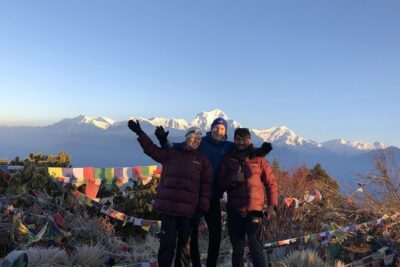
Poon Hill is the closing viewpoint, with mountain panoramas and a sunrise setting if conditions cooperate. The early start is worth understanding before you book. You will not be finishing the trek with a lazy breakfast.
After Poon Hill, the trail descends to Nayapul, where the included taxi carries you to Pokhara. One night in a Pokhara hotel with breakfast is included, giving you a proper bed and a little recovery time before the tourist bus returns you to Kathmandu.
Guides, group size, and the human side
The trip uses a government-licensed guide, with English, Nepali, and Hindi available. The group limit is 12, which is a sensible size for a route where pace and altitude need close attention.
If you can request a guide, ask about Rabin. He is specifically recommended as a strong choice for this trek. Another solo trekker was paired with Ganesh and found him attentive, patient, adaptable, and careful with details. That matters because a guide on the Annapurna Circuit does more than point out the path. He helps you judge pace, manage the long days, and deal with changing conditions.
Solo hikers can join without traveling alone. At the same time, you should remember that a small group is still a group. If you want a private schedule or private vehicle, those are not part of the standard package.
The best season and the main tradeoffs
Spring and autumn are identified as the best seasons for this trek. Those periods are the sensible choice if you want the most favorable conditions for the high pass and mountain views.
The main tradeoff is speed. Thirteen days creates a neat, efficient circuit, but it leaves little spare time for delays, illness, or a slow walking pace. The itinerary includes an acclimatization day in Manang, which is important, but you still need to arrive ready for high-altitude trekking.
Book this trip if you want the Annapurna Circuit’s major contrasts in a compact package, value having a guide and permits arranged, and accept basic tea houses and public transport. I would choose it especially for a fit first-time Himalayan trekker who wants support without paying for a private luxury setup.
Think twice if you dislike long walking days, shared rooms, road transfers, or high-altitude exertion. Also budget for drinks, personal costs, Kathmandu lodging, and possibly the $250 porter fee. For the right walker, the mix of Thorong La, Manang, Muktinath, Mustang, Tatopani, and Poon Hill makes $970 a strong value.
FAQ
How long is the Annapurna Circuit trek?
The experience lasts 13 days, including road transfers, walking days, an acclimatization day in Manang, and transport to Pokhara and Kathmandu.
What is the highest point on the trek?
The highest point is Thorong La Pass at 5,416 meters, or 17,769 feet.
Is a guide included?
Yes. A government-licensed guide is included, along with the guide’s food, accommodation, salary, equipment, and insurance.
What languages can the guide speak?
Guides are available in English, Nepali, and Hindi.
How large is the group?
The group is limited to 12 participants.
Are meals included?
Breakfast, lunch, and dinner are included during the trek. Meals in the cities and soft or hard drinks are not included.
What type of accommodation is provided?
The trek includes 12 nights in basic twin-sharing tea houses, plus one hotel night with breakfast in Pokhara.
Is a porter included?
No. A porter is available for an extra $250.
Are trekking permits included?
Yes. The necessary permits for the Annapurna Circuit are included.
What should I know about transport?
The package includes airport pickup, a taxi to the Kathmandu bus station, public transport toward the trail, transport from Jomsom to Tatopani, a taxi to Pokhara, and a tourist bus from Pokhara to Kathmandu. Private transport is not included.
When is the best time to go?
Spring and autumn are identified as the best seasons for the trek.
Can I cancel for a refund?
You can cancel up to 24 hours in advance for a full refund. You can also reserve now and pay later.
Just added around Nepal
- Everest Base Camp Trek★ 5.0 · 3 reviews
- Everest Base Camp Trek★ 5.0 · 7 reviews
- 15 Days Private Everest Base Camp Trek★ 5.0 · 30 reviews
- Everest Base Camp Trek★ 5.0 · 57 reviews
- 14 Days of Adventure Trekking to Everest Base Camp★ 5.0 · 2 reviews
- 14-Day Everest Base Camp Trek★ 5.0 · 20 reviews
- From Kathmandu: Private 14-Day Everest Base Camp Trek★ 5.0 · 20 reviews
- 14 Days Everest Base Camp Trek★ 5.0 · 4 reviews
Annapurna Base Camp Treks, compared.
Trekking in Annapurna/Langtang/Everest/Upper Mustang regions
Read our review →
Kathmandu to Annapurna Base Camp (ABC) 5-Day Trek
Read our review →Browse the lists this trek appears in