
Review · KATHMANDU
Annapurna Circuit Trek
The Annapurna Circuit earns its reputation by changing scenery almost every day. You begin with a long drive from Kathmandu, then walk through forest, river valleys, dry high country, Tibetan-influenced villages, and finally the famous Thorong La Pass. The route feels like several treks joined into one.
I like the practical setup: your guide handles the hard logistics, and the price includes teahouse lodging, three meals a day, permits, buses, and the return to Kathmandu. I also like the slow rise in altitude, with a full acclimatization day in Manang before the highest section. The catch is clear: this is a serious high-altitude trek, not a casual walk. Cold nights, basic rooms, long days, and the 5,416-meter pass demand preparation.
Key points before you book
- Thorong La is the big test: You cross the 5,416-meter pass on Day 9, after sleeping at Thorong Phedi.
- The route changes character: Expect green valleys, waterfalls, pine forest, dry mountain country, and high Himalayan views.
- Guiding is a major strength: Guides named Rabin, Santosh, Ganesh, Sandip, and Chakra have been praised for patience, safety help, local knowledge, and encouragement.
- The $1,175 price covers useful basics: Teahouse accommodation, meals, permits, guide service, transport listed in the itinerary, and a first-aid kit are included.
- You need moderate fitness: Walking days range from four to eight hours, with the highest sections above 4,000 meters.
- Extra costs remain: Insurance, drinks, laundry, showers, battery charging, bottled or boiled water, tips, and a porter are not included.
Why the Annapurna Circuit still works
The route gives you contrast. In the lower country, you walk beside rivers and through thick forest. Higher up, trees thin out and the valley turns dry and open. Around Manang and Muktinath, the architecture, religious sites, and mountain setting feel quite different from Kathmandu.
That variety is the main reason to choose this circuit over a short mountain excursion. You do not simply walk to one viewpoint and return. You move through several districts, spend nights in local teahouses, and watch the climate change as you gain and lose altitude.
The private format also matters. Only your group participates, so your guide can pay attention to your pace and daily condition. It does not mean the trek becomes easy. It means you have more room to discuss rest, timing, and the next section than you would in a large group.
Adventure Bound uses government-licensed guides. Names connected with this experience include Rabin, Santosh, Ganesh, Sandip, and Chakra. Their roles go beyond leading the path. They explain local customs, answer questions, help with decisions, and encourage you through the pass. One guide, Ganesh, was especially praised for patience during the Thorong La crossing, while Santosh was noted for keeping the next day clear and helping with exploration.
More Annapurna Treks in Kathmandu
- Annapurna Circuit Trek with Tilicho Lake
★ 5.0 · 368 reviews - Annapurna base camp trek 5 Days
★ 5.0 · 252 reviews - 14-Day Private Annapurna Base Camp Trek
★ 5.0 · 180 reviews
Day 1: The long road from Kathmandu to Jagat
Your first day is mostly transport. The bus travels from Kathmandu to Jagat by way of Besisahar, a journey listed at eight to nine hours.
This is not a glamorous start, but it gets you close to the walking route without spending an extra night on the lower trail. You should treat the day as a transition into the mountains. Road conditions and traffic can make a long drive feel even longer, so keep expectations practical.
Jagat sits at about 1,100 meters. Reaching it on the first day gives you a useful starting point for the gradual climb ahead.
Days 2 and 3: River valleys, forest, and Chame
On Day 2, you walk from Jagat to Dharapani, gaining height to about 1,960 meters. The trek takes six to seven hours. This section introduces the rhythm of the circuit: a morning start, steady walking, breaks along the way, and a teahouse at day’s end.
The trail passes through the lower Annapurna region, where green forest and rushing water shape the experience. You can expect waterfalls, river views, and village paths rather than high snowfields. This is a good place to settle into your walking pace.
Day 3 takes you from Dharapani to Chame at 2,710 meters. The walk lasts five to six hours. Chame is the administrative center of Manang District and marks a more pronounced change in the valley.
At this point, the air is cooler and the mountains feel closer. The route remains demanding, but the day is shorter than the previous one. That matters because the schedule is preparing you for higher ground without rushing you straight into the thin air.
Days 4 and 5: Pisang and the approach to Manang
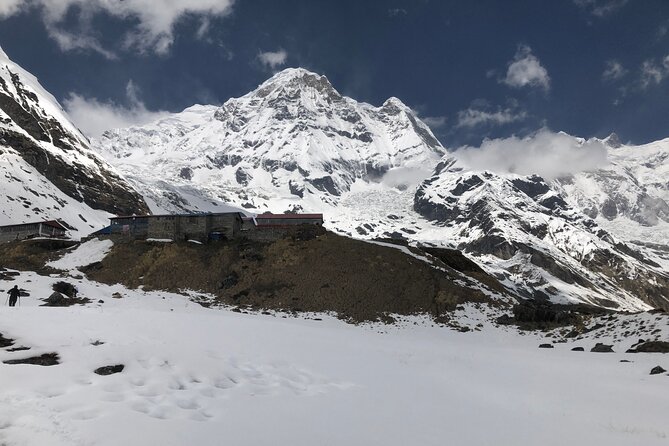
You walk from Chame to Pisang on Day 4, reaching roughly 3,300 meters after five to six hours. The country becomes more open, and the dramatic peaks of the Annapurna region begin to dominate the views.
Pisang is an important overnight stop because it places you above 3,000 meters while keeping the daily walking time reasonable. Your body is now adjusting to altitude, so drinking regularly, walking steadily, and telling your guide about symptoms are sensible habits.
Day 5 leads from Pisang to Manang. The six to seven-hour walk ends at about 3,540 meters. Manang is one of the main cultural and practical centers on the upper circuit.
The route from Pisang to Manang is one of the trip’s rewarding middle sections. You move from the lower valley feel into a drier, higher setting, with distinctive villages and mountain views. The exact trail experience can vary, but the itinerary is designed to keep the elevation gain gradual.
Same trailhead, a different route:
- Everest Base Camp Trek – 14 Days
★ 5.0 · 1,499 reviews - Everest Base Camp Trek
★ 5.0 · 842 reviews - Everest Base Camp Helicopter Tour landing at Everest View Hotel
★ 5.0 · 668 reviews - Everest Base Camp Trekking
★ 5.0 · 485 reviews
Day 6: A needed pause in Manang
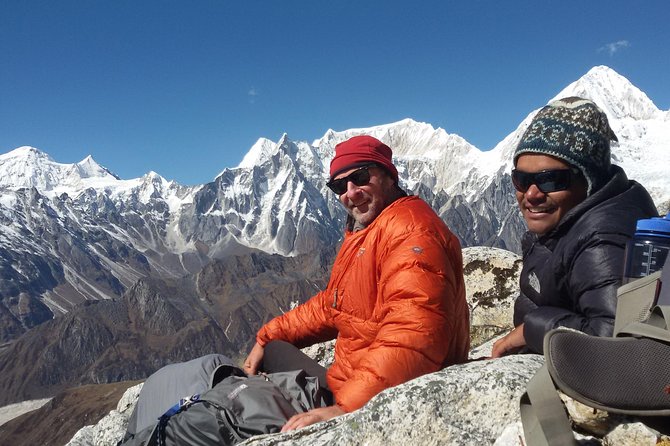
The full acclimatization day in Manang is one of the most valuable parts of the schedule. You do not simply lose a day. You give your body time to adjust before the route climbs above 4,000 meters.
The provided plan does not specify a fixed activity for this day, so your guide can help shape it around rest and local exploration. Keep this day useful rather than exhausting. The next three walking days lead toward Thorong La, and saving energy is more important than squeezing in every possible side walk.
Altitude deserves respect here. The itinerary requires moderate physical fitness, but fitness alone does not prevent altitude problems. You should have travel and rescue insurance, which is specifically excluded from the price.
Days 7 and 8: Yak Kharka and Thorong Phedi
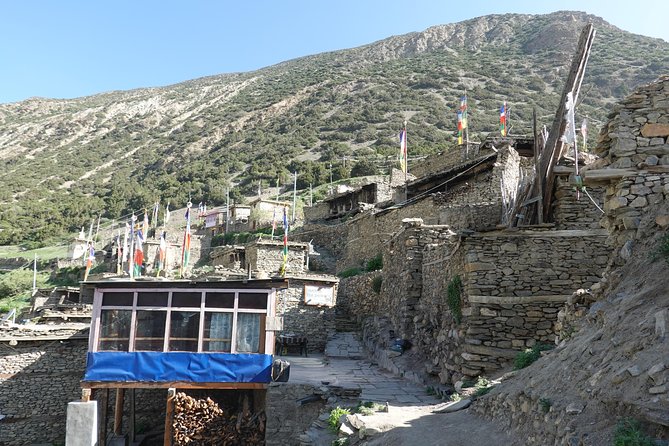
Day 7 takes you from Manang to Yak Kharka at about 4,120 meters. The walk is four to five hours. It is shorter than the earlier valley days, but the altitude makes it feel harder.
Yak Kharka is a staging point, not a sightseeing base with a long list of attractions. Its value is its position on the route. You gain height in controlled steps and spend the night closer to the pass.
On Day 8, you continue to Thorong Phedi, reaching about 4,450 meters after another four to five hours. This is the last major overnight stop before the pass.
The setting becomes stark and exposed. Cold, wind, and basic accommodation are part of the deal. One account connected with this trek described nighttime temperatures falling as low as minus 20 degrees Celsius, with water freezing in an ordinary bottle. That is not a guaranteed forecast, but it is a useful warning about the conditions you may face. Bring clothing and equipment suited to severe cold, and ask your guide about the next morning’s plan.
Day 9: Crossing Thorong La at 5,416 meters
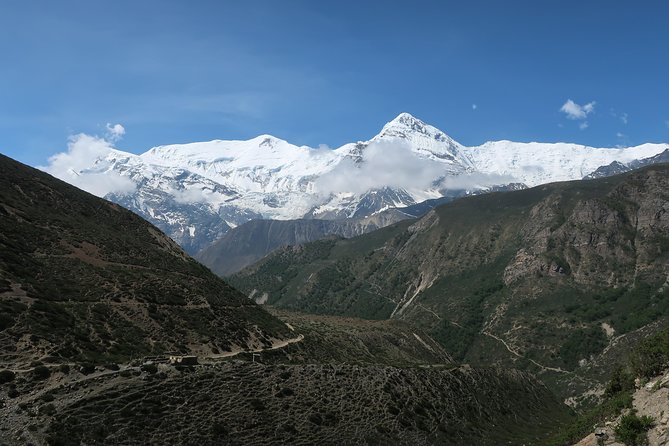
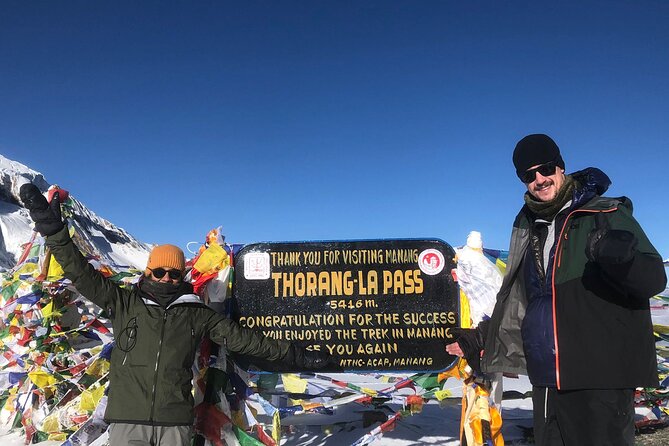
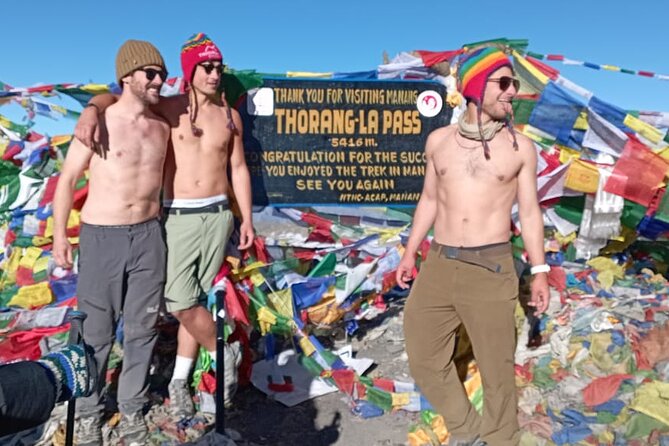
This is the defining day. You leave Thorong Phedi, cross Thorong La at 5,416 meters, and descend to Muktinath at 3,802 meters. The listed walking time is seven to eight hours.
The pass is physically demanding because you are climbing to the highest point of the trek early in the day, often in cold and wind, then continuing downhill for several hours. Your guide’s support matters most here. The guides associated with this trek have been praised for patient pacing, encouragement, and help with decisions during the crossing.
The reward is not just reaching a number on a map. You see the route change again as you descend toward Muktinath. The dramatic shift from high pass to lower settlement gives the day a strong sense of achievement.
Do not treat the pass as a guaranteed finish line. You still need to reach Muktinath, and tired legs make the descent difficult. Keep your pace steady and follow your guide’s instructions.
Day 10: Muktinath to Jomsom
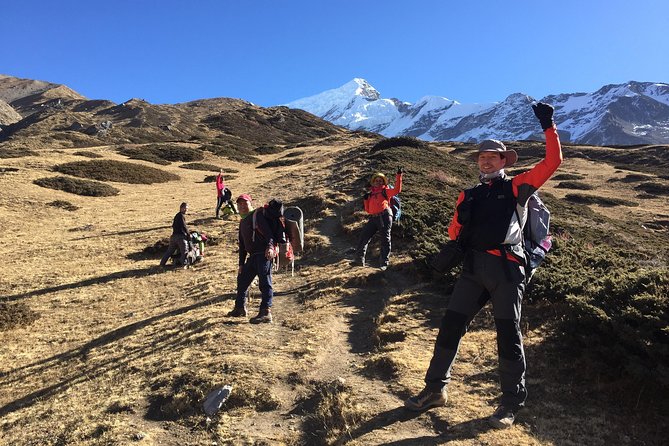
The walk from Muktinath to Jomsom takes five to six hours and descends to about 2,743 meters. After the pass, this lower elevation should feel more comfortable, though the route can still be tiring.
Muktinath is an important pilgrimage site, and the itinerary gives you time to experience the area rather than simply crossing through it. The circuit’s appeal comes partly from this meeting of mountain walking and religious culture.
Jomsom is a major settlement in the Kali Gandaki area. It also marks the point where the trip begins shifting from a high-altitude trek toward transport and lower valleys.
Day 11: Jomsom to Tatopani by road
Day 11 uses a bus from Jomsom to Tatopani, a four to five-hour drive. This is one of the practical compromises in the itinerary. You are not walking every section of the traditional route, but the road saves time and links the upper circuit with the lower trekking country.
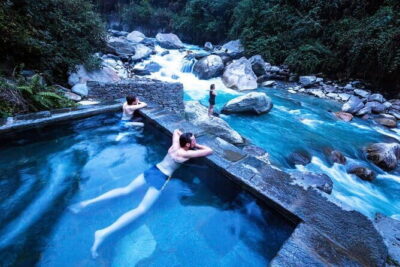
Tatopani is known for its natural hot spring. After several days above 3,000 meters, a stop here offers a change of pace and a chance to rest your body. The hot spring is included as a named feature, but personal expenses such as entry charges are not specified, so ask your guide how that part is handled.
Days 12 and 13: Tatopani, Ghorepani, and Poon Hill
Day 12 is a serious walking day. You climb from Tatopani at about 1,290 meters to Ghorepani at approximately 2,750 meters, with seven to eight hours on foot.
The return to higher ground is gradual but substantial. The route brings you back into greener country, with forest and changing views after the dry upper valleys. Because the day is long, you should not think of Tatopani as a simple rest stop followed by an easy climb.
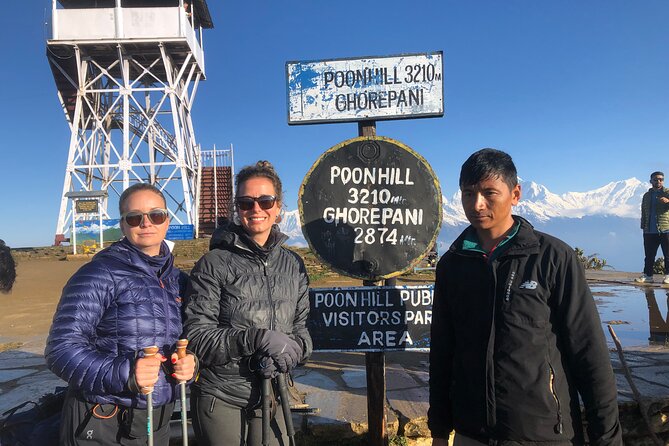
Day 13 starts early with a hike to Poon Hill at 3,210 meters. You then walk down to Nayapul and take a taxi to Pokhara. The full day lasts about seven to eight hours.
Poon Hill is the final major viewpoint on the plan, and the early start is designed to catch the morning mountain scenery. The descent to Nayapul comes after the viewpoint, so you should expect a full day rather than a quick sunrise outing.
Reaching Pokhara gives you a welcome change from teahouse trekking. The itinerary does not list accommodation details in Pokhara, so confirm what happens after the taxi arrives if you need a hotel that night.
Day 14: Returning from Pokhara to Kathmandu
The final day is a drive from Pokhara, at about 822 meters, back to Kathmandu, at about 1,400 meters. The provided information does not state the exact driving time or vehicle type for this leg.
This last transfer completes the circuit as a 14-day package, but it is still a road day. If you have a flight soon after arrival, leave plenty of margin. The tour offers pickup, and arrival flight details are requested at booking, which helps the operator coordinate the start of your trip.
What the $1,175 price really covers
At $1,175, the package has solid value for a guided private trek, mainly because several unavoidable costs are bundled together. You receive:
- Bus transport from Kathmandu to Jagat
- Bus transport from Jomsom to Tatopani
- Private transport from Nayapul to Pokhara
- Teahouse accommodation during the trek
- A government-licensed guide
- Annapurna Conservation Area permits
- TIMS registration
- Three standard meals each trekking day
- A first-aid medical kit and trekking map
- Government tax
The inclusion of breakfast, lunch, and dinner is especially useful. Food costs can add up over a two-week mountain trip, and having meals arranged keeps the daily routine simple.
Still, do not mistake the headline price for your full budget. Travel and rescue insurance are essential personal costs. You also pay for phone calls, laundry, bar bills, battery charging, showers, bottled or boiled water, and tips. A porter is not included, either, so ask about the current price if you do not want to carry your own bag.
Teahouses, transport, and the private format
Teahouse lodging is practical rather than luxurious. The inclusion gives you a bed at each trekking stop, but the information does not promise private rooms, attached bathrooms, heating, or charging access. Expect basic mountain accommodation and budget extra for comforts listed as personal expenses.
The transport mix saves time but reduces the purity of a completely on-foot circuit. You ride on the first day, take a bus from Jomsom to Tatopani, use a taxi from Nayapul to Pokhara, and drive back to Kathmandu. I see that as a fair trade for completing the circuit in 14 days, especially if you want the major high points without adding several extra walking days.
The private group format is a real advantage if you value flexibility. You can ask questions, adjust the pace with your guide, and receive direct help if the high sections become difficult. It is also worth asking before departure which guide will lead your group and whether a porter can be arranged.
Who should book this trek
This experience suits you if you want a major Himalayan trek but prefer not to arrange permits, teahouses, transport, meals, and route logistics on your own. It is also a good fit if you enjoy cultural contact and changing scenery more than a single summit objective.
You should have moderate physical fitness and be ready for four to eight hours of walking on many days. The high point is 5,416 meters, and cold conditions can be severe. If you dislike basic lodging, long road transfers, or uncertain mountain weather, this may not be the right choice.
Solo hikers can benefit from the private setup, especially if they want a guide without joining a large group. The support is personal, but the physical demands remain the same. You should arrange insurance that covers trekking and rescue before setting out.
The cancellation policy is fairly strict close to departure: a full refund requires cancellation at least six full days before the start time. Cancellation two to six full days ahead allows a 50 percent refund, while cancelling less than two full days ahead receives no refund.
Should you book the Annapurna Circuit Trek?
Book it if you want the full arc of the Annapurna region, from river valleys and forest to high desert, a 5,416-meter pass, pilgrimage sites, hot springs, Poon Hill, and Pokhara. The guide support, included permits, meals, teahouses, and transport make the $1,175 price sensible for many hikers.
Do not book it expecting an easy holiday. The pass, cold nights, basic rooms, long walks, and extra costs require honest preparation. If you arrive fit, insured, properly equipped, and ready for simple conditions, this is a strong way to experience one of Nepal’s classic routes with the planning burden kept under control.
FAQ
Where does the Annapurna Circuit Trek start?
The experience begins in Kathmandu, with a drive to Jagat by way of Besisahar on the first day.
How long does the trek last?
The listed duration is approximately 14 days, including the drives from Kathmandu to Jagat, Pokhara to Kathmandu, and other transport sections.
What is the highest point on the route?
The highest point is Thorong La Pass at 5,416 meters, crossed on Day 9 between Thorong Phedi and Muktinath.
Is accommodation included?
Yes. Teahouse accommodation during the trek is included in the price.
Are meals included?
Yes. Three standard meals, breakfast, lunch, and dinner, are included during the trekking portion.
Is transportation included?
Yes. The package includes bus transport from Kathmandu to Jagat and from Jomsom to Tatopani, plus private transport from Nayapul to Pokhara. The itinerary also includes the drive from Pokhara to Kathmandu.
Is a guide provided?
Yes. The trek includes a government-licensed, experienced guide. This is a private activity, so only your group participates.
Is travel insurance included?
No. Travel and rescue insurance are not included and must be arranged separately.
Just added around Kathmandu
- Everest Base Camp Trek★ 5.0 · 3 reviews
- Everest Base Camp Trek★ 5.0 · 7 reviews
- 15 Days Private Everest Base Camp Trek★ 5.0 · 30 reviews
- 14-Day Everest Base Camp Trek★ 5.0 · 20 reviews
- Everest Base Camp Trek★ 5.0 · 57 reviews
- 14 Days of Adventure Trekking to Everest Base Camp★ 5.0 · 2 reviews
- From Kathmandu: Private 14-Day Everest Base Camp Trek★ 5.0 · 20 reviews
- 14 Days Everest Base Camp Trek★ 5.0 · 4 reviews
Annapurna Base Camp Treks, compared.
Trekking in Annapurna/Langtang/Everest/Upper Mustang regions
Read our review →
Kathmandu to Annapurna Base Camp (ABC) 5-Day Trek
Read our review →Browse the lists this trek appears in