
Review · KATHMANDU
Annapurna Circuit Trek with Heritage Highlights
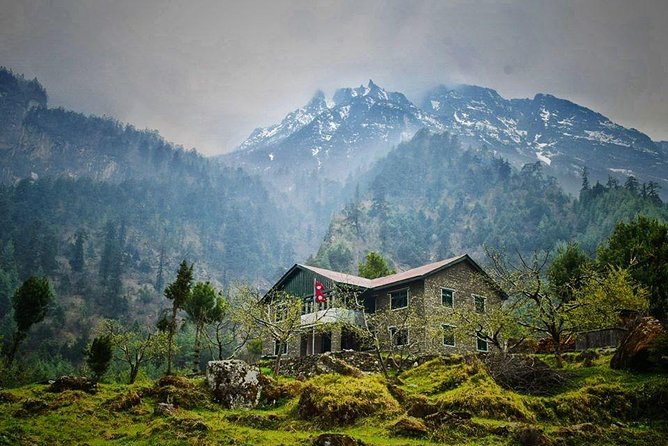
The biggest draw here is the Annapurna Circuit’s dramatic change of scenery. You begin among green hills and river gorges, climb through pine and juniper country, cross the high Thorong La at 5,416 meters, then descend into the dry, Tibetan-style Kali Gandaki Valley. I like that the route joins serious mountain walking with Kathmandu, Pokhara, and several important Hindu and Buddhist sites.
I also like the built-in acclimatization day in Manang and the practical support: permits, guide, porter service, staff costs, and most lodging are covered. The main consideration is the price structure. At $1,937.80, the package covers a lot, but meals on the trek, heritage entrance fees, insurance, tips, and personal expenses are extra. You also need good fitness for long walking days and thin air.
Key points at a glance
- Thorong La at 5,416 meters: The trek’s hardest and most memorable day, with views toward the Dhaulagiri Massif.
- A real change of climate: Green Marsyangdi valleys give way to dry, high Himalayan country around Manang, Muktinath, and Kagbeni.
- Manang acclimatization day: Time for a slower day, local monasteries, Gangapurna Lake, and advice from the Himalayan Rescue Association.
- Heritage before and after the trek: Kathmandu Durbar Square, Swayambhunath, Boudhanath, Patan, Bhaktapur, and Pokhara’s cultural sites add depth.
- Porter and guide support included: One porter is provided for every two trekkers, with staff insurance, equipment, and accommodation covered.
- Jomsom to Pokhara flight: A useful shortcut after the pass, followed by several relaxed days in Pokhara.
What this 18-day Annapurna Circuit really gives you
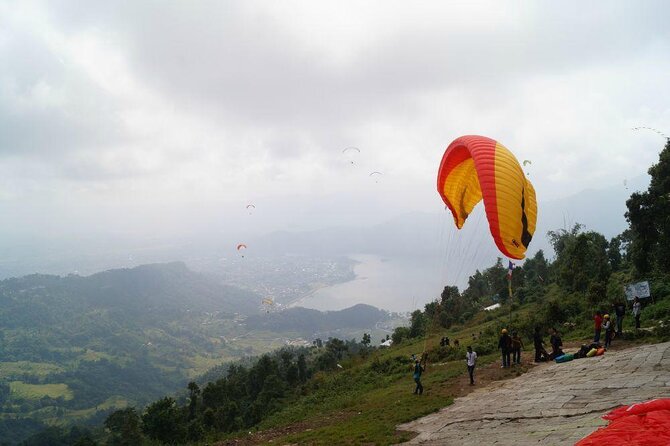
This is not a short mountain excursion with one famous viewpoint. It is a full Himalayan journey, with time at both ends for temples, old cities, lakes, museums, and recovery.
The trekking section runs through Bhulbhule and the Marsyangdi Valley, then Chame, Pisang, Manang, Yak Kharka, Ledar, Thorong High Camp, Thorong La, Muktinath, Kagbeni, and Jomsom. The route includes long road transfers at the start and end, so you should think of it as a combination of trekking and cultural touring rather than a walking-only trip.
The package costs $1,937.80 per person. That is a substantial outlay, but it includes four nights in Kathmandu, three nights in Pokhara, ten nights during the trek, transportation listed in the schedule, permits, a licensed guide, and porter service. Since food and drinks are not included, keep room in your budget for daily meals, tea, snacks, bottled drinks, and tips.
More Annapurna Treks in Kathmandu
- Annapurna Circuit Trek with Tilicho Lake
★ 5.0 · 368 reviews - Annapurna base camp trek 5 Days
★ 5.0 · 252 reviews - 14-Day Private Annapurna Base Camp Trek
★ 5.0 · 180 reviews
Kathmandu begins with temples and old royal squares
Your arrival at Tribhuvan International Airport includes a greeting and transfer to your hotel. After you settle in, there is a tour briefing and time to rest. That first evening matters more than it may seem, since the next day is an early cultural introduction and the trekking schedule soon becomes demanding.
Day two covers three major sights. Kathmandu Durbar Square gives you a first look at the old royal center, with medieval Malla-era architecture and busy courtyards. The entrance fee is not included, so plan for that extra cost.
Swayambhunath, often called the Monkey Temple, sits on a hill above the Kathmandu Valley. The climb includes 365 stone steps. You get a strong city view from the top, but the stairs are also a useful warning about the physical effort still ahead.
Boudhanath Stupa is a calmer place to end the day. Its broad circular walkway and surrounding rooftop restaurants make it a good lunch stop. Entrance fees for these heritage sites are also extra, with total heritage charges estimated at about $60 per person for the trip.
The Marsyangdi Valley leads you into the mountains
The road from Kathmandu toward Besisahar and Syange takes roughly seven hours in a private vehicle, with breaks for food and snacks. This is a long day on winding hill roads, but it gives you an immediate sense of rural Nepal as the route passes through small towns and green hills.
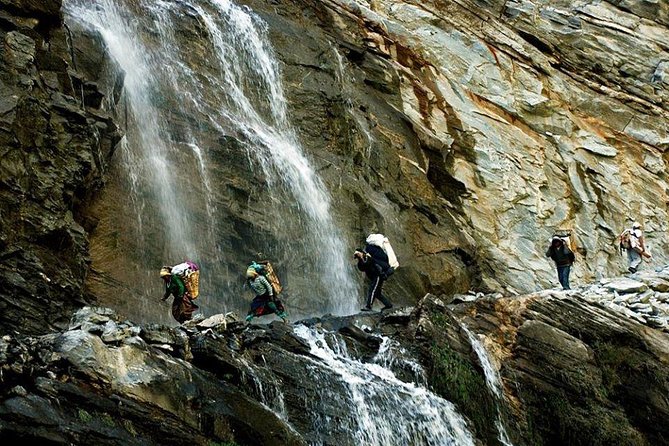
From Syange, the trail and road system takes you through Jagat, Chyamche, Tal, Kyodo, and Karte before reaching Dharapani at about 1,860 meters. The route rises and falls, though the description presents it as manageable. You will see river gorges, waterfalls, villages, and increasingly grand mountain views.
The next section leads toward Chame. Here, the schedule contains a small inconsistency: one day describes the Syange to Dharapani route, while the following day is labeled Chame but repeats some of the same wording. I would ask the operator to confirm the exact walking distance, overnight village, and transport plan before departure.
Chame is the administrative center of the Manang district and a useful point for the scenery to change. Forests, cliffs, and snowy peaks begin to dominate the view. The route toward Pisang enters a narrow valley and passes the striking Paungda Danda rock face, shaped by glacial forces.
Pisang and Manang bring the best mountain views
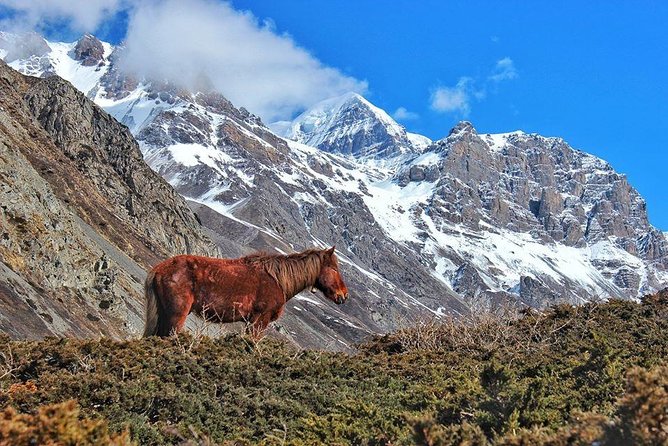
Pisang has several lodges and a choice of meals, making it a practical overnight stop rather than just a name on a route map. From here, you can take the route toward Manang via Ngwal or Ghyaru. These higher paths provide broad views across the valley and toward the surrounding peaks.
The approach to Manang is one of the strongest parts of the circuit. You walk along the northern side of the river and gain a clearer sense of how high the valley sits above the lower Marsyangdi region. Ngwal and Ghyaru offer open views and old village settings, while Manang has more services, lodges, monasteries, and places to pause.
Your rest day in Manang is not wasted time. It is an important part of the schedule because altitude gain needs to be handled carefully. You can visit nearby monasteries, look toward the mountains, or take a short boating trip on Gangapurna Lake if conditions allow.
The itinerary specifically advises paying attention to guidance from the Himalayan Rescue Association. That is sensible. At this point, the right choice is not to chase distance. A slower day in Manang gives your body a better chance to adjust before the route rises toward 4,000 meters and beyond.
Same trailhead, a different route:
- Everest Base Camp Trek – 14 Days
★ 5.0 · 1,499 reviews - Everest Base Camp Trek
★ 5.0 · 842 reviews - Everest Base Camp Helicopter Tour landing at Everest View Hotel
★ 5.0 · 668 reviews - Everest Base Camp Trekking
★ 5.0 · 485 reviews
Yak Kharka and Ledar test your legs and lungs
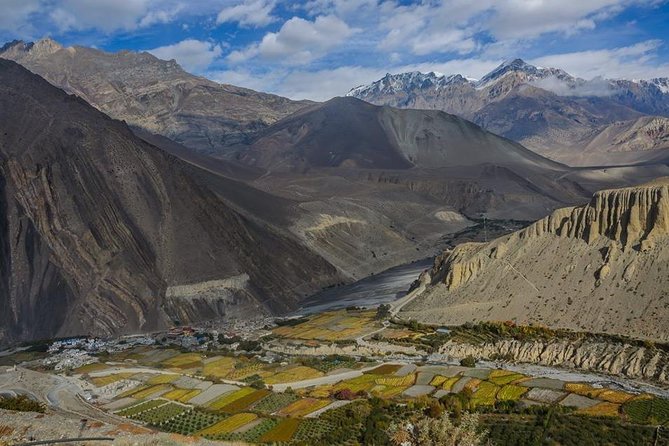
After Manang, the trail climbs toward Tengi, Ghunsang, Yak Kharka, and Ledar. The vegetation becomes more open, with barberry, juniper, and rose mentioned along the route. You also cross streams and leave the Marsyangdi Valley behind.
Yak Kharka sits at about 4,000 meters, while Ledar is reached after another hour of walking. The listed walking time for this day appears short compared with the altitude and terrain, so I would treat the schedule as an outline rather than a guarantee. Mountain conditions, pace, and rest stops can alter the timing.
This is a good place to be conservative. Drink regularly, keep your pace steady, and tell your guide if you develop a headache or feel unwell. You do not need technical climbing skills for this route, but altitude makes ordinary walking much harder.
Thorong High Camp prepares you for the pass
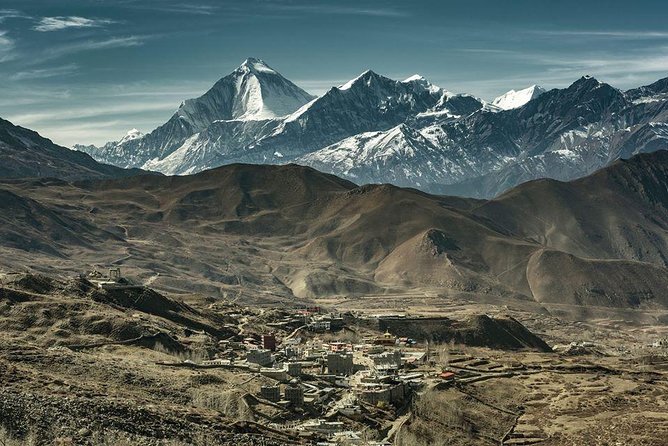
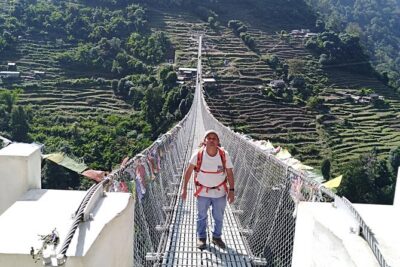
The trail toward Thorong Phedi and High Camp follows the valley, crosses a suspension bridge, and then climbs on the opposite side. The route gives you views of Thorong Peak and the surrounding mountains.
The itinerary lists Thorong Phedi at 5,416 meters, but that figure is generally associated with the Thorong La pass itself rather than the lower base camp. Because altitude figures affect preparation and safety, confirm the precise overnight elevation and daily plan with the operator.
The High Camp night is the key preparation point for the pass crossing. The next day begins early, and you will need warm clothing, water, snacks, and a steady approach. Meals and drinks are not included in the package, so plan to buy these during the trek.
Crossing Thorong La is the trip’s defining day
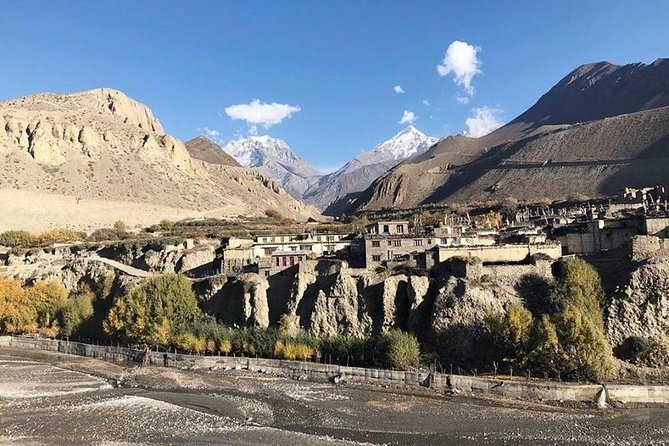
The pass crossing is listed at 5,416 meters, or 17,764 feet. You should expect a steep, tiring ascent followed by a long descent. The reward is the view west toward the Dhaulagiri Massif and the feeling of passing from the greener Manang side into the dry Mustang region.
This is a demanding day, listed at about seven hours before continuing down toward Muktinath. The exact timing depends on conditions and your pace. You do not need ropes or climbing experience, but you do need a good level of fitness and a willingness to walk slowly.
Muktinath gives the day a strong cultural finish. It is sacred to both Hindus and Buddhists, and the area includes a temple, Buddhist monastery, and natural gas flame. You may also see Sadhus and Tibetan traders, along with small piles of stones left by people seeking blessings.
The religious importance of Muktinath is part of what makes this route more than a mountain challenge. You are moving through places where pilgrimage, trade, village life, and high-altitude travel have been connected for generations.
Kagbeni and Jomsom show a drier side of Nepal
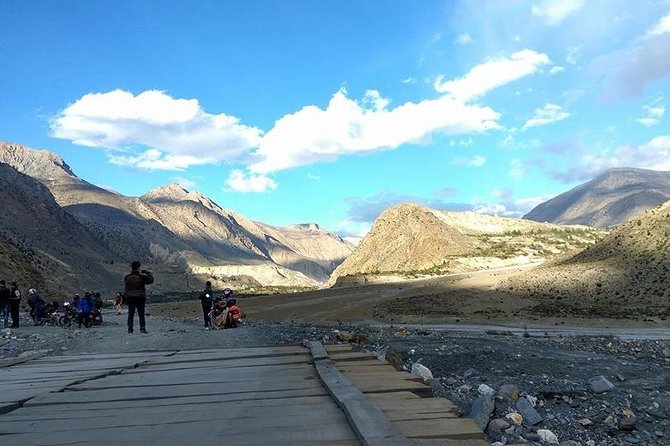
The next morning includes more time at Muktinath before an easier descent toward Kagbeni. The route passes through villages with a Tibetan visual character, and Kagbeni is a good place to slow down and look at local buildings, the monastery, and daily life along the Kali Gandaki Valley.
Jomsom follows as the final major trekking stop. The plan is to fly from Jomsom to Pokhara the next morning. This flight saves a long return overland journey and gives you a different view of the mountain country, including glimpses of the Annapurna and Tatopani or Ghorepani routes.
Flights in mountain regions can depend on conditions and schedules, so allow some flexibility. The itinerary places the flight on day thirteen, but the operator should confirm the current departure time and what happens if the flight schedule changes.
Pokhara offers a gentler second half
Pokhara is a welcome change after the high pass. You have three nights here, with time for the lakeside area, Phewa Lake, and mountain views reflected in the water. Annapurna, Machhapuchhre, and Dhaulagiri may appear from the lake when the weather is clear.
Sightseeing includes Devi’s Fall, where water from Phewa Lake disappears into an underground cavern, and Gupteswar Gupha, a sacred cave nearby. The International Mountain Museum adds useful context about mountaineering and the people who have explored the Himalayas.
You can also see the Seti Gandaki River, which runs through the city and turns milky because of limestone in the ground. The itinerary mentions Tibetan settlements and handicraft shops around Pokhara, including Tibetan carpets.
An early drive to Sarangkot provides a sunrise viewpoint over Annapurna, Fishtail, Dhaulagiri, and other peaks. Afterward, the plan includes boating on Phewa Lake and walking toward the World Peace Pagoda on Anadu Hill. The pagoda itself is peaceful, but the listed two-minute visit time is clearly brief, so confirm how much time is actually planned there.
Patan and Bhaktapur finish the cultural story
The final full day returns to the Kathmandu Valley for Patan and Bhaktapur. Patan Durbar Square includes the Krishna Temple and Patan Museum. Entrance to the listed heritage sites is included on this day, unlike the first Kathmandu sightseeing day.
Bhaktapur is known for its preserved old streets, carved wooden buildings, and Nyatapola Temple. Pottery Square adds a hands-on option, with a traditional pottery-making class available at an additional cost.
I like this ending because it puts the mountain villages into a wider cultural setting. You begin and finish among old cities, temples, workshops, and courtyards, rather than flying home immediately after the trek.
What is included, and what will cost extra
The package includes:
- Airport transfers and transportation listed in the schedule
- ACAP, TIMS, and other required permits
- Four nights in Kathmandu on breakfast basis
- Three nights in Pokhara on breakfast basis
- Ten nights of trek lodging
- A government-licensed guide
- One porter for every two trekkers
- Staff wages, insurance, equipment, and accommodation
- Six breakfasts
You pay separately for food and drinks, personal expenses, heritage entrance fees, Nepal visa charges, tips, travel insurance, emergency rescue evacuation, donations, and room or service upgrades.
The lack of emergency evacuation insurance is especially important. You should arrange suitable travel insurance before departure, including coverage appropriate for high-altitude trekking. The tour requires a moderate fitness level and a large amount of walking, so this is not a casual sightseeing holiday.
Who should book this Annapurna Circuit package?
I would choose this trip if you want a supported high-altitude trek but also want substantial time in Kathmandu and Pokhara. It suits people who value a guide, porter support, organized transfers, and a planned acclimatization day.
It is less suitable if you want complete independence, short walking days, or all-inclusive pricing. You should also be comfortable with basic trekking accommodation for ten nights, long road transfers, changing weather, and the possibility that daily timings may shift.
The small group format is private, meaning only your own group takes part. That can make the pace and daily routine more personal. Nilam and Devi are named as helpful contacts in the arrangements, and their warm, attentive approach is a useful sign for anyone who values clear support before and during the trip.
Should you book it?
Book this experience if the full mix appeals to you: old Kathmandu, remote villages, a high pass, sacred Muktinath, Mustang-style scenery, Pokhara lakeside time, and a return to Patan and Bhaktapur.
Before paying, confirm the exact Chame and Dharapani schedule, the true elevations of the overnight stops near Thorong La, current Jomsom flight arrangements, and which heritage fees are included on each day. If you prepare for the extra costs and take the altitude seriously, this package offers a strong way to experience the Annapurna Circuit without arranging every permit, porter, hotel, and transfer yourself.
FAQ
How long is the Annapurna Circuit trek?
The experience lasts approximately 18 days, including arrival and departure days, cultural sightseeing in Kathmandu, trekking, time in Pokhara, and the return to Kathmandu.
Where does the tour begin?
The tour begins with pickup at Tribhuvan International Airport in Kathmandu, Nepal.
Is a guide included?
Yes. The package includes an experienced, government-licensed trekking and tour guide.
Are porters included?
Yes. Porter service is included at a ratio of one porter for every two trekkers. Staff salary, insurance, equipment, and accommodation are also included.
Are meals included?
Six breakfasts are included. Food, drinks, and beverages are otherwise excluded, including meals during the trek.
Do I need travel insurance?
Travel insurance is not included. Emergency rescue evacuation insurance is also excluded, so you need to arrange your own suitable coverage.
Can I cancel for a full refund?
Yes. You can cancel at least 24 hours before the experience start time for a full refund. Cancellations or changes made less than 24 hours in advance are not accepted for a refund.
More Historical Tours in Kathmandu
- 10 Days Nepal Trip – Heritage Kathmandu – Natural Pokhara and Poon Hill Trek
★ 5.0 · 3 reviews - Trekking History and Indigenous Heritage in Minca + Cacao & Coffee + Waterfall
★ 4.9 · 63 reviews - From Hanoi : Sapa Moutain Trek – Halong bay Heritage
★ 4.5 · 25 reviews
Just added around Kathmandu
- Everest Base Camp Trek★ 5.0 · 3 reviews
- Everest Base Camp Trek★ 5.0 · 7 reviews
- 15 Days Private Everest Base Camp Trek★ 5.0 · 30 reviews
- Everest Base Camp Trek★ 5.0 · 57 reviews
- 14 Days of Adventure Trekking to Everest Base Camp★ 5.0 · 2 reviews
- 14-Day Everest Base Camp Trek★ 5.0 · 20 reviews
- From Kathmandu: Private 14-Day Everest Base Camp Trek★ 5.0 · 20 reviews
- 14 Days Everest Base Camp Trek★ 5.0 · 4 reviews
Annapurna Base Camp Treks, compared.
Trekking in Annapurna/Langtang/Everest/Upper Mustang regions
Read our review →
Kathmandu to Annapurna Base Camp (ABC) 5-Day Trek
Read our review →Browse the lists this trek appears in