
Review · KATHMANDU
Annapurna Circuit Trek in Nepal (9 Days)
The great draw here is the fast, high-altitude route across Thorong La Pass, paired with villages, monasteries, apple orchards, suspension bridges, and views of the Annapurna range. I like the built-in acclimatization day in Manang and the fact that your guide, permits, meals, lodging, and main ground transport are bundled into one price.
I also like the small private-group format: only your own party takes part, so the pace and daily rhythm should feel more personal than a large commercial departure. The catch is the schedule. Nine days leaves little spare time, and the pass day begins around 3 AM at more than 5,400 meters. You need solid fitness, a willingness to walk long hours, and travel insurance that covers emergency evacuation.
Key things to know before booking
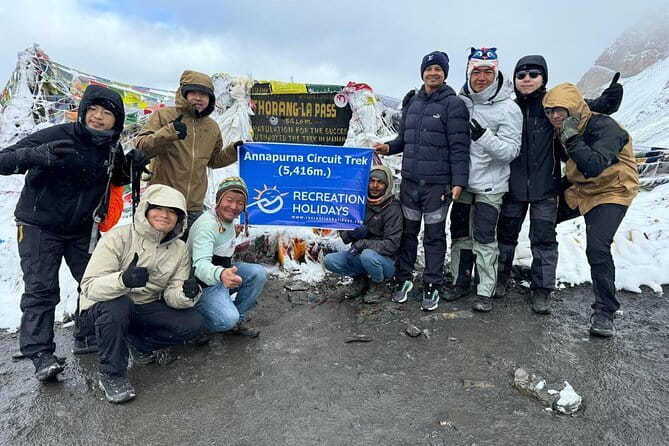
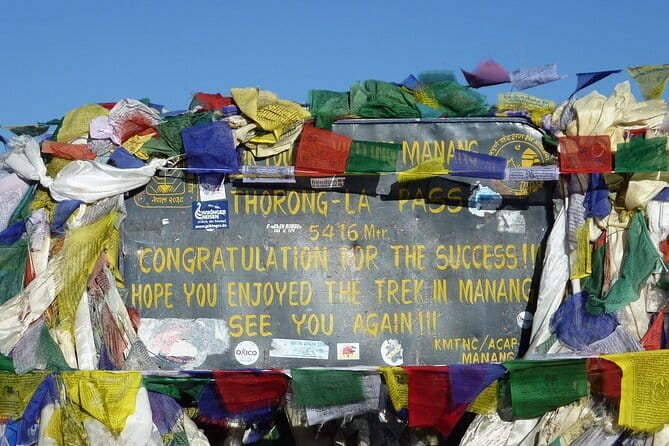
- Thorong La reaches 5,416 meters, making Day 8 the physical and emotional high point of the trip.
- Manang includes a full acclimatization day, with time for the village, Gangapurna glacial lakes, or local monasteries.
- Eight tea house nights, meals, permits, and a licensed English-speaking guide are included in the $880 price.
- The trek ends in Pokhara, not Kathmandu, after a scenic drive from Muktinath through lower Mustang.
- Porter service costs an extra $240 per porter, with one porter available for every two trekkers.
- The schedule is demanding, with several days listed at about 12 hours and a pre-dawn start for the pass.
What the $880 price really covers
At $880 per person, this is not simply a guide-and-walk package. The price includes eight nights in twin-sharing tea houses, eight breakfasts, eight dinners, nine lunches, trekking permits, a licensed English-speaking guide, a first-aid kit, local transport, and all listed fees and taxes.
That bundle gives you a clearer budget than arranging each part alone. You still need to pay for your Nepal entry visa, international flights, Kathmandu and Pokhara hotels, insurance, extra baggage, and any private transport. Porter service is also separate at $240 per porter.
The food allowance is especially useful. Eight breakfasts and dinners cover your overnight stays, while nine lunches match the nine-day schedule. Tea house accommodation is practical rather than luxurious. You should think of it as a warm bed and a simple base for the next day, not a hotel-style stay.
One important detail deserves a check before you pay. The daily plan describes the first day reaching Bhulbhule, then changing to a shared jeep, while the included transport section says transport from Kathmandu to Dharapani. Ask Recreation Holidays to confirm the exact first-day road transfer and where the trek begins. This is a small clarification, but it matters when you are planning luggage, arrival times, and your first night.
More Annapurna Treks in Kathmandu
- Annapurna Circuit Trek with Tilicho Lake
★ 5.0 · 368 reviews - Annapurna base camp trek 5 Days
★ 5.0 · 252 reviews - 14-Day Private Annapurna Base Camp Trek
★ 5.0 · 180 reviews
Day 1: Kathmandu to Bhulbhule and the road into the hills
Pickup is scheduled around 6 or 7 AM from your Kathmandu hotel, with the formal start time listed as 6:15 AM. The day begins with a long bus ride toward Besisahar and Bhulbhule, followed by a shared jeep for the final approach described in the plan.
This is primarily a transport day, so do not expect a gentle warm-up walk. The road brings you out of Kathmandu and toward the Annapurna region, but the ride can make the day feel long before your boots have done much work.
The shared jeep is part of the local travel experience, though it also means less room and less control than private transport. Private transportation is not included. If you value a shorter wait or more personal space, ask about the extra cost before departure.
Day 2: Dharapani to Chame through Tibetan-style villages
The walking begins in earnest from Dharapani toward Chame. The route passes Bagarchhap and Danakyu, with the scenery shifting toward cooler alpine country. Apple orchards and mountain views add variety to a day that would otherwise be mostly steady uphill walking.
This section gives you an early taste of the cultural side of the trek. The villages reflect Himalayan and Tibetan influences, and the route is not just a march toward a pass. You are moving through lived-in communities where farming, lodges, monasteries, and mountain travel share the same narrow corridor.
The day is listed at about 12 hours, so the distance and road conditions should not be underestimated. The exact walking time can depend on the road and group pace. Keep water, rain protection, snacks, and warm layers close rather than packed away.
Day 3: Forest, bridges, and Paungda Danda
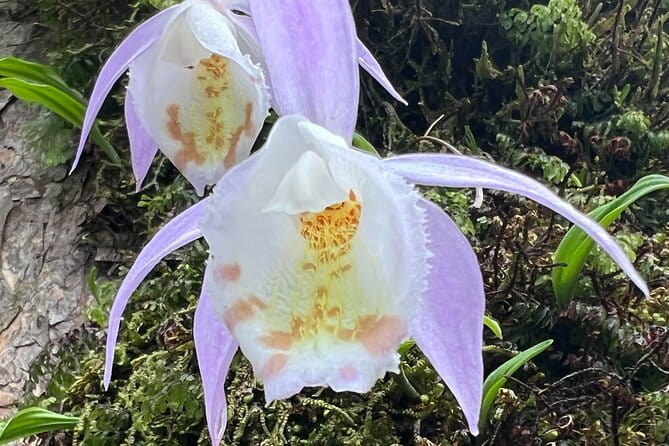
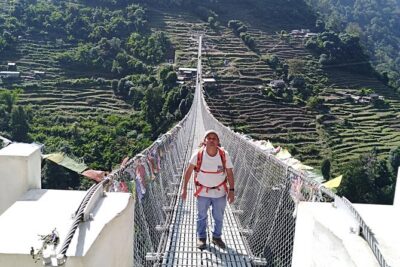
The route now passes through dense rhododendron and pine forest, open meadows, and steeper climbs. You cross several suspension bridges before reaching Paungda Danda, a huge curved rock face that gives this section a strong visual landmark.
I like this day because it changes the feel of the trek. The previous villages and orchards give way to trees, bridges, and more rugged mountain terrain. Suspension bridges also add a little harmless drama, especially if you are not fond of heights.
The schedule again allows about 12 hours, and the combination of forest paths and steep ascents will test your legs. Take the day at a measured pace. There is no prize for arriving first, and the next few days bring still higher ground.
The listed destination for this day is not clearly named beyond the route features and Paungda Danda. Confirm the overnight village and approximate walking distance with the operator. That information will help you judge the day more accurately.
Same trailhead, a different route:
- Everest Base Camp Trek – 14 Days
★ 5.0 · 1,499 reviews - Everest Base Camp Trek
★ 5.0 · 842 reviews - Everest Base Camp Helicopter Tour landing at Everest View Hotel
★ 5.0 · 668 reviews - Everest Base Camp Trekking
★ 5.0 · 485 reviews
Day 4: Arriving in Manang beneath the Annapurnas
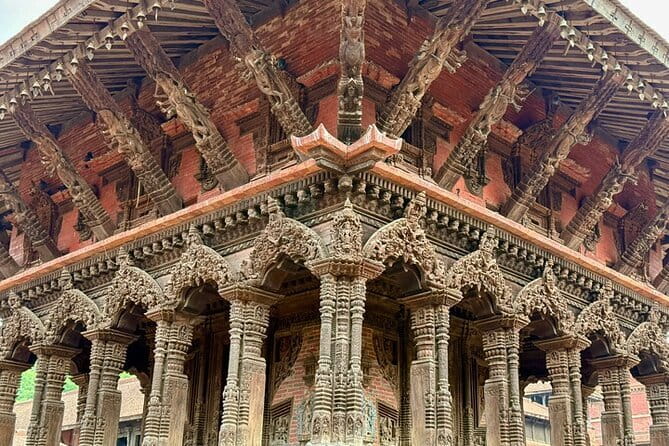
Day 4 leads toward Manang, one of the key settlements on the circuit. The route begins on flatter ground and then climbs gradually toward Humde, with broad views of Annapurna II, Annapurna III, and Annapurna I.
Manang matters for two reasons. It is a memorable mountain village, and it is the right place to pause before the route rises into much thinner air. The steady approach is easier on the body than a sudden steep climb, but altitude remains the main concern.
You should treat this day as preparation for the pass, not simply another scenic walk. Eat properly, drink regularly, and tell your guide if you develop a headache, nausea, unusual tiredness, or trouble breathing. The included first-aid kit is useful, but it does not replace medical judgment or insurance.
Day 5: A full acclimatization day in Manang
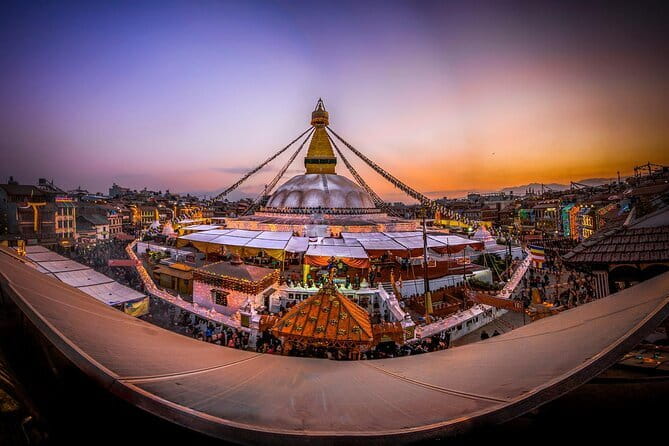
The rest day in Manang is one of the smartest features of this nine-day plan. You can explore the village, walk toward Gangapurna’s glacial lakes, or visit local monasteries. The goal is not to exhaust yourself. It is to let your body adjust before the route climbs higher.
You may be tempted to spend the day doing nothing, but gentle movement can be more useful than remaining in bed. Follow your guide’s advice and keep the outing within your ability. The plan gives you choices, so this is a good day to match activity to how you feel.
Manang also gives the trip a human scale. The Annapurna Circuit is famous for mountains, but village life and local religious sites help you understand the region beyond the trail. This is where the cultural side of the trip has room to breathe.
Day 6: Manang to Yak Kharka on a steady climb
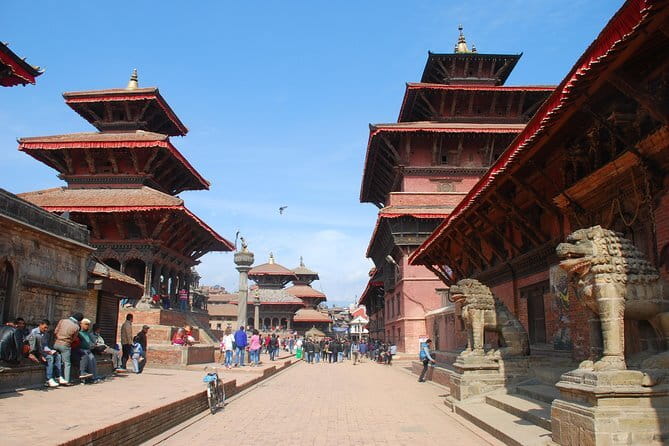
From Manang, the path rises gradually through settlements and cultivated farmland toward Yak Kharka. The ascent is described as moderate, with suspension bridges along the way.
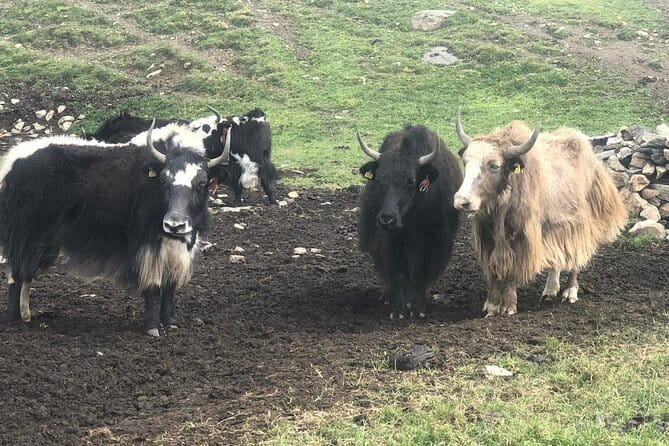
This is a quieter day in terms of named sights, but it has an important job. You are gaining height carefully before the pass. The walking may feel manageable at first, yet the thinner air can make ordinary hills seem much harder than they look.
Yak Kharka is a useful staging point for the next push. Keep your evening calm and organized. Set out clothing, water, headlamp, and anything needed for the early start ahead. The schedule lists another long day, so conserving energy now is sensible.
Day 7: Yak Kharka to Thorong Phedi
The day is labeled Thorong La Pass in the schedule, but the description places the overnight goal at Thorong Phedi. That distinction matters: you do not appear to cross the pass on Day 7. Instead, you walk for about four to five hours up to the staging area below it.
The climb is gradual, but altitude slows everything down. Build in plenty of breaks, drink water, and do not let the short stated walking time fool you into treating this as an easy day. At this height, the body works harder for every step.
The pass day follows before dawn, so Thorong Phedi is where you need to prepare. Ask your guide about the exact departure time, expected weather, and what you should carry. The route is demanding enough without searching through a large bag in the dark.
Day 8: Thorong La Pass and Muktinath
The alarm comes around 3 AM. You then climb toward Thorong La, the highest point of the trip at 5,416 meters. This is the day that requires the most patience, physical effort, and respect for changing mountain conditions.
At the summit, the reward is a wide view across the high Himalayas. The achievement is real, but the pass is not a place to linger carelessly. Weather, wind, cold, altitude, and fatigue can all change quickly. Listen closely to your guide and keep your own condition in view.
After the pass, the route descends to Muktinath. The descent can be a relief for breathing, but it is still hard on tired knees. Muktinath Temple gives the day a cultural and spiritual finish, making it more than a high-point photo stop.
This is listed as a roughly 12-hour day, and the early start makes it feel even longer. Pack only what you need for the climb and keep warm layers accessible. You will likely appreciate a hot meal and a full rest more than anything else that evening.
Day 9: Muktinath to Pokhara through lower Mustang
The final day uses a jeep or bus from Muktinath to Pokhara. The road descends through the lower Mustang Valley, offering a changing view as high mountain terrain gives way to lower elevations.
This is another long travel day, listed at about 12 hours. It is not a relaxed transfer to the airport, and you should avoid scheduling a tight onward connection in Pokhara. The reward is finishing in one of Nepal’s best-known lake cities, where you can rest after the trek.
The tour ends in Pokhara. Accommodation there is not included, so arrange your hotel separately. The same applies to Kathmandu before the trek. Complimentary luggage storage during the trek is included, which is handy if you plan to leave city clothes or a larger suitcase behind.
Guide support, group size, and safety
A licensed English-speaking guide accompanies the trek. For groups of eight or more, an assistant guide is included, with food, lodging, salary, and insurance covered for that assistant.
The activity is private, meaning only your own group participates. That should make it easier to discuss pace, rest stops, and daily concerns with your guide. Still, private does not mean easy. The route includes long days and serious altitude.
The first-aid kit is included, and emergency evacuation support is covered through travel insurance. You must supply that insurance yourself. Do not treat the evacuation note as a substitute for buying a policy that specifically covers trekking at the heights reached on this route.
A porter can be added for $240 per porter, with one porter available for every two trekkers. If you are unsure about carrying your own gear for nine days, this is an expense worth considering. The price is separate, so include it in your real budget.
Who should choose this nine-day trek
I would choose this trip if you want the major Annapurna Circuit highlights but have limited time. It gives you Manang, an acclimatization day, Yak Kharka, Thorong La, Muktinath, and Pokhara in a tight nine-day package.
It suits people with moderate physical fitness who are comfortable with long walking days, basic tea house accommodation, early starts, and a high mountain pass. It also works well for a group of friends or family members who want a private departure instead of joining a large mixed group.
I would hesitate if you want a slow trek with extra rest days or much more flexibility for weather and road delays. The schedule has little padding. I would also think twice if altitude, steep walking, or a 3 AM start sounds unpleasant rather than exciting.
Should you book the Annapurna Circuit Trek?
Book it if your priority is a well-supported, time-efficient crossing of Thorong La with meals, permits, tea house lodging, a guide, and transport already arranged. The $880 price is reasonable for what it includes, especially when you add the eight nights and nine lunches to the calculation.
Before booking, confirm the Day 1 transport details, the exact overnight stop after Paungda Danda, the porter arrangement, and the insurance requirements. If those details suit you and you are ready for long days at altitude, this is a strong choice for seeing the Annapurna region without arranging every moving part yourself.
FAQ
How long is the Annapurna Circuit Trek?
The experience lasts approximately nine days, beginning in the Kathmandu area and ending in Pokhara.
What is the price per person?
The listed price is $880 per person.
Where does the trek start?
Pickup is offered from your hotel in Kathmandu, with the listed meeting point at Tribhuvan Airport and a start time of 6:15 AM.
Where does the experience end?
The trek ends in Pokhara, Nepal, after transport from Muktinath.
Is accommodation included?
Yes. Eight nights of twin-sharing tea house accommodation are included during the trek. Accommodation in Kathmandu and Pokhara is not included.
Are meals included?
Yes. The package includes eight breakfasts, eight dinners, and nine lunches during the trek.
Is a trekking guide included?
Yes. A licensed, English-speaking guide is included. Groups of eight or more also receive an assistant guide.
Is porter service included?
No. Porter service is available for $240 per porter, with one porter offered for every two trekkers.
Are permits included?
Yes. All necessary trekking permits are included in the price.
Is travel insurance included?
No. Travel and medical insurance are not included. Emergency evacuation support is covered by your travel insurance, so you need to arrange suitable coverage yourself.
Just added around Kathmandu
- Everest Base Camp Trek★ 5.0 · 3 reviews
- Everest Base Camp Trek★ 5.0 · 7 reviews
- 15 Days Private Everest Base Camp Trek★ 5.0 · 30 reviews
- Everest Base Camp Trek★ 5.0 · 57 reviews
- 14 Days of Adventure Trekking to Everest Base Camp★ 5.0 · 2 reviews
- 14-Day Everest Base Camp Trek★ 5.0 · 20 reviews
- From Kathmandu: Private 14-Day Everest Base Camp Trek★ 5.0 · 20 reviews
- 14 Days Everest Base Camp Trek★ 5.0 · 4 reviews
Annapurna Base Camp Treks, compared.
Trekking in Annapurna/Langtang/Everest/Upper Mustang regions
Read our review →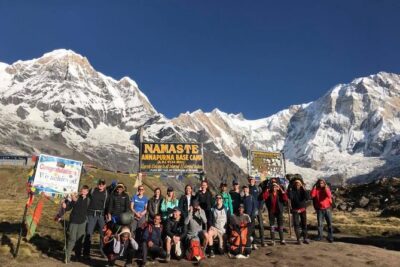
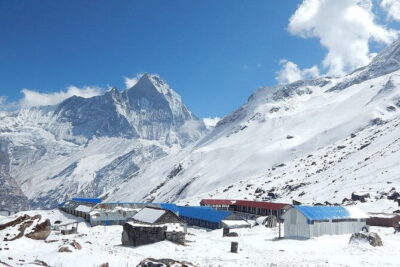
Kathmandu to Annapurna Base Camp (ABC) 5-Day Trek
Read our review →Browse the lists this trek appears in