
Review · KATHMANDU
Annapurna Circuit Trek
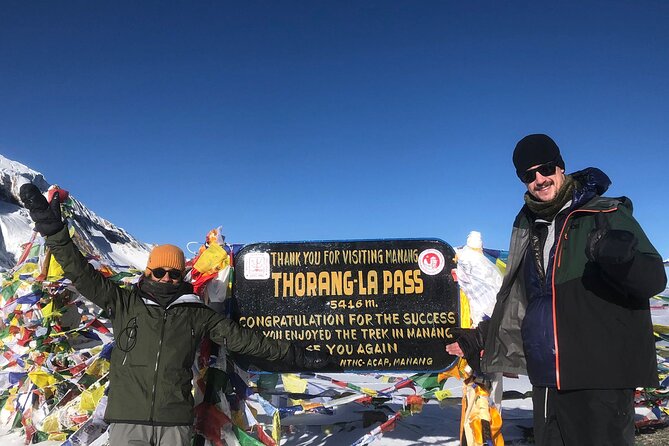
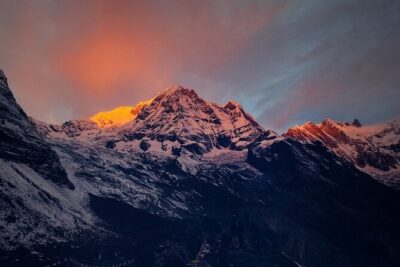
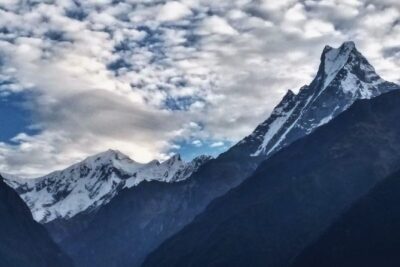
The high point here is Thorong La Pass, where the route crosses one of the world’s great Himalayan passes before dropping toward the sacred town of Muktinath. Along the way, you move from river valleys and forests to dry high country, with Annapurna, Manaslu, Lamjung Himal, and Pisang Peak appearing at different points.
I like the built-in acclimatization day in Manang and the practical support: airport transfers, permits, sleeping bags, breakfast, porters, and a flight from Jomsom to Pokhara. I also like the mix of mountain walking and culture, from Boudhanath and Pashupatinath in Kathmandu to villages such as Dharapani and Muktinath.
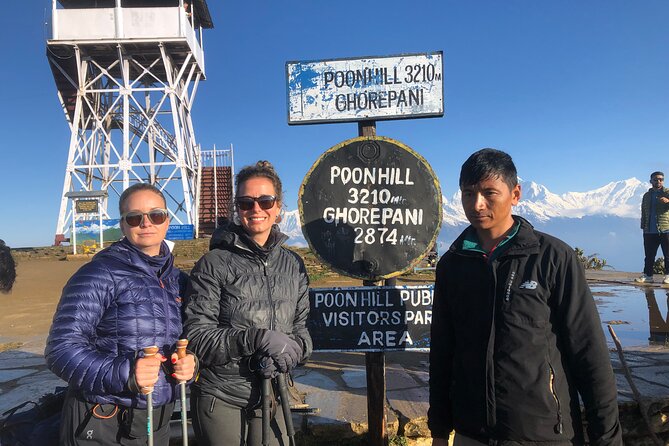
The main thing to check before paying is the route description. The opening material refers to Ghorepani, Poon Hill, Jhinu Hot Spring, Landruk, and Dhampus, but the day-by-day plan follows the Annapurna Circuit over Thorong La and does not include Poon Hill. Ask the operator to confirm the exact route, transport, and flight schedule.
Key points to know before booking
- Thorong La crossing: The toughest day is the climb over the 5,416-meter pass before descending to Muktinath.
- Sixteen-day format: The trip includes Kathmandu sightseeing, the trek, Pokhara, and airport transfers rather than sixteen full hiking days.
- Daily effort: Plan on roughly 5 to 7 hours of walking, or about 10 to 14 kilometers, on most trekking days.
- Shared porters: One porter serves two people, with a baggage limit of about 10 to 13 kilograms per person.
- Simple mountain lodging: Tea-house rooms are basic, bathrooms may be outside, and hot water depends on solar power.
- Route clarification needed: Poon Hill is described in the overview but is absent from the detailed schedule.
What this Annapurna Circuit trip really includes
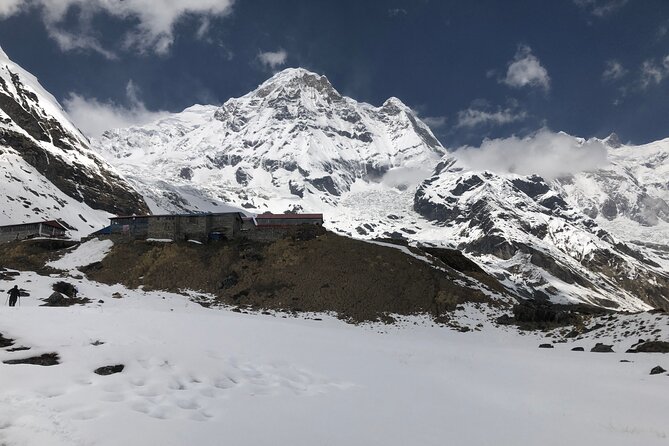
At $1,350 per person, this is a reasonably full package for a sixteen-day Nepal trip. It covers airport pickup and drop-off, Kathmandu and Pokhara hotels, trekking lodges, breakfast, the Jomsom to Pokhara flight, permits, TIMS registration, guide and porter support, sleeping bags if needed, and tourist-bus transport back to Kathmandu.
That price is useful because the expensive and awkward parts of a Himalayan trek are bundled together. You do not need to arrange each lodge, permit, ground transfer, or porter on your own. The package also includes a welcome dinner and guided sightseeing in Kathmandu and Pokhara.
Still, $1,350 does not cover everything. You pay for lunch and dinner in Kathmandu, Pokhara, and along the trail. Kathmandu sightseeing entry fees, your international or Pokhara to Kathmandu flight if you choose to fly, visa costs, personal purchases, insurance, tips, and optional activities are extra.
For a realistic budget, set aside money for meals, drinks, snacks, showers, charging, tips, and possible transport changes. Only Nepali rupees are accepted on the trek, so arrange cash before leaving the cities.
More Annapurna Treks in Kathmandu
- Annapurna Circuit Trek with Tilicho Lake
★ 5.0 · 368 reviews - Annapurna base camp trek 5 Days
★ 5.0 · 252 reviews - 14-Day Private Annapurna Base Camp Trek
★ 5.0 · 180 reviews
Kathmandu begins with temples, stupas, and a busy first day
Your arrival at Tribhuvan International Airport includes a transfer to the hotel and a welcome dinner. The listed meeting time is 6:00 am, but the arrival day and the trek orientation are described separately, so confirm the actual pickup and briefing time before you fly.
The next day packs four major sights into about four hours:
- Boudhanath Stupa: A major Buddhist site with a broad white dome and prayer flags.
- Pashupatinath Temple: An important Hindu pilgrimage site on the Bagmati River.
- Patan Durbar Square: A historic area filled with traditional Newari architecture.
- Swayambhunath Temple: A hilltop religious complex with wide views over Kathmandu.
Admission fees are not included. This sightseeing day gives you useful cultural context before the trek, but it is also a full schedule after a long international flight. If you arrive tired, take the day at a steady pace and keep your energy for the mountains.
The Kathmandu hotel is listed as Himalayan Suite Hotel. It is described as clean and suitable by local standards, but not comparable to a European four-star property. Two people share a room unless you pay for a single supplement. Even then, private rooms may not be available at every mountain lodge.
The road from Kathmandu to Bhulbhule is part of the adventure
The journey toward the trailhead takes about seven to eight hours by bus through mountain scenery, rivers, green hills, and forest. The listed route passes through Besisahar and Bhulbhule, then continues toward Nadi.
This is not a quick transfer. Roads in Nepal can be slow, and the long drive is a reminder that the mountains are reached by patience as much as by fitness. You will see rural life from the bus, but the tradeoff is a tiring day before the walking begins.
The first night near Bhulbhule or Nadi sets the pattern for the trek: basic accommodation, early breakfasts, and simple mountain meals. Breakfast is included, but lunch and dinner are not, so ask your guide where and when the group will stop.
Bhulbhule to Dharapani follows rivers, fields, and waterfalls
From Bhulbhule, the route heads toward Jagat through paddy fields, muddy tracks, green hills, waterfalls, and mountain views. This section is lower and generally more welcoming than the high pass days, with farms and villages providing a close look at daily life in the hills.
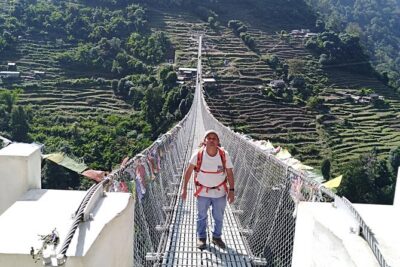
The walk to Jagat is listed at about five hours. From there, the route continues toward Dharapani, descending beside steep cliffs and following the Kali Gandaki River. Tal is a notable stop, with waterfalls and a more open plain, followed by Karte and a suspension bridge before Dharapani.
Dharapani sits at about 1,960 meters. The stone Mani marking the entrance to the village is a small but meaningful detail. You are not simply moving between hotel names. You are walking through settlements shaped by Buddhist traditions, mountain agriculture, and the demands of a difficult road system.
Same trailhead, a different route:
- Everest Base Camp Trek – 14 Days
★ 5.0 · 1,499 reviews - Everest Base Camp Trek
★ 5.0 · 842 reviews - Everest Base Camp Helicopter Tour landing at Everest View Hotel
★ 5.0 · 668 reviews - Everest Base Camp Trekking
★ 5.0 · 485 reviews
Dharapani to Manang changes the feel of the trek
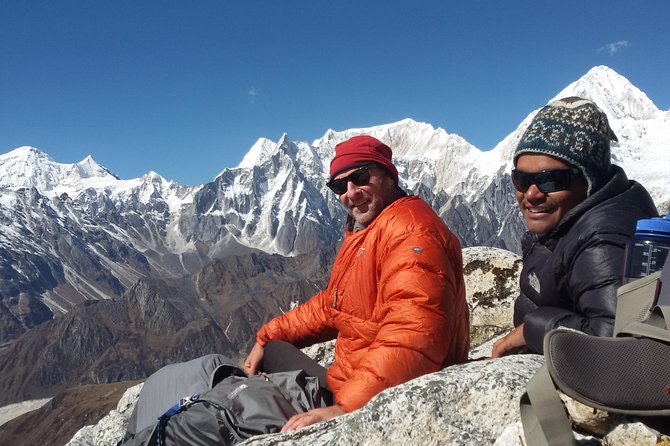
Leaving Dharapani, you climb toward Chame, the administrative center of Manang. The trail passes Danaque and climbs steeply to Timang, below Lamjung Himal. This is one of the first days when the route begins to feel properly alpine.
The following day takes you through fir and pine forest toward Bhratang and Pisang. The route climbs over rocky ground, then opens into a valley with views of Annapurna II and Pisang Peak. The transition is striking: thick forest gives way to wider mountain spaces, and the walking begins to feel more exposed.
From Pisang, the trail climbs toward Manang Valley. The route description notes views of Tilicho Lake, Annapurna III, and Annapurna IV, as well as the airstrip at Hungde. The day is listed at about six hours, but the altitude makes the same distance feel harder than it would at home.
Manang is one of the most valuable stops on the entire trip because it gives you time to adjust before the highest section. The next day is set aside for acclimatization, with short walks and time around the village. Do not treat this as a wasted day. It is your best chance to gain altitude gradually, rest your legs, and notice how your body is responding.
Above Manang, altitude matters more than speed
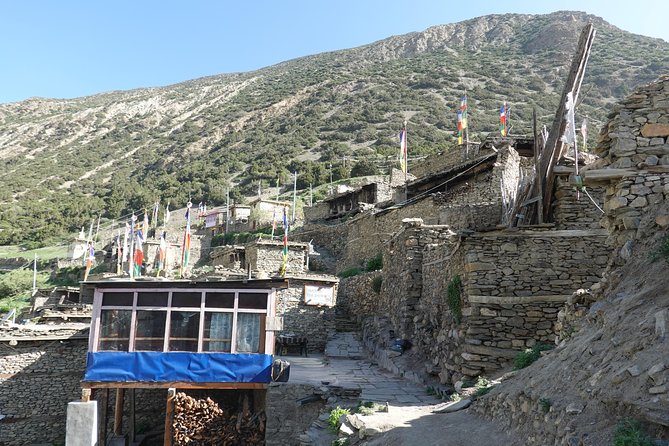
After Manang, the route climbs through Tenki Manang and leaves the Marshyangdi Valley. You cross along the Jarsang River and pass Yak Kharka, a pasture area where yaks graze, before reaching Ledar.
The walk to Ledar is listed at about five hours. At this height, cold, wind, dry air, and thinner oxygen can affect you even if you are fit. Walk slowly, drink regularly, and tell your guide if you develop a headache, dizziness, unusual tiredness, nausea, or breathing trouble.
The following day reaches High Camp in about three hours. That short walking time does not make it easy. The trail is rough, with narrow sections and steep rises and drops beside the Kali Gandaki River. High Camp is a staging point for the hardest day, so use the afternoon to rest, organize your layers, and prepare water.
The trip information recommends drinking at least three liters of clean water daily. You can use purification tablets or fill bottles at regulated pure-water stations. Bottled water is available at lodges but is discouraged, both for cost and waste.
Thorong La to Muktinath is the physical test
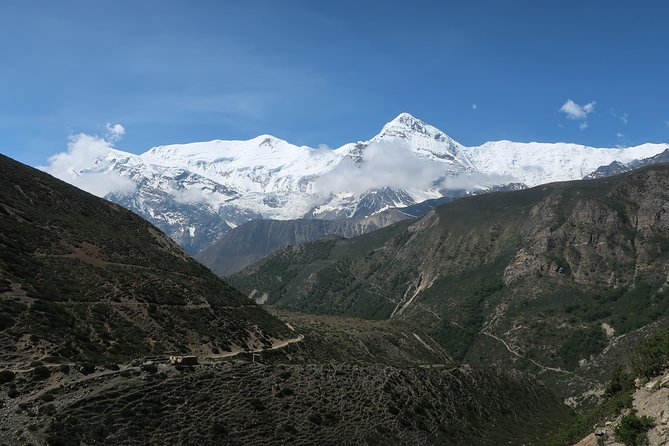
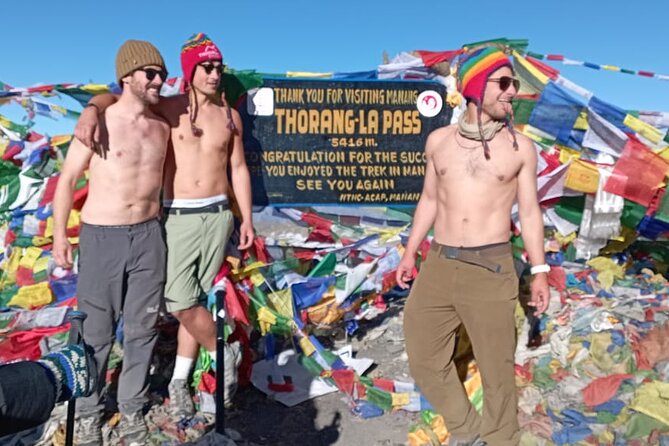
The crossing to Muktinath is listed at about seven hours and is the key challenge of the route. You climb over Thorong La Pass, then descend toward Muktinath. The pass reaches roughly 5,416 meters, so this is not a normal day hike.
Your acclimatization day in Manang is important, but it cannot remove all risk. Travel insurance is compulsory for this trek and should cover medical care, evacuation by helicopter, air ambulance, repatriation, personal injury, and baggage. Check the wording carefully before departure.
Muktinath is both a mountain destination and a sacred place. The schedule allows a visit the next day before continuing to Jomsom, giving you more time to see the area rather than arriving late and leaving immediately.
The descent toward Jomsom changes the setting again. The upper route is dry and open, with strong mountain light and a different feel from the forested valleys below Manang. Jomsom is the final trekking stop in this plan.
Jomsom and Pokhara provide a welcome reset
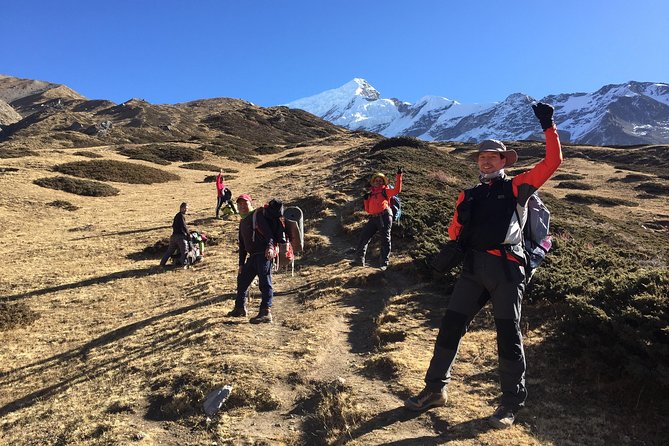
The itinerary calls for an early flight from Jomsom to Pokhara. Flights in mountain regions are sensitive to weather, so keep your plans flexible and confirm the flight status locally. Once in Pokhara, you have time to freshen up, see the city, or arrange the optional helicopter trip to Annapurna Base Camp.
The helicopter flight is not included. It may appeal if you want a close mountain view without adding another multi-day trek, but it is an optional extra and should be priced separately.
Pokhara accommodation is listed as Hotel Dandelion or Lake Star. Breakfast is included, while lunch and dinner remain your responsibility. Pokhara is also where excess luggage is stored before the trek, leaving you to carry only what you need in the mountains.
The next day returns to Kathmandu by tourist bus in about six to seven hours, or by an optional flight from Pokhara. The bus costs less but takes much longer. A flight saves time but adds another ticket and can be affected by weather, so decide based on your schedule and budget.
Guides, porters, and group size
The operator says each trekking group can have up to sixteen people, with an English-speaking guide and porters. Elsewhere, the stated maximum is fifteen travelers, so ask for the exact group limit on your departure date.
The support team is an important part of the value. One porter carries the luggage of two people, and the expected limit is 10 to 13 kilograms per person. Bring a daypack for water, layers, snacks, rain gear, medication, and valuables. Your main bag will travel separately with the porters.
The company has used guides including Tikaram, Ganesh, Shankar Timalsina, Bini, Ram, Prakash, and Shishir Tamang on various Nepal trips. Your own guide may be different, so request the name and qualifications before departure. The strongest pattern in the supplied feedback is praise for guides and porters who offered encouragement, patience, organization, and practical help when conditions became difficult.
That personal support matters on a long trek. A good guide helps manage pace, meals, lodge choices, weather decisions, and altitude concerns. It is also customary to tip guides, porters, and drivers at the end, with the amount depending on service and group size.
Fitness, weather, and what to pack
You should be able to walk for five to seven hours a day, often covering 10 to 14 kilometers. Training on hills, stairs, or a treadmill helps, as does regular jogging or gym work for several months before departure.
The trek is described as suitable for fit people into their early sixties, but age is less important than conditioning, health, and altitude tolerance. Consult your doctor if you have a medical condition that could be affected by strenuous exercise or high altitude.
Bring well-worn hiking boots or shoes. For trips from November through the first half of March, pack a jacket suitable for around 0 degrees Celsius. At other times, the suggested jacket rating is 4 to 6 degrees Celsius, but mountain weather can shift quickly, so warm layers and rain protection are sensible.
You can use the supplied sleeping bag or bring your own. Laundry is available in Kathmandu and Pokhara, not during the trek. Pack light, since the porter limit is strict.
The Poon Hill confusion matters
The introductory description presents this as a Ghorepani and Poon Hill trek, with sunrise views toward Dhaulagiri and Annapurna, plus Jhinu Hot Spring, Landruk, and Dhampus. Those are appealing features, especially for someone seeking rhododendron forest and a shorter Annapurna experience.
But the sixteen-day schedule does not list Ghorepani, Poon Hill, Jhinu, Landruk, or Dhampus. Instead, it follows Bhulbhule, Manang, High Camp, Thorong La, Muktinath, and Jomsom.
That is not a minor wording issue. Poon Hill and the Thorong La section are different route experiences. Before booking, get written confirmation of the exact itinerary. If Poon Hill is your main reason for coming, do not assume it is included simply because it appears in the overview.
Who should book this trek?
I would recommend this trip to a fit hiker who wants a supported Himalayan route with permits, porters, lodges, transport, and a guide arranged in advance. It suits someone who values cultural stops in Kathmandu and Muktinath as much as dramatic mountain views.
I would not choose it without clarification if you want a private room every night, predictable road travel, included dinners, or a gentle walking holiday. The high-altitude crossing is serious, lodge facilities are basic, and some parts of the plan need confirmation.
The free-cancellation policy allows cancellation up to 24 hours before the start time for a full refund, but changes or cancellations inside that window are not accepted. You also need a valid passport, a Nepal visa, two passport photos for permits and visa arrangements, and suitable insurance.
Should you book the Annapurna Circuit Trek?
Book it if you want the classic Manang to Thorong La route and appreciate having the major logistics handled for you. The combination of mountain villages, a built-in acclimatization day, porter support, and the Jomsom to Pokhara flight gives the trip solid value at $1,350, provided you budget for meals, insurance, tips, entry fees, and personal costs.
Before paying, ask three direct questions: Is this definitely the Thorong La circuit, is Poon Hill included, and what transport is confirmed between Pokhara and Kathmandu? If the answers match your goals, this is a demanding but rewarding way to see a broad slice of the Annapurna region.
FAQ
How long is the Annapurna Circuit Trek?
The full experience lasts approximately 16 days, including Kathmandu sightseeing, transport to the trail, trekking, the Jomsom to Pokhara flight, time in Pokhara, and the return to Kathmandu.
What is the price per person?
The listed price is $1,350 per person.
What meals are included?
Breakfast is included throughout the package, along with the welcome dinner on the first day. Lunch and dinner in Kathmandu, Pokhara, and during the trek are not included.
Is airport pickup included?
Yes. Airport pickup and drop-off at Tribhuvan International Airport are included.
What is the hardest part of the trek?
Crossing Thorong La Pass on the way to Muktinath is the toughest section. That day is listed at about seven hours of walking.
Is there an acclimatization day?
Yes. Day 9 is an acclimatization day in Manang, with short walks and time to adjust to the altitude.
Are permits included?
Yes. TIMS registration and the necessary trekking permits are included.
How much luggage can I give to the porter?
The stated limit is about 10 to 13 kilograms per person. One porter carries the luggage of two people.
Are private rooms available?
A single supplement may be available, but private rooms cannot be guaranteed at every mountain lodge. Two people generally share each room.
Is travel insurance required?
Yes. Insurance is compulsory for this trek and should include medical expenses, helicopter rescue, air ambulance, repatriation, personal injury, death, and baggage cover.
Just added around Kathmandu
- Everest Base Camp Trek★ 5.0 · 3 reviews
- Everest Base Camp Trek★ 5.0 · 7 reviews
- 15 Days Private Everest Base Camp Trek★ 5.0 · 30 reviews
- Everest Base Camp Trek★ 5.0 · 57 reviews
- 14 Days of Adventure Trekking to Everest Base Camp★ 5.0 · 2 reviews
- 14-Day Everest Base Camp Trek★ 5.0 · 20 reviews
- From Kathmandu: Private 14-Day Everest Base Camp Trek★ 5.0 · 20 reviews
- 14 Days Everest Base Camp Trek★ 5.0 · 4 reviews
Annapurna Base Camp Treks, compared.
Trekking in Annapurna/Langtang/Everest/Upper Mustang regions
Read our review →
Kathmandu to Annapurna Base Camp (ABC) 5-Day Trek
Read our review →Browse the lists this trek appears in