
Review · KATHMANDU
Annapurna Circuit Trek
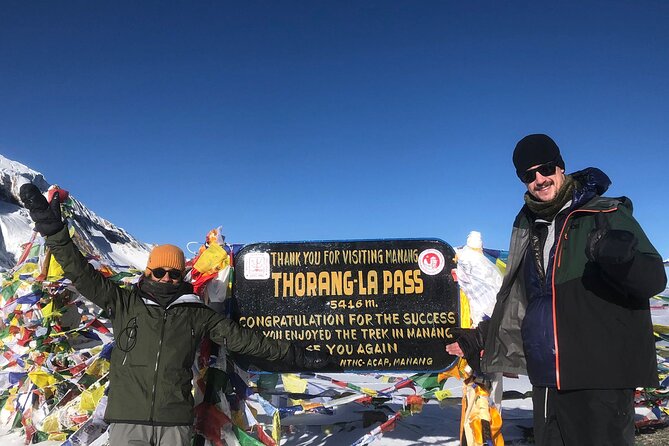
The Annapurna Circuit packs an enormous change of scenery into 15 days. You move from warm paddy fields and low valleys to Manang’s high mountain country, cross the 5,416-meter Thorong La Pass, then descend through Muktinath, Marpha, hot springs, and Poon Hill. The pass crossing is the great challenge, but the steady shift in climate and culture makes the whole route worthwhile.
I like that the price includes meals, tea-house lodging, transport, permits, and a guide rather than leaving the main costs scattered. I also like the private format, so your group can walk at its own pace within the planned schedule. The main catch is the altitude and the long days. Porter service, personal gear, drinks, showers, Wi-Fi, battery charging, and travel insurance cost extra.
Key points at a glance
- Thorong La reaches 5,416 meters: The highest day is demanding and requires sensible pacing.
- Manang provides a planned rest day: This is useful before the route climbs above 4,000 meters.
- The scenery changes constantly: Expect warm fields, pine country, alpine valleys, dry mountain areas, hot springs, and rhododendron country.
- The trip ends with Poon Hill: You get a final sunrise viewpoint before walking to Nayapul and driving to Pokhara.
- Food and lodging are included: Breakfast, lunch, dinner, and tea-house accommodation are covered during the trek.
- You carry some extra costs: Your own equipment, porter, insurance, drinks, hot showers, Wi-Fi, and charging are not included.
Why the Annapurna Circuit remains a major trek
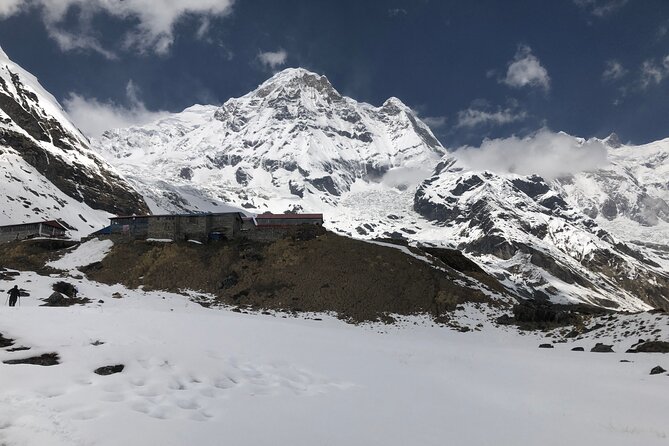
The Annapurna Circuit works because it is not one long view of the same mountain. It is a journey across several climate zones, with the trail rising gradually from low valleys to high mountain settlements before dropping toward the Kali Gandaki area.
You begin near 840 meters and eventually reach Thorong La at 5,416 meters. That change affects everything around you: the air grows colder, vegetation thins, villages look different, and the walking becomes more serious. I like this sense of progress. Each day has a clear purpose, and the route does not feel like a series of unrelated day hikes.
The schedule is private, which matters on a trek. You are not placed into a large public group, and only your own party participates. That gives you more control over breaks and walking rhythm, though the 15-day plan still requires you to keep moving. This is not a casual mountain holiday.
The published cost is $1,290 per person. For that price, you receive transport by bus, taxi transfers for hotel pickup and drop-off, three meals each trekking day, tea-house accommodation, a guide, trekking permits, and guide-related food, salary, insurance, and equipment. That is useful value because permits, meals, rooms, and road transfers can otherwise become a string of separate expenses.
Still, you need to budget beyond the headline price. Drinks, coffee, beer, cola, mineral water, hot water, hot showers, Wi-Fi, and battery charging are excluded. Your trekking equipment, travel insurance, and porter are also your responsibility. Read the inclusions carefully before you book, especially if you prefer to walk with a light daypack.
More Annapurna Treks in Kathmandu
- Annapurna Circuit Trek with Tilicho Lake
★ 5.0 · 368 reviews - Annapurna base camp trek 5 Days
★ 5.0 · 252 reviews - 14-Day Private Annapurna Base Camp Trek
★ 5.0 · 180 reviews
Days 1 to 4: From Bulbule and Nagdi toward Dharapani
The first day begins early, with a 6:15 am start. You drive for roughly five to six hours to Bulbule at 840 meters, then hike for about an hour to Nagdi at 930 meters. This is a long transport day followed by a gentle introduction to walking.
The road transfer saves time compared with beginning the route farther down the valley. It also means you should expect a basic bus journey rather than a polished private transfer. If you are prone to motion sickness, the early start and long drive are worth preparing for.
Day two takes you to Jagat at 1,300 meters in four to five hours. The elevation gain is moderate, but the route begins to feel like a proper trek. Day three continues to Dharapani at 1,860 meters, again in about four to five hours.
Dharapani is an important early stop because the itinerary begins to leave the lower valley behind. The walking days remain manageable, but you are now gaining altitude with purpose. I would treat these early days as a chance to settle into your boots, adjust your packing, and learn how your body handles the schedule.
On day four, you walk five hours to Chame at 2,670 meters. This is a noticeable step upward. Temperatures may feel cooler, and the trail begins to take on a more alpine character. The route is still not at its hardest, but the altitude is no longer a minor detail.
Days 5 to 7: Pisang, Manang, and the key rest day
Day five leads to Pisang at 3,230 meters in about five hours. This is where the high-altitude portion becomes more apparent. The rise from Chame is substantial, so your best tool is not speed. Walk steadily, drink regularly, and avoid turning the day into a race.
Day six continues to Manang Village at 3,450 meters, also in about five hours. Manang is one of the major milestones on the route. It marks a shift from the lower valleys into a high mountain setting, and it is the place where the itinerary gives you time to pause.
Day seven is a rest day in Manang Village. This is not wasted time. It is an important buffer before the route climbs above 4,000 meters. You can use it to rest your legs and prepare for the harder days ahead.
The itinerary does not specify particular rest-day activities, so you should not expect a packed sightseeing program. The value is in the pause itself. At this altitude, an easy day can make the next section more manageable. I would keep the day calm and resist the urge to spend all of it walking just because the scenery is tempting.
Days 8 and 9: Above 4,000 meters at Yak Kharka and high camp
Day eight takes you to Yak Kharka at 4,110 meters in about four hours. The walking time is shorter, but the altitude makes the day more serious than the clock suggests. At this point, a moderate physical fitness level is essential, and your body needs to be treated with care.
Day nine is a four-hour climb to Thorong High Camp at 4,600 meters. This is a high overnight stop before the pass. The short walking time can be misleading. Thin air, cold conditions, and the previous days of climbing may make the route feel much harder than a four-hour walk at home.
The high camp is functional, not a luxury stop. Tea-house accommodation is included throughout the trek, but you should not confuse that with hotel comfort. Personal expenses such as hot water, showers, charging, and Wi-Fi remain outside the package.
This is also the point where your equipment matters most. The tour does not provide your personal trekking gear, so you need to arrive prepared for high, cold conditions. Travel insurance is also excluded and should be arranged separately.
Same trailhead, a different route:
- Everest Base Camp Trek – 14 Days
★ 5.0 · 1,499 reviews - Everest Base Camp Trek
★ 5.0 · 842 reviews - Everest Base Camp Helicopter Tour landing at Everest View Hotel
★ 5.0 · 668 reviews - Everest Base Camp Trekking
★ 5.0 · 485 reviews
Day 10: Crossing Thorong La at 5,416 meters
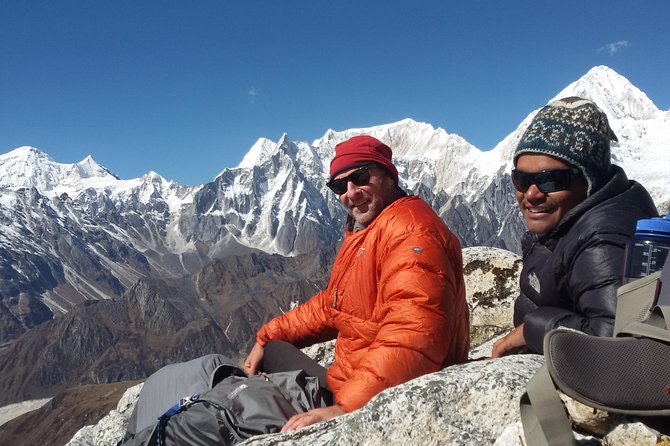
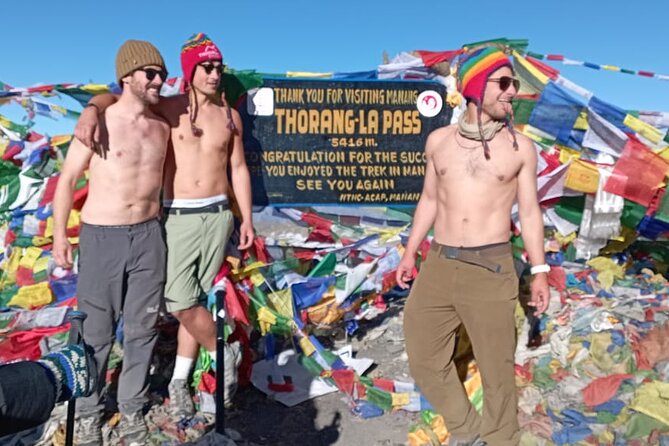
Day ten is the defining day of the route. You cross Thorong La Pass at 5,416 meters and descend to Muktinath at 3,800 meters. The full day takes about seven hours.
The appeal is obvious: this is the highest point and the moment that gives the circuit its shape. The challenge is just as clear. You begin from high camp, reach the pass, then continue downhill for a major drop in elevation. Even strong walkers should expect a demanding day.
You will want warm layers, sensible footwear, and a controlled pace. The best approach is to focus on steady progress rather than trying to finish quickly. Since the itinerary is fixed, you should make sure you are comfortable with long mountain days before booking.
Muktinath gives you a strong change of setting after the pass. At 3,800 meters, it is still high, but the descent provides welcome relief. This stop also prevents the pass from feeling like a single isolated achievement. You cross the highest point, then continue into a different part of the circuit.
Days 11 to 13: Muktinath, Jomsom, Marpha, Lete, and Tatopani
Day eleven takes you to Marpha at 2,670 meters by way of Jomsom at 2,715 meters. The walking time is about six hours. The route descends from the high pass area and introduces a lower, more settled section of the trek.
Jomsom is listed as part of the route rather than an overnight stop, while Marpha is the destination for the night. That distinction matters if you are picturing a long visit in each place. The day is mainly about moving through the valley toward Marpha.
Day twelve continues for about six hours to Lete at 2,480 meters. You are still descending, though the altitude change is less dramatic than the day after Thorong La. The walking remains substantial, so do not assume that lower elevation means an easy day.
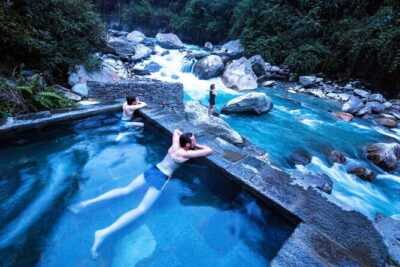
On day thirteen, you walk six hours to Tatopani at 1,190 meters. Tatopani is known here for its natural hot spring, making it a welcome break after many days on the trail. This is one of the route’s nicest contrasts: a demanding high pass earlier in the week, followed by a much warmer stop at low altitude.
The hot spring is part of the appeal, but check what is included before assuming every bathing cost or hot-water service is covered. The tour specifically excludes hot water and hot showers as personal expenses.
Days 14 and 15: Ghorepani and the final Poon Hill morning
Day fourteen climbs to Ghorepani at 2,880 meters in about six hours. After the low point at Tatopani, this is a real uphill return. Your legs may welcome the lower altitude, but the climb still makes it a full trekking day.
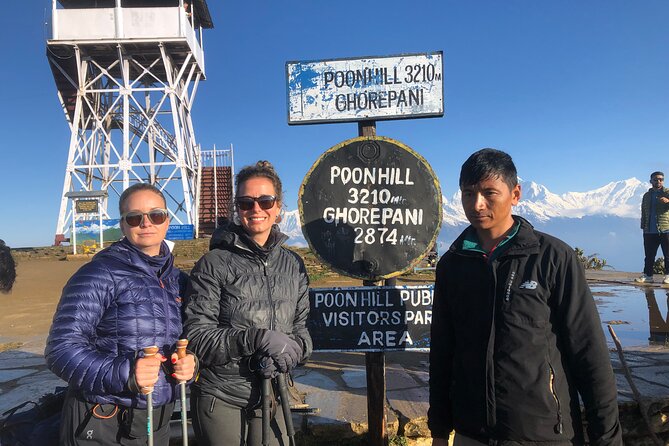
Day fifteen starts with Poon Hill at 3,210 meters, then continues to Nayapul at 1,100 meters before a drive to Pokhara at 860 meters. The total walking and transfer schedule takes roughly six to seven hours.
Poon Hill gives the trek a strong final viewpoint rather than ending immediately after the pass. You climb again for a mountain outlook, then descend toward the road and Pokhara. That final morning adds variety, though it also means the last day starts early and is not a simple travel day.
Pokhara is the endpoint stated for this itinerary. The package includes the needed transport, but you should confirm the exact hotel drop-off details when arranging your plans. The schedule says pickup is offered and hotel pickup and drop-off by taxi are included.
Food, tea houses, guides, and what you carry
Breakfast, lunch, and dinner are included during the trek. That makes planning easier and gives the price genuine substance. Drinks are not included, so set aside money for tea, coffee, beer, cola, mineral water, and hot water.
Accommodation is in mountain tea houses. These are practical places to sleep along the route, not full-service hotels. The package does not include Wi-Fi, battery charging, or hot showers, and those extras can matter after several long days.
A guide is included, with the company covering the guide’s food, salary, insurance, and equipment. A porter is not included. That means you should either carry your own gear or arrange porter service separately. This point can change the feel of the trek more than many people expect. A lighter daypack makes long climbs and the Thorong La crossing easier.
One porter, Rishi, is specifically praised for being helpful, friendly, safety-conscious, and willing to do more than expected. You should not assume his availability for your departure, but his example highlights why porter arrangements deserve attention before the trek begins.
The company is also described as clear and honest about prices, which is useful in a destination where unclear extras can spoil an otherwise good trip. The strongest praise focuses on personal help, safety, and a family-like approach. I would still ask for a written breakdown of any extra costs before paying.
Physical demands, timing, and who should book
The tour is marked as suitable for people with a moderate level of physical fitness. That is a fair minimum, but the elevation and long schedule deserve respect. You face several five to seven-hour walking days, a night at 4,600 meters, and a 5,416-meter pass crossing.
This trek suits you if you want a classic mountain route with changing scenery and are comfortable with basic lodging. It also suits people who value an organized package that includes meals, permits, transport, and a guide.
It may not suit you if you want short walks, private hotel rooms, included porter service, or a flexible schedule. The fixed 15-day plan leaves little room for delays or a slow personal pace. You should also be comfortable paying separately for ordinary mountain extras.
The private format is a real advantage for couples, families, or friends who want to stay together. At the same time, private does not mean easy. Your group still has to meet the itinerary’s demands, especially between Manang, Yak Kharka, high camp, and Muktinath.
Should you book this Annapurna Circuit Trek?
I would book this trek if you want a serious but organized 15-day crossing with a clear route, included meals, tea houses, permits, transport, and guide support. The strongest reasons are the huge variety of scenery, the planned rest day in Manang, and the dramatic Thorong La crossing.
I would pause before booking if you need a porter, full personal equipment, flexible cancellation, or a softer level of comfort. The price is reasonable for what it covers, but the excluded extras add up, and the non-refundable terms make advance planning important.
Ask about porter availability, the exact equipment you need, and expected personal spending before you commit. If you arrive fit, prepared, and realistic about tea-house conditions, this route offers one of Nepal’s most varied high-country walking experiences in a compact two-week plan.
FAQ
How long is the Annapurna Circuit Trek?
The trek lasts approximately 15 days, beginning with transport from Kathmandu and ending with a drive from Nayapul to Pokhara.
What time does the tour start?
The stated start time is 6:15 am.
Is this a private tour?
Yes. Only your own group participates in the activity.
What meals are included?
Breakfast, lunch, and dinner are included during the trek.
Is a porter included?
No. Porter service is not included, so you need to carry your equipment or arrange a porter separately.
What costs are not included?
Tea, coffee, beer, cola, mineral water, hot water, Wi-Fi, battery charging, hot showers, personal trekking equipment, travel insurance, and porter service are not included.
Just added around Kathmandu
- Everest Base Camp Trek★ 5.0 · 3 reviews
- Everest Base Camp Trek★ 5.0 · 7 reviews
- 15 Days Private Everest Base Camp Trek★ 5.0 · 30 reviews
- Everest Base Camp Trek★ 5.0 · 57 reviews
- 14 Days of Adventure Trekking to Everest Base Camp★ 5.0 · 2 reviews
- 14-Day Everest Base Camp Trek★ 5.0 · 20 reviews
- From Kathmandu: Private 14-Day Everest Base Camp Trek★ 5.0 · 20 reviews
- 14 Days Everest Base Camp Trek★ 5.0 · 4 reviews
Annapurna Base Camp Treks, compared.
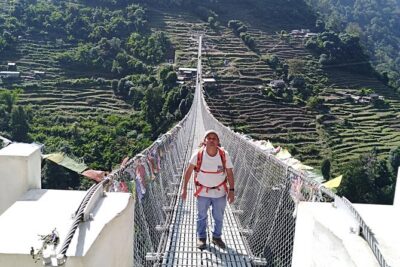
Trekking in Annapurna/Langtang/Everest/Upper Mustang regions
Read our review →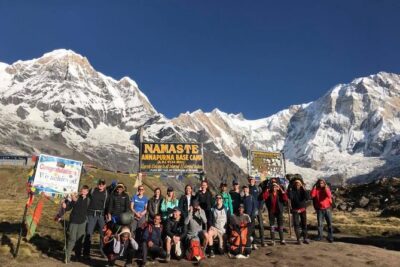
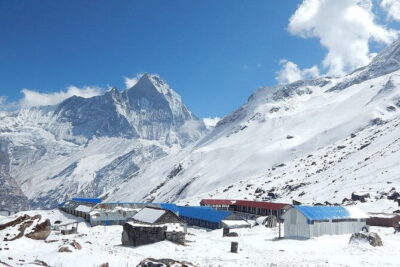
Kathmandu to Annapurna Base Camp (ABC) 5-Day Trek
Read our review →Browse the lists this trek appears in