
Review · KATHMANDU
Annapurna Circuit Thorong La Pass
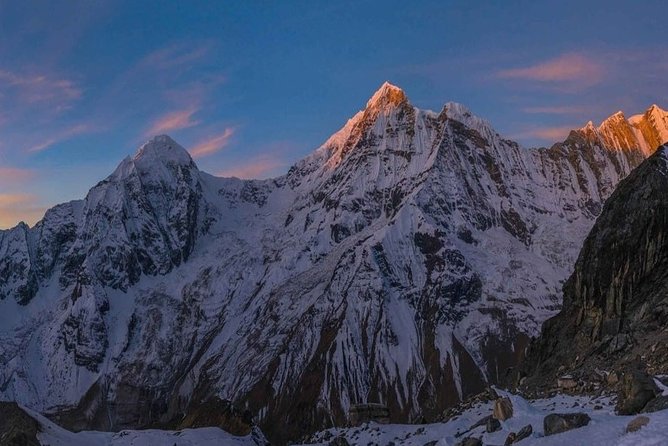
Thorong La Pass is the great test of this 15-day Annapurna Circuit trek. You move from Kathmandu into mountain villages, follow high river valleys, sleep in tea houses, and finally cross the 5,416-meter pass before descending to Muktinath. The route gives you changing scenery every few days, from busy roads and green lower valleys to stark high-altitude country.
I like the practical setup: meals, permits, tea house lodging, guide, porter support, and ground transport are bundled into the $1,750 price. I also like the built-in acclimatization day in Manang, plus the choice of sleeping at Thorong Phedi or pushing higher to High Camp.
The main caution is the altitude and the long pass-crossing day. The climb to Thorong La and descent to Muktinath takes about eight to nine hours, and the itinerary reaches high elevations quickly. You need good fitness, proper insurance, and a willingness to accept basic lodging and extra costs for hot showers, drinks, charging, and personal comforts.
Key points to know before booking
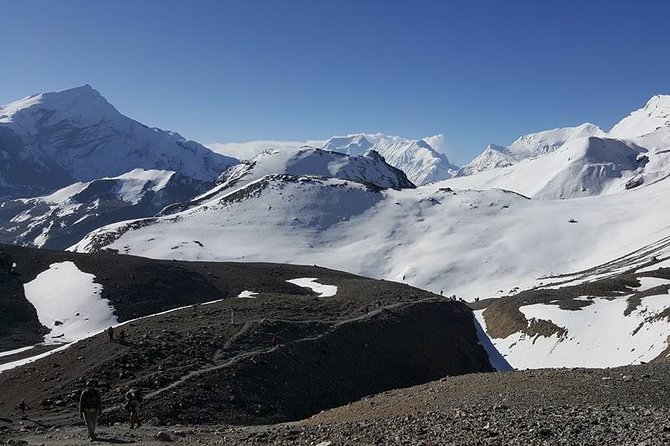
- Thorong La reaches 5,416 meters, making the pass day the physical center of the trip.
- Manang provides one acclimatization day, with a short hike to a lake and mountain viewpoints.
- The trek uses tea houses, with standard breakfast, lunch, dinner, and three cups of tea or coffee daily.
- A porter is provided for every two people, while you trek with an English-speaking guide.
- The $1,750 price includes major trip costs, but not travel insurance, evacuation, visas, tips, or personal purchases.
- The route ends in Pokhara before returning to Kathmandu, giving you a gentler final stop after the mountain crossing.
From Kathmandu to the first mountain road
The trip begins with airport pickup and two nights of accommodation in Kathmandu, including breakfast. That extra time matters. You can recover from your flight, meet the trekking team, sort equipment, and prepare for a long road transfer.
The first major transfer takes you by bus from Kathmandu to Besisahar, at about 760 meters. This is not a glamorous travel day. It is a long ground journey, but it gets you into the Annapurna region without adding a domestic flight to the package.
From Besisahar, you continue by vehicle to Koto, at about 2,700 meters. The drive takes six to seven hours. That rapid gain in elevation is worth noting, since the following trekking days require you to pay close attention to how your body feels.
Koto is where the walking section begins in earnest. The shift from bus seats to mountain trails is welcome, but you should not mistake the first walking days for an easy warm-up. You are already at significant altitude.
More Annapurna Treks in Kathmandu
- Annapurna Circuit Trek with Tilicho Lake
★ 5.0 · 368 reviews - Annapurna base camp trek 5 Days
★ 5.0 · 252 reviews - 14-Day Private Annapurna Base Camp Trek
★ 5.0 · 180 reviews
Koto to Manang, four days of changing scenery
The walk from Koto to Upper Pisang takes about six hours and reaches 3,350 meters. This is your first full trekking day, with mountain scenery, river country, and villages built along the route. Tea house accommodation keeps the evening simple: eat, rest, and prepare for the next morning.
From Upper Pisang, you hike to Nawal at 3,650 meters in about five hours. The route gains height steadily, so your pace matters more than speed. I would treat this as a day for small steps, regular water breaks, and a calm approach to altitude.
The next day takes you from Nawal to Manang, at 3,540 meters, in roughly three to four hours. Compared with the previous two days, this is shorter. Manang is an important stopping point because it gives you time to rest before the route rises above 4,000 meters.
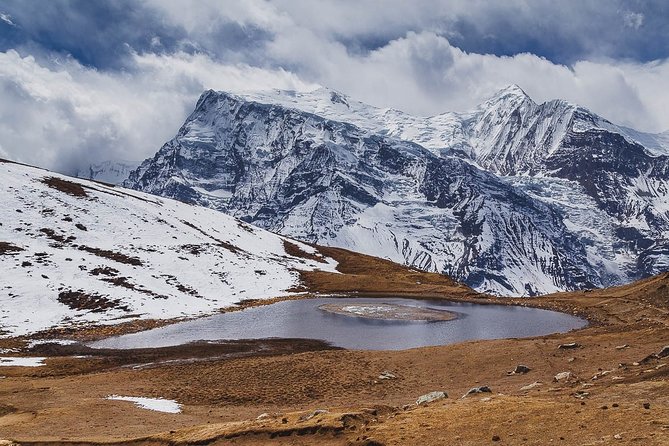
The itinerary includes an acclimatization day in Manang. You hike for a few hours to visit a lake and see the Himalayan range, then return to the village. This is not wasted time. It helps break up the climb and gives your guide a chance to watch how you are handling the altitude.
The Manang pause is one of the strongest parts of the plan. A rushed schedule could make the pass crossing far harder, while this slower rhythm gives you a better chance to continue safely.
Yak Kharka and Thorong Phedi, where the air gets thin
After Manang, you walk to Yak Kharka at about 4,200 meters. The four-hour hike is not especially long on paper, but altitude changes the effort. A short uphill can feel like a serious climb, and you may find that your usual walking pace no longer works.
The following day takes you to Thorong Phedi at 4,450 meters, or High Camp at 4,880 meters. The walk takes about five to six hours. The choice is based on your stamina and your preference for sleeping lower or higher.
Thorong Phedi gives you a lower sleeping altitude. High Camp can shorten the next morning’s climb, but it means spending the night higher. This is exactly the kind of decision that should be made with your guide, based on how you are feeling rather than on pride or a fixed target.
The included guide is important here. The company has used guides and staff named Bimal, Karma, Krishna, Saroj, and Aayush on its Nepal trips. Bimal, also known as Happy, is closely associated with the company, while Saroj has been singled out for his experience on another trek. Your specific guide should be confirmed when you book, since the supplied details do not name the guide assigned to this departure.
Crossing Thorong La at 5,416 meters
The pass day is the reason most people choose this route. You climb from Thorong Phedi or High Camp to Thorong La, gaining about 1,200 meters, then descend all the way to Muktinath at 3,800 meters.
Allow eight to nine hours. This is a demanding day, not a scenic stroll. The high point is physically tough, and the long downhill can be hard on your knees after the climb. You should start with enough water, warm layers, gloves, sun protection, and a pace that leaves energy for the descent.
At the pass, you reach 5,416 meters and cross from the Manang side toward Muktinath. The attraction is not just the number. It is the sense of moving between two very different parts of the Annapurna region in one strenuous day.
The itinerary describes Thorong La as one of the hardest parts of the Annapurna Circuit, and that is a fair warning. A moderate fitness level is listed as the minimum, but I would prepare beyond that standard. You need to be comfortable walking for several hours on uneven mountain paths and handling a full day of exertion at altitude.
Your guide and porter support are useful here. One porter is included for every two people, and staff costs, insurance, medicine, and food are covered for the trekking team. You should still pack carefully and keep essential personal items in your own day bag.
Same trailhead, a different route:
- Everest Base Camp Trek – 14 Days
★ 5.0 · 1,499 reviews - Everest Base Camp Trek
★ 5.0 · 842 reviews - Everest Base Camp Helicopter Tour landing at Everest View Hotel
★ 5.0 · 668 reviews - Everest Base Camp Trekking
★ 5.0 · 485 reviews
Muktinath to Kagbeni, a gentler mountain day
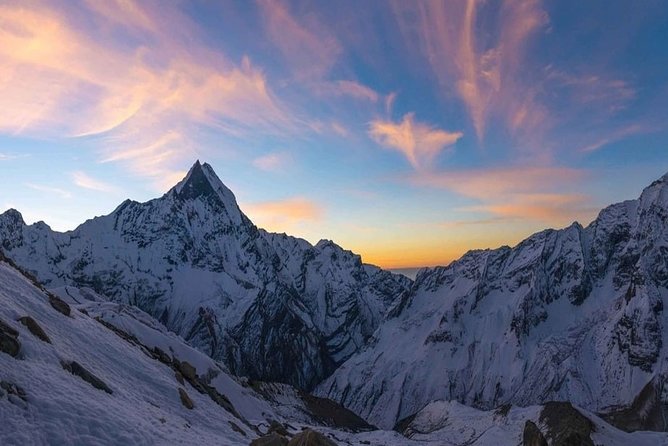
After the pass, you walk from Muktinath to Kagbeni at about 2,804 meters. The four-hour day is much shorter than the crossing, and the drop in elevation can feel welcome.
Muktinath is an important stop on the route, but the supplied program keeps the visit focused on trekking rather than adding a long sightseeing schedule. Kagbeni is the overnight point before the trip shifts from walking to road travel.
This is a good place to remember that the Annapurna Circuit is both a mountain trek and a changing transport journey. You do not spend every day on remote trails. The later sections use buses, which saves time but reduces the quiet walking experience.
The road to Tatopani and Pokhara
From Kagbeni, you take a bus to Tatopani, at about 1,200 meters. The ride takes around three hours. The sharp drop from the high country to a much lower elevation is a pleasant change after the pass, though bus travel on mountain roads may feel tiring after many days of hiking.
The following day takes you by local bus through Beni to Pokhara, at about 825 meters. You spend the night in Pokhara with breakfast included. This provides a useful soft landing after the trek, although lunch and dinner in Pokhara are not covered.
The final transport day is a tourist bus from Pokhara to Kathmandu, at about 1,400 meters. The journey brings you back to the capital before departure. If your flight is later, the schedule allows extra time in Kathmandu for shopping, sightseeing, or simply resting.
What the $1,750 price really covers
At $1,750 per person, this is an arranged trek rather than a basic guiding service. The cost includes airport pickup and drop-off, two nights in Kathmandu with breakfast, one night in Pokhara with breakfast, trekking permits, the TIMS card, ground buses, tea house accommodation, and an English-speaking guide.
During the trek, standard breakfast, lunch, and dinner are included, along with three cups of tea or coffee each day. The package also covers staff salaries, food, accommodation, insurance, medicine, a medical kit, and porter service at a ratio of one porter for two people.
You also receive a company duffel bag, a T-shirt, and a trekking certificate. These are small extras, but the duffel bag can be useful if you do not already have a suitable soft pack for porter transport.
The main value comes from removing much of the planning work. You do not need to arrange each tea house, permit, bus connection, or staff payment yourself. The package also gives you someone to contact if questions or problems arise, a feature that has been important to people who wanted help with planning and communication.
Budget for costs outside the package. Kathmandu and Pokhara lunches and dinners are not included. You pay for alcoholic drinks, hot showers, bottled water, cold drinks, hot water, battery charging, donations, tips, personal equipment, and anything else not listed as included.
Tips for the guide and porter are expected. Travel medical insurance and emergency evacuation are also your responsibility. The price is good value for a supported, private trek, but it is not an all-inclusive holiday.
Tea houses, comfort, and daily rhythm
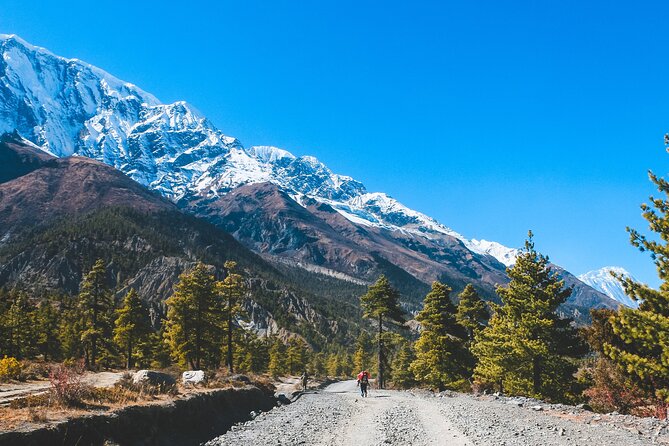
Tea house lodging keeps the trek tied to local mountain communities. You should expect practical accommodation rather than hotel comfort. The package does not promise private rooms, heating details, internet access, or charging access, so bring the right expectations.
Meals are included, which makes daily budgeting easier. Three cups of tea or coffee are also covered, but extra hot drinks and hot water cost more. Battery charging and hot showers are personal expenses, so a power bank is a sensible part of your personal equipment.
The experience is private, meaning only your group participates. That gives you more control over the pace and makes it easier to discuss fatigue, weather, and the Thorong Phedi or High Camp choice with your guide.
The company has received strong praise for airport welcome, communication, arranging equipment, and keeping people informed about the daily plan. Bimal has also lent equipment to people who arrived without everything they needed. I would treat that as helpful goodwill, not as a substitute for bringing your own proper boots, warm clothes, and altitude-ready gear.
Who should book this Annapurna Circuit trek
This trip suits you if you want a classic Himalayan route with organized support and do not want to arrange buses, permits, lodging, and porters on your own. It also suits people who like a private format and want a guide available throughout the trek.
You should be ready for basic tea house life, long bus rides, early starts, and a serious high-altitude crossing. A moderate fitness level is required, but the pass day deserves more preparation than that phrase may suggest.
This is less suitable if you want luxury lodging, short walking days, flexible independent travel, or a trip with no long road transfers. It is also not the right choice if you have not arranged travel medical insurance that covers high-altitude trekking and emergency evacuation.
Free cancellation is available when you cancel at least 24 hours before the start time. Cancellations within 24 hours are not refunded, and bad weather may lead to a different date or a full refund.
Should you book it?
I would choose this trek if Thorong La is your main goal and you value having the difficult logistics handled for you. The strongest parts are the full support package, the Manang acclimatization day, the private format, and the staff presence from Kathmandu through Pokhara.
Before paying, confirm the exact guide, porter arrangement, sleeping plan at Thorong Phedi or High Camp, and what transport is being used on each road section. If you are fit, properly insured, and comfortable with a demanding pass day, this is a well-priced way to tackle the Annapurna Circuit with practical support. If you want a gentle holiday, choose a shorter Nepal trek instead.
FAQ
How long is the Annapurna Circuit Thorong La Pass trek?
The experience lasts approximately 15 days, including arrival and departure days, road transfers, trekking, an acclimatization day in Manang, and overnight stays in Kathmandu and Pokhara.
What is the highest point on the trek?
The highest point is Thorong La Pass at 5,416 meters.
Is airport pickup included?
Yes. Airport pickup and drop-off by car, van, or bus are included.
Where does the trek begin?
The organized trip begins in Kathmandu. You travel by bus to Besisahar, then by vehicle to Koto, where the main walking section begins.
Is accommodation included?
Yes. Two nights in Kathmandu with breakfast, one night in Pokhara with breakfast, and tea house accommodation during the trek are included.
Are meals included?
Breakfast, lunch, and dinner are included during the trekking portion. Three cups of tea or coffee per day are also included. Lunch and dinner in Kathmandu and Pokhara are not included.
Is a guide provided?
Yes. An English-speaking guide is included. The assigned guide’s name should be confirmed when booking.
Is porter service included?
Yes. The package includes one porter for every two people.
What is not included in the price?
Travel medical insurance, emergency evacuation, Nepal entry visa fees, international airfare, personal equipment, tips, alcoholic drinks, hot showers, bottled water, hot water, battery charging, donations, and other unlisted expenses are not included.
Can I cancel for a full refund?
Yes, if you cancel at least 24 hours before the experience start time. Cancellations made within 24 hours are not refunded. If poor weather cancels the experience, you are offered another date or a full refund.
Just added around Kathmandu
- Everest Base Camp Trek★ 5.0 · 3 reviews
- Everest Base Camp Trek★ 5.0 · 7 reviews
- 15 Days Private Everest Base Camp Trek★ 5.0 · 30 reviews
- Everest Base Camp Trek★ 5.0 · 57 reviews
- 14 Days of Adventure Trekking to Everest Base Camp★ 5.0 · 2 reviews
- 14-Day Everest Base Camp Trek★ 5.0 · 20 reviews
- From Kathmandu: Private 14-Day Everest Base Camp Trek★ 5.0 · 20 reviews
- 14 Days Everest Base Camp Trek★ 5.0 · 4 reviews
Annapurna Base Camp Treks, compared.
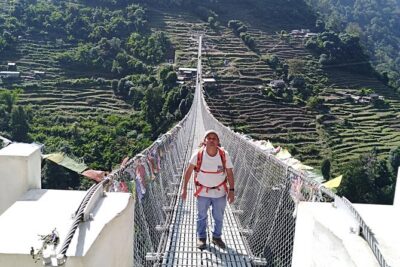
Trekking in Annapurna/Langtang/Everest/Upper Mustang regions
Read our review →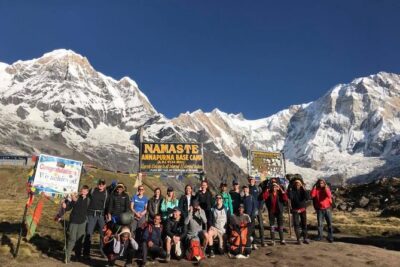
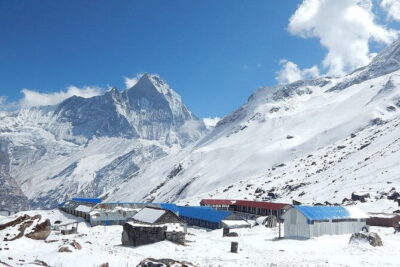
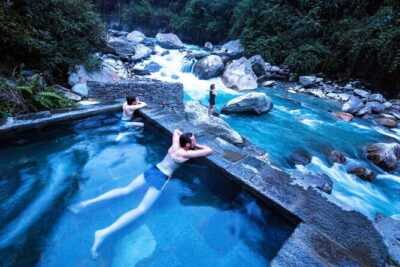
Kathmandu to Annapurna Base Camp (ABC) 5-Day Trek
Read our review →Browse the lists this trek appears in