
Review · KATHMANDU
Annapurna Base Camp Trekking
Annapurna Base Camp is the main event here, but the route earns its keep long before you reach the high mountains. You’ll pass stone stairways, Magar and Gurung villages, rhododendron forest, waterfalls, and the sunrise viewpoint at Poon Hill before reaching the amphitheater of peaks around base camp.
I like the way this trip takes care of the hard logistics, including airport pickup, permits, porters, transport, and meals during the trek. I also like the private format, which gives your guide room to adjust the pace. The main caution is that the published plan contains a few timing and day-label conflicts, so confirm the final schedule before you pay.
Key points to know before booking
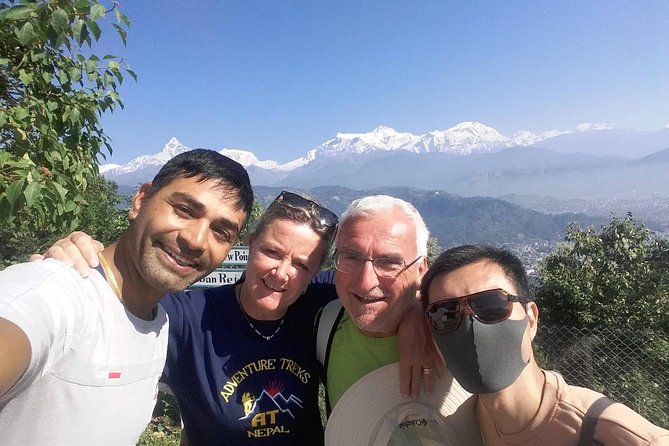
- Poon Hill adds a superb early-morning viewpoint: You climb before breakfast for sunrise over the Annapurna and Dhaulagiri ranges.
- The route mixes culture with mountain walking: Kathmandu’s sacred sites come first, followed by Magar and Gurung villages and high forest trails.
- Porter support is included: One porter is listed for every two trekkers, with salary, insurance, food, lodging, and equipment covered.
- This is a private trip: Only your group participates, and the itinerary can be adjusted with your guide.
- The final approach is demanding: Stone steps, steep descents, rocky paths, and long walking days require moderate fitness.
- Read the inclusions carefully: Meals are covered in the mountains, but lunch and dinner in Kathmandu and Pokhara are extra, as are drinks, showers, charging, laundry, and tips.
Kathmandu gives the trek a strong opening
Your first day is simple. A representative from Himalayan Sanctuary Adventure picks you up at Tribhuvan International Airport and takes you to your hotel in Kathmandu, at about 1,300 meters. That removes one of the least pleasant arrival tasks: finding transport after a long international flight.
Day two is more than a box-ticking sightseeing day. You visit four major sites in the Kathmandu Valley: Pashupatinath, Boudhanath, Patan Durbar Square, and Swayambhunath.
Pashupatinath is one of Nepal’s most important Hindu shrines, set beside the Bagmati River. Boudhanath, with its large white stupa and prayer flags, gives you a calmer Buddhist setting. Patan Durbar Square brings together palace courtyards, pagoda temples, and a museum with religious objects. Swayambhunath, often called the Monkey Temple, sits on a hill above the valley.
I like this start because it lets you see Nepal as more than a trailhead and a mountain backdrop. You also have a chance to meet the guide and prepare for the walk before leaving the city.
Entrance fees for sightseeing are not included, so carry money for the Kathmandu visits. The itinerary also describes day two as trek preparation, but the day is already full, so ask when permits, gear checks, and any briefing will take place.
More Annapurna Treks in Kathmandu
- Annapurna Circuit Trek with Tilicho Lake
★ 5.0 · 368 reviews - Annapurna base camp trek 5 Days
★ 5.0 · 252 reviews - 14-Day Private Annapurna Base Camp Trek
★ 5.0 · 180 reviews
The long road from Kathmandu to Pokhara
On day three, you leave early for the tourist bus station. Pickup is listed for around 6:30 or 6:45 a.m., with departure close to 7:00 or 7:30 a.m. The drive to Pokhara takes about six hours, depending on road conditions.
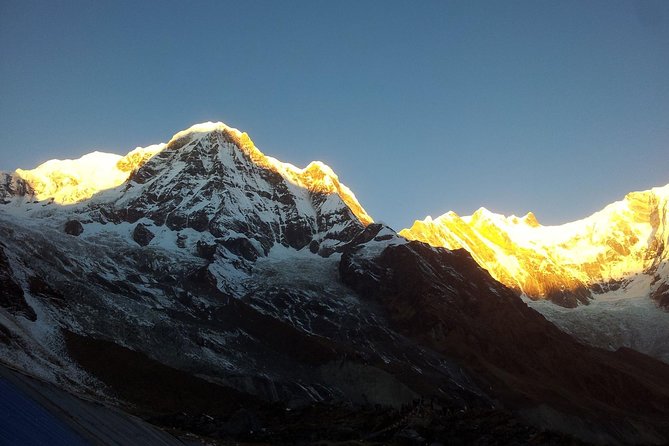
Pokhara is a useful change of pace after Kathmandu. It sits beside Phewa Lake and is known for views toward Annapurna, Machhapuchare, Dhaulagiri, Lamjung Himal, and Manaslu. The town is smaller and calmer than the capital, and it works well as a place to spend the night before the trail begins.
The bus is included, which keeps the price down compared with arranging private transport. Still, a six-hour road journey can feel long, especially after the flight and city sightseeing. Keep water and snacks handy, though bottled or boiled water is not included.
The package includes three-star hotels in Kathmandu and Pokhara with breakfast. Lunch and dinner in Pokhara are your responsibility, so budget for those meals separately.
Nayapul to Ulleri: a gentle start with a steep finish
On day four, a private vehicle takes you from Pokhara to Nayapul. The walking begins beside the Modi Khola and continues to Birethanti, a sizable village with shops and teahouses.
From Birethanti, the path follows the Bhurungdi Khola toward Hille and Tikhedhunga. This first section is a sensible introduction to the route. You walk through inhabited country, pass small settlements, and get used to the rhythm of a Himalayan trail without starting at extreme altitude.
The day is listed at roughly five to seven hours. The hardest part comes near Ulleri, where the path climbs through a large Magar village at about 2,070 meters. The route description also refers to the night near Tikhedhunga, so confirm the overnight stop. That matters because Ulleri and Tikhedhunga create different walking distances for the next day.
This is one of the places where a private guide helps. A good guide can set a steady pace rather than pushing the group to match an arbitrary schedule.
Ulleri, Ghorepani, and the rhododendron forest
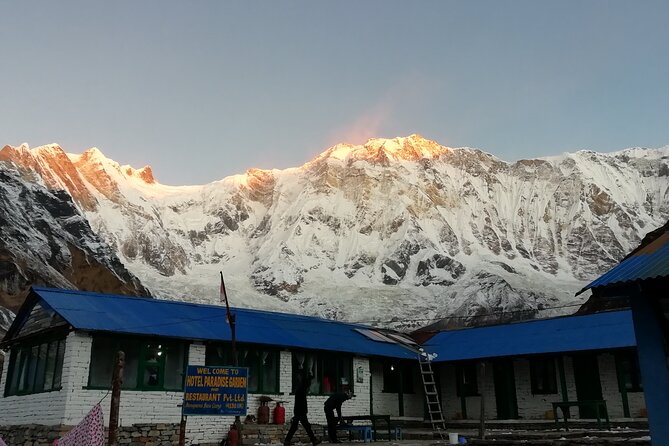
The next day brings a steep climb from Ulleri, followed by a more gradual walk through oak and rhododendron forest. Banthanti and Nangethanti break up the ascent before you reach Ghorepani, at roughly 2,750 to 2,840 meters depending on the stated figure.
The walking time is given as four to five hours, but the stone steps can make this feel tougher than the clock suggests. You should expect plenty of uphill work, even though the day is shorter than some later stages.
Ghorepani is important because it sets up the early morning walk to Poon Hill. It is also your first clear taste of a higher mountain settlement, where the night can feel colder and the facilities simpler than in Pokhara.
Teahouse accommodation and breakfast, lunch, and dinner are included during the trek. Hot water, showers, drinks, and bottled or boiled water cost extra. Ask your guide or lodge about current charging and bathing arrangements, since battery recharge and showers are specifically excluded.
Same trailhead, a different route:
- Everest Base Camp Trek – 14 Days
★ 5.0 · 1,499 reviews - Everest Base Camp Trek
★ 5.0 · 842 reviews - Everest Base Camp Helicopter Tour landing at Everest View Hotel
★ 5.0 · 668 reviews - Everest Base Camp Trekking
★ 5.0 · 485 reviews
Poon Hill sunrise is worth the early alarm
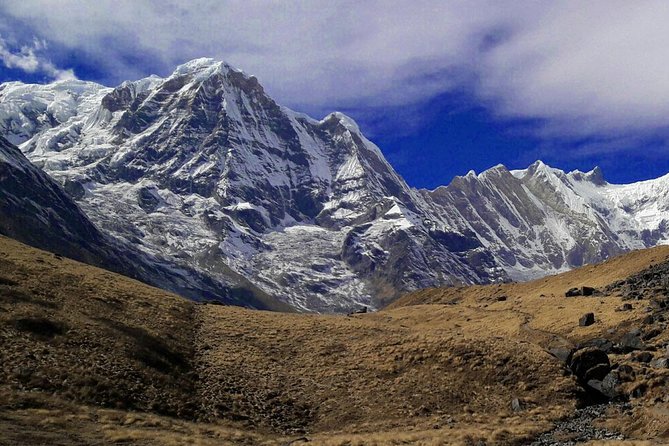
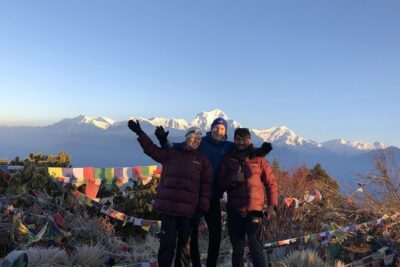
Day six begins before breakfast with an uphill walk to Poon Hill, at 3,210 meters. The climb takes about an hour from Ghorepani, and the reward is a broad sunrise view toward the Annapurna and Dhaulagiri ranges.
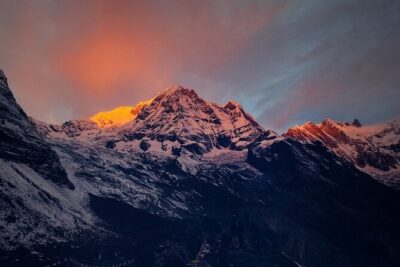
This is one of the strongest parts of the trip. Poon Hill gives you a major mountain viewpoint without requiring a separate expedition, and the morning light can reveal Annapurna, Dhaulagiri, Mustang, Pokhara, and many other high peaks.
You then return to Ghorepani for breakfast before continuing toward Tadapani. The trail climbs a ridge, then drops through rhododendron forest and past waterfalls. The full day is listed at six to seven hours, so it is not simply a short viewpoint walk.
The early start is the tradeoff. You may be cold and tired before breakfast, and clouds can affect the view. Even so, the route’s mix of forest, waterfalls, and high peaks makes this a memorable day even when the sunrise is not perfect.
Tadapani to Chhomrong brings villages and stone steps
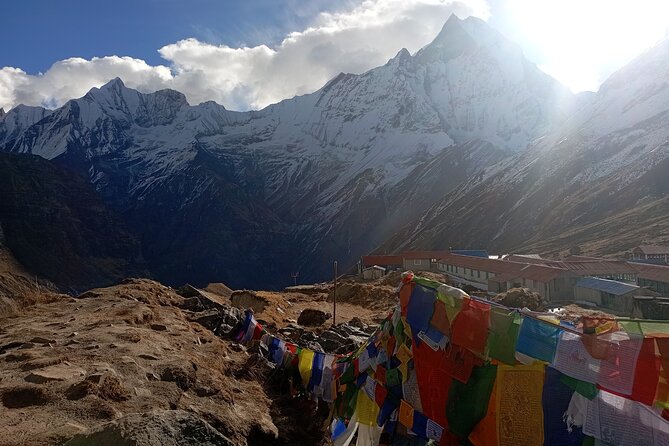
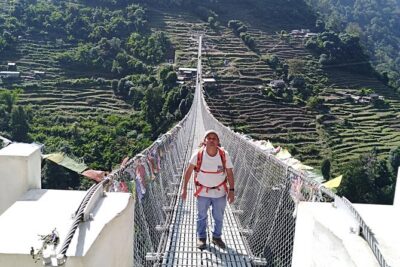
From Tadapani, the trail descends through a large rhododendron forest and opens onto terraced fields. You pass waterfalls, cross a suspension bridge, and continue through a series of uphill and downhill sections to Chhomrong.
Chhomrong sits below the Annapurna massif and is one of the key villages on the approach to base camp. The day takes about five to six hours, but the repeated changes in elevation can be tiring. Nepal’s mountain trails often make you work hard even when the destination appears close.
This is a good place to notice the human side of the trek. The route passes through Gurung communities and working farmland rather than empty wilderness. Your guide can help explain the villages and local life, though the supplied information does not promise a formal cultural program.
Bamboo forest, Dovan, and the narrowing valley
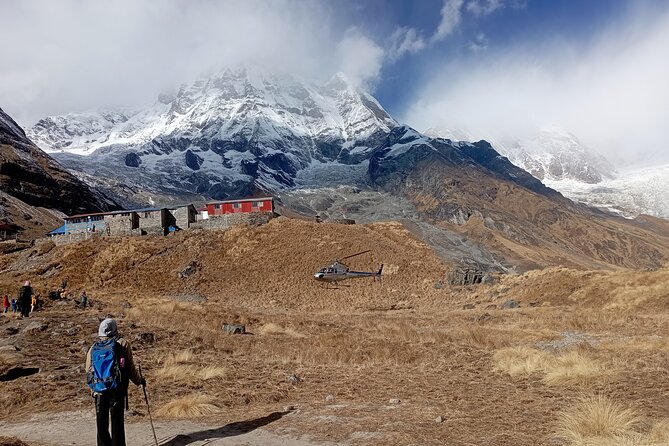
Day eight leads from Chhomrong toward Dovan. The trail passes through damp bamboo forest, climbs toward the Himalaya Hotel, and then reaches a drier section with wider views of the river and surrounding cliffs.
The route includes Hinku Cave, a descent to a river, and another climb to Dovan. The walking time is about five to six hours. The vegetation begins to thin as you gain height, and waterfalls appear on the cliffs around the valley.
The forest can be cold and wet, while the exposed sections can feel warmer in the sun. Pack layers that are easy to reach, rather than burying your jacket at the bottom of your bag. A porter carries the main luggage, but you still need a small day pack.
The guide and porter arrangement is a real part of the value here. The package lists one porter for every two trekkers, with their wages, insurance, equipment, food, and lodging included. Confirm the expected luggage limit, since the information provided does not state one.
Deurali and the final approach to base camp
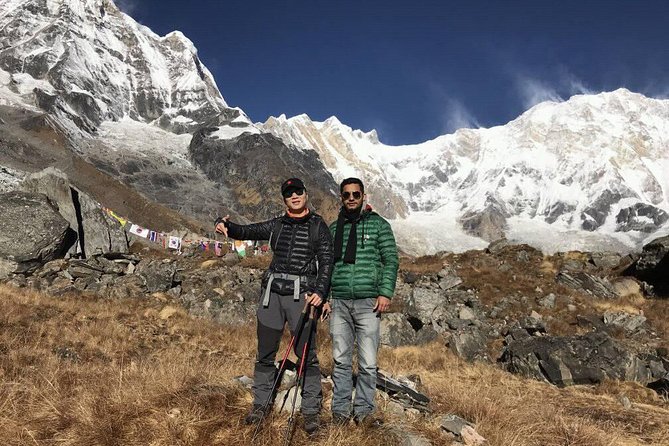
The trail from Dovan toward Deurali follows the valley in a steady climb. Parts of the path cling to rocky cliffs, and some sections are steep. The route description lists about five to six hours.
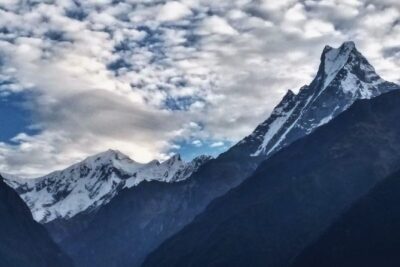
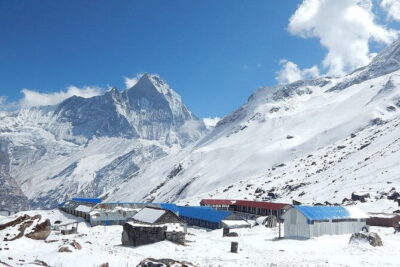
From Deurali, the trail continues toward Machhapuchare Base Camp and then Annapurna Base Camp. The valley becomes more open as you leave much of the forest behind, and the mountain setting takes over. Machhapuchare, also called Fish Tail, is a major landmark on the way.
The final approach is listed at five to seven hours. At this height, a moderate fitness level is not just a polite suggestion. You need to handle long uphill stretches, uneven rock, cold conditions, and a thinner atmosphere without rushing.
The published day labels are not fully consistent. One section lists day nine as Deurali and day ten as Deurali again, while the fuller schedule places Annapurna Base Camp on day ten. Ask for the final overnight plan, the intended time at base camp, and the exact descent route.
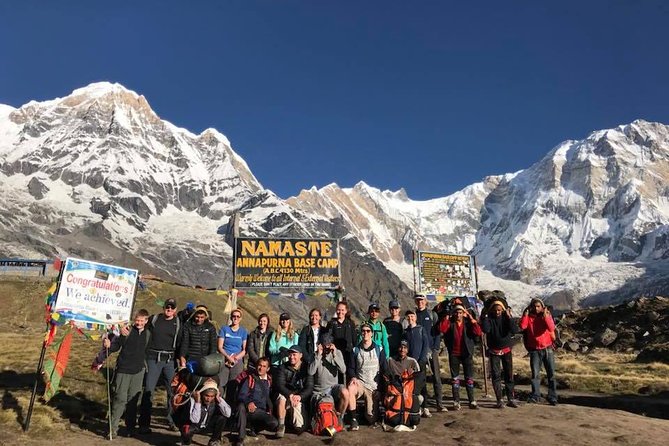
At Annapurna Base Camp, the attraction is the enclosed mountain setting and the sense of reaching a clear goal on foot. You are not climbing Annapurna itself. You are walking to the base camp, surrounded by the Annapurna range and other high peaks.
The descent is easier on the lungs, harder on the knees
After base camp, the route descends through Machhapuchare Base Camp, Deurali, Himalaya Hotel, and Dovan before reaching Bamboo. The day is listed at five to seven hours, and another version gives seven hours.
Downhill does not mean easy. Stone steps and loose or rocky sections can punish your knees, especially after the long climb. Use trekking poles if you have them, and let the guide know early if your legs are struggling.
The route then continues from Bamboo back toward Chhomrong, with lunch there before a steep descent to the Modi Khola valley. The stone steps around Chhomrong are described as tricky in both directions. Expect another long day of about seven hours.
This is where the private format has practical value. A guide can help you slow down, choose sensible rest stops, and watch for signs that someone needs more time.
Jhinu Danda provides a softer finish
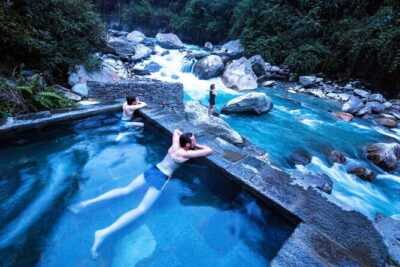
From the Chhomrong area, you continue toward Jhinu Danda. The day is listed at about five hours and includes time at the hot spring.
Jhinu is a welcome change after the high trail. The walk still includes hills, but the hot spring gives you a chance to rest sore legs in a natural setting. The area also offers views across western Nepal’s hills.
The itinerary has a small inconsistency here too. One version describes trekking to Jhinu, enjoying the spring, and staying overnight there. Another says you leave Jhinu and enjoy the scenery, then stay overnight at Jhinu. The practical result is the same, but confirm how much time you actually get at the spring.
The following day takes you to Nayapul and then by road to Pokhara. That drive marks the end of the walking portion, though the trip itself continues.
Return to Pokhara and Kathmandu
After finishing the trek, you drive back to Pokhara and spend the night there. The stated journey takes about five hours, though road conditions can affect the timing.
Day fourteen begins after breakfast with the tourist bus back to Kathmandu. The drive is listed at seven to nine hours. It is a long final transport day, so do not plan an important international connection immediately afterward.
Airport pickup on arrival is included, but the information does not say that an airport transfer for your departure is included. Confirm this if you need help reaching the airport.
The advertised duration is described as both 14 and 15 days. The detailed schedule contains 14 days, so use that as the working plan while asking the operator to confirm the exact number of hotel nights and trekking nights.
What the $899 price really covers
At $899 per person, the package offers solid value if you want a guided trek with the major logistics handled. The price includes airport pickup, Kathmandu and Pokhara hotels with breakfast, mountain teahouses, all three daily meals during the trek, tourist coach transport between Kathmandu and Pokhara, a private English-speaking guide, porter support, permits, paperwork, and government and local taxes.
That is a lot to arrange independently. The porter, guide, permits, and mountain meals can add up quickly, and the private format gives you more control than a large fixed group.
Still, do not treat $899 as the final cash you will need. You pay separately for Kathmandu and Pokhara lunches and dinners, sightseeing entrance fees, drinks, tea and coffee, hot water, bottled or boiled water, showers, laundry, phone calls, battery charging, bar bills, and tips.
There is also a contradiction in the written terms: one section says government and local taxes are included, while another says all fees and taxes are not included. Ask the company to clarify this in writing before booking.
The cancellation terms are straightforward: cancel at least 24 hours before the start time for a full refund. Changes or cancellations inside that window are not accepted for a refund.
Who should choose this Annapurna itinerary?
I would choose this trip if you want the classic Annapurna Base Camp route without spending days arranging buses, permits, lodges, guides, and porters yourself. It suits someone with moderate fitness who is comfortable walking for four to seven hours on steep and uneven trails.
It is also a good fit if you value personal attention. The operator has received especially strong praise for caring guides, including Bishnu Bhatta and guides referred to as Bishnu or Vishnu. Those names may not mean your assigned guide will be one of them, so ask who will lead your departure.
I would be more cautious if you need a highly polished, fixed schedule. The repeated day and timing discrepancies need clarification, and the bus journeys are long. You should also be comfortable with basic teahouse conditions and paying extra for several everyday comforts.
Should you book it?
Book this Annapurna Base Camp trek if you want a well-supported private route with Poon Hill, Kathmandu’s major heritage sites, porter help, and meals in the mountains at a competitive price.
Before committing, get three things confirmed: the exact 14 or 15-day schedule, the overnight stops around Ulleri, Deurali, and Jhinu, and the full list of taxes and extra costs. If those points are clear, the package offers a practical way to reach Annapurna Base Camp while leaving the mountain logistics to an experienced local team.
FAQ
How long is the Annapurna Base Camp tour?
The detailed itinerary covers 14 days, but the overview describes it as a 15-day tour. Ask the operator to confirm the final duration, hotel nights, and trekking nights before booking.
Is the tour private?
Yes. Only your group participates, and the itinerary can be adjusted with your guide.
What level of fitness do I need?
A moderate level of physical fitness is required. Walking days range from about four to seven hours and include steep climbs, stone steps, rocky trails, and long descents.
Are meals included?
Breakfast is included at the Kathmandu and Pokhara hotels. Breakfast, lunch, and dinner are included in the teahouses during the trek. Lunch and dinner in Kathmandu and Pokhara are not included.
Are a guide and porter included?
Yes. An English-speaking trekking guide and porters are included. The package lists one porter for every two trekkers and includes their salary, insurance, equipment, food, and lodging.
What is the cancellation policy?
You can cancel at least 24 hours before the experience begins for a full refund. Cancellations or changes made less than 24 hours before the start time are not accepted for a refund.
Just added around Kathmandu
- Everest Base Camp Trek★ 5.0 · 3 reviews
- Everest Base Camp Trek★ 5.0 · 7 reviews
- 15 Days Private Everest Base Camp Trek★ 5.0 · 30 reviews
- 14 Days of Adventure Trekking to Everest Base Camp★ 5.0 · 2 reviews
- 14-Day Everest Base Camp Trek★ 5.0 · 20 reviews
- Everest Base Camp Trek★ 5.0 · 57 reviews
- From Kathmandu: Private 14-Day Everest Base Camp Trek★ 5.0 · 20 reviews
- 14 Days Everest Base Camp Trek★ 5.0 · 4 reviews
Annapurna Base Camp Treks, compared.
Trekking in Annapurna/Langtang/Everest/Upper Mustang regions
Read our review →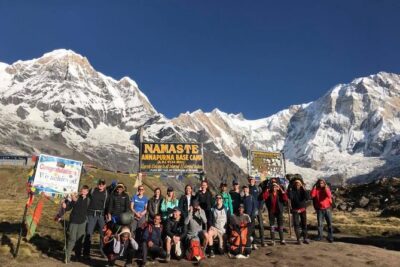
Kathmandu to Annapurna Base Camp (ABC) 5-Day Trek
Read our review →Browse the lists this trek appears in