
Review · KATHMANDU
Annapurna Base Camp Trekking
The Annapurna Base Camp trek packs a lot into 14 days: Kathmandu temples, Pokhara, Poon Hill, Gurung villages, rhododendron forests, and a final mountain bowl at 4,130 meters. The route feels varied from one day to the next, with stone steps, rivers, forests, waterfalls, and high mountain views.
I like the mix of cultural stops and serious mountain scenery, and I like that permits, trekking meals, guesthouse stays, transport, and a local guide are included. The main drawback is the physical demand: long days on uneven trails, steep stairs, and high altitude require a moderate level of fitness, while travel and rescue insurance remain your responsibility.
Key points before you book
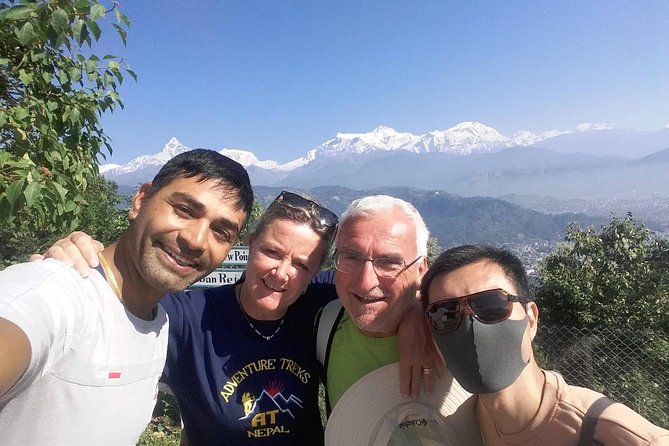
- Poon Hill adds a superb mountain viewpoint with views toward Dhaulagiri, Annapurna, and Manaslu.
- Annapurna Base Camp reaches 4,130 meters, after a steady change from lowland forest to thinner alpine vegetation.
- The route passes through Gurung and Magar communities, including Chhomrong and Ghandruk.
- Full-board meals are included during the trek, along with tea or coffee and twin-sharing guesthouse accommodation.
- Kathmandu and Pokhara are built into the schedule, so this is more than a walk in the mountains.
- The package is private, meaning only your group takes part in the activity.
Why this Annapurna route is so appealing
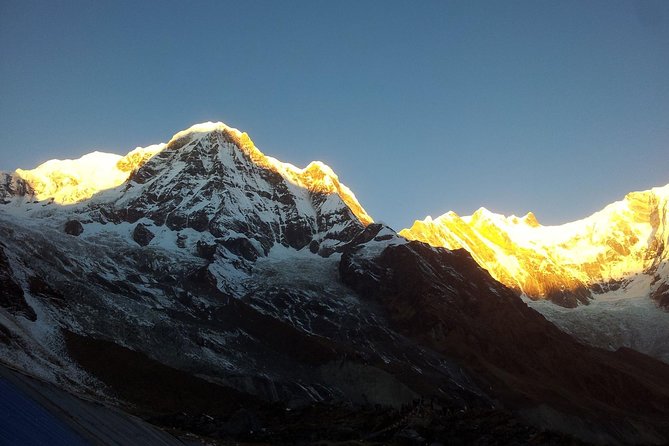
Annapurna Base Camp is one of Nepal’s classic treks because it gives you a strong sense of progress without keeping you in one type of scenery. You begin with city temples and busy streets, then move through terraced farmland, village trails, oak and rhododendron forests, bamboo groves, and a high mountain sanctuary.
I especially like the way the route builds toward its main goal. Poon Hill gives you an early mountain reward, while the final approach through Machapuchare Base Camp and Annapurna Sanctuary brings the peaks close around you. You are not simply walking toward a distant skyline. The mountains become part of the trail itself.
The route also has a useful cultural side. Chhomrong is a Gurung village, and Ghandruk includes a museum focused on Gurung culture and tradition. These stops give the trek more meaning than a simple climb from one lodge to another.
Still, you should not mistake the steady itinerary for an easy holiday. The schedule includes several six or seven-hour walking days, many stone steps, repeated uphill and downhill sections, and a high point of 4,130 meters. The package suits you best if you already handle long walks comfortably.
More Annapurna Treks in Kathmandu
- Annapurna Circuit Trek with Tilicho Lake
★ 5.0 · 368 reviews - Annapurna base camp trek 5 Days
★ 5.0 · 252 reviews - 14-Day Private Annapurna Base Camp Trek
★ 5.0 · 180 reviews
Days 1 and 2: Kathmandu temples and a gentle start
Your trip begins with a private airport pickup at Tribhuvan International Airport and transfer to your hotel. If you arrive during the day, you can walk around Thamel. A late arrival is better spent resting, since the next day includes several hours of sightseeing.
Day 2 is set aside for Kathmandu Valley sightseeing. The route can be adjusted to your interests and includes UNESCO World Heritage Sites grouped around stupas, temples, and palaces. That flexibility is useful, since you may prefer religious sites, historic architecture, or a broad introduction to Kathmandu.
The sightseeing lasts about five hours and admission tickets are listed as included. I would use this day to get comfortable with the city before the trek rather than trying to pack in every possible sight. The private format also means your group does not need to follow the pace or interests of a larger tour.
Day 3: The road from Kathmandu to Pokhara
You travel by tourist bus from Kathmandu to Pokhara, a journey of about six hours. The road passes towns, villages, rivers, terraced farmland, and hilly scenery before reaching the City of Lakes.
This transfer is not just a way to fill time. It gives you a look at rural Nepal before the walking begins, though you should expect a long road day rather than a quick connection. After checking into the Pokhara hotel, you can walk around Phewa Lake in the evening.
Pokhara is also a useful pause before the trek. The city is associated with activities such as paragliding, zip lining, and bungee jumping, along with sights including Davis Falls, the World Peace Pagoda, and Bindhyabasini Temple. None of those activities is part of this package, so treat Pokhara as free time unless you arrange extras yourself.
Days 4 and 5: Ulleri stairs and Ghorepani
On Day 4, a drive takes you from Pokhara to Naya Pul, where the trek starts. The trail passes through oak and rhododendron forest and reaches Tikhedunga before climbing toward Ulleri.
This is where the stairs make their presence known. The route includes stone steps, boulders, bridges, cliffs, and steep sections. The description calls the path winding and manageable in parts, but the famous Ulleri stairs still make this a demanding first walking day. You reach Ulleri in the afternoon after roughly six hours.
Day 5 continues through Banthanti and Nangethanti toward Ghorepani. Oak and rhododendron forest keeps the route shaded, and lunch is planned around Nangethanti. Ghorepani is important because it opens views toward Dhaulagiri and the Annapurna range.
The combination of forest and mountain outlooks makes this a pleasant section, but the rhythm remains uphill. You will appreciate having a guide who handles the route while you focus on your footing, water, and pace.
Same trailhead, a different route:
- Everest Base Camp Trek – 14 Days
★ 5.0 · 1,499 reviews - Everest Base Camp Trek
★ 5.0 · 842 reviews - Everest Base Camp Helicopter Tour landing at Everest View Hotel
★ 5.0 · 668 reviews - Everest Base Camp Trekking
★ 5.0 · 485 reviews
Day 6: Poon Hill and the forest trail to Tadapani
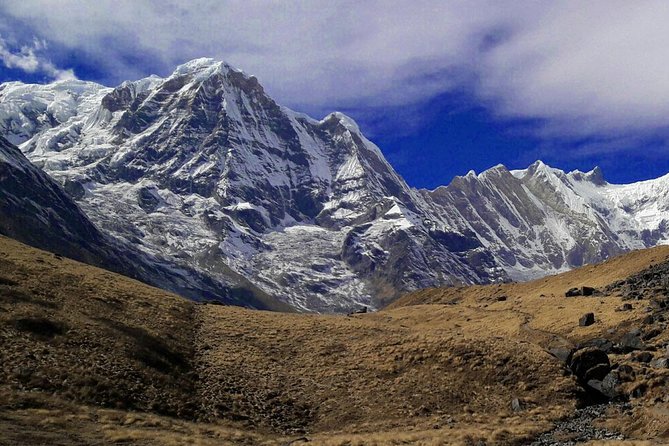
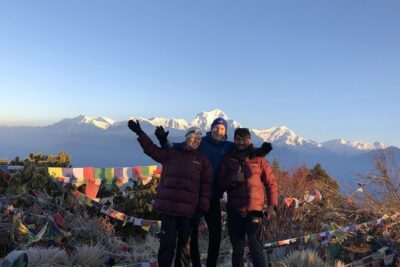
Poon Hill is one of the best-known viewpoints on this trek. From here, you can see Dhaulagiri, Annapurna, and Manaslu, giving you a broad mountain view before the trail moves deeper into the Annapurna route.
The walk to Tadapani includes uphill and downhill sections through forest and over rocky steps. It lasts about six hours, so Poon Hill is not a quick photo stop followed by an easy stroll. The day asks for steady legs, especially after the stairs around Ulleri and Ghorepani.
I like this part of the itinerary because it gives you an early payoff. If cloud blocks the peaks, the forest still provides a good setting, but mountain visibility is naturally weather-dependent.
Day 7: Chhomrong, Gurung culture, and the Annapurna wall
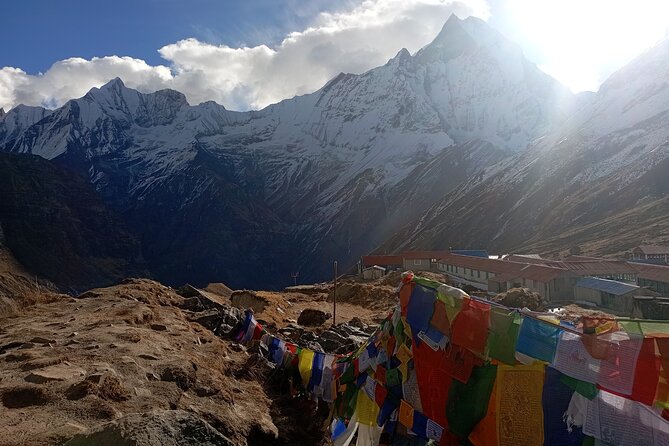
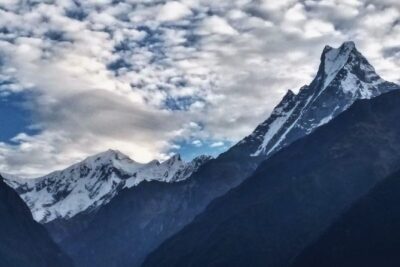
After breakfast, the trail descends through rhododendron and oak forest before reaching Chhomrong. This Gurung village sits below the Annapurna massif and offers views toward Annapurna South and Machhapuchhre, also known as Fish Tail.
Chhomrong is more than another overnight stop. You have time to explore the village, which breaks up the walking schedule and lets you see how the route connects with local communities. The setting is one of the strongest cultural and scenic combinations on the trek.
The downhill sections may sound easy, but steep descents can be hard on your knees. Take your time here. On a trek with repeated climbs and descents, saving energy matters more than racing into the next village.
Day 8: Stone steps, Bamboo, and the changing forest
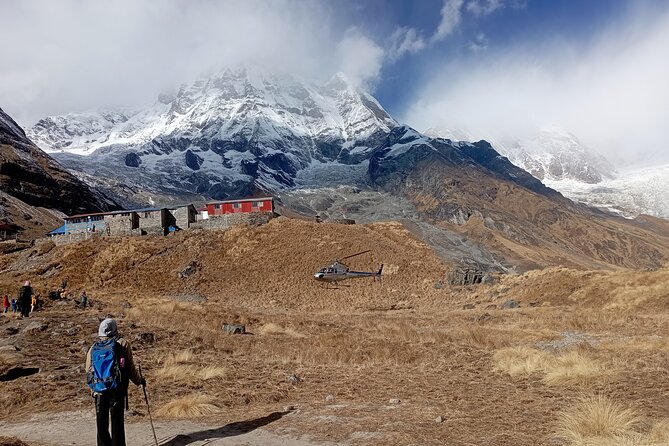
Day 8 is one of the more varied walking days. You descend about 2,500 steps toward the Chhomrong Khola, then climb toward Khuldighar at 2,380 meters and Sinuwa. From there, the trail passes through a gorge and reaches Bamboo.
Bamboo is described as damp and cold, a sharp change from the warmer village sections. After Bamboo, the path climbs through rhododendron forest toward the Himalaya Hotel, where you can see glaciers. The day lasts roughly seven hours, making it one of the longer and more tiring sections.
This is the point where the trek begins to feel more remote and more alpine. Vegetation, temperature, and trail conditions change as you move upward. Keep a warm layer easy to reach, since the day can move between sun, shade, damp forest, and exposed sections.
Day 9: Machapuchhre Base Camp and Annapurna Base Camp
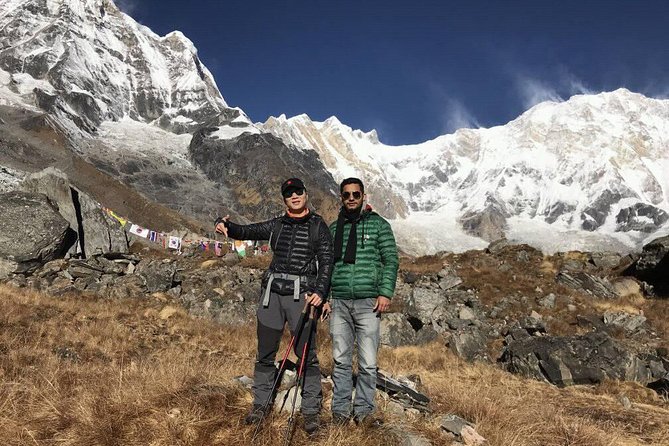
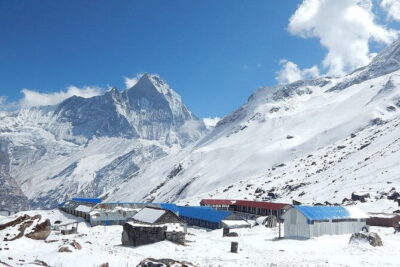
Day 9 is the central event of the trek. The trail passes Hinko Cave and Deurali before reaching Machapuchhre Base Camp. From there, the route continues uphill for about two hours to Annapurna Base Camp.
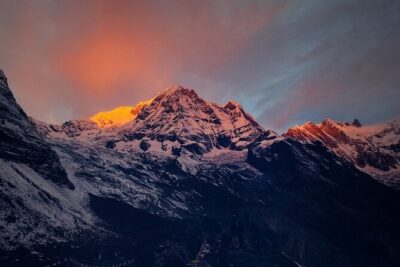
The vegetation becomes thinner as you climb. Waterfalls, valley views, and a steadily narrowing sense of space lead you into the Annapurna Sanctuary. At Machapuchhre Base Camp, the surrounding peaks include Machhapuchhre, Hiunchuli, Annapurna South, Annapurna I, Annapurna III, Gandharvachuli, and Gangapurna.
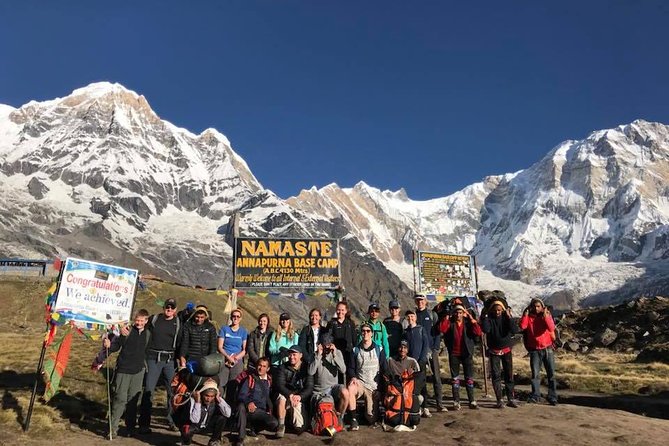
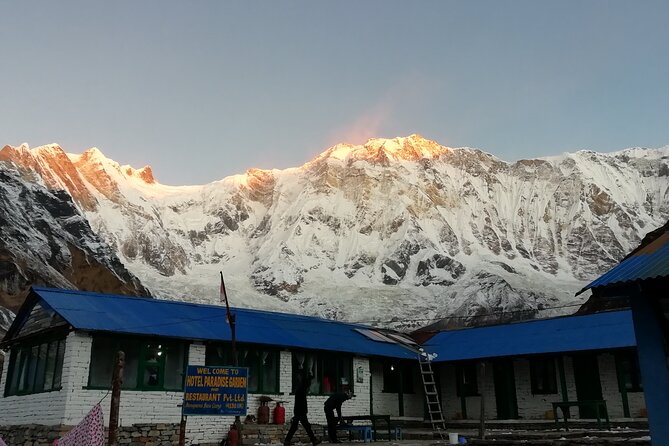
At Annapurna Base Camp, the views open toward Machhapuchhre, Annapurna South, Annapurna I, Hiunchuli, and other peaks. The base camp sits at 4,130 meters, so the achievement is physical as well as scenic. You should expect this to be the most demanding and most memorable day of the walk.
One odd detail in the schedule lists only six minutes at this stop, which clearly does not describe the full walking day. The route description itself gives about two hours from Machapuchhre Base Camp to Annapurna Base Camp, and the day involves the approach, time at the sanctuary, and accommodation arrangements. Confirm the exact overnight plan with Travel Max Guide before departure.
Days 10 and 11: Retracing the trail and reaching Jhinu Danda
Day 10 heads back downhill through the bamboo, rhododendron, and oak forest. The trail retraces the route toward Bamboo and is easier than the previous day in terms of elevation gain, though downhill walking can still be tiring after the climb to base camp.
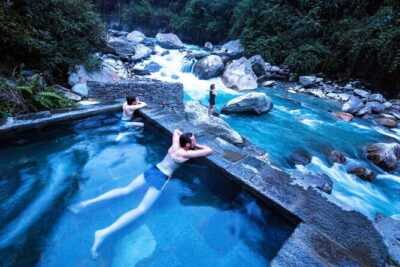
You continue toward Chhomrong Khola on Day 11, then follow a downhill trail to Jhinu Danda. The highlight here is the chance to use a natural hot spring, a welcome change after several days of walking.
This pair of days shows the practical nature of the route. You do not take a completely different path after base camp. You return through familiar terrain, but the descent lets you notice details that were easy to miss while climbing.
Days 12 and 13: Ghandruk, Pokhara, and the return to Kathmandu
Day 12 takes you downhill toward Ghandruk, with views of Annapurna South and Fish Tail. The village museum offers information about Gurung culture and tradition, giving you a final cultural stop before leaving the mountains.
From Ghandruk, the trail continues down to Kimche and Nayapul. You then travel by jeep or bus to Pokhara. The total day is listed at about six hours, but the walking and road transfer make it another full day.
On Day 13, you return from Pokhara to Kathmandu by tourist bus. The scenery shifts from greener forest and hills to areas with less vegetation as you approach the capital. You cross rivers and streams along the way, and the drive takes about six hours.
That evening includes a farewell dinner at a typical Nepali restaurant with Nepali dance. It is a pleasant way to close the active part of the trip, though the dinner is a scheduled group experience rather than a quiet final meal.
What the $1,600 price covers
At $1,600 per person, the package offers solid value if you want one company to handle the main moving parts. It includes twin-sharing accommodation with breakfast in Kathmandu and Pokhara, twin-sharing guesthouse accommodation during the trek, airport transfers, tourist bus transport between Kathmandu and Pokhara, and guided Kathmandu sightseeing.
During the trek, breakfast, lunch, dinner, and tea or coffee are included. The package also covers an English-speaking Nepal Government certified trekking guide, ACAP and TIMS permits, guide insurance, guide meals, lodging, transport, and a medical kit.
You also receive a farewell dinner and a trip accomplishment certificate. The listed meal count includes 13 breakfasts, nine lunches, and eight dinners, so check the exact meal schedule if you want to compare this package with another 14-day trek.
The price does not include international flights, a Nepal entry visa, travel and rescue insurance, bottled water, laundry, phone calls, bar bills, tips, or expenses not listed as included. Tipping is expected, so keep that extra cost in your budget. Travel and rescue insurance is especially important to arrange yourself because it is not part of the package.
Guides, group size, and practical comfort
This is a private activity, so only your group participates. That is a useful advantage if you want control over walking speed, rest stops, and the amount of time spent in villages or viewpoints.
John Shrestha is identified as a company contact who helps with equipment and responds to questions. The trek itself includes a Nepal Government certified English-speaking local guide. The guide’s role matters on a route with many trail changes, long stair sections, and high-altitude walking.
Accommodation is twin-sharing throughout the package. In Kathmandu and Pokhara, you stay in hotels with breakfast. On the trail, you use guesthouses and receive full-board meals. Do not expect city-hotel comfort in the mountains. The real value is having food and a bed arranged along a demanding route.
The pickup and final airport transfer use a private vehicle. The Kathmandu to Pokhara and return journeys use tourist buses. The activity has a mobile ticket, and confirmation is provided when you book.
Who should choose this trek?
I would recommend this trip if you want a well-organized first Himalayan trek with city time, mountain villages, permits, meals, and transport handled in one plan. It works particularly well for people who want the classic Annapurna Base Camp route without arranging each lodge and transfer independently.
You should be comfortable with a moderate physical challenge. The schedule includes six to seven-hour days, steep stairs, rocky sections, repeated descents, and a high point above 4,000 meters. If you have little experience with long walks, ask the company detailed questions about pacing and acclimatization before booking.
This is less suitable if you want a luxury trek, a short walking holiday, or a flexible schedule with many spare days. It is also not an all-inclusive vacation, since airfare, visa, insurance, personal spending, and tips are extra.
Should you book the Annapurna Base Camp trek?
Book it if you want the full Nepal introduction: Kathmandu temples, Pokhara, Poon Hill, Gurung villages, forest trails, a hot spring, and the high mountain bowl of Annapurna Base Camp. The included permits, meals, guide services, accommodation, and transfers make the $1,600 price easier to justify.
Before paying, confirm the day 8 and day 10 route details, the overnight locations, and the exact meal count. Also arrange travel and rescue insurance, prepare for steep stairs, and leave room in your budget for tips and personal expenses. If you can manage the physical side, this itinerary offers a strong balance of mountain scenery and local culture.
FAQ
Where does the Annapurna Base Camp trek start and finish?
The activity starts with pickup at Tribhuvan International Airport in Kathmandu. It ends back at the meeting point after a private vehicle transfer to the airport.
How long does the trek take?
The full experience lasts about 14 days. It includes time in Kathmandu and Pokhara, the mountain trek, return transport, and the final airport transfer.
How high is Annapurna Base Camp?
Annapurna Base Camp is at 4,130 meters.
Is the trek private?
Yes. Only your group participates in the activity.
What accommodation is included?
You receive twin-sharing hotel accommodation with breakfast in Kathmandu and Pokhara. During the trek, you stay in twin-sharing guesthouses.
Are meals included during the trek?
Yes. Breakfast, lunch, dinner, and tea or coffee are included during the trekking period. The listed package includes 13 breakfasts, nine lunches, and eight dinners.
Is a guide included?
Yes. The package includes a Nepal Government certified English-speaking local trekking guide. Guide meals, lodging, transportation, salary, and insurance are also included.
Is travel insurance included?
No. International flights, the Nepal entry visa, travel and rescue insurance, personal expenses, and tips are not included. You can cancel up to 24 hours before the start time for a full refund.
Just added around Kathmandu
- Everest Base Camp Trek★ 5.0 · 3 reviews
- Everest Base Camp Trek★ 5.0 · 7 reviews
- 15 Days Private Everest Base Camp Trek★ 5.0 · 30 reviews
- Everest Base Camp Trek★ 5.0 · 57 reviews
- 14 Days of Adventure Trekking to Everest Base Camp★ 5.0 · 2 reviews
- 14-Day Everest Base Camp Trek★ 5.0 · 20 reviews
- From Kathmandu: Private 14-Day Everest Base Camp Trek★ 5.0 · 20 reviews
- 14 Days Everest Base Camp Trek★ 5.0 · 4 reviews
Annapurna Base Camp Treks, compared.
Trekking in Annapurna/Langtang/Everest/Upper Mustang regions
Read our review →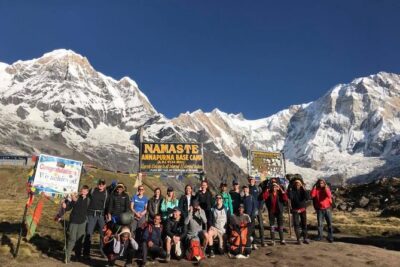
Kathmandu to Annapurna Base Camp (ABC) 5-Day Trek
Read our review →Browse the lists this trek appears in