
Review · KATHMANDU
Annapurna Base Camp Trekking
The big draw here is the route itself: you get Poon Hill sunrise, rhododendron forests, mountain villages, Machhapuchhre Base Camp, and Annapurna Base Camp in one 12-day trip. It is a full Himalayan trek, not a quick viewpoint walk, with a high point of 4,130 meters.
I like that the price covers the costly moving parts: a licensed guide, porter support, permits, bus transfers, a duffle bag, sleeping bag, down jacket, and first aid kit. I also like the human touch reported from guide Avi and porter Robin, who were patient and careful about safety.
The main catch is that meals during the trek are extra, as are Kathmandu and Pokhara hotels, drinks, and a solo porter. You also need a moderate fitness level, and the climb to high altitude should be taken seriously.
Key points to know before you book
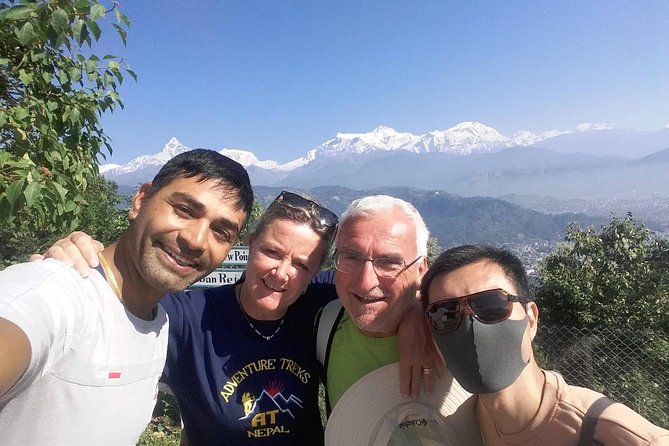
- Poon Hill adds a sunrise climb: Leave Ghorepani before dawn for views from 3,210 meters.
- Annapurna Base Camp reaches 4,130 meters: The route requires steady walking and sensible pacing.
- Tea house lodging is included: You sleep along the trail, while food costs extra.
- A guide and shared porter support are included: One porter is provided for every two trekkers.
- Bus travel links Kathmandu and Pokhara: The road journeys take about seven hours each way.
- Jhinu Danda offers a hot spring stop: The bathing fee is not included.
What the $749.90 price really covers
At $749.90 per person, this trip is priced as a package of services rather than a bare walking route. You are paying for permits, staff, transport between the main cities, transport to and from the trail, tea house lodging, and trekking equipment.
That matters in Nepal. Arranging each piece yourself can take time, and a guide helps keep the route, permits, and daily plans together. The package also includes staff wages, food, equipment, insurance, and transport for the trekking team, which gives the price more weight than a simple guide fee.
The strongest value is the equipment loan. You can use a duffle bag, sleeping bag, and down jacket during the trek, rather than buying or carrying everything from home. A first aid kit is also provided, along with a T-shirt, map, and trip certificate.
Still, set aside extra money for breakfast, lunch, and dinner during the trek. Water, soft drinks, juice, and other cold drinks are also not included. Hotels in Kathmandu and Pokhara are outside the price, and a solo trekker must pay for a porter separately.
This is a private tour, so only your group takes part. That gives you more control than a large fixed group, though the provided information does not state the maximum group size. The experience is also booked, on average, 40 days ahead, so last-minute availability may be limited.
More Annapurna Treks in Kathmandu
- Annapurna Circuit Trek with Tilicho Lake
★ 5.0 · 368 reviews - Annapurna base camp trek 5 Days
★ 5.0 · 252 reviews - 14-Day Private Annapurna Base Camp Trek
★ 5.0 · 180 reviews
Days 1 and 2: Kathmandu briefing, then the long road to Pokhara
Your first day begins with airport pickup and a transfer to your Kathmandu hotel. Later, you meet the trek leader for a pre-trip briefing. This is an important part of the trip, not just a formality. Use it to check your gear, ask about the walking pace, and confirm what your porter will carry.
The next morning starts at 7:00 a.m. with the drive to Pokhara. The trip takes about seven hours and follows one of Nepal’s scenic river corridors. It is also a long road day, so do not treat it as a quick transfer.
Pokhara is the relaxed base for the Annapurna region. The Lakeside area gives you time to settle in before the trail begins, but accommodation there is not included. Check what hotel arrangements are being made, and budget for that night separately.
The return bus to Kathmandu is included near the end of the trip. The journey takes about eight hours, so the package saves you from arranging another long-distance ticket, but it does not remove the road time.
Day 3: Birethanti, Ulleri, and the first hard climb
A private transfer takes you from Pokhara toward the trailhead area near Nayapul and Birethanti. The route begins at roughly 827 meters, with the walk continuing toward Tikhedhunga and then Ulleri.
The climb from Tikhedhunga to Ulleri takes about four hours. This is where the trek starts to feel real. You gain height on foot, with the trail rising from about 1,480 meters to Ulleri. It is a useful early test of your boots, breathing, and pack setup.
Nangethanti is a small rest point farther along the route, at about 2,460 meters. Ghorepani comes later, at 2,874 meters, and is one of the best-known stops in the Annapurna region. The day includes roughly three hours of drive time, four hours of walking toward Ulleri, and about two hours around Ghorepani.
The figures in the daily plan describe stops rather than a simple door-to-door walking total, so expect a full day. Your porter carries the main trekking load, but you should still keep a small daypack with water, warm layers, and personal items.
Day 4: Poon Hill sunrise and the trail to Tadapani
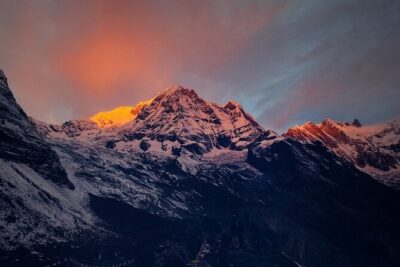
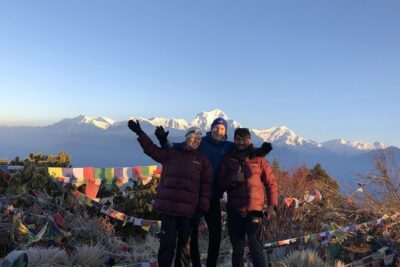
The pre-dawn walk to Poon Hill is one of the finest parts of this route. From Ghorepani, the climb takes about 45 minutes and reaches 3,210 meters. You go early for sunrise, when the Annapurna and Dhaulagiri ranges may catch the first light.
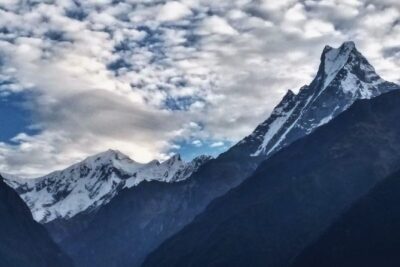
The viewpoint also looks toward Machhapuchhre, Annapurna South, and Hiunchuli. Mountain weather can change, so the views are not guaranteed, but the early start gives you the best chance at a clear morning.
After returning from Poon Hill, you continue toward Tadapani. The day includes about seven hours of trekking, and Tadapani sits at approximately 2,630 meters. It is known for mountain views and its position on both the Ghorepani and Annapurna Base Camp routes.
This is a demanding day because the sunrise walk comes before the main trek. If you prefer slow mornings, Poon Hill may feel like an extra chore. For most hikers, though, it is a worthwhile addition because it provides a major viewpoint without requiring a separate trip.
Same trailhead, a different route:
- Everest Base Camp Trek – 14 Days
★ 5.0 · 1,499 reviews - Everest Base Camp Trek
★ 5.0 · 842 reviews - Everest Base Camp Helicopter Tour landing at Everest View Hotel
★ 5.0 · 668 reviews - Everest Base Camp Trekking
★ 5.0 · 485 reviews
Day 5: Chuile, forests, and Sinuwa
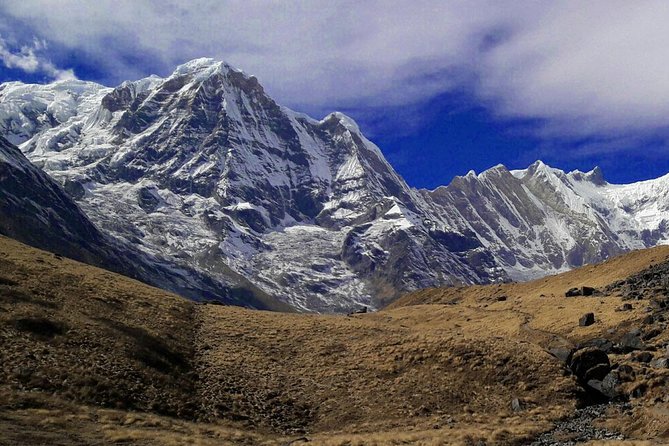
The trail passes through Chuile, a quiet village at about 2,300 meters, before continuing toward Sinuwa. You walk through forest and terraced areas, with views toward Annapurna South and Hiunchuli.
Sinuwa is divided into Lower Sinuwa at around 2,340 meters and Upper Sinuwa at about 2,360 meters. It is a key point on the approach to the Annapurna Sanctuary. The day is listed at about seven hours, so this is not a casual village stroll.
The route begins to feel more enclosed as you move through bamboo and rhododendron forest. The scenery changes from broad mountain viewpoints to a greener, more sheltered trail. That variety is one of the route’s strengths.
Tea house accommodation keeps the logistics simple, but do not expect hotel comforts in the mountains. The package includes the best available tea house accommodation during the trek, while meals remain your responsibility.
Day 6: From Sinuwa to Deurali at 3,174 meters
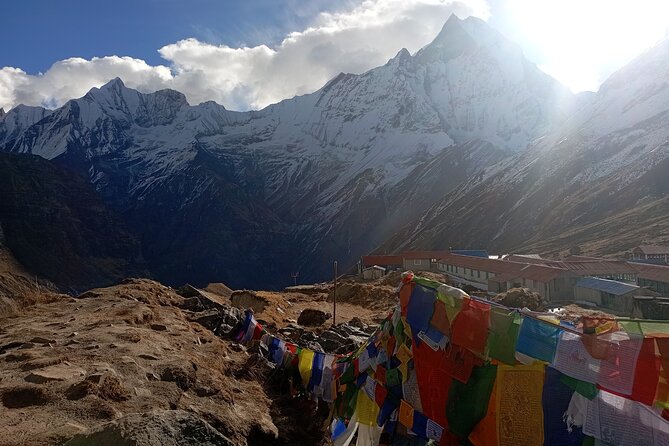
The sixth day continues upward from Sinuwa. The plan allows about six hours from Sinuwa and another five hours toward Deurali, with the route passing the Chhomrong and Himalaya area depending on the day’s starting point.
Deurali is listed at about 3,174 meters. This is a significant altitude gain, and you will notice that the walking pace matters more here. Keep your steps steady, drink regularly, and tell your guide if you feel unwell.
The route may include Himalaya at roughly 2,890 meters before reaching Deurali. The names can be confusing because Deurali also refers to another location near Pokhara, but the important point is the high mountain stop on the trail.
This is one of the days when a licensed guide earns his keep. The guide can help set the pace, manage the route, and watch for signs that you need a break. The trip includes a first aid kit, but you should still bring any personal medication you need.
Day 7: Machhapuchhre Base Camp and Annapurna Base Camp
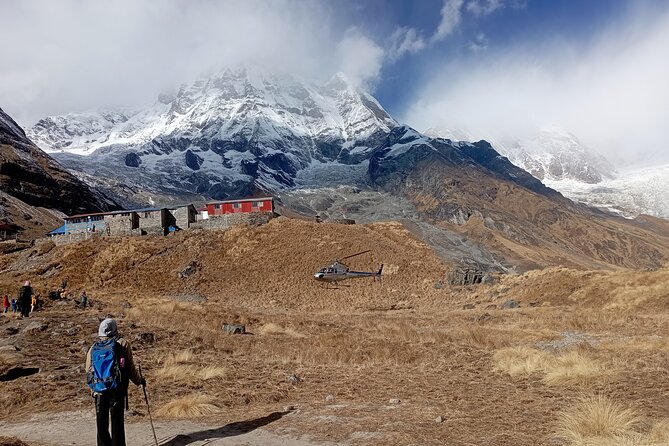
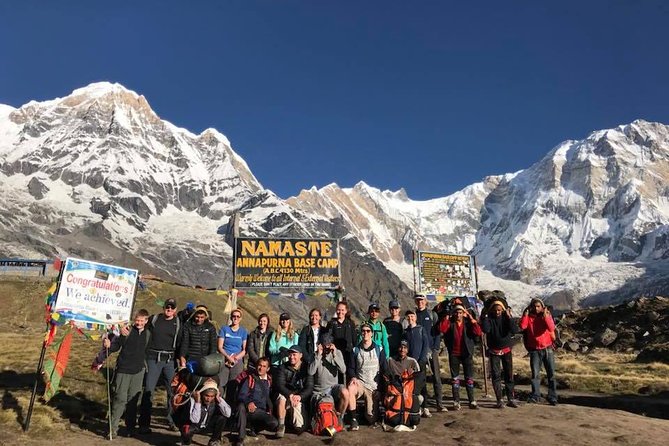
The main goal arrives on day seven. From Himalaya or Deurali, you continue toward Machhapuchhre Base Camp, also called MBC, at about 3,700 meters. From there, the trail reaches Annapurna Base Camp at 4,130 meters.
The walking time is listed at roughly six hours. At this height, the cold and thinner air can make a moderate distance feel much harder than it would at home. This is a day for patience, not speed.
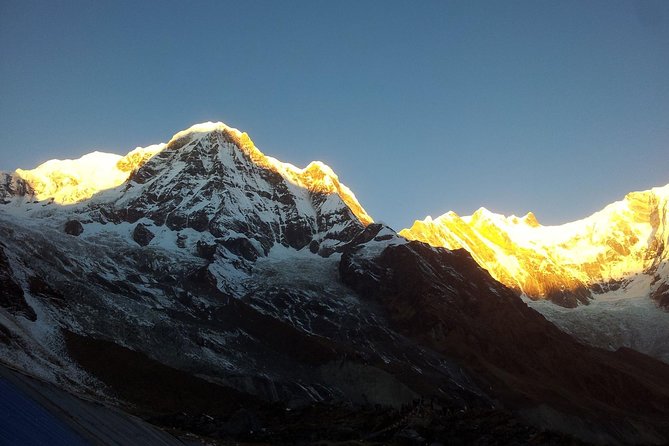
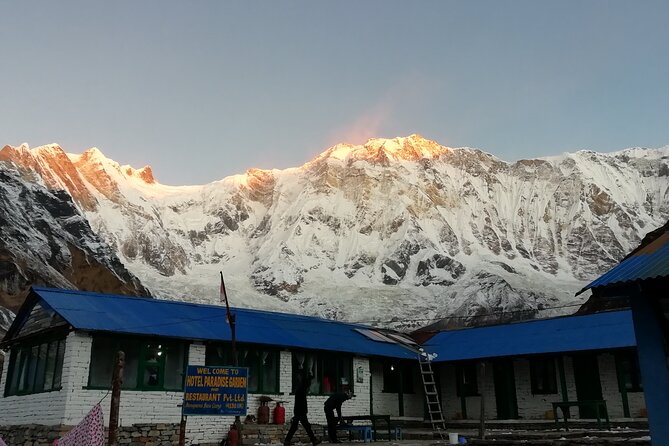
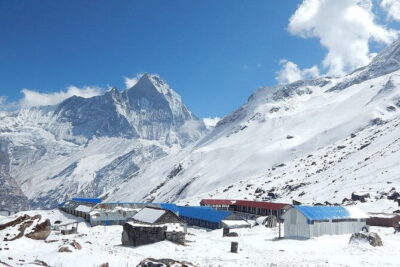
Annapurna Base Camp sits within the Annapurna Sanctuary, surrounded by high peaks. The sense of arrival comes from the enclosed mountain setting as much as from the sign or destination itself. You have walked through villages, forests, and steep trails to reach a high basin beneath the peaks.
The package includes admission for this part of the trip, along with the required TIMS and Annapurna Conservation Area permits. Those permits are not minor details. They are part of the official access system for the region and save you from handling the paperwork yourself.
Day 8: A long descent from 4,130 meters to Bamboo
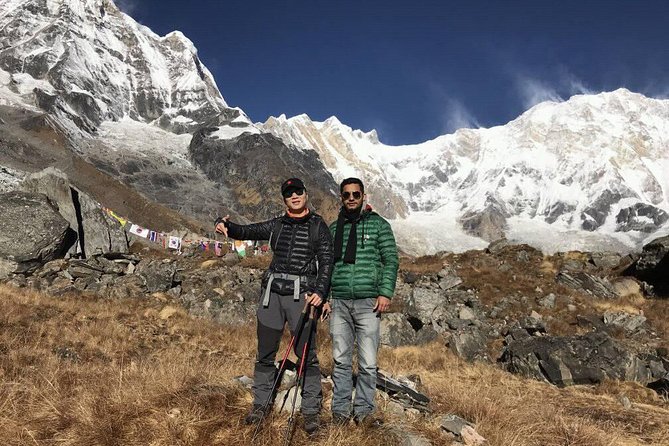
After reaching base camp, you descend toward Bamboo at approximately 2,350 meters. The route covers about 16 kilometers and takes around seven hours.
Downhill walking is easier on the lungs but can be rough on knees and ankles. Use trekking poles if you have them, take care on uneven ground, and do not rush simply because you are heading lower.
This day gives you another look at the same mountain corridor from a different direction. You may also feel the difference as the air warms and the altitude drops. Bamboo is a practical overnight stop rather than a grand destination, but it breaks the return journey well.
The included porter is especially useful on the descent, when tired legs can make even a light bag feel heavy. One porter is assigned for every two trekkers. If you are traveling alone, remember that the porter charge is not included.
Day 9: Bamboo to Jhinu Danda
The route continues from Bamboo to Jhinu Danda, dropping to about 1,780 meters. The walk takes roughly five hours.
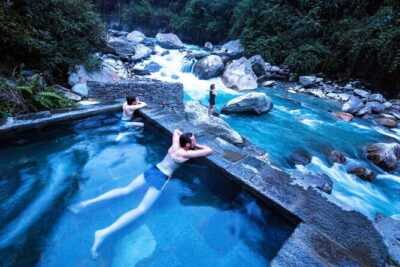
Jhinu Danda is known for its natural hot springs. This is a welcome change after several high, cold nights. The hot spring admission is not included, so carry a little local currency for the fee.
The stop also gives the trip a better rhythm. You have reached the main goal, descended from base camp, and now have time to rest before returning to Pokhara. I like this part of the plan because it adds a simple local experience rather than ending the trek immediately after the main viewpoint.
Day 10: Hot springs and the final walk to Pokhara
You have about an hour at the Jhinu Danda hot spring area before continuing toward Siwa or Ghandruk Phedi, depending on the route used. The trek takes about five hours and finishes at roughly 1,150 meters.
From there, transport continues to Pokhara Lakeside. The included transfer means you do not need to arrange the trail-end connection yourself, but confirm the exact end point and timing with your guide.
Pokhara is a good place to recover after the trek. The city sits beside Phewa Lake and has views toward the Annapurna and Machhapuchhre ranges. Your accommodation is not included, so confirm whether you are expected to book it independently or add it through the operator.
Days 11 and 12: Return to Kathmandu and departure
Day 11 is the return bus from Pokhara to Kathmandu. The drive covers about 200 kilometers and takes around eight hours. Road conditions can affect the timing, so avoid planning a tight international connection on the same day.
The final day includes transfer to Tribhuvan International Airport. The listed airport service takes about an hour and is included, which is useful after a long trek and several road transfers.
The trip begins and ends with organized transport, but your international flights are not part of the package. Keep your departure details clear and confirm the pickup time at the final briefing.
Guides, porters, and the human side of the trek
The package includes one licensed English-speaking guide and one porter for every two trekkers. Staff costs, insurance, equipment, food, salary, and transport are included for the trekking team.
That arrangement lets you focus on walking rather than carrying a full duffle. You still need to respect porter weight limits and pack carefully. Bring only what you need for the trail, using the provided duffle for larger items and a daypack for essentials.
Guide Avi and porter Robin are named in the trip feedback, with particular praise for patience, safety, and steady support. If you are assigned this team, expect a personal style of guiding. Even if your staff differs, those are the qualities to ask for: clear pacing, honest altitude advice, and help when the trail gets tough.
Who should book this Annapurna route?
This trip suits you if you want a classic Himalayan trek with a guide, porter, permits, and major transport already arranged. It is also a good fit if you want both Poon Hill and Annapurna Base Camp instead of choosing one.
You should have moderate physical fitness and be ready for several long walking days. The route reaches 4,130 meters, includes steep climbs and descents, and requires early starts. It is not a relaxed sightseeing tour.
The private format suits friends, couples, or families who want to walk together without joining a large fixed group. Solo trekkers can book, but must pay extra for a porter. You also need to budget separately for meals, drinks, and city hotels.
Free cancellation is available up to 24 hours before the start time. Changes or cancellations inside that window are not accepted, so check your plans before the final day.
Should you book it?
Book this trek if you want a well-organized Annapurna experience and value the practical support of a guide, porter, permits, gear loan, tea houses, and transport. The route has real variety, from Poon Hill sunrise to forest trails, high mountain lodges, base camp, and Jhinu’s hot springs.
Skip it if you want short walks, guaranteed mountain views, or an all-inclusive price with food and hotels covered. The $749.90 fee is solid for the services provided, but your final cost will be higher once you add meals, drinks, accommodation in Kathmandu and Pokhara, and personal expenses.
For an active trekker who wants the classic route without arranging every detail alone, this is a strong option. Go in with realistic fitness, a little extra cash, and enough time for the roads, and the package gives you a sensible way to reach Annapurna Base Camp.
FAQ
How long is the Annapurna Base Camp experience?
The tour lasts approximately 12 days, including Kathmandu, Pokhara, the trek, return transport, and airport transfer.
What is the price per person?
The listed price is $749.90 per person.
Is airport pickup included?
Yes. Airport pickup in Kathmandu is included at the beginning, and airport transfer is included on the final day.
Is the tour private?
Yes. Only your group participates in the activity.
Are Kathmandu to Pokhara bus transfers included?
Yes. Tourist bus transfers between Kathmandu and Pokhara are included in both directions.
Is food included during the trek?
No. Breakfast, lunch, and dinner during the trek are not included.
Is tea house accommodation included?
Yes. Tea house accommodation during the trek is included. Accommodation in Kathmandu and Pokhara is not included.
What trekking equipment is provided?
A duffle bag, sleeping bag, and down jacket are provided for use during the trek. A first aid kit is also included.
Are permits included?
Yes. The TIMS permit and Annapurna Conservation Area Permit are included, along with government fees and agency service charges.
Is a porter included?
Yes. One porter is provided for every two trekkers. A porter for a solo traveler costs extra.
What is the highest point on the route?
Annapurna Base Camp is the highest listed point, at approximately 4,130 meters or 13,550 feet.
Is the Jhinu Danda hot spring included?
The stop is part of the route, but admission to the hot spring is not included.
What fitness level is required?
You should have a moderate level of physical fitness. The route includes long walking days, steep climbs, steep descents, and high altitude.
How far in advance is the trip usually booked?
The experience is booked on average 40 days in advance.
What is the cancellation policy?
You can cancel up to 24 hours before the start time for a full refund. Cancellations or changes made less than 24 hours before the start time are not accepted.
Just added around Kathmandu
- Everest Base Camp Trek★ 5.0 · 3 reviews
- Everest Base Camp Trek★ 5.0 · 7 reviews
- 15 Days Private Everest Base Camp Trek★ 5.0 · 30 reviews
- 14-Day Everest Base Camp Trek★ 5.0 · 20 reviews
- Everest Base Camp Trek★ 5.0 · 57 reviews
- 14 Days of Adventure Trekking to Everest Base Camp★ 5.0 · 2 reviews
- From Kathmandu: Private 14-Day Everest Base Camp Trek★ 5.0 · 20 reviews
- 14 Days Everest Base Camp Trek★ 5.0 · 4 reviews
Annapurna Base Camp Treks, compared.
Trekking in Annapurna/Langtang/Everest/Upper Mustang regions
Read our review →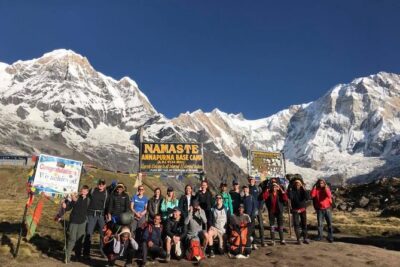
Kathmandu to Annapurna Base Camp (ABC) 5-Day Trek
Read our review →Browse the lists this trek appears in