
Review · KATHMANDU
Annapurna Base Camp Trek and Chitwan Excursion
The best part of this 19-day Nepal journey is the change of pace: you move from Kathmandu’s temple squares to Annapurna Base Camp at 4,130 meters, then trade mountain boots for a jeep safari and canoe ride in Chitwan. I like the strong mix of walking and culture, especially the sunrise at Poon Hill and the hot springs at Jhinu Danda. I also like that permits, porters, hotels, and many transfers are handled for you.
The main caution is the trekking schedule. Several days run six to eight hours, and the trail includes long stair climbs, steep descents, rocky paths, and thin mountain air. The two nights at ABC allow more time in the sanctuary, but they also mean you need to be comfortable with a demanding multi-day walk.
Key details before you book
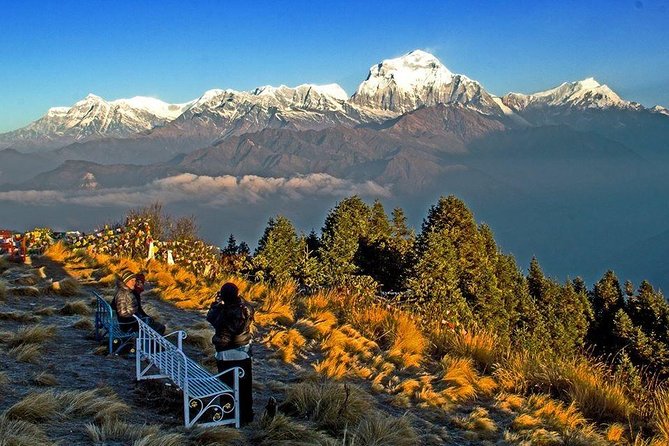
- Poon Hill sunrise and ABC in one trek: You get both the famous dawn lookout at 3,210 meters and the mountain-ringed Annapurna Sanctuary.
- A real mountain-to-jungle itinerary: After the trek, Chitwan brings jeep wildlife viewing, a Rapti River canoe trip, and a visit to a Tharu village.
- Porter support is built in: One porter is assigned for every two trekkers, while an English-speaking, government-licensed guide leads the walk.
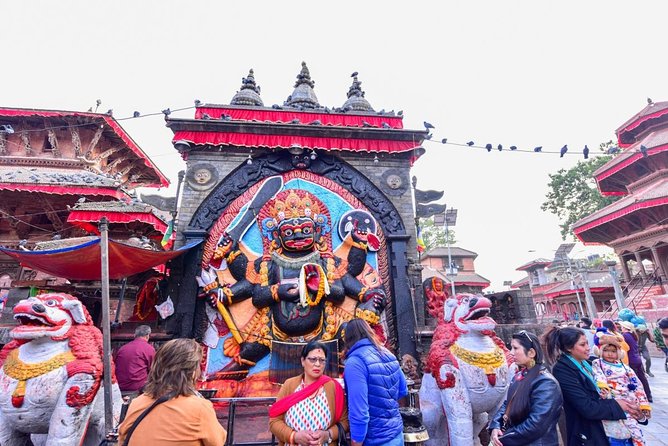
- Good city coverage: Kathmandu Durbar Square, Swayambhunath, Boudhanath, Patan, and Bhaktapur are all included in the wider trip.
- Comfort varies by region: You get four nights in a four-star Kathmandu hotel, but trekking nights are in the best available tea houses on a room-only basis.
- A useful recovery stop: Jhinu Danda’s natural hot springs offer a welcome break after the high-altitude section.
Why this Nepal itinerary works
Many Nepal trips force you to choose between mountain trekking and wildlife. This one gives you both, with Kathmandu at the beginning and end to frame the journey. You see carved temples, terraced hills, rhododendron woods, high peaks, jungle, rivers, and Tharu culture without arranging each piece separately.
I especially like the order. You begin with sightseeing in Kathmandu, move to Pokhara for a slower lakeside pause, then walk uphill in stages before reaching ABC. After descending, you have a recovery night in Pokhara before the road to Chitwan. That break matters because the Annapurna section is not a casual stroll.
The cost is $1,456.37 per person. That is a substantial sum, but it covers 19 days of transport, hotels, trekking lodges, permits, a guide, porter service, staff costs, and selected meals. You still pay for food and drinks on much of the trip, UNESCO entrance fees of about $55 per person, tips, insurance, international flights, and personal expenses. For a private trip with your own group, the price is easier to justify if you value support and planning over assembling the same route yourself.
More Annapurna Treks in Kathmandu
- Annapurna Circuit Trek with Tilicho Lake
★ 5.0 · 368 reviews - Annapurna base camp trek 5 Days
★ 5.0 · 252 reviews - 14-Day Private Annapurna Base Camp Trek
★ 5.0 · 180 reviews
Kathmandu begins with temples and a practical briefing
Your arrival transfer starts at Tribhuvan International Airport and takes you to Yatri Suites & Spa in Thamel. The first day is intentionally light. After settling in, you can walk around Thamel, then attend a hotel-lobby briefing in the afternoon for trip details and preparations.
Day two brings three major sights. At Kathmandu Durbar Square, you walk through old palace courtyards and temples in the capital’s historic center. The visit is only about an hour, so it works more as an introduction than a full archaeological study. The entrance fee is not included.
At Swayambhunath, also called the Monkey Temple, you climb 365 stone steps to the hilltop stupa. The reward is a broad view across Kathmandu Valley, along with pagodas, shrines, and prayer activity. If stairs are difficult for you, this is one of the day’s more demanding short visits despite its modest one-hour duration.
Boudhanath gives you more time, about two hours. Walk around the great stupa, turn the prayer wheels, and watch monks and local worshippers follow their routines. The admission fee is also extra. I would keep some small spending money available for the temple visits and donations, although donations are not required as part of the tour.
Pokhara gives you one quiet day before the climb
Day three is based around Pokhara Lakeside. You have about four hours to walk, shop, sit by the water, or stop at a lakeside bar. This is not a packed sightseeing day, and that is a plus. You are about to begin a strenuous trek, so time to rest and organize your gear is useful.
The stated transport plan includes Kathmandu to Pokhara by tourist bus. Other land transport is by private vehicle. The road journey itself is not described as part of the sightseeing program, so expect the value here to be in getting into position rather than seeing a list of formal attractions.
Days four and five build your legs on the Annapurna trail
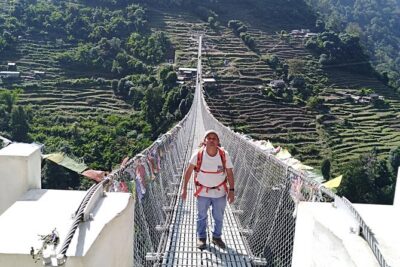
The trek begins with a drive from Pokhara to Nayapul. From there, you walk through terraced fields toward Tikhedhunga and then face the steep, straight climb to Ulleri. This first trekking day takes about six hours. Ulleri is an important test of your fitness because the trail quickly shifts from gentle village walking to sustained uphill steps.
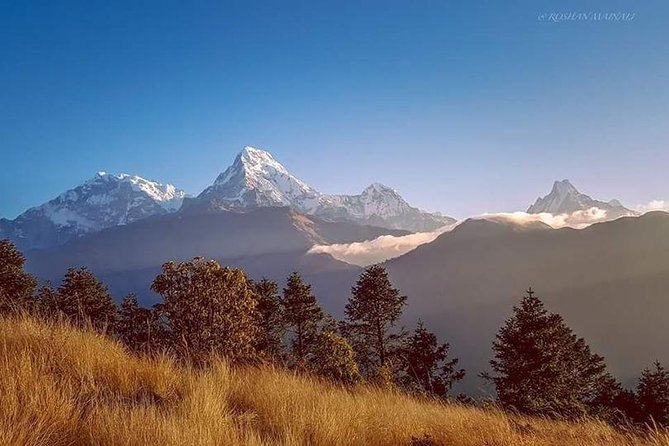
The next day is easier in feel, though it lasts about seven hours. You pass through rhododendron and pine woods, cross small bridges, and continue through Nangethathi before reaching Ghorepani. Upper Ghorepani gives you views toward Dhaulagiri and other high peaks.
You stay in tea houses during the trek, with accommodation on a room-only basis. That means you should budget separately for meals and drinks. The package does include porter service, with one porter for every two trekkers. Pack thoughtfully and keep essential items in your day bag, since your main luggage may be carried separately.
Same trailhead, a different route:
- Everest Base Camp Trek – 14 Days
★ 5.0 · 1,499 reviews - Everest Base Camp Trek
★ 5.0 · 842 reviews - Everest Base Camp Helicopter Tour landing at Everest View Hotel
★ 5.0 · 668 reviews - Everest Base Camp Trekking
★ 5.0 · 485 reviews
Poon Hill delivers the first major mountain sunrise
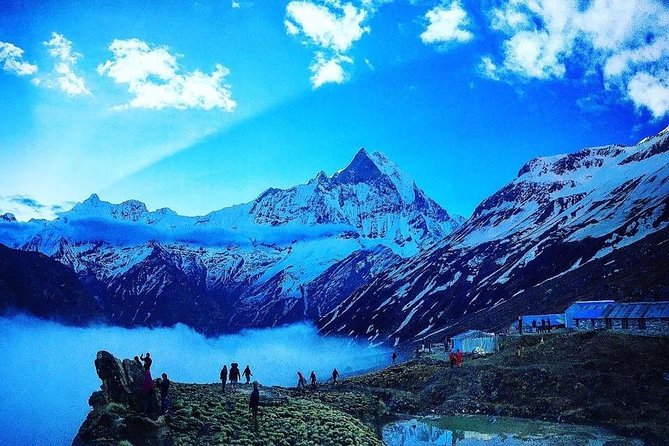
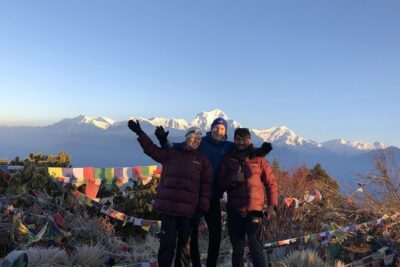
Day six starts early with the climb from Ghorepani to Poon Hill, at 3,210 meters. The point is simple: reach the lookout before sunrise. In clear conditions, the morning light reaches across Annapurna and Dhaulagiri, and this is likely to be one of the most rewarding views of the entire trip.
You return to Ghorepani for breakfast, then continue to Tadapani at 2,610 meters. The route passes through rhododendron, bamboo, and oak woods, with waterfalls, streams, birds, and green valleys along the way. The full day takes about eight hours, so the early start is followed by a long walk.
Poon Hill is a strong feature for people who want a major mountain view without waiting until the end of the trek. The drawback is that the sunrise section is cold, dark, and uphill. Put warm layers where you can reach them quickly, and do not expect the day to end after the lookout.
Chhomrong and Bamboo bring steep steps and forest
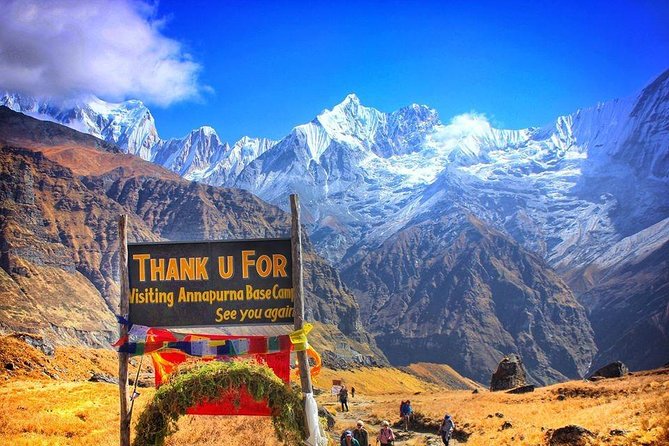
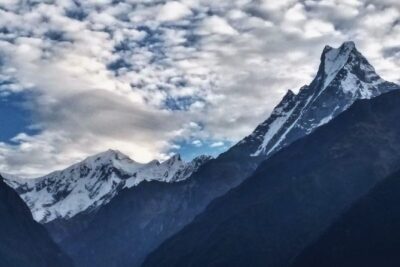
From Tadapani, you descend toward the Kimrung River, pass rice fields and small settlements, and then climb to Chhomrong. The village offers views of Fishtail and Annapurna South. This six-hour day gives you a useful contrast to the forest sections, with more open views and farmland.
The following day begins with a steep descent to the Chhomrong Khola River. After crossing the bridge, you climb again toward Sinuwa, then continue over rocky steps and through bamboo forest to Bamboo at 2,300 meters. The walking time is about seven hours.
The route description highlights the chance to see large lemur colonies near Bamboo. Wildlife sightings are never guaranteed, so treat this as a possibility rather than a planned encounter. The more certain reward is the forest itself, which gives shade and a sense of moving deeper into the Annapurna Sanctuary.
Deurali to ABC is the trek’s big payoff
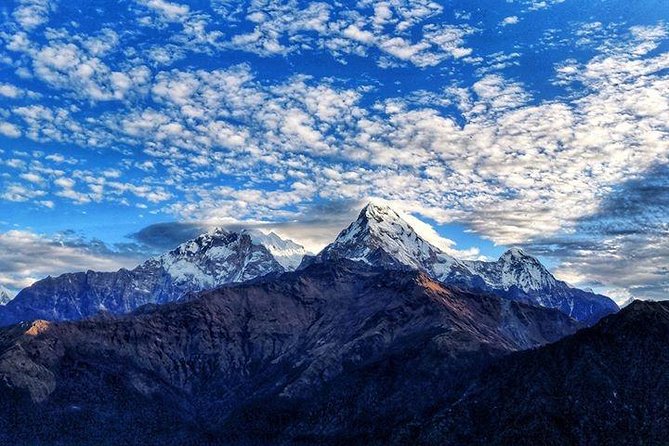
From Bamboo, you continue through Dovan and the Himalayan Hotel, crossing rhododendron and bamboo forest. Near Hinku Cave, the forest becomes drier, and the path drops toward the river before climbing again to Deurali at 2,920 meters. This is another seven-hour day, with repeated climbs that can feel tougher than the distance suggests.
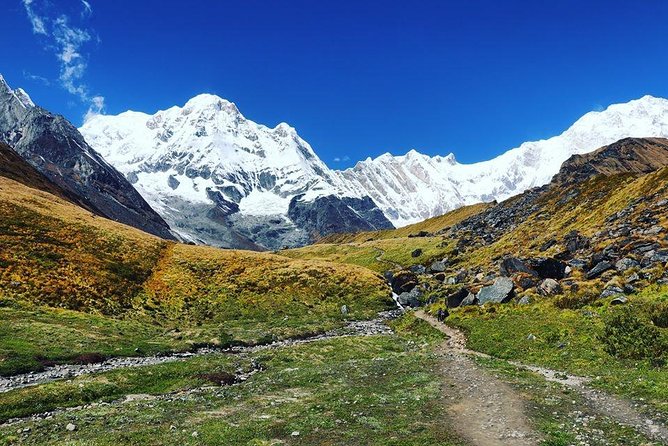
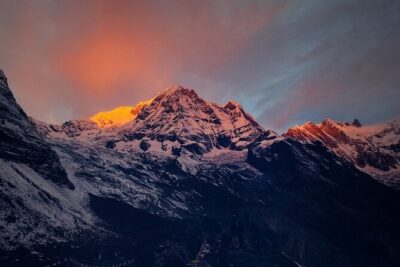
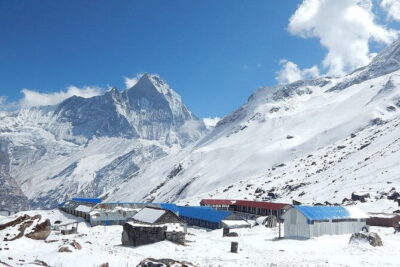
The next day follows the Modi Khola River toward Machhapuchhre Base Camp, often called MBC. After about 40 minutes of ascending from that point, you reach Annapurna Base Camp. The sanctuary forms an oval plateau surrounded by high peaks, including Annapurna I at 8,091 meters.
This is the moment the entire route has been building toward. You are not simply looking at one mountain from a distant viewpoint. You are inside a broad mountain bowl, with the peaks surrounding the camp. The walking day is listed at about six hours, but altitude, weather, trail condition, and your pace will affect how it feels.
You spend two nights around ABC. One day includes sunrise at the base camp and the option to hike toward Hiuchuli Base Camp, or simply rest and enjoy the setting. That extra time is valuable. It reduces the pressure to arrive, take a few pictures, and immediately leave. It also gives you a better chance to appreciate the changing light on the peaks.
The altitude is the serious consideration here. The trip is intended for people with moderate physical fitness, but fitness alone does not remove the effects of high elevation. Listen to your guide, keep your pace steady, and understand that the plan may need to adjust if conditions change.
The descent ends with Jhinu hot springs
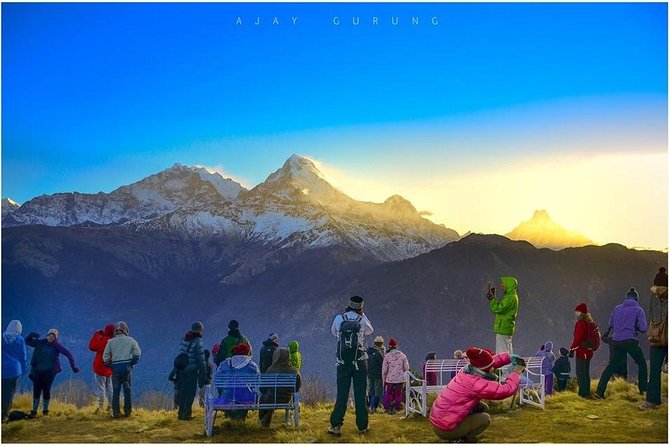
After breakfast at ABC, you descend through MBC to Bamboo. This seven-hour day reverses much of the earlier route. Downhill is not always easy, especially on rocky steps, so trekking poles could be useful if you already use them, though they are not listed as an included item.
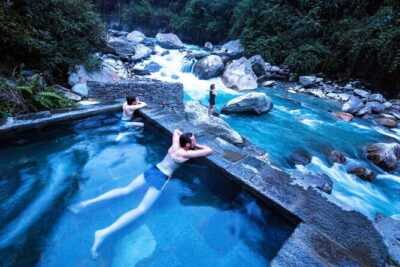
From Bamboo, you return toward Chhomrong and then take a separate, steep descent to Jhinu Danda. You leave your bags at the lodge and walk down to the natural hot springs beside the Modi Khola River. After several days of uphill walking, this is a well-placed reward and one of the most distinctive stops on the route.
The final trekking day passes small villages, rice fields, plants, flowers, and butterflies. It takes roughly seven hours to reach Kyumi, Syauli Bazar, and finally Nayapul, where a car returns you to Pokhara. This is a full walking day, not just a short transfer out of the mountains.
Chitwan changes the trip from peaks to wildlife
After a night in Pokhara, you drive to Chitwan National Park and stay two nights at Rain Forest Resort or a similar three-star property on a full-board basis. The first afternoon focuses on Tharu culture. You visit a Tharu village, have tea prepared in a clay teapot, and watch traditional stick dance and dhaan naach performances.
Later, you can sit near the river for sunset and watch for birds and wildlife. This part is slower and more social than the trek. It gives you a look at local life rather than treating Chitwan as only a safari stop.
The next day combines a local jeep ride through the forest with a canoe trip on the Rapti River. The aim of the jeep outing is to look for animal signs, including tiger footprints. Possible sightings include one-horned rhinoceros, Asian elephant, spotted deer, barking deer, hog deer, sambar, swamp deer, blackbuck, wild boar, wild dog, and leopard.
No safari can promise a particular animal, so the value is in the range of habitats and the search itself. The canoe ride adds a quieter view of the park, with birds along the river. The total day lasts about seven hours.
Patan and Bhaktapur finish the cultural side
Day 17 is the drive back to Kathmandu, listed at about six hours. Afterward, you can return to Thamel for shopping and souvenirs. The next day is devoted to two of the Kathmandu Valley’s best preserved historic cities.
At Patan Durbar Square, you visit the square, nearby temples, Patan Museum, Golden Temple, and Banglamukhi Temple. The museum adds context to the city’s rulers and art, while the Golden Temple serves both Hindu and Buddhist worshippers. The sightseeing time in Patan is about two hours, and entrance fees are extra.
Bhaktapur follows, with another two hours around its old buildings and carved woodwork. Nyatapola Temple is a major stop, and Pottery Square adds hands-on time. The pottery class is included, and you can shape a pot using traditional methods, then add patterns or inscriptions.
I like ending with Bhaktapur because it gives you a physical activity after several days of looking at monuments. Still, the day covers a lot. If you want slow museum visits and long meals, the schedule may feel brisk.
What the $1,456.37 price really covers
The package includes:
- Airport transfers and land transport by private vehicle
- Kathmandu to Pokhara transport by tourist bus
- Four nights at Yatri Suites & Spa, a four-star Kathmandu hotel, with breakfast
- Two nights at Hotel Crystal Palace or a similar three-star hotel in Pokhara, with breakfast
- Two nights at Rain Forest Resort or a similar three-star Chitwan hotel, with full board
- Trekking lodge accommodation
- An English-speaking, government-licensed trekking guide
- Porter service, one porter for every two trekkers
- Staff wages, insurance, equipment, and accommodation
- TIMS, ACAP, other required permits, and government and local taxes
- Selected meals, listed as seven breakfasts, two dinners, and two lunches
You pay separately for most food and beverages, personal expenses, tips, travel insurance, emergency evacuation insurance, international flights, donations, and UNESCO entrance fees. The stated UNESCO cost is about $55 per person.
The private format is important. Only your own group participates, and group discounts are offered. That gives you more control than a large fixed group, though the exact discount is not stated. The package is strongest for someone who wants a guide and porter system without arranging permits, hotels, and transfers independently.
Who should book this trek?
Book it if you want a full Nepal introduction with serious mountain walking, cultural sights, and a short wildlife program. It is especially suitable if you want Poon Hill and ABC in the same route, appreciate porter support, and prefer a planned private trip.
Think twice if you want a relaxed holiday. The trek has several six to eight-hour days, steep stairs, and high-altitude walking. Also think carefully about costs beyond the headline price, since food, drinks, entrance fees, insurance, tips, and flights add up.
The two available ratings are five-star, with praise focused on pleasant places, professional staff, and a memorable experience. Since guide names are not provided, ask for the assigned guide’s name and confirm the daily plan before departure. That small step gives you clearer expectations.
FAQ
How long is the Annapurna Base Camp and Chitwan trip?
The trip lasts approximately 19 days, including Kathmandu, Pokhara, the Annapurna trek, Chitwan, and the return to Kathmandu.
Where does the tour begin?
It begins with pickup at Tribhuvan International Airport in Kathmandu, Nepal.
Is airport pickup included?
Yes. Airport reception and transfer to the Kathmandu hotel are included.
How difficult is the trek?
The trip is intended for people with a moderate physical fitness level. Trekking days generally last six to eight hours and include steep climbs, descents, rocky steps, and high-altitude walking.
How high is Annapurna Base Camp?
Annapurna I reaches 8,091 meters, while the itinerary identifies Annapurna Base Camp as the mountain sanctuary destination. Poon Hill is listed at 3,210 meters, and Deurali at 2,920 meters.
Is a guide included?
Yes. An experienced, English-speaking, government-licensed trekking guide is included.
Are porters included?
Yes. Porter service is included at a ratio of one porter for every two trekkers.
Are meals included?
Some meals are included. The package lists seven breakfasts, two dinners, and two lunches. Food, drinks, and beverages not specifically included are extra, and trekking lodge accommodation is on a room-only basis.
Are UNESCO site entrance fees included?
No. Entrance fees for the UNESCO World Heritage sites are not included. The estimated cost is about $55 per person.
What happens in Chitwan?
You visit a Tharu village, see traditional dance performances, take a jeep safari, look for tiger footprints and other wildlife, and canoe along the Rapti River.
Is the tour private?
Yes. Only your own group participates in the activity.
Can I cancel for a full refund?
You can cancel at least 24 hours before the experience start time for a full refund. Cancellations or changes made less than 24 hours before the start time are not accepted for a refund.
Just added around Kathmandu
- Everest Base Camp Trek★ 5.0 · 3 reviews
- Everest Base Camp Trek★ 5.0 · 7 reviews
- 15 Days Private Everest Base Camp Trek★ 5.0 · 30 reviews
- Everest Base Camp Trek★ 5.0 · 57 reviews
- 14 Days of Adventure Trekking to Everest Base Camp★ 5.0 · 2 reviews
- 14-Day Everest Base Camp Trek★ 5.0 · 20 reviews
- From Kathmandu: Private 14-Day Everest Base Camp Trek★ 5.0 · 20 reviews
- 14 Days Everest Base Camp Trek★ 5.0 · 4 reviews
Annapurna Base Camp Treks, compared.
Trekking in Annapurna/Langtang/Everest/Upper Mustang regions
Read our review →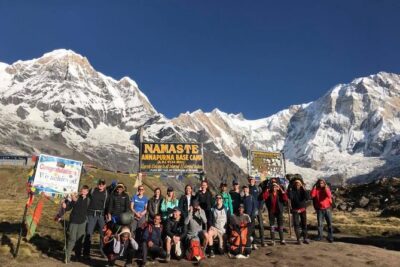
Kathmandu to Annapurna Base Camp (ABC) 5-Day Trek
Read our review →Browse the lists this trek appears in