
Review · KATHMANDU
Annapurna Base Camp Trek
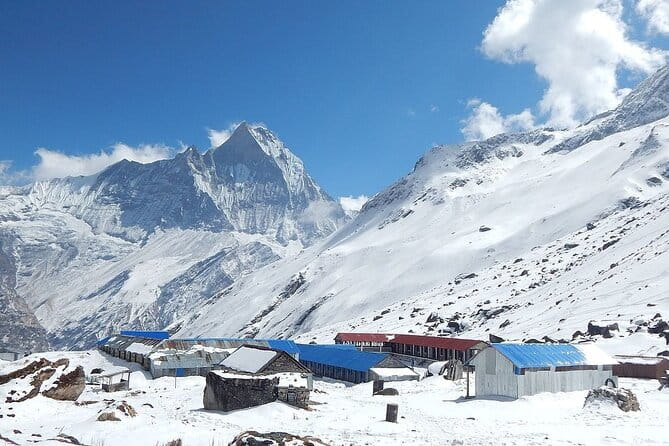
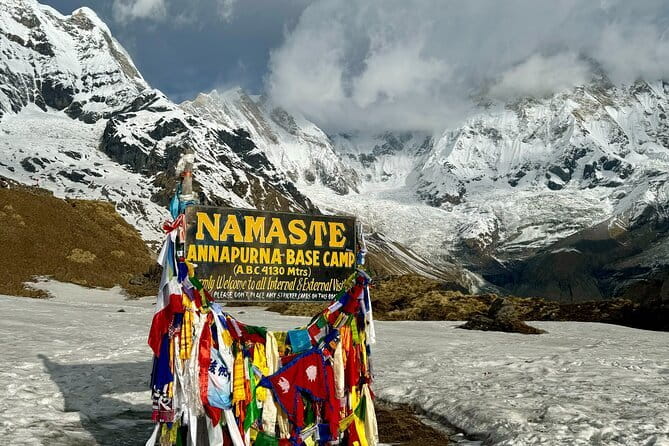
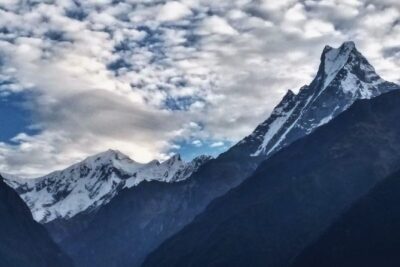
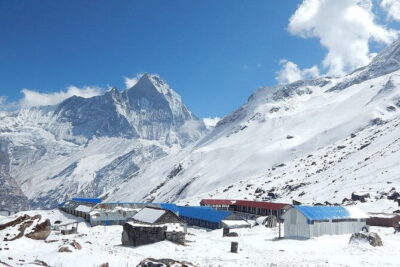
The big draw here is the walk into Annapurna Sanctuary, a high mountain bowl surrounded by peaks including Annapurna, Machhapuchhre, Dhaulagiri, and Hiunchuli. You move from riverside villages and bamboo woods to snow-covered mountain country, reaching Annapurna Base Camp at 4,130 meters.
I like the mix of local culture and changing scenery, especially the Magar and Gurung villages, forest trails, waterfalls, and tea houses. I also like the practical setup: airport transfers, permits, meals, a guide, and one porter for every two hikers are included.
The main consideration is the pace. This is called a moderate trek, but several days run for five to seven hours, with steep steps and a rapid rise in altitude. You need reasonable fitness, and the cold, basic rooms, extra charges, and high point at 4,130 meters should not be brushed aside.
Key points before you book
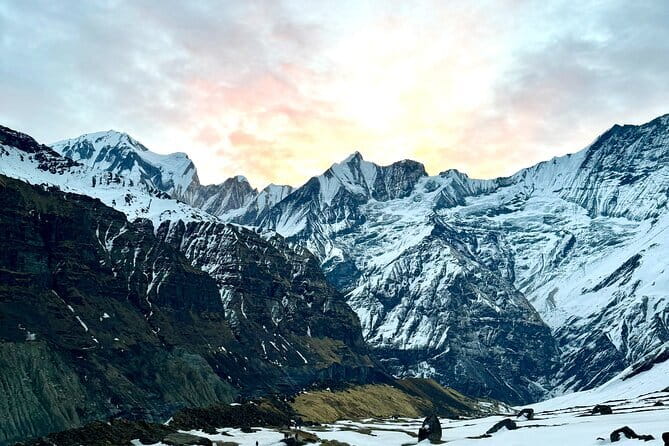
- Annapurna Base Camp at 4,130 meters: The route reaches a dramatic mountain amphitheater below Annapurna and other major Himalayan peaks.
- A nine-day door-to-door plan: The trek includes road journeys between Kathmandu and Pokhara, so only the middle portion is spent on foot.
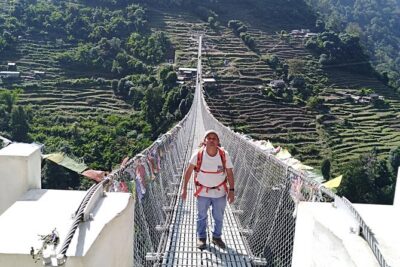
- Magar and Gurung village life: You pass through communities, tea houses, forest paths, and small mountain settlements rather than following a purely scenic route.
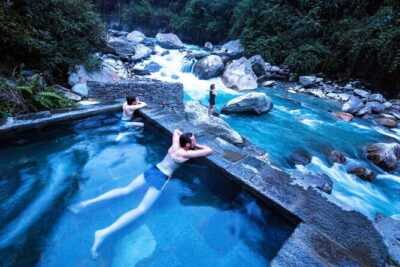
- Jhinu Danda hot springs: The return route includes time near natural hot springs, a welcome treat after steep descents.
- Good inclusions for the price: Meals during the trek, permits, guide service, porter support, transport, and airport transfers are covered in the $819.49 rate.
- A private group experience: Only your own group takes part, which gives the itinerary more personal space than a large departure.
Why this route works so well
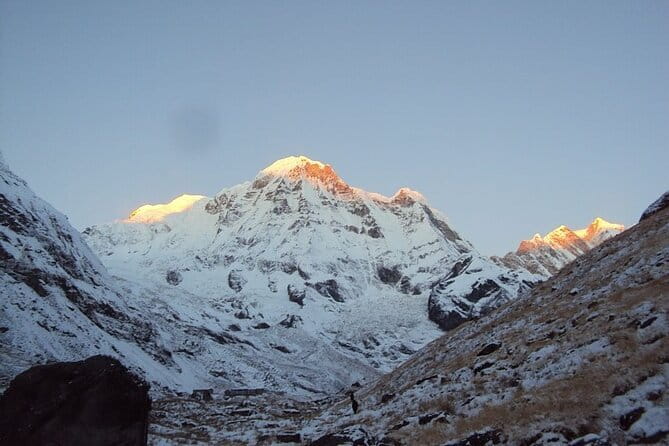
The Annapurna Base Camp Trek is a compact Himalayan adventure with a clear sense of progression. You begin with roads, lakes, terraced fields, and villages. Then the trail narrows through bamboo and rhododendron forests before opening into the high sanctuary, where the mountains become the main event.
I like this route because it gives you more than a summit-style objective. The walk is also about village life, changing vegetation, stone and forest trails, and the daily rhythm of tea-house travel. Magar and Gurung communities are part of the route, giving the trek a social side that a simple mountain viewpoint excursion would miss.
The trip is private, but the information does not name a particular guide. You receive a professional trekking guide and an experienced porter shared between two hikers. The team also has insurance, while your own travel and rescue insurance is not included, so you need to arrange that separately.
The $819.49 price is useful to judge as a package rather than as a simple nine-day tour. It includes airport pickup and drop-off in a private vehicle, road transport, a Pokhara hotel on a bed-and-breakfast basis, three meals a day during the trek, permits, guide service, and porter support.
That is a solid list of essentials. You still pay for Nepal entry formalities, international flights, food and accommodation in Kathmandu, personal drinks, hot showers, battery charging, laundry, bar bills, extra Pokhara nights, and tips. The true cost will be higher, but many of the major trekking expenses are already folded into the advertised rate.
More Annapurna Treks in Kathmandu
- Annapurna Circuit Trek with Tilicho Lake
★ 5.0 · 368 reviews - Annapurna base camp trek 5 Days
★ 5.0 · 252 reviews - 14-Day Private Annapurna Base Camp Trek
★ 5.0 · 180 reviews
Day 1: Kathmandu to Pokhara by seven-hour bus
The first day is mostly a road journey. You leave after a quick breakfast and travel by tourist bus toward Pokhara, Nepal’s second-largest city, at about 850 meters.
The drive takes roughly seven hours and passes rivers, stepped fields, gravelly gorges, and forested hills. It is not merely a transfer, but you should expect a full travel day rather than a sightseeing tour with frequent stops.
After reaching Pokhara, you check into a hotel and have time to refresh. The plan also allows for a look around Phewa Lake, including boating if conditions suit, with possible reflections of the Annapurna range and Machhapuchhre on the water.
A welcome dinner is arranged, and the night is spent at a hotel. I like starting in Pokhara because it breaks up the long journey from Kathmandu before the walking begins. The drawback is simple: road conditions and traffic can make a seven-hour drive feel longer.
Day 2: Nayapul to Jhinu Danda at 1,760 meters
You leave Pokhara early and drive about 42 kilometers to Nayapul, a journey of roughly 90 minutes. From there, the walking begins near Birethanti, a village beside the Modi River.
The trail passes bamboo woods, waterfalls, swimming holes, and mountain villages before reaching Jhinu Danda at 1,760 meters. This is a good introduction to the trek because the surroundings change quickly, yet you are not immediately pushed into the highest terrain.
You spend the night in a tea house or local guesthouse. Basic mountain accommodation is part of the experience, but it also means you should be ready for simple rooms and paid extras such as hot showers and battery charging.
Jhinu Danda is also important later in the trip, since its hot springs provide a chance to rest after the return walk. The first visit gives you a sense of the village before the trail turns higher into the forest.
Day 3: Jhinu Danda to Bamboo in about five hours
The route heads toward Chhomrong, then descends and climbs again toward Sinuwa before reaching Bamboo at 2,245 meters. This is a classic day on the Annapurna route: the distance is manageable, but the trail repeatedly changes direction and grade.
Do not judge the day only by its five-hour estimate. Uneven ground, stone steps, and repeated uphill sections can make the walk feel harder than the clock suggests. Your guide can set the pace, while the porter arrangement means you carry a lighter personal load than on a fully independent trek.
The scenery becomes more wooded, with bamboo and other vegetation around the trail. You also pass through areas where different local communities and village cultures are part of the route, adding human interest to what could otherwise be a long forest walk.
Bamboo is a practical overnight stop rather than a major sightseeing destination. Its value is in breaking up the climb and placing you at a useful altitude for the next stage.
Same trailhead, a different route:
- Everest Base Camp Trek – 14 Days
★ 5.0 · 1,499 reviews - Everest Base Camp Trek
★ 5.0 · 842 reviews - Everest Base Camp Helicopter Tour landing at Everest View Hotel
★ 5.0 · 668 reviews - Everest Base Camp Trekking
★ 5.0 · 485 reviews
Day 4: Bamboo to Deurali at 3,210 meters
From Bamboo, the trail climbs through dense bamboo and rhododendron forest toward Deurali. The walking time is about five hours, and the route passes the Hinku Caves.
This is where the altitude begins to matter more. Deurali sits at 3,210 meters, and you are moving into a colder, higher section of the trek. The views begin to include closer sights of Hiunchuli and Machhapuchhre, while the forest still frames much of the path.
Rhododendron woodland is one of the route’s defining features. Depending on the season, the forest can be a major visual highlight, but the information available does not promise flower conditions on your dates. You should think of the trek as a forest and mountain route, not book it only for blossoms.
The night is in a local guesthouse or tea house. At this point, warm food, rest, and a sensible walking rhythm become increasingly important. The next day takes you into the high sanctuary.
Day 5: Deurali to Annapurna Base Camp at 4,130 meters
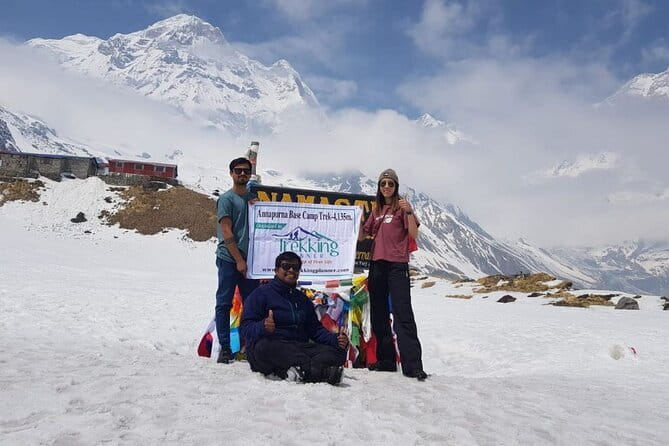
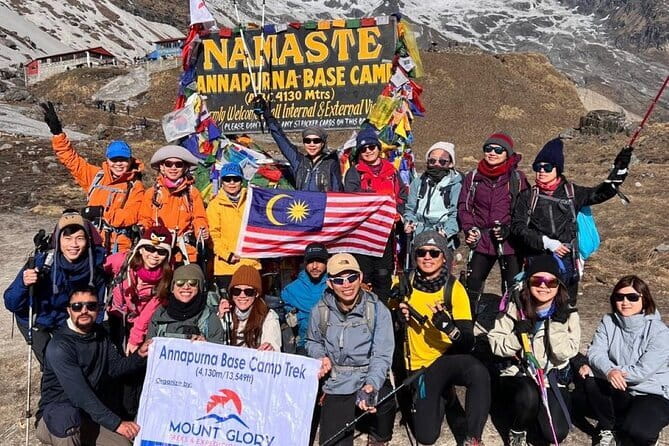
This is the central day of the trip. The route takes roughly five to six hours, first reaching Machhapuchhre Base Camp at about 3,700 meters, then continuing into Annapurna Sanctuary and onward to Annapurna Base Camp.
The trail to Machhapuchhre Base Camp is described as having views of rhododendrons and high peaks. From there, the mountain walls become more immediate, with Annapurna I, Annapurna III, and Machhapuchhre among the major sights named for the route.
The final approach to Annapurna Base Camp brings you to 4,130 meters. From this high point, you can look toward Annapurna, Dhaulagiri, Machhapuchhre, and Hiunchuli. The setting is the reward for the steady climb, but altitude can affect people differently, so you need to tell your guide if you feel unwell.
The schedule gives you a night at a local guesthouse or tea house after reaching base camp. This is not a luxury mountain lodge stay. Expect a simple overnight stop in a high, exposed setting, with the focus on the peaks outside rather than comfort indoors.
This day is also why the trek deserves more preparation than a casual walking holiday. The route is described as suitable for independent, novice, and experienced hikers, but the distance, steep sections, and height still call for moderate physical fitness.
Day 6: Annapurna Base Camp to Bamboo in about six and a half hours
The return starts with a long descent to Bamboo at 2,245 meters. The published walking time is about six and a half hours, although the detailed plan describes the day as close to seven hours.
Descending is often kinder to your breathing, but it can be demanding on knees and ankles. The trail follows the Modi River and returns through forest, villages, and changing vegetation. You will see familiar places from a new direction, and the lower altitude should feel easier for most people.
This is a day to use trekking poles if you have them and to avoid rushing. The mountain scenery remains important, but much of your attention may go to foot placement on uneven ground.
Overnight accommodation is again a tea house or lodge. The repeated simple stays are part of the price advantage, but anyone expecting hotel-style comfort throughout the trip will need to reset expectations.
Day 7: Bamboo to Jhinu Danda and the hot springs
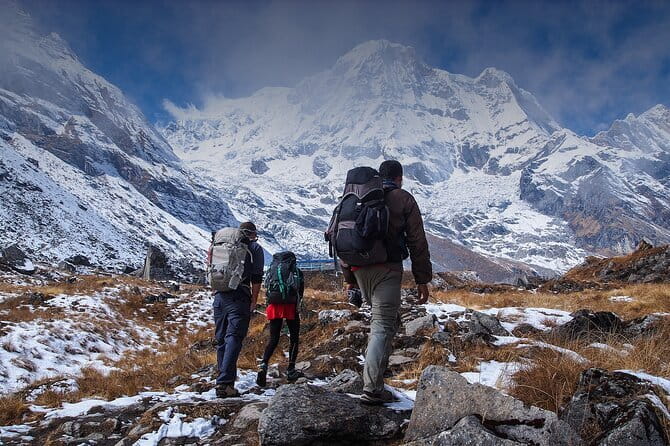
The walk back to Jhinu Danda takes about five and a half hours. You retrace the route toward Chhomrong, passing bamboo, rhododendron, and other vegetation before descending on steep trails.
The hot springs are the day’s clear reward. After several demanding days, a natural soak can be a welcome way to loosen tired legs. The information provided does not give details about changing facilities or how long you will spend there, so treat it as a planned stop rather than a guaranteed spa-style visit.
You stay overnight in a local guesthouse. Jhinu Danda is a pleasant place to slow down before the final walk out, and its position makes the return route feel less like a rushed march to the road.
Day 8: Jhinu Danda to Nayapul, then Pokhara
The final walking day takes about five hours to Birethanti and Nayapul. The route is described as easier than the higher sections, though you still need to allow time for the distance and uneven trail.
From Nayapul, a private car takes you to Pokhara in about 90 minutes. You then have time to shower, rest, and walk around the city. Phewa Lake and other Pokhara landmarks are available for a final look, depending on your arrival time and energy.
I like having this recovery night before the return to Kathmandu. It keeps the trip from ending with a long bus journey immediately after the last mountain walk.
Day 9: Pokhara to Kathmandu by tourist bus
The final day repeats the road connection between Pokhara and Kathmandu, taking about seven hours. Lunch is planned somewhere along the way, and the trip ends in Kathmandu with a farewell dinner and a hotel night.
This arrangement gives you a buffer before departure, though the international flight itself is not included. You should not schedule a same-day flight without checking the timing carefully, since the bus ride can occupy most of the day.
What the package includes, and what it does not
The inclusions cover many of the details that can otherwise complicate a trek:
- Airport pickup and drop-off by private vehicle
- Pokhara hotel accommodation with breakfast
- Transport described in the itinerary
- A professional trekking guide
- An experienced porter for every two hikers
- Insurance for the guide and porters
- Government and local taxes
- Breakfast, lunch, and dinner during the trek
- Annapurna Conservation Area Permit and TIMS documents
You remain responsible for your Nepal visa, flights, Kathmandu food and accommodation, personal purchases, hot showers, charging, laundry, cold drinks, bar bills, and any extra Pokhara nights. Tips for the guide and porter are also not included.
The tour starts at 5:15 am. That early start matters most on the first road day and on the early departures from Pokhara. Pickup is offered, and the booking provides a mobile ticket. Service animals are allowed according to the supplied information.
Free cancellation is available if you cancel at least 24 hours before the local start time. Changes or cancellations inside that window are not accepted for a refund.
Who should choose this Annapurna trek?
I would recommend it to you if you want a serious mountain experience without committing to a much longer expedition. The nine-day format combines road transfers, village walking, forest trails, high mountain views, and a clear destination at base camp.
It also suits a private group that wants guide and porter support while keeping the trip relatively compact. Novice hikers can consider it if they already have moderate fitness and understand that five to seven hours of walking, steep paths, and altitude are part of the deal.
I would be cautious if you dislike basic tea-house accommodation, long bus rides, or early starts. The package does not include your travel insurance, and the highest nights are at 3,700 meters and above, so preparation and suitable cover matter.
Should you book it?
Book this trek if the appeal of Annapurna Base Camp, village culture, forest trails, and Himalayan views outweighs the effort of long walking days and simple lodging. The strongest value comes from the included permits, meals, guide, porter, transport, and airport transfers, all for $819.49 per person.
Before paying, confirm the exact hotel category, tea-house arrangements, transport details, guide assignment, and current conditions for your dates. If you want a private, well-supported route with a clear mountain goal, this is a sensible choice. If you want relaxed sightseeing or hotel comfort, choose a gentler Nepal itinerary instead.
FAQ
How long is the Annapurna Base Camp Trek?
The full experience lasts approximately nine days, including travel between Kathmandu and Pokhara. The walking portion runs from Nayapul to Annapurna Base Camp and back through Jhinu Danda.
What is the highest point of the trek?
Annapurna Base Camp is the highest point listed, at 4,130 meters. Machhapuchhre Base Camp is reached earlier at about 3,700 meters.
Is transportation included?
Yes. The package includes transportation according to the itinerary, including tourist bus journeys between Kathmandu and Pokhara, the Pokhara to Nayapul transfer, and the drive from Nayapul back to Pokhara. Airport transfers by private vehicle are also included.
Are meals included?
Breakfast, lunch, and dinner are included during the trekking portion. Food in Kathmandu is not included, and personal drinks and bar bills are extra.
Is accommodation included?
Hotel accommodation in Pokhara with breakfast is included. During the trek, you stay in local guesthouses or tea houses. Accommodation and food in Kathmandu are not included.
Are permits included?
Yes. The Annapurna Conservation Area Permit and TIMS documents are included, along with government and local taxes.
What level of fitness do I need?
The trek requires a moderate level of physical fitness. Walking days generally last about five to seven hours, and the route includes uneven trails, steep sections, and a climb to 4,130 meters.
Just added around Kathmandu
- Everest Base Camp Trek★ 5.0 · 3 reviews
- Everest Base Camp Trek★ 5.0 · 7 reviews
- 15 Days Private Everest Base Camp Trek★ 5.0 · 30 reviews
- Everest Base Camp Trek★ 5.0 · 57 reviews
- 14 Days of Adventure Trekking to Everest Base Camp★ 5.0 · 2 reviews
- 14-Day Everest Base Camp Trek★ 5.0 · 20 reviews
- 14 Days Everest Base Camp Trek★ 5.0 · 4 reviews
- From Kathmandu: Private 14-Day Everest Base Camp Trek★ 5.0 · 20 reviews
Annapurna Base Camp Treks, compared.
Trekking in Annapurna/Langtang/Everest/Upper Mustang regions
Read our review →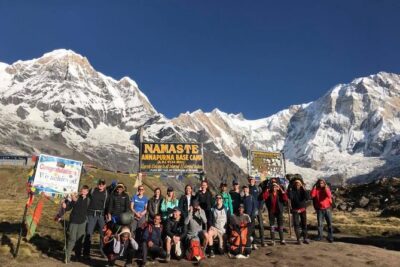
Kathmandu to Annapurna Base Camp (ABC) 5-Day Trek
Read our review →Browse the lists this trek appears in