
Review · KATHMANDU
Annapurna Base Camp Trek
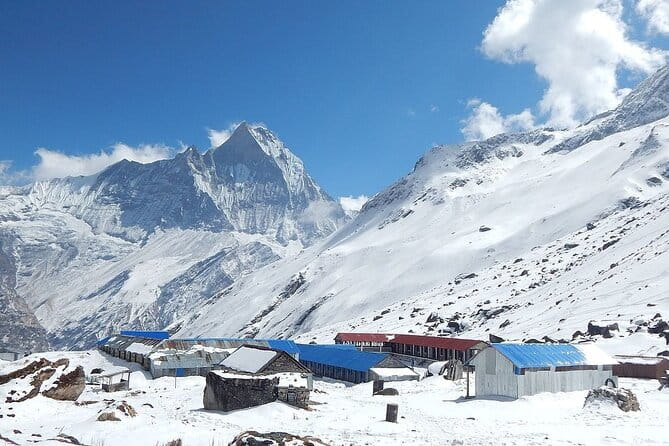
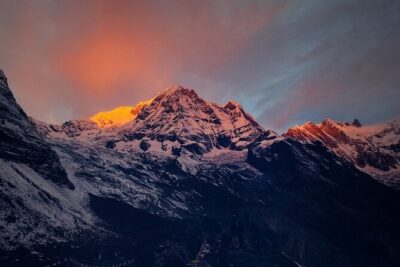
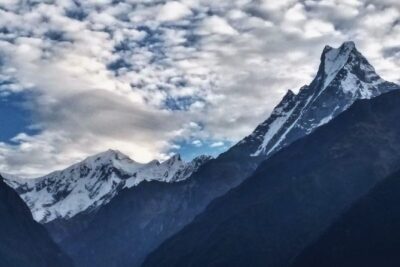
Annapurna Base Camp is the prize at the end of a wonderfully varied mountain walk. You move from Pokhara’s Fewa Lake to Gurung villages, rhododendron and bamboo forests, rushing rivers, waterfalls, and finally the wide, high bowl of the Annapurna Sanctuary. The 360-degree mountain view at base camp is the moment everything clicks.
I like the route’s cultural side, especially Ghandruk and Chhomrong, where village life is part of the journey rather than scenery viewed from a bus. I also like the practical package: meals, tea-house lodging, permits, a guide, shared porter service, and transport are included, which removes much of the usual planning work.
The catch is that this is not a gentle sightseeing holiday. Day 7 is the hardest, the trail includes steep climbs and long descents, and the schedule gives you little spare time if weather or road delays interfere. You need moderate fitness, travel insurance that covers helicopter rescue, and a willingness to sleep simply.
Key points to know before booking
- Base camp comes after a real mountain day: The walk from Deurali through Machhapuchre Base Camp to Annapurna Base Camp is the trip’s toughest section.
- Gurung culture is part of the route: Ghandruk offers time to explore a major Gurung settlement and visit the Gurung Museum if the schedule allows.
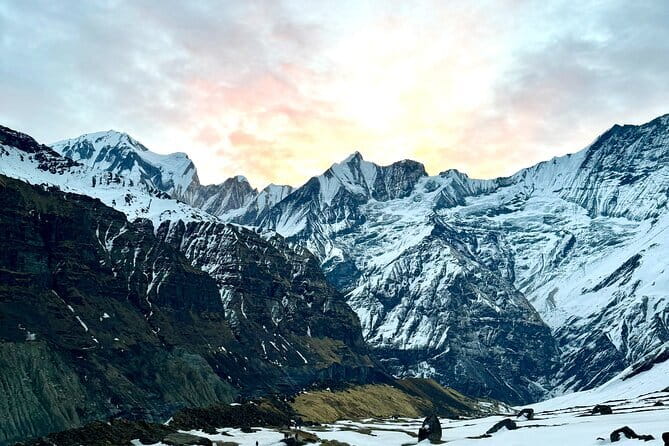
- The scenery changes every day: Expect forests, bamboo groves, bridges, waterfalls, rivers, villages, and snow peaks rather than one repeated mountain view.
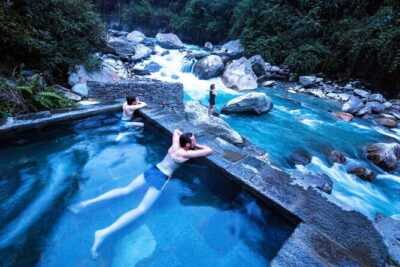
- Jhinu adds a welcome recovery stop: A short walk from Jhinu Danda leads to the area’s popular natural hot springs.
- The package covers most core costs: Eight tea-house nights, trekking meals, permits, staff costs, a duffel bag, and transport are included.
- The $810 price is useful for planners: You still need to budget for insurance, personal drinks and laundry, tips, cancellation costs, and other items not listed as included.
Kathmandu begins with a briefing, not a mountain view
Your first day is deliberately light. A representative picks you up at Tribhuvan International Airport and takes you to your hotel, followed by a 7 pm trip briefing with the trek leader.
That meeting matters. Use it to ask about the walking pace, luggage, weather, meals, porter arrangements, and what happens if conditions change. The briefing is also your chance to check that you understand the route before leaving the city.
If you arrive early, you can use the spare time for Thamel, the old market area of Ason, or a Nepali film at the cinema. The tour manager can help arrange these plans. I would keep the first afternoon modest, since the next morning begins with an early breakfast and a long road journey.
More Annapurna Treks in Kathmandu
- Annapurna Circuit Trek with Tilicho Lake
★ 5.0 · 368 reviews - Annapurna base camp trek 5 Days
★ 5.0 · 252 reviews - 14-Day Private Annapurna Base Camp Trek
★ 5.0 · 180 reviews
Pokhara gives you one calm day before the trail
Day 2 takes you by tourist bus from Kathmandu to Pokhara, known for Fewa Lake and its mountain outlooks. The drive is listed as an early start and takes most of the day, so do not treat it as a quick transfer.
Once in Pokhara, you check into a Lakeside hotel and have time to explore. Boating on Fewa Lake and visiting Tal Barahi Temple are the main suggested activities. On a clear day, you may see Machhapuchhre, the Annapurnas, and Dhaulagiri from the lake area.
This stop is more than a pleasant extra. It gives you a slower evening before the hiking begins, and it lets you enjoy Pokhara’s food stalls, restaurants, shops, and lakeside walks. The mountain views depend on weather, so keep your expectations flexible. Clouds can easily hide the peaks.
Ghandruk combines mountain walking with Gurung life
The trek begins at Nayapul after a drive from Pokhara. The trail passes through Birethanti before climbing through forest and steeper ground toward Ghandruk, with about five hours of walking listed for the day.
Ghandruk is one of the route’s strongest cultural stops. It is a major Gurung settlement, and if time permits, you can visit the Gurung Museum. The village gives the walk a human scale: you are not simply hiking toward a mountain target, you are moving through communities with their own architecture, customs, and hospitality.
The first trekking day can feel tougher than the distance suggests because of the uphill sections. Take it steadily. The point is not to arrive first, and an early, sensible pace will help you enjoy the following days.
Chhomrong brings steep steps and the Annapurna massif
Day 4 is a demanding six-hour walk. You descend to Kimrung Khola, climb again to Chere Danda, then continue more gently to Chhomrong, a village at the base of the Annapurna massif.
This is a good example of how the trek works. A route that looks like a short line on a map can include repeated descents and climbs. Crossing a river does not mean the hard work is finished, since the next ascent may begin immediately.
Chhomrong is an important overnight stop because it places you close to the high mountain section. The village setting and mountain surroundings make it one of the memorable points along the route, but you should expect tired legs by evening.
Same trailhead, a different route:
- Everest Base Camp Trek – 14 Days
★ 5.0 · 1,499 reviews - Everest Base Camp Trek
★ 5.0 · 842 reviews - Everest Base Camp Helicopter Tour landing at Everest View Hotel
★ 5.0 · 668 reviews - Everest Base Camp Trekking
★ 5.0 · 485 reviews
Bamboo shows you the cost of the famous steps
The next section begins with a descent of about 2,500 steps to Chhomrong Khola, followed by a steep climb to Sinuwa. From there, the trail enters forest toward Kuldihar and continues downhill to Bamboo. The walking time is listed at about five hours.
This is a day when trekking poles, careful footing, and patience are useful. Descending can be harder on your knees than climbing, especially when the trail is uneven. The forest gives shade and a cooler setting, but it also means fewer open mountain views for much of the day.
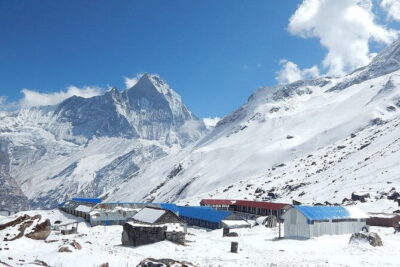
Bamboo is a tea-house stop in the Annapurna trekking area. Accommodation here is functional rather than luxurious, and you should think of the lodge as a warm meal, a bed, and a place to rest for tomorrow’s climb.
Deurali leads through cold bamboo forest and river views
From Bamboo, the trail continues through a cold, damp bamboo forest. Steep sections lead to the Himalayan Hotel, a familiar landmark on the route, followed by a more open area with views toward the glacial river below.
You then climb through a drier part of the forest to Hinku Cave, descend closer to the river, and make a gentler ascent to Deurali. The listed walking time for this day appears unusually short, so treat the stated duration as something to confirm with the operator rather than a reliable measure of effort.
The setting changes as you gain height. Thick forest gradually gives way to sparser growth and wider views, which is a good visual sign that the base camp section is near. Deurali is your staging point for the biggest day of the trek.
Annapurna Base Camp is the hard-earned center of the trip
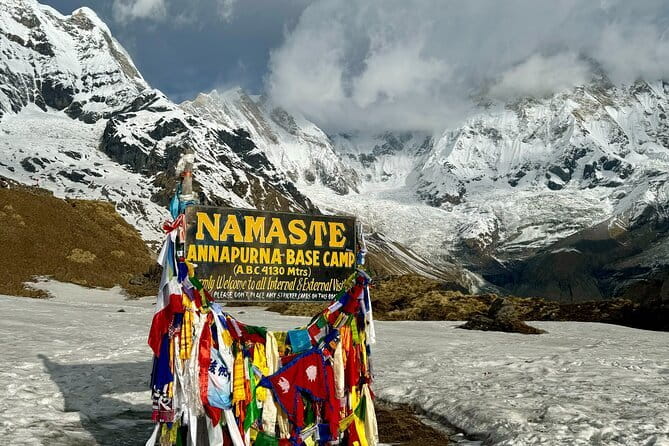
Day 7 starts early and is the most strenuous part of the itinerary. You walk to Bagar, continue to Machhapuchre Base Camp, then cross the sparse terrain of the Annapurna Sanctuary to Annapurna Base Camp.
The challenge comes from the combination of distance, uphill walking, colder conditions, and the thinner mountain air. The supplied plan does not give an elevation figure, so you should not judge the difficulty by a number alone. Your guide’s pace and your own condition will matter more.
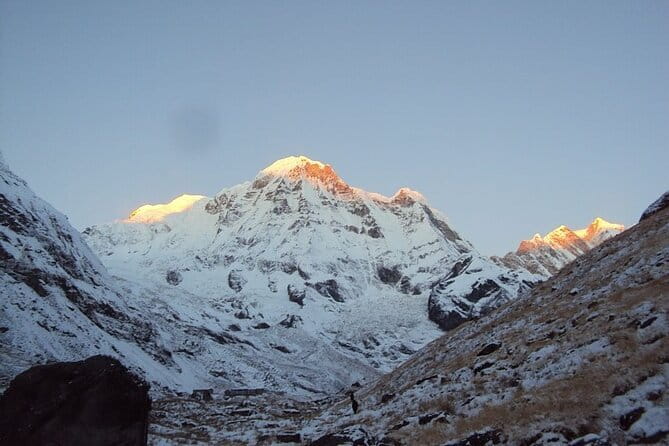
The reward is the open mountain setting at base camp. You are surrounded by high peaks, with a 360-degree view described as the trip’s major visual payoff. This is not a quick photo stop followed by an easy return. You spend the night at Annapurna Base Camp, which gives you a chance to experience the sanctuary in the quieter morning and evening hours.
The overnight stay is also the reason you need to pack thoughtfully. Warm clothing and a sleeping setup suitable for tea-house conditions matter here, even though the package supplies the basic duffel bag and lodge arrangements. Personal gear remains your responsibility.
The return route uses different pleasures, not fewer
Day 8 retraces the route to Bamboo. It is mainly downhill and listed at about seven hours, so do not confuse easier navigation with an easy day. Long descents can be tiring, and the same trail looks different when you know the climb to base camp is behind you.
Day 9 takes you uphill to Kuldighar, down to Chhomrong Khola, back up the 2,500 steps to Chhomrong, and then down again to Jhinu Danda. That repeated pattern is physically demanding, but Jhinu gives the day a clear reward.
From Jhinu Danda, a 20-minute walk leads to natural hot springs. This is one of the most useful stops on the schedule because it offers a chance to relax after several days of steep trails. Bring a sense of humor and do not expect a private spa experience. The value is the setting and the chance to ease tired muscles in a natural spring.
Nayapul and Pokhara close the walking chapter
The final trekking day descends from Jhinu to Nayapul and is listed at about six hours. The walk ends where the route began, then a vehicle takes you to Pokhara for the night.
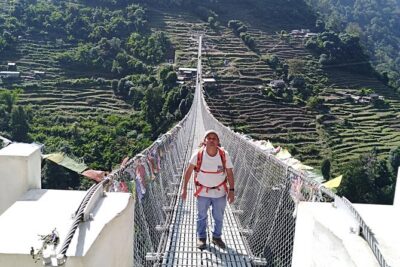
This last section is a good reminder that the trek is not only about reaching base camp. The full journey includes villages, forest corridors, river crossings, bridges, waterfalls, and changes in weather and vegetation. Several accounts of the experience highlight wooden and metal bridges, rushing water, small waterfalls, and friendly local encounters. Those details are easy to overlook when you are focused on the next uphill section, but they are part of what makes this route feel varied.
You may be ready for a shower and a comfortable hotel room by the time you reach Pokhara. The overnight return to a standard tourist hotel is a practical reset before the bus ride back to Kathmandu.
Kathmandu provides a final evening and airport transfer
Day 11 is an early drive from Pokhara to Kathmandu, listed at about eight hours. That makes this another full transport day, not an open afternoon with guaranteed sightseeing time.
If energy and arrival time allow, you can explore Thamel and shop for souvenirs or Nepali handmade products. The plan includes a final night in Kathmandu and a Nepali cultural farewell dinner with local food and performances. This adds a social ending to a trip that is otherwise built around early starts, walking, and tea-house evenings.
On Day 12, the representative takes you to the airport three hours before your scheduled flight. The included airport transfers are useful, especially after a long trek when arranging a last-minute taxi may be one task too many.
What the $810 package really covers
At $810 per person, the price has solid value if you want a supported trek rather than a do-it-yourself arrangement. It covers two nights in standard tourist hotels in Kathmandu and Pokhara, eight nights in trekking lodges or tea houses, trekking meals, permits, entry fees, staff insurance and allowances, and a professional government-certified English-speaking guide.
It also includes shared porter service at a ratio of one porter for two trekkers. That can make a major difference on a route with long climbs and descents, but you should understand that shared service is not the same as having an individual porter for your complete load.
Transportation is included between Kathmandu and Pokhara by tourist bus, along with private car airport and hotel transfers. A duffel bag is supplied as part of the package. Breakfast is included throughout the hotel portion, while lunch and dinner are included during the trek as specified in the schedule.
The price does not include travel insurance, and the policy specifically says your insurance must cover helicopter rescue in an emergency. Drinks, laundry, tips, personal items, trip cancellation charges, extensions caused by unforeseen problems, and other unlisted expenses are extra.
That last point is important. A low headline price can become less useful if you arrive without insurance or enough money for small daily purchases. Plan for these costs before you decide the package is all-inclusive.
Who will enjoy this trek most
This route suits you if you want a serious but relatively compact Himalayan trek with support, cultural stops, and a major mountain finish. It works especially well for friends, couples, and solo walkers who value a guide and the structure of arranged accommodation and meals.
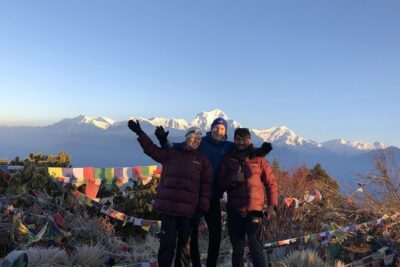
The available feedback repeatedly emphasizes friendship, shared effort, local kindness, mountain mornings, waterfalls, bridges, and the feeling of getting away from ordinary routines. The social side seems strongest when you are willing to talk at tea houses, walk at a shared pace, and accept the simple rhythm of mountain travel.
It is less suitable if you want private rooms, easy transport, no steep stairs, or a flexible daily schedule. The route includes long days, a strenuous base camp push, basic lodge accommodation, and road journeys that take much of a day.
The experience is sold as a private activity for your group, but the porter arrangement is shared between two trekkers. Confirm the exact group and luggage setup before paying if that detail matters to you.
Practical details to settle before departure
The operator confirms bookings at the time of reservation and offers pickup. Cancellation is free if you cancel at least 24 hours before the local start time. Cancellations or changes made inside that window are not accepted for a refund.
Weather matters in the mountains. If poor weather forces cancellation, you are offered another date or a full refund. Even so, build some patience into your plans, since the itinerary includes long bus journeys and a weather-sensitive trek.
Pack for changing conditions, comfortable walking, and cold nights. The information supplied does not specify a full equipment list, so ask the operator what is provided beyond the duffel bag and what you need to bring yourself.
Should you book the Annapurna Base Camp trek?
I would book this trek if you want a well-supported route with a clear goal and plenty of variety along the way. The combination of Gurung villages, forest trails, bridges, waterfalls, tea houses, hot springs, and the Annapurna Sanctuary gives you much more than a mountain photograph.
I would pause if you are unsure about steep terrain or moderate fitness. Day 7 is tough, the return includes long downhill stretches, and the schedule does not leave much room for a slow pace. Ask the operator to clarify the unusual Day 6 duration and confirm the detailed walking plan before booking.
For an organized 12-day experience at $810, with core lodging, meals, permits, transport, a guide, and shared porter support included, this is a strong choice for a first Himalayan trek. Go prepared, allow for simple conditions, and buy rescue-ready insurance. You will earn the view at base camp one step at a time.
FAQ
How long does the Annapurna Base Camp trek take?
The full experience lasts approximately 12 days, including arrival and departure in Kathmandu, time in Pokhara, the trek, and the return journey.
Where does the trek start?
The walking portion starts at Nayapul, reached by vehicle from Pokhara.
Is airport pickup included?
Yes. A representative picks you up at Tribhuvan International Airport in Kathmandu and transfers you to your hotel. Airport drop-off is also included at the end.
Are meals included?
Breakfast is included at the Kathmandu and Pokhara hotels. During the trek, daily breakfast, lunch, and dinner are included according to the package details.
What accommodation is provided?
You receive two nights in standard tourist hotels in Kathmandu and Pokhara, plus eight nights in trekking lodges or tea houses in the Annapurna trekking area.
Is a guide included?
Yes. A professional, government-certified, English-speaking trekking guide accompanies the trek.
Is porter service included?
Yes. Shared porter service is included at a ratio of one porter for two trekkers.
Do I need travel insurance?
Yes. You must arrange your own travel insurance, and it must cover helicopter rescue in case of emergency.
What happens if bad weather cancels the trek?
If poor weather causes cancellation, you are offered a different date or a full refund. For ordinary cancellations, you need to cancel at least 24 hours before the experience start time for a full refund.
Just added around Kathmandu
- Everest Base Camp Trek★ 5.0 · 3 reviews
- Everest Base Camp Trek★ 5.0 · 7 reviews
- 15 Days Private Everest Base Camp Trek★ 5.0 · 30 reviews
- Everest Base Camp Trek★ 5.0 · 57 reviews
- 14 Days of Adventure Trekking to Everest Base Camp★ 5.0 · 2 reviews
- 14-Day Everest Base Camp Trek★ 5.0 · 20 reviews
- From Kathmandu: Private 14-Day Everest Base Camp Trek★ 5.0 · 20 reviews
- 14 Days Everest Base Camp Trek★ 5.0 · 4 reviews
Annapurna Base Camp Treks, compared.
Trekking in Annapurna/Langtang/Everest/Upper Mustang regions
Read our review →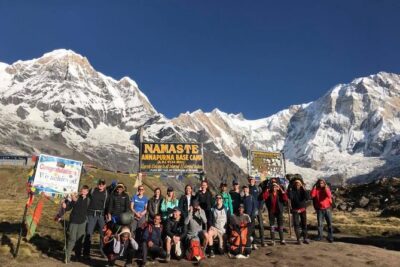
Kathmandu to Annapurna Base Camp (ABC) 5-Day Trek
Read our review →Browse the lists this trek appears in