
Review · KATHMANDU
Annapurna Base Camp Trek
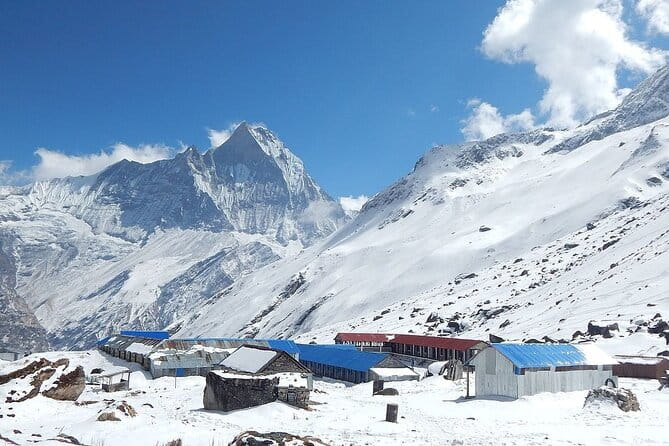
Annapurna Base Camp gives you a rare mountain journey in a compact 12-day plan. You walk from terraced hills and Gurung villages into the enclosed Annapurna Sanctuary, where Annapurna I, Annapurna South, Hiunchuli, Gangapurna, and Machhapuchhre rise around the trail. The route also includes Poon Hill, waterfalls, suspension bridges, and a hot spring stop at Jhinu Danda.
I like the mix of scenery and culture, especially the shift from warm village life to cold glacier valleys. I also like that the package includes a guide, conservation fees, airport transfers, and Kathmandu sightseeing at the end. The main caution is the altitude: Annapurna Base Camp reaches 4,130 meters, and the route includes long climbs, stone steps, slippery sections, and repeated ups and downs.
I also appreciate the human side of the operation. Aneel is named as one of the guides, while Machhindra Achary and Radhika are involved with the company. Still, the price needs close inspection. At $1,440 per person, domestic flights, porter support, most trek meals, equipment, insurance, and tips are extra.
Key points before you book
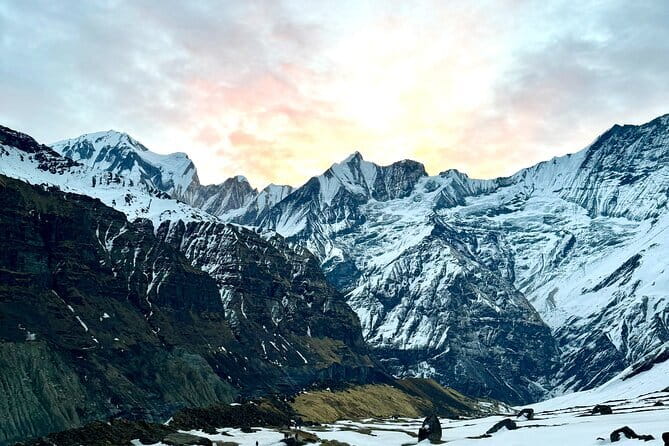
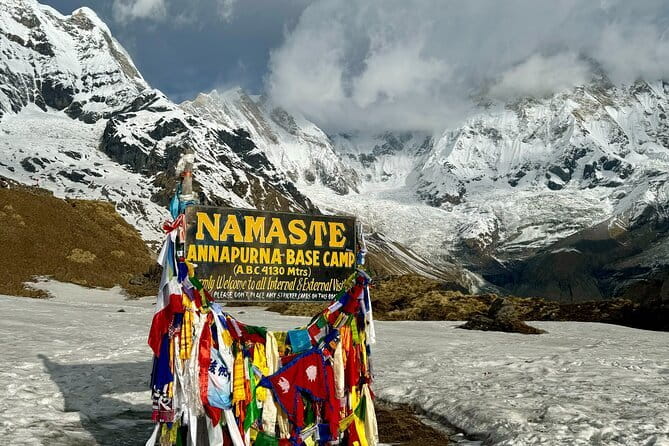
- Annapurna Base Camp at 4,130 meters: The final approach passes Machhapuchhre Base Camp and brings you into a dramatic mountain basin.
- Poon Hill and village life: The route combines a famous viewpoint with Ghandruk, Chhomrong, and other Gurung communities.
- A 12-day Kathmandu-to-Kathmandu plan: You get airport transfers, trekking, Pokhara connections, and a full day of Kathmandu sightseeing.
- Teahouse accommodation: Expect simple lodge stays rather than resort comfort, with hot showers usually costing extra.
- Moderate but demanding trekking: The route is suitable for people with a good level of fitness, but high altitude and steep stone trails are serious considerations.
- A private group experience: Only your own group takes part, with an English-speaking guide assigned to the trek.
Why the Annapurna Sanctuary route is so appealing
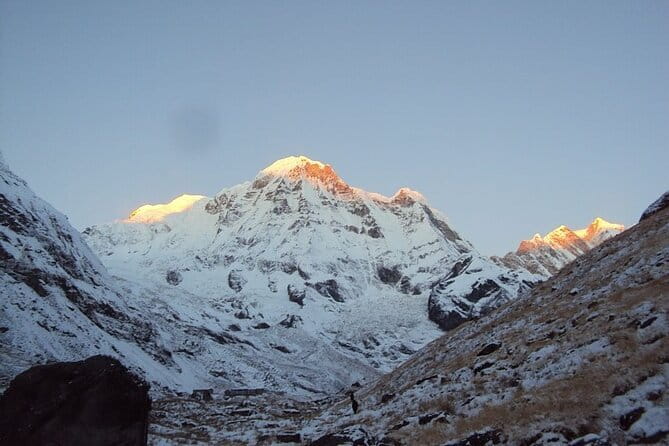
The Annapurna Base Camp Trek is often called the Annapurna Sanctuary Trek because the trail leads into a natural mountain bowl surrounded by high peaks. You begin among farms, forests, and villages, then follow rivers and narrow valleys toward a much colder world.
That change is the real reward. The trek is not only about reaching a sign at base camp. You see people farming steep terraces, walk through rhododendron forest, cross suspension bridges, and watch the valley tighten around you. By the time you reach Machhapuchhre Base Camp, the mountains feel close enough to fill your whole view.
The route is described as clockwise, beginning at Nayapul and continuing through Ulleri, Ghandruk, Chhomrong, Bamboo, Deurali, and Annapurna Base Camp. Poon Hill is also part of the wider route plan, though the day-by-day description does not clearly state when that viewpoint visit takes place. Ask for the exact walking plan before departure.
More Annapurna Treks in Kathmandu
- Annapurna Circuit Trek with Tilicho Lake
★ 5.0 · 368 reviews - Annapurna base camp trek 5 Days
★ 5.0 · 252 reviews - 14-Day Private Annapurna Base Camp Trek
★ 5.0 · 180 reviews
Kathmandu arrival and the start of the trip
Your trip begins at Tribhuvan International Airport, at about 1,300 meters. A representative from Oriental Journeys meets you and takes you to your hotel in Thamel. A briefing follows, along with an introduction to your guide.
This first night matters. You can ask practical questions about altitude, meals, luggage, weather, and the next morning’s transport. The package includes two nights in Kathmandu on a bed-and-breakfast basis, though the exact hotel is not named.
The next morning starts early, with a 7:00 am meeting time. You travel to Kathmandu’s domestic airport, fly for about 30 minutes to Pokhara, then continue by private vehicle to Nayapul. From Nayapul, a local vehicle takes you toward Ulleri, where the walking section begins.
This is an efficient way to reach the trail, but it is also a long transport day. You will deal with an airport transfer, a flight, a road journey, and a local vehicle before reaching the trail. Pack your day bag so water, warm clothing, and personal items are easy to reach.
Ghandruk and the Gurung villages
From Ulleri, you climb toward Ghandruk, listed at about 1,940 meters. This village is one of the cultural highlights of the route. The Gurung community, local customs, village life, and warm hospitality give the early part of the trek its character.
You are not simply walking through scenery here. The trail passes working communities and terraced farmland, so the pace feels more connected to daily life than a high mountain expedition. The climb from Ulleri can be tiring, especially after the morning’s transport, but Ghandruk makes a worthwhile first overnight stop.
The schedule then takes you toward Chhomrong. The available plan does not provide a precise walking time or detailed route for this day, so ask your guide how the distance and elevation gain will be handled. Chhomrong is an important point on the trek, with mountain views and a local lodge setting.
The stone steps from Chhomrong to Bamboo
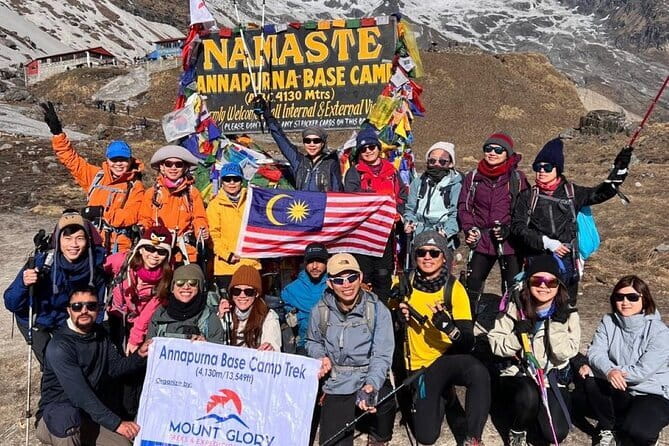
The trail out of Chhomrong begins with about 2,500 stone steps. You descend to the Chhomrong Khola, cross a swaying suspension bridge, and then climb again near Sinuwa.
This is a good example of the route’s character. You can lose elevation and then gain it back in the same day. The trail passes through forest toward Kuldihar before an easier downhill stretch to Bamboo, where you spend the night in a teahouse.
The forest is attractive, but the footing can be slippery, particularly in wet conditions. Good trekking shoes are not optional here. Trekking poles can also help with the long descent and the steps, although poles are not listed among the included equipment.
Bamboo is a simple overnight stop. Do not expect hotel-style facilities. Accommodation is in a teahouse, and hot showers are specifically excluded from the package. Most personal spending during the trek is also extra.
Same trailhead, a different route:
- Everest Base Camp Trek – 14 Days
★ 5.0 · 1,499 reviews - Everest Base Camp Trek
★ 5.0 · 842 reviews - Everest Base Camp Helicopter Tour landing at Everest View Hotel
★ 5.0 · 668 reviews - Everest Base Camp Trekking
★ 5.0 · 485 reviews
Deurali and the glacier valley
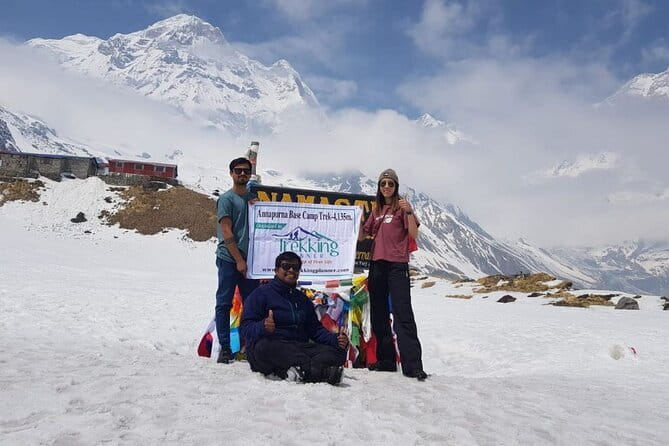
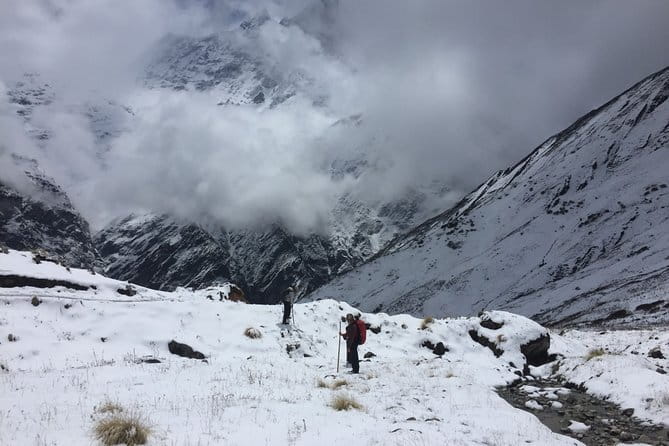
The next section takes you through damp, cold bamboo forest. You follow the river and pass near Hinku Cave before climbing toward Deurali. The trail draws closer to the glacial river, while cliffs rise above the route with thin waterfalls falling down their faces.
This is one of the most scenic parts of the walk, but it also brings colder conditions and more noticeable altitude. Deurali sits at a higher elevation than the earlier villages, so you should walk steadily and tell your guide if you develop a headache, nausea, unusual fatigue, or other altitude-related problems.
The itinerary includes an English-speaking guide, guide insurance, and a first-aid kit for groups of more than six people. That support is useful, but it does not replace travel insurance. Emergency rescue, medical expenses, and trip cancellation cover are not included.
Machhapuchhre Base Camp and the final climb
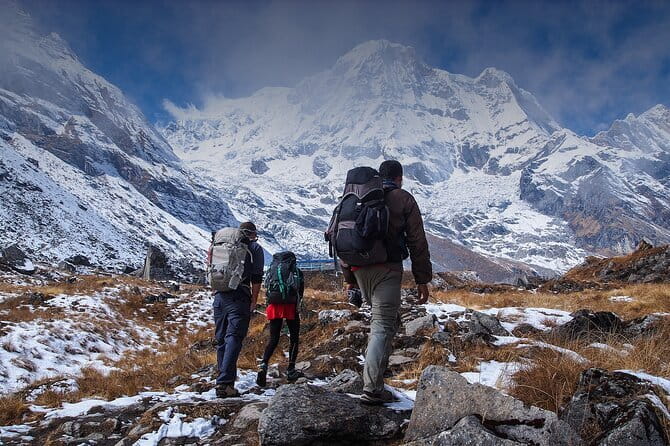
The walk from Deurali to Annapurna Base Camp takes about five to six hours and passes through Machhapuchhre Base Camp at 3,700 meters. The route first follows a riverbed, then climbs more steeply from Bagar toward Machhapuchhre Base Camp.
This is the hardest and most important walking day. The air is thinner, the route is strenuous, and the surroundings are much more exposed than the lower forest sections. Take your time. The goal is not speed.
Machhapuchhre, also called Fishtail, gives the intermediate base camp its name and its strongest visual moment. From here, the mountain views include Machhapuchhre, Hiunchuli, Annapurna South, Annapurna I, Annapurna III, Gandharvachuli, and Gangapurna.
Annapurna Base Camp sits at about 4,130 meters, or 13,545 feet. You spend the night there, which makes the achievement feel more complete, but it also means you need to be prepared for basic conditions and cold temperatures. A down jacket, sleeping bag, thermal layers, warm hat, gloves, and warm socks are all specifically recommended.
Morning photographs and the return to Bamboo
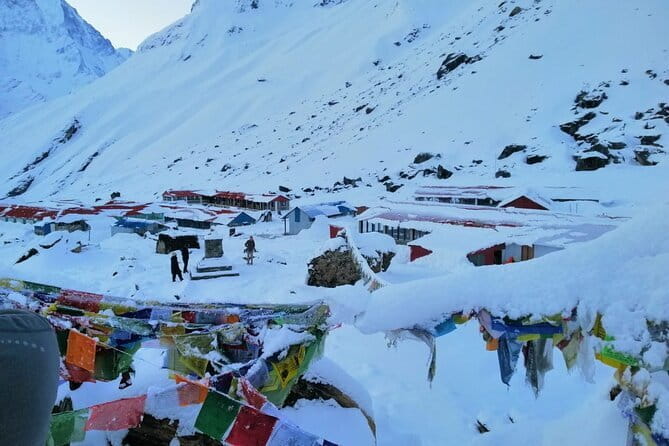
The next morning gives you time to photograph the mountains and the surrounding basin before breakfast. This is one of the best reasons to sleep at base camp rather than rush back down the same day. Morning light can change the feel of the peaks and the valley.
You then retrace the route toward Bamboo. The descent is easier on the lungs, but it can be hard on knees and ankles. The same river valleys and rock faces that felt imposing on the way up now provide a familiar route back into the forest.
The package lists breakfast, lunch, and dinner in limited quantities rather than covering every meal for the entire trek. The inclusion section specifies four dinners, seven breakfasts, and two lunches, while the exclusions say that three meals per day are not included. Clarify the meal arrangement before booking so you understand exactly what you will pay for at the lodges.
Jhinu Danda and the hot spring stop
From Bamboo, you climb to Kuldighar, descend to Chhomrong Khola, climb back to Chhomrong, and then descend to Jhinu Danda. It is a full day of ups and downs, not a gentle downhill walk.
The payoff is a visit to the hot springs. From the lodge, you walk down for a soak, which can feel especially welcome after several days of steep trail. The hot spring visit is one of the more relaxing moments in the schedule, though the cost of a hot shower during the trek is not included, and no separate hot spring fee is stated.
The mountain views, plants, and wildlife change again as you move toward lower elevations. Jhinu Danda gives you a final taste of the mountain villages before the road takes over.
Siwai, Pokhara, and the return to Kathmandu
The next day, you trek down to Siwai and take a vehicle to Pokhara. This is a practical end to the walking portion, though the road transfer means the day is still active.
The following morning, you return to Kathmandu either by flight or by road. The plan says a flight leaves time for Kathmandu sightseeing the same day, while driving takes about five to six hours. Since domestic flights are not included, the choice affects both your budget and your available time.
The final full day is a guided Kathmandu Valley tour beginning at 9:00 am. You visit Pashupatinath, Boudhanath, Swayambhu, and Kathmandu Durbar Square, all listed as UNESCO World Heritage sites. This gives the trip a useful cultural finish after the mountain section.
You should note that temple and monument entrance fees are not included. Bring appropriate clothing for religious sites, and keep some local currency available for entry charges and personal expenses.
What the $1,440 price really covers
At $1,440 per person, this is not an all-inclusive trek. The value comes from the structure and support: airport pickup and drop-off, two Kathmandu hotel nights with breakfast, teahouse accommodation, an English-speaking guide, conservation fees, the TIMS card, government taxes, guide salary, and guide insurance.
That can be worthwhile if you want a planned route and do not want to arrange permits, transfers, or lodge bookings yourself. The private group format is another advantage. You are not joining a large mixed party, so the walking rhythm and daily decisions are handled within your own group.
Budget carefully for the extras. Domestic flights, porter service, most meals, drinks, trekking gear, hot showers, temple entrance fees, insurance, rescue, laundry, phone use, tips, and personal expenses are excluded. Porter service is described as one porter for two people, carrying a maximum of 30 kilograms, so confirm the fee and the precise luggage arrangement.
The listed reviews give strong emphasis to guide care, smooth booking support, local food, and the company’s effort to make the trip feel personal. Aneel is specifically praised as a guide, while Machhindra Achary and Radhika are associated with the company’s support. If those names matter to you, ask who will lead your departure and how many people will be in your private group.
Who should book this trek?
You should consider this trip if you want a major Himalayan trek without committing to a much longer expedition. The route offers villages, forests, rivers, high peaks, base camps, and Kathmandu sightseeing in less than two weeks.
You need moderate physical fitness and a willingness to walk uphill, downhill, and on uneven or slippery trails for several hours. People with back problems, heart complaints, other serious medical conditions, or pregnancy are advised not to take part. The route is not suitable for wheelchair users.
Pack for changing conditions. Warm layers, a sleeping bag, trekking boots, gloves, sunglasses, a water bottle, a day bag, a waterproof jacket, sunscreen, cold cream, and a headlamp are all listed as useful items. The trek operates in all weather, so do not count on perfect skies.
Free cancellation is available if you cancel at least 24 hours before the local start time. Cancellation within 24 hours is not refundable. If bad weather cancels the experience, you are offered another date or an alternative destination of the same value.
Should you book the Annapurna Base Camp Trek?
I would book this trek if you want a guided, private-group route with a strong mix of mountain scenery and village culture. The walk into Annapurna Sanctuary is the clear highlight, and the added Poon Hill plan, Jhinu hot spring, and Kathmandu heritage tour give the trip more range than a simple base camp out-and-back.
I would not book it without first confirming the meal plan, domestic flight cost, porter fee, exact hotel, guide assignment, and Poon Hill timing. The $1,440 price is reasonable for the organization and permits, but your final cost will be higher once you add meals, flights, gear, insurance, tips, and personal spending.
If you are fit, prepared for basic teahouse conditions, and comfortable with altitude, this is a strong introduction to trekking in Nepal. If you want soft beds, fixed comforts, and little physical strain, choose a lower-altitude tour instead.
FAQ
How long is the Annapurna Base Camp Trek?
The full experience lasts approximately 12 days, including arrival in Kathmandu, the trek, travel between Kathmandu and Pokhara, and a Kathmandu Valley sightseeing day.
What is the highest point on the trek?
Annapurna Base Camp is at approximately 4,130 meters, or 13,545 feet. Machhapuchhre Base Camp is at about 3,700 meters.
Where does the walking route begin?
The walking section begins at Ulleri after transport from Pokhara through Nayapul. The wider route is described as starting from Nayapul and continuing through several mountain villages.
Is a guide included?
Yes. An English-speaking guide is included, along with the guide’s salary and insurance during the trek.
Is porter service included?
No. Porter service is listed as an extra. The arrangement described is one porter for two people, with a maximum load of 30 kilograms.
Are domestic flights included in the price?
No. Domestic flights are excluded. The plan includes a flight between Kathmandu and Pokhara, but you pay for that separately if you choose to fly.
Are meals included during the trek?
Only some meals are included. The package lists four dinners, seven breakfasts, and two lunches, while three meals per day are otherwise excluded. Confirm the exact meal arrangement before booking.
What accommodation is provided?
You stay in guest houses or teahouse lodges during the trek. Two nights in Kathmandu are included on a bed-and-breakfast basis.
Is the trek suitable for all fitness levels?
No. It is rated moderate and requires a moderate level of physical fitness. The route includes high altitude, steep climbs, stone steps, uneven ground, and possible slippery sections.
What happens if bad weather cancels the trip?
You will be offered an alternative date or an alternative destination of the same value. The experience operates in all weather, so warm and waterproof clothing is important.
Just added around Kathmandu
- Everest Base Camp Trek★ 5.0 · 3 reviews
- 15 Days Private Everest Base Camp Trek★ 5.0 · 30 reviews
- Everest Base Camp Trek★ 5.0 · 7 reviews
- Everest Base Camp Trek★ 5.0 · 57 reviews
- 14 Days of Adventure Trekking to Everest Base Camp★ 5.0 · 2 reviews
- 14-Day Everest Base Camp Trek★ 5.0 · 20 reviews
- From Kathmandu: Private 14-Day Everest Base Camp Trek★ 5.0 · 20 reviews
- 14 Days Everest Base Camp Trek★ 5.0 · 4 reviews
Annapurna Base Camp Treks, compared.




Trekking in Annapurna/Langtang/Everest/Upper Mustang regions
Read our review →


Kathmandu to Annapurna Base Camp (ABC) 5-Day Trek
Read our review →Browse the lists this trek appears in