
Review · KATHMANDU
Annapurna Base Camp trek
Annapurna Base Camp is the reward at the end of a long walk through rhododendron forest, bamboo groves, terraced farmland, and mountain villages. This 14-day trek gives you time to adjust to the pace, meet local people, and reach the foot of Annapurna without rushing every stage.
I like the small group size of up to 10 and the fact that permits, tea-house accommodation, meals, guide service, and public transport are included. I also like the practical support from Nepal Trekking Experts, with Rajesh handling trip questions and guides such as Amit, Ganesh, Rajan, Basanta, Resham, and Milan praised for patient care and flexibility.
The main catch is simple: you need to be fit enough to walk for about six hours most days. Tea houses offer a real mountain stay, not hotel comfort, and extras such as Wi-Fi, hot showers, charging, drinks, insurance, and trekking gear cost more.
Key points to know before you book
- About six hours of hiking each day: This is a proper mountain trek, not a sightseeing tour with short walks.
- A maximum of 10 people: The small group allows closer contact with your guide and makes it easier to manage different walking speeds.
- Tea-house accommodation: You sleep in basic mountain lodges, an important part of the local experience.
- Permits are included: The Annapurna Conservation Area permit and TIMS card are covered in the price.
- Meals are included: Breakfast, lunch, and dinner are provided according to the trip plan, but drinks and extra food are not.
- Guides are a major part of the experience: Rajesh coordinates the company, while local guides such as Amit, Ganesh, Rajan, Basanta, Resham, and Milan have led different groups.
What the 14-day Annapurna Base Camp trek is really like
This trek is built around steady progress rather than speed. You spend roughly six hours hiking on most days, moving through changing scenery and settlements before reaching Annapurna Base Camp.
The route takes you from the busy urban setting of Kathmandu toward the quieter foothills of the Himalaya. Along the way, you see working farmland, village life, forests, and high mountain scenery rather than only checking off a viewpoint.
The company describes the trek as moderately challenging. That is a useful description for a fit person who already enjoys long walks, but you should not read moderate as easy. Six hours of uphill and downhill walking, repeated over many days, asks a lot from your legs and feet.
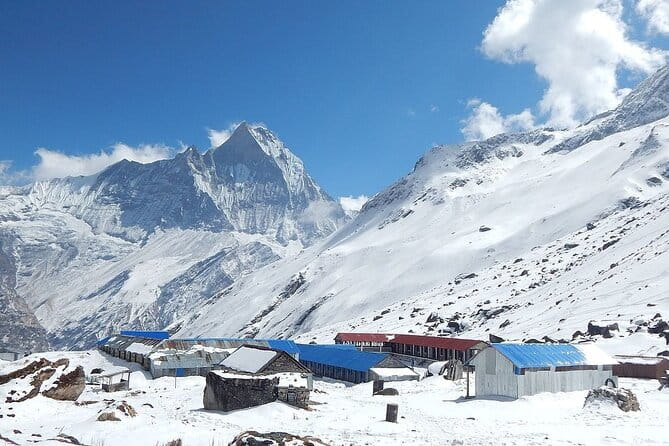
The reward is a strong sense of progress. Forest paths gradually give way to more open mountain scenery, and each day brings a different view of the Annapurna region. At the base camp, you are standing at the foot of one of the world’s highest mountain systems. The destination matters, but the route is what fills most of the trip.
More Annapurna Treks in Kathmandu
- Annapurna Circuit Trek with Tilicho Lake
★ 5.0 · 368 reviews - Annapurna base camp trek 5 Days
★ 5.0 · 252 reviews - 14-Day Private Annapurna Base Camp Trek
★ 5.0 · 180 reviews
Kathmandu pickup and the start of the journey
Hotel pickup and drop-off are included, along with round-trip public transportation. That keeps the arrival process fairly simple, especially if you are new to Nepal or arriving with trekking bags.
Public transport is practical rather than luxurious. It is part of the value of the trip, since you are not paying separately for every transfer, but it also means you should expect a more local and functional style of travel.
Before setting off, you can expect support with the basic preparation for the hike. Rajesh is described as responsive to questions about conditions, clothing, equipment, and trip planning. A pre-trek briefing is also part of the company’s approach, covering practical do’s and don’ts.
Bring your passport details when booking. The operator requires each participant’s passport name, number, expiry date, and country of issue. Confirmation is provided at the time of booking.
Forests, farmland, and village paths
The middle portion of the trek is where the route earns its reputation. You walk through rhododendron forests and bamboo stands, pass terraced farmland, and enter isolated villages where daily life is closely tied to the mountains.
This is a good place to slow down and notice the details. You may see how food is grown on steep slopes, how supplies move through the villages, and how tea houses support the walking route. The trip is not only about mountain photographs. Your guide can explain local culture, history, and the way people live in the Himalaya.
Rhododendron forests are especially appealing because the scenery changes as you gain height. Bamboo gives the trail a different feel, while open farmland allows wider views. You are not walking through one unchanging setting for two weeks.
The drawback is that natural beauty does not make the walking easy. Forest trails can be steep, and long days may feel harder than expected if you are not used to sustained climbs. A moderate fitness level is required, and I would prepare with long walks and regular uphill practice before arriving.
Tea houses and the value of a simple bed
Tea-house accommodation is included, and it is central to the character of this trek. You stay in mountain lodges instead of returning to a city hotel each evening.
The facilities are basic. Hot showers, Wi-Fi, and battery charging are not included, and you may need to pay extra for them when available. Drinks, personal shopping, souvenirs, and trekking equipment also come out of your own pocket.
This is worth understanding before you book. The $999 price covers important costs, but it is not an all-inclusive holiday package. You should budget for personal extras and bring suitable gear rather than expecting a fully supplied adventure.
The tea houses also make the trek feel more connected to the route. You eat and sleep along the same mountain corridor used by other hikers and local communities. For me, that is one of the trip’s strengths, as long as you value a genuine mountain stay more than private-room comfort.
Same trailhead, a different route:
- Everest Base Camp Trek – 14 Days
★ 5.0 · 1,499 reviews - Everest Base Camp Trek
★ 5.0 · 842 reviews - Everest Base Camp Helicopter Tour landing at Everest View Hotel
★ 5.0 · 668 reviews - Everest Base Camp Trekking
★ 5.0 · 485 reviews
Meals for a long walking day
Breakfast, lunch, and dinner are included according to the trip plan. That is a useful saving on a 14-day hike, when buying every meal separately can quickly add up.
The information provided does not promise particular dishes or special dietary arrangements, so you should ask the operator about food needs before booking. Drinks are not included, and food or beverages outside the stated meal plan are also excluded.
You should think of meals as fuel for the trail rather than a major dining feature. The important advantage is convenience: you do not have to arrange every meal yourself while moving between villages.
Annapurna Base Camp and the high point of the trip
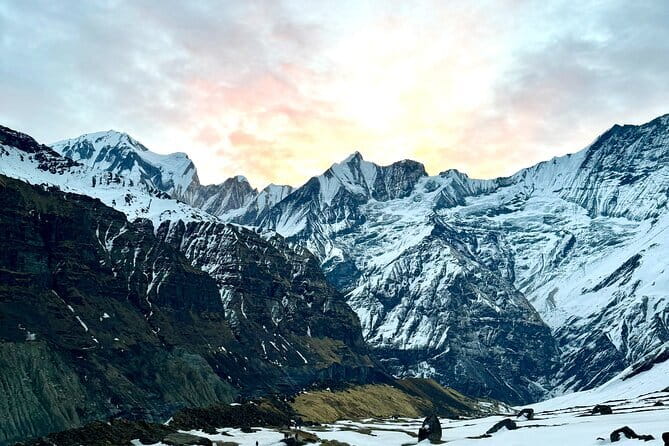
The final approach to Annapurna Base Camp is the moment the whole trek has been building toward. By this stage, you have already spent days walking through forests, farmland, and settlements. The scenery becomes more dramatic as the mountains feel closer and the route reaches the foot of Annapurna.
The base camp itself is not a quick photo stop. It is the result of a sustained effort, and the cold can be serious. One account described the base camp as very cold, with the scenery making the effort worthwhile. Pack properly for low temperatures and remember that weather can affect visibility.
Your guide plays an important role here. A good guide keeps an eye on the pace, helps you handle the demanding sections, and gives context to the places you pass. The company’s guides have been praised for personal care, including helping hikers who became sick or suffered an injury. One guide, Milan, was specifically described as carrying an injured group member and accompanying the person to hospital.
That kind of support matters more than polished sales language. Mountain conditions can change, and you want someone who pays attention when a group member is struggling.
The guides and the small-group advantage
The group limit is 10 people, which is a strong feature for this type of trek. A guide can communicate more easily with a small party, and the group is less likely to feel like a moving crowd.
The exact guide is not guaranteed in the information provided. Names connected with different trips include Rajesh, Amit, Ganesh, Rajan, Basanta, Resham, Milan, and Prakash. Rajesh appears to handle much of the pre-trip communication, while local guides lead groups on the trail.
That distinction is useful. You should expect a government-registered, English-speaking local guide, but you should not book based on receiving one particular named guide unless the company confirms it directly.
The strongest pattern in the available feedback is attentive support. The company has helped with itinerary changes, flight problems, illness before departure, questions about gear, and adjustments for different groups. That flexibility is valuable if your plans change, but it does not remove the need for travel insurance.
What the $999 price includes
At $999 per person, the trip offers solid value for a guided 14-day Himalayan trek, especially because several unavoidable costs are already covered.
Included items are:
- Accommodation according to the trip plan
- Annapurna Conservation Area permit
- TIMS card
- Local taxes
- Breakfast, lunch, and dinner as specified
- Government-registered English-speaking guide
- Hotel pickup and drop-off
- Round-trip public transportation
You are also paying for organization. The company handles the permit process, coordinates transport, and provides a guide for a route that would be harder to manage alone.
The price does not cover travel insurance, trekking gear, drinks, extra food, temple and monastery entrance fees, Wi-Fi, hot showers, battery charging, souvenirs, or personal shopping. Those extras may be small one at a time, but over two weeks they can become noticeable.
I would compare this trip with care. A cheaper headline price may leave you paying separately for permits, meals, transport, or guide service. A more expensive package may offer better accommodation or private transport. The value here comes from a practical package with strong logistical support, not luxury.
Who should book this trek
I would recommend it to an active person who wants a classic Himalayan route and is comfortable with simple lodging. It suits you if you enjoy walking for hours, want contact with local villages, and prefer a guide who can explain the culture and surroundings.
It may also suit a first-time Nepal trekker who wants help with permits, transport, accommodation, and meals. The small group gives you more support than a large departure, while the company’s communication before the trek can help you prepare.
I would think twice if you dislike basic facilities, need guaranteed Wi-Fi, or want a relaxed holiday with short daily walks. This is also not the right choice if you expect every possible cost to be included. You need your own insurance and trekking gear, and you should plan for paid extras.
Practical details before you commit
The experience operates throughout the stated period from January 1, 2024, through December 31, 2026, with listed operating hours from 5:15 AM to 10:45 PM daily. The trek is based in Kathmandu, and pickup is offered.
You receive confirmation at booking, and passport information is required for everyone in your party. The tour is near public transportation, but the included round-trip transport is public rather than private.
Cancellation is flexible if your plans are uncertain: you can receive a full refund when cancelling at least 24 hours before the local start time. Cancellations or changes made inside that 24-hour window are not accepted for a refund.
Should you book the Annapurna Base Camp trek?
Book this trek if you want a well-supported, moderately challenging mountain journey with permits, meals, transport, and a local guide arranged for you. The small group and repeated praise for personal support are the strongest reasons to choose it.
Before paying, confirm the exact day-by-day schedule, the name of your assigned guide, what gear you must bring, and which meals are covered on each day. Also set aside money for drinks, showers, charging, Wi-Fi, insurance, and personal purchases.
If you can handle six hours of hiking most days and accept tea-house conditions, the $999 cost offers a sensible way to reach Annapurna Base Camp without having to organize every moving part yourself. If comfort is your priority, choose a higher-end trek with more included services.
FAQ
How long does the Annapurna Base Camp trek take?
The trek lasts approximately 14 days.
How many hours will I hike each day?
You should prepare to hike for around six hours each day.
How large is the group?
The maximum group size is 10 people.
Is a guide included?
Yes. A government-registered, English-speaking professional local guide is included.
Are trekking permits included?
Yes. The Annapurna Conservation Area permit and TIMS card are included.
Are meals included?
Breakfast, lunch, and dinner are included according to the trip plan. Drinks and food outside the stated meals are not included.
Where will I stay during the trek?
You will stay in tea houses, or mountain lodges, according to the accommodation plan.
Is travel insurance included?
No. Personal insurance is not included, so you must arrange it separately.
Just added around Kathmandu
- Everest Base Camp Trek★ 5.0 · 3 reviews
- Everest Base Camp Trek★ 5.0 · 7 reviews
- 15 Days Private Everest Base Camp Trek★ 5.0 · 30 reviews
- Everest Base Camp Trek★ 5.0 · 57 reviews
- 14 Days of Adventure Trekking to Everest Base Camp★ 5.0 · 2 reviews
- 14-Day Everest Base Camp Trek★ 5.0 · 20 reviews
- From Kathmandu: Private 14-Day Everest Base Camp Trek★ 5.0 · 20 reviews
- 14 Days Everest Base Camp Trek★ 5.0 · 4 reviews
Annapurna Base Camp Treks, compared.




Trekking in Annapurna/Langtang/Everest/Upper Mustang regions
Read our review →


Kathmandu to Annapurna Base Camp (ABC) 5-Day Trek
Read our review →Browse the lists this trek appears in