
Review · KATHMANDU
Annapurna Base Camp Trek
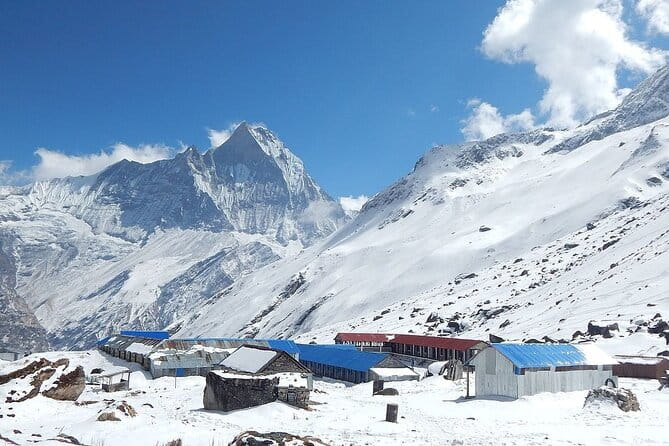
Annapurna Base Camp gives you a rare mountain journey with a clear sense of progress. You begin with Kathmandu’s temples, reach Pokhara by road, walk through rhododendron forest and stone villages, and finish inside a dramatic ring of Himalayan peaks. The high point is not only the base camp itself, but the steady change from farmland and forest to rock, snow, cliffs, and glacial valleys.
I like the Poon Hill sunrise and the route’s varied scenery. I also like the private format, airport pickup, equipment check, and support from guides such as Pradeep, Bikas, Santos, Birendra, Lal, and Aashman, depending on the group. The main caution is simple: this is a demanding 15-day trip with long walks, many stone steps, basic mountain lodging, and no travel insurance included.
Key points before you book
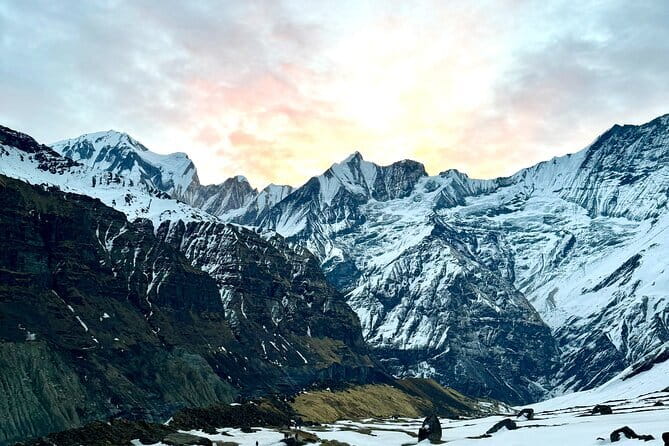
- Poon Hill adds a sunrise morning: You get a famous early view of the Annapurna and Dhaulagiri ranges before continuing toward the base camp route.
- The trek uses lodges, not hotels: Expect overnight stays in Ulleri, Tadapani, Chhomrong, Bamboo, Deurali, Annapurna Base Camp, and other mountain villages.
- The walking is genuinely strenuous: The route includes 3,400 steps to Ulleri, repeated uphill and downhill sections, suspension bridges, and rocky trails.
- A private group keeps the trip personal: Only your own group participates, with pickup offered and a guide briefing in Kathmandu.
- The $995 price covers useful basics: Permits, listed entrance fees, hotels, 14 breakfasts, 10 lunches, and 10 dinners are included.
- The plan needs a careful read: Day 5 reaches Ghorepani, while the following morning includes the Poon Hill sunrise. Confirm the exact overnight arrangement and transport details before paying.
Why this route works so well for a first Himalayan trek
The Annapurna Base Camp Trek is a strong choice if you want a full Himalayan experience without spending every day at extreme elevation or on a single type of trail. The route gives you city culture, a long road journey, village life, forest, rivers, waterfalls, terraced fields, and close mountain views.
I especially like the way the trip builds gradually. Kathmandu gives you time to arrive and check equipment. Pokhara provides a softer transition before the hard walking begins. From there, the route climbs through Ulleri, Ghorepani, and Tadapani before turning toward Chhomrong and the Annapurna Sanctuary.
You should not mistake the pleasant variety for an easy holiday. The trip is rated for people with moderate physical fitness, but that phrase deserves attention. The Ulleri steps alone are a serious opening test, and later days include steep trails, cold forest sections, rocky ground, and long descents that can be hard on knees.
More Annapurna Treks in Kathmandu
- Annapurna Circuit Trek with Tilicho Lake
★ 5.0 · 368 reviews - Annapurna base camp trek 5 Days
★ 5.0 · 252 reviews - 14-Day Private Annapurna Base Camp Trek
★ 5.0 · 180 reviews
Kathmandu temples and a useful first briefing
Your first day is gentle. A representative meets you at the airport with a sign bearing your name and takes you by private car to your hotel. Later, you attend a welcome dinner at a cultural restaurant, with Nepalese food and a traditional dance show.
That dinner is more than a formal welcome. It gives you a first taste of local culture and a chance to hear the full plan before leaving the city. You sleep in a Kathmandu hotel, so you are not thrown straight into the mountains after an international flight.
Day two is a full Kathmandu Valley sightseeing day. You visit Pashupatinath Temple, Boudhha, Swayambhunath, and Kathmandu Durbar Square. These sites give the trip a solid cultural beginning instead of treating Kathmandu as a mere airport stop.
Pashupatinath is a major Hindu temple near the airport. Boudhha is a famous Buddhist stupa, and Swayambhunath, also called the Monkey Temple, is a well-known Buddhist pilgrimage site. Durbar Square brings you closer to the old royal center of Kathmandu.
In the evening, you meet the trekking guide, attend a tour briefing, and check your equipment. I consider this one of the most useful parts of the city stay. Use it to ask about the day’s walking time, meals, baggage, weather, footwear, and what happens if you need a slower pace.
The long road to Pokhara
Day three uses a tourist bus for a seven to eight-hour journey to Pokhara. The road follows hills and the Trishuli River, with a lunch stop near Malekhu and Ghansikuwa. You should expect a full travel day, not a quick transfer.
Pokhara is the gateway to the Annapurna region and the base for the walking section. The hotel is near Fewa Lake, giving you a relaxed evening before the trek. Local restaurants and cafes provide an easy place to walk around, eat, and prepare for the next morning.
The bus journey is practical and scenic, but it may feel tiring after the previous day’s sightseeing. If you value speed over road views, check the current transport arrangements, since the plan notes that the return to Kathmandu may be by flight or road but does not set out every transport detail.
Ulleri’s 3,400 steps and the first real test
On day four, you travel to Nayapul and begin walking. The trail crosses a forested valley and the Bhurungdi Khola River before reaching Tikhedhunga. From there, the route rises toward Ulleri by way of roughly 3,400 steps and boulders.
This is where the trip changes from sightseeing to trekking. The steps create a sharp physical challenge early in the route, but they also give you a clear measure of the work ahead. You reach Ulleri in the afternoon and spend the night in a mountain lodge.
The lodge setting is part of the experience, but comfort will be simpler than in Kathmandu and Pokhara. You should pack with mountain nights in mind and keep daily essentials easy to reach. The supplied information does not specify room arrangements, so ask the operator about room sharing and bathroom facilities before departure.
Same trailhead, a different route:
- Everest Base Camp Trek – 14 Days
★ 5.0 · 1,499 reviews - Everest Base Camp Trek
★ 5.0 · 842 reviews - Everest Base Camp Helicopter Tour landing at Everest View Hotel
★ 5.0 · 668 reviews - Everest Base Camp Trekking
★ 5.0 · 485 reviews
Ghorepani, Poon Hill, and a sunrise worth the early alarm
The next section leads toward Ghorepani. Breakfast comes before a steady climb through waterfalls and small villages, with views toward Annapurna South. The itinerary lists about five hours of walking and an overnight stay in the Ghorepani area.
The following morning begins before sunrise with the climb to Poon Hill. This viewpoint is known for broad views of the Annapurna and Dhaulagiri ranges. A cup of hot coffee adds a welcome bit of comfort while you wait for the light to reach the peaks.
The schedule describes day five as reaching Poon Hill, then describes day six as the dawn visit to Poon Hill after staying at Ghorepani. That wording is not fully consistent. I would ask Mission Himalaya Trekking to confirm the exact order, since the early start, breakfast timing, and overnight village matter on this part of the route.
After returning to Ghorepani for breakfast, you continue through rhododendron forest and past waterfalls to Tadapani. The seven-hour day includes both the early viewpoint walk and the onward trek, so pacing matters. Poon Hill is a highlight, but it is not a free add-on. It lengthens an already active day.
Chhomrong and the turn toward the sanctuary
Day seven passes through more rhododendron forest before opening onto terraced fields. You walk uphill for about five kilometers, pass waterfalls, cross a suspension bridge, and continue over mixed ground to Chhomrong.
Chhomrong is a memorable village because it sits below the high Annapurna peaks and marks the route’s turn deeper into the sanctuary. It is also a good place to take stock of your legs. The route has already included long climbs, and the next days continue to require steady effort.
From Chhomrong, you descend many stone steps to the Chhomrong Khola River. After crossing a swinging bridge, you climb to Sinuwa and follow forest paths through Kuldihar before descending to Bamboo.
This kind of up-and-down trail can surprise people. You may assume that descending means an easier day, but the steps still demand care, especially after several trekking days. Bamboo is a practical overnight stop, and the itinerary lists about six hours of walking.
Bamboo, Deurali, and the change in scenery
The route from Bamboo continues through a cool bamboo forest before a steep climb toward the Himalaya Hotel. Beyond it, the forest begins to open, allowing views of the glacial river below. You then enter a drier forest and reach Hinku Cave.
The trail descends to a river and climbs again to Deurali. Here, the scenery shifts from thick greenery to wider views of the valley, cliffs, waterfalls, and nearby peaks, including Dhaulagiri. This change makes the day feel rewarding even though it includes another steep ascent.
The walking time is listed at about five hours, but trail conditions and pace can affect the day. You should keep water and warm layers handy. The route is no longer just a forest walk, and the weather may feel different as the surroundings open up.
Annapurna Base Camp and Machapuchare Base Camp
Day ten is the central goal. You follow the valley trail through rocky cliffs and steeper sections, then reach a flatter stretch before climbing to Machapuchare Base Camp.
From Machapuchare Base Camp, the views include Hiunchuli, Annapurna South, Annapurna I, Annapurna III, Gandharvachuli, and Gangapurna. The scale changes here. After days of forest, farmland, and village paths, you are surrounded by high peaks and rock.
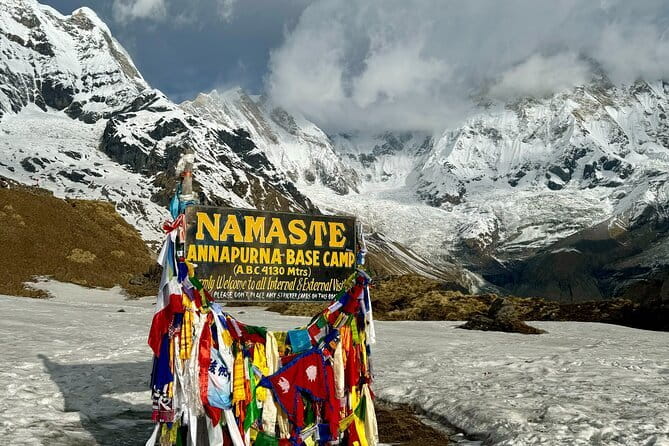
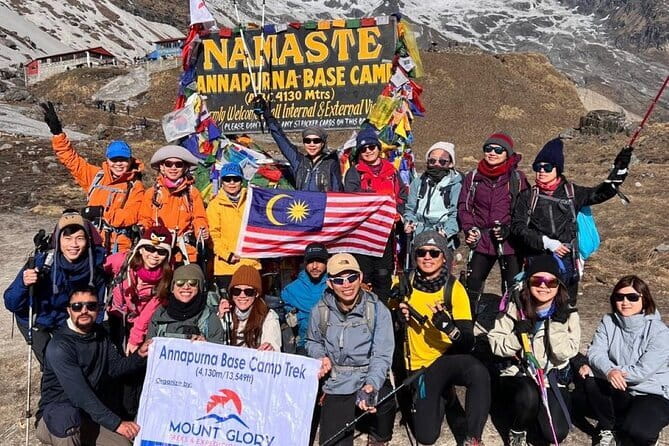
The final walk to Annapurna Base Camp is about reaching a place that feels enclosed by mountains. The route enters through the gorge you have been following, and the base camp sits among a remarkable group of peaks. Overnight accommodation is at ABC, so you can experience the setting beyond a brief photo stop.
The itinerary allows about six hours for this day. That is a serious walking day, and you should not treat the base camp as a quick sightseeing point. The combination of rocky ground, steep sections, and the emotional push of reaching the goal can make the final stretch feel longer than expected.
The return route through Doban and Jhinu Danda
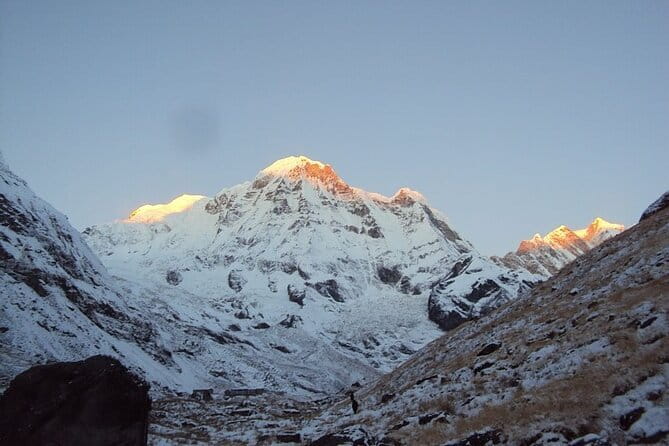
The next morning begins with sunrise at Annapurna Base Camp. This is likely to be one of the finest moments of the trip, since the peaks change color as the light arrives. After breakfast, you descend through Machapuchare Base Camp, Deurali, the Himalayan Hotel area, and Doban.
The itinerary describes this as a relatively easy downhill day, but downhill does not mean effortless. Six hours of descending can test knees and toes, especially after the ascent. Trekking poles, if you use them, may be helpful, though the tour information does not specify equipment supply.
You later retrace the route toward Chhomrong, stopping for lunch before tackling the stone steps and descending to Jhinu Danda. The final approach passes farmland and rainforest, giving you a more pleasant walking rhythm after the high mountain section.
The return route is valuable because it shows the same area from a different physical angle. You notice how quickly the scenery changes as you lose height. Jhinu Danda is the last mountain overnight stop before the return to Nayapul and Pokhara.
Back to Pokhara, then Kathmandu
Day thirteen takes you from Jhinu Danda to Nayapul, with lunch along the way. The route follows western Nepal’s hill scenery and marks the end of the Annapurna Sanctuary walk. A vehicle then takes you back to Pokhara for the night.
The next day, you return to Kathmandu by flight or road. The itinerary allows about eight hours, which suggests a long day if you travel overland. Once back in Kathmandu, you have free time for shopping or further exploration, followed by a farewell dinner.
The final morning is simple. A representative takes you to the airport three hours before departure. The airport transfer and farewell arrangements are useful touches, especially after a trip where your attention has been focused on walking, weather, meals, and rest.
What the $995 price really covers
At $995 per person, the tour gives you a substantial package for a 15-day private trek. The price includes all listed fees and taxes, required permits, entrance fees, hotel stays mentioned in the program, and a set meal plan of 14 breakfasts, 10 lunches, and 10 dinners.
That meal count matters. Breakfast is covered throughout the trip, while lunch and dinner are included on selected days rather than every day. The exact distribution is not explained, so ask which meals are included in Kathmandu, Pokhara, and the mountain lodges.
You must budget extra for personal expenses, drinks, bar bills, tips, travel insurance, and anything not mentioned in the program. Insurance is especially important to arrange yourself because it is explicitly excluded. The tour also offers group discounts, though the amount is not stated.
The value is strongest if you want one company to coordinate airport transfers, city hotels, road travel, guides, permits, entrance fees, meals, and mountain lodges. It is less attractive if you prefer to choose every hotel, meal, and transport segment independently.
Guides, support, and the private format
Guide support is a major part of this experience. Names associated with the trek include Pradeep, Bikas, Santos, Birendra, Lal, and Aashman. The available feedback places particular emphasis on friendly, attentive support, motivation on hard sections, communication in English, and help with changing plans.
One useful detail is that Bikas is described as helping a participant continue despite knee pain. Another account describes Pradeep, Bikas, Santos, and porters adjusting the plan when an eight-year-old struggled during snow. These details do not make the trek easy, but they suggest that the support team pays attention to individual needs.
The tour is private, so only your group participates. That can make it easier to set a walking pace, discuss discomfort, and ask for explanations about local culture and the route. Confirm the final guide team before departure, since the names may vary by date and group.
Who should book this trek
I would recommend this trip to you if you want a structured Himalayan trek with cultural sightseeing before the trail and a guide team throughout. It suits people who enjoy long walking days, basic mountain accommodation, changing scenery, and a clear goal at Annapurna Base Camp.
It can also suit families or small private groups, based on the reported support for an eight-year-old. Still, children and adults with knee problems need an honest fitness discussion before booking. The route includes many steps, steep sections, and long days, so flexibility from the guide does not remove the physical demands.
You should think twice if you dislike early mornings, long bus rides, mountain lodges, shared or basic facilities, or uncertain weather. You also need to be comfortable paying separately for drinks, tips, insurance, and personal expenses.
Should you book the Annapurna Base Camp Trek?
I would book this trek if the $995 price fits your budget and you want a private, guided route with city sightseeing, Poon Hill, and Annapurna Base Camp in one trip. The strongest features are the careful progression from Kathmandu to the high mountains, the memorable sunrise stops, and the reported personal support from the guide and porter teams.
Before paying, confirm the exact Poon Hill schedule, transport between Kathmandu and Pokhara, lodge arrangements, meal coverage, and the guide names for your departure. Canceling is free only when you cancel at least three full days before the start time. With those details settled, this is a demanding but well-rounded way to experience the Annapurna region.
FAQ
How long is the Annapurna Base Camp Trek?
The experience lasts approximately 15 days, including Kathmandu sightseeing, travel to and from Pokhara, the trek, and airport transfers.
Where does the trek begin?
The experience begins in Kathmandu, where you receive airport pickup, hotel transfer, a welcome dinner, sightseeing, a briefing, and equipment checks. The walking portion begins after traveling to Nayapul from Pokhara.
Is airport pickup included?
Yes. A representative meets you at the airport with a sign bearing your name and takes you to your hotel by private car. Airport transportation is also arranged for your departure.
Is this a private or shared tour?
It is a private activity. Only your group participates.
What meals are included?
The package includes 14 breakfasts, 10 lunches, and 10 dinners. Personal expenses, drinks, bar bills, and meals or items not mentioned in the program are not included.
Are permits and entrance fees included?
Yes. The tour includes required permits, entrance fees listed in the program, and all fees and taxes.
Do I need a high level of fitness?
The stated requirement is a moderate level of physical fitness. You should still prepare for long walking days, steep sections, rocky trails, suspension bridges, and about 3,400 steps on the route to Ulleri.
Can I cancel for a full refund?
You can receive a full refund if you cancel at least three full days before the experience start time. Cancellations or changes made less than three full days before the start time are not accepted for a refund.
Just added around Kathmandu
- Everest Base Camp Trek★ 5.0 · 3 reviews
- Everest Base Camp Trek★ 5.0 · 7 reviews
- 15 Days Private Everest Base Camp Trek★ 5.0 · 30 reviews
- Everest Base Camp Trek★ 5.0 · 57 reviews
- 14 Days of Adventure Trekking to Everest Base Camp★ 5.0 · 2 reviews
- 14-Day Everest Base Camp Trek★ 5.0 · 20 reviews
- From Kathmandu: Private 14-Day Everest Base Camp Trek★ 5.0 · 20 reviews
- 14 Days Everest Base Camp Trek★ 5.0 · 4 reviews
Annapurna Base Camp Treks, compared.




Trekking in Annapurna/Langtang/Everest/Upper Mustang regions
Read our review →


Kathmandu to Annapurna Base Camp (ABC) 5-Day Trek
Read our review →Browse the lists this trek appears in