
Review · KATHMANDU
Annapurna Base Camp Trek
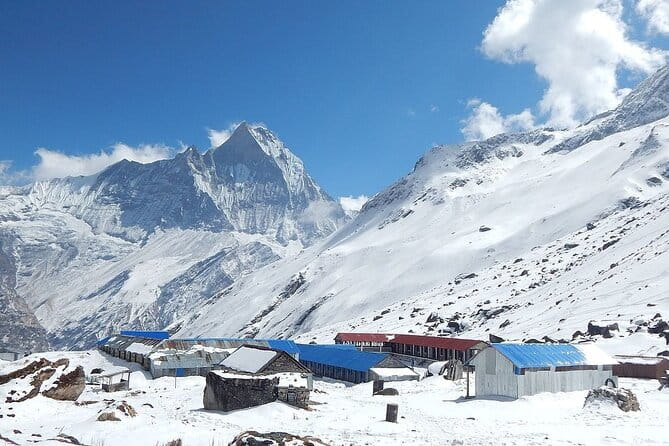
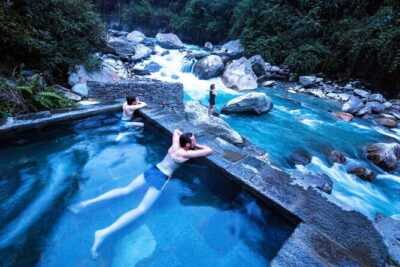
Annapurna Base Camp is the prize here, but the route earns it honestly. You walk from village to village, through forest and above deep gorges, then reach a high mountain bowl below peaks topping 21,000 feet. I especially like the sunrise hike to Poon Hill and the warm-water stop at Jhinu Hot Spring.
The package also takes care of the awkward parts: Kathmandu and Pokhara hotels, tourist-bus transfers, licensed guides, porters, and local staff. Guides named Kumar Thapa and Jeevan have been praised for patience, humor, good judgment, and flexible planning. The catch is real: the climb to 13,550 feet is strenuous, insurance is compulsory, and you must bring or arrange your own trekking equipment.
Key points to know before you book
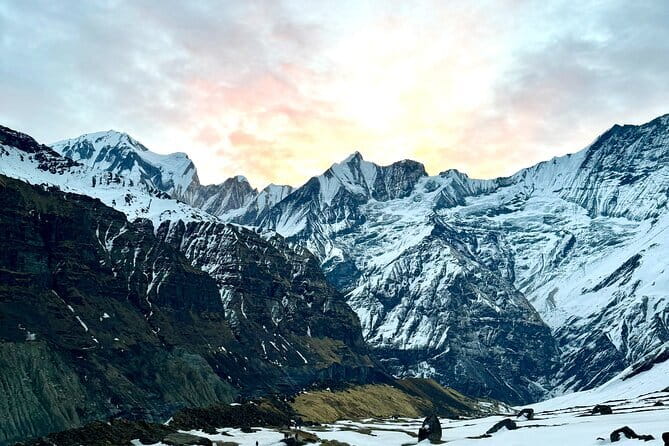
- Poon Hill adds a superb early-morning viewpoint: You climb to 10,535 feet before continuing toward Tadhapani.
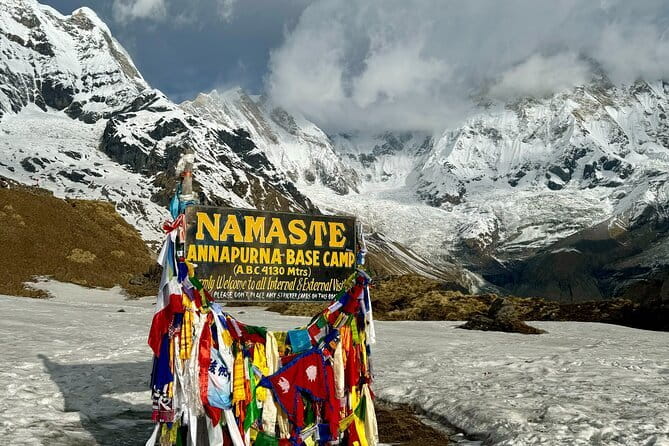
- Annapurna Base Camp reaches 13,550 feet: The altitude and long uphill days demand moderate fitness.
- The route includes both mountain villages and city time: Kathmandu sightseeing and Pokhara touring frame the trek.
- Porters carry shared luggage: One porter is provided for every pair of hikers, with local support staff included.
- Private groups get room to adjust plans: Changes may be possible when time allows and everyone agrees.
- The $1,300 price covers the core trek package: Flights, visa, insurance, and personal equipment remain your responsibility.
Why this route earns its reputation
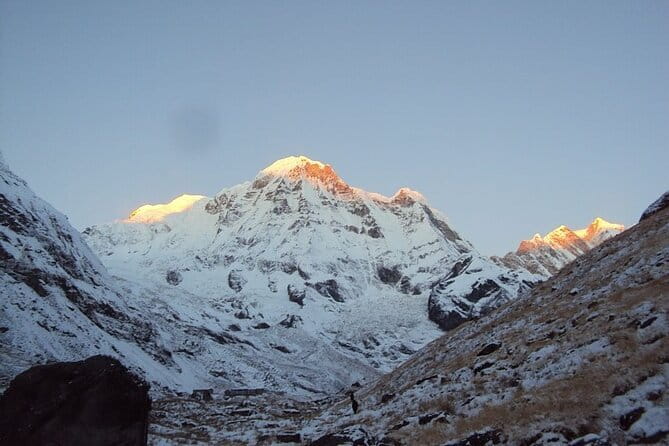
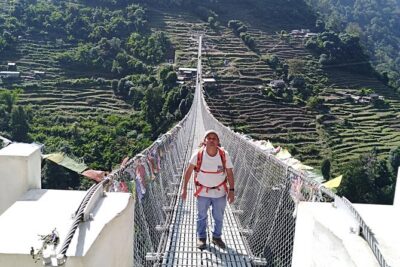
The Annapurna Base Camp trek works because it gives you a full Himalayan story in two weeks. You begin in Kathmandu, settle into Pokhara, walk through villages and forests, climb to Poon Hill, and then push farther into the Annapurna Sanctuary. The return route is not simply a repeat, since you come down through Bamboo and Jhinu Hot Spring before heading back to Pokhara.
I like that balance. You get a major mountain destination, but you also spend time in places where daily life continues at a slower pace. The route is not only about standing at base camp for a few minutes and turning around. The villages, guesthouses, changing altitude, and long stone paths are part of the experience.
The itinerary begins at a modest altitude in Kathmandu, listed at about 4,600 feet, and reaches 13,550 feet at base camp. That gradual rise gives you time to adjust, though the schedule still includes hard climbing. Most days are in the lower Himalayas, but altitude is only part of the challenge. Steep steps and hours on your feet can test your legs even when the air feels comfortable.
More Annapurna Treks in Kathmandu
- Annapurna Circuit Trek with Tilicho Lake
★ 5.0 · 368 reviews - Annapurna base camp trek 5 Days
★ 5.0 · 252 reviews - 14-Day Private Annapurna Base Camp Trek
★ 5.0 · 180 reviews
Days 1 to 3: Kathmandu orientation and the road to Pokhara
Day 1 is for arrival and a hotel night in Kathmandu. The next day combines sightseeing around the Kathmandu Valley with a pre-trip meeting. That meeting matters. Use it to ask about walking times, luggage limits, altitude concerns, equipment, and the exact plan for your group.
The Kathmandu hotel is three-star and based on twin sharing, with breakfast provided. This is a practical start rather than a luxury stay. You have a bed, a meal, and a chance to get organized before leaving the city.
On Day 3, you ride a tourist bus to Pokhara, at roughly 3,000 feet. The trip takes you away from the capital and places you closer to the trailhead. Pokhara also gives you a useful pause before the walking begins, with an overnight hotel stay before the drive to Nayapool.
The bus is part of the value, but it is not the fastest way to move around Nepal. If you are used to tight schedules, build in patience. The itinerary itself advises leaving a few spare days before and after the trek because flight delays, accidents, and natural hazards can force changes.
Days 4 and 5: Nayapool, Tikhedhunga, and the first hard climb
Day 4 starts with a drive to Nayapool at 3,477 feet. From there, you walk to Tikhedhunga at about 5,060 feet and spend the night in a guesthouse.
This is where the trip changes from sightseeing to a proper mountain trek. The first walking day is a useful test of your boots, daypack, clothing, and fitness. You are not yet near the highest point, but you begin the steady pattern of uphill walking, village stops, and simple accommodation.
Day 5 takes you to Ghorepani at 9,416 feet. This is one of the bigger gains in altitude on the way up, so do not treat it as a casual stroll. You will spend the night in a guesthouse, with the comfort level shaped by the remote mountain setting rather than by the three-star hotel standard in Kathmandu.
Ghorepani is important because it positions you for Poon Hill. It also shows why the trek is more than a single summit-style goal. Each day changes the setting, the temperature, and the feel of the trail.
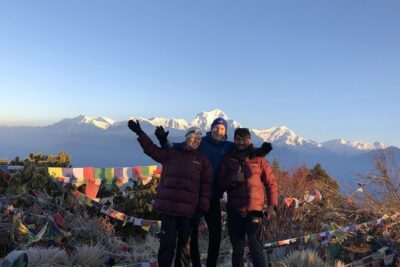
Day 6: Poon Hill at 10,535 feet, then Tadhapani
The Poon Hill morning is one of the strongest parts of the schedule. You hike to 10,535 feet, then continue to Tadhapani at 8,628 feet.
The early climb adds effort, but it gives you a high viewpoint before the route moves deeper into the mountains. Mountain weather can change, so clear views are never guaranteed. Still, this is a smart inclusion because it gives you a major scenic moment before Annapurna Base Camp.
The descent and onward walk to Tadhapani also remind you that trekking is rarely a simple uphill line. You gain height, lose some, and keep moving. That rhythm can be tiring, especially after waking early, but it makes the route feel more varied.
Same trailhead, a different route:
- Everest Base Camp Trek – 14 Days
★ 5.0 · 1,499 reviews - Everest Base Camp Trek
★ 5.0 · 842 reviews - Everest Base Camp Helicopter Tour landing at Everest View Hotel
★ 5.0 · 668 reviews - Everest Base Camp Trekking
★ 5.0 · 485 reviews
Days 7 and 8: Chomrong and the approach to Himalaya Hotel
Day 7 leads to Chomrong at 7,120 feet. The lower elevation after Poon Hill may feel welcome, but the trail continues to demand steady work. Chomrong is one of the key villages on the approach to the Annapurna Sanctuary, and it marks the point where the route feels increasingly focused on the high mountains ahead.
Day 8 takes you to Himalaya Hotel at 9,678 feet. By now, the walking routine is established. You will spend long hours on the trail, with forest sections, mountain paths, and views above gorges. The description specifically warns that hours of climbing will put pressure on your legs, so good preparation matters more than speed.
The guide and support team become especially useful here. The package provides a local government-licensed guide, one porter for each pair of hikers, and additional local support staff. You should still carry a daypack with the items you need during the day, while the porter handles the shared load assigned to your pair.
Day 9: Reaching Annapurna Base Camp at 13,550 feet
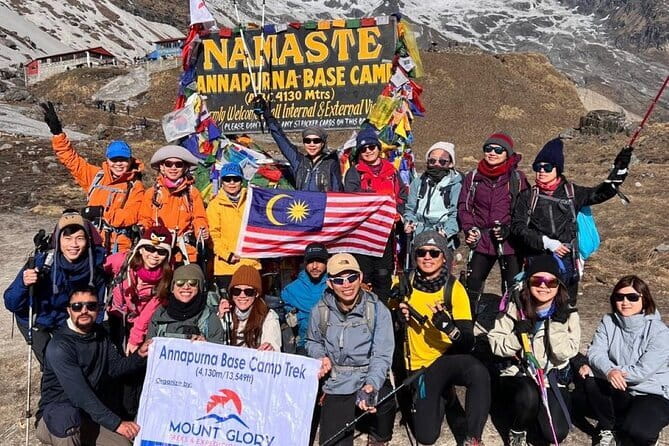
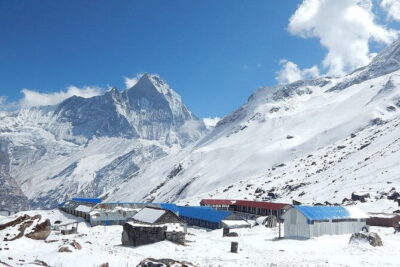
Day 9 is the high point, both literally and emotionally. You trek to Annapurna Base Camp at 13,550 feet and spend the night in a guesthouse.
The final approach is not just a photo stop. You are walking beneath the Annapurna massif, with peaks above 21,000 feet rising around the route. Locals regard the base camp area as the home of the gods, and the enclosed mountain setting helps explain that belief. The sense of arrival comes from the height, the scale of the peaks, and the effort required to get there.
This is also the day when altitude becomes a serious consideration. The itinerary describes the trip as suitable for people with moderate physical fitness, not as an easy walk. If you have a medical condition that could affect the trek, you are expected to tell the guides and consult your doctor before departure.
Travel insurance is mandatory and must cover emergency rescue and evacuation. You need to arrange it at home before arriving in Nepal, since the supplied information says it cannot be purchased in Nepal. That is not a minor box to tick. At this altitude and in remote terrain, proper coverage is essential.
Days 10 to 12: Descending through Bamboo and Jhinu Hot Spring
After the high point, Day 10 takes you down to Bamboo at 7,695 feet. Descending is often easier on the lungs, but it can be tough on knees and ankles. Trekking poles, careful foot placement, and sensible pacing can make a difference, though equipment is not included in the package.
Day 11 continues to Jhinu Hot Spring at 5,840 feet. This is a welcome change of pace after the high-altitude section. A hot spring stop gives the return journey its own reward and breaks up the descent with something more memorable than simply reaching the next guesthouse.
On Day 12, you trek back to Nayapool at 3,477 feet, then drive to Pokhara. The schedule includes sightseeing in Pokhara and another hotel night. This gives you a softer ending to the walking portion and a chance to reconnect with city comforts.
The itinerary does not specify each Pokhara sightseeing stop, so do not book it expecting a fixed list of attractions. Think of it as a flexible city visit after the trek, with the exact shape depending on timing and local conditions.
Days 13 and 14: Kathmandu and the final departure
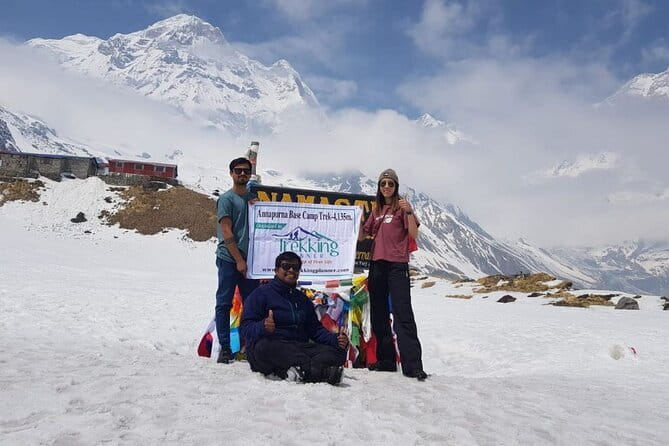
Day 13 is the return tourist-bus journey to Kathmandu, followed by a farewell dinner and hotel night. The farewell meal is a simple but fitting close to the group portion of the trip.
Day 14 is final departure. If your international flight is fixed tightly after the return to Kathmandu, consider adding extra time. The operator advises keeping a few open days around the trek because roads, flights, accidents, and weather can upset a neat schedule.
That advice is practical, not pessimistic. Nepal rewards flexibility. A private trip may allow some itinerary changes when there are no time limits and the whole group agrees, but that does not remove the need for a buffer.
What the $1,300 price includes
At $1,300 per person, the package covers the main structure needed for a 14-day trek:
- Three-star hotel accommodation in Kathmandu on a twin-sharing basis
- Breakfast at the Kathmandu hotel
- Hotel stays in Pokhara
- Twin-sharing guesthouses during the trek
- Licensed local guides
- One porter for each pair of hikers
- Local support staff
- Tourist-bus transport between Kathmandu and Pokhara
- Transfers between Pokhara and Nayapool
- The planned trekking route and stated sightseeing time
The value is strongest if you want a supported trek rather than a do-it-yourself arrangement. Hiring guides and porters separately, organizing guesthouses, arranging transfers, and managing the route would take time and local judgment. Here, those tasks are grouped into one price.
You still need to budget for international airfare, Nepal visa fees, travel insurance, trekking equipment, and personal expenses. Food during the trek is not clearly listed as included, so ask for a precise meal policy before paying. The same goes for equipment rental, even though rental may be available in Kathmandu for a small fee if you forget something.
Guides, group size, and the human side of the trek
This is a private activity, so only your group participates. That makes the trip more personal than a large fixed group and may make it easier to discuss pace, rest stops, and small itinerary changes.
The strongest personal praise is directed at Kumar Thapa, described as respectful, honest, patient, humorous, and attentive to individual needs. Jeevan is also singled out as a strong guide. If having one of them matters to you, ask before booking rather than assuming a particular guide is guaranteed.
The support team has also handled groups ranging from teenagers to people in their fifties, with groups of about eight managed by two guides. That does not make the trek easy, but it suggests the format can work for mixed-age groups when everyone accepts the pace and physical demands.
You should tell the guides about medical conditions in advance and carry any required medicines. Local staff have basic medical training, but that is not a substitute for your own preparation or rescue insurance.
Equipment and preparation that matter
You are responsible for bringing your trekking equipment. If you forget something, equipment can be bought or rented in Kathmandu for a small fee, but it is wiser to check your kit before arriving.
At minimum, pay close attention to footwear, warm layers, rain protection, a sleeping setup suited to the trek, sun protection, and a daypack. The exact standard equipment list is not provided here, so request it before departure rather than relying on guesswork.
Train for consecutive walking days, not just one long hike. The route includes steep climbs, descents, and altitude above 10,000 feet. You do not need to be an elite mountaineer, but you should be comfortable with moderate physical exertion and several hours of walking.
Service animals are allowed, though the route’s terrain and guesthouse setup make advance discussion with the operator sensible.
Who should book this Annapurna trek?
Book it if you want a guided Himalayan trek with a clear 14-day framework, city stays at both ends, local porters, and a private group. It is a good fit if Poon Hill, Annapurna Base Camp, village walking, and Jhinu Hot Spring all appeal to you.
It is less suitable if you want a soft adventure with short walking days, private rooms throughout, or a tightly guaranteed schedule. You must accept simple guesthouses, twin sharing, long climbs, changing conditions, and the possibility of itinerary changes.
The free-cancellation rule allows a full refund if you cancel at least 24 hours before the local start time. Changes or cancellations inside that window are not accepted for a refund, so check your plans and insurance before the deadline.
FAQ
How long is the Annapurna Base Camp trek?
The planned experience lasts approximately 14 days, including arrival in Kathmandu, sightseeing, hotel nights, the trek, transport to and from Pokhara, and departure.
What is the highest altitude on the route?
Annapurna Base Camp is the highest point listed, at 13,550 feet. Poon Hill reaches 10,535 feet.
Is the trek suitable for beginners?
The experience requires a moderate level of physical fitness. Most days are in the lower Himalayas, but several hours of climbing and the high altitude can make the trek demanding.
Are guides and porters included?
Yes. The package includes local government-licensed guides, one porter for each pair of hikers, and local support staff.
Are hotels and guesthouses included?
Yes. A three-star hotel in Kathmandu and hotel stays in Pokhara are included, along with twin-sharing guesthouses during the trek.
Do I need travel insurance?
Yes. Travel insurance is compulsory and must cover emergency rescue and evacuation. You need to arrange it before arriving in Nepal.
Can I cancel for a full refund?
Yes, if you cancel at least 24 hours before the experience start time. Cancellations or changes made less than 24 hours before the start time are not accepted for a refund.
Should you book it?
I would book this trek if you want the major Annapurna highlights without handling every transfer and guesthouse yourself. The combination of Poon Hill, Annapurna Base Camp, local villages, porters, guides, and Jhinu Hot Spring gives you a well-shaped mountain journey for $1,300.
Before paying, confirm the guide assignment, equipment list, meal arrangements, and exactly what is covered in Pokhara sightseeing. If you are fit, properly insured, and willing to trade comfort for mountain access, this private trek offers a strong and practical route into the Annapurna region.
Just added around Kathmandu
- Everest Base Camp Trek★ 5.0 · 3 reviews
- Everest Base Camp Trek★ 5.0 · 7 reviews
- 15 Days Private Everest Base Camp Trek★ 5.0 · 30 reviews
- Everest Base Camp Trek★ 5.0 · 57 reviews
- 14 Days of Adventure Trekking to Everest Base Camp★ 5.0 · 2 reviews
- 14-Day Everest Base Camp Trek★ 5.0 · 20 reviews
- From Kathmandu: Private 14-Day Everest Base Camp Trek★ 5.0 · 20 reviews
- 14 Days Everest Base Camp Trek★ 5.0 · 4 reviews
Annapurna Base Camp Treks, compared.
Trekking in Annapurna/Langtang/Everest/Upper Mustang regions
Read our review →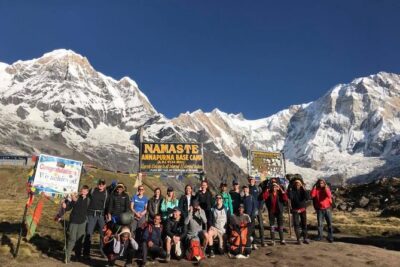
Kathmandu to Annapurna Base Camp (ABC) 5-Day Trek
Read our review →Browse the lists this trek appears in