
Review · KATHMANDU
Annapurna Base Camp Trek
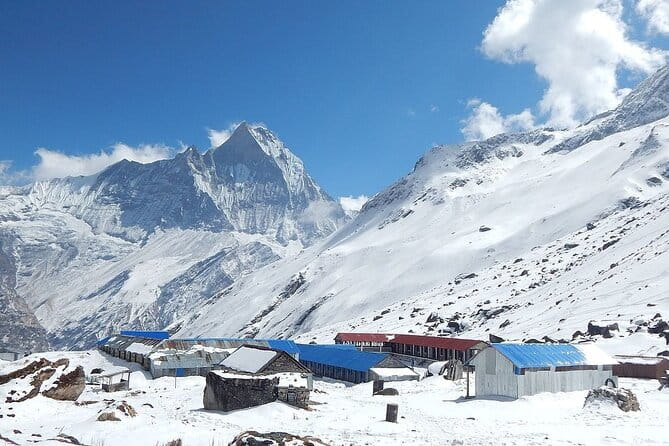
Annapurna Base Camp gives you a rare two-part Himalayan walk: Poon Hill sunrise first, then a climb into the Annapurna Sanctuary beneath Annapurna I. You move from terraced villages and rhododendron woods to cold, high mountain country at 4,130 meters.
I like the way the trip mixes big views with real village life, and I like that Dambar Thapa has more than 25 years of guiding experience. The main caution is the physical demand: five to six hours of walking on many days, steep steps, basic teahouses, and a high point where altitude can affect even fit walkers.
Key points to know before booking
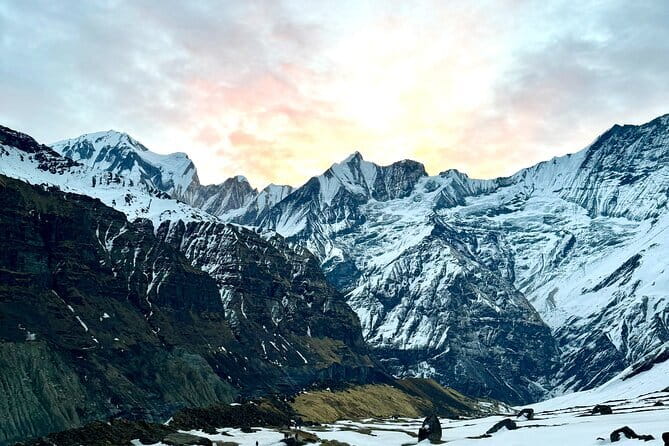
- Poon Hill at 3,210 meters: Rise early for one of Nepal’s finest sunrise viewpoints, with Annapurna and Dhaulagiri catching the first light.
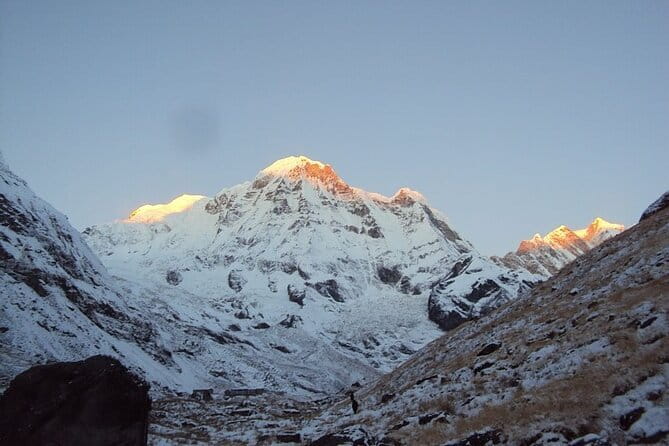
- Annapurna Base Camp at 4,130 meters: The trek finishes in a dramatic mountain bowl beneath Annapurna I, Annapurna South, Hiunchuli, and Gangapurna.
- A private guided trip: Your group travels privately, with an authorized guide and porters arranged by Shikhar Adventure.
- A strong package value: The $940 price includes permits, transport, meals during the trek, mountain lodging, guide and porter costs, and Kathmandu and Pokhara hotels.
- Basic trail comforts: Sleeping bags, duffel bags, hot showers, and electronic charging are handled differently from place to place, with some fees paid locally.
- A demanding but manageable route: The itinerary suits people with moderate fitness who can handle several hours of walking each day.
Why this route works so well
The classic Annapurna Base Camp route can feel like one long climb toward a single goal. This version adds Ghorepani and Poon Hill, so you get an early reward before reaching base camp. That helps break up the journey and gives you two very different mountain experiences.
The lower trail passes through villages, farm terraces, oak woods, bamboo, and rhododendron forests. Higher up, the trees thin out and the mountains take over. You see the setting change under your feet, which makes the route feel varied rather than repetitive.
I also like the cultural side of the trip. You stay in local mountain guesthouses, eat meals prepared along the route, and pass through communities where trekking is part of daily life. The experience is not a luxury mountain holiday, but it gives you a closer look at how people live in the Annapurna region.
More Annapurna Treks in Kathmandu
- Annapurna Circuit Trek with Tilicho Lake
★ 5.0 · 368 reviews - Annapurna base camp trek 5 Days
★ 5.0 · 252 reviews - 14-Day Private Annapurna Base Camp Trek
★ 5.0 · 180 reviews
Kathmandu and Pokhara: two useful starting points
Your first day begins with a private airport transfer in Kathmandu, at about 1,400 meters. A staff member meets you and takes you to your hotel, giving you time to rest after your flight. Two nights at Hotel Simal or a similar property are included.
Kathmandu is more than a place to sleep before the trek. Ancient temples, historic sites, and busy streets give you a first taste of Nepal. The schedule allows some time to recover, though the stated start time of 2:15 am is worth checking carefully with the operator. That may refer to an early transfer or departure arrangement.
The route then moves to Pokhara, where two nights at Hotel Trekkers Inn or a similar hotel are included. Phewa Lake is the easy highlight here. A one-hour evening stroll beside the water gives you a quiet break before the walking begins.
Meals in Kathmandu and Pokhara are not included except for the listed breakfasts, so budget extra money for those meals. This is a small but important detail when comparing the $940 price with other trekking packages.
Day 3: from Birethanti to Ulleri
After breakfast in Pokhara, you drive to Birethanti near the Annapurna region. From there, the trail climbs toward Ulleri through villages, farm terraces, and forest.
The walk takes about five hours. This first trekking day is a useful test of your legs, since the route quickly introduces uphill walking. You are not yet at great altitude, but the steps and steady climbing can feel tiring after the drive from Pokhara.
Ulleri is valuable as a first overnight stop because it puts you properly into the mountain rhythm. Expect a local guesthouse rather than a city hotel. The basic setting is part of the appeal, but you should be ready for fewer comforts than you had in Kathmandu and Pokhara.
Day 4: rhododendrons and Ghorepani
The trail from Ulleri to Ghorepani takes about five hours and passes through rhododendron forest. When these trees are in bloom, the route becomes especially colorful, though the scenery remains worthwhile outside the flowering season.
Ghorepani is one of the best-positioned stops on the trek. It is a popular rest point and the launchpad for the early walk to Poon Hill. The village also gives you broad views toward the Annapurna and Dhaulagiri ranges.
This is a short walking day by Himalayan standards, but you need to protect your energy for the next morning. The Poon Hill climb begins before sunrise, so an early dinner and an early night make sense.
Same trailhead, a different route:
- Everest Base Camp Trek – 14 Days
★ 5.0 · 1,499 reviews - Everest Base Camp Trek
★ 5.0 · 842 reviews - Everest Base Camp Helicopter Tour landing at Everest View Hotel
★ 5.0 · 668 reviews - Everest Base Camp Trekking
★ 5.0 · 485 reviews
Day 5: the Poon Hill sunrise
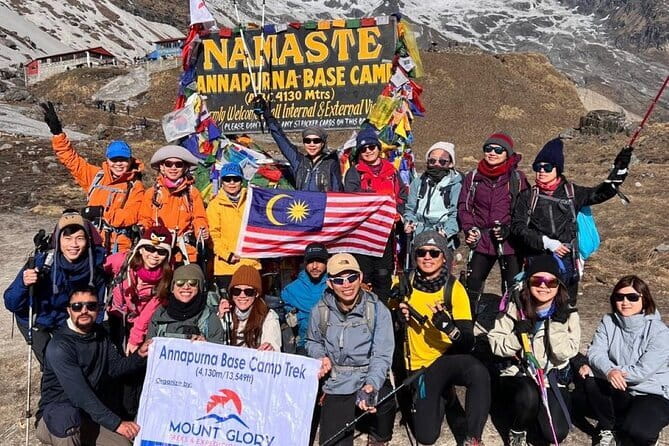
Poon Hill is the first major payoff of the journey. At 3,210 meters, it offers a wide view of the Annapurna and Dhaulagiri ranges. You leave early, reach the viewpoint, and watch the light move across the snowy peaks.
The appeal is simple and powerful. The mountains shift from dark outlines to gold, and the changing light gives you a clear sense of their size. This is not just a viewpoint for taking a quick photo. Give yourself time to look around and let the scene develop.
After returning to Ghorepani for breakfast, you continue toward Tadapani. The route passes through oak and rhododendron forest, with occasional mountain views. The full walking time is about five hours, not counting the separate Poon Hill stop.
Tadapani sits at about 2,630 meters and offers a quieter night among the trees. The day combines an early start, a viewpoint climb, and a second walk, so it can be one of the more tiring days even though the distance is not extreme.
Day 6: Tadapani toward Sinuwa
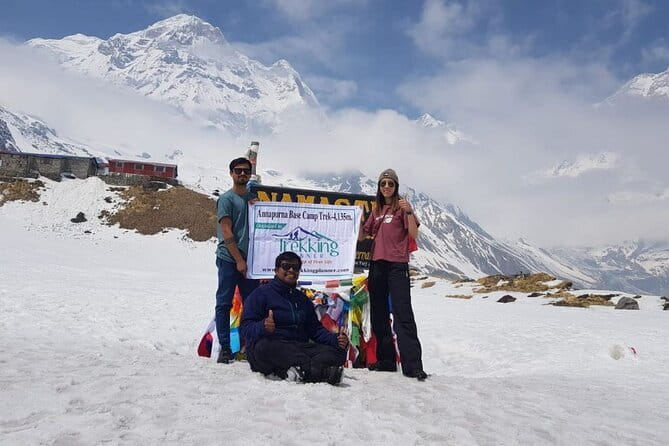
The itinerary describes this day as a walk from Chule to Sinuwa, although the previous night is listed at Tadapani. That is a detail worth confirming with Shikhar Adventure before departure, since route names and overnight stops should be clear.
The walking time is about six hours. You pass through dense forest and continue toward views of Annapurna and Machhapuchhre, also called Fishtail. Sinuwa is a small hillside village and a peaceful place to stop before the trail moves higher into the sanctuary.
This is where your fitness begins to matter more. The route includes sustained walking, uneven ground, and changes in elevation. A guide can help you keep a steady pace rather than starting too quickly in the morning.
Day 7: bamboo forest and Deurali
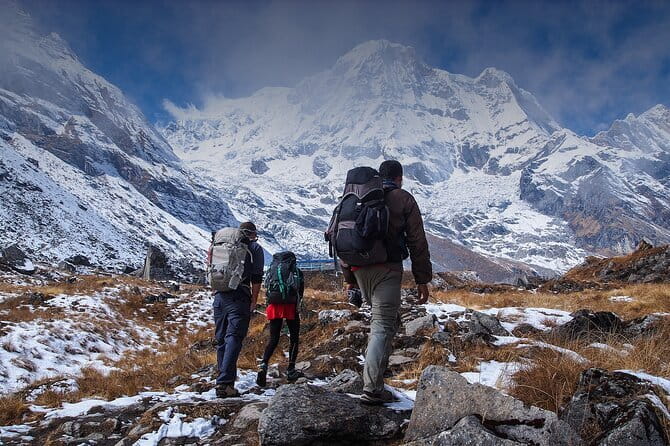
From Sinuwa to Deurali, the trail takes about five hours. Bamboo forest, rocky ground, and river valleys give this section a different feel from the Poon Hill route.
You are now moving deeper into the Annapurna Sanctuary. The peaks become a stronger presence, and the higher elevation can make ordinary uphill sections feel harder than expected.
Deurali is a practical overnight stop before the base camp push. Do not treat this as a sightseeing day only. Rest, drink water, and keep your pace measured. The following day takes you to the highest point of the route.
Day 8: reaching Annapurna Base Camp
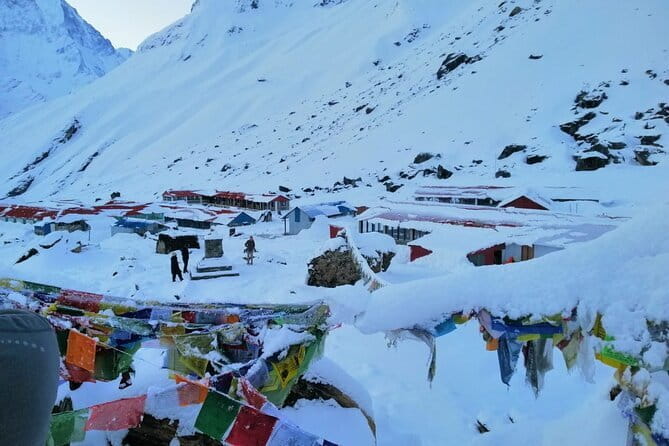
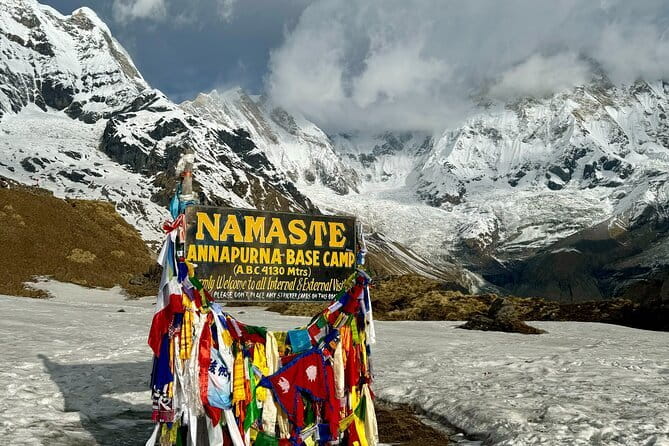
The walk from Deurali to Annapurna Base Camp takes about five hours. At 4,130 meters, ABC is the trek’s main goal and its most dramatic setting.
The camp sits among high snow-covered peaks, including Annapurna I, Annapurna South, Hiunchuli, and Gangapurna. The surrounding mountain walls make the destination feel very different from Poon Hill, where the view opens across a broad range. Here, you are inside the mountains rather than looking at them from a distant ridge.
The climb is not only about distance. Altitude can affect your appetite, sleep, breathing, and energy. The tour calls for moderate physical fitness, but you should still take symptoms seriously and tell your guide if you feel unwell. Dambar’s past guiding work includes helping a solo walker pace carefully when altitude became difficult, which is exactly the kind of support you want on this section.
Overnight conditions are basic. The package includes accommodation, food, a sleeping bag, and a duffel bag, but you should expect limited hot water and charging access. Shower and electronic charging fees may cost about $5 at some guesthouses.
Day 9: descending through changing country
After a night at base camp, you retrace the trail to Sinuwa. The walk takes about five hours. Downhill travel is often easier on your lungs, but it can be demanding on knees and thighs, especially after the long climb to base camp.
The return route gives you a different view of the same country. Rocky high ground gives way to greener forest, bamboo, rushing rivers, and suspension bridges. The change happens quickly, which makes the descent feel rewarding rather than like a simple repeat.
Sinuwa provides another night in a local teahouse. You may be tired by now, but this is also when the trip’s variety becomes clear: snowy peaks, forests, village paths, and river crossings all fit into one route.
Day 10: Jhinu Danda and its hot springs
The route continues to Jhinu Danda, at about 1,780 meters. The walk includes forest and terraced fields, and the lower altitude brings warmer conditions.
Jhinu is best known for its natural hot springs. After several days of climbing and descending, soaking in warm water can be a welcome way to ease tired muscles. The stop gives the trek a gentler ending before the return drive.
The listed stop duration is only one hour, so ask how much time is actually planned at the springs. The schedule may allow a short visit rather than a long soak. Transport from Jhinu to Pokhara is by car or jeep, according to the package details.
Days 11 and 12: returning to Kathmandu
The trip includes a drive back to Kathmandu, listed as about seven hours. The schedule also shows four hours for the stop, so you should allow for a long travel day and possible road delays.
This is not a scenic walking day, but it is a useful buffer after the trek. Your final night in Kathmandu is followed by onward travel on Day 12. Departure and arrival transfers by private car are included.
The trip has a clear advantage here: you are not left to arrange the major transport pieces yourself. The operator handles the tourist bus connection between Kathmandu and Pokhara, the drive to Birethanti, and the return transport from Jhinu.
What the $940 price really covers
At $940 per person, the package offers solid value if you want a guided trek with the main costs arranged in advance. It includes:
- Two nights in Kathmandu
- Two nights in Pokhara
- Mountain guesthouse accommodation
- Breakfast, lunch, and dinner during the trek
- Annapurna Conservation Area Permit
- Authorized guide and porters
- Guide and porter wages, insurance, food, and accommodation
- Sleeping bag and duffel bag, returned after the trek
- Private airport transfers
- Transport between Kathmandu, Pokhara, Birethanti, and Jhinu
- First-aid kit, taxes, and service charges
The main extra costs are international flights, meals in Kathmandu and Pokhara apart from included breakfasts, personal purchases, alcoholic drinks, packaged snacks, tips, insurance, and unexpected expenses.
Travel insurance is mandatory, not optional. You also need to budget for tips and small trail charges. The package is generous on core trekking costs, but it is not an all-inclusive holiday.
Who should book this trek?
I would choose this trek if you want a serious Himalayan experience without arranging every permit, transfer, meal, and porter yourself. It suits people who enjoy village stays, long walks, early mornings, and changing scenery more than polished hotels and easy transport.
A moderate fitness level is required. You should be comfortable walking for five to six hours on several days, with uphill and downhill sections. The high point at 4,130 meters adds a real altitude factor.
The private format is useful for solo walkers, couples, or a small family group that wants a flexible pace. Dambar Thapa is a particularly appealing guide choice based on the experience described in the supplied information, but confirm in advance whether he will lead your departure or whether another authorized guide will be assigned.
Should you book the Annapurna Base Camp Trek?
Book it if you want Poon Hill’s sunrise and Annapurna Base Camp in one well-supported route. The strongest parts are the changing scenery, the local guesthouses, the included meals and permits, and the personal support of an experienced guide such as Dambar Thapa.
Think twice if you dislike basic accommodation, long walking days, early starts, or uncertain mountain-road timing. Before paying, confirm the Day 6 overnight location, the exact departure time, the guide’s name, and how much time is allowed at Jhinu hot springs.
The tour offers free cancellation up to 24 hours before the local start time. After that point, the payment is not refunded and schedule changes are not accepted.
FAQ
How long is the Annapurna Base Camp Trek?
The experience lasts approximately 12 days, including time in Kathmandu and Pokhara, the trek, transport days, and departure arrangements.
What is the highest point of the trek?
Annapurna Base Camp is the highest point, at about 4,130 meters or 13,550 feet.
Is Poon Hill included?
Yes. The route includes an early morning visit to Poon Hill at 3,210 meters for sunrise views of the Annapurna and Dhaulagiri ranges.
What is included in the $940 price?
The price includes selected Kathmandu and Pokhara hotels, mountain guesthouse accommodation, meals during the trek, permits, guide and porter services, sleeping bags, duffel bags, listed transport, airport transfers, a first-aid kit, taxes, and service charges.
Are meals included in Kathmandu and Pokhara?
Breakfast is included as listed, but other meals in Kathmandu and Pokhara are not included.
Do I need travel insurance?
Yes. Personal travel insurance is mandatory and is not included in the tour price.
What fitness level is required?
The tour states that you should have a moderate physical fitness level. Walking days generally last about five to six hours, with uphill and downhill sections.
Can I cancel for a full refund?
You can cancel for a full refund if you cancel at least 24 hours before the experience start time. Cancellations or changes made less than 24 hours before the start are not accepted for a refund.
Just added around Kathmandu
- Everest Base Camp Trek★ 5.0 · 3 reviews
- Everest Base Camp Trek★ 5.0 · 7 reviews
- 15 Days Private Everest Base Camp Trek★ 5.0 · 30 reviews
- Everest Base Camp Trek★ 5.0 · 57 reviews
- 14 Days of Adventure Trekking to Everest Base Camp★ 5.0 · 2 reviews
- 14-Day Everest Base Camp Trek★ 5.0 · 20 reviews
- From Kathmandu: Private 14-Day Everest Base Camp Trek★ 5.0 · 20 reviews
- 14 Days Everest Base Camp Trek★ 5.0 · 4 reviews
Annapurna Base Camp Treks, compared.




Trekking in Annapurna/Langtang/Everest/Upper Mustang regions
Read our review →


Kathmandu to Annapurna Base Camp (ABC) 5-Day Trek
Read our review →Browse the lists this trek appears in