
Review · KATHMANDU
Annapurna Base Camp Trek 12 Days
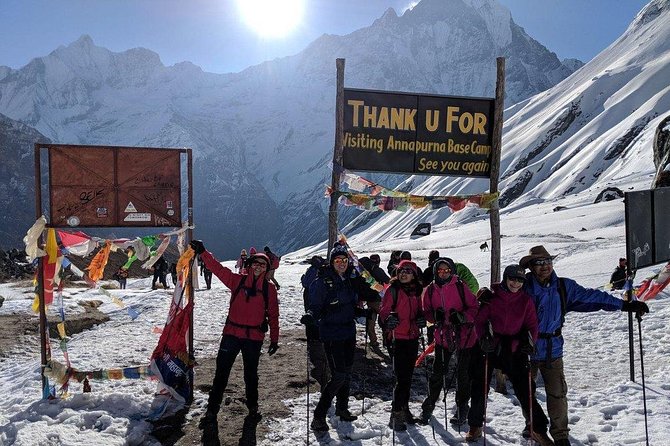
Annapurna Base Camp gives you a rare mountain payoff without requiring a long expedition. In 12 days, you pass from Kathmandu to Pokhara, walk through hillside villages, rise to Poon Hill for sunrise, and continue into the high mountain bowl below Annapurna and Machhapuchhre.
I like the practical package: permits, meals, teahouse lodging, and ground transport are included, and the private format lets your guide set a sensible pace. The main caution is altitude and rough trail conditions. You need moderate fitness, proper insurance with emergency rescue cover, and enough patience for long bus rides.
Key points to know before booking
- Poon Hill sunrise adds a second mountain highlight before you reach Annapurna Base Camp.
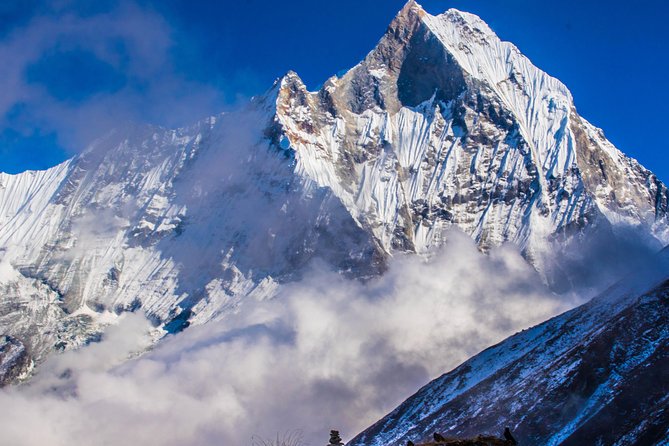
- The route includes Annapurna Base Camp and Machhapuchhre Base Camp, with close views of major Himalayan peaks.
- Private groups travel with one guide, with past guide names including Bhairas Tamang, Prajil, Deepak, Somnath Tripathi, Uttar, and Buddha.
- The $800 price covers major trip costs, including permits, 11 nights of accommodation, meals on the trek, and Kathmandu to Pokhara transport.
- Kathmandu and Pokhara lunches and dinners are extra, as are porters, drinks, Wi-Fi, insurance, and personal purchases.
- The itinerary mixes local buses, shared transport, private vehicles, and walking, so this is not a luxury lodge holiday.
From Kathmandu arrival to the road toward Pokhara
Your trip begins at Tribhuvan International Airport, where the company provides an arrival transfer to your hotel. The first day is intentionally light. You have time to rest, meet the team, and prepare for the trek rather than rushing straight into the hills.
That is a sensible start. International flights into Kathmandu can leave you tired, and a little time for packing, checking gear, and getting cash is useful. Your first night is part of the 11-night accommodation package.
The second morning starts early. Your guide meets you at about 6:30 a.m., and you walk a short distance to the Sorakhutte tourist bus station for a 7 a.m. departure. The bus heads toward Pokhara, with Malekhu mentioned as an early point along the route.
Expect this to be a travel day, not a scenic express transfer. Road journeys in Nepal can take time, and bus comfort may vary. The benefit is cost: tourist-bus transport is included instead of requiring a separate private vehicle between Kathmandu and Pokhara.
More Annapurna Treks in Kathmandu
- Annapurna Circuit Trek with Tilicho Lake
★ 5.0 · 368 reviews - Annapurna base camp trek 5 Days
★ 5.0 · 252 reviews - 14-Day Private Annapurna Base Camp Trek
★ 5.0 · 180 reviews
Pokhara, Nayapul, and the first village paths
After breakfast in Pokhara on day three, your guide arranges transport to the bus park. From there, you take a shared local bus or jeep toward Nayapul, the trekking start point. The listed drive takes about an hour and a half.
The change from city transport to walking is part of the appeal. Pokhara is a useful staging point, while Nayapul places you on the route toward the Annapurna villages. A private vehicle is included between Pokhara and the trek start point, though the itinerary also refers to shared local transport, so you should confirm the exact arrangement before departure.
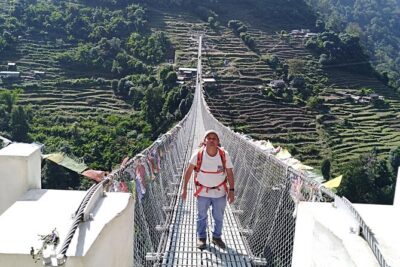
The early walking days bring you into a slower rhythm. Donkeys, goats, hens, and dogs may provide the morning soundtrack, and the route passes through settled mountain country rather than empty wilderness. That local activity helps make the trek feel like a journey through working villages, not simply a march toward a famous viewpoint.
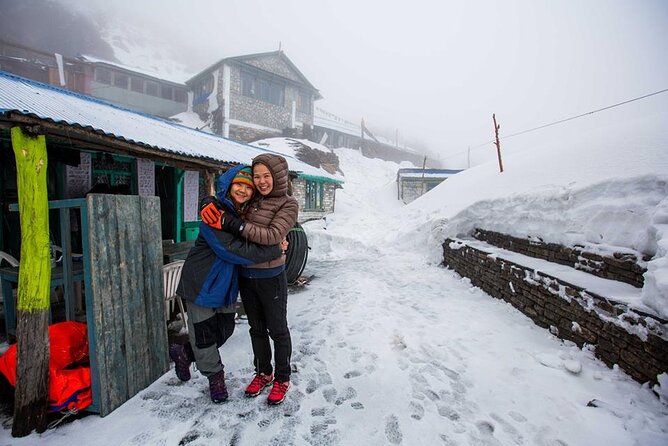
Accommodation is in teahouses. These are basic mountain lodges, and the package covers 11 nights. The quality can vary, but the value is strong when you consider that lodging, guide services, permits, and most trekking meals are bundled together.
Poon Hill sunrise before the high country
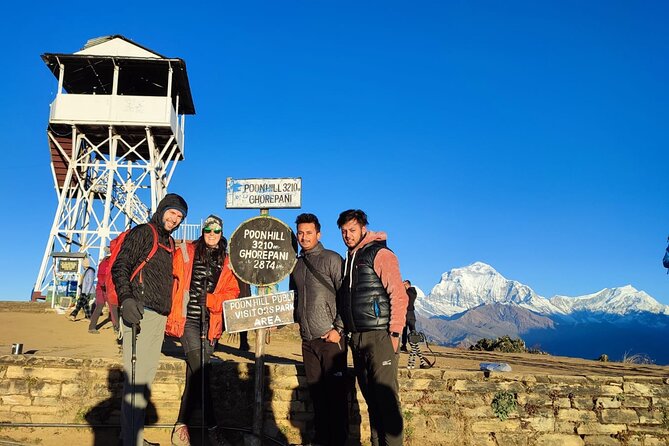
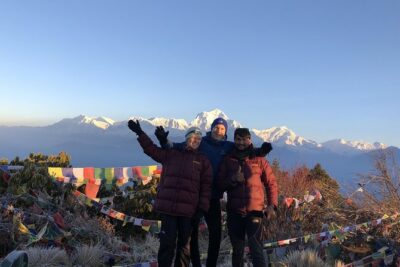
One of the smartest features of this route is its stop at Ghorepani and Poon Hill. On day five, you rise early and walk roughly 45 minutes to an hour to the viewpoint for sunrise.
You will want warm clothing for this short climb. The morning can be chilly, and the viewpoint comes before breakfast. In return, you get a broad Himalayan panorama, with the itinerary describing views of 18 countable peaks in clear conditions.
Poon Hill matters because it gives you a major mountain view early in the trek. If clouds later obscure Annapurna Base Camp, you have still had a proper sunrise viewpoint. It also breaks up the route nicely, giving you a memorable goal before the longer push toward base camp.
The downside is the early start and the crowds that can gather at a famous sunrise point. Even so, the walk is relatively short compared with the later mountain stages. I would treat it as an essential part of the trip, not an optional extra.
Tadapani, Chhomrong, and the steady climb toward Sinuwa
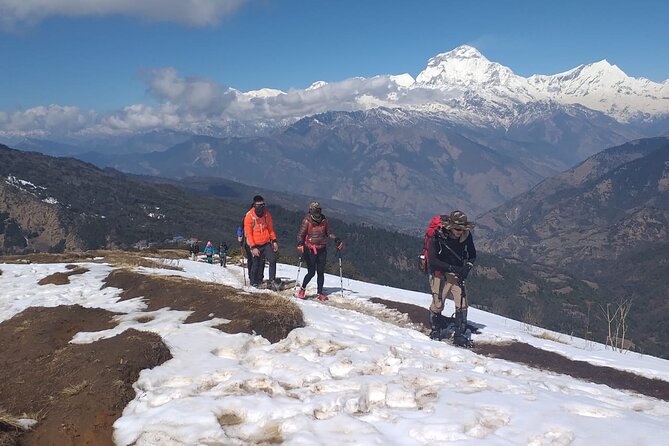
After the Poon Hill section, the route continues through Tadapani and toward Chhomrong and Sinuwa. Day six is described as a mostly downhill walk from Tadapani to Sinuwa, passing through Chhomrong and views toward Modi Khola and Chhomrong Khola.
Downhill sounds easy, but it can be hard on knees, especially after several walking days. The trail also includes stair sections, so trekking poles may be useful. Your guide’s role becomes important here. Several named guides, including Bhairas Tamang and Prajil, were praised for keeping a manageable pace, stopping when someone became tired, and checking on their well-being.
Chhomrong is a key settlement on the approach to Annapurna Base Camp. You are still among farms, waterfalls, and village paths, but the route begins to feel more remote as you move toward the Modi Khola valley.
At Sinuwa, the day seven climb begins after breakfast. The route rises toward Bamboo and then Deurali, with the stated climb to Bamboo taking about an hour and a half. This is where the trek becomes more demanding. You are gaining altitude, and the trail through wooded sections can feel long even when the scenery is close at hand.
The itinerary does not provide exact daily walking hours for every stage, so do not judge the trip only by its 12-day label. Ask the operator for current walking times, elevation figures, and the planned pace for your dates.
Same trailhead, a different route:
- Everest Base Camp Trek – 14 Days
★ 5.0 · 1,499 reviews - Everest Base Camp Trek
★ 5.0 · 842 reviews - Everest Base Camp Helicopter Tour landing at Everest View Hotel
★ 5.0 · 668 reviews - Everest Base Camp Trekking
★ 5.0 · 485 reviews
Deurali to Machhapuchhre Base Camp
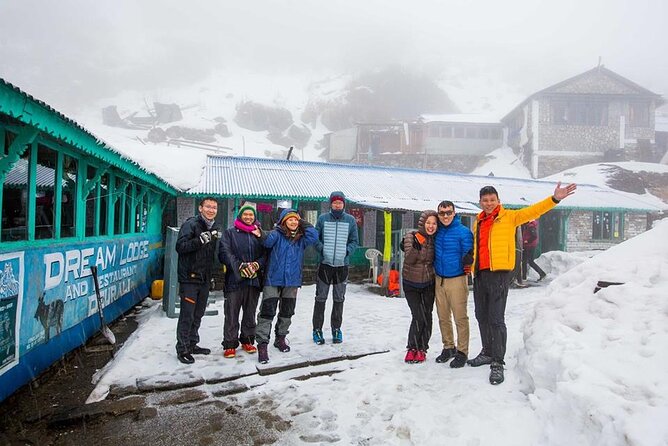
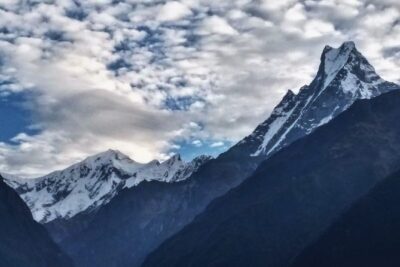
The approach to base camp is one of the strongest parts of the route. From the Sinuwa and Bamboo area, you continue toward Deurali and then into the higher valley. The destination is not just Annapurna Base Camp. You also pass Machhapuchhre Base Camp, placing you beneath the distinctive peak commonly known as Fishtail.
The higher section has a different feel from the lower villages. Vegetation becomes sparser, the trail is more rugged, and the mountains begin to surround you rather than sit far beyond the foothills. This is the part where weather and altitude can shape the day.
Your guide is valuable here for more than navigation. The company describes its guides as experienced with this route, and the named guides have been praised for organization, problem solving, humor, and attention to pace. Still, no guide can remove mountain risk. You remain responsible for saying when you feel unwell and for following sensible advice about rest and descent.
Annapurna Base Camp, the central reward
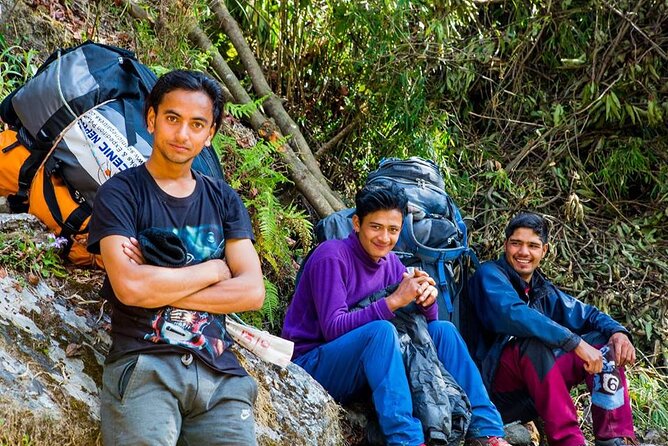
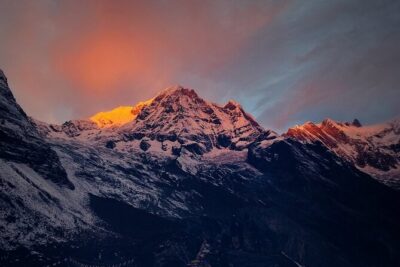
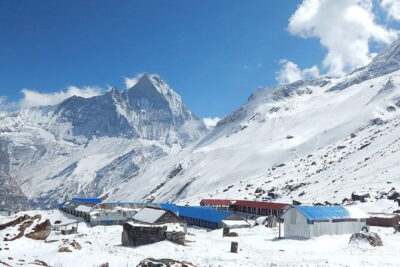
Day eight reaches Annapurna Base Camp, the high point and main purpose of the trek. The camp sits within a dramatic mountain bowl, with peaks rising around you. If the weather is clear, the setting provides the sort of close mountain scale that makes the long approach worthwhile.
Plan for a powerful but simple moment. You arrive, take in the peaks, settle into the accommodation, and prepare for an early morning view. The itinerary places emphasis on sunrise, so keep warm layers and a camera close at hand.
Conditions may not cooperate. Clouds can cover the summits, and the approach can be tiring. That is why the inclusion of Poon Hill is such a practical bonus. You are not relying on one single viewpoint for the entire trip.
Meals on the trekking portion include breakfast, lunch, and dinner, along with tea or coffee. Water purification drops or tablets and a trekking map are also included. Personal drinks, snacks, bottled water, Wi-Fi, beer, juice, and soft drinks cost extra, so budget for those small purchases.
The return to Sinuwa and Siwai
After sunrise and breakfast at base camp, day nine turns downhill toward Sinuwa. The route returns through rugged paths and more lightly wooded sections. Descending can be faster than climbing, but it is not automatically easy. Loose ground and repeated steps can test tired legs.
The return route is also a useful reminder that the package is a trek, not a series of viewpoints connected by vehicles. You retrace sections of the valley on foot, with the same basic teahouse style and changing weather.
Day ten continues from Sinuwa toward Siwai. The itinerary describes a climb to Chhomrong, followed by views of mountains, cascades, and farmland, before continuing to the road connection. A private vehicle then takes you back toward Pokhara.
This final walking day can feel satisfying because you are leaving the high route under your own power. It may also feel long after the base camp push. A guide who watches the group pace is a real advantage here, and that is one of the clearest strengths associated with the named team members.
Pokhara to Kathmandu, then home
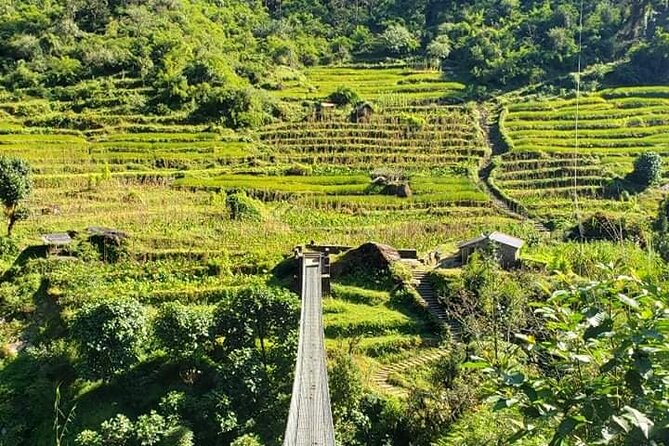
After breakfast in Pokhara on day 11, you return to Kathmandu by tourist bus. The rest of the day is free for rest or shopping, followed by a farewell dinner in the evening.
The package includes breakfast in Kathmandu and Pokhara, but lunches and dinners in those cities are not included. Keep that distinction in mind when comparing the $800 price with other packages. Trekking meals are covered, but your city dining budget remains separate.
Day 12 provides an airport transfer for your onward flight. The experience ends in Kathmandu, with departure assistance included. The meeting information lists Tribhuvan International Airport as the starting point and a Kathmandu address as the end point, so confirm the final drop-off details with the company before you travel.
What the $800 price really covers
At $800 per person, this is a strong value if you want a guided trek with the main costs handled in advance. The price includes:
- Airport transfers on arrival and departure
- Tourist-bus transport between Kathmandu and Pokhara
- 11 nights of accommodation
- An experienced guide
- Trekking meals, including breakfast, lunch, dinner, tea, and coffee
- Transport between Pokhara and the trail
- Annapurna Conservation Area, TIMS, and local permits
- A trekking map and water purification supplies
- Government taxes and official fees
You should add money for international flights, a Nepal entry visa, travel and health insurance, personal snacks and drinks, city lunches and dinners, Wi-Fi, and tips. A porter is available if needed, but the listed price does not include one.
The biggest financial point is insurance. Your policy must cover emergency rescue and evacuation. That is not a minor add-on for a high-altitude trek. Confirm the coverage before you leave home.
Guide support and private-group advantages
This is a private activity, meaning only your own group participates. That gives you more control than a large fixed group, though the exact pace still needs to suit the route and the mountain conditions.
The company has assigned guides including Bhairas Tamang, Prajil, Deepak, Somnath Tripathi, Uttar, and Buddha on different trips. The strongest praise centers on care and organization. Bhairas was noted for a good pace and for stopping when someone was tired. Prajil was praised for help with practical needs and for making tea-house time more enjoyable. Somnath was described as well prepared and capable of adjusting the agenda when problems appeared.
Those details matter. A good Himalayan guide is not just someone who points out peaks. You want someone who notices fatigue, keeps the day moving without pushing too hard, and handles transport and lodging details when plans change.
Who should book this Annapurna trek?
This trip suits you if you want a guided introduction to Himalayan trekking, prefer a fixed 12-day plan, and value having permits, lodging, meals, and transport arranged together. It is also a good fit if you want both Poon Hill and Annapurna Base Camp rather than choosing between them.
You should be comfortable with basic teahouse accommodation, early starts, local buses, long road transfers, uneven trails, and repeated climbs and descents. The provider asks for moderate physical fitness, but that phrase should not be treated casually. You need to prepare for several consecutive walking days and possible altitude discomfort.
I would be cautious if you want luxury rooms, private road transport at every stage, flexible rest days, or a short, easy mountain holiday. You can ask about adding a porter or changing the schedule, but those details are not included in the published package.
Cancellation is free if you cancel at least 24 hours before the local start time. Cancellations or changes inside that period are not refunded or accepted.
FAQ
Is airport pickup included?
Yes. Arrival and departure airport transfer services are included. The trip begins at Tribhuvan International Airport in Kathmandu.
How long is the Annapurna Base Camp trek?
The experience lasts approximately 12 days. The itinerary includes arrival in Kathmandu, the trek, the return to Kathmandu, and airport departure.
Are meals included?
Breakfast is included, along with meals during the trekking portion, including lunch, dinner, tea, and coffee. Lunch and dinner in Kathmandu and Pokhara are not included. Personal drinks, snacks, bottled water, beer, juice, and Wi-Fi are also extra.
Is accommodation included?
Yes. The package includes 11 nights of accommodation during the tour. The supplied information describes the mountain stays as teahouse lodging.
Are permits included?
Yes. The Annapurna Conservation Area Permit, TIMS, local permits, applicable fees, government tax, and VAT are included.
Do I need travel insurance?
Yes. You must arrange your own travel and health insurance, and it should cover emergency rescue and evacuation. Insurance is not included in the tour price.
Should you book it?
Book this trek if you want a well-organized route with two major highlights, Poon Hill and Annapurna Base Camp, at a price that includes most of the expensive practical pieces. The private format and guide support add useful flexibility, while the company’s named guides are repeatedly praised for care, pacing, and problem solving.
Do not book it expecting a soft adventure. The buses, teahouses, early sunrise walk, high altitude, and long trail days are part of the deal. If you prepare your fitness, insurance, clothing, and extra spending money, this $800 package offers a sensible way to reach one of Nepal’s great mountain destinations.
Just added around Kathmandu
- Everest Base Camp Trek★ 5.0 · 3 reviews
- Everest Base Camp Trek★ 5.0 · 7 reviews
- 15 Days Private Everest Base Camp Trek★ 5.0 · 30 reviews
- Everest Base Camp Trek★ 5.0 · 57 reviews
- 14 Days of Adventure Trekking to Everest Base Camp★ 5.0 · 2 reviews
- 14-Day Everest Base Camp Trek★ 5.0 · 20 reviews
- From Kathmandu: Private 14-Day Everest Base Camp Trek★ 5.0 · 20 reviews
- 14 Days Everest Base Camp Trek★ 5.0 · 4 reviews
Annapurna Base Camp Treks, compared.
Trekking in Annapurna/Langtang/Everest/Upper Mustang regions
Read our review →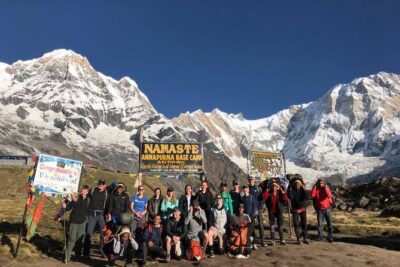
Kathmandu to Annapurna Base Camp (ABC) 5-Day Trek
Read our review →Browse the lists this trek appears in